
Journalist

Choi Jong-moon
-
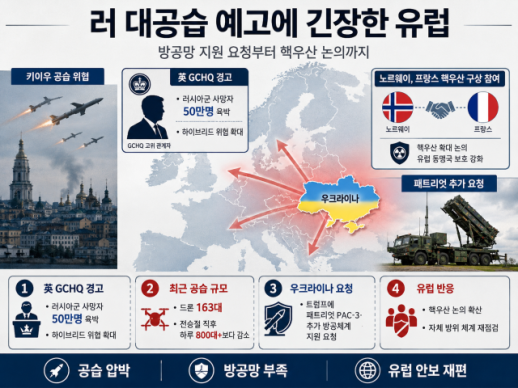 Europe on Edge as Russia Warns of Major Airstrikes Security concerns in Europe are escalating as Russia has warned of a large-scale airstrike targeting Ukraine. Ukraine has requested additional Patriot missile support from the United States, while Norway has agreed to participate in a nuclear umbrella initiative led by France. The military pressure from Russia is prompting discussions about Europe's own defense systems, extending beyond Ukraine's air defense issues. According to Sky News on May 27, Anne Keast-Butler, head of the UK Government Communications Headquarters (GCHQ), stated in a speech at Bletchley Park that "Russian military deaths are nearing 500,000 since the start of the war in Ukraine." She assessed that Russian forces are retreating on the battlefield. However, she emphasized that military losses do not equate to a reduction in risk. Keast-Butler warned that "Russia is expanding its irregular threat activities, including cyberattacks and sabotage, against the UK and Europe," continuously targeting critical infrastructure, democratic processes, supply chains, and public trust. She added, "The risk of miscalculation is higher than I have ever seen." On the battlefield, the possibility of airstrikes targeting Kyiv, Ukraine's capital, has increased. Russia has recently warned foreign diplomats and personnel to "leave Kyiv" in anticipation of large-scale strikes. Ukraine has responded defiantly, urging its allies to stand united. While the scale of attacks has temporarily decreased, tensions remain high. The Ukrainian Air Force reported that as of 6 PM on May 26, Russia launched 163 drones. Although this is a reduction from earlier in the month when over 800 drones and missiles were deployed following a ceasefire on Victory Day, clashes continue in Crimea and along the Russian border. Ukraine is expressing its urgent need for air defense systems. President Volodymyr Zelensky has sent a letter to President Donald Trump requesting additional support, specifically Patriot PAC-3 missiles and other air defense systems. He noted, "We are almost entirely reliant on the United States for ballistic missile defense" and emphasized the need for further assistance to counter Russian missile attacks. Zelensky also called for NATO to expedite its arms supplies. Ukraine believes that the NATO 'Ukraine Priority Support List' (PURL) is not keeping pace with the speed of Russian attacks. PURL is a program through which NATO jointly purchases U.S.-made defense equipment for Ukraine. The security concerns in Europe have also sparked discussions about nuclear deterrence. Norwegian Prime Minister Jonas Gahr Støre announced that Norway would participate in the French-led nuclear umbrella initiative. He cited Russia's large-scale rearmament, including its nuclear capabilities, and its ongoing full-scale war in Europe as the backdrop for this decision. Norway has clarified that it will not deploy nuclear weapons on its territory during peacetime. However, by agreeing to participate in the French nuclear umbrella initiative, Norway, which has long viewed close cooperation with the United States as central to its security, is expanding discussions on European security into the realm of nuclear deterrence.* This article has been translated by AI. 2026-05-28 15:12:00
 -
 Bank of Korea Signals Potential Rate Hike Amid Economic Concerns The Bank of Korea has kept its benchmark interest rate steady at 2.50%, but the market perceives this as a signal of a shift toward tightening. Following a monetary policy committee meeting on May 28, Governor Shin Hyun-sung stated, "There is a need to raise the benchmark interest rate at an appropriate time in the future." The committee's dot plot indicated that most members anticipate further rate increases, with some even suggesting an immediate hike. The market is now largely expecting a rate increase in July.Just a few months ago, market focus was on economic slowdown and the possibility of rate cuts. However, the situation has changed rapidly. Rising international oil prices, currency instability, signs of a rebound in housing prices, and a recovery in the semiconductor industry have made it difficult for the Bank of Korea to maintain an accommodative stance.Governor Shin's remark that "three rabbits are running in the same direction" symbolically reflects the current economic situation. It suggests that the goals of monetary policy—price stability, growth, and financial stability—are all pointing toward the need for tightening. Indeed, the real estate market in the capital region is showing signs of renewed activity, and concerns about overheating in the stock market are growing. There is also a noticeable trend of liquidity moving quickly into riskier assets.The challenge lies in the market sentiment. Despite the increasing likelihood of a rate hike, optimism remains strong across various asset markets. Particularly concerning is the influx of personal funds into leveraged ETFs and derivatives markets. As the bull market extends, investors tend to seek higher returns and stronger incentives. However, a period of rising interest rates presents a very different scenario from a liquidity-driven market. When the cost of money rises, the prices of risk assets are typically the first to be affected.The issue of household debt also warrants reevaluation. South Korea's household debt remains among the highest in the world. An increase in interest rates will first impact households and self-employed individuals, who have a high proportion of variable-rate loans. If excessive borrowing increases amid a resurgent real estate market, future shocks could be more severe.Businesses are not in a secure position either. Companies accustomed to a low-interest-rate environment will face increased borrowing costs. Small and medium-sized enterprises, in particular, may struggle with the simultaneous pressures of rising interest rates, raw material costs, and domestic demand slowdown. The risk of defaults in real estate project financing remains unresolved.The Bank of Korea's dilemma is understandable. While considering growth, premature tightening could pose challenges. However, ignoring signs of inflation and financial instability while allowing market overheating could lead to greater risks. Delayed responses often result in more abrupt rate hikes and larger shocks.The key is speed and trust. The Bank of Korea must communicate effectively with the market and outline a predictable tightening path to minimize shocks. Simultaneously, the government should not rely solely on monetary policy. It must also implement measures to stabilize the real estate market, manage household debt, and support vulnerable groups.What the South Korean economy needs now is neither excessive optimism nor fear, but a calm recognition of the realities that accompany a shift toward tightening. While the inertia of the low-interest-rate era still lingers in the market, the global economic environment has already changed. A rate hike is not just a numerical change; it signals a shift in market dynamics and investment strategies. It is time to carefully manage inflated expectations. 2026-05-28 15:12:00
 -
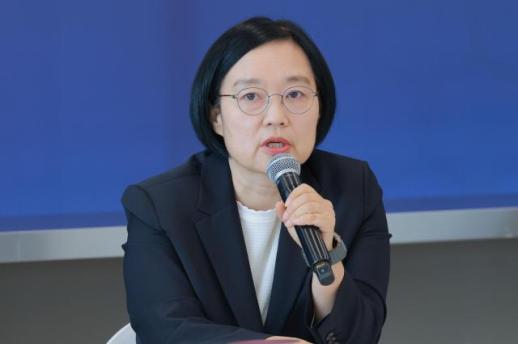 Minister Han Seung-sook: Building an Entrepreneurial Ecosystem to Maximize SME Exports Minister Han Seung-sook of the Ministry of Small and Medium Enterprises and Startups held a press conference to commemorate the first anniversary of the government, reflecting on the achievements in small business and venture policies over the past year and outlining future priorities. She highlighted significant progress in promoting entrepreneurship while identifying the need for policy innovation in response to external crises as a key ongoing challenge. During the press conference on the 28th at SVC Seoul, Minister Han expressed her commitment to continue supporting startup companies. Since taking office, she has visited 152 locations and implemented 23 measures along with 78 improvements to laws and regulations. Minister Han identified four key themes of the ministry's achievements: 'Entrepreneurship' (Everyone's Startup), 'Growth' (TIPS), 'Leap' (Jump Up), and 'Second Chances and Safety Nets.' Notably, the 'Everyone's Startup Project,' aimed at revitalizing the stagnant self-employed and venture ecosystem, attracted over 63,000 applicants, marking the largest participation in a government competition to date. Within just 37 days of its launch, the number of participants surpassed 20,000, indicating a nationwide surge in entrepreneurial interest. The initiative will continue with a second season, set to begin in July, expanding the selection from 5,000 to 10,000 participants. To spread the entrepreneurial enthusiasm across the country, the government will designate regional startup cities. In the first half of this year, four cities—Daejeon, Daegu, Gwangju, and Ulsan—home to major science and technology institutions, will be prioritized for support across the entire startup cycle, from entrepreneurship to technology development, investment, and market access. An additional six cities will be selected by 2027 to expand this initiative nationwide. The foundation for supporting entrepreneurship and stable recovery has also been established. The 'Startup One-Stop Support Center,' which opened in 19 regions last December, has quickly become a key resource, surpassing 10,000 consultations within five months. A 'Re-Challenge Fund' of 1 trillion won is planned to support struggling businesses in their recovery over the next five years. Minister Han referenced the Lee Jae-myung administration's declaration of a 'National Startup Era,' stating, "Now is the time to plan with an eye toward 2045." She added, "We will create an environment conducive to becoming a startup nation over the next 20 years." Small and medium enterprise exports also reached new heights, achieving a record $118.6 billion last year. In the first quarter of this year, exports continued to break records, marking the second consecutive year of peak performance. The K-beauty and online export sectors have also set new records, contributing to the expansion of export opportunities. The venture investment market has also rebounded, thanks to the 'Four Major Venture Nation Measures' announced at the end of last year. In the first quarter of this year, the amount raised by venture funds reached an all-time high of 4.4 trillion won, with investments totaling 3.3 trillion won. Additionally, the ministry is accelerating the establishment of a demand-driven delivery system. By reducing application paperwork by 50%, the administrative burden on businesses has been significantly decreased. The government has also launched initiatives such as 'Crisis Alert Talk' to proactively reach out to struggling small businesses and a 'Whistleblower System for Technology Theft' to enhance policy accessibility. Furthermore, the ministry is set to launch the 'Small and Medium Enterprise Growth Platform,' consolidating 64 previously scattered policy platforms into one, with a pilot operation scheduled for June. This initiative aims to simplify the complex procedures of government support programs, which President Lee Jae-myung likened to a 'tangled mess,' into a user-friendly system that requires 'just one login' and features an 'AI virtual assistant.' Minister Han stated, "The achievements of the past year are thanks to the small and medium enterprises and self-employed individuals who have not stopped challenging themselves on the ground, rather than the government. We will continue to run alongside them unwaveringly to ensure that their challenges lead to even greater results." However, she acknowledged that despite these visible achievements, the ministry has struggled to implement 'substantial structural reforms' due to uncontrollable global crises. "With 1 million small business closures, the impact of U.S. tariffs, and conflicts in the Middle East, various situations beyond the ministry's control are affecting small and medium enterprises overall," she said. "In this critical period requiring a reorganization of supply chains, we have not been able to focus on how to innovate policies effectively." In response to questions from reporters regarding wage disparities and labor shortages between large and small enterprises, she emphasized the need for a social consensus and the creation of a new compensation system, stating, "We must strengthen support to secure quality research talent within small and medium enterprises." 2026-05-28 15:10:00
 -
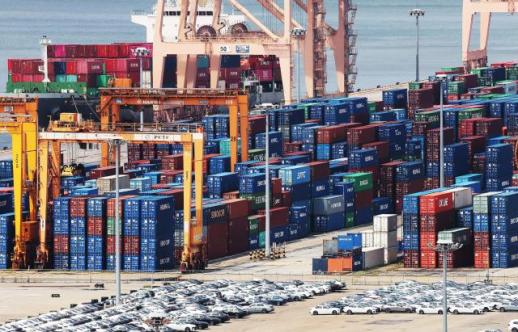 Bank of Korea Raises Economic Growth Forecast to 2.6% Driven by Semiconductor Boom The Bank of Korea has revised its economic growth forecast for this year from 2.0% to 2.6%. This adjustment is attributed to strong export performance driven by a booming semiconductor industry. In a revised economic outlook released on May 28, the Bank projected a real GDP growth rate of 2.6% for the year. This figure significantly exceeds the potential growth rate of approximately 1.8% and marks the highest growth rate since 2022, when it was 2.7%. Compared to the forecast made in February, this represents an increase of 0.6 percentage points, the largest adjustment since May 2021, when the forecast was raised from 3.0% to 4.0%. For the second quarter of this year, the growth rate is estimated to rise by 0.2% compared to the previous quarter. Lee Ji-ho, head of the Bank's Economic Research Department, stated, "The market expects negative growth in the second quarter, but we anticipate positive growth due to the response to the Middle East conflict, with a potential downturn expected in the third quarter. We expect growth to slow down due to base effects from the first quarter and energy shocks from the Middle East conflict." The Bank of Korea believes that the impact of supply shocks from the Middle East will be partially mitigated by government policies, including supplementary budgets, while strong semiconductor exports will contribute to a higher growth rate than previously forecasted in February. Earlier, the Bank had initially projected a growth rate of 1.8% for 2024 in November, lowered it to 1.6% in May, and then adjusted it to 1.8% in November and 2.0% in February. The semiconductor boom is also expected to drive the current account surplus. The Bank has significantly raised its forecast for the current account surplus this year to $250 billion, up from the February estimate of $170 billion. This figure is more than double last year's record surplus of $123.1 billion. Additionally, the Bank has adjusted its growth forecast for next year from 1.8% in February to 2.1%. Previously, the Bank had set the growth forecast for next year at 1.9% in November, lowered it to 1.8% in February, and now raised it again. This adjustment reflects expectations that the semiconductor cycle will continue into next year, boosting growth rates. In its optimistic scenario for the semiconductor market, the Bank predicts that semiconductor export volumes could expand to the mid-20% range this year and maintain a high level in the mid-10% range next year, potentially increasing domestic growth rates by 0.5 percentage points this year and 0.3 percentage points next year. In this case, inflation rates are also expected to rise by 0.1 percentage points this year and next. Conversely, in a pessimistic scenario where concerns about the profitability of AI investments lead major tech companies to slow their investment pace, the growth rate is projected to decrease by 0.3 percentage points this year and 0.2 percentage points next year due to a slowdown in semiconductor export growth to the 10% range. The Bank also presented optimistic and pessimistic scenarios based on developments in the Middle East. If negotiations between the U.S. and Iran are successfully concluded and shipping through the Strait of Hormuz resumes quickly, growth rates for this year and next could each be 0.1 percentage points higher than the baseline forecast. However, if negotiations stall and shipping remains restricted through the end of the year, growth rates could drop by 0.5 percentage points this year and 0.3 percentage points next year. Nonetheless, there are opinions that the semiconductor boom will not lead to a permanent increase in potential growth rates. Lee stated, "If the semiconductor boom represents a permanent change, it would raise potential growth rates, but if the semiconductor industry operates cyclically, the impact on potential growth rates will be limited. At this point, we do not see a significant increase in potential growth rates." The Bank has also raised its consumer price inflation forecast from 2.2% to 2.7%, the highest level since 2023 (3.6%). This increase is attributed to expectations of sustained high prices due to the prolonged conflict in the Middle East. The core inflation rate is also expected to reach 2.4%, higher than the February forecast of 2.1%. The inflation trend is anticipated to peak in August of this year. For next year, the consumer price inflation forecast has been adjusted from 2.0% to 2.3%. While cost pressures from oil prices are expected to ease, demand-side pressures are likely to expand, leading both consumer and core inflation rates to exceed target levels.* This article has been translated by AI. 2026-05-28 15:06:00
 -
 Repeated Safety Disasters Highlight Need for Change in Priorities The recent collapse at the Seosomun Overpass demolition site and the missing rebar issue at the Samsung Station GTX construction site may appear to be separate incidents, but they share a common root: a persistent culture that prioritizes cost and speed over safety. On May 28, President Lee Jae-myung stated, "Money cannot be more valuable than life," calling for thorough investigations and accountability from relevant agencies. He criticized the "distorted practices" that place money and efficiency above safety, underscoring the seriousness of accidents in the public sector. These incidents are particularly alarming because they occurred in public domains responsible for citizen safety and large infrastructure projects. The Seosomun Overpass accident was a major safety incident in the heart of the city, while the missing rebar issue has raised significant public anxiety. The absence of rebar is not merely a construction error; it raises doubts about whether the entire system of design, supervision, construction, and management is functioning properly. Korean society has repeatedly vowed that such large-scale disasters must never happen again. However, over time, vigilance wanes, and the logic of cost-cutting and expedited timelines resurfaces, often at the expense of safety. On-site, resources and personnel are reduced, and within the layers of subcontracting, accountability becomes blurred. In many cases, when accidents occur, only a few workers face consequences. May 28 also marks the 10th anniversary of the Guui Station tragedy, where a 19-year-old worker was killed by a train while repairing a screen door. At that time, society strongly criticized the outsourcing of risk and inadequate safety management. Yet, a decade later, workers continue to lose their lives in industrial settings, and issues of substandard construction and safety violations persist. There is growing concern that the temptation to cut safety costs is increasing amid economic downturns and profitability pressures. This trend is not limited to construction and civil engineering; it is also intensifying across manufacturing, logistics, and platform industries, where competition prioritizes "efficiency" and "speed." However, viewing safety as a cost inevitably leads to predictable disasters. Both corporations and public institutions must fundamentally change their mindset. Safety should be seen as an investment, not an expense. Adhering to safety regulations is not optional; it is a minimum obligation. Relying solely on post-accident measures and punishing responsible parties will not prevent recurrence. Safety standards must be reinforced throughout the entire process, from design to construction, operation, and supervision, with clear accountability for violations, regardless of rank. The political sphere must also move away from using safety issues as fodder for partisan conflict. Each time a major accident occurs, the focus on blaming the opposing side has prevented the resolution of structural problems on the ground. What the public desires is not political bickering but effective measures to prevent recurrence. A nation's status is not determined solely by its skyscrapers or advanced technology. More importantly, it is about whether citizens can live, work, and move about safely. A society where safety is compromised cannot be considered advanced. It is time to reaffirm the fundamental principle that "life takes precedence over money." 2026-05-28 15:06:00
 -
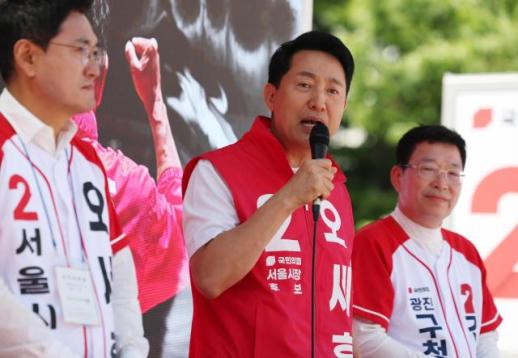 Oh Se-hoon Vows to Win Against Unreason and Unconscionable Acts to Protect Seoul "My opponent is not just someone with different views. It is unreason that can quickly dismantle the order we have worked hard to maintain and unconscionable behavior that denies the responsibilities of candidates seeking the people's choice." Oh Se-hoon, the candidate for Seoul mayor, expressed his determination to fight fiercely as the election nears. He framed the election as a critical battle to protect Seoul, emphasizing the urgency of his message. On May 27, Oh posted a lengthy message on his Facebook page titled "I will definitely win against unreason and unconscionable acts." He stated, "As election day approaches, my sense of urgency deepens. This is not just about my personal victory; we must win to protect the citizens of Seoul and ensure South Korea follows the right path." He described the Seoul mayoral election as "the second most important and significant election after the presidential election," expressing strong concerns about the current electoral atmosphere. "I have participated in many elections, but I have never seen one as dire as this," Oh said, claiming that powerful forces are deceiving voters and that the ruling party candidate's attitude is degrading the dignity of the Seoul mayoral race. Targeting his opponent, he questioned, "What qualifications does a candidate hiding behind immense power and avoiding competition and scrutiny have to lead Seoul? Can a candidate who evades questions and uses easily exposed falsehoods to escape immediate crises be responsible for Seoul's future?" Oh also voiced his dissatisfaction with the economic situation. "Is it right to call the current state of high interest rates, high prices, and high exchange rates 'the cost of success' while the lives of citizens are faltering?" he asked, adding that the real estate market is devastated and the rental crisis is reaching catastrophic levels. He continued, "The cries and screams that cannot reach the inner sanctums are enveloping the streets and neighborhoods. The citizens left behind after the noisy election are holding back tears, feeling they have nowhere to turn." Oh characterized this election not merely as a political contest but as a battle for the values of 'order and reason.' "I am not just facing opponents with different philosophies and directions; I am fighting against unreason that threatens the order we have painstakingly maintained and unconscionable behavior that disregards the minimal responsibilities of candidates," he emphasized. He concluded, "Despite the ongoing grueling campaign, my resolve is growing stronger. I will not yield to unreason and unconscionable acts, and I will continue to rally support." Political analysts interpret Oh's message as a clear indication of his strategy to frame the final days of the campaign around the themes of 'stability versus scrutiny' and 'reason versus unreason.' There are also analyses suggesting he aims to elevate the Seoul mayoral election from a mere local power struggle to a symbolic contest over the future direction of national governance and political order.* This article has been translated by AI. 2026-05-28 15:04:00
 -
 Hana Financial Group Launches $2.3 Billion Support Plan for Inclusive Finance Hana Financial Group announced on May 28 that it will implement a roadmap for inclusive finance, which includes a financial support plan worth 3 trillion won ($2.3 billion) this year.The group outlined three key initiatives for 2026: addressing financial polarization, supporting financial independence, and expanding inclusive infrastructure.Hana Bank will launch a specialized product called the 'Hana OneQ Medium-Rate Loan' next month, targeting low- to mid-credit borrowers with a total of 2 trillion won ($1.5 billion). The loan will be available to individuals in the bottom 50% of credit scores, with a maximum limit of 10 million won ($7,500) and a fixed interest rate of 5.5% until the end of the year.To assist small business owners facing management crises, the bank will introduce the 'Hana Deul SoHo Success Ladder Loan,' providing 1 trillion won ($750 million) in support. This initiative will offer unsecured loans to small business owners with a maximum limit of 10 million won ($7,500) at a minimum interest rate of 4.5%.Additionally, to help those in debt, Hana Financial Group plans to implement a 200 billion won ($150 million) initiative next month to halt the expiration of delinquent debts and forgive loans.A task force involving the Financial Research Institute and Hana Financial Convergence Technology Institute will also be established to enhance an alternative data-based credit evaluation system. 2026-05-28 15:02:00
 -
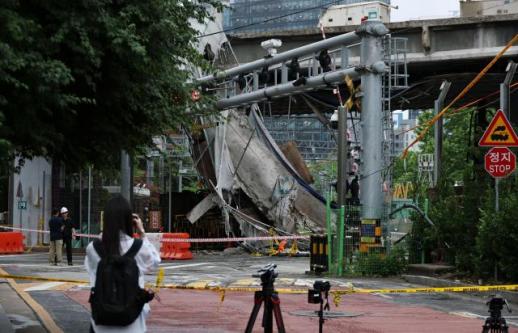 Structural Failures Highlight Gaps in Demolition Safety Standards The recent collapse of the Seosomun overpass has prompted South Korea's largest civil engineering organization to declare that the incident reflects a systemic failure rather than mere negligence at the site. As investigations into the cause of the accident continue, concerns are being raised about the deficiencies in the cost and oversight systems for demolishing aging infrastructure. On May 28, the Korean Society of Civil Engineers issued a statement identifying three major gaps in the country's demolition construction system as contributing factors to the incident. They noted the absence of mandatory pre-demolition design, insufficient reflection of demolition costs in standard cost estimates, and a lack of specialized oversight systems and qualification criteria. The society emphasized that financial considerations are at the core of the issue. They pointed out that costs for structural analysis, temporary support structures, and monitoring are not included in standard cost estimates, leading to lower bidding prices. This, in turn, can result in safety procedures being either inadequately implemented or overlooked altogether. According to the Ministry of Land, Infrastructure and Transport's standard cost estimates for construction projects, there are few specific items for estimating the demolition of civil structures like bridges. The existing guidelines primarily address the demolition of small concrete structures and the installation and dismantling of temporary scaffolding. There is a lack of clear criteria for assessing the changing loads during the phased demolition of a bridge, installing temporary supports, and monitoring deflections as part of the safety process. While standard cost estimates define the input quantities for unit tasks, the absence of standards for the demolition process itself makes it difficult to incorporate related costs into bidding prices. The quantity of materials being demolished is accounted for, but the costs associated with safe design and oversight are not. Internationally, there are movements to treat demolition work as a distinct engineering discipline. The American Society of Civil Engineers (ASCE) published a dedicated technical guideline for bridge demolition, titled 'MOP 157,' in 2024. This aims to reduce inconsistencies in demolition analysis criteria across different regions and companies. The risks associated with demolition work are evident in statistics. According to the Ministry of Land, Infrastructure and Transport, there have been 1,141 accidents related to demolition and dismantling work over the past five years, with the fatality rate for demolition work being twice that of the overall construction industry. Concerns are growing as the number of aging bridges and overpasses increases. However, some experts caution against attributing the incident solely to systemic deficiencies. They argue that the more significant issue may be the failure to adhere to established principles on-site. The Seoul city guidelines stipulate that temporary supports should be installed as needed to prevent deformation or subsidence of the structures being demolished. Whether adequate reinforcement measures were in place at the accident site will be a key point of investigation. To prevent future incidents, the society has proposed several measures, including: mandatory pre-demolition design services for civil structures, establishing appropriate cost standards for high-risk demolition projects, creating qualifications for specialized demolition oversight, prioritizing remote inspections when signs of collapse are detected, and establishing protections and compensation systems for private experts involved in public safety inspections. The proposals for prioritizing remote inspections and expert protections are particularly relevant in light of this recent accident. Han Seung-hun, president of the Korean Society of Civil Engineers and a professor in the Department of Civil and Environmental Engineering at Yonsei University, stated, "If the system does not keep pace with the field, tragedies like this can happen again at any time. We need a comprehensive overhaul of the safety management system for aging bridges nationwide." 2026-05-28 14:58:00
 -
 OpenAI and Anthropic Prepare for IPOs, Valuations Reach $2 Trillion OpenAI and Anthropic are both gearing up for initial public offerings (IPOs), with a combined valuation potentially reaching $2 trillion. Among domestic companies, SK Telecom and LG CNS are expected to directly benefit from the anticipated rise in corporate value following these IPOs. According to Yuanta Securities on May 28, Anthropic's post-IPO valuation is estimated to be as high as $1 trillion. The 0.3% stake held by SK Telecom could be valued at approximately 3.5 trillion won. After investing 130 billion won in Anthropic in August 2023, SK Telecom is poised to realize a return of about 26.9 times its investment in just over three years. LG CNS is also expected to benefit from the increase in asset value due to its indirect investment through LG Technology Ventures, a Silicon Valley venture capital firm, although the exact investment amount remains undisclosed. In the tech industry, OpenAI submitted a confidential S-1 registration statement to the U.S. Securities and Exchange Commission (SEC) on May 22. Goldman Sachs and Morgan Stanley are serving as underwriters, with a target IPO date set for September and a valuation exceeding $1 trillion. Anthropic aims for an October listing and has appointed law firm Wilson Sonsini while negotiating with underwriters Goldman Sachs, JPMorgan, and Morgan Stanley. However, evaluations of both companies vary. Concerns about OpenAI's financial structure are significant. The company reported revenues of $13.1 billion in 2025 while incurring losses of approximately $22 billion. This year's projected losses alone could reach $14 billion, with contractual liabilities estimated at $14 trillion. HSBC analysts suggest that OpenAI may need to raise an additional $207 billion by 2030, casting doubt on its ability to achieve profitability by that year. In contrast, market outlooks for the newer entrant Anthropic are generally positive. According to Counterpoint Research, Anthropic captured a 31.4% share of the global large language model (LLM) revenue in the first quarter of this year, surpassing OpenAI's 29% for the first time. Investment banking analysts predict that Anthropic will achieve its first-ever quarterly operating profit in the second quarter of this year, with revenues projected at $10.9 billion. The expected breakeven point is anticipated in 2028, two years earlier than OpenAI's 2030 target. Anthropic's current valuation stands at around $900 billion based on ongoing funding rounds, and demand for its shares in the secondary market has already surpassed that of OpenAI.* This article has been translated by AI. 2026-05-28 14:56:00
 -
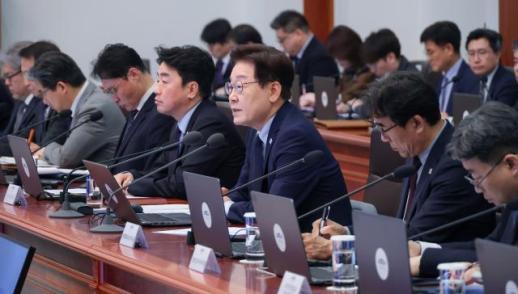 Lee Calls for Thorough Investigation on 10th Anniversary of Guui Station Tragedy President Lee Jae-myung stated on May 28 that "the harmful practice of prioritizing money and efficiency over safety still exists in some parts of society." He emphasized the need for a thorough investigation into the recent accidents at the Seosomun overpass demolition site and the missing rebar issue at the Samsung Station GTX construction site, suggesting these incidents may stem from the same systemic issues.During a senior secretary meeting at the Blue House, President Lee remarked, "Money cannot be more valuable than human life." He highlighted the seriousness of these incidents, particularly because they involve the public sector, which should prioritize citizen safety above all else. He urged relevant agencies to swiftly uncover the truth and hold accountable those responsible, regardless of their position.President Lee noted that today marks the 10th anniversary of the Guui Station tragedy, where a young worker was killed by a train while working alone on the platform. He lamented that since that day, many workers have continued to lose their lives in unsafe workplaces, a heartbreaking reality that persists.He reiterated the importance of recognizing that safety is the most effective investment and pledged that the government would dedicate maximum resources to protect and save the lives of citizens.* This article has been translated by AI. 2026-05-28 14:56:00