
Journalist

Elizabeth Englezos
-
 Smilegate to Launch “Maid of the Storm” Globally on Steam The maid cafe management tycoon game “Maid of the Storm” is set for an official global release on PC platform Steam on the 24th. Published by Smilegate and developed by Burgerduck Games, the dot-graphics management simulation puts players in charge of running a maid cafe and growing the business. Players manage distinctive maid characters, expand the shop and face competitive elements designed to increase immersion. A key feature is a strategic staffing system that goes beyond basic operations. Players must assign work while factoring in each maid’s condition and emotional state, aiming to maximize efficiency. The game also includes content modeled on real-world maid cafe culture, including performances tied to omelet rice and drink orders, a mini-game that involves drawing with ketchup, and interactive elements such as taking photo cards with customers. Players build the cafe through various episodes with the goal of winning the “Maid Championship,” combining management simulation with character and story elements. A demo previously released on Stove drew positive user feedback, helping validate the gameplay. Smilegate said it plans to use the global Steam launch to showcase the bright, upbeat appeal of maid cafes to players worldwide, including in Japan.* This article has been translated by AI. 2026-04-24 15:22:15
 -
 Seoul, Southern Gyeonggi Apartment Prices Rise as Gains Spread Beyond Gangnam South Korea’s apartment market continued a mild uptrend, with gains spreading in areas with strong access to Seoul’s Gangnam district — notably southern Gyeonggi Province — and into Seoul’s outer districts, highlighting widening gaps by location. KB Real Estate said in its weekly report released April 23 that nationwide apartment sale prices rose 0.07% in the third week of April, while jeonse (lump-sum deposit) lease prices increased 0.11%. In the Seoul metropolitan area, prices rose in Seoul (0.22%) and Gyeonggi (0.11%), while Incheon was flat. Within Seoul, Seongdong District (0.51%) and Seongbuk District (0.44%) posted gains, but Gangnam District (-0.08%) and Seocho District (-0.01%) fell, showing sharp differences by neighborhood. In Gyeonggi, the southern area led gains, supported by proximity to Gangnam and shorter commutes. Seongnam’s Sujeong District rose 0.64%, followed by Hanam (0.55%), Gwangmyeong (0.42%), Seongnam’s Jungwon District (0.38%) and Anyang’s Dongan District (0.37%). Some outlying areas declined, including Goyang’s Ilsandong District (-0.09%), Icheon (-0.07%) and Pyeongtaek (-0.06%). Regional markets were mixed: Ulsan (0.08%) and Daejeon (0.01%) rose, while Daegu (-0.01%), Busan (-0.02%) and Gwangju (-0.09%) fell. Busan turned down after 27 weeks of gains. Jeonse prices also edged higher nationwide. In the capital region, jeonse rose in Seoul (0.20%), Gyeonggi (0.19%) and Incheon (0.10%), with modest increases elsewhere as well. Seoul’s buyer-seller sentiment index climbed to 73.0, up 4.8 points from the previous week, rebounding after a one-week dip. The index has been volatile, suggesting both buyers and sellers remain cautious. A similar pattern appeared in data from the Korea Real Estate Board, which said April 23 that Seoul apartment sale prices rose 0.15% in the third week of April, accelerating from 0.10% a week earlier. In Seoul, gains were led by outer districts with many mid- to lower-priced apartments. Seongbuk (0.27%) rose mainly in Gireum and Hawolgok; Dongdaemun (0.25%) in Dapsimni and Hwigyeong; Gangbuk (0.24%) in large complexes in Mia and Beon; Gwangjin (0.22%) in Guui and Gwangjang; and Nowon (0.22%) near stations in Wolgye and Junggye. Gangseo (0.31%) rose mainly in Gayang and Yeomchang, and Gwanak (0.28%) in large complexes in Bongcheon and Sillim. Songpa gained 0.07%, ending an eight-week slide. Gangnam (-0.06%) and Seocho (-0.03%) continued to fall, underscoring diverging trends between core and outer areas. Across the capital region, Gyeonggi rose 0.07%. Gains were led by Hwaseong’s Dongtan area (0.41%), Gwangmyeong (0.34%), Suwon’s Yeongtong District (0.31%), Guri (0.29%) and Hanam (0.29%), aligning the uptrend in Seoul’s outskirts with southern Gyeonggi. Outside the capital region, weakness persisted. The five major metropolitan cities fell 0.01%, shifting from flat to negative, and Sejong (-0.07%) also turned down after rising. Nam Hyeok-woo of Woori Bank’s real estate research institute said sellers in Seoul’s mid-priced areas, which had shown strength in the first half of the year, moved to buy mainly distressed listings in Seongdong, Gwangjin, Dongjak and Mapo districts. He said many distressed listings in popular parts of Songpa were absorbed, pushing demand toward less popular, cheaper areas, with transactions extending into nearby Gangdong. Nam added that the relatively firm price trend in Seoul’s mid- to lower-tier areas is spreading in part to nearby outlying areas of Gyeonggi, and that the current “price catch-up” could gradually expand further into Gyeonggi’s outskirts. * This article has been translated by AI. 2026-04-24 15:21:20
 -
 Reliance’s Jio Financial, Allianz to Form 50-50 General Insurance Venture in India India’s Jio Financial Services (JFSL), the financial arm of Reliance Industries (RIL), said on the 22nd it will set up a general insurance company with Germany’s Allianz Group, with each side taking a 50% stake. JFSL said it signed an agreement with Allianz on the 22nd to establish a joint venture that will offer property and casualty insurance and health insurance. The two companies are also preparing to sign an agreement covering life insurance operations in India. RIL Chairman Mukesh Ambani said combining JFSL’s digital network with Allianz’s expertise would create “unique strengths.” He said the partners want to provide “easy-to-understand, affordable, world-class” insurance solutions across India and contribute to the Indian government’s vision of “insurance for all by 2047.” Allianz has long operated in India through two joint ventures with local insurer Bajaj Finserv. In March last year, Allianz said it would withdraw its investment from the two companies and end its partnership with Bajaj, and in July the same year it announced a tie-up with JFSL.* This article has been translated by AI. 2026-04-24 15:15:34
 -
 Banks Lift South Korea Growth Forecasts After Strong Q1, Fueling Rate-Hike Talk South Korea’s economy posted much stronger-than-expected growth in the first quarter, prompting major financial institutions at home and abroad to raise their full-year forecasts. Some global investment banks said the country’s fundamentals look firmer than expected, reviving speculation that the Bank of Korea could eventually shift toward rate increases. As of April 24, the financial industry said JPMorgan raised its 2026 annual gross domestic product growth forecast to 3.0% from 2.2%, a jump of 0.8 percentage points. The bank cited strong momentum in exports and facility investment as key drivers. Park Seok-gil, an economist at JPMorgan, said growth could slow in the second quarter due to base effects from the first quarter and the impact of the Middle East war. Still, he said upside risks are large compared with the bank’s earlier conservative view of 0% growth, and that it was raising its second-quarter outlook to reflect strong export and investment momentum. Over the medium to long term, he added, a technology cycle and improved corporate earnings could lift facility investment and increase the contribution from net exports. Citibank also raised its outlook. In a report, economist Kim Jin-wook said the bank was lifting its 2026 growth forecast to 2.9% from 2.2% to reflect the stronger-than-expected first-quarter GDP figure. Other firms made smaller upward revisions. Nomura raised its forecast to 2.4% from 2.3%, and Goldman Sachs increased its estimate to 2.5% from 1.9%. South Korean brokerages also moved higher, with Samsung Securities and KB Securities each at 2.7% and Daishin Securities at 2.5%, reinforcing expectations for mid-2% growth this year. Lee Jeong-hoon, a researcher at Daishin Securities, said the first-quarter surprise means that, arithmetically, the economy could still grow 2.4% even if it posts zero growth through year-end. He said export momentum may gradually cool in the second half, but domestic demand excluding construction investment could remain solid if the stock market avoids major swings. With growth proving stronger than expected, attention has turned to the Bank of Korea. Analysts said persistent inflation pressure, alongside resilient growth, is strengthening the case that policy rate increases could become a reality. Citing the GDP data, JPMorgan forecast the central bank would shift to a “gradual hiking cycle,” raising the base rate by 0.25 percentage points in the fourth quarter of this year and again in the fourth quarter of next year. Park said the risk of a more hawkish stance has increased due to cost pressures from higher oil prices. With inflation above target and growth above potential, he said, a gradual adjustment in the policy stance would be justified. Citi expects two rate hikes within the year. Kim said the risk of prolonged core inflation has increased, and that with accommodative financial conditions and an active role for fiscal policy, there is growing upside risk that the terminal rate could rise higher than expected to 3.25% to 3.50% by the second to third quarter of next year. Local brokerages also said the likelihood of rate hikes is rising. Kim Myeong-sil, a researcher at iM Securities, said expectations for rate cuts are retreating quickly as the combination of resilient growth and rising prices takes hold, bringing renewed focus on possible tightening. If inflation risks increase further, she said, the policy reaction function could effectively shift toward an asymmetric, hawkish stance.* This article has been translated by AI. 2026-04-24 15:11:55
 -
 NH NongHyup Financial Q1 Net Profit Rises 21.7% to 868.8 Billion Won on Strong Fee Income NH NongHyup Financial Group said Thursday it posted first-quarter net profit of 868.8 billion won, up 21.7% from a year earlier. The group attributed the gain to balanced growth in both interest and noninterest income. Interest income rose 7.3% to 2.1143 trillion won, helped by a larger core deposit base and a corporate-loan-focused portfolio that improved net interest margin. The combined bank and card NIM increased to 1.75% in March from 1.67% in December. Noninterest income climbed 51.3% to 903.6 billion won. The group cited higher brokerage revenue amid more active capital markets and a sharp rise in fee income as assets under management expanded. Return on assets and return on equity improved from the end of last year to 0.78% and 11.85%, respectively. The ratio of substandard or lower loans was 0.65%, and the loan-loss reserve coverage ratio stood at 156.54%. By major unit, NongHyup Bank earned 557.7 billion won, NH Investment & Securities posted 475.7 billion won, and NongHyup Life and Non-Life Insurance reported 67.1 billion won. NongHyup Bank’s profit rose slightly from a year earlier, up 3.3 billion won. Among capital-market affiliates, NH Investment & Securities and NH-Amundi Asset Management posted year-on-year profit increases of 128.5% and 117.5%, respectively, helping lift group results. 2026-04-24 15:10:48
 -
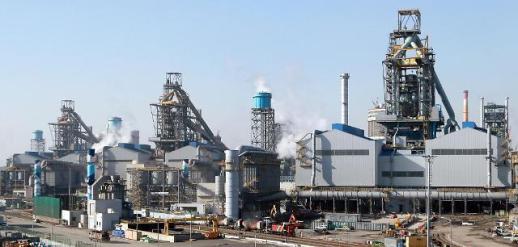 Hyundai Steel swings to Q1 operating profit on higher sales volume SEOUL, April 24 (AJP) - Hyundai Steel returned to the black in the first quarter of 2026, posting an operating profit of 15.7 billion won ($10.5 million) as rising sales volumes offset persistent cost pressures. The company reported consolidated revenue of 5.74 trillion won for the January to March period on Friday, up 3.2 percent from a year ago, buoyed by stronger product shipments. Operating profit, however, slid 63.7 percent quarter-on-quarter as exchange rate headwinds and elevated raw material costs weighed heavily on margins. Hyundai Steel said the surge in debt and its leverage ratio reflected capital injections into its U.S. steelworks and other growth-oriented expenditures, describing the increase as temporary. The company projected a gradual recovery in profitability from the second quarter onward, citing an expected easing in cheap import inflows and planned price increases for key products. "We will pre-empt new demand in the power infrastructure industry and actively respond to carbon-reduced steel demand through our combined electric arc and blast furnace process to achieve a recovery in profitability," said a Hyundai Steel Spokesperson. Shares of Hyundai steel traded at 42,100 won per stock on 3:00 p.m., 2.06 percent higher than a day ago. 2026-04-24 15:04:24
 -
 Soaring Materials Push Up Construction Contract Costs; Samsung, Hyundai, Daewoo Up Over 1 Trillion Won Rising construction costs are reshaping the mood across South Korea’s building sector. With higher raw material and labor costs persisting, contractors are repeatedly revising previously disclosed single sales-and-supply contract amounts, a sign that cost pressures at job sites are becoming harder to absorb. Samsung C&T, Hyundai Engineering & Construction and Daewoo Engineering & Construction have raised contract amounts by more than 1 trillion won combined so far this year. On April 24, the construction industry said Samsung C&T on April 22 filed a revised disclosure increasing the contract value for “PROJECT LIGHTNING” — a high-voltage direct current transmission project in the United Arab Emirates — to 2.8764 trillion won from 2.7693 trillion won, an increase of 107.1 billion won. The project includes installing power conversion and substation facilities in the UAE and supplying subsea HVDC cables. Separately, the main equipment construction cost for Shin Hanul nuclear power units 3 and 4 rose by 85.9 billion won, to 1.2959 trillion won from 1.21 trillion won. Hyundai E&C has also raised contract amounts in April for projects including the Daejang-Hongdae metropolitan rail private investment project, the Jafurah utility project in Saudi Arabia, and the reconstruction of Banpo Jugong Apartment Complex 1, zones 1, 2 and 4. Based on related disclosures, the total increase is about 446.2 billion won. The Daejang-Hongdae rail project alone grew from 868.864 billion won when first disclosed in June last year to about 1.1097 trillion won in the latest revision. The increases span urban redevelopment, rail and overseas sites, indicating the cost burden is not limited to one type of project. Daewoo E&C reported similar revisions, adjusting contract amounts for projects including the Jangwi District 10 redevelopment, the GTX-A line private investment project, the Heukseok District 11 redevelopment and the Cheongju Technopolis development work. The total increase is estimated at about 681.2 billion won, including about 252.2 billion won for the Heukseok District 11 redevelopment. Together, the three builders’ increases total 1.3204 trillion won. The trend is not limited to the largest firms. Mid-sized builders such as Hanshin Engineering & Construction and Dongbu Construction have also filed revised disclosures for single sales-and-supply contracts. The pressure to recalculate costs is spreading beyond redevelopment and reconstruction to civil engineering and plant projects. Among 12 listed builders ranked in the top 50 by construction capability assessment, contract increases over the past two months totaled 2.4290 trillion won. An industry official said costs at many sites have risen to levels where it is difficult to protect profitability based on the original contract amount. “At sites where disputes over construction costs have dragged on, cases are not rare where this leads to delayed starts, work stoppages, or renegotiations between contractors and associations,” the official said. The market expects the upward pressure on construction costs to persist because material and labor costs remain unstable. According to the Korea Construction Industry Research Institute, the construction cost index in February stood at 133.69, up 2.0% from a year earlier. The institute attributed the rise to higher prices for other metal products, automatic adjustment and control devices, and primary steel products. Uncertainty has also increased for key process costs, including chemical-related materials, amid geopolitical risks in the Middle East, energy price swings and transportation cost burdens. As time passes after groundbreaking, cost changes accumulate, and projects that can no longer absorb them internally move to revise contract amounts. Even so, higher contract amounts do not necessarily translate into a quick recovery in profitability. In many cases, only part of the increase is reflected through negotiations with project owners, and longer construction periods can create additional burdens. A construction company official said that even with partial increases, it is difficult to fully recoup surging material and labor costs as well as higher financing costs. “Contract amounts have risen on paper, but it is hard to say profitability will recover,” the official said.* This article has been translated by AI. 2026-04-24 15:03:25
 -
 Hana Financial posts record Q1 net profit of 1.21 trillion won on stronger fee income Hana Financial Group said it posted its highest-ever first-quarter net profit despite external headwinds such as exchange-rate volatility. The company said April 24 that first-quarter net profit totaled 1.21 trillion won, up 7.3% from a year earlier. Hana Financial said the results were notable because they came after absorbing one-off costs, including 82.3 billion won in foreign-exchange translation losses tied to a weaker won. Net interest income rose 10.2% from a year earlier to 2.5053 trillion won. The group’s net interest margin was 1.82%, up 0.13 percentage points from the first quarter of last year, helping lift interest income. Noninterest income fell 11.9% to 583.6 billion won. Within that, fee income climbed 28% from a year earlier, which the group attributed to higher asset-management fees amid a strong stock market and improved competitiveness at its nonbank units. Asset quality indicators weakened slightly. The group’s estimated common equity Tier 1 ratio at the end of the first quarter was 13.09%, down 0.15 percentage points from a year earlier. Return on equity rose 0.29 percentage points to 10.91%, and return on assets was 0.73%. By affiliate, Hana Bank posted first-quarter net profit of 1.1042 trillion won, up 11.2% from a year earlier. Its net interest income increased 12.8% to 2.1843 trillion won, while fee income rose 19.1% to 297.3 billion won. The bank’s net interest margin was 1.58%, up 0.06 percentage points from the fourth quarter of last year (1.52%). Among nonbank affiliates, Hana Securities posted first-quarter net profit of 103.3 billion won, up 37.1% from a year earlier, driven by growth in wealth management and investment banking. Other first-quarter net profits were 57.5 billion won at Hana Card, 53.5 billion won at Hana Capital, 7.9 billion won at Hana Life, and 6.7 billion won at Hana Asset Trust. Hana Financial’s board also approved a quarterly cash dividend of 1,145 won per share for the first quarter, up 11.6% from last year’s average dividend per share. It also approved a 200 billion won share buyback and cancellation as part of a previously announced 400 billion won program. 2026-04-24 14:57:16
 -
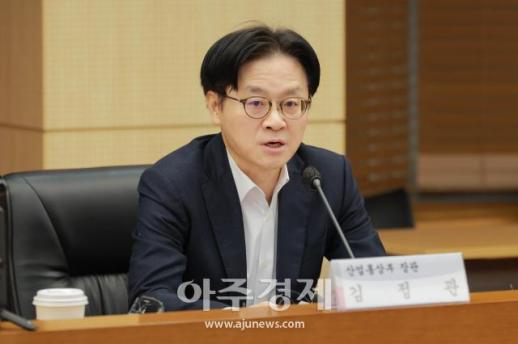 South Korea Industry Ministry Says Culture Improved After 5 Months Cutting 'Fake Work' The Ministry of Trade, Industry and Energy said more than half of its employees believe the agency’s workplace culture has improved since it launched a drive to cut what it calls “fake work.” The ministry said it held its second town hall meeting on Thursday at the Government Complex Sejong, with about 500 employees from headquarters and affiliated agencies attending. The meeting, chaired by Minister Kim Jeong-gwan, reviewed progress and next steps for the “fake work reduction” project launched after the first town hall meeting in November, and recognized employees for what the ministry described as “real results.” In an all-staff survey, 53% said workplace culture and work practices improved after the project was introduced, compared with 18% who responded negatively, the ministry said. Employees cited gains including more efficient public relations work such as providing summarized press clippings and distributing a checklist for drafting news releases (65%); fewer late-night hours spent waiting at the office (61%); fewer unnecessary business trips due to expanded use of video reporting (58%); and greater acceptance of simplifying events and reporting requirements led by bureau and division chiefs (58%). The ministry also shared results of an organizational diagnosis conducted in February with the Korea Productivity Center. The review found that, due to structural factors typical of an economy-focused ministry — including urgency, uncertainty and coordination with other agencies — working-level staff spend 41.6% of total working hours on “issue response and external cooperation.” The ministry said it will identify additional follow-up tasks tailored to these findings and work to improve them. During a question-and-answer session with the minister, employees raised broader concerns about working conditions, including personnel policies, attendance rules and welfare. Suggestions included establishing a promotion culture based on performance rather than seniority, expanding support for skills development, and eliminating tangible and intangible disadvantages for employees who take parental leave. A first special performance bonus ceremony was held alongside the meeting. The ministry said it awarded 68 million won in bonuses to 46 employees across eight selections. In the group category, a U.S.-focused team working on tariff negotiations and MASGA received 40 million won. In the individual category, four people were selected, including an assistant director who received 5 million won for leading work to build the policy foundation and implementation for the M.AX project, aimed at shifting manufacturing to artificial intelligence. “Seeing the changes achieved in half a year confirmed in numbers is meaningful,” Kim said. He said the ministry would return time lost to “formalities and old practices” to employees and connect that energy to results the public can feel. He added that employees’ feedback would be actively reflected in institutional improvements, calling it the starting point for the next round of innovation.* This article has been translated by AI. 2026-04-24 14:54:52
 -
 LH Signs Pact to Advance Vietnam’s Bac Ninh New Town Project Korea Land and Housing Corp. (LH) said Thursday it signed a basic agreement to launch a public-private consultative body to move forward with the Vietnam Bac Ninh Southeast New Town development project. The signing ceremony was held Monday in Hanoi as part of the “Korea-Vietnam Mutual Growth and Development Cooperation Forum” hosted by South Korea’s Ministry of Land, Infrastructure and Transport. Attendees included Land Minister Kim Yun-deok and Le Anh Tuan, vice minister of Vietnam’s Ministry of Construction, LH said. LH said the agreement follows a preliminary pact signed in 2024 and is intended to strengthen project momentum among 14 public and private companies involved. The Bac Ninh Southeast New Town project is described as the first export of a “K-New Town” model. It is based on a June 2023 memorandum of understanding under the Urban Growth Partnership Program (UGPP) signed by LH and Vietnam’s Bac Ninh province. The plan calls for building a new town on about 8 million square meters of land in Bac Ninh province, about 18 kilometers from the boundary of Hanoi. Phase 1 covers 2.3 million square meters. LH said it is proceeding with local approvals, including the Investment Policy Approval (IPA) process, and plans to step up formation of an investment consortium ahead of an investor tender expected in the second half of this year. Cho Kyung-sook, LH’s acting president, said, “With this agreement as a driving force, LH will serve as a strong bridge so that our companies can enter the Vietnamese market in a stable way and achieve contract wins through the successful 추진 of the Southeast New Town.”* This article has been translated by AI. 2026-04-24 14:54:16