
Journalist

Elizabeth Englezos
-
 AI Layoffs Hit the Workers Who Built the Systems, Raising Fears for Entry-Level Jobs 미국 실리콘밸리발 감원은 단순한 경기 대응형 구조조정이 아니라, 노동의 정의가 바뀌는 구조적 전환의 신호로 읽힌다. 특히 AI를 구축하고 학습시키던 인력이 자신들이 만든 기술에 의해 밀려나는 역설이 현실화하고 있다. 메타(Meta)는 인력의 10%를 감축하면서도 AI 인프라에 연간 1,350억 달러를 투입하고 있다. 마이크로소프트도 대규모 조기퇴직을 단행했다. 겉으로는 비용 절감이지만, 핵심은 인건비를 줄여 AI라는 자본재에 재투자하는 ‘노동의 자본 대체’가 고착화되는 흐름이라는 지적이 나온다. 감원의 중심은 단순 노무직이 아니라 ‘중간층 지식노동’이다. 마크 저커버그 메타 CEO는 “과거 대규모 팀이 필요했던 프로젝트를 이제는 뛰어난 소수가 해낼 수 있다”고 말했다. AI가 팀 규모와 인력 구조를 바꾸고 있다는 취지다. 문제는 전통적인 ‘신입-중급-시니어’로 이어지던 숙련의 사다리가 흔들린다는 점이다. 신입은 기초 코딩, 데이터 정리, 문서 초안 작성 같은 기본 업무를 통해 조직을 배우고 중급으로 성장해 왔다. 그러나 생성형 AI가 이 ‘기초 업무’ 영역을 빠르게 대체하면서, 사다리의 첫 칸이 사라지고 있다. AI를 학습시키고 데이터를 정제하며 모델을 개선하던 주니어 인력이 오히려 가장 먼저 대체 가능한 존재가 되는 역설도 제기된다. 기술이 인간의 기초 노동을 바탕으로 발전했지만, 그 과정에서 인재가 성장할 기회가 줄어든다는 것이다. 이런 ‘진입의 부재’는 청년 실업 문제를 넘어 조직 내부의 중간층 약화와 인적 병목을 낳을 수 있다는 우려로 이어진다. 기업들이 주니어 역할을 줄이고 시니어 중심의 고효율 구조를 지향하면, 시간이 갈수록 조직은 유입이 끊겨 노쇠화될 수 있다는 분석이다. 새로운 감각과 혁신을 가져올 젊은 인력이 줄어들면 조직의 역동성과 시장 대응력도 떨어질 수 있다. 경험의 단절도 문제로 꼽힌다. 숙련된 전문가는 반복적인 실무 축적을 통해 성장하지만, 주니어 직무가 AI로 대체되면 미래의 시니어가 될 인력이 역량을 쌓을 ‘훈련의 장’이 줄어든다. 그 결과 5년 뒤의 중간급 인력, 10년 뒤의 리더가 부족해지는 ‘인재 공급망 단절’이 예고된다는 지적이다. 이 변화는 한국에서도 통계로 나타나고 있다. 2026년 3월 기준 청년 취업자는 41개월 연속 감소했다. 전문·과학기술 서비스업과 정보통신업의 일자리 감소분 중 약 89%가 2030 세대에 집중됐다. AI가 전체 일자리를 줄이기 전에 “신입이 진입할 통로”부터 막히고 있다는 주장도 나온다. 변호사, 회계사, 개발자 등 자동화의 안전지대로 여겨졌던 전문직도 예외가 아니라는 것이다. 계약서 검토나 리서치 등 주니어 단계 업무가 AI로 대체되면서, 신입이 실무를 배우며 전문가로 성장할 기회가 줄어들고 있다는 문제 제기가 이어진다. 대응 역시 재점검이 필요하다는 목소리가 있다. 지금까지는 ‘AI 교육 확대’에 초점이 맞춰졌지만, 현장의 문제는 청년들이 AI를 몰라서가 아니라 AI 시대에 발을 붙일 첫 일자리가 부족하다는 데 있다는 것이다. 정책은 교육 확대를 넘어 ‘기회 구조의 재설계’로 옮겨가야 한다는 제안이 나온다. AI 도입으로 생산성이 높아진 기업들이 이익의 일부를 신입 채용과 실무 인턴십 유지에 재투자하도록, 세제 혜택을 포함한 ‘청년 첫 직무 보장제’를 사회적 논의에 올려야 한다는 주장이다. 기업과 정부가 단순 실행 위주의 직무에서 벗어나, AI 결과물을 검증하고 문제를 정의하는 ‘AI-보완형 주니어 직무’를 새로 설계해야 한다는 제안도 있다. 신입이 기술에 종속되지 않고 기술을 활용하는 역량을 키울 수 있도록 하자는 취지다. 또 실무 경험이 중요한 전문직을 중심으로 AI와 인간이 협업하며 전문성을 승계하는 ‘디지털 도제제도’ 도입 필요성도 제기된다. 시니어가 주니어를 멘토링하는 과정에서 발생하는 비용을 국가가 보전할 때, 끊어진 숙련의 사다리를 다시 잇는 데 도움이 될 수 있다는 주장이다. AI 시대의 위험은 기술이 인간을 앞서는 데만 있지 않다는 지적이 나온다. 미래 세대가 노동시장에 진입할 길을 잃으면, AI는 생산성을 높이는 동시에 청년의 기회를 줄이는 ‘세대 간 불평등’의 요인이 될 수 있다는 우려다. 청년에게 위로를 건네기보다, 새로운 형태의 진입 경로를 만드는 데 역량을 집중해야 한다는 주장으로 글은 마무리된다. * This article has been translated by AI. 2026-04-24 11:06:27
 -
 South Korea’s Lee Jae-myung and first lady take surprise walk in Hanoi, greet locals President Lee Jae-myung took a walk through central Hanoi and met Vietnamese residents, later stopping at a local restaurant with first lady Kim Hye-kyung for dinner of pho and fried rice. Lee, who is on a state visit to Vietnam, posted photos on Instagram from April 23 (local time) showing the couple walking the streets of Hanoi and greeting people. “Hanoi’s evening was truly beautiful, and as we walked around Hoan Kiem Lake and the alleys of the Old Quarter, we exchanged warm greetings with Vietnamese people,” Lee wrote. “It was even more meaningful because we could meet in everyday spaces, not in a formal schedule.” Hoan Kiem Lake is a major landmark in central Hanoi where residents relax and spend leisure time. Vietnamese residents welcomed the couple by calling out “Hello” and “Nice to meet you,” presidential office deputy spokesperson Ahn Gwi-ryeong said in a written briefing. Lee and Kim responded in Vietnamese, saying “Xin chao.” Lee patted the head of a Korean student attending elementary school in Vietnam and offered encouragement, while Kim said she was pleased to see a Korean-language sign posted on a shop wall. Lee sampled pork skewers and a sugarcane drink sold on the street and said they were “very delicious.” Kim described the sugarcane drink as “refreshing and impressive,” Ahn said. The couple also bought durian and shared it with aides. They then moved to a nearby restaurant for dinner. Ahn said Kim showed strong interest in local food culture, asking about ingredients after a vegetable similar to Korea’s dried radish greens was served with the fried rice. Posting a photo of the couple dining, Lee wrote, “They say you can’t go wrong at any restaurant in Vietnam, and that turned out to be true. Thanks to that, we’re enjoying a delicious dinner.” Lee added that the visit reminded him “hearts can connect even across different languages and cultures,” and said he would long remember the smiles and greetings they received. He said he hoped the two countries would continue building friendship and trust and expand exchanges. * This article has been translated by AI. 2026-04-24 11:04:07
 -
 South Korea Industry Ministry Hosts Lecture on Industrial Park AI Shift, Calls for Proof to Cut Costs The Ministry of Trade, Industry and Energy on the 24th held a special lecture for ministry staff, inviting Park Min-won, president of Changwon National University and head of the industrial complex AX subcommittee under the Manufacturing AI Transformation (M.AX) Alliance. The industrial complex AX subcommittee was launched on the 26th as the 11th subcommittee of the M.AX Alliance. On the 17th of this month, it held its first meeting after the chairs of 10 mini-alliances — the subcommittee’s implementation bodies — joined as members. The ministry said it planned the lecture after concluding that the industrial complex AX effort needs to move into full operation. The session, aimed at strengthening field-oriented policy capacity, was held under the theme, “Manufacturing, the heart of South Korea, opening the future with M.AX.” Park briefed staff on the historical context of M.AX, the urgency of the initiative and specific implementation plans. “As the global industrial order shifts, technology competition has intensified, and proof-of-concept demonstrations are needed so companies can reduce the investment burden when applying AI technologies,” Park said. He also called for sharing company interviews on demand for AX. Industry Minister Kim Jung-kwan said the lecture would help narrow the gap between policy and the field and renew a sense of urgency in pushing M.AX policy, strengthening internal capabilities. He said the ministry would expand opportunities for policy officials to directly grasp the pace and needs on the ground through continued communication with field experts.* This article has been translated by AI. 2026-04-24 11:03:17
 -
 Choo Mi-ae Pledges ‘One-Team’ Support to Boost Gyeonggi Semiconductor Cluster Choo Mi-ae, the Democratic Party candidate for governor of Gyeonggi Province, said April 24 she would work as a “one team” with the government and the ruling party to strengthen the global competitiveness of the region’s semiconductor cluster. Choo visited Samsung Electronics’ Pyeongtaek campus, a Korea Land & Housing Corp. (LH) site for a national industrial complex in Yongin, and SK hynix’s Yongin industrial complex. Calling the Gyeonggi semiconductor cluster “a core task that will determine the future of the South Korean economy,” she said she would “complete the world’s best semiconductor cluster” with speed and drive. She added that if she wins the June local elections, “the president, governor, mayors and lawmakers will be a solid one team,” and said she would “take responsibility to the end and prove it with results.” Accompanying her were Democratic Party lawmakers Hong Ki-won and Kim Hyun-jung from Pyeongtaek, and Lee Sang-sik, Son Myung-soo, Boo Seung-chan and Lee Eon-ju from Yongin, along with Pyeongtaek mayoral candidate Choi Won-yong and Yongin mayoral candidate Hyun Geun-taek, among other party candidates. At Samsung’s Pyeongtaek campus, Choo described the so-called “Su-Yong-Seong-Pyeong-O-I” semiconductor belt — linking Suwon, Yongin, Hwaseong, Seongnam, Anseong, Pyeongtaek, Osan and Icheon — as a key pillar of the nation’s industry, and said she would further strengthen it into a world-leading semiconductor cluster. She cited the Dutch chip-equipment maker ASML, which has manufacturing facilities in Dongtan, Hwaseong, and U.S. chip company Applied Materials, which plans to build a research and development center in Osan, underscoring her push to advance semiconductor technology centered on Pyeongtaek. At the SK hynix site in Yongin, Choo said South Korea needs a “mega-scale semiconductor ecosystem” combining private investment and public infrastructure, and said the Gyeonggi semiconductor cluster should be completed as a single, ultra-wide industrial belt. 2026-04-24 10:57:09
 -
 South Korea, Vietnam Expand Cooperation on Urban and Transport Infrastructure The South Korean government said it will step up cooperation with Vietnam on urban and transport infrastructure, including a contract to supply metro rail cars and efforts to identify local infrastructure development projects, following President Lee Jae-myung’s state visit to Vietnam. The Ministry of Land, Infrastructure and Transport said Kim Yun-deok, the land minister, met on April 21 with Vietnam’s construction minister, Tran Hong Minh, and asked for strong interest and support from the Vietnamese government for South Korea’s participation in the development of a new town in southeastern Bac Ninh province. Kim said he “deeply sympathizes” with Vietnam’s push to devolve central authority to local governments, adding that he hopes the Korea Land and Housing Corp. and Vietnamese local governments can work together and “grow together” in areas such as new-town development. He also introduced South Korea’s high-speed rail technology and discussed ways to support participation by South Korean companies in Vietnam’s North-South high-speed rail project. The ministry said the two sides also discussed strategic cooperation on infrastructure modernization, transportation and urban development projects at a “Korea-Vietnam Co-Prosperity Development Cooperation Forum” held the same day. On April 22, Kim attended a completion ceremony for a mixed-use complex in Starlake City in Hanoi and encouraged construction officials. The Starlake City project is an urban development venture that South Korea and Vietnam have worked on since 2006. The newly completed complex is a large-scale facility combining offices, a hotel and commercial space, and was developed by South Korean firms including Daewoo Engineering & Construction from planning through operations. On April 23, during a Korea-Vietnam business forum, major government bodies and companies from both countries signed a contract to supply metro rail cars for Ho Chi Minh City’s Line 2, and KIND signed an MOU with the Bank for Investment and Development of Vietnam and Hana Bank. The ministry said the Ho Chi Minh City Line 2 contract marks the first entry into Vietnam’s rail-car sector. It added that KIND plans to work with BIDV, a key state-owned bank, to identify promising projects in Vietnam and link them to financial support to strengthen the foundation for South Korean companies’ expansion there.* This article has been translated by AI. 2026-04-24 10:53:40
 -
 KB Kookmin Bank Revamps Mobile Retirement Pension Trading Service KB Kookmin Bank said on the 24th it has revamped its non-face-to-face retirement pension product trading service within KB Star Banking. The update focuses on a customer-centered design, allowing users to view their holdings at a glance from the retirement pension home screen in the app. Through a link with KG Zeroin, a fund evaluation and consulting firm, the bank also added real-time ETF quote lookups to support investment decisions based on market information. The step-by-step transaction guide was improved as well, showing each stage of the buy-and-sell process so customers can track progress. The bank said it plans a second update in the first half of the year to strengthen personalized asset management features. A bank official said the overhaul will make it easier and more intuitive for customers to manage pension assets, adding that the bank will continue expanding convenient and reliable services as a trusted partner in asset management.* This article has been translated by AI. 2026-04-24 10:52:51
 -
 IBK Industrial Bank, Korea Credit Guarantee Fund to Provide 500 Billion Won for Startup Financing IBK Industrial Bank of Korea said Thursday it signed a business agreement with the Korea Credit Guarantee Fund to provide 500 billion won in financial support aimed at helping innovative startups grow and expanding productive finance. The program targets early-stage startups that have strong technology but struggle to raise funds. Under the agreement, IBK said companies that receive KODIT guarantee certificates will be eligible for benefits including interest-rate cuts of up to 1.5 percentage points and a 0.5-point discount on guarantee fees. An IBK official said the support was designed for innovative companies facing financing difficulties despite solid technology, adding the bank will continue to back small and midsize companies through each stage of growth and work to invigorate the startup ecosystem.* This article has been translated by AI. 2026-04-24 10:52:08
 -
 NH NongHyup Bank, Vietnam’s Agribank sign MOU on digital agricultural finance NH NongHyup Bank said Thursday it signed a memorandum of understanding with Vietnam’s Agribank in Hanoi on a “strategic partnership for digital agricultural finance.” Agribank is Vietnam’s top agricultural commercial bank. NH NongHyup Bank said the agreement deepens existing cooperation in areas including digital finance and investment. The MOU calls for cooperation on building an integrated farming and finance platform, launching a card-based overseas remittance service, developing card products tied to K-content, and working together on Agribank’s privatization. NH NongHyup Bank said it will support Agribank’s agricultural finance platform using its experience with the NH All One Bank platform. It also cited NH Oneul Nongsa, an agriculture-focused platform launched by the National Agricultural Cooperative Federation in 2021, which offers rural labor matching, real-time local food sales and settlement inquiries, and real-time wholesale crop price checks. The two banks, which the lender described as leading agricultural finance institutions in South Korea and Vietnam, have expanded cooperation in areas such as staff exchanges since signing their first MOU in 2013. “This has strong symbolic meaning as cooperation between the leading agricultural finance institutions representing our two countries,” Kang said. “We will expand overseas the agricultural and digital finance achievements built in Korea and, through cooperation with Agribank, strengthen our global competitiveness by contributing to the development of agriculture and rural communities.”* This article has been translated by AI. 2026-04-24 10:51:19
 -
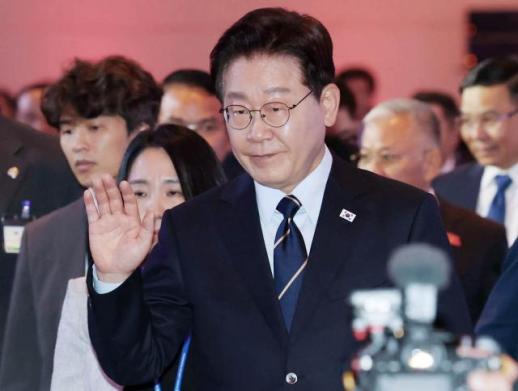 Lee Jae-myung says capital gains tax cuts for nonresidents encourage housing speculation President Lee Jae-myung said April 24 that cutting capital gains taxes simply because someone bought a home for investment and held it for a long time, without living in it, is not a housing protection policy but “a policy that encourages housing speculation.” He also criticized attacks over a bill introduced in the National Assembly to limit the special deduction for long-term holding, saying it is unrelated to the government but is being “manipulated” to look like a presidential proposal. Lee, on a state visit to Vietnam, posted on X, formerly Twitter, alongside an article saying markets were confused by controversy over “abolishing” the long-term holding deduction. His post was titled, “Where there is income, there are taxes. People pay earned income tax on wages, so it is natural to pay capital gains tax on housing sales income.” Lee said he agrees there is a need for capital gains tax relief tied to how long a person actually lives in a home. But he said it is wrong to cut taxes for those who do not live there and bought it as an investment simply because they held it for a long time. “Who are the people who spread ‘buy one prime home’ speculation centered on Seoul’s Gangnam, driving a chain reaction of surging home prices — and who are the people shielding them?” Lee wrote. “Is it a ‘tax bomb’ to normalize the abnormal practice of cutting taxes because someone speculated for a long time on a home they don’t live in?” He also criticized opposition to scaling back long-term capital gains tax benefits, saying, “It seemed quiet for a while, but it looks like forces that encourage real estate speculation are starting to move again.” Lee said a bill proposed by some opposition lawmakers to limit the long-term holding deduction is being portrayed as his initiative. “To properly protect housing for single-home owners, it would be right to reduce tax relief for nonresidency holding periods and increase relief for residency holding periods by that amount,” he wrote. Calling “normalizing the abnormal” and escaping real estate speculation “this country’s final survival strategy,” Lee added, “Home prices must stabilize so people can build a home, get married, and have and raise children.” He asked readers to share their views in comments. Separately, Lee’s approval rating, which had dipped slightly, rebounded in a week to a new high, the report said, citing the KOSPI index hovering around 6,500 and first-quarter economic growth of 1.7%. Gallup Korea said April 24 that in a survey of 1,001 voters nationwide aged 18 and older conducted April 21-23, Lee’s approval rating rose 1 percentage point from the previous week to 67%. The poll was conducted through computer-assisted telephone interviews. At a 95% confidence level, the margin of error was plus or minus 3.1 percentage points. More details are available on the website of the National Election Survey Deliberation Commission.* This article has been translated by AI. 2026-04-24 10:48:57
 -
 White House Accuses China-Based Groups of Trying to Steal U.S. AI Technology The White House publicly accused China of attempting to steal U.S. artificial intelligence technology, saying China-based entities tried to extract the performance of American AI models on an industrial scale. The dispute has again highlighted U.S.-China tensions over AI and semiconductors ahead of President Donald Trump’s planned visit to China. Michael Kratsios, director of the White House Office of Science and Technology Policy, wrote on X on April 23 that the United States has evidence that foreign entities, mainly based in China, are running “industrial-scale distillation campaigns” to steal U.S. AI and that Washington will take steps to protect American innovation. Distillation refers to training on large volumes of outputs from a high-performing AI model to boost another model’s performance. A memo released the same day by the Office of Science and Technology Policy echoed that assessment, saying there is information that foreign entities primarily based in China are involved in deliberate, industrial-scale campaigns to distill America’s most advanced AI systems. The White House said the entities used tens of thousands of fake or routed accounts to evade detection and used “jailbreaking” techniques to expose proprietary information, aiming to mimic core capabilities of U.S. AI models at low cost. The administration signaled follow-up steps, saying it will share relevant information with U.S. AI companies and support coordinated private-sector responses. It also said it plans to develop best practices to identify, mitigate and recover from industrial-scale AI distillation activity and will consider ways to hold foreign actors accountable. China pushed back. The Chinese Embassy in Washington told Reuters it opposes “groundless accusations” and said China values intellectual property protection. The announcement came ahead of a planned summit between Trump and Chinese President Xi Jinping. Reuters reported the issue could also affect whether Nvidia will be allowed to export AI semiconductors to China.* This article has been translated by AI. 2026-04-24 10:46:18