
Journalist

Elizabeth Englezos
-
 Democratic Party’s Jung Won-oh vows Seoul will match Tokyo within five years, criticizes Oh Se-hoon Democratic Party Seoul mayoral candidate Jung Won-oh said Wednesday he aims to put Seoul “shoulder to shoulder” with Tokyo within five years, while accusing Seoul Mayor Oh Se-hoon of failing on “space, the industrial ecosystem and management philosophy.” Jung made the remarks at a policy event at the National Assembly Members’ Office Building in Seoul’s Yeouido district, titled “Jung Won-oh’s G2 Seoul vision declaration, a major transformation for global city Seoul.” He said he would make Seoul “Asia’s No. 1 economic and cultural city” that “outpaces Tokyo,” adding, “Seoul’s counterpart is New York.” He said Seoul has been stagnant, claiming it has “stagnated for 14 years” and that since the COVID-19 pandemic, the city’s growth rate under Oh has “dragged down the overall average.” Jung attributed the slowdown to what he called structural failures in Oh’s administration, saying Oh has tried to solve city issues only within Seoul’s boundaries rather than the broader capital region, failed to foster new industries such as artificial intelligence and finance, and lacked a management philosophy, allowing stagnation to persist. As an alternative, Jung proposed a “1-2-3-4 strategy”: developing Seoul into Asia’s top economic and cultural capital by 2030; creating two additional urban centers; building three youth startup clusters; and establishing a pipeline for four special zones. He said the city would add Sinchon-Hongdae and Cheongnyangni-Wangsimni as new centers beyond the existing three — central Seoul, Yeouido-Yeongdeungpo and Gangnam. He also proposed youth startup innovation clusters in Sinchon (content), Cheongnyangni (bio and innovation) and Gwanak (deep-tech startups). On the four-zone pipeline, he said Hongneung, Yangjae and Yongsan would be designated as special zones, while Guro would be pursued through a Seoul city ordinance.* This article has been translated by AI. 2026-04-23 16:52:02
 -
 Xi Calls Yiwu Growth Model a Benchmark for ‘Correct View of Political Achievements’ Chinese President Xi Jinping has urged officials to treat the development model of Yiwu in Zhejiang province — home to what China calls the world’s largest small-commodities wholesale market — as a benchmark for a “correct view of political achievements.” The concept, which Xi has repeatedly stressed in public, calls for evaluating officials by sustainable, practical results rather than short-term gains or showpiece projects. According to China’s state-run Xinhua News Agency on Wednesday, Xi said in recent instructions that Yiwu’s small-commodities sector “opened up a huge market” and grew into a major industry, forming what he called the “Yiwu development experience.” He praised it as a successful example of developing a county-level economy in line with local conditions. Xi said the “Yiwu development experience” should be summarized more systematically and used effectively in connection with study and education programs aimed at establishing and practicing the “correct view of political achievements.” He said regions should build on their own resource advantages, respect grassroots and public creativity, and pursue reform, innovation and concrete implementation. He also called for sustained effort to find high-quality development paths suited to local conditions, and for better alignment with national development strategies. Xi has shown long-standing interest in Yiwu’s economy, visiting the city 12 times while serving as a party chief in Zhejiang and Shanghai. Xinhua said he personally compiled Yiwu’s development experience at the time and directed that it be studied and promoted among officials, and he has repeatedly cited Yiwu in public remarks. Yiwu, described as the world’s largest export base for small commodities, is often called a barometer of China’s foreign trade and the global economy because orders and production there are seen as reflecting broader trends. The Yiwu market covers 6.4 million square meters — about the size of 900 soccer fields — and contains about 1.26 million shops, with trade involving more than 230 countries and regions. The report said many goods tied to the World Cup, U.S. elections and Christmas are produced and exported from Yiwu. It added that the term “Yiwu index” is used because export orders there are sometimes cited to predict outcomes of major international events, such as U.S. election dynamics and World Cup winners. While Yiwu was held up as a model, the cities of Yichun in Jiangxi province and Nanning in the Guangxi Zhuang autonomous region were cited as examples of a “wrong view of political achievements” for wasteful investment, the report said. China Central Television said Tuesday that Hozon New Energy Automobile, the parent company of Chinese electric vehicle maker Neta, posted losses of 18.3 billion yuan over three years and went bankrupt last year. CCTV said Yichun and Nanning poured tens of billions of yuan into attracting a Neta auto plant, including special policies offering subsidies, but the effort ultimately worsened local finances and led to industrial homogenization. CCTV criticized some local governments for fixating on political achievements, ignoring fiscal realities and relying on borrowing and subsidy competition, while focusing on large short-term projects aimed at visible results.* This article has been translated by AI. 2026-04-23 16:51:17
 -
 Taiwan’s UMC Weighs Producing 2D NAND Flash Memory at Japan Plant Taiwan foundry United Microelectronics Corp. is believed to be considering producing NAND flash memory at its plant in Mie, Japan, the Economic Daily reported. The company is said to be looking at so-called mature products that memory makers in South Korea and Japan, including Samsung Electronics and Kioxia, have scaled back or exited. The product under review is a flash memory known as “2D NAND.” While competitors such as Samsung and Kioxia have shifted production toward higher-margin “3D NAND,” 2D NAND still has demand in long-life electronics such as automotive, home appliances and industrial control equipment. With supply tight, prices have been surging. The report said UMC plans trial production in the second half of this year (July-December) and aims to start mass production from 2027. UMC is expected to make the 2D memory based on circuits designed by its partner, Taiwan-based fabless chip designer eMemory. The report said UMC has been studying the plan after receiving a request from a major Japanese memory maker to help maintain domestic 2D NAND production capacity. UMC’s Mie plant was originally a Fujitsu facility that produced 12-inch wafers. UMC acquired it in 2019 and made it a subsidiary, United Semiconductor Japan Corp., or USJC. The plant currently focuses on logic chips for smartphones and vehicles, with capacity of 39,800 12-inch wafers a month. A USJC spokesperson told NNA that the report “was not announced by UMC or our company,” adding, “We cannot respond to market speculation.”* This article has been translated by AI. 2026-04-23 16:48:14
 -
 Honda Korea to Exit Auto Sales in South Korea by Year-End, Focus on Motorcycles Honda Korea will end its automobile business in South Korea about 23 years after entering the market, shifting its focus to motorcycles. The company plans to stop car sales by the end of 2026. CEO Lee Ji-hong announced the plan at a news conference on the 23rd at COEX in Seoul’s Gangnam district. “It was decided yesterday,” Lee said, adding that the company “will end its automobile sales business in Korea as of the end of 2026.” Honda Korea entered South Korea with its motorcycle business in 2001 and began selling cars in 2004. It later became the first brand in the imported-car market to join the “10,000-unit club,” but has struggled in recent years. The company said it made the decision to reflect changes in the local market and to maintain mid- to long-term competitiveness by concentrating management support on more core areas. Honda Korea said it will continue to strengthen motorcycles as its key business. From April last year through March this year, it sold about 43,000 motorcycles, accounting for about 40% of the market. The company also said it will continue after-sales operations, including maintenance service, parts supply and warranty support. Unwinding ties with local dealers remains a key task. Lee said he had just held a briefing that included discussions with dealers for an hour before the news conference. “With trust, we want to work to part on good terms,” he said, adding that the company will begin addressing issues that need to be resolved starting next week. * This article has been translated by AI. 2026-04-23 16:46:07
 -
 Samsung Electronics Majority Union Rally Draws 40,000 at Pyeongtaek Plant Over Bonus Cap Samsung Electronics' cross-company union, which has secured majority-union status for the first time at the company, held a rally Thursday afternoon outside the firm's Pyeongtaek site, demanding the abolition of a cap on performance bonuses and other changes. Police and the union estimated attendance at about 40,000. The union held a preliminary gathering until 2 p.m., followed by the main rally from 2 p.m. to 3 p.m. The union is calling for performance bonuses equal to 15% of the company's operating profit and for the bonus cap to be scrapped. If it fails to reach an agreement with management, the union plans a general strike from May 21 to June 7. The union said a strike could halt semiconductor production lines and cause losses of 20 trillion won to 30 trillion won. The cross-company union has become Samsung Electronics' first majority union. As of the end of last year, Samsung Electronics had about 128,800 employees in South Korea, including about 78,000 in its DS (Device Solutions) semiconductor division. The union said it has secured about 74,000 members, mainly in the DS division. Police blocked both directions of roads near the rally and deployed about 300 officers for traffic control and to prepare for unexpected incidents. Pyeongtaek city also sent a safety alert message Thursday afternoon, notifying residents of traffic controls near the Samsung Electronics site and urging drivers to use detours. Union Chairman Choi Seung-ho said in a speech that the union had negotiated in good faith for four months since last December to build a better Samsung Electronics, but "nothing" came back. He argued the bonus system remains opaque and that management tried to wrap up talks under the banner of one-time compensation. He said the union would keep fighting until its demands are met, calling for fair compensation based on performance to revive the company's "talent first" principle. Separately, Samsung Electronics shareholders held a counter-rally near the union gathering. Around 10 a.m., some members of the Korea Shareholder Activism Headquarters voiced opposition to the union's strike move and called for protecting shareholder rights. Minority shareholders held a banner reading, "Samsung stands with 5 million shareholders in Korea," and placards that read, "Samsung shareholder dividends 11 trillion won! Samsung employee dividends 40 trillion won?" They said shareholder rights and interests should be protected within a reasonable range, and argued the union seeks excessive bonuses when results are strong but does not share responsibility when results are weak. * This article has been translated by AI. 2026-04-23 16:45:15
 -
 DL E&C Offers Fixed Construction Cost, 150% LTV for Seoul’s Apgujeong 5 Redevelopment Bid DL E&C has unveiled its proposal for the Apgujeong District 5 redevelopment project in Seoul, pitching a fixed construction price and aggressive financing terms under its high-end ACRO brand as it steps up its bid to win the contract. The company said April 23 it is offering the “ACRO Apgujeong” plan for the project in Gangnam-gu. The complex would span six basement levels to 68 stories above ground across eight buildings, with 1,397 households. The site is considered the largest redevelopment project in the broader Apgujeong area. DL E&C proposed a fixed construction cost of 11.39 million won per 3.3 square meters. The company said that is more than 1 million won lower than the association’s planned cost, and that the builder would absorb additional expenses tied to inflation. The move is aimed at reducing uncertainty as disputes over construction costs have spread across the redevelopment market. The financing package includes a loan-to-value ratio of 150% for relocation loans, and a deferral of members’ payments for up to seven years after move-in. DL E&C also proposed a 57-month construction period, four months shorter than Apgujeong District 2, in a bid to reduce financing costs. To strengthen profitability in a district with limited general-sale units, DL E&C emphasized maximizing retail revenue. It said it would expand retail space by 1,696 pyeong to a total of 5,069 pyeong and cover the full construction cost for the retail portion. The company projected that retail sales profit per association member would rise by about 660 million won. DL E&C also said it would increase total usable residential area by 1,535 pyeong to enhance asset value. A DL E&C official said, “Apgujeong is a symbolic area at the pinnacle of high-end housing in Korea,” adding, “We have concentrated all of the company’s capabilities to deliver a top-level complex.” The official said the company presented “terms rarely seen” centered on fixed conditions that minimize members’ burdens and project risk, and pledged to complete Apgujeong District 5 as “Korea’s best high-end residential complex.” Apgujeong District 5 is currently in the process of selecting a builder. DL E&C said it plans to present additional product design proposals following the release of its business terms.* This article has been translated by AI. 2026-04-23 16:44:28
 -
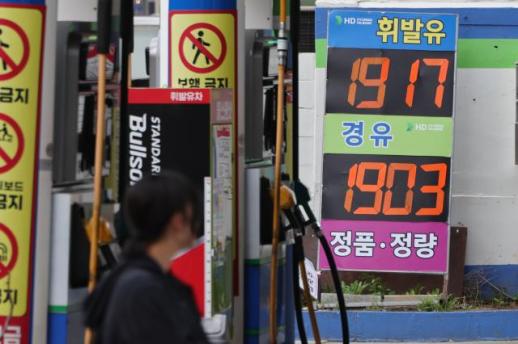 Chips carry Korea's Q1, but Gulf fallout looms large SEOUL, April 23 (AJP) — From the headline, South Korea’s economy looks robust — gross domestic product posting its strongest growth in more than five years while chipmakers log staggering margins nearing 70 percent. But beneath the surface, the expansion is widely seen peaking, exposing structural fault lines from overreliance on a single sector and mounting inflationary pressure. According to the Bank of Korea on Thursday, the nation’s GDP grew 1.7 percent from the previous quarter, the fastest pace since the third quarter of 2020. Yet the strength fades on closer inspection. The recovery remains heavily skewed toward semiconductors, underscoring a deepening K-shaped divergence within the economy. Exports contributed 1.1 percentage points — more than 60 percent of total growth — with chips alone accounting for roughly 55 percent of that figure. Without the semiconductor boom, growth would likely have stayed below 1 percent, the central bank acknowledged. Corporate earnings tell a similar story of concentration. Samsung Electronics posted 57.2 trillion won ($38.65 billion) in operating profit, while SK hynix logged 37.6 trillion won. Together, the two accounted for 66.5 percent of the 142 trillion won total operating profit expected from KOSPI-listed firms — more than doubling their share from about 26.7 percent a year earlier. The dominance is increasingly reflected in financial markets. The combined market capitalization of the two firms has surged from around 30 percent of the KOSPI early last year to 41.1 percent as of Thursday. As market movements hinge more heavily on these stocks, volatility has intensified, with the KOSPI Volatility Index more than doubling from 22 a year ago to 53. Few are willing to contemplate the downside should the chip cycle turn. Behind the headline strength, policymakers are bracing for a second-quarter inflection as the delayed impact of the Strait of Hormuz disruption begins to feed through the economy. “The impact remained minimal through the first quarter as vessels that passed through the strait before the closure arrived in Korea by late March,” said Lee Dong-won, director general of economic statistics at the Bank of Korea. “The squeeze from the blockade will be reflected in second-quarter data,” he said. “It is clear that the conflict in the Middle East has placed upward pressure on inflation and downward pressure on economic growth.” This adverse mix — rising inflation alongside slowing growth — dominated discussions at the first policy meeting between Finance Minister Koo Yun-cheol and new Bank of Korea Governor Shin Hyun-song on Thursday. The central bank has already signaled it will revise its inflation outlook closer to 3 percent this year while lowering its growth forecast from around 2 percent. Energy prices are already feeding through to the real economy. As of April 22, gasoline prices in Seoul averaged 2,041 won per liter, up 16.7 percent from 1,749.6 won at the onset of the conflict. Diesel prices, critical for logistics, climbed 21.9 percent to 2,028 won. The ripple effects are spreading across transport and trade. Korean Air’s fuel surcharge on the Incheon–Los Angeles route will jump 80.1 percent to 501,000 won starting May 1, reflecting disruptions in jet fuel supply — a key export for Korean refiners. Shipping costs are also surging. The Shanghai Containerized Freight Index (SCFI) has risen 41.5 percent from 1,333 in late February to 1,886 as of April 17, with some routes seeing freight rates increase severalfold depending on cargo and destination. Consumer sentiment is already deteriorating. The Bank of Korea said the Composite Consumer Sentiment Index fell 7.8 points in April to 99.2, slipping below its long-term average for the first time in a year — the sharpest drop since December 2024. Nearly 90 percent of households cited rising petroleum prices as their primary concern, more than 2.5 times the share worried about industrial goods. Bond yields moved in the opposite direction of the chip-blinded stock market. Both the three-year and 10-year government bond yields added around 9 basis points respectively to 3.453 percent and 3.787 percent by midday Thursday, whereas the Kospi finished a new historic high. The Korean won remains under sustained pressure. The currency has weakened about 9 percent from 1,367 per dollar in June 2025 to around 1,480 this month — a far steeper decline than the 1–2 percent depreciation seen in the Japanese yen and Chinese yuan over the same period. As external shocks begin to collide with domestic imbalances, the question is no longer how strong the first quarter was — but how quickly the momentum will unravel in the quarters ahead. 2026-04-23 16:43:51
 -
 South Korean Court Gives Suspended Sentence to Driver in Mokdong Market Crash That Killed 1, Hurt 11 A 76-year-old driver who plowed a car into the Kkaebi Market in Mokdong, Seoul, in 2024, leaving 12 people dead or injured, has been sentenced to a suspended jail term. On the 23rd, the Seoul Southern District Court’s Criminal Division 5, Judge Seo Ji-won presiding, sentenced Kim, 76, to two years in jail, suspended for three years, for causing death and injury under the Act on Special Cases Concerning the Settlement of Traffic Accidents. According to the indictment, Kim was driving a passenger car through the market on Dec. 31, 2024, when he struck victims at 76 kilometers per hour. A man in his 40s who ran a fruit shop was taken to a hospital but died. Eleven other pedestrians were injured. Kim initially told police he did not remember what happened. During the investigation, however, he admitted he accelerated to pass a village bus and applied the brakes only late, and he acknowledged the charges. Police said Kim had previously received treatment for dementia but stopped. He has been living in a care facility and stood trial without being detained. Prosecutors had sought a three-year jail term at a sentencing hearing held on the 14th. In his final statement, Kim said, “I am sorry for causing the accident because I could not judge properly,” and asked the court to consider that the crash was linked to cognitive impairment. The court said Kim caused “very serious harm” by speeding well above the limit to pass a bus, resulting in one death and injuries to 11 people requiring two weeks to six months of treatment. The judge also cited Kim’s pledge not to drive again, settlements reached with nine of the 12 victims, and statements from two others that they did not want punishment. The court also considered that Kim’s vehicle was covered by comprehensive auto insurance, which compensated property damage, and that he is elderly and in poor health, including dementia. The judge told Kim’s guardian, seated in the courtroom, to ensure he does not drive in the future.* This article has been translated by AI. 2026-04-23 16:43:41
 -
 Daejeon O-World Says It Will Pause Photos and Videos of Its Wolfdog Daejeon O-World said it will stop releasing photos and videos of its “wolfdog” for the time being. In a post on social media on the 23rd, O-World thanked the public for their concern and interest in the animal’s condition, saying the wolfdog “is quickly regaining stability.” The park said it decided to halt photo and video filming because the animal needs “a calm and quiet environment above all else” to fully recover. O-World said it will provide an update once the wolfdog is stable enough to return to its original home and live comfortably. It also asked the public to watch over the animal with “warm hearts” so it can return to a normal routine. The announcement follows a recent post showing the wolfdog eating after it returned nine days after going missing. Some online commenters criticized the park for placing food on the ground instead of in a bowl. O-World said that if food is provided in a bowl, the animal may react sensitively to the sound and avoid eating. It said eating from the ground is a natural feeding method for wolves and has been used in the past as well.* This article has been translated by AI. 2026-04-23 16:39:14
 -
 Pulmuone Opens Hands-On Cooking School; BBQ Expands in Thailand; GS25 Meal Sales Hit 100M; Beef Fund Backs Farm Solar Pulmuone opens hands-on cooking school ‘Tasty Pulmuone’ Pulmuone said April 23 it has opened a cooking school, ‘Tasty Pulmuone,’ at its headquarters in Suseo, Seoul, and has begun full operations. The opening ceremony was held the previous day with board chair Lee Hyoyul and chief executive Lee Woobong among attendees. The program is designed as a hands-on platform where consumers cook for themselves while learning meal planning that considers health and the environment. It is built around Pulmuone’s “211” approach, emphasizing vegetables, whole grains and low-saturated-fat protein. The curriculum has four tracks: vegetable-forward meals, using whole grains, cooking low-saturated-fat proteins, and practicing flexible vegetarian eating. Classes run as a two-day format, two hours per day, with eight participants per session, held twice a month. Enrollment is first-come, first-served through the official website. Sample dishes include a fresh dandelion-and-soybean salad, herb chicken breast with sweet pumpkin, glutinous brown rice vegetable sushi, and kale wraps with thick soybean paste. Pulmuone said the menu uses simple one-bowl and one-dish cooking to make it easier to apply at home. Pulmuone said it plans to expand participation to vulnerable groups, foreigners and food professionals, and to build a community to promote sustainable eating. Graduates will receive recipe cards and certificates. “‘Tasty Pulmuone’ was designed as a place where consumers can naturally learn sustainable eating by cooking and tasting for themselves,” said Yoon Myung-rang, head of global marketing at Pulmuone Foods. “We will expand everyday practice through a range of education programs.” BBQ signs Thailand master franchise deal, steps up Southeast Asia push Genesis BBQ said April 23 it has signed a master franchise agreement with a local company in Thailand, moving to scale up its business there and use the country as a base to expand across Southeast Asia. Its partner, Genesis BBQ (Thailand) Co., Ltd., is a corporation established by a company that has operated food-and-beverage and social overhead capital businesses based in Shanghai, China, BBQ said. The partner has experience running casual dining restaurants in Thailand and is seen as having a strong grasp of local commercial districts and consumer trends. Thailand, with a population of about 71 million and strong tourism demand, is viewed as a key Southeast Asian market, BBQ said. The company also cited local preferences for spicy flavors, fried foods and sauce-based dishes as factors supporting demand for chicken and other Korean food items. BBQ said it plans to open casual-dining flagship stores in major commercial areas in Bangkok, Chiang Mai, Phuket and Pattaya, including in large shopping complexes such as Siam Paragon and CentralWorld, and then expand franchising in stages. A BBQ official said the company plans to establish a foothold in Thailand and then expand into neighboring countries including Myanmar, Laos and Cambodia. GS25 ‘Hyeja’ ready meals top 100 million sold in three years since relaunch GS Retail said April 23 that cumulative sales of its GS25 private-label ready-to-eat line ‘Hyeja’ have surpassed 100 million units in the three years since the brand’s relaunch, as demand grows for budget-friendly meals amid high prices. Including sales since the brand’s first launch in 2010, cumulative volume totals 530 million units, the company said. The ‘Hyeja’ line is a private-brand convenience food range developed with actor Kim Hye-ja and marketed under the concept of “mom’s home cooking.” GS Retail said it has been credited with helping position convenience-store meals as a regular meal option by emphasizing reasonable prices and consistent quality. As dining-out costs rose and “lunchflation” intensified, consumers called for the brand’s return, GS Retail said. GS25 brought it back in February 2023 and said it overhauled ingredients and manufacturing processes to improve quality. The company said expanding beyond lunch boxes into salads and bread also supported growth. A 1,500-won ‘Hyeja’ dessert introduced in March sold 1 million units in a month, it said. “We earned customer trust through reasonable prices and steady quality improvements,” said Park Jong-seo, a GS Retail FF team manager. “We will further strengthen our position as a ‘national ready-meal’ brand by developing products that match changing food culture.” Korean beef fund, Solarwalk partner to expand solar power at livestock farms The Korean Beef Fund Management Committee said it is partnering with solar power company Solarwalk to help livestock farms adopt renewable energy, aiming to ease rising energy costs and support carbon-neutral efforts. The committee said April 23 it signed a business agreement with Solarwalk to expand the use of eco-friendly energy. The signing ceremony was held at Solarwalk’s headquarters in Gyeongsan, North Gyeongsang Province, with committee chair Cho Jae-sung and Solarwalk CEO Hong Hyun-jin attending. The agreement is intended to support Korean beef farms facing difficulties from higher energy prices and the climate crisis, and to build a production base aligned with carbon neutrality, the committee said. The two sides agreed to cooperate on improving energy efficiency and reducing operating costs through solar installations. Planned cooperation includes supporting the introduction and expansion of solar facilities at farms, jointly pursuing ways to cut energy costs, identifying projects tied to environmentally friendly livestock operations, and providing education and consulting. The committee said it will encourage participation nationwide and handle administrative support. Solarwalk will be responsible for installation and technical support and will provide tailored energy-saving solutions by farm. The company also plans maintenance and follow-up support after installation to ensure stable operations. “We expect this will provide practical help to farms facing heavier energy cost burdens,” Cho said. “I hope this agreement becomes a turning point for an environmentally friendly transition in the Korean beef industry.” * This article has been translated by AI. 2026-04-23 16:37:16