
Journalist

HAN Joon ho
-
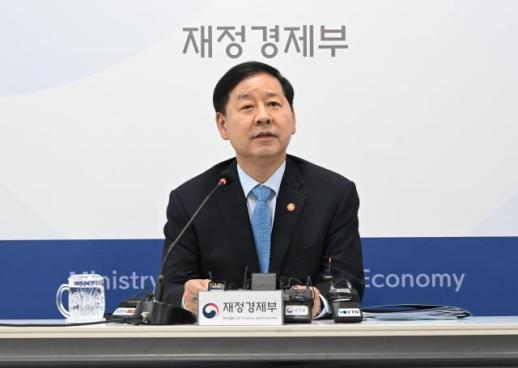 Government Sells NXC Shares for 1 Trillion Won to Stabilize Currency and Bond Markets The South Korean government has sold part of its NXC shares, which it had held for three years, at a price higher than the book value to stabilize the currency and secure non-tax revenue. Koo Yun-cheol, Deputy Prime Minister and Minister of Economy and Finance, announced this during a press conference at the Government Sejong Center on May 11. The shares were sold at 555,800 won each, exceeding the book value of 553,400 won per share, reducing the government's stake from 30.6% to 25.7%. Previously, the government attempted to sell the shares through public bidding and the selection of a sale manager after receiving them from NXC in 2023, but repeated failures occurred due to the large scale of 4.7 trillion won. NXC has initiated a stock buyback based on investment returns from domestic and international corporations. This sale marks the first instance of asset disposal exceeding 30 billion won since the government improved its asset sale system last December, completing the necessary procedures including meetings of the National Property Policy Review Committee, cabinet approval, and reporting to the National Assembly. Koo stated, "Although the government had tried to sell the shares until last year without success, this time, Nexon purchased the shares with foreign currency. We view this positively as the sale price exceeds the book value we received." The Ministry of Economy and Finance expects this sale to have several benefits, including an influx of foreign currency and securing non-tax revenue. By utilizing some of the foreign currency funds for the buyback, the government aims to contribute to currency stability. Additionally, the successful sale of previously stagnant shares is expected to contribute to fiscal management. The government plans to include the 1 trillion won from the NXC share sale in this year's non-tax revenue budget. Meanwhile, due to recent amendments to the Commercial Act mandating the retirement of treasury shares, NXC is expected to retire the shares it has purchased. Koo also mentioned that the government is working on legislation related to the 'Korean version of the sovereign wealth fund,' which would address the transfer of the NXC shares to the fund. Under current law, proceeds from the sale of Nexon shares cannot be transferred to the sovereign wealth fund. He added, "If a sovereign wealth fund is established, we could place the shares received into the fund, allowing it to determine the timing and method of sale to maximize profits. I believe that if the fund is established quickly, it could greatly benefit the nation." The government has assessed that the inclusion in the World Government Bond Index (WGBI) has positively impacted the foreign exchange market, leading to a significant influx of foreign capital, primarily from Japanese investors, into the domestic bond market. From March 30 to May 8, foreign investors purchased a total of 14.6 trillion won in government bonds based on transaction standards, with net purchases amounting to approximately 10 trillion won. The government analyzed that the WGBI inclusion is expanding the investor base in the medium to long term, improving the supply and demand conditions in the bond market. It also expects that the stability of the South Korean economy, policy reliability, and the level of financial market development will enhance the country's credibility internationally. In particular, the influx of new foreign capital is anticipated to lower government bond yields and reduce corporate financing costs, positively affecting the real economy and encouraging investment. The government also noted that the WGBI inclusion, along with the new framework for the National Pension Service and the introduction of domestic stock return accounts (RIA), is contributing to the stability of foreign exchange supply and demand. Following the announcement of the National Pension Service's new framework on April 14, expectations for expanded currency hedging have alleviated speculative dollar buying in the offshore market. Amid a favorable domestic capital market, the number of RIA accounts and the amount deposited are rapidly increasing. As of May 8, the number of RIA accounts reached 212,000, with deposits exceeding 1.6 trillion won. The government anticipates continued capital inflows, as investors can receive a 100% tax exemption on capital gains from the sale of overseas stocks until the end of this month. 2026-05-11 16:30:33
 -
 AI Hacking Era Triggered by Anthropic's Mythos: Security Industry Focuses on Encryption and Zero Trust Anthropic's next-generation artificial intelligence (AI) model, Mythos, has revealed its potential for detecting software vulnerabilities and automating attacks, prompting the domestic security industry to enhance its response strategies. Industry experts note that while AI is not creating new hacking methods, it is significantly accelerating the speed of vulnerability exploration and attack execution. As a result, there is a shift from a preemptive security framework to one that emphasizes automated detection and response, data encryption, and zero trust-based security. On May 11, Ryu Je-myung, the Second Vice Minister of Science and ICT, met with Michael Selitto, Global Policy Lead at Anthropic, to discuss collaboration in the AI and cybersecurity sectors. The government is reportedly exploring the possibility of securing access to Mythos and participating in Project Glasswing. Mythos is a high-performance AI model capable of understanding and analyzing complex software to identify vulnerabilities. Its ability to detect vulnerabilities has raised global concerns about AI security, especially as the potential for exploitation becomes apparent. The government is considering applying Mythos to real systems and infrastructure to identify vulnerabilities and validate defense mechanisms as part of its interest in Project Glasswing. The domestic security industry views the concerns surrounding AI security as a foreseeable issue. They have been preparing for hacking scenarios resulting from AI advancements, and the recent Mythos shock has heightened awareness of AI security threats. Experts analyze that new attack techniques have not emerged due to Mythos; rather, the speed and level of automation in exploring and attacking vulnerabilities have significantly increased through AI. The methods of exploiting vulnerabilities, executing malware, and carrying out commands remain largely unchanged from traditional hacking techniques. However, the speed, repetitiveness, and sophistication of attackers' explorations have risen, necessitating a shift in corporate response strategies. Consequently, security strategies are evolving from a focus on preemptive blocking to prioritizing rapid detection, analysis, response, data encryption, and zero trust principles. AhnLab views the Mythos shock as a pivotal moment for the security industry to transition to new defense systems. The ability to quickly identify and analyze emerging threats for swift response has become crucial, rather than attempting to block all attacks in advance. The industry believes that AI should be recognized not just as a tool but as an active agent, and that AI security must expand to encompass the identification and control of AI actions in the future. Fasoo AI emphasizes minimizing damage after data breaches. As AI-based attacks become more sophisticated, it is increasingly unrealistic to prevent all breaches. Therefore, encryption is vital to ensure that even if data is leaked, attackers cannot access or exploit its contents. A Fasoo AI representative stated, "We protect data itself through our enterprise document and data encryption solution, FED (Fasoo Enterprise DRM), and our data identification and classification solution, FDR (Fasoo Data Radar)." SGA Solutions explains that AI-based attacks often target data theft, making database access management and control, as well as preventing lateral movement between servers, essential. An SGA Solutions representative noted, "To achieve this, it is important to strengthen micro-segmentation in server security and expand security frameworks based on zero trust architecture." However, there are concerns that the domestic security industry faces limitations in verifying actual threat levels and enhancing response systems. This is due to the difficulty in gaining direct access to restricted AI security research projects like Mythos. Consequently, domestic security companies must focus on strengthening their own AI security capabilities and automation systems.* This article has been translated by AI. 2026-05-11 16:27:26
 -
 Bibi releases special single Bumpa on May 20 SEOUL, May 11 (AJP) - South Korean singer-songwriter Kim Hyung-seo, known professionally as Bibi, will release a special single titled Bumpa on May 20. The upcoming track serves as her first musical release in exactly one year since her second studio album debuted in May 2025. Kim Hyung-seo is a prominent soloist in South Korea recognized for her distinct vocal style and narrative-driven songwriting. Since her debut, she has maintained a high degree of creative autonomy, frequently overseeing the production, lyrics, and composition of her entire discography. According to her agency Feel Ghood Music, the artist personally handled the writing and production for the new single. The song was first performed during her solo concert in March 2023, where the live version generated immediate demand for an official digital release. The agency stated that the studio version has been reimagined as a summer track with a new band arrangement. While the original performance featured Afrobeats elements, the new version emphasizes a more vibrant and energetic sound through live instrumentation. This release follows the commercial success of her 2025 album Eve: Romance and previous hits such as Bam Yang Gang and BIBI Vengeance. The singer-songwriter first gained international attention for her ability to blend R&B, hip-hop, and pop elements with unconventional storytelling. Bumpa will be available on all major music streaming platforms starting at 6:00 p.m. (0900 GMT) on May 20. 2026-05-11 16:25:44
 -
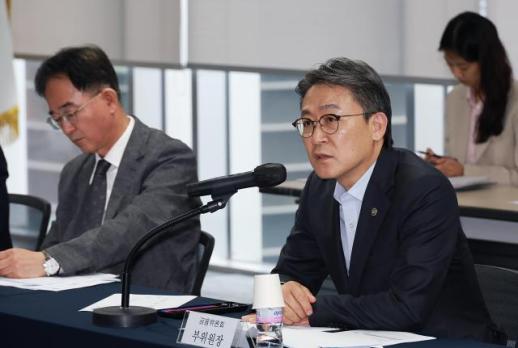 Financial Commission Investigates EMR Firms' Refusal to Join Insurance Claim System The Financial Commission is investigating the collective refusal of certain electronic medical record (EMR) companies to participate in the digitalization of insurance claims, in collaboration with the Fair Trade Commission. This low participation from EMR firms, which play a crucial role in connecting hospitals and the Insured24 system, is seen as a delay in the system's expansion. At a meeting on May 11 in Jongno, Seoul, Kwon Dae-young, Vice Chairman of the Financial Commission, stated, "It is abnormal that, six months after the implementation of a system created after 14 years of discussion, the connection rate with hospitals remains at 29%, and some companies are collectively refusing to participate. The government will normalize this situation." The digitalization of insurance claims allows patients to submit invoices, receipts, detailed billing statements, and prescriptions to insurance companies through the Insured24 app without needing paper documents from hospitals. For this to work, the EMR systems used by medical institutions must be linked with Insured24. As of May 6, a total of 30,614 medical institutions were participating in the digital insurance claim system, including 827 hospitals, 3,573 public health centers, 12,875 clinics, and 13,339 pharmacies. The connection rate for Insured24, based on the total number of targeted medical institutions, stood at 29.0%. Approximately 3.77 million people are enrolled in the Insured24 service, with 2.41 million claims completed. The Financial Commission plans to monitor the progress of Insured24 monthly and aims to increase the connection rate to 80-90% in the second half of the year. Initially, they will examine whether the collective refusal of some EMR companies constitutes unfair practices in collaboration with the Fair Trade Commission. To encourage direct participation from medical institutions, the Financial Commission will introduce features such as displaying the number of claims per hospital on Insured24, allowing institutions to see the benefits of using the service. They will also launch a public campaign in collaboration with Naver and Toss, urging insurance policyholders to request connections with medical institutions. However, the Financial Commission anticipates that the connection rate will rise to 52% next month, following a recent decision by a major EMR company to join Insured24. Vice Chairman Kwon emphasized, "For the public to fully enjoy the benefits of digital insurance claims, the connection rate must approach 100%."* This article has been translated by AI. 2026-05-11 16:25:18
 -
 Godrej Industries Aims for $6 Billion Market Capitalization by 2031 Godrej Industries Group, a diversified Indian conglomerate, announced on May 7 its goal to achieve a market capitalization of 5 trillion rupees (approximately $6 billion) by 2031 through new strategies and brand identity initiatives. This target represents nearly a threefold increase from its market capitalization of $20 billion (about 3.13 trillion yen) as of the end of March this year. The group plans to list two of its subsidiaries over the next five years. Godrej Industries has recorded an annual growth rate of over 20% in revenue and net profit over the past five years. For the next five years, the group aims for an annual revenue growth rate of more than 15% and a 20% increase in earnings per share (EPS). Each business segment is expected to achieve a return on equity (ROE) of over 18%. The group also plans to increase its listed companies from the current three to five. Currently, its publicly traded subsidiaries include Godrej Consumer Products (FMCG), Godrej Properties (real estate development), and Godrej Agrovet (agriculture). Through these efforts, the group anticipates reaching a market capitalization of 5 trillion rupees within the next five years.* This article has been translated by AI. 2026-05-11 16:24:26
 -
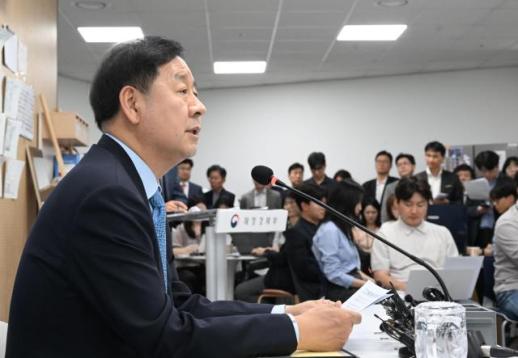 Finance Minister Gu Yoon-cheol Projects Over 2% Economic Growth This Year Finance Minister Gu Yoon-cheol projected that South Korea's economic growth rate will exceed 2% this year, driven by a semiconductor boom and increased exports. He expressed hope for a smooth resolution to the ongoing strike at Samsung Electronics, emphasizing the importance of not missing opportunities during this favorable period for the semiconductor industry. During a press briefing on May 11 at the Ministry of Economy and Finance in Sejong, Gu stated, "I expect this year's economic growth rate to surpass 2%. The exact extent will depend on the semiconductor boom and the impact of the conflict in the Middle East." He added that a specific growth rate forecast will be announced in the upcoming 'Second Half Economic Growth Strategy' report at the end of June. Gu provided a positive assessment of recent macroeconomic indicators, noting that the first quarter GDP grew by 1.7%, significantly exceeding market expectations. He also mentioned that South Korea's exports have risen from seventh to fifth in the world, surpassing Japan and Italy. Additionally, he highlighted a current account surplus of $73.3 billion in the first quarter, showcasing the growth potential of the South Korean economy compared to the previous record of $39.2 billion in the fourth quarter of 2025. However, he cautioned against overly optimistic views on economic recovery, stressing the importance of managing inflation and external risks. Gu acknowledged the uncertainties posed by the semiconductor market and the Middle East conflict, stating, "While the economic indicators are positive, the government will not become complacent. We will respond more meticulously to these challenges." He identified inflation as a pressing risk, assuring that the government will closely monitor living costs through special management and task forces. In light of high international oil prices due to the Middle East conflict, Gu mentioned price caps and fuel tax reductions as measures to combat inflation. He indicated that the price cap would remain in place until stability is restored in the region, and he is initiating revisions to the price stabilization law to implement effective sanctions against hoarding and profiteering, including rewards for reporting and penalties for unjust gains. He noted that the sustainability of these policies will depend on future oil price trends and the geopolitical situation in the Middle East. Gu reaffirmed the government's commitment to balancing supply expansion and demand management in real estate policy. Following the expiration of the temporary suspension of capital gains tax for multiple homeowners on May 9, concerns about a potential housing market freeze have arisen. He stated, "The government is coordinating with relevant agencies to expand supply and will manage demand until adequate housing supply is available." He emphasized that the government's demand management strategy focuses on helping first-time homebuyers acquire housing, shifting the perspective from profit-making to ensuring housing stability. Regarding the Samsung Electronics strike, Gu urged both labor and management to reach a peaceful agreement. He noted that the semiconductor sector is a key driver of export and growth forecasts, and labor disputes could hinder the industry's recovery. Gu expressed hope that the parties involved are working towards a resolution through the Central Labor Relations Commission, stating, "It would be unfortunate to miss opportunities during this critical time when the world is seeking semiconductor chips from Korea due to labor discord." On the stock market, Gu emphasized the need to address undervaluation rather than focusing on short-term overheating. He remarked, "Based on the price-to-book ratio, South Korean stocks are still undervalued compared to developed countries. Given the pre-orders made until next year, this reflects the perspectives of both global and domestic investors on the potential of our stock market." Gu maintained a cautious stance on inheritance tax reform, stating, "We are listening to various opinions regarding tax reform, but no decisions have been made at this time." He also commented on the government's sale of some NXC shares received as payment, noting that the shares were acquired at 5,534,000 won each and will be sold at 5,558,000 won, describing it as a successful transaction. The government expects to secure over 1 trillion won in non-tax revenue from this sale, contributing to foreign exchange market stability as NXC brings in foreign capital. Gu addressed concerns regarding the missed meeting with U.S. Treasury Secretary Scott Bansen, who is visiting South Korea on May 13 ahead of the U.S.-China summit. He disagreed with claims of 'Korea passing,' stating, "We are in constant communication with the U.S. Treasury. Unlike in the past, meetings do not have to be face-to-face, and we are regularly updated through communications between deputy ministers. Minister Kim Jeong-kwan recently visited the U.S., ensuring good cooperation with them on investment matters."* This article has been translated by AI. 2026-05-11 16:22:13
 -
 Democratic Party's Hwang In-sik Proposes Ambitious Development Plans for Seocho Hwang In-sik, the Democratic Party candidate for Seocho District mayor, is shaking up local development politics with his proposals for the "demolition and restructuring of the Gangnam Express Bus Terminal overpass" and the "development of Dure Village in Bangbae-dong." By directly addressing longstanding issues that have remained untouched for decades, Hwang's campaign is being seen as a significant factor in the upcoming Seocho District mayoral election. At the opening of his campaign office in Bangbae-dong on May 11, Hwang stated, "For the past 30 years, local governance in Seocho has essentially been a system of appointed mayors by central power. I will rewrite Seocho's future as an administrator who proves my capabilities, not as a proxy for political power." Hwang characterized the issues surrounding the Gangnam Express Bus Terminal overpass and Dure Village as prime examples of long-neglected administrative challenges in Seocho, sharply criticizing the ruling People Power Party. He noted, "The Gangnam Express Bus Terminal overpass, completed 48 years ago, poses both safety concerns and urban disconnection issues. Upon my election, I will initiate discussions on its demolition and restructuring, forming a public-private consultative body involving the Seoul city government, Seocho District, and residents." The overpass currently spans the heart of the Banpo and Jamwon neighborhoods. Hwang's team identifies several key issues: the danger of the overpass's entry and exit points, urban decay beneath the structure, incompatibility with the upscale residential belt in Banpo, disconnection from the Sevit Island and Han River tourism axis, and separation from local commercial areas. As the Banpo area undergoes transformation into a high-end apartment district and tourist zone, concerns have been raised that the outdated overpass system from the 1970s does not align with the city's modern character. Hwang argued, "Concerns about traffic chaos are exaggerated. Research indicates that the rate of speed reduction is not significant and can be managed effectively." This proposal is seen as a declaration to restructure the urban landscape of southern Seoul. Another key promise from Hwang is the development of Dure Village in Bangbae 3-dong. Dure Village, located behind Sangmun High School at the foot of Woomyeonsan Mountain, spans approximately 1,500 pyeong (about 5,000 square meters) and has been home to numerous illegal structures for decades. While the surrounding area has seen the rise of luxury villas and single-family homes, Dure Village remains stuck in time, characterized by dilapidated buildings with slate roofs. Hwang described this situation as "the most embarrassing aspect of Seocho administration," stating, "A beautiful, rectangular 1,500-pyeong public land has been left in a dark state for decades. Previous district mayors have been too afraid to address the illegal structures." Seocho District recently attempted to sell public land with conditions for park development and the removal of illegal buildings, but the auction failed to attract bidders. Hwang pledged, "I will establish optimal utilization plans that include measures for illegal buildings immediately upon taking office. I will hold previous mayors accountable for not fulfilling their sacred duties as district leaders." The real estate industry sees high potential for Dure Village's development. Factors such as proximity to Sangmun High School, access to Woomyeonsan's green space, and connections to the Bangbae reconstruction belt suggest significant business viability. Proposed development models include eco-friendly low-rise residential complexes, luxury terrace villas, cultural and artistic residential towns, and high-end residential belts linked to Woomyeonsan. Hwang, a city administration expert with experience as Seocho District's chief and as a director and spokesperson for the Seoul city government, is viewed as someone who can translate these political promises into actionable administrative initiatives. A real estate expert remarked, "Dure Village and the express bus terminal overpass are issues that Seocho residents have felt for a long time but no one has dared to address. Hwang has brought the most challenging urban problems into the electoral spotlight." A political insider noted, "This election is shaping up not just as a simple party contest but as a reset of Seocho's development politics, which could create significant pressure for the current administration."* This article has been translated by AI. 2026-05-11 16:19:41
 -
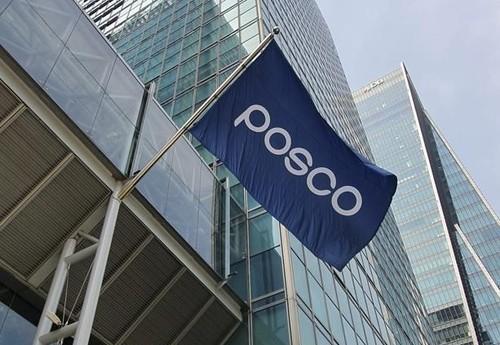 POSCO Faces Major Labor Crisis as First Strike Looms in 58 Years POSCO is facing its first strike threat in 58 years as tensions over the direct hiring of subcontractor employees escalate to the primary contractor level. This situation tests the crisis management skills of Jang In-hwa, chairman of the POSCO Group, in his final year of tenure. According to industry sources on May 11, some employees from subcontractors at POSCO's Pohang and Gwangyang steelworks have refused to report to work, disrupting operations. The affected employees include those from POTL and PSC, who are being considered for direct hiring. POSCO has reportedly deployed direct employees to replace them on an emergency basis. Dissatisfaction among subcontractor unions regarding issues such as recognition of service, wage restructuring, and performance bonuses has led to unrest on the ground. Last month, POSCO announced plans to directly hire 7,000 subcontractor employees through a cooperative council at its Pohang and Gwangyang steelworks, detailing the hiring process, conditions, and treatment. A new job category, 'Operational Synergy (S) Group,' was established, with a promotion system ranging from S1 to S7. Concerns have been raised about potential wage reductions and devaluation of experience. The primary contractor's union has also expressed strong dissatisfaction. The POSCO labor union, affiliated with the Korean Confederation of Trade Unions, filed for mediation with the Central Labor Relations Commission and is preparing for a general strike. This follows a meeting on May 6, where management and labor failed to reach an agreement on direct hiring issues. The union has demanded an apology and compensation from management, which has reportedly not been accepted, escalating the conflict. However, the union has indicated a preference for dialogue over an immediate full-scale strike. A union representative stated, "POSCO's competitiveness lies in its labor-management relations, so we will strive to resolve this through dialogue. If the company presents a proactive solution during the mediation period and we can narrow the gaps, we can continue discussions; otherwise, we will proceed with a phased strike plan." POSCO is committed to negotiating to avoid the worst-case scenario of a strike. A company representative said, "We are coordinating labor-management opinions regarding the direct hiring joint committee and plan to maintain ongoing communication with the union." Since its founding in 1968, POSCO has maintained a reputation as a non-conflict workplace, having never experienced a full-scale strike. Industry observers note that if this conflict escalates into a general strike, it could pose significant challenges for Chairman Jang's leadership. Particularly, Jang has emphasized 'field-centered management' and 'organizational stabilization' since taking office, leading to speculation that the resolution of this labor dispute could impact his chances for reappointment. An industry insider remarked, "In the steel industry, the continuous process nature means that disruptions in even a single area can significantly affect productivity and profitability. As the direct hiring issue extends beyond personnel conflicts to concerns about labor disputes and production disruptions, it could place considerable pressure on Chairman Jang." 2026-05-11 16:17:18
 -
 China confirms Trump's visit to Beijing later this week SEOUL, May 11 (AJP) - U.S. President Donald Trump will make a state visit to China this week at the invitation of Chinese President Xi Jinping, the country's Foreign Ministry said on Monday. The announcement came a day after the White House said Trump is scheduled to arrive in Beijing on Wednesday ahead of a summit with Xi Jinping the following day. His trip will mark the first visit to China by a U.S. president in nearly a decade. The last such visit was also made by Trump during his first term in 2017. The leaders of the world's two largest economies are expected to discuss a range of issues, including efforts to stabilize energy supplies and reopen the Strait of Hormuz amid the prolonged conflict in the Middle East. Trade and tariffs are among the key topics in their talks after the two countries clashed last year over steep tariffs, semiconductor technology, and restrictions on rare earth exports. It remains to be seen whether the two sides will be able to mend ties and resolve their disputes. North Korea's nuclear program is not officially on the agenda, but it is expected to come up during the talks, with Trump likely to seek cooperation from Xi on the issue. Although the White House said there are no plans for a meeting between Trump and North Korean leader Kim Jong-un, the possibility of an impromptu encounter has not been completely ruled out. Meanwhile, Trump will visit Temple of Heaven, a UNESCO World Heritage site in Beijing, together with Xi on Thursday and is also scheduled to attend a bilateral tea meeting and a working lunch with Xi on the final day of his visit, according to the White House. 2026-05-11 16:14:15
 -
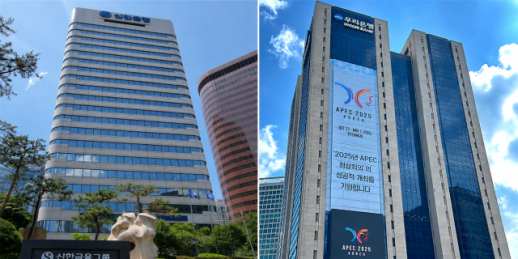 Seoul to Decide on New Bank Custodian for $51 Billion Budget On May 12, Seoul will select a new custodian bank to manage its annual budget of 51 trillion won. A fierce competition is expected as Shinhan Bank seeks to retain its position while Woori Bank aims to reclaim it after four years. Despite the inevitable burden of high interest rates and contribution funds, the stakes are high due to the symbolic and ancillary benefits associated with the role.According to financial industry sources and the Seoul city government, the city will hold a custodian bank selection committee on May 12 to evaluate proposals and presentations from the bidding banks.On that day, the committee will assess the proposals and presentations from each bank, ultimately selecting the top-scoring institutions for the primary and secondary custodian roles. The chosen bank will manage Seoul's funds from next year through 2030.Four banks submitted proposals by the May 6 deadline: Shinhan, Woori, KB Kookmin, and Hana Bank. Shinhan and Woori both bid for the primary and secondary custodian roles, while Kookmin and Hana only participated in the secondary custodian bidding.The primary custodian is responsible for managing the general and special accounts, while the secondary custodian oversees fund management. Of this year's budget of 51.4778 trillion won, approximately 47 trillion won is allocated to the primary custodian. Thus, the bank selected as the primary custodian effectively secures the custodian status for Seoul.Shinhan and Woori have previously competed for the primary custodian role in 2018 and 2022. Woori Bank has managed the Seoul city custodian role for over a century since the days of the Gyeongseong City Custodian in 1915, but lost the position to Shinhan Bank in 2018. Shinhan retained the primary custodian role in 2022 and also secured the secondary custodian position.Woori aims to reclaim the Seoul city custodian role in this bidding. Since the second half of last year, the bank has formed a task force to develop strategies for evaluation criteria and prepare its proposal. Woori plans to highlight its extensive experience in revenue and expenditure management accumulated over more than a century of custodianship, as well as its current management of 14 out of 25 district custodians in Seoul.Shinhan Bank emphasizes continuity and stability. Having operated the primary custodian role for the past eight years and integrated the secondary custodian management since 2022, Shinhan has established a robust IT system and settlement framework, ensuring continuity. Collaborative projects with the city, such as the public delivery app 'Ddaengyeo' and support for local merchants and the Seoul Plaza ice rink, are also seen as strengths.Industry insiders identify interest rates as a key factor in the custodian selection process. Given that there is little differentiation in management capabilities, creditworthiness, and financial stability among the banks, interest rates are expected to play a decisive role.In fact, the city has raised the scoring for interest rates on demand deposit accounts from 6 points to 8 points in this selection process. This change is interpreted as an effort to encourage competition among banks to offer higher rates. The interest rate for the Seoul city custodian is calculated by adding a bank-specific premium to the base rate, which remains fixed during the contract period, significantly affecting profitability.Contribution funds are also a critical factor that could influence the outcome. In the 2018 primary custodian bidding, Shinhan Bank proposed a contribution of around 300 billion won, and in the 2022 re-bidding, it was reported to have offered approximately 260 billion won.A financial industry source noted, "While there are various evaluation criteria, the actual competition will hinge on the contribution funds and interest rates. Although there are cost burdens, the potential for securing a large funding base and the associated brand benefits are significant, prompting banks to actively pursue this opportunity."* This article has been translated by AI. 2026-05-11 16:09:59