
Journalist

HAN Joon ho
-
 Lotte Chemical Reports 1st Quarter Operating Profit of 73.5 Billion Won Amid Middle East Conflict Lotte Chemical announced on May 11 that it recorded preliminary first-quarter revenues of 4.99 trillion won, an operating profit of 73.5 billion won, and a net profit of 33.5 billion won for 2026. The company achieved a turnaround in its basic materials sector despite the impact of the ongoing conflict in the Middle East, largely due to a lagging effect worth 250 billion won. Lotte Chemical stated, "The expansion of product spreads and the positive inventory valuation effect from rising naphtha prices at the end of the quarter were key factors in the improved performance." They added, "We are currently securing a stable supply of domestic naphtha and expect continued supply in the future," noting that current plant operating rates remain unaffected. To strengthen the domestic petrochemical industry, Lotte Chemical is reviewing a restructuring of its business operations. During a conference call, the company indicated, "Considering the sluggish petrochemical market expected to persist over the next 2-3 years, we are contemplating shutting down one of the two naphtha cracker (NCC) units in Daesan and two of the four units in Yeosu." At the same time, Lotte Chemical plans to expand its functional materials and high-value-added businesses in the long term. The company aims to produce 500,000 tons annually of engineering plastics, a high-value specialty material, at its single largest compounding plant, set to be completed within the year. Future plans include expanding the production lineup to include high-performance products like Super EP. A Lotte Chemical representative stated, "We will continue to closely monitor external conditions and market situations to optimize production operations for stable material supply. Additionally, we will enhance competitiveness through business restructuring in basic chemicals and pursue a balanced portfolio to ensure our long-term growth strategy remains steadfast."* This article has been translated by AI. 2026-05-12 03:55:52
 -
 TSMC Faces Pressure as Apple Considers Chip Production Deal with Intel Reports that Apple plans to outsource some of its custom-designed chips to Intel have raised concerns about a potential shift in TSMC's exclusive partnership with Apple. However, experts believe TSMC will likely maintain its status as Apple's key partner for the foreseeable future, given its advantages in yield, power efficiency, and advanced packaging technology. On May 11, Taiwanese media outlets, including Focus Taiwan, reported mixed assessments within the industry regarding the potential collaboration between Apple and Intel. The Wall Street Journal had previously reported on May 8, citing multiple sources, that Apple reached a preliminary agreement to have Intel produce some of its custom-designed chips. Apple and Intel have reportedly been negotiating this partnership for over a year. In this context, Liu Peijian, a researcher at the Taiwan Institute of Economic Research, assessed that TSMC is likely to remain Apple's primary chip manufacturing partner. He noted that TSMC's advanced packaging technologies, including InFO (Integrated Fan-Out) and CoWoS (Chip on Wafer on Substrate), are still critical for the performance of Apple's A-series and M-series chips. Liu pointed out that both Intel and Samsung are currently behind TSMC in terms of yield and power efficiency, making it difficult for Apple to shift its flagship chip orders away from the Taiwanese foundry in the near term. He analyzed that the deep technological collaboration between Apple and TSMC over the years has created a high barrier to entry for competitors. Unless rivals achieve significant breakthroughs in 2-nanometer or Gate-All-Around (GAA) technology, TSMC is expected to remain Apple's preferred manufacturing partner. Intel is advancing its 18A process, while Samsung is exploring opportunities with its 2-nanometer GAA technology. However, Liu noted that both companies have faced issues with unstable yields and excessive power consumption in past large-scale production processes. Considering TSMC's stable delivery performance and extensive research and development capabilities, Liu assessed that the company's leading position remains difficult to challenge. He added that for Apple, moving core chip orders too soon could pose significant supply chain risks. Li Fangguo, chairman of President Capital Management, also told CNA that Apple's push for collaboration with Intel is not due to any technical issues with TSMC. Instead, he suggested that the growing demand for advanced processes from AI chip customers like NVIDIA has strained TSMC's production capacity. Li stated that this situation highlights TSMC's dominant position in the advanced chip manufacturing sector, noting that demand across the industry currently exceeds supply. Concerns About TSMC's Position Conversely, some experts believe that a partnership between Apple and Intel could pose challenges for TSMC. According to the China Times, financial and economic expert Luan Muhua recently expressed on social media that if the collaboration between Apple and Intel is formalized, it could heighten TSMC's sense of crisis. Luan assessed that if the partnership materializes, Apple would gain additional key options related to its supply chain, while Intel would secure a heavyweight customer in its foundry business revival. However, he pointed out that this could signify the practical end of TSMC's exclusive production era for Apple chips. Luan explained that it is currently unclear which Apple products Intel would produce chips for. However, he noted that even a slight adjustment in Apple's supply chain, given its massive annual shipments of iPhones, iPads, and Mac computers, could impact chip production facility allocations and market forecasts. He raised questions about whether Intel has the capacity to share production of Apple orders with TSMC. However, he acknowledged that the backing of the White House could change the dynamics, suggesting that this shift is reflected in the recent stock trends of Intel, Apple, and TSMC.* This article has been translated by AI. 2026-05-12 03:53:25
 -
 Five Major Banks Increase Self-Rescue Efforts by 3.5 Times Amid Debt Management Changes President Lee Jae-myung praised the Financial Services Commission's achievements in inclusive finance as "remarkable" during a Cabinet meeting, highlighting a shift in how banks manage delinquent loans. Instead of selling off delinquent accounts to external collection agencies, banks are now focusing on internal debt adjustments and loan forgiveness to help borrowers recover. Documents obtained from the Cabinet meeting on May 11 reveal that the five major commercial banks—KB Kookmin, Shinhan, Hana, Woori, and NH Nonghyup—saw their internal debt adjustments rise from 989 cases in the first quarter of 2025 to 3,456 cases by the fourth quarter of the same year, a 3.5-fold increase. In contrast, the sale of delinquent loans plummeted from 35,000 cases in 2025 to just 11 in the first quarter of 2026. The Financial Services Commission views this as a transition from a "maximizing recovery" approach to one focused on "recovery and coexistence." Traditionally, the financial sector has relied on selling long-term delinquent loans to external collection agencies. While this allowed financial institutions to remove bad debts from their books, it often left borrowers facing prolonged collection efforts. The management of delinquent loans by banks is evolving. The five major banks have increased their efforts to write off old debts that are difficult to collect. Their performance in terms of debt expiration and write-offs rose from an average of 2,229 cases and 59.8 billion won over the past three years to 7,676 cases and 288.2 billion won in the first quarter of this year. This represents more than a threefold increase in the number of cases and nearly a fivefold increase in the amount, indicating a stronger trend toward internal adjustments rather than transferring delinquent loans externally or leaving them in prolonged collection. During the Cabinet meeting on May 6, President Lee remarked on the report from Financial Services Commission Chairman Lee Ok-won, stating, "The Financial Services Commission is achieving remarkable results. They are doing very well." He emphasized the need for a structural shift in finance, noting that the previous mindset of squeezing every last penny from borrowers was not acceptable. The effects of removing delinquency records are also becoming evident. Approximately 2.928 million individuals who repaid their delinquencies have received credit relief, with 154,000 of them resuming normal financial transactions, such as obtaining new loans or credit cards. Efforts to address old debts are also underway. Financial authorities are working on plans to forgive or write off long-term delinquent loans, specifically targeting 1.13 million individuals with debts under 50 million won that have been overdue for more than seven years, totaling 16.4 trillion won. This initiative aims to reintegrate borrowers who have been excluded from the financial system due to prolonged delinquency. The Financial Services Commission plans to institutionalize these improvements in delinquent loan management to ensure they are not one-time measures. Starting in the second quarter, it will disclose delinquent loan management performance across all sectors and establish incentive systems, including differential fees. This aligns with President Lee's comments regarding the potential for incentives and penalties through evaluations and management guidelines for financial institutions.* This article has been translated by AI. 2026-05-12 03:51:21
 -
 MBC News Comments Spark Controversy Over Samsung's Role in Semiconductor Industry Recent comments made during the closing segment of MBC's 'News Desk' have sparked controversy, seemingly targeting Samsung Electronics amid the ongoing bonus dispute involving SK Hynix. During the broadcast, the anchor stated, "The growth of Samsung Electronics into a leading global semiconductor company has been fueled by the hard work of many employees, but it has also received substantial support from the government in the form of tax benefits and infrastructure development for the semiconductor industry." The anchor added, "One reason we refer to Samsung Electronics as a 'national company' is that no business can thrive while ignoring the interests and trust of the public." Following the broadcast, critical reactions flooded online communities and social media. Observers noted that the public broadcaster's comments might reflect a biased message, especially in light of the recent SK Hynix bonus controversy, demands for bonuses from local employees in China, and the booming semiconductor market. One online forum saw over 2,000 comments on related posts, fueling the debate. Users expressed sentiments such as, "It sounds like the company only grew because of tax benefits," and, "Why not mention Samsung's contributions to the country?" Others remarked, "It feels like a reprimand to a company that sustains South Korea's exports," and, "It seems like the broadcast is engaging in a campaign against businesses." Some questioned whether the logic of being a 'national company' implies that the government can manipulate it as it pleases, given that the national pension holds shares in the company. The core of the controversy lies not just in the criticism of the company but in whether it was appropriate to convey a value-laden message in the format of a news program's closing remarks. Some users pointed out, "The line between reporting and commentary seems to have blurred," and, "The closing remarks felt more like an editorial than a news summary." As issues surrounding bonuses, labor disputes, global competitiveness, and government support intertwine in the semiconductor industry, the MBC closing remarks controversy has evolved into a broader public discourse regarding the role of large corporations in South Korea.* This article has been translated by AI. 2026-05-12 03:49:07
 -
 Samsung SDS Consortium Selected as Private Partner for National AI Computing Center The Ministry of Science and ICT announced on May 11 that the Samsung SDS Consortium has been selected as the private partner for the establishment of the National Artificial Intelligence (AI) Computing Center. The ministry plans to invest a total of 2.5 trillion won (approximately $2 billion) through a public-private partnership special purpose company (SPC) to build a national AI infrastructure capable of supporting 15,000 advanced AI semiconductors by 2028. The consortium includes Samsung SDS, Naver Cloud, Samsung C&T, Kakao, Samsung Electronics, KT, Clush, Jeollanam-do, and the Southwest Coast Enterprise City Development. The government conducted a public bidding process from September to October last year, with the Samsung SDS Consortium being the sole bidder. After undergoing technical and policy evaluations and financial reviews, the consortium was selected as the preferred negotiation partner in March. The funding procedures have also been finalized. Last month, the National Growth Fund's investment committee approved the SPC's funding for the National AI Computing Center project, confirming an initial investment of 400 billion won, which includes 116 billion won from public sources and 284 billion won from private sources. On the same day, the ministry signed an agreement for the project plan and a shareholder agreement for the establishment and operation of the SPC. The government and the consortium plan to establish the SPC in the second quarter of this year and begin construction of the center in the third quarter. Additional funding will be secured to gradually build the AI computing center, reaching a total investment of 2.5 trillion won. The National AI Computing Center aims to provide high-performance AI computing resources to domestic companies and research institutions at competitive prices. The center will particularly support small and medium-sized enterprises, startups, and academia by offering discounts and usage rights to reduce the financial burden of AI development. It will also provide technical consulting, commercialization support, and educational programs to bolster the domestic AI ecosystem. Fostering a domestic AI semiconductor ecosystem is also a key objective. The government plans to create an R&D zone within the center to provide an environment for designing and validating domestic AI semiconductors, as well as supporting the demonstration and reliability verification of near-commercial neural processing units (NPUs). Subsequently, verified domestic AI semiconductors will be applied in real service environments through a separate NPU zone to support the formation of an initial market. Minister of Science and ICT Lee Baek-hoon expressed hope that the National AI Computing Center will serve as a representative example of public-private joint investment, stimulating domestic AI infrastructure investment. He emphasized the government's commitment to actively support South Korea's growth as an AI infrastructure hub in Asia. The establishment of the National AI Computing Center faced challenges, having been unsuccessful in two previous bidding rounds. The first round, held from January 23 to May 30 last year, was canceled due to a lack of bidders by the deadline. A second round from June 2 to June 13 of the same year also failed to attract any participating companies.* This article has been translated by AI. 2026-05-12 03:46:27
 -
 Vietnamese Parents Express Concerns Over Youth Exposure to Online Content In Vietnam, where online learning has become commonplace, a growing social debate surrounds the exposure of youth to harmful content. Parents and schools are at odds over their responsibilities, struggling to find effective solutions. According to a report by the Vietnamese media outlet Tuoi Tre on May 11, 87% of adolescents aged 12 to 17 use the internet daily, with many spending 5 to 7 hours online. Additionally, 74% of these youths access the internet during school hours. This trend suggests that digital devices have become essential tools for learning, leading to a situation where children are constantly connected to the internet. Critics argue that this environment weakens parental control. One parent shared their struggle to limit screen time and keep phones out of bedrooms, only to find that assignments and supplementary learning are all conducted online, undermining their rules. Concerns are particularly pronounced regarding the continuity of online classes and assignments. Parents worry that screens left open for learning easily transition into messaging and social media activities. The debate over parental responsibility is intensifying. Some readers pointed out that many parents prefer to keep quiet and hand their children a phone. Another commenter remarked, "If the upper levels are not stable, the lower levels will inevitably be chaotic." Conversely, others questioned, "In a situation where all school assignments and education are conducted online, who can manage the children individually?" Another comment highlighted, "The issue is not whether children use the internet, but whether adults are prepared to help them online." There is also division over proposals to ban social media use for those under 16. Some argue that if adults are swayed by misinformation, how can children discern the truth? Others counter that teaching children to use these platforms correctly from an early age may be safer in the long run. The proliferation of provocative content online is raising further concerns. Some popular Vietnamese YouTube channels feature videos with repeated profanity and threats, often categorized as 'online gangster' content. Some videos have garnered over 100,000 views within days of being posted. One channel boasts over 770,000 subscribers and has published more than 600 videos. Additionally, content featuring dangerous motorcycle stunts, risky challenges, and skits mimicking debt collection is rapidly spreading, making it easy for youth to imitate. Legal issues are also emerging. Tran Minh Hung, a Vietnamese lawyer, explained that Article 21 of Vietnam's Child Law protects children's privacy and personal information. He noted that disclosing sensitive information or images of children over the age of 7 without their consent and that of their parents or guardians could constitute a clear legal violation. He added that if content is deemed obscene, Article 326 of the Criminal Code may apply, as well as Article 155 if the intent is defamation or insult. Calls for stronger technical measures are also being voiced. Some readers suggested specific actions, such as blocking access after 10 p.m. or automatically shutting down games after an hour of play. However, many believe that rather than imposing blanket bans on social media, it is more realistic for families and schools to establish guidelines and work together with children. As digital environments have become essential for learning and communication, the question of how to protect children remains unresolved. There is an urgent need for societal discussions on the responsibilities and roles of parents, schools, and platforms in safeguarding youth.* This article has been translated by AI. 2026-05-12 03:44:18
 -
 Refinery Sector Anticipates Earnings Surprise Amid High Oil Prices Domestic refiners are expected to report an earnings surprise for the first quarter of 2026 due to high oil prices stemming from the ongoing conflict in the Middle East. However, the increase in profits is attributed to low-cost crude oil inventories, raising concerns about deteriorating performance in the second quarter without compensation for losses incurred under the price cap policy. On May 11, S-Oil announced an operating profit of 1.2311 trillion won for the first quarter. According to securities firms, SK Innovation is projected to report 2 trillion won, GS Caltex around 1.9 trillion won, and HD Hyundai Oilbank approximately 200 billion won in operating profit. In the same period last year, the combined operating profit of the four refiners was only 811 billion won, but this year it is expected to exceed 5 trillion won. The significant profits are largely due to the sale of crude oil purchased at relatively low prices before the conflict, resulting in substantial inventory valuation gains. However, these gains are seen as temporary, and the sustainability of improved performance in the second quarter remains uncertain, depending on oil price trends. The refining sector argues that reasonable compensation for losses related to the price cap policy is urgently needed following the war. The government has been controlling the prices of petroleum products sold at gas stations under a "price cap policy" since March 13, aimed at stabilizing oil prices and living costs. The government also announced that it would provide financial support in the event of losses incurred by refiners due to this measure. The lack of clarity regarding the compensation method and criteria is problematic. It is estimated that the cumulative losses for the four domestic refiners have exceeded 3 trillion won, with weekly losses around 500 billion won. The rapid accumulation of losses is due to insufficient reflection of price increases. Industry insiders contend that the first-quarter earnings surprise is merely an illusion caused by inventory valuation gains, emphasizing the necessity for loss compensation. With high oil prices persisting, the cost burden is expected to be significantly reflected starting in the second quarter. Additionally, if international oil prices plummet due to a ceasefire or peace agreement, there are concerns about reduced refining margins and substantial inventory valuation losses. A representative from the refining sector stated, "The improvement in first-quarter results reflects the benefits of low-cost crude oil inventories secured before the surge in oil prices. Currently, we are purchasing crude oil at high prices, but the selling prices are restricted by the price cap, creating significant pressure. Furthermore, the lack of clear criteria for loss compensation could greatly increase performance volatility if oil prices decline in the future."* This article has been translated by AI. 2026-05-12 03:42:28
 -
 Apple Faces Ongoing Controversy Over False Advertising Claims Apple has strongly refuted allegations of false advertising regarding its artificial intelligence (AI) system, Apple Intelligence, as a domestic civic group has officially urged the Fair Trade Commission (FTC) to disclose investigation materials.On May 11, the Seoul YMCA's Civic Mediation Office criticized Apple’s official statement released on May 8, interpreting it as a denial of violations of the Fair Labeling and Advertising Act. They stated, "It is absurd for Apple to discuss negotiations while ignoring the FTC's request for documentation for over a year."The YMCA added, "Before discussing negotiations with the FTC, Apple should prioritize communication with consumers."On the same day, the Seoul YMCA sent a letter of inquiry to the FTC to hear updates on the situation. They specifically questioned why the FTC has not taken action despite Apple failing to submit requested documents for over a year, what discussions are currently ongoing with Apple, and what future investigation plans are in light of a recent compensation agreement reached in the U.S.The YMCA stated, "We plan to transparently disclose the FTC's responses and will continue to monitor and act strongly to prevent Apple from misusing the FTC's consent decree system to gain immunity with insufficient content."Previously, the Seoul YMCA pointed out that the FTC has not reached a clear conclusion on Apple’s alleged violations of the Fair Labeling and Advertising Act, which were reported in March of last year.In response, Apple issued a statement on May 8, strongly opposing the YMCA's claims and asserting, "We will continue to engage in discussions with the Fair Trade Commission regarding this matter."Meanwhile, Apple recently reached a settlement of $250 million (approximately 360 billion won) to resolve a class-action lawsuit in the U.S. According to Reuters, Apple faced a lawsuit from American consumers in 2024 for allegedly misleadingly advertising its Apple Intelligence and next-generation Siri features to sell iPhones.* This article has been translated by AI. 2026-05-12 03:41:07
 -
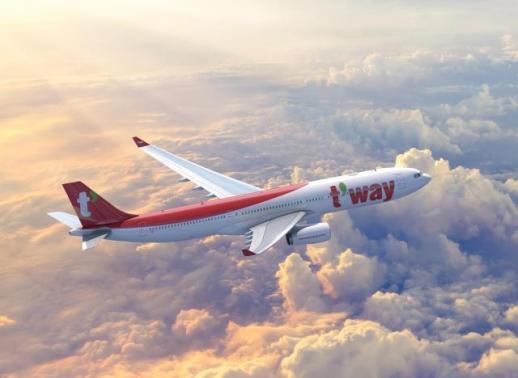 T'way Air Returns to Profit After Two Years, Boosted by Winter Travel and Cargo Business T'way Air has successfully returned to profitability for the first time in two years, driven by increased passenger numbers and a robust cargo transport business. On May 11, T'way Air announced that its operating profit for the first quarter reached 19.9 billion won, marking a return to the black after eight quarters. Revenue totaled 612.2 billion won, a 37% increase compared to the same period last year. The airline's improved performance is attributed to a surge in travel demand during the winter peak season and the stabilization of its route operations. The number of passengers in the first quarter surpassed 3.13 million, reflecting a 17% increase year-on-year. Notably, international passenger numbers rose by over 23% to 2,188,463. Analysts suggest that the airline's strategy of expanding new routes and diversifying its offerings, which began last year, is yielding positive results. Passenger load factors for both domestic and international routes exceeded 90%. T'way Air's cargo transport business is also experiencing steady growth. In the first quarter of 2026, cargo volume reached approximately 9,000 tons, a 130% increase compared to the first quarter of 2024, effectively tripling the scale of the operation. Following its acquisition by the Sonot Trinity Group, T'way Air has thoroughly reviewed its route operations structure. The airline has restructured its operations to focus on efficiency, contributing to the improved performance in the first quarter. Recently, T'way Air held a shareholders' meeting where it announced a name change to Trinity Air. Full operations under the new name will commence once approval from relevant domestic and international authorities is secured. A T'way Air official stated, "We plan to enhance operational efficiency with the introduction of new A330-900NEO aircraft in the second half of the year. We will continue to drive performance through efficient operations in passenger and cargo transport and stabilization of medium- to long-haul routes."* This article has been translated by AI. 2026-05-12 03:39:24
 -
 KOSPI Approaches 8000 Mark Amid Strong Buying from Retail Investors On May 11, the KOSPI index surged close to the 8000 mark, buoyed by strong buying from both retail and institutional investors. The index rose more than 4%, surpassing the 7800 level. According to the Korea Exchange, the KOSPI closed at 7822.24, up 324.24 points (4.32%) from the previous trading day. It opened at 7775.31, gaining 277.31 points (3.70%) as retail buying momentum increased. Lee Kyung-min, a researcher at Daishin Securities, noted, "The KOSPI continues its upward trend, driven by a concentration in large-cap semiconductor stocks, marking five consecutive days of gains. On this day, 159 stocks rose, 6 remained unchanged, and 734 declined, indicating that a few large-cap stocks led the index's increase." In the securities market, retail and institutional investors made net purchases of 3.1711 trillion won and 753.1 billion won, respectively, driving the index higher. Foreign investors, however, sold a net 3.9432 trillion won. Among the top market capitalization stocks, Samsung Electronics (up 6.33%), SK Hynix (up 11.51%), SK Square (up 8.11%), Hyundai Motor (up 5.38%), Samsung C&T (up 6.98%), and HD Hyundai Heavy Industries (up 4.10%) all saw gains, while LG Energy Solution (down 1.78%) and Doosan Enerbility (down 1.23%) declined. On this day, SK Hynix traded at 1.45 million won, setting a new all-time high. Samsung Electronics, which had reached 230,000 won on the 30th, experienced a drop due to profit-taking but rebounded to 232,500 won within a day. The KOSDAQ index closed at 1213.74, up 21.39 points (1.79%). It started at 1212.28, an increase of 19.93 points (1.67%) from the previous day. In the KOSDAQ market, retail and foreign investors made net purchases of 147 billion won and 55.4 billion won, respectively, while institutions sold a net 172 billion won. Among the top KOSDAQ stocks, EcoPro BM (down 6.53%), EcoPro (down 5.55%), Alteogen (down 4.55%), HLB (down 2.92%), and ABL Bio (down 1.84%) closed lower, while Rainbow Robotics (up 10.33%), Kolon TissueGene (up 3.99%), Samchundang Pharm (up 1.36%), and Lino Industry (up 2.84%) finished higher.* This article has been translated by AI. 2026-05-12 03:37:23