
Journalist

Huan Xiang
-
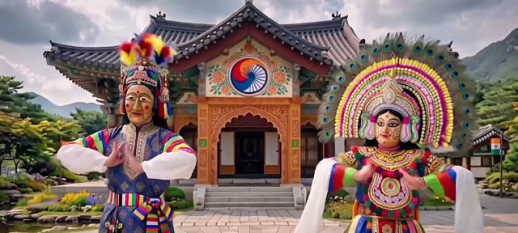 Korea-India Cultural Contest Highlights Language Barriers and Understanding There was no Hindi interpreter present. In a meeting with a country of 1.5 billion people, South Korea could not provide a single person fluent in that language. Instead, a double interpretation through English conveyed the words of both leaders.During a Cabinet meeting on April 28, President Lee Jae-myung directly reprimanded Foreign Minister Park Jin. "We need to ensure that we can avoid double interpretation in the future by training at least one person in special education," he said.While the reprimand focused on the lack of personnel, it also highlighted a more uncomfortable reality. South Korea and India are both located on the Asian continent, share thousands of years of civilization, and have experienced colonial pain together. Despite having established diplomatic relations long ago and increasing trade each year, the two countries still feel distant from one another. The absence of a single interpreter was not a coincidence but a result of structural indifference.Language is a measure of interest. The languages we choose to learn reflect how seriously we regard those countries. By that standard, India has long been a low priority.To bridge this gap, the Indian Cultural Center in Korea, the Indian Embassy, and Aju Media collaborated to launch the '2026 Korea-India AI Video and Essay Contest,' which drew a passionate response from about 550 participants. The responses were remarkable.Sonali Ray, who won the essay grand prize, compared Seoul's Gwangjang Market with India's bazaars. She noted that while kimchi and achar (Indian pickles) are not the same food, they share a common philosophy. Both civilizations understood the wisdom of transforming simple ingredients into something complex and vibrant through fermentation and patience.Kim Ji-young, who won the gold prize, approached India from a different angle. His essay began with the observation that the Hindi words for 'yesterday' and 'tomorrow' are expressed with the same term, 'kal.' This led him to reflect on India's philosophy of rejecting definitive conclusions.Quoting independence activist Aurobindo, who said, "Humans are transitional beings and never complete," he quietly examined the impatience of modern Korean society, which often defines each other by four letters of the MBTI. In a country where yesterday is tomorrow and tomorrow is yesterday, he learned a life attitude of not rushing to conclusions.Ultimately, the two essays, though expressed in different languages, convey the same message: we have not known India well enough.Kim Dong-hee's AI video titled 'Together We Soar Higher,' which won the top prize in the video category, captured a similar sentiment in a different format. It showcased what could emerge when Korea's planning capabilities meet India's creative sensibilities in a rapidly changing digital environment.Double interpretation is a language issue. However, at a deeper level, it is a matter of understanding. The 550 participants took the opportunity to explore India through this contest. They researched Indian cuisine, read about Indian history, and pondered the meaning of a single Hindi word. Each of these actions, in a different way but no less significant, helped bridge the distance between the two countries.On May 16, an India Culture Day event will be held at Yeouido Hangang Park. Contest winners will stand on the podium that day. As the colors and sounds of India spread over the Han River, it may mark the first scene where the distance of double interpretation transforms into a bridge of bilingual understanding. In a country where yesterday and tomorrow are the same word, we are just beginning to greet that nation properly.* This article has been translated by AI. 2026-05-15 13:26:10
 -
 Kumho Construction Reports 121 Billion Won Operating Profit in Q1, Up 112% Year-on-Year Kumho Construction has achieved a significant rebound in its financial performance for the first quarter of 2026 through improved profitability and solid management practices.In its quarterly report released on May 15, Kumho Construction announced that its consolidated revenue for the first quarter reached 453.4 billion won, with an operating profit of 12.1 billion won and a net profit of 10.8 billion won. While revenue saw a slight decline compared to the same period last year, operating profit surged by 112% from 5.7 billion won in the first quarter of the previous year, more than doubling. Net profit also saw a substantial increase, rising from 800 million won last year to 10.8 billion won this quarter.The reduction of risks associated with previously high-cost projects, which have now been completed, has contributed to this improvement, along with a greater focus on profitable new ventures.Kumho Construction is expanding its operations beyond public housing and private participation projects to include energy sectors such as LNG combined cycle power plants and electrical infrastructure projects, which are currently in high demand. Analysts attribute the rise in profit margins to a strict selective bidding strategy, enhanced site management, and efforts to reduce interest expenses.The stabilization of financial indicators is also noteworthy. With improved performance, the collection of receivables has become smoother, significantly increasing cash liquidity. As of the first quarter, cash and cash equivalents stood at 275.6 billion won, a 72% increase from 160.7 billion won at the end of last year.With the secured cash, the company is also reducing its debt levels. During the first quarter, Kumho Construction repaid approximately 26 billion won in borrowings, accelerating its financial structure improvement. Consequently, total borrowings decreased from 157.1 billion won at the end of last year to 131.1 billion won in the first quarter.A Kumho Construction official stated, "We are maintaining a management policy that strengthens both profitability and financial stability. We plan to continue our stable profit structure based on thorough cost management and a selective bidding strategy."Shin Dae-hyun, a researcher at Kiwoom Securities, commented, "Kumho Construction is expected to continue its growth in size and profitability through the expansion of private participation projects. The government is planning to focus on public housing supply, and the increase in private participation project tenders this year is also a favorable factor. However, many private participation projects have experienced delays in commencement, so government action is needed to initiate these projects."* This article has been translated by AI. 2026-05-15 13:22:01
 -
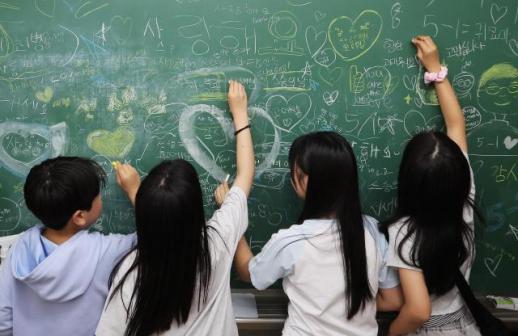 South Korea's Teachers' Day without pride, gratitude and... cake SEOUL, May 15 (AJP) -South Koreans, whose Confucian roots instill deep reverence for educators, have observed Teachers' Day for more than six decades. Yet the tradition endures largely in name, as schoolteachers' authority and morale languish under the weight of compounding regulations and increasingly assertive parenting. The interference extends to the absurd: provincial education offices have issued specific directives on how cakes may be shared on Teachers' Day, lest schools and classroom teachers find themselves entangled in legal disputes. "Students casually joke that they could have a teacher arrested simply for accepting a drink or even a small bunch of flowers," said Yun Misook, a teacher at S Elementary School in Geumjeong District, Busan with 21 years in the profession. "To hear that in the days before Teachers' Day makes one question the whole profession." The remark followed a notice posted on an internal portal by the Gyeongsangbuk-do Office of Education, a provincial education authority, advising that teachers and students refrain from sharing cake together under the country's anti-graft legislation — a directive that ignited immediate debate. What was once a day of gratitude has, for many educators, curdled into bitterness and cynicism. Only three in ten teachers reported satisfaction with their work, while more than half said they had considered leaving the profession within their first year, according to a survey released Thursday by the Korean Federation of Teachers' Unions. Half reported feeling wrongfully treated by parents and students; a mere five in one hundred felt their profession commanded genuine respect in society. A separate survey by the Korean Federation of Teachers' Associations (KFTA) yielded parallel findings. Nearly half — 49.2 percent — said their sense of professional pride had eroded over the past one to two years. The most commonly cited source of disillusionment, noted by 67.9 percent of respondents, was a sense of being distrusted by students and parents, or experiencing direct violations of their professional rights. Regional data echo the national picture. In Busan, the country's second-largest city, 69.2 percent of surveyed teachers said they would not choose teaching again given the opportunity, according to a 2026 perception survey conducted by the Busan Teachers' Union. Some 80.9 percent said they lived in fear of being accused of child abuse — even in the course of legitimate educational activities. Under current regulations, teachers are formally classified as having a direct conflict-of-interest relationship with students and parents, rendering even nominal tokens such as carnations, coffee, or cake largely impermissible. Teachers' Day has been observed each May 15 since 1965, the date chosen to coincide with the birthday of King Sejong, the sovereign who devised the Korean alphabet, hangeul, to broaden access to literacy and learning. In Confucian tradition, teachers are held in high esteem as moral guides as much as instructors — which is why students still compose handwritten letters of gratitude to their teachers. Yet many educators say the reality inside classrooms has transformed beyond recognition. "In the past, much was socially accepted as part of student guidance," Yun said. "Now everything is governed by manuals, procedures and the ever-present threat of complaints." She recalled organizing monthly class events and occasionally treating students to snacks as a reward. Today, concerns over safety liability, administrative paperwork and accusations of favoritism have made such gestures increasingly untenable. Classrooms, teachers say, have grown defensive and legally guarded. "These days, I record most counseling sessions with students," Yun said. "It feels necessary as a safeguard in case a complaint or child-abuse allegation surfaces later." The shift reflects a pervasive anxiety that has spread through South Korea's education system in the wake of several high-profile teacher deaths, sustained campaigns of parent complaints, and protracted disputes over classroom discipline. The crisis came to national attention following the 2023 death of an elementary school teacher at Seoul's Seoyi Elementary School, who died after reportedly enduring relentless parent complaints and classroom confrontations. The case galvanized mass nationwide protests, with teachers demanding meaningful legislative protection. Yet many educators say the situation inside schools has remained substantively unchanged. Teachers also point to the proliferation of artificial intelligence and smartphones as forces reshaping both classroom dynamics and students' dispositions toward their teachers. Baek Y.K., an elementary school teacher in Seoul's Gangnam district, observed that the digital environment had fundamentally altered how students perceived teachers' authority. "Teachers are no longer regarded as the primary source of knowledge, and that has changed classroom dynamics in profound ways," she said. A recent survey by the Seoul Education Research and Information Institute found that more than half of Seoul's teachers believed disruptions to classroom order — and encroachments on teachers' authority by emotionally distressed students — had worsened appreciably in recent years. Experts describe the situation as a cultural collision between entrenched Confucian expectations and a contemporary, consumer-oriented approach to education. Society, teachers say, still expects them to steward students' behavior and emotional development — while stripping them of the authority and trust that once underwrote that role. The profession itself has borne the consequences. Teaching was once among South Korea's most coveted and respected careers. But years of declining school-age enrollment, incessant parental pressure, and mounting fear of legal exposure have steadily eroded its appeal. Average admission scores at several of the country's elite teachers' universities fell in the 2025 academic year, according to local admissions analysts, signaling a measurable retreat in the profession's allure. Elementary teaching has also remained heavily female-dominated. In Seoul's 2026 public elementary school teacher hiring examination, only 30 of 210 successful candidates — roughly 14.3 percent — were men, according to the Seoul Metropolitan Office of Education. "Because there are so few male teachers, physically demanding tasks or difficult situations tend to fall to us by default," said Yeon, a teacher in his thirties based in Daejeon. "And if you try to raise concerns, there's an unspoken expectation that a man shouldn't complain — so you end up absorbing the pressure in silence." He added that workplace culture could be difficult to navigate, marked by frequent gossip and diffuse social pressures among colleagues. The teacher crisis in South Korea cannot be attributed to demographic decline alone, educators insist. Even as student populations shrink, many teachers say their workload has grown substantially more demanding — emotionally, administratively and legally — owing to behavioral challenges, persistent parental complaints and heightened legal scrutiny. "What is needed is mutual respect, consideration and a genuine sense of community," Yun said. "Education cannot be sustained by laws and systems alone." As South Korea marks another Teachers' Day, many educators say words of appreciation, however warmly offered, are no longer sufficient. What they want, they say, is far simpler: to teach without fear. 2026-05-15 13:01:49
 -
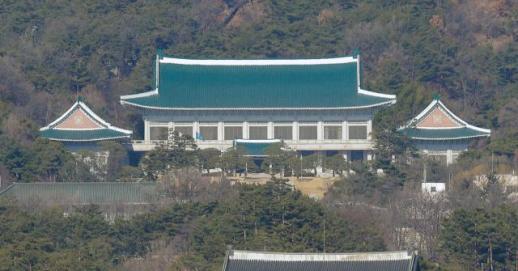 Japanese Prime Minister Kono to Visit South Korea for Shuttle Diplomacy South Korea's Blue House announced on May 15 that Japanese Prime Minister Sanae Takaichi will visit Andong, South Korea, from May 19 to 20 at the invitation of President Lee Jae-myung.In a written briefing, Chief Spokesperson Kang Yoo-cheong explained that Takaichi's visit comes about four months after President Lee's trip to Japan in January, marking the first reciprocal hometown visit between the leaders of the two nations.On the first day of the visit, May 19, the two leaders will hold both small and expanded summit meetings, a joint press conference, and a dinner, along with additional informal engagements.During the summit, they will discuss the future direction of South Korea-Japan relations and seek to enhance practical cooperation in various areas directly affecting citizens, including the economy, society, and public safety. They will also address regional and global issues, including the situation in the Middle East.Kang expressed hope that the shuttle diplomacy between Prime Minister Takaichi and President Lee, expanding from Gyeongju to Andong and other regional cities, will deepen the strong ties and trust between the two leaders and solidify the foundation for a forward-looking development of South Korea-Japan relations.* This article has been translated by AI. 2026-05-15 12:09:23
 -
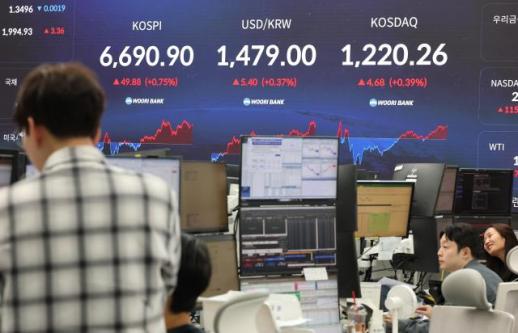 Middle East Risk Eases as Foreign Capital Outflow Declines in April Last month, improved investor sentiment significantly reduced the outflow of foreign capital from the stock market. Bond funds transitioned to net inflows following their inclusion in the World Government Bond Index (WGBI). According to the Bank of Korea's report on international finance and foreign exchange trends released on May 15, foreign securities (stocks and bonds) saw a net outflow of $2.13 billion in April. This indicates that the amount of foreign investment leaving the South Korean securities market exceeded the amount entering. Foreign capital had recorded a historic outflow of $36.55 billion last month, but as investor sentiment improved, the scale of outflows decreased significantly. Foreign stock investments experienced a net outflow of $2.68 billion, marking the fourth consecutive month of outflows due to geopolitical risks in the Middle East. However, following a ceasefire agreement between the U.S. and Iran, investor sentiment showed some recovery, leading to a substantial reduction in outflows from the previous month’s $29.78 billion. In contrast, bond funds saw a net inflow of $550 million, reversing from a net outflow of $6.77 billion the previous month. Despite low arbitrage incentives, the influx was driven by long-term government bond investments following WGBI inclusion. The net investment in government bonds with maturities of 1 to 30 years surged from $2.88 billion in March to $6.45 billion in April. The credit default swap (CDS) premium for South Korean government bonds (based on the 5-year foreign exchange stabilization fund bonds) averaged 31 basis points (1 basis point = 0.01 percentage points) in April, down 1 basis point from the previous month’s 30 basis points, maintaining the same level. However, as the conflict in the Middle East continues, the short-term external borrowing spread rose from 14 basis points to 19 basis points, while the long-term spread increased from 37 basis points to 45 basis points. Last month, the volatility of the won-dollar exchange rate decreased significantly compared to March. The average fluctuation and rate of change in April were 8.9 won and 0.59%, respectively, returning to February levels from the previous month’s 11.4 won and 0.76%. The Bank of Korea explained, "The exchange rate fell to the 1,450 won level due to expectations of progress in U.S.-Iran peace negotiations and the strengthening of the yen, but the decline was limited by reduced expectations for U.S.-Iran peace and net selling of domestic stocks by foreigners."* This article has been translated by AI. 2026-05-15 12:06:31
 -
 Milk Production Costs Decrease 0.4% Last Year, Freezing Milk Prices Likely This Year As negotiations for raw milk prices approach, the possibility of freezing milk prices is gaining traction. This is due to a decrease in production costs, a key factor in determining raw milk prices, which has reduced the pressure for price increases compared to previous years. According to the National Data Agency's "2025 Livestock Production Cost Survey Results" released on May 15, the production cost of milk per liter last year was 1,014 won, a decrease of 0.4% (4 won) from the previous year. This decline is attributed to a drop in the price of feed for dairy cows, which fell from 629 won to 615 won per kilogram, a decrease of 2.2% (-14 won). Raw milk prices are determined through negotiations between the Dairy Promotion Association, which consists of the dairy industry and dairy farmers, based on the previous year's production cost fluctuations. Under the current raw milk price linkage system, negotiations can occur if the production cost fluctuation rate is more than ±4% compared to the previous year, with price adjustments made within a maximum range of 70% of the production cost change. This year, the fluctuation rate of production costs did not reach the ±4% threshold, and the government's strong stance on price stability further increases the likelihood of freezing milk prices. However, since raw milk prices have been frozen for two consecutive years, and due to rising labor costs and exchange rates, there remains potential for price increases. The Dairy Promotion Association may conduct separate negotiations based on the board's judgment, considering the supply and demand situation for raw milk and market conditions, even if the previous year's production cost fluctuation does not meet the criteria. Meanwhile, the profitability of livestock farms varied by type last year.For beef cattle, the net loss per animal was 999,000 won, a reduction of 615,000 won (38.1%) from the previous year, indicating some improvement in the deficit. However, this marks the fourth consecutive year of losses since 2022. Although the price of beef cattle has risen, improving profitability, the burden of production costs continues due to rising calf prices. In fact, the production cost for beef cattle was 12.89 million won, an increase of 13,000 won (1.0%) from the previous year. For other beef cattle, the net loss was 1.493 million won, a decrease of 315,000 won (17.4%) from the previous year. This reduction in the deficit is attributed to lower feed costs and higher auction prices. In contrast, the profitability of dairy cows and pigs and chickens improved. Dairy cows saw a net profit of 2.235 million won per animal, an increase of 85,000 won (3.9%) from the previous year, due to rising farm-gate prices for raw milk and calf prices. Finishing pig farmers recorded a net profit of 81,000 won per animal, up 50,000 won (157.6%) from the previous year, thanks to higher prices received for pork. Layer hens benefited from rising egg prices, resulting in a net profit of 12,561 won per bird, an increase of 4,519 won (56.2%). Broilers also saw a profit increase to 213 won per bird, up 85 won (66.0%) due to reduced rearing costs. 2026-05-15 12:04:14
 -
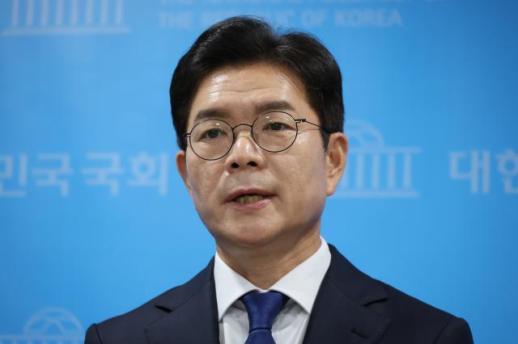 Jung Won-oh Promises Additional 2.5 Trillion Won in Local Love Gift Certificates Jung Won-oh, the Democratic Party's candidate for Seoul mayor, has pledged to issue an additional 2.5 trillion won in local love gift certificates. He also intensified his criticism of Oh Se-hoon, the candidate from the People Power Party, regarding his debate stance and the 'Garden of Gratitude'. At a press conference held on the morning of May 15 at the National Assembly in Yeouido, Jung stated, "Local love gift certificates are the most effective livelihood policy to alleviate citizens' living costs and boost sales in local businesses." Jung criticized the reduction in support during the administration of former President Yoon Suk-yeol and under Oh Se-hoon's tenure as mayor. He noted, "The Yoon administration has cut national funding for local love gift certificates and plans to halt it in 2024," adding that "Mayor Oh has only provided matching support for special issues like delivery and online sales since last year." He plans to expand the purchase and holding limits for local love gift certificates and increase the discount rate to 10%, the same as during the COVID-19 pandemic. Funding for this initiative is expected to come from a supplementary budget. Jung explained, "I will discuss this with newly elected city council members and during the transition period after taking office," adding that discussions with candidates for district mayor positions are already underway. Regarding recent polling showing a close race with Oh, Jung remarked, "The Seoul election is a tight contest." He stated, "Regardless of my approval ratings, the Seoul election is competitive, with some areas showing significant differences and others being very close." He criticized Oh's recent proposal for additional joint debates, saying, "It is more problematic that Oh changes his stance based on the situation rather than the debates themselves." Jung pointed out, "A month ago, Oh said, 'TV debates are not everything' and refused to debate his opponents in the primary. It is unreliable to frame it differently now that circumstances have changed. I hope he reflects on his own statements." Additionally, regarding the controversy surrounding the Garden of Gratitude, Jung indicated that he is considering relocating the sculpture. He stated, "The intention to express gratitude to the 22 UN participating countries is appropriate," but added, "The current location lacks contextual significance. I will consult with citizens about relocating it to the War Memorial in Yongsan."* This article has been translated by AI. 2026-05-15 12:01:06
 -
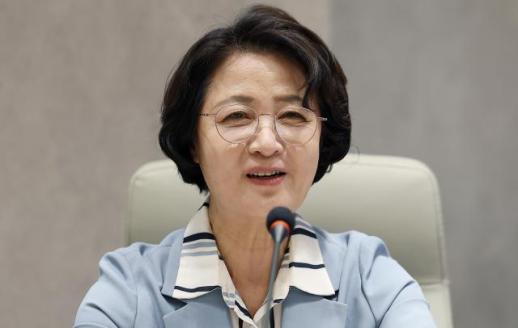 Choo Mi-ae Defends AI National Dividend Proposal Amid Controversy Choo Mi-ae, the Democratic Party candidate for Gyeonggi governor, addressed the recent controversy surrounding the AI national dividend proposal suggested by policy chief Kim Yong-beom. She stated that while misunderstandings could influence voter sentiment, it is impossible to determine which side would benefit more from the situation. In an interview on KBS 1 Radio's "Current Affairs," Choo remarked, "As robotics and AI technology advance, productivity can significantly increase, but existing jobs may decline. This is not an absurd statement." She emphasized that during a period of industrial transformation, it is the responsibility of politicians and administrators to create opportunities that benefit all citizens. Choo described the national dividend system as a concept of considerable significance, noting that similar ideas are being explored abroad, and called for public discussion alongside institutional design. Choo also warned that if the People Power Party continues to incite public sentiment, citizens who are not well-informed may misunderstand the proposal as nonsensical. She added, "There are positive aspects to this system, so we cannot definitively say it will favor one side over the other." Meanwhile, after Kim proposed the AI dividend system on May 12 via Facebook, People Power Party leader Jang Dong-hyuk has intensified his attacks. Jang criticized Lee Jae-myung, stating on Facebook the previous day, "Lee is only interested in collecting money, and the excess profits or tax revenues are not money earned by him." He further condemned the notion that they would forcibly take money while hindering industrial development as a typical gang mentality. The Blue House clarified that Kim's proposal reflects his personal opinion and is based on the concept of utilizing excess tax revenues rather than excess profits. The Democratic Party indicated that while no discussions have taken place on the matter, it should be reviewed by academia in the future. 2026-05-15 11:49:06
 -
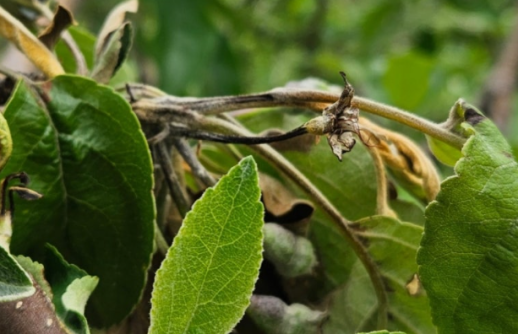 First Case of Apple Fire Blight Detected in Chungju; Alert Level Raised On May 15, the Rural Development Administration (RDA) raised the alert level to caution after the first case of fire blight was detected this year in an apple orchard in Chungju, North Chungcheong Province.According to the RDA, the disease was discovered during a routine inspection period this month, following a report from a local farm. Officials from the Chungju Agricultural Technology Center conducted a preliminary test on May 14, which returned a positive result. Subsequent detailed testing confirmed the presence of fire blight. The affected orchard will be disposed of according to guidelines.In response, the RDA has activated its emergency response team and is operating a field diagnostic lab to quickly assess suspected samples collected from the outbreak area.Currently, the North Chungcheong Agricultural Technology Institute and the Chungju Agricultural Technology Center are collaborating on urgent pest control measures. Additionally, they plan to conduct intensive inspections of all orchards within a 2-kilometer radius of the outbreak site until May 19 to prevent further spread.The RDA emphasizes the importance of preventive measures by farmers to curb the spread of fire blight. They are urging agricultural workers to complete pest prevention training and adhere to safety protocols, as well as to enhance self-monitoring for apple and pear growers.Furthermore, the RDA warns that farmers who respond passively to suspected symptoms of fire blight may face penalties, including reduced compensation for losses, and encourages immediate reporting to agricultural technology centers upon detection of any symptoms.Cha Eui-seok, head of the RDA's Disaster Response Division, stated, "Currently, fire blight is not expected to significantly impact the supply of apples and pears. However, since new cases emerge in more than two regions each year, thorough monitoring and pest control must be prioritized in areas without outbreaks."* This article has been translated by AI. 2026-05-15 11:39:10
 -
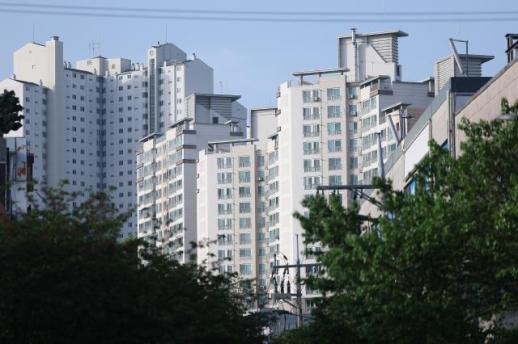 Seoul Housing Prices Rise After End of Capital Gains Tax Exemption Seoul's housing prices have resumed their upward trend following the end of the capital gains tax exemption. Even Gangnam has turned positive, while areas like Seongbuk and Jongno have recorded their highest growth rates since statistics began, reflecting a significant increase in mid-priced apartment areas. According to the Korea Real Estate Agency's April national housing price trend survey released on May 15, the comprehensive housing price index in Seoul rose by 0.55%. The increase was driven by strong demand in mid-priced areas. By district, Gwangjin saw the highest growth rate at 0.96%, primarily in the Junggok and Guui-dong areas. Seongbuk followed with a 0.92% increase, focusing on small to medium-sized apartments in Seongbuk and Gileum-dong, while Nowon recorded a 0.79% rise, mainly in the large complexes of Wolgye and Junggye-dong. Seodaemun (0.78%) and Dongdaemun (0.77%) also saw increases in areas like Bukgajwa and Hong-eun-dong, and Dapsimni and Huigyeong-dong, respectively. Gangseo (0.87%) showed growth in redevelopment areas of Gayang and Yeomchang-dong, Yeongdeungpo (0.83%) in the station areas of Singil and Yangpyeong-dong, Gwanak (0.74%) in Sinlim and Bongcheon-dong, and Guro (0.72%) in Gaebong and Gocheok-dong. However, Gangnam reported a decline of -0.22% in April, particularly in high-priced areas like Apgujeong and Gaepo-dong. However, the mood shifted dramatically this month following the end of the capital gains tax exemption. According to the Korea Real Estate Agency, the apartment sale prices in Gangnam rose by 0.19% in the second week of May, marking a turnaround after 12 weeks of decline. Major areas like Songpa (0.35%), Seocho (0.17%), and Yongsan (0.21%) also increased their growth rates. The rise in prices is also accelerating in the outer areas where mid-priced apartments are concentrated. In the second week of May, Seongbuk (0.54%) and Jongno (0.36%) recorded their highest growth rates since statistics began. Areas with strong demand, such as Seodaemun, Gangseo, Dongdaemun, and Nowon, continued to see upward trends, contributing to the overall increase in the market. Consequently, Seoul's apartment sale prices rose by 0.28% in the same week, significantly up from 0.15% the previous week. This marks the largest increase since the fourth week of January this year. Analysts suggest that the surge in sales aimed at tax savings, which occurred before the end of the capital gains tax exemption, has depleted available listings, leading to a simultaneous decrease in inventory and an increase in prices. The Ministry of Land, Infrastructure and Transport is encouraging listings by expanding the exemption of occupancy requirements in designated land transaction areas from certain multi-homeowners to all homes with tenants. Yoon Soo-min, a real estate expert at NH Nonghyup Financial Group, noted, "Price impacts vary by region. Areas with many mid-priced apartments have steady demand, making price stabilization difficult, while high-priced apartments have limited demand, suggesting a more stable trend may continue." Nam Hyuk-woo from Woori Bank's real estate research institute stated, "The upward trend has resumed, particularly in so-called 'value-for-money areas' where price burdens are lighter and living conditions are favorable. Areas like Seodaemun, Dongdaemun, and Gangseo have a small gap between transaction prices and listing prices, resulting in lower buyer resistance, and there seems to be an influx of demand from lower-tier to higher-tier areas." * This article has been translated by AI. 2026-05-15 11:36:45