
Journalist

JEONG SE HEE
-
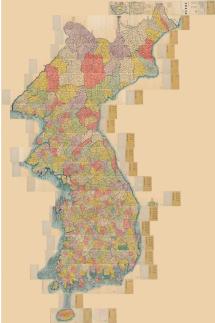 Historic map featuring Dokdo islets to be auctioned next week SEOUL, May 22 (AJP) - Daedongyeojido, a map of the Korean Peninsula, that includes South Korea's easternmost islets of Dokdo as part of its territory, is slated to go on auction in Seoul next week. According to Seoul Auction in southern Seoul, the hand-colored copy of the map created by famed geographer Kim Jeong-ho will be put up for auction next Thursday, along with about 145 works spanning modern and traditional Korean art, with a combined estimated value of about 10.3 billion won. Divided into 22 foldable sections for portability, the map, known for its detailed depiction of geography, measures roughly 3.9 meters in width and 6.85 meters in length when fully unfolded. "The map has scholarly significance because it includes the islets," said a Seoul Auction staffer, adding that it is historically valuable amid Japan's repeated claims of sovereignty over Dokdo. 2026-05-22 17:45:38
 -
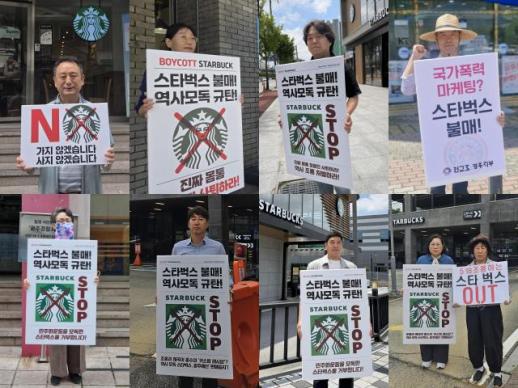 Govt boycott widens vs Starbucks Korea over "Tank Day" backlash SEOUL, May 22 (AJP) - More Korean ministries and public agencies are moving to distance themselves from Starbucks Korea after the top coffee franchise under Shinsegae Group came under fire for its “Tank Day” promotion over its association with the May 18 Gwangju Democratic Uprising. South Korea’s Defense Ministry has temporarily suspended welfare partnership projects with Starbucks Korea as criticism intensifies over what many viewed as historically insensitive marketing tied to one of the country’s darkest democratic tragedies. The ministry had signed a memorandum of understanding with Starbucks Korea on April 6 at its headquarters in Yongsan, Seoul, under the company’s “Hero Program.” The agreement, attended by Vice Defense Minister Lee Doo-Hee and Starbucks Korea strategic planning chief Lee Soo-yeon, included plans to provide beverages to troops stationed in remote areas, scholarships for children of fallen or injured soldiers and employment support for service members preparing for civilian life. The suspension followed mounting outrage over Starbucks Korea’s “Tank Day” campaign, which coincided with the anniversary of the 1980 Gwangju Uprising. Critics argued the use of the word “tank” was deeply inappropriate given the military crackdown that killed and injured pro-democracy demonstrators during the uprising. Civilian boycott of Korea's favorite coffee brand accounting for a quarter of the coffee-chain market has been widening. The controversy has not died down even after Shinsegae Group chairman Chung Yong-jin moved fast to sack Starbucks Korea CEO Son Jung-hyun. Since the incident drew open condemnation from President Lee Jae Myung, government agencies moved swiftly to distance themselves from the brand. The Justice Ministry recently instructed the Supreme Prosecutors’ Office to review whether Starbucks products had been used in official surveys, contests or promotional events since January. Prosecutors later reported that no Starbucks products had been purchased during the period. Minister of Patriots and Veterans Affairs Kwon Oh-eul also publicly criticized the controversy in a post on X on Thursday. “As minister of patriots and veterans affairs, I express deep regret and grave concern over Starbucks Korea, which caused controversy with its May 18 Tank Day event on the anniversary of the May 18 Democratic Uprising,” Kwon said. Kwon added that the ministry would strengthen monitoring against the spread of false information related to the May 18 movement and promote broader historical awareness across society, including within corporations. He also urged Starbucks Korea to issue a sincere apology to democracy activists, bereaved families and the wider public. The veterans ministry is also understood to have conducted a comprehensive review of its use of Starbucks gift certificates and products at ministry events over the past several years and issued internal guidance temporarily banning their use. 2026-05-22 17:39:58
 -
 Consumer group urges Starbucks to fully refund prepaid balances SEOUL, May 22 (AJP) - The Korea National Council of Consumer Organizations urged Starbucks Korea to refund prepaid card balances in full and without conditions to customers who no longer wish to use the chain, as a consumer boycott over a controversial marketing campaign deepens. The civic group on Friday also called on regulators and lawmakers to overhaul what it described as an unreasonable refund regime for prepaid stored-value cards. Under Starbucks' current terms, customers must spend at least 60 percent of a charged balance before the remainder can be refunded. That threshold is rooted in the Fair Trade Commission (FTC)'s standard terms for new-type gift certificates and the Electronic Financial Transactions Act, which require users of fixed-amount vouchers to spend at least 60 percent — or 80 percent for vouchers worth 10,000 won ($6.59) or less — before reclaiming the balance. "Starbucks must improve its system so that refunds can be processed without visiting a store, easing the burden on store staff," the council said in a statement, adding that the FTC and the National Assembly should swiftly amend the relevant rules. The backlash erupted after Starbucks Korea launched its "Tank Day" promotion on May 18, the 46th anniversary of the Gwangju Democratization Movement, using slogans including "tap on the desk" — phrases critics say evoked the 1980 military crackdown in Gwangju and the 1987 torture death of student activist Park Jong-chul. The boycott has since spread to other Shinsegae affiliates and prompted a surge in app deletions and prepaid card refunds. Starbucks Korea's cash and cash equivalents stand at about 137.4 billion won, equivalent to roughly 32 percent of its prepaid liabilities — meaning available cash could be exhausted if just one in three customers demanded refunds simultaneously. 2026-05-22 17:22:38
 -
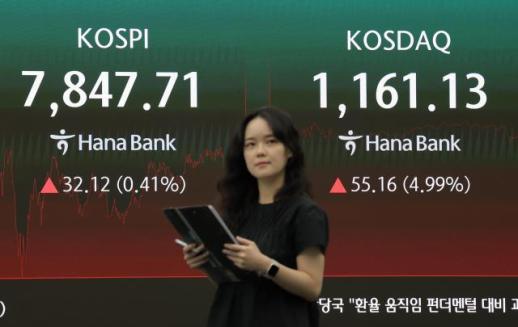 Asia AI boom lifts Nikkei to record high while KOSDAQ roars on retail frenzy SEOUL, May 22 (AJP) - Japan's main index touched new heights Friday as it led broad Asian gains refueled by AI hype, while Seoul's secondary bourse received a boost from a state-backed fund. The Nikkei 225 rose 2.68 percent to a record close of 63,339.07 amid reinforced momentum in AI- and semiconductor-related stocks following Nvidia's strong earnings. SoftBank Group surged more than 12 percent intraday after a near 20-percent jump in the previous session — the biggest one-day gain since February 2000 — on expectations surrounding Arm Holdings and a potential OpenAI IPO. AI-related shares also rallied strongly, with factory automation firm Fanuc climbing 6.61 percent, Kawasaki Heavy Industries gaining 4.48 percent and electronic components maker Taiyo Yuden soaring 11.74 percent to a record high on expectations for rising AI server demand. China's Shanghai Composite also ended 0.87 percent higher at 4,112.90, while Hong Kong's Hang Seng Index was trading up 0.85 percent at 25,602.66. Korea's benchmark KOSPI swung sharply throughout the session before closing 0.41 percent higher at 7,847.71. The index briefly fell below 7,800 in early trading before rebounding above 7,860. Retail investors bought a net 1.07 trillion won worth of local shares, while foreigners sold a net 1.92 trillion won. Institutional investors bought a net 758.3 billion won. The junior KOSDAQ surged 4.99 percent to 1,161.13, triggering buy-side sidecar curbs for a second consecutive session as growth and speculative shares rallied sharply. Investor sentiment was boosted by the launch of the "National Growth Fund," a state-backed investment program aimed at channeling household savings into AI and other strategic industries. Online allocations at several brokerages sold out within minutes after subscriptions opened Friday morning, reinforcing expectations that the fund would primarily benefit smaller KOSDAQ-listed technology and venture firms, while boosting buying interest in biotech, AI, semiconductor equipment and secondary-battery shares. Secondary-battery stocks EcoPro BM and EcoPro climbed 10.77 percent and 12.87 percent to close at 216,000 won and 146,500 won, respectively, while semiconductor equipment maker Jusung Engineering surged 20.95 percent to 224,000 won. Biotech shares also rallied broadly, with HLB jumping 8.76 percent to 50,900 won, ABELBIO rising 9.37 percent to 120,200 won and LigaChem Biosciences gaining 12.83 percent to 157,400 won. The divergence between the two benchmarks widened as Samsung Electronics and SK hynix lost momentum following weeks of steep gains tied to the global AI rally. Samsung Electronics fell 2.34 percent to 292,500 won after hitting a record intraday high of 300,500 won, while SK hynix edged up 0.05 percent to 1,941,000 won. Other major KOSPI names traded mixed. Auto shares weakened, with Hyundai Motor falling 1.65 percent to 655,000 won and Kia declining 1.85 percent to 164,800 won amid profit-taking pressure following recent gains. By contrast, electronics and industrial shares advanced. Samsung Electro-Mechanics surged 11.30 percent to 1,340,000 won, while HD Hyundai Heavy Industries rose 1.19 percent to 680,000 won and Hanwha Aerospace gained 1.04 percent to 1,261,000 won. Financial and holding company shares also strengthened, with KB Financial rising 2.70 percent to 160,000 won, Samsung Life Insurance adding 2.68 percent to 364,500 won and SK Inc. jumping 11.46 percent to 642,000 won. Among battery and biotech names on the main board, Samsung SDI climbed 5.03 percent to 647,000 won and Samsung Biologics gained 1.43 percent to 1,415,000 won. Despite the relatively muted finish for the KOSPI, intraday volatility remained elevated as investors rotated out of large-cap semiconductor names and into smaller policy-driven momentum plays linked to the government fund theme. The dollar-won exchange rate retreated to 1,517.2 won on verbal intervention from authorities after crossing 1,580 won earlier in the day as foreign equity selling extended for a 12th straight session. In a joint statement, South Korea's Ministry of Economy and Finance and Bank of Korea said they were closely monitoring the market and would take decisive action if needed. The Seoul markets are closed Monday for Buddha's Birthday. 2026-05-22 17:19:06
 -
 Two key candidates in tight race for Seoul mayor ahead of local elections, poll suggests SEOUL, May 22 (AJP) - With just weeks to go before the June 3 local elections, Jung Won-oh of the ruling Democratic Party (DP) and Oh Se-hoon of the main opposition People Power Party (PPP), a former incumbent, appear to be in a neck-and-neck race for Seoul mayor, one of the biggest showdowns. In a poll of over 1,000 Seoul residents conducted by pollster Ace Research earlier this week, Jung had 41.7 percent support, compared with 41.6 percent for Oh. They were followed by distant rivals Kwon Young-guk of the minor Justice Party, who garnered 2.1 percent, and Reform Party candidate, Kim Jung-chul, who received 2.0 percent. About 5.8 percent of respondents said they support no candidate, while a similar proportion said they were undecided or refused to answer. Among respondents who said they would "definitely vote," Jung led with 49.8 percent, ahead of Oh's 42.4 percent. When asked who was most likely to win regardless of their own preference, 46.2 percent named Jung and 41.4 percent Oh. By area, Jung drew most of his support from voters in northeastern Seoul, which includes Dobong, Gwangjin, Jungnang and Seongdong, while Oh led in the affluent southern districts south of the Han River such as Gangnam, Seocho and Songpa. 2026-05-22 16:54:48
 -
 Blue zones and EVs: PUBG takes over Seongsu SEOUL, May 22 (AJP) -Seoul’s hip Seongsu district has turned into a real-world battleground — minus the gunfire, but with plenty of blue zones, laser combat and electric vehicles. To mark the eighth anniversary of PUBG Mobile, South Korean game publisher Krafton and Kia launched “Area 8,” an immersive pop-up event stretching across “PUBG Seongsu” and “Kia Unplugged Ground” through May 25. The collaboration transforms parts of Seongsu into a playable extension of the game world, blending PUBG’s survival mechanics with Kia’s EV lineup. At PUBG Seongsu, visitors are greeted by a giant blue-zone air dome modeled after the shrinking combat field familiar to PUBG players. Inside, blue ball pits, obstacle challenges and themed photo zones recreate the tension and chaos of surviving late into a match. Scattered throughout the venue are PUBG props and displays featuring the Kia EV4, turning the electric vehicle into part of the game environment rather than a showroom centerpiece. Nearby at Kia Unplugged Ground, the experience follows the rhythm of a PUBG round itself — landing, looting and combat. Visitors race EV4 RC cars through miniature courses and participate in team laser battles inspired by the game’s firefights, while staff dressed as PUBG’s iconic “Helmet Guy” guide players through missions and activities. The event also turns Seongsu itself into part of the gameplay. A stamp tour linking PUBG Seongsu and Kia Unplugged Ground encourages visitors to move between venues, effectively expanding “Area 8” beyond the walls of the installations and into the neighborhood’s streets and cafes. Rather than presenting cars as static products, Kia’s Kia EV3 and EV4 appear as interactive objects embedded inside PUBG’s universe — part marketing showcase, part urban game map. Staff dressed as PUBG’s iconic “Helmet Guy” character guide visitors through the venues, while Kia EV3 and EV4 models are presented as in-game style objects rather than traditional showroom displays. Visitors can also participate in a stamp tour linking PUBG Seongsu and Kia Unplugged Ground, turning the wider Seongsu area into an extension of the “Area 8” game world. 2026-05-22 16:49:16
 -
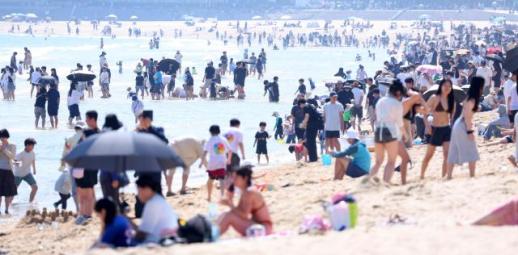 South Korea forecast to see hotter-than-usual summer with extreme heatwave SEOUL, May 22 (AJP) - South Korea is likely to face a hotter-than-usual summer this year, with above-normal sea surface temperatures around the Korean Peninsula expected to fuel prolonged heat and heavy downpours, the Korea Meteorological Administration (KMA) said on Friday in its forecast for the upcoming three months. According to the weather agency, there is a 60 percent chance that temperatures in June and July will be higher than the seasonal average. For August, the peak summer period, the probability is estimated at 50 percent. An analysis by the World Meteorological Organization, using 525 climate model datasets from meteorological agencies and institutions in some 12 countries, also points to a warmer-than-usual summer for South Korea. The analysis put the probability at up to 76 percent that temperatures from June to August would exceed seasonal norms. These forecasts are attributed to unusually warm sea surface temperatures in the North Indian Ocean and North Pacific. Warmer waters in the North Indian Ocean can strengthen convective activity and help generate atmospheric wave patterns that favor high-pressure circulation east of South Korea. Such high pressure systems can draw hot and humid southerly winds toward the peninsula. In recent summers, a strong North Pacific high parked southeast of South Korea has repeatedly helped produce extended periods of oppressive heat. The KMA also cited the likely persistence of a positive North Atlantic tripole pattern, which can help build high pressure in the upper atmosphere over South Korea. That pattern tends to increase sunshine and suppress cloud formation, raising temperatures further. El Niño is another factor. Sea surface temperatures in the central and eastern tropical Pacific are expected to rise through the June-August period, increasing the chance of El Niño conditions. U.S. and international forecasters have said the event could strengthen toward a "super El Niño" level by autumn. Waters around South Korea are also already warmer than usual and are expected to remain so through the summer. The KMA said the probability of above-normal sea surface temperatures was especially high in the East Sea, reaching 70 percent in June and July. Warmer seas can increase the supply of water vapor to the atmosphere, intensifying both heat and the risk of extreme rainfall. The KMA said stronger-than-usual warm currents, including the Tsushima Warm Current and the East Korea Warm Current, have raised ocean heat content near the peninsula. The forecast follows a string of record-breaking warm seasons. Over the past 53 years, South Korea's average June temperature has risen by 1.7 degrees Celsius, while July and August temperatures have climbed by 1.3 degrees and 1.4 degrees, respectively. This year's monsoon season is expected to bring similar or slightly higher levels of rainfall in June and July. The likelihood of heavy rain is linked to hot, humid air flowing into the inland areas from the south. Meanwhile, the Korea Disease Control and Prevention Agency said it began operating shelters and facilities to respond to heat-related illnesses and emergencies last week, and will continue to run them until the end of September in cooperation with more than 500 medical institutions across the country. Heat-related illnesses including heatstroke can cause symptoms such as headaches, dizziness, muscle cramps, fatigue and loss of consciousness, and can be fatal if left untreated. The number of reported heat-related illness cases rose to 4,460 last year, up more than 20 percent from 3,704 a year earlier, and close to the 4,526 cases recorded in 2018, when South Korea experienced its longest-ever stretch of extreme heat days. 2026-05-22 16:30:51
 -
 AJP Market Watch: AI boom runs into debt and FX markets in Korea, Japan SEOUL, May 22 (AJP) -Artificial intelligence is starting to look like a mixed blessing — at least for the currency and debt markets of Northeast Asia. Equity markets in both countries are on fire. The KOSPI is up more than 85 percent this year, the Nikkei 225 more than 22 percent. Both economies have outperformed expectations, with Japan's GDP expanding 2.1 percent on an annualized basis in the first quarter and Korea's 1.7 percent, as tech-heavy manufacturers ride the AI boom. But the robust headline numbers mask a colder reality the AI froth is hiding — dangerously high leverage, asset inflation, depopulation, energy shocks tied to heavy dependence on Gulf fuel sources, and stubbornly weak currencies. Overlooked by euphoric equity investors, debt yields are rising sharply across major economies as inflation fears, oil shocks and mounting public debt collide with overheated asset prices. Nowhere is that tension clearer than in South Korea and Japan — two export powers riding the AI wave while simultaneously confronting the return of inflation, currency weakness and bond-market stress. The warning signs are already visible. Korea's producer price index surged 2.5 percent month-on-month and 6.9 percent year-on-year in April, the sharpest pace since the aftermath of the 1998 Asian financial crisis. Petroleum and coal prices jumped 31.9 percent, while financial and insurance services rose 26.2 percent — the largest increase on record — as stock trading exploded during the AI frenzy. Brokerage commissions alone surged 119 percent as retail investors rushed into the market on fear of missing out. The KOSPI soared more than 85 percent between the end of 2025 and May 21, while consumer sentiment returned to optimistic territory despite accelerating inflation pressures. Japan is experiencing a parallel dynamic. The Nikkei 225 has climbed more than 22 percent this year alone, powered by AI-linked manufacturing, semiconductors and global capital flows seeking alternatives to slowing Western growth. At the same time, Japanese government bond yields have surged to levels unseen in decades as investors price in a more sustained exit from ultra-loose monetary policy. Japan's 10-year government bond yield climbed above 2.8 percent this week — its highest since 1996 — after stronger-than-expected economic growth reinforced expectations that the Bank of Japan may continue tightening. Thirty-year Japanese yields touched record highs dating back to 1999. Korea's 10-year yield simultaneously climbed above 4.1 percent, while five-year yields approached 4 percent. What links the two countries is not merely the AI rally itself, but the structural vulnerability hidden beneath it. Both Korea and Japan remain deeply dependent on imported energy, external demand and globally mobile capital. Both have allowed years of ultra-cheap liquidity to inflate financial assets. And both are now discovering that AI-driven wealth can quickly spill into inflation psychology, speculative behavior and currency instability. The shift is already feeding through markets. Foreign investors dumped a net 44.6 trillion won worth of KOSPI shares in May through May 21, after modest buying in April, according to Financial Supervisory Service data. Daily foreign selling reached nearly 2.94 trillion won on May 20 alone. The exodus has intensified pressure on the Korean won. The dollar-won exchange rate climbed from 1,483.3 won at the end of April to above 1,506 this week, before surging further intraday Friday toward 1,518 amid broad foreign selling and dollar strength. One-month forward rates also jumped, signaling expectations for further depreciation. That matters because neither Korea nor Japan imports inflation gently. Both economies rely heavily on imported oil, gas and raw materials. Brent crude remains more than 72 percent above end-2025 levels, while Dubai crude is still up more than 56 percent despite recent pullbacks. A weaker won and weaker yen therefore magnify energy costs directly into domestic producer prices, transportation costs and household inflation. And the AI boom itself is beginning to amplify those pressures. In Korea, semiconductor profits and stock gains are reshaping wage expectations across industries. Samsung Electronics and SK hynix bonuses are becoming reference points far beyond the chip sector, fueling broader compensation demands during an already inflationary period. Retail participation in equities has surged as households increasingly treat asset inflation as a substitute for income growth. Japan faces a different historical context but an increasingly similar outcome. After decades of wage stagnation, rising corporate profits and labor shortages are finally pushing salaries higher. But stronger wages combined with rising import costs are also complicating the Bank of Japan's long-awaited normalization process. The central banks now face a dilemma with no painless solution. If they keep policy loose, currencies may weaken further, feeding imported inflation and asset bubbles. If they tighten aggressively, they risk puncturing equity rallies and destabilizing heavily indebted governments and households accustomed to abundant liquidity. This is why the recent bond-market moves matter far beyond technical finance. Global investors are beginning to question whether the AI era can coexist indefinitely with the monetary assumptions of the post-2008 world — ultra-low rates, permanently suppressed bond yields and endless liquidity support. That skepticism is appearing simultaneously across markets. U.S. Treasury yields have climbed sharply amid inflation and debt concerns. German bund yields are approaching levels last seen during the eurozone sovereign debt crisis. British gilt yields are hovering near financial-crisis highs. Japan's long-dormant bond market is finally awakening. Korea's curve is steepening rapidly. Bond vigilantes — long absent during the era of quantitative easing — are returning globally. For Korea and Japan, the danger is particularly acute because both economies sit at the intersection of technology euphoria and external vulnerability. Their markets have grown increasingly dependent on foreign inflows, semiconductor optimism and weak currencies that support exports. But those same weak currencies now threaten to import inflation at precisely the moment asset markets appear most overheated. History shows these phases can persist longer than expected. Asset rallies often intensify even as financial conditions deteriorate underneath. The Asian financial crisis began not with recession, but with confidence and capital inflows. So did many liquidity booms before it. That does not mean a crisis is imminent. But it does mean the era of consequence-free liquidity is ending. The AI revolution may indeed reshape the global economy. But it will not abolish the basic laws of finance. Rising wages, weaker currencies, higher oil prices and surging asset values eventually collide with the bond market's demand for discipline. And that collision is beginning to unfold across Northeast Asia now. 2026-05-22 16:05:40
 -
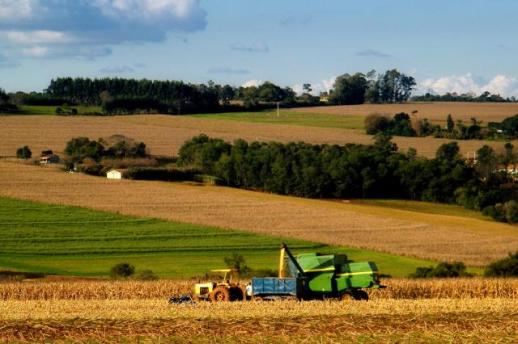 Korean farm income hits record on livestock rebound SEOUL, May 22 (AJP) - South Korean farm households earned an average of 54.67 million won ($36,017) in 2025, a record high driven by a sharp recovery in livestock and crop prices, while fishery households saw their incomes slide on weaker seaweed and abalone markets. According data of last year's farm and fishery household economy released by the Ministry of Data and Statistics on Friday, average annual farm income climbed 8.0 percent from a year earlier to 54.67 million won — the highest level since the ministry began compiling the data. Agricultural income alone surged 22.3 percent to 11.71 million won, powered by an 8.3 percent jump in gross farm receipts that outpaced a 3.4 percent rise in operating costs. Livestock revenue soared 28.5 percent, while crop revenue edged up 1.1 percent. "Farm receipts had temporarily contracted in 2024 due to falling rice and livestock prices, but prices rebounded last year and pushed receipts back into growth," said the Ministry of Agriculture, Food and Rural Affairs, adding that firmer prices for certain fruit crops also lifted the headline figure. Transfer income, which includes government subsidies, rose 9.1 percent to a record 19.89 million won on the back of higher direct payments to farmers and an increase in the maximum monthly basic pension to 342,510 won. By farming type, livestock households led the gains with income jumping 64.0 percent to 88.39 million won, followed by fruit growers and rice farmers, while vegetable producers saw a 3.2 percent decline. Fishery households, by contrast, posted average income of 58.98 million won, down 7.3 percent from a year earlier as what the ministry explained as base effect from 2024's record seaweed prices unwound and abalone prices weakened. Fishery income tumbled 31.6 percent to 19.06 million won, with aquaculture revenue plunging 26.3 percent even as catch-based revenue rose 9.0 percent. Average farm household assets reached 662.85 million won at the end of 2025, up 7.6 percent, while debt rose 6.0 percent to 47.71 million won, reflecting increased borrowing tied to smart farm investments and policy-loan deferrals for disaster-hit producers. 2026-05-22 15:54:16
 -
 Samsung tops US customer satisfaction index for mobile phones SEOUL, May 22 (AJP) - Samsung Electronics secured the top position in a major U.S. consumer satisfaction survey for mobile phones, slightly ahead of rival Apple Inc.. The South Korean tech firm scored 81 out of 100 in the overall mobile phone category of the 2026 American Customer Satisfaction Index (ACSI) study, which was released on Tuesday. Apple, which shared the top position last year, slipped one point to 80, while Google and Motorola tied for third with 77 points each. The survey polled approximately 30,000 U.S. consumers between April 2025 and March 2026. Among specific device features, basic communication functions such as calling and text messaging received the highest satisfaction score of 86. A newly added "mobile AI" category tied for second at 85, indicating that consumers weigh artificial intelligence performance as heavily as standard communication capabilities. In the flagship device segment, Samsung scored 84, leading Apple at 82. The two companies tied for first place in the smartwatch category, both earning 80 points. Separately, U.S. consumer advocacy publication Consumer Reports ranked Samsung's Galaxy S26 Ultra as its top smartphone with an overall score of 88 in April. 2026-05-22 15:51:02