
Journalist

James Mehigan
-
 K-Art Takes Center Stage in May Auctions Following Record-Breaking Sales This year, the domestic art auction industry has set record prices, prominently featuring Japanese works. In May, however, it is showcasing 'K-Art'. According to the auction industry on May 21, several notable pieces representing Korean art, including the Daedongyeojido, works by Park Soo-keun and Seo Do-ho, will be auctioned this month. Japanese artists have garnered significant attention in the domestic auction market this year. Last month, at a Seoul Auction event, Yoshitomo Nara's 2016 piece 'Nothing about it' sold for 15 billion won, setting a record for the highest auction price in South Korea. In the same auction, Yayoi Kusama's 2015 work 'Pumpkin' fetched 10.45 billion won. In May, the domestic auction industry is focusing on K-Art. Seoul Auction will feature a colored manuscript of the Daedongyeojido in its auction on May 28. This piece is based on the 1861 Sin-yu edition by Kim Jeong-ho, with approximately 35 known copies worldwide. It is classified as a national registered cultural heritage, among seven designated cultural assets. Notably, the manuscript includes the term 'Usan' (于山), referring to Dokdo, a feature not commonly found in woodblock prints. The overall dimensions are approximately 390 cm wide and 685 cm long. It combines geographical representation with artistic form, enhancing visibility through varied colors for different regions and highlighting mountain ranges, waterways, and road networks. Other items include a collection of photographs and materials related to Han Hee-soon, the last court lady of the Korean Empire, and a set of seven photographs related to the Cheondogyo Youth Party, which documented the intersection of religion, education, and national movements during the Japanese occupation. K Auction, which will hold its auction on May 27, will also present Seo Do-ho's large installation 'Cause & Effect', along with significant works by modern Korean masters such as Park Soo-keun, Kim Whanki, and Yoo Young-kuk. Seo Do-ho gained international recognition when he was selected as the representative for the Korean Pavilion at the Venice Biennale in 2001, exploring themes of migration, residence, and the relationship between individuals and communities. His 'Cause & Effect', measuring 164 cm in diameter and 300 cm in height, is a large installation made from acrylic, aluminum discs, stainless steel frames, cables, and monofilament. Thousands of small figurines are intertwined to form a single, massive organism, encapsulating the artist's core reflections on the relationship between the individual and the collective. This is a rare opportunity to acquire one of Seo Do-ho's large works, which are held in major institutions worldwide, including the Leeum Museum of Art. Works by other modern Korean masters, including Park Soo-keun, Kim Whanki, Yoo Young-kuk, Lee Jung-seob, and Lee Eung-no, will also be featured. Meanwhile, the auction industry is experiencing a general resurgence both domestically and internationally. The Phillips Auction's modern and contemporary art evening auction in New York on May 19 achieved a total sales amount of $115,216,700, with a 100% sell-through rate in both quantity and value, more than double the total sales from the previous year.* This article has been translated by AI. 2026-05-21 18:30:00
 -
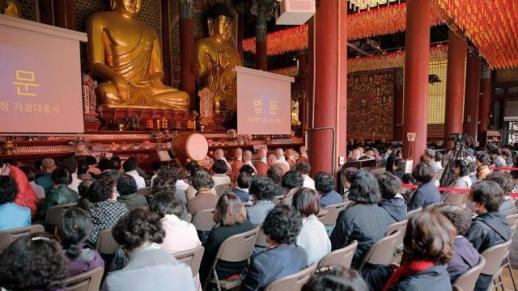 Alternative Holiday for Buddha's Birthday Raises Questions About Services As the alternative holiday for Buddha's Birthday approaches, there is growing interest in the operation of essential services. While government offices, schools, and financial markets typically close, the status of banks, hospitals, and delivery services varies by institution and requires prior confirmation. This year, Buddha's Birthday falls on Sunday, May 24. Since the holiday coincides with a Sunday, the following Monday, May 25, will be designated as an alternative holiday. This practice was established in 2023, when Buddha's Birthday was included in the list of holidays eligible for alternative holiday status alongside Christmas. Government offices will be closed. As the alternative holiday is governed by the 'Regulations on Public Holidays for Government Offices,' central and local government agencies, as well as public institutions, will observe the day off. For any necessary administrative tasks, citizens can utilize online services such as Government24, or they should plan to visit in person after the next business day on the 26th. Schools also typically observe the alternative holiday. Primary, middle, and high schools will close in accordance with the holiday schedule, but the availability of after-school programs and facility access may vary based on the policies of individual schools and education offices. Employees should check with their workplaces regarding attendance. Businesses with five or more employees are required to provide paid leave for public holidays and alternative holidays. The Ministry of Employment and Labor has indicated that since January 1, 2022, this requirement also applies to private companies with between five and 30 employees. However, businesses with fewer than five employees may not be subject to this rule, so it is advisable to review employment contracts or workplace regulations. The stock market will also be closed. May 25 is designated as a holiday for the domestic securities market due to Buddha's Birthday. No trading will occur for stocks, ETFs, ETNs, or ELWs, and investors should verify settlement dates and order times around the holiday. Most bank branches are expected to be closed as well. It is common for alternative holidays to be excluded from financial institution operating days. However, mobile banking, online banking, and ATMs will remain available for use as on regular holidays. Some specialized locations, such as airports and currency exchange centers, may have different operating hours, so it is advisable to check before visiting. The operation of hospitals and pharmacies will vary by institution. Many local clinics will be closed on public holidays, but emergency rooms will remain open. The availability of after-hours and holiday medical services, as well as open pharmacies, will differ by region, so it is recommended to call ahead. The Emergency Medical Portal E-Gen provides information on emergency rooms and after-hours medical facilities, while the Holiday Pharmacy Finder can help locate pharmacies that are open on holidays. Delivery services will depend on the policies of individual companies. General delivery may be limited or delayed on the alternative holiday, but not all delivery services operate in the same manner. Early morning deliveries, same-day deliveries, convenience store deliveries, and those using in-house delivery networks may have different operational policies. If planning online orders around the holiday, it is advisable to check the delivery cutoff times and expected arrival dates with the retailer.* This article has been translated by AI. 2026-05-21 18:27:25
 -
 Competition Heats Up for 'K-Palantir' in Defense Technology As artificial intelligence (AI) emerges as a crucial element in future warfare, South Korea is witnessing the rise of defense companies equipped with big tech capabilities. The importance of real-time battlefield situational awareness and data connectivity has increased, particularly following the conflicts involving the U.S., Iran, and the Russia-Ukraine war. The competition for what is being dubbed the 'K-Palantir' is intensifying. According to industry sources, defense startup MakinaRax recorded a 'double' on its initial public offering (IPO) on May 20, quadrupling its offering price and surpassing a market capitalization of 1 trillion won. Known as the Korean version of Palantir, MakinaRax is an AI-driven industrial defense platform that attracted significant investor interest even before its listing. Particularly in the defense sector, attention has focused on its self-developed AI enterprise operating system (OS) that supports decision-making in combat situations. This system is designed to maintain high security even in closed network environments and is reportedly supplying related technologies to the Agency for Defense Development (ADD). Human Technology, which holds the top market share in South Korea's anti-drone sector, is developing next-generation integrated defense solutions that combine AI with aviation, robotics, and electronics. On May 15, the company changed its name to 'Agos' to strengthen its identity as an AI defense firm. It is currently preparing to enter the European defense market in collaboration with five companies, including Rainbow Robotics. The rise of AI-based battlefield platform companies in South Korea is rooted in the recent changes in warfare dynamics. The conflicts involving the U.S. and Iran, as well as Russia and Ukraine, have highlighted the importance of real-time information connectivity using relatively inexpensive drones over costly advanced weaponry. The ability to quickly assess battlefield situations and find optimal responses has emerged as a key competitive advantage. At the center of this 'battlefield brain war' is the U.S. defense company Palantir. Palantir analyzes drone, satellite, and reconnaissance data in real-time, connecting it to command systems through its AI-based battlefield platform. It has reportedly supported the U.S. Department of Defense's strategic decisions during the ongoing conflict in Iran, establishing itself as a leading defense tech company in the U.S. Palantir's growth has been remarkable. In the first quarter of this year, its revenue reached $1.633 billion, an 85% increase compared to the same period last year. This growth was largely driven by an expansion in its defense and public sector business with the U.S. government, which generated $687 million. Its net income soared to $871 million, more than quadrupling. In terms of revenue, Palantir is on par with traditional South Korean defense manufacturers. Its first-quarter revenue is comparable to Hanwha Aerospace's reported 5.751 trillion won, excluding Hanwha Ocean's 3.2099 trillion won. It is more than double the first-quarter revenue of LIG Defense and Aerospace, which stood at 1.1679 trillion won. Among South Korea's major defense companies, Hanwha Systems is recognized as an AI battlefield platform firm. It is building future battlefield platforms based on military command and control systems and manned-unmanned teaming (MUM-T). Last year, it secured a contract worth 93.7 billion won for the 'Joint Command and Control System Performance Improvement Development Project' from the Defense Acquisition Program Administration. The development of an AI-based intelligent command decision support system is also underway, with a target completion date set for 2029. Industry experts believe that AI battlefield operating systems and platforms are likely to become a new revenue stream in South Korea's defense market. Professor Park Joo-hong from POSTECH's Department of IT Convergence Engineering stated, "There is a growing consensus within the military on the necessity of AI-based battlefield systems," but emphasized that AI should evolve into a platform that explains situations considering the decision-making structure of defense organizations rather than autonomously judging wartime scenarios.* This article has been translated by AI. 2026-05-21 18:22:16
 -
 Junsungbae Jeon Sentenced to 5 Years for Corruption Tied to Yoon Suk Yeol and Unification Church Junsungbae Jeon, known as the "Ganjin Beopsa," was sentenced to five years in prison for accepting bribes from the Unification Church and other groups by leveraging his connection with Kim Geon-hee. The court ruled that Jeon relayed requests to former President Yoon Suk Yeol through Kim, indicating a collusion between religion and politics. However, his acknowledgment of the bribes during the special investigation and his submission of key evidence were considered mitigating factors. On May 21, the 13th Criminal Division of the Seoul High Court (Judges Kim Mu-shin, Lee Woo-hee, and Yoo Dong-kyun) sentenced Jeon to five years in prison for charges of intermediary bribery and violations of political funding laws. The court also ordered the confiscation of a Graff necklace and the return of approximately 1.8 billion won. This sentence is one year less than the six-year term imposed in the first trial. The court upheld most of the intermediary bribery charges against Jeon, stating, "The defendant used his personal relationship with Kim Geon-hee to exert influence over members of the National Assembly and high-ranking government officials after Yoon Suk Yeol was elected, pursuing his own interests in the process." The court further noted, "Jeon acted as an intermediary by relaying requests from the Unification Church to former President Yoon through Kim Geon-hee, resulting in a collusion between Yoon and the Unification Church that undermined the constitutional principle of separation of church and state." In the appeal, Jeon was found guilty of accepting bribes worth approximately 83 million won, including two Chanel bags and a Graff diamond necklace from former Unification Church leader Yoon Young-ho between April and July 2022. The court specifically identified the Chanel bag worth 8.02 million won delivered in April 2022 as "not merely a gift but a reward for implicit requests." The judges explained, "At that time, Kim Geon-hee was in a position that could be perceived as having influence over presidential duties, making it reasonable to view the gifts from the Unification Church as expectations of assistance regarding presidential responsibilities." Jeon was also found guilty of receiving 30 million won from Yoon Young-ho in exchange for requesting a position as an advisor to the Unification Group. Additionally, he was convicted of accepting 160 million won from ConLab Company under the pretext of facilitating business initiatives and 45 million won for suppressing a tax investigation related to Hee-rim Architecture. However, the court considered Jeon's partial confession during the trial and his voluntary submission of key evidence to the special prosecutor's team as factors in determining his sentence. The judges stated, "The defendant provided crucial testimony that clarified the crimes during Kim Geon-hee's trial, which qualifies as a mitigating factor under the special prosecutor law." While the first trial denied any mitigating circumstances due to Jeon's denial of charges during the investigation, the appeals court overturned this, stating, "The fact that he made statements during the investigation that differed from those in court is not explicitly stated as a reason to exclude mitigating circumstances." Conversely, Jeon was acquitted of charges related to receiving 100 million won for assisting Park Chang-wook's candidacy for the Gyeongbuk Provincial Council during the 2022 local elections, consistent with the first trial's ruling. The court acknowledged that Jeon was active in the Yoon Suk Yeol campaign's network but concluded that it was difficult to classify him as a "political person" under political funding laws after the presidential election.* This article has been translated by AI. 2026-05-21 18:16:59
 -
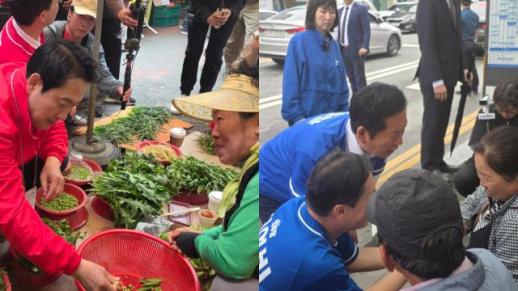 Official Campaigns Kick Off for Local Elections in South Korea On May 21, the official campaign period for the local elections began, with both major parties launching aggressive efforts to win over voters. Jung Cheong-rae, leader of the Democratic Party, and Jang Dong-hyuk, leader of the People Power Party, focused their strategies on the Chungcheong region, known for its pivotal role as a 'casting vote' in local elections. The Democratic Party emphasized that this election is crucial for preventing the People Power Party's controversial nominations and for leading the country towards normalization under the Lee Jae-myung administration. Jung highlighted the importance of this election as a 'golden time' for the nation. Jung began his campaign at midnight at a rally for Seoul mayoral candidate Jung Won-oh, visiting key battlegrounds in Gyeonggi, Gongju, Daejeon, and Cheonan to attract moderate voters. At a rally for candidate Ryu Sam-young in the Dongjak District, Jung stated, "As seen in the recent nominations by the People Power Party, those who still support internal conflict are oblivious to the need for reflection. I ask you to judge these forces by voting for us." In the afternoon, during a campaign event in Gongju with candidates Park Soo-hyun for Chungnam governor and Kim Jeong-seop for Gongju mayor, Jung expressed gratitude to the residents for overcoming internal conflict and urged them not to give a single vote to the People Power Party, asking them to support the Democratic Party instead. Conversely, the People Power Party concentrated its efforts in the Chungcheong region, which includes Jang's constituency, arguing that if the Democratic Party wins the local elections, it would lead to a one-party dictatorship alongside the Lee Jae-myung administration. At a rally for Daejeon mayoral candidate Lee Jang-woo, Jang declared, "If the Democratic Party, which has seized legislative power, also wins local governments, South Korea will become a one-party dictatorship. The People Power Party aims to protect democracy and the future of our nation from Daejeon." In Gongju, where candidates Kim Tae-heum for Chungnam governor and Choi Won-cheol for Gongju mayor campaigned, Jang continued to criticize the Democratic Party and President Lee Jae-myung. He claimed, "The president is attempting to halt his trial and initiate a special investigation. We must win in Chungnam and across the nation to hold the arrogant Democratic Party accountable." Notably, Jung and Jang crossed paths in front of the Gongju Sanseong Market during overlapping campaign schedules. As Jung passed by the People Power Party rally, Jang called out the names of their candidates, stating, "Just a moment ago, Jung Cheong-rae and the Democratic candidates walked by. I wanted them to hear this." Some supporters of the People Power Party shouted against Jung, but he smiled and waved at Jang as he left the rally.* This article has been translated by AI. 2026-05-21 18:13:57
 -
 Two Suspects Charged with Murder in Death of Director Kim Chang-min Two suspects in the death of director Kim Chang-min have been charged with murder while in custody. According to Yonhap News, the Namyangju branch of the Uijeongbu District Prosecutors' Office announced on May 21 that Lee (32) and Lim (32) have been indicted on charges of murder and violating the Welfare of Persons with Disabilities Act. The prosecution determined that the severity of the crime warranted murder charges, rather than the initial charge of manslaughter applied by the police. The suspects are accused of dragging director Kim into an alley and brutally assaulting him over a noise dispute outside a restaurant in Guri, Gyeonggi Province, on October 20 of last year, leading to his death. The prosecution has also charged them with emotional abuse for assaulting Kim in front of his son, who has a developmental disability. Kim lost consciousness shortly after the assault and was transported to a hospital, where he ultimately did not recover. Seventeen days after the incident, he was declared brain dead and later donated his organs to four recipients before passing away. Initially, police applied for arrest warrants for the suspects multiple times, but the courts denied them, citing a lack of flight risk. However, public outrage grew after the incident became known and CCTV footage of the assault was released, leading to criticism of the police's inadequate investigation. According to Yonhap News, the prosecution formed a dedicated investigation team to conduct a supplementary investigation, interviewing Kim's son and searching the suspects' residences and mobile phones. They analyzed approximately 3,000 phone recordings, which included statements such as, "I thought I had to kill him" and "I had no thoughts other than to kill him," leading to the conclusion of intent to commit murder. Additionally, the prosecution consulted five medical experts regarding brain CT scans and obtained opinions indicating that Kim died from brain injuries caused by repeated and severe external forces to the head and face. Forensic analysis also suggested that Lim choked the victim, impairing his ability to defend himself. On May 11, the prosecution's citizen committee unanimously agreed that the suspects exhibited intent to kill and acted as accomplices, prompting the prosecution to proceed with murder charges. However, Lee has admitted to only striking Kim three to four times with his fists, denying some of the charges, while Lim claims he only tried to separate Lee and Kim.* This article has been translated by AI. 2026-05-21 18:12:00
 -
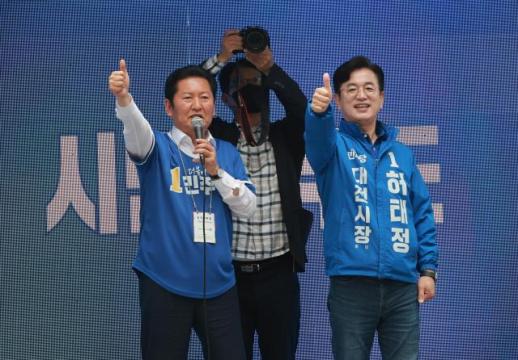 Jeong Cheong-rae Criticizes Starbucks Amid Daejeon Election Campaign Jeong Cheong-rae, the leader of the Democratic Party, sharply criticized Starbucks on May 21, questioning the appropriateness of its recent Tank Day event amid ongoing controversies regarding the 5·18 Gwangju Democratization Movement. Speaking at the campaign launch for Daejeon mayoral candidate Heo Tae-jeong, Jeong stated, "We must hold a grateful heart for those who lost their lives during the 5·18 Gwangju Democratization Movement." He emphasized the need for respect and remembrance. He added, "There’s a Starbucks here too. Starbucks is not good," and highlighted that both Chun Doo-hwan, who declared martial law in Gwangju, and Yoon Suk Yeol, who issued an illegal martial law on December 3, were ultimately subdued by the people. Jeong remarked, "If the illegal martial law had succeeded, there would be no local elections, and neither Lee Jae-myung nor I would be in this world," recalling the situation as "a chilling experience." Additionally, Jeong called for support for Heo, noting his experience as both a district mayor and Daejeon mayor, as well as his work at the Blue House. He concluded by stating, "South Korea is now normalizing," urging voters to elect a capable mayor for Daejeon, similar to the current president's performance. 2026-05-21 18:09:25
 -
 From timid boy to war hero: India's wartime doctor honored in Korea SEOUL, May 21 (AJP) - At the unveiling of a new memorial near the heavily fortified border with North Korea, Kalpana Prasad, an Indian woman in her 40s and the grand-niece of Lt. Col. A.G. Rangaraj, recalled how her older family members spoke about their brother, who had served on the frontline during the Korean War. “His siblings rushed to tell their mother, but she refused to believe it because she still remembered him as a shy boy who was afraid to walk alone in the dark,” she said. “But somehow, that timid boy ended up jumping out of airplanes.” The timid boy was Lt. Col. A.G. Rangaraj, an army doctor who led an Indian medical unit during the 1950-53 war. Rangaraj and fellow veterans were posthumously honored at a ceremony on Thursday at Imjingak in Paju, north of Seoul, where officials unveiled a memorial recognizing India’s contribution as part of events marking the 76th anniversary of the outbreak of the conflict. The ceremony was attended by visiting Indian Defense Minister Rajnath Singh, who was hosted by Patriots and Veterans Affairs Minister Kwon Oh-eul. The two sides signed a memorandum of understanding on international veterans affairs cooperation aimed at strengthening exchanges in honoring and remembering those who served. One of six countries that provided non-combat support to South Korea during the conflict, India’s contribution came largely in the form of medical and humanitarian aid. The country’s 60th Parachute Field Ambulance, one of the largest medical units sent by a supporting nation, deployed 627 medical personnel. One of the unit’s best-known operations came during Operation Tomahawk on March 21, 1951, near Munsan, north of Seoul, when members attached to the U.S. Army’s 187th Airborne Regimental Combat Team parachuted into enemy territory as part of a combat airborne operation. Amid intense frontline fighting, they established medical facilities and treated wounded soldiers. Led by Rangaraj, the Indian unit treated 200,000 patients and performed 2,500 surgeries. For South Korea, the new memorial carries symbolic weight not only because of India’s wartime role, but also because of its location. Just south of the Demilitarized Zone, Imjingak has long served as a site of remembrance for the war and hope for peace on the still-divided peninsula. The presence of Rangaraj’s family added a personal dimension to Thursday’s ceremony, turning the memorial from a diplomatic event into a reminder of the individual lives behind wartime history. Rangaraj, who completed his medical degree in 1941 before joining the army, became India’s first paratrooper doctor. He was honored in Seoul as the Ministry of Patriots and Veterans Affairs’ Korean War Hero of the Month in March this year. “It is an honor for all of us to know that he has been nominated as a Korean War hero by the government of the Republic of Korea,” Prasad said. In addition to the medical unit, India also played a major postwar role through the Neutral Nations Repatriation Commission. A 5,230-strong Custodian Force of India helped carry out the peaceful repatriation of some 2,000 prisoners. The memorial features busts of Rangaraj and another Indian figure closely associated with the Korean War, Gen. K.S. Thimayya, who chaired the U.N. Neutral Nations Repatriation Commission at the time of the armistice. The memory of the unit’s Korean War service remains alive in Agra, the northern Indian city that is home to the Taj Mahal. The city also hosts the 50th Independent Parachute Brigade, one of the Indian Army’s elite airborne formations, under which the 60th Parachute Field Ambulance continues its medical support mission. During AJP’s visit to the brigade in March, Col. Jagneet Gill, the current commanding officer of the 60th Parachute Field Ambulance, said the unit’s deployment to Korea remains an important part of its identity. “The 60th Parachute Field Ambulance is a key medical support unit under the Indian Army’s 50th Independent Parachute Brigade, and we supported wounded people during the Korean War,” Gill said. “It was really nice to have the chance to visit South Korea last November at the invitation of the Korean government.” Decades later, the legacy of the Korean War continues to resonate in the hearts of both nations. 2026-05-21 18:05:00
 -
 Krafton's PUBG Mobile Celebrates 8th Anniversary with Kia Collaboration Krafton has launched an online game and offline experiential pop-up in collaboration with Kia to celebrate the 8th anniversary of PUBG Mobile. The initiative aims to strengthen direct communication with users and expand the long-term service foundation of PUBG Mobile. On May 21, Krafton opened PUBG Seongsu and Kia Unplugged Ground in the Seongsu area of Seoul. The concept, dubbed 'Zone 8,' combines the core element of the game, the magnetic field, with Kia's EV mobility in a collaborative project. PUBG Mobile, launched in 2018, is Krafton's mobile adaptation of the original PC game, PlayerUnknown's Battlegrounds (PUBG). The PUBG intellectual property (IP) has become a significant revenue source for Krafton. The company has been actively expanding the PUBG IP through various game versions, including PUBG Mobile and PUBG Mobile India. According to Krafton's first-quarter results, revenue from PUBG's PC, console, and mobile IP grew by 14% and 30%, respectively, compared to the same period last year. A Krafton marketing representative at the PUBG Seongsu event stated, "As we celebrate eight years since the launch of PUBG Mobile, we recognize the importance of communicating with long-time players. This offline experience zone was prepared to enhance that communication with our users." Krafton's collaboration with Kia for the 8th anniversary of PUBG Mobile reflects this focus. The PUBG games, including PUBG Mobile, fall under the open-world shooting genre. In PUBG Mobile, players navigate vehicles such as cars, buses, and motorcycles into a shrinking magnetic field, which is a key gameplay element. Krafton has brought this experience outside the game by incorporating vehicles into the offline pop-up. This marks the first collaboration between PUBG Mobile and a domestic automotive brand. The Kia vehicles featured in the offline experience zone include the EV3, EV4, and PV5 models. These vehicles represent Kia's EV lineup and serve as key objects in the collaboration, showcasing vehicle skins from the game. Previously, PUBG Mobile collaborated with global automotive brands like Porsche. This partnership allows Kia to present its electric vehicle lineup to a younger gaming audience, while PUBG Mobile integrates real vehicles into its game world, enhancing the realism of the collaborative content. Located near Ttukseom Station, the Kia Unplugged Ground is designed with a 'combat zone' concept. The layout includes EV landing, item farming, EV4 RC car racing, and a laser battle zone, allowing visitors to experience in-game activities such as parachuting, shooting, and item hunting. Kia's EV3, EV4, PV5 vehicles, RC cars, and parachute figures are arranged like game objects to seamlessly expand the experience of Kia's EV lineup. The pop-up zone at PUBG Seongsu, located about a seven-minute walk away, features a realistic representation of the magnetic field, allowing for an immersive PUBG Mobile experience. It includes a large blue dome air dome, an in-circle challenge, a direct play zone for PUBG Mobile, a puzzle zone (8UZZLE), and a message wall. Visitors to the experience zone enjoyed activities such as navigating obstacles to avoid the magnetic field or test-driving Kia vehicles set up within the air dome. While the Kia Unplugged Ground focuses on in-game content experiences like shooting and farming, PUBG Seongsu emphasizes creating a photo zone where visitors can explore the game environment and take pictures. According to Krafton, the primary user demographic for PUBG Mobile is in their teens and twenties, which is younger compared to the 2030 age group that predominantly plays the PC version of PUBG. The decision to operate an experiential zone in Seongsu reflects the preferences of this younger audience. At the PUBG Seongsu craft zone, users could create maps directly on their smartphones. In the actual PUBG Mobile game, players can create their own maps, a feature that was not available at the game's launch in 2018 but has been introduced by Krafton to enhance user-generated content (UGC) for long-term engagement. A representative at the site explained, "As the service period for PUBG Mobile has extended, we have attempted to expand the in-game experience through UGC content." A Krafton spokesperson stated, "This collaboration is designed to allow users to experience PUBG Mobile not only through in-game content but also through community events and offline pop-ups. We hope that users will continue to engage with PUBG Mobile through these immersive experiences."* This article has been translated by AI. 2026-05-21 18:01:52
 -
 Korea's Small Business Agency Partners with POSCO for Supply Chain Support The Korea Small and Medium Enterprises and Startups Agency (KOSME) has established a supply chain cooperation system with POSCO and will provide production funds to small businesses in the steel and secondary battery sectors. KOSME announced on May 21 that it signed a memorandum of understanding (MOU) with POSCO, POSCO Future M, N2B, and POSCO HY Clean Metal at POSCO's headquarters in Pohang. About 20 officials attended the signing ceremony, including Ban Jeong-sik, KOSME's Director of Regional Innovation; Lee Seung-ki, Head of Equipment and Material Purchasing at POSCO; Jo Eun-gu, Head of Purchasing Contracts at POSCO Future M; Yoon Jin-soo, Head of Equipment Purchasing at N2B; and Park Ji-yoon, Head of Management Support at POSCO HY Clean Metal. This agreement aims to strengthen the cooperative framework with small businesses amid increasing global supply chain uncertainties in the steel and secondary battery industries. Major affiliates of the POSCO Group are participating jointly for the first time. The key elements of the agreement include: support for cooperative small businesses through the Cooperative Growth Network Loan; recommendations for outstanding companies and linkage with policy projects; expanded information exchange in industrial fields; and the establishment of a cooperative system to enhance supply chain competitiveness. Currently, approximately 90 companies are participating in the Cooperative Growth Network Loan program, which is in its third year. KOSME plans to expand participation from major corporate groups to broaden support for small businesses and actively respond to global supply chain restructuring. The Cooperative Growth Network Loan is designed to foster a collaborative ecosystem between large and small businesses. When a large or mid-sized company that has signed an agreement with KOSME recommends a small business, KOSME prioritizes providing low-interest production funds based on the order. This financial product supports up to 80% of the order amount as short-term funding within 365 days. Ban Jeong-sik, KOSME's Director of Regional Innovation, stated, "This agreement with the POSCO Group, which leads the domestic steel and secondary battery industries, will serve as a meaningful example of cooperation between large and small businesses. We will lead stable funding for cooperative small businesses and the stability of various industrial supply chains through the expansion of the Cooperative Growth Network Loan support."* This article has been translated by AI. 2026-05-21 17:58:54