
Journalist

James Mehigan
-
 VIP Marketing Evolves into High-End Experiences The landscape of VIP benefits in the retail industry is changing. Services that once focused on convenience, such as parking privileges and exclusive lounge access, are evolving into tailored private experiences that encompass travel, fine dining, and cultural arts. This shift aims to enhance brand loyalty by offering top-tier customers unique experiences that cannot be purchased with money. According to industry sources, Shinsegae Department Store's VIP-exclusive curation platform, 'The Showcase,' has attracted over 50,000 VIP customers since its launch in November 2024. The average transaction value is approximately 20 million won, which is seven times higher than the average of 3 million won in the luxury category. Notably, 63% of users are in their 30s and 40s, indicating success in engaging younger high-spending consumers in the online space. Through 'The Showcase,' Shinsegae is offering limited-edition Lamborghini supercars. A portion of the vehicle purchase price counts toward VIP spending, and customers can also access luxury yacht viewing tickets for the Yeouido Fireworks Festival. Additionally, the store is showcasing the highest-end line of the Swedish royal bed brand, Hästens, known to be priced around 1 billion won. Lotte Department Store has revamped its existing 'Avenue L Points' system into 'Avenue L Curation,' enhancing its content-focused VIP services. Avenue L Curation allows customers to experience luxury lifestyle content at over 100 partner locations across six categories, including luxury hotels, fine dining, and golf and leisure activities. A highlight of this program is an exclusive tour of Ulleungdo for Avenue L customers scheduled for next month. This event will feature private course dining by Chef Jeong Ho-young, breakfast, and wine pairing by Lotte's sommelier Han Hee-soo, all set against the backdrop of the luxury resort 'Cosmos Villasome.' The program also includes a scenic drive along Ulleungdo's coastal roads in a BMW 7 Series and local sightseeing tours. The focus on VIP experience marketing comes as recent sales performances have increasingly depended on VIP customers and foreign spending. In the first quarter of this year, Shinsegae Department Store reported an operating profit of 141 billion won, a 30.7% increase from the previous year. Lotte Department Store saw a 47.1% rise to 191 billion won, while Hyundai Department Store's operating profit grew by 39.7% to 135.8 billion won, largely driven by luxury consumption and VIP sales. Last year, VIP customers accounted for 50% of total sales at major department stores. Shinsegae led with 47%, while Lotte and Hyundai both recorded 46%. At Shinsegae's flagship store in Gangnam, VIP sales exceeded 50% of total revenue. In this context, duty-free shops and the beauty industry are also expanding VIP experiences into cultural and artistic realms. On May 13, Shinsegae Duty-Free invited its top SVIP customers to the Youngin Literary Museum in Pyeongchang-dong, Seoul, where they viewed the late Lee Eo-ryeong's study and participated in a literary salon led by Director Kang In-sook. Amorepacific also hosted its 'All About Amore' event on May 7 at its headquarters in Yongsan, inviting over 500 VIP customers from Amore Mall along with 240 product planners from Naver, Kakao, and Coupang for a brand experience event. An industry insider noted, "While past VIP benefits focused on discounts and convenience, they are now evolving toward designing customer preferences and experiences. The competition for lifestyle platforms that encompass rarity, experience, and community will become even more intense in the future."* This article has been translated by AI. 2026-05-18 19:32:10
 -
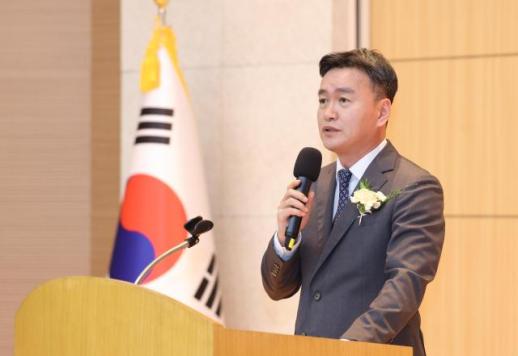 New Customs Chief Lee Jong-wook Announces Overhaul of Border Monitoring System Lee Jong-wook, the newly appointed Customs Commissioner, stated on May 18 that he plans to completely redesign the border monitoring system to safeguard citizens from transnational crimes such as drug trafficking and gun smuggling. He also pledged to develop multifaceted and effective policies to support exports and imports. During his inauguration ceremony at the Daejeon government complex, Lee highlighted ongoing challenges, including supply chain disruptions due to the Middle East crisis, uncertainties in global trade barriers, and the spread of transnational crimes like drug trafficking. He emphasized the growing public demand for strict law enforcement to support export-import businesses and eradicate unfair practices in society. Lee outlined plans to reconstruct the monitoring and enforcement network based on entry routes, enhance the collection and utilization of domestic and international crime information, expand international joint enforcement systems, and develop sophisticated risk analysis techniques to elevate inspection protocols. He stressed the need to bolster organization, personnel, and equipment to create a robust and impenetrable border against smuggling. Regarding export-import support, he committed to swiftly implementing comprehensive measures to protect small and medium-sized manufacturing enterprises and provide focused support for advanced technology industries, such as semiconductors, which are vital for the future national economy. He also promised to address minor inconveniences and challenges faced by businesses on the ground and to boldly innovate unreasonable regulations to enhance the business environment. Additionally, Lee announced plans to establish a law enforcement system capable of combating economic crimes related to trade and foreign exchange transactions. He vowed to take strict action against malicious tax evasion and to achieve a significant transformation in customs administration through artificial intelligence and digital innovation. He reiterated his commitment to providing all necessary support in customs administration to overcome the economic shocks caused by the ongoing Middle East crisis and to enhance the resilience of the national economy. Lee quoted the famous Japanese warlord Takeda Shingen, saying, "People are the castle, the walls, and the moat." He emphasized that excellent policies and systems must be backed by the strength of those who implement them, aiming to create a healthy customs service characterized by communication, cooperation, and a balance of results and accountability.* This article has been translated by AI. 2026-05-18 19:26:41
 -
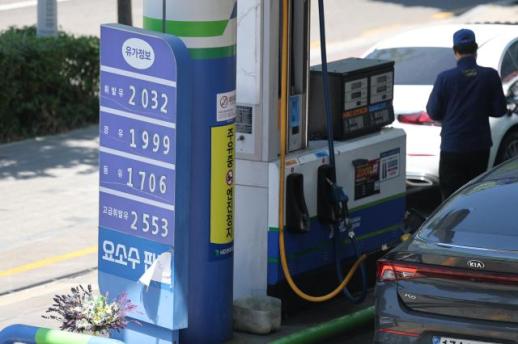 International Oil Prices Remain Above $100, Pressuring Inflation and Domestic Demand International oil prices have remained above $100 per barrel for an extended period, intensifying accumulated inflationary pressures. While the government has managed to suppress immediate price increases, there are concerns that rising import costs may eventually impact the domestic economy. As of May 18, Brent crude for July delivery rose 1.98% to $111.42 per barrel, while West Texas Intermediate (WTI) for June delivery increased by 2.43% to $107.98, marking the highest price this month. International oil prices averaged $128.52 per barrel in March and $105.70 in April, and they have continued to hover around the $100 mark in May. Brent crude has been above $100 since April 23, and WTI has remained at that level since May 11. The prolonged high oil prices are gradually amplifying inflationary pressures. Although import prices temporarily decreased last month, the overall inflation burden remains significant. According to the Bank of Korea, the import price index for April was 168.12, down 2.3% from the previous month. However, this decline was largely due to a base effect from a 16.1% surge in March. Compared to the same month last year, April's import prices were still 20.2% higher. With oil prices maintaining above $100 in May, analysts suggest that the accumulated import cost burden is likely to be reflected in consumer prices with a time lag. The government has implemented measures such as a cap on oil prices and a reduction in fuel taxes to mitigate short-term inflationary pressures, but companies are gradually facing increased cost burdens. The Korea Development Institute (KDI) has indicated that rising oil prices due to transportation uncertainties could elevate this year's consumer price inflation rate by 1.0 to 1.6 percentage points, with the possibility of high inflation persisting into next year. The Bank of Korea is also expected to revise its inflation rate forecasts upward in its upcoming economic outlook. The central bank has projected consumer price inflation rates of 2.2% for this year and 2.0% for next year. Earlier, KDI significantly raised its inflation forecast for this year from 2.1% in February to 2.7% this month. High oil prices are anticipated to exert pressure not only on inflation but also on the current account balance. As a major oil-importing country, South Korea faces increased dollar expenditures for the same volume of crude oil, leading to a heightened energy import burden. This is likely to result in a reduced trade surplus. Additionally, since most oil transactions are conducted in dollars, the increased demand for dollars by companies is also a concern. If rising fuel and electricity prices coincide, it could lead to a decrease in real household income, increased cost burdens for businesses, and a potential slowdown in investment, heightening the risk of domestic economic contraction. Analysts warn that prolonged high oil prices could trigger stagflation, characterized by simultaneous inflation and economic slowdown. Kim Jin-sung, a researcher at Heungkuk Securities, stated, "Private consumption is influenced by a complex interplay of factors, including expectations for economic recovery, policy support, inflationary pressures, and geopolitical uncertainties. If conflicts in the Middle East persist, the economic shocks following rising oil prices are likely to intensify."* This article has been translated by AI. 2026-05-18 19:24:00
 -
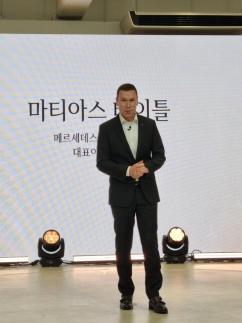 Mercedes-Benz Korea Opens Fifth Global Studio in Seongsu-dong, Plans to Launch 11 New Models Mercedes-Benz Korea is set to open its fifth global brand lifestyle experience space in Seoul. This initiative aims to enhance customer engagement while moving away from traditional brand images, coinciding with a series of new vehicle launches planned for the near future.On May 19, Mercedes-Benz Korea will officially open the 'Mercedes-Benz Studio Seoul' and announced that studios will be established in 18 major cities worldwide.The Mercedes-Benz Studio serves as a space for connecting with customers and sharing brand values and lifestyle experiences. Seoul will be the fifth location, following Copenhagen, Stockholm, Tokyo, and Prague.Matthias Baitel, CEO of Mercedes-Benz Korea, stated, "Korea is one of the most important markets for Mercedes-Benz globally, which is why we are opening this studio. We will also unveil new vehicles here, allowing customers to experience our brand's future direction and vision firsthand." Mercedes-Benz Korea plans to introduce 11 new models to the Korean market in the second half of this year.The first models to be officially launched in the third quarter are the updated 'The New Mercedes-Benz S-Class' and 'The New Mercedes-Maybach S-Class.' Both models will feature the Mercedes-Benz Operating System (MB-OS), with pre-orders starting today. The New Mercedes-Benz S-Class will be displayed at the Seongsu-dong studio for customers to view.Additionally, the 'Mercedes-Benz The All-New CLA,' which will be the first model equipped with MB-OS, is expected to launch in Korea in the second half of this year. It will be available in hybrid and fully electric versions, having already received positive feedback after its European market debut last year.As a result, Mercedes-Benz Korea's strategy for Software Defined Vehicles (SDV) is expected to begin with the S-Class and Maybach S-Class. With these models leading the way, the introduction of The All-New CLA featuring MB-OS will significantly expand Mercedes-Benz's lineup of vehicles based on its proprietary operating system in Korea.Furthermore, Baitel commented on the 'Retail of the Future (RoF)' initiative, which began on April 13, stating that over time, it will prove to be a change suited to Korean customers. He noted, "A single price and a unified inventory system represent a significant change for us, and customer satisfaction has greatly improved in all countries where RoF has been implemented." RoF is a direct sales model that consolidates vehicle pricing and inventory management, which previously varied by dealer, allowing Mercedes-Benz Korea to manage it directly.* This article has been translated by AI. 2026-05-18 19:21:29
 -
 Japanese Prime Minister to Visit South Korea with State-Level Honors Ahead of Japanese Prime Minister Sanae Takaichi's visit to South Korea, Japanese media are highlighting that the South Korean side will welcome her with "state-level honors." The Korea-Japan summit will take place in Andong, the hometown of President Yoon Suk Yeol, and is seen by Japan as a continuation of the "hometown mutual visits" and a demonstration of shuttle diplomacy following the meeting held in Nara, Takaichi's hometown, in January. Japanese outlets, including the Nihon Keizai Shimbun (Nikkei), Jiji Press, and Kyodo News, reported on May 18, citing the Blue House, that Takaichi will visit South Korea for a two-day stay starting May 19. The summit will be held in Andong, where the Blue House plans to greet Takaichi with "state-level honors." President Yoon will personally welcome Takaichi at the hotel entrance, and a ceremonial guard and military band will be present. The symbolism of the ceremonial welcome has been particularly emphasized by Japanese media. When President Yoon visited Nara in January, Takaichi personally visited his accommodation to greet him. This time, Takaichi will visit Yoon's hometown of Andong. Nikkei noted that this will mark the sixth Korea-Japan summit since Yoon took office, with the two leaders meeting face-to-face again after four months. The Blue House also released details about the dinner and social events planned, which will feature local specialties from Andong, including Andong soju, as well as sake from Nara Prefecture, Takaichi's home region. After dinner, there will be a program at the UNESCO World Heritage site Hahoe Village, showcasing pansori (traditional Korean music) and a traditional fireworks display. Jiji Press described this as a production wishing for harmony and friendship between the two countries. However, there has been little political reaction in Japan regarding Takaichi's visit. While sensitive issues such as historical grievances remain, both countries have managed to avoid escalating these conflicts. The uncertainty in U.S.-China relations, the North Korean situation, and developments in the Middle East have increased regional security and supply chain risks, making it difficult for the two nations to remain at odds solely over historical issues. The Japanese government views this visit as an opportunity to reaffirm the importance of Korea-Japan relations and trilateral cooperation with the United States. Chief Cabinet Secretary Hirokazu Matsuno stated, "Under the current strategic environment, the importance of Korea-Japan relations and the trilateral cooperation among Korea, Japan, and the U.S. has increased significantly," adding that this visit will be a crucial opportunity for close communication. NHK reported that discussions will include strengthening cooperation in areas closely related to the economy and public safety, as well as international issues, including the situation in the Middle East. Jiji Press and others mentioned that the outcomes of the U.S.-China summit and the situation in Iran would also be on the agenda. On the surface, the Andong summit is a reciprocal visit by Takaichi and an extension of shuttle diplomacy between the two leaders' hometowns. However, underlying this meeting is the critical point of how far Korea and Japan can align their strategic perceptions amid uncertainties in U.S.-China relations, the situation in the Middle East, North Korea, and supply chain risks.* This article has been translated by AI. 2026-05-18 19:15:32
 -
 Telecom Companies Shift Focus to Power Business The rise of generative artificial intelligence (AI) has led to a significant increase in power demand for AI data centers (AIDC), prompting the three major telecom companies in South Korea to expand their power-related businesses. On May 18, the telecom giants announced their entry into the renewable energy resale market following their AIDC initiatives. They are utilizing AI technology to operate smart grids and virtual power plants, while also developing and testing intelligent power grid solutions. SK Telecom (SKT) has proactively pursued renewable energy procurement at the group level. In 2023, SKT signed a direct power purchase agreement (PPA) with SK E&S and eight subsidiaries of the SK Group for an annual supply of 537 gigawatt-hours (GWh). This agreement will provide solar-based renewable energy to major business sites and data centers for the next 20 years, starting this year. While SKT does not sell electricity directly, it is exporting a value chain that combines global data centers with generated power, leveraging its infrastructure and operational expertise in the domestic market. LG Uplus is also focusing on long-term renewable energy procurement. In January, LG Uplus signed a PPA with GS Construction to receive power generated from a solar power plant in Taean, South Chungcheong Province, for approximately 20 years, with an annual supply of about 17 GWh. The company aims to enhance its energy response capabilities, including for AIDC. Additionally, LG Uplus is working on a project to create a virtual power plant by connecting small-scale renewable energy facilities across the country through the cloud. It is also supplying IoT lines for a net-zero project to transition the energy needs of LG Group subsidiaries to eco-friendly renewable energy and for smart grid systems. KT, which has received government approval as a 'renewable energy electricity supplier,' is engaged in a direct power trading contract (PPA) business to sell its procured renewable energy directly to companies. Recently, KT signed a memorandum of understanding with Tokyo Electron Korea to promote a direct PPA, planning to supply renewable energy to its Hwaseong office starting in September. Initially, it will supply 15 megawatts (MW) of renewable energy, with plans to expand to 50 MW in the future. As the AIDC market continues to grow rapidly, the actions of the three telecom companies are expected to accelerate. According to the Korea Energy Economics Institute (KEEI), domestic data center power consumption is projected to rise from 5 terawatt-hours (TWh) in 2023 to 31.6 TWh by 2040, and 65.4 TWh by 2060. The explosive demand for power is increasing the role of the telecom companies. Solar and wind energy generation varies with time and weather conditions, which limits stable power supply. This highlights the need for hybrid power structures that combine energy storage systems (ESS) and LNG generation, along with smart grids and AI power management systems. Kim Cheol-hyun, a researcher at KEEI, stated, "Due to the intermittency and uncertainty of renewable energy, it is difficult to rely solely on it for data center power. A mixed power structure that combines the existing power grid with renewable energy and battery energy storage systems (BESS), along with intelligent supply technologies for efficient distribution, is necessary."* This article has been translated by AI. 2026-05-18 19:10:06
 -
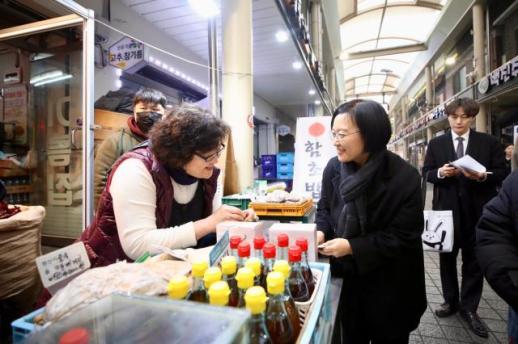 Minister Han Seung-sook Visits Gongju's Saseong Market to Discuss Local Bookstore Development Minister Han Seung-sook of the Ministry of SMEs and Startups visited Gongju's Saseong Market and the surrounding Jeamincheon commercial area to gather feedback and discuss the future of local bookstores. On May 18, the ministry reported that Minister Han visited Saseong Market, where she purchased rice cakes and side dishes, encouraging merchants who are struggling due to rising prices and decreased consumer spending while listening to their concerns. She then toured the Jeamincheon area, visiting the 'Gongju Youth Shared Housing,' which has transformed an old inn into shared housing for young entrepreneurs, as well as the independent bookstore 'Bookstore, Itta' and the Hanok cafe 'Lucia's Garden,' where she heard from small business owners. A 'Local Bookstore Meeting' was held at the independent bookstore 'Old Questions' near Jeamincheon. Attendees included Ji Myung-hoon, the representative of 'Old Questions,' Yeon Young-sook, who operates 'Danbi Bookstore' in Sejong, and Kim Jun-tae, who runs 'Dadada' in Daejeon, among other representatives from regional bookstores in the Chungcheong area. Also present were Lee Dae-geon, president of the National Local Bookstore Network, along with commercial district planners and experts who shared their insights. The meeting began with a presentation by Lee on the 'Current Status of Local Bookstores, Best Practices, and Future Development Directions,' followed by a free discussion format. Participants shared the role and importance of local bookstores as key hubs that connect people within local commercial districts and traditional markets, discussing future development directions. According to a 2024 survey on local bookstores conducted by the Korea Publishing Culture Industry Promotion Agency, there are approximately 3,295 local bookstores nationwide, with 21 areas identified as at risk of extinction. Minister Han stated, "Local bookstores are not just spaces for selling books; they are cultural hubs where community stories come to life. We will continue to support the development of local bookstores as cultural anchors in commercial districts, from startup assistance to collaboration and revitalization efforts."* This article has been translated by AI. 2026-05-18 19:05:16
 -
 Controversy Surrounds Historical Accuracy in '21st Century Great Lady' Choi Tae-sung, a Korean history instructor, has sparked attention by proposing the establishment of a "Historical Verification Research Institute" in response to the controversy surrounding the MBC drama '21st Century Great Lady.' Despite achieving over 13% viewership ratings, '21st Century Great Lady' has faced criticism for historical inaccuracies. Scenes such as the character Lee An-dae-gun (played by Byun Woo-seok) shouting "cheonsae" instead of "manse" during a royal coronation, and the use of a Chinese-style crown instead of the appropriate Korean imperial crown, have drawn scrutiny. After the show's conclusion, debates arose regarding whether the portrayal of South Korea as a constitutional monarchy implied it was a vassal state of China rather than a sovereign nation. Viewers have called for apologies from the production team and cast, prompting Choi Tae-sung to express his views on social media. On May 18, Choi stated, "Korean dramas and films have become content consumed by audiences worldwide. A production system that matches this status is necessary." He criticized the frequent historical inaccuracies, questioning why millions are spent on actor salaries while historical verification costs are often minimal. He added, "Actors should be able to focus solely on their performances. It’s disheartening to receive criticism after working hard to create a good historical drama. I hope a Historical Verification Research Institute can be established." As the controversy intensified, the production team issued an apology on May 16, stating, "We apologize for causing concern regarding the world-building and historical verification issues. We will correct the audio and subtitles for the relevant scenes in replays, VOD, and OTT services." On May 18, lead actors IU and Byun Woo-seok also posted apologies on their social media accounts. IU expressed her regret, saying, "As the lead actress, I feel heavy-hearted for not demonstrating a responsible attitude and for disappointing viewers. I sincerely reflect on and apologize for not considering the various verification issues in the drama more deeply." Byun Woo-seok, in a handwritten apology, acknowledged, "I lacked sufficient consideration of the historical context and significance embedded in the work and how it would be perceived by viewers. I will strive to approach my roles with greater caution and depth in the future." Once anticipated as a major success due to the pairing of two highly popular actors, '21st Century Great Lady' has seen its success overshadowed by the ongoing historical distortion controversy. Attention now turns to how related content, including the web novel by writer Yoo Ji-won and the OTT video released on Disney+, will address these historical issues.* This article has been translated by AI. 2026-05-18 19:02:06
 -
 South Korea Hosts Workshop with OpenAI on Cybersecurity Collaboration The South Korean government held a practical workshop with global artificial intelligence (AI) company OpenAI to discuss cybersecurity collaboration and the Trusted AI Cybersecurity Program (TAC). On May 18, the Ministry of Science and ICT (MSIT) announced that it explored AI-based cybersecurity cooperation with various agencies, including the Ministry of Foreign Affairs, the National Intelligence Service, the Financial Services Commission, the National AI Strategy Committee, the AI Safety Research Institute (AISI), the Korea Internet & Security Agency (KISA), and the Financial Security Institute. The workshop was organized for Shasha Baker, OpenAI's Head of National Security Policy, to explain the TAC program to South Korean government officials. MSIT requested OpenAI to share information and collaborate on addressing AI security threats. Both parties agreed to continue active discussions on the application of AI models in the cybersecurity field following this meeting. Baker stated, "To effectively respond to cyber threats in the AI era, close public-private cooperation is essential. When the government, businesses, infrastructure operators, research institutions, and AI companies collaborate based on a shared sense of responsibility, we can safely utilize AI and enhance cyber resilience." Choi Woo-hyuk, Director of the Information Security Network Policy Office at MSIT, noted, "Through this workshop and meeting, there was a consensus that AI should be a weapon for defense rather than an attacker, and that close cooperation between the public and private sectors is necessary to address AI security threats. We will continue to enhance domestic AI security capabilities through active collaboration and practical discussions with global AI companies." Meanwhile, MSIT held a meeting with Anthropic on May 11 to discuss Anthropic's 'Mythos' access rights, AI stability policies, and the AI Basic Act.* This article has been translated by AI. 2026-05-18 19:00:00
 -
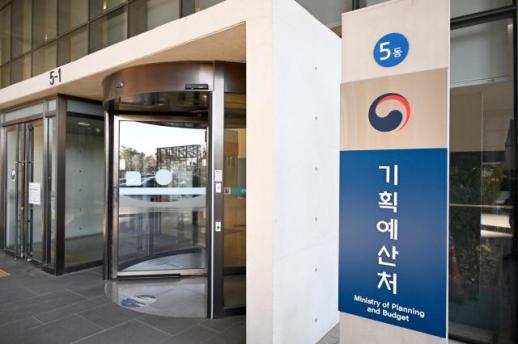 Government Launches Major Spending Restructuring to Enhance Budget Efficiency The South Korean government has initiated its largest-ever spending restructuring effort to reduce unnecessary financial expenditures. This move includes mandates for each ministry to implement spending restructuring at the project level, reinforcing the commitment to enhance fiscal efficiency. On May 18, the Ministry of Strategy and Finance notified various ministries of the results from the "Integrated Financial Project Evaluation" conducted over the past four months since January. As a result of this restructuring, 901 project budgets are set to be reduced or consolidated. This evaluation differs from previous self-assessments conducted by individual ministries. To enhance objectivity and reliability while alleviating the evaluation burden on ministries, 153 external experts were engaged to form a "Private Expert Evaluation Group." Out of 2,487 projects evaluated, 901 (36.2%) were identified for budget reductions or consolidations. Only 89 projects (3.6%) were deemed to be proceeding normally, while 1,497 projects (60.2%) were classified as needing improvement. The sector with the largest budget reductions is transportation and land, with 54 projects (17.3262 trillion won) facing cuts or consolidation. This is followed by disaster safety with 84 projects (8.6024 trillion won) and defense, diplomacy, and unification with 46 projects (3.7149 trillion won). Unlike previous self-assessments, ministries are now required to implement spending restructuring at the project level. If they fail to meet the restructuring targets by September, they must submit a justification for the unimplemented changes to the Open Budget portal for public disclosure. The Ministry anticipates that these restructuring efforts could lead to a total of 77 trillion won in budget adjustments. The Ministry plans to link the results of this integrated evaluation to the formulation of next year's government budget. Projects that receive poor performance ratings will see budget requests from ministries reduced accordingly. Projects identified for improvement must have their necessary adjustments reflected in a performance management improvement plan, which is to be submitted next month. Projects that demonstrate excellent performance will be rewarded. The evaluation group will select up to 50 outstanding projects, which will be exempt from evaluation in the following year. In July, a public vote will determine which projects are perceived to have high satisfaction and impact, with rewards for the project managers. By the end of this month, ministries must submit their budget requests for 2027, reflecting the evaluation results to the Ministry of Strategy and Finance. The report on the integrated evaluation results will be made public on the Open Budget portal next month. A Ministry official stated, "To strengthen the integrity of the integrated evaluation system, we will comprehensively address the improvement tasks raised during the evaluation process and the challenges faced by ministries, aiming to implement system improvements in the second half of the year." Woosuk Jin, head of the evaluation group and a professor at Myongji University, noted, "Compared to previous self-assessments, only 3.6% of projects were rated as normal, indicating a stricter evaluation. The differences in spending restructuring rankings among ministries suggest that further management will be necessary going forward."* This article has been translated by AI. 2026-05-18 18:57:32