
Journalist

John Pritchard
-
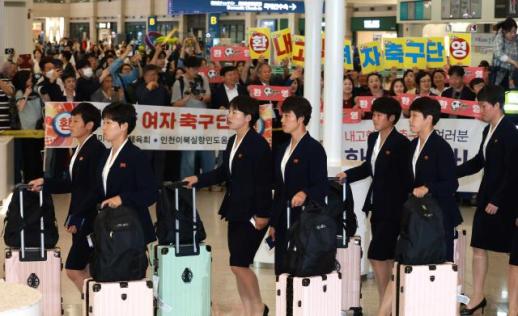 North Korean Women's Soccer Team Visits South Korea for First Time in Eight Years The Naegohyang Women's Football Team, representing North Korea, arrived in South Korea on May 17, 2026, for the Asian Football Confederation (AFC) Women's Champions League (AWCL) semifinals, marking the first visit by a North Korean sports team in eight years. The team landed at Incheon International Airport around 2:20 PM, consisting of 27 players and 12 staff members, totaling 39 individuals, according to the Ministry of Unification. This is the first time a North Korean team has participated in a sports event in South Korea since the International Table Tennis Federation (ITTF) World Tour Grand Finals held in Incheon in December 2018. Additionally, it is the first visit by a North Korean women's soccer team since the 2014 Incheon Asian Games, which took place 12 years ago. The Naegohyang team is set to face Suwon FC Women at the Suwon Sports Complex on May 20. The team departed Pyongyang on May 12 via a flight from Air Koryo, arriving in Beijing, where they trained near the North Korean embassy before flying to South Korea on a China International Airlines flight. According to a 'Cheering Support Reference Material' released by the Ministry of Unification on May 14, over 3,000 members from around 200 civic groups, organized by the National Council for Reconciliation and Cooperation, will form a joint cheering squad for the AFC AWCL. The ministry stated, "We respect the voluntary discussions and agreements of civic groups and are facilitating orderly cheering in accordance with AFC regulations," adding that they have provided guidance on prohibited items and the ban on political and religious messages at the venue. As a result of discussions with civic organizations, the joint cheering squad will utilize banners, cheering towels, cheering sticks, and flags from both clubs, all compliant with AFC regulations. 2026-05-17 15:12:00
 -
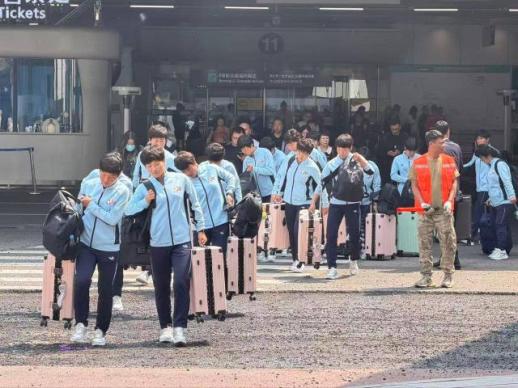 N. Korean women's football team arrives in S. Korea ahead of historic inter-Korean clash SEOUL, May 17 (AJP) - A North Korean women's football team arrived in South Korea on Sunday to compete in the Asian Football Confederation Women's Champions League semifinals, setting the stage for a rare and highly anticipated inter-Korean match. The Naegohyang Women's FC delegation, consisting of 27 players and 12 staff members, landed at Incheon International Airport at approximately 2:20 p.m., according to South Korea's Ministry of Unification. The team is scheduled to face off against South Korea's Suwon FC Women on Wednesday, May 20, at 7:00 p.m. The semifinal clash will take place at the Suwon Sports Complex. The North Korean arrival marks the first time a sports delegation from the North has visited South Korea in eight years, ending a drought that dates back to the International Table Tennis Federation World Tour Grand Finals in December 2018. In the realm of women's football, it is the first visit by a North Korean team in 12 years, following the 2014 Incheon Asian Games. The four-team tournament in Suwon will feature another major international matchup on Wednesday, with Australia's Melbourne City FC taking on Japan's Tokyo Verdy Beleza at 2:00 p.m. The finals and third-place matches are scheduled for May 23. The North Korean squad began their journey to the tournament on the morning of May 12, taking an Air Koryo flight from Pyongyang to Beijing. After holding training sessions near the North Korean Embassy in the Chinese capital, the team completed their journey to South Korea via an Air China flight on Sunday. 2026-05-17 15:07:54
 -
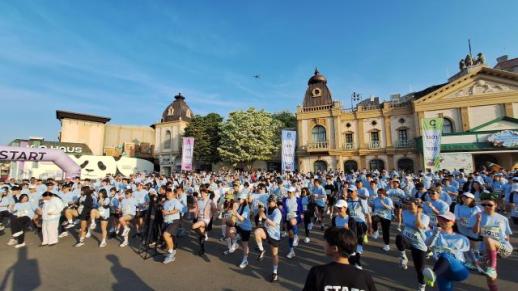 Everland Hosts Galaxy Watch Run, Featuring 4.82 km Race At 6:30 a.m. on May 17, the air was still cool at Everland in Yongin, Gyeonggi Province. Normally, this would be a time before the park opened, but over 1,000 people wearing sky-blue T-shirts filled the plaza, each sporting a Galaxy Watch 8. Today, this wristwatch was more than just an accessory; it served as a pace maker and personal medical assistant for the 4.82 km 'Safari Run.' The 'Galaxy Watch Run @Safari,' organized by Samsung Electronics in collaboration with Samsung Health, is in its second year. Only those who passed a competitive selection process with a ratio of 95 to 1 could participate. The slogan, 'Start running with Galaxy Watch, complete with Samsung Health,' caught the eye. The thrill of running on foot through the Lost Valley and Safari World, areas usually accessible only by vehicle, was palpable. Before the race began, a familiar face appeared on stage: Sean, a marathoner and Samsung Health ambassador. He joined Lim Sung-taek, Vice President of Samsung Electronics Korea, to share the significance of the event. Lim took the stage alone before Sean's arrival to announce the opening, stating, "Many people have shared their experiences with the Galaxy Watch. The biggest change for me is how it turns my entire life into numbers." Following Lim's remarks, participants engaged in a brief warm-up led by former national marathon coach Kwon Eun-joo, which included ankle rotations and thigh slaps. I glanced at my wrist, where the 'Start Running' button appeared on the Galaxy Watch 8 screen. I tapped it, and the Samsung Health app activated the GPS. Ready to go. With a shout of encouragement, runners from Group A began to take off sequentially. Lim high-fived participants as they started, and the energy surged as palms met. The first kilometer was a straightforward run. More accurately, I was pulled along by the watch. I felt a vibration on my wrist, indicating my current pace. The watch was tracking my speed down to the second. During the run, I checked the watch screen several times. The lap time display accumulated my segment records, while the pace screen updated my steps per minute and calories burned in real time. Another screen showed my heart rate at 133 bpm, with a maximum of 205 bpm indicated by red and yellow gauges. The graph pointed into the red zone. "I’m really pushing myself right now," I thought, as the data provided an objective view of my performance. Whenever my heart rate spiked, the watch vibrated silently, signaling me to ease my pace. I took a moment to catch my breath and adjust my speed. My body recovered. The running coach feature of Samsung Health analyzes running habits to assess current levels. Participants who recorded practice runs as a pre-race mission already understood their optimal pace by the time they reached the starting line. From preparation to completion, Samsung Health designed the entire event as a cohesive health routine. As we reached the midpoint of the course, we entered the Safari World section, a path usually seen only through car windows. I ran past the lion enclosure, where the scent of animals lingered. A zookeeper shouted, "Our lions are hungry, so hurry up!" eliciting laughter from the crowd. As the finish line came into view, a fellow participant raised both arms in triumph. Without realizing it, I quickened my pace. The moment I crossed the arch, the watch vibrated, signaling the end of my workout. The screen displayed my total time, average pace, and calories burned. Though I was out of breath and couldn't read it all, I felt a sense of accomplishment. All finishers received a commemorative medal shaped like the Galaxy Watch 8, filling me with pride. After the race, I headed to the experience zone, where people gathered around displays featuring the Galaxy Watch Ultra and Galaxy S26 Ultra. On the smartphone screens, results from the Samsung Health 'antioxidant index' measurement were displayed. The measurement taken at 8:06 a.m. on May 17 indicated a 'low' result on the graph. The antioxidant index is one of the specialized features of the Galaxy Watch 8 series and Samsung Health, measuring carotenoid levels in the skin to indicate the body's oxidative stress status. Measuring before and after exercise allows participants to directly compare changes in their physical condition. For those who had monitored their condition through sleep coaching the night before the run, the entire day became a comprehensive health data set. From the moment I pressed the start button to crossing the finish line, the Galaxy Watch 8 remained on my wrist, tracking my heart rate, pace, and segment records. After the run, opening the Samsung Health app revealed all that data neatly organized. It was a moment when 'records' became 'memories.' As I caught my breath after completing the race, Lim's earlier words echoed in my mind. Just as he said, seeing my life quantified made me eager to pursue my own personalized fitness journey again. 2026-05-17 14:59:34
 -
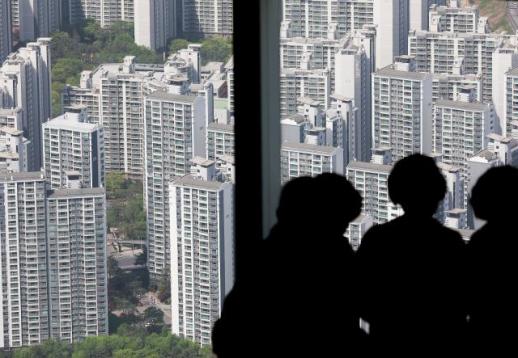 Housing Loans in South Korea Increase by 5.5 Trillion Won as Authorities Target Business Loan Loopholes The increase in housing loans from financial institutions in South Korea expanded in April, reaching the highest level in eight months. Financial authorities are closely monitoring the potential for rising household loans as housing transactions increase, while also significantly tightening regulations on the misuse of business loans for real estate purchases. According to the Financial Services Commission on May 17, total household loans across all financial sectors rose by 3.5 trillion won in April, maintaining the same level as the previous month. Household loans have increased for four consecutive months since a decline of 1.2 trillion won in December 2025. By category, mortgage loans surged by 5.5 trillion won last month, a significant increase from 3 trillion won in March. This marks the largest increase since August 2025, when it reached 5.8 trillion won. Other loans decreased by 2 trillion won, reversing a gain of 500 billion won from the previous month. The decline in credit loans also widened from 2 trillion won to 8 trillion won. By sector, mortgage loans from banks shifted from a decrease of 200 billion won in March to an increase of 27 trillion won in April. Bank-originated mortgages also rebounded from a decrease of 15 trillion won to an increase of 13 trillion won. Loans from non-bank financial institutions rose by 13 trillion won, although this was a decrease from the previous month’s increase of 31 trillion won. Earlier, the Financial Services Commission held a "Household Debt Monitoring Meeting" on May 14, focusing on the management of total household debt, trends in household loans across financial sectors, and the monitoring of illegal activities related to the misuse of business loans for real estate. Shin Jin-chang, the Secretary General of the Financial Services Commission, stated, "The increase in housing transactions during the first quarter is likely to be reflected with a lag, contributing to the upward trend in bank-originated mortgages, indicating that potential risk factors remain. We plan to strengthen monitoring to ensure compliance with the newly established management targets for bank-originated mortgages this year." In particular, financial authorities are intensively inspecting the circumvention of real estate regulations through the use of business loans. The Financial Supervisory Service began on-site inspections of the misuse of business loans across all financial sectors at the end of March, focusing on high-risk types such as loans taken immediately after business registration or those related to businesses in the affluent Gangnam area. The Financial Supervisory Service identified a total of 127 cases of misuse of business loans in the second half of last year. In the first half of this year, it plans to revise inspection guidelines for each financial sector, extending the prohibition period for loan issuance to three years for the first offense and ten years for the second. For individual business owners, restrictions will be placed not only on business loans but also on new household loans to crack down on illegal and improper lending practices. Shin emphasized, "While the downward stabilization trend of household debt continues, the incentive to use loans to circumvent regulations for housing purchases still exists. We will maintain a strong management stance to eradicate illegal activities related to the misuse of business loans in real estate."* This article has been translated by AI. 2026-05-17 14:55:26
 -
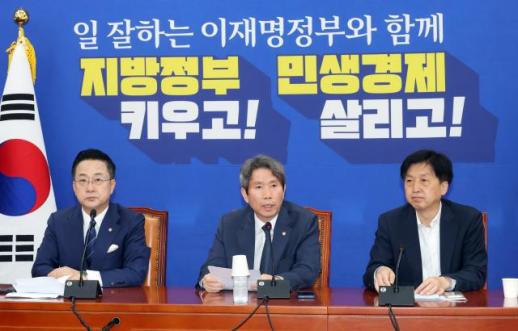 Democratic Party Condemns Negative Campaigning Against Seoul Mayor Candidate The Democratic Party on May 17 condemned negative campaigning directed at Seoul mayoral candidate Jung Won-o, urging an immediate halt to what they described as "malicious smear tactics." The party specifically referenced the controversy surrounding the missing rebar in the GTX-A line, promising a thorough investigation at the national assembly level. Lee In-young, the head of Jung's campaign, spoke with reporters at the National Assembly, stating, "We strongly condemn the smear tactics and malicious stigmatization against candidate Jung. No matter how urgent the election may be, this behavior is unacceptable. It is more disgraceful and vile than the 'gangster frame' that was placed on President Lee Jae-myung." Lee emphasized that such tactics undermine the citizens' choices and should be firmly rejected and eradicated from the political landscape. He warned, "We will hold accountable all those involved in smear politics and demand an immediate end to the People Power Party's despicable fabrications." He also addressed the recent construction errors, including the missing rebar at the Samsung Station section of the GTX-A line, indicating that a national assembly investigation would be initiated. "We demand an answer from candidate Oh regarding whether he was aware of these issues," Lee said, adding that he would work with members of the National Assembly's Land, Infrastructure and Transport Committee to uncover the truth and implement measures to prevent future occurrences. He warned that if these issues occurred under Oh's negligence or complicity, it would be a serious matter. Lee criticized Oh's administration, stating, "With such a disregard for safety, the future of Seoul is nowhere to be found. If the reality hidden behind the façade of communication is revealed, it would be shocking." He concluded by asserting that Jung would establish citizen sovereignty and transform Seoul into a city where citizens are the main actors, stating, "Candidate Oh has welcomed the night of insurrection and advocated for the release of Yoon Seok-yeol. He deserves to be judged alongside insurrectionist forces."* This article has been translated by AI. 2026-05-17 14:54:36
 -
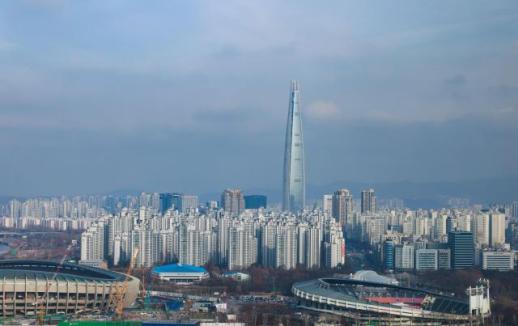 Seoul's Retail Landscape Transformed by Reconstruction Projects Reconstruction and redevelopment projects are reshaping not only residential areas but also the consumption landscape in cities. The influx of residents into large complexes and improvements in infrastructure are attracting more people to surrounding commercial areas, while the demand for new housing is expanding everyday consumer spending, highlighting new growth factors for offline retail.On May 17, an analysis of statistics from Seoul's commercial area analysis service revealed a significant increase in the 'floating population' around major urban redevelopment sites in the past five years. The floating population refers to individuals who reside or spend time around streets and buildings, serving as a key indicator for commercial area analysis.The most notable increase was observed in Dunchon-dong, Gangdong-gu. The floating population in Dunchon-dong rose from approximately 5.44 million in the fourth quarter of 2020 to about 7.92 million in the fourth quarter of 2025, marking a 45.5% increase. During the same period, estimated sales in the area grew from around 85.2 billion won to approximately 101 billion won, an increase of 18.6%.Dunchon-dong is set to see the completion of the Olympic Park Foreon, a large-scale complex with 12,032 units, starting in late 2024. The influx of residents, along with increased demand for moving and living services, new commercial facility users, and consumer spending from the surrounding residential areas, has contributed to the growth of the local market. However, the sales growth rate remains lower than the increase in the floating population, indicating that it may take more time for commercial facilities to establish themselves and for consumer spending to solidify.In Imun-dong, Dongdaemun-gu, the floating population increased from about 4.90 million to 6.84 million, a rise of 39.4%. Estimated sales in the area grew from approximately 112.1 billion won to about 142.1 billion won, a 26.8% increase. Imun-dong is experiencing a transformation as new residents from the Raemian La Grande, a redevelopment project in the Imun 1 redevelopment promotion zone, began moving in January 2025, adding a new consumer base to the existing mixed-use commercial area.Conversely, in Jamwon-dong and Gil-dong, sales growth outpaced population increases. In Jamwon-dong, Seocho-gu, the floating population grew by only 9.9%, from 6.48 million to 7.13 million, while estimated sales surged from about 245.3 billion won to approximately 329.4 billion won, a 34.3% increase. This growth is attributed to the influx of residents from the Maple Xi, a redevelopment project in the Shinbanpo 4 district, combined with increased demand for high-end housing along the Han River.Gil-dong in Gangdong-gu saw a floating population increase of just 8.0%, but estimated sales rose from about 318.5 billion won to approximately 425.6 billion won, a 33.6% increase. Gil-dong is interpreted as an area absorbing demand from the large-scale developments in Dunchon-dong and new housing in the Gangdong area rather than being a direct focus of major redevelopment projects.Overall, the impact of redevelopment projects on commercial areas has not been uniform. In areas like Dunchon-dong and Imun-dong, large-scale developments have initially attracted more residents, while in Jamwon-dong and Gil-dong, sales have responded more rapidly despite smaller population increases.Industry experts suggest that redevelopment projects are not merely about increasing housing supply but are fundamentally changing the structure of commercial areas. In the past, concerns about vacancies and commercial stagnation were prevalent during the early stages of reconstruction. However, recent trends show that after large-scale developments, consumer populations are recovering, leading to a restructuring of commercial areas focused on franchises, essential services, healthcare, educational institutions, and large retail facilities.Nonetheless, there are concerns that rapid development without buffer zones could lead to stagnation in existing, aging commercial areas. The redevelopment project in the Hannam 3 district in Yongsan is a prime example. This large-scale redevelopment site began demolition in February 2025 and is expected to create a complex with 5,988 units. As demolition and relocation progress, local merchants report that commercial facilities and shops within the area are already closing at a rapid pace.While the commercial area around Itaewon Station, which has recently attracted a lot of foot traffic, has been relatively less affected, the existing commercial zones deeper within the district are experiencing significant gaps. Even if new commercial areas are established post-redevelopment, it remains uncertain whether existing merchants can cope with rising rents and the changing consumer landscape to re-enter the market.A commercial leasing representative in Jangwi-dong, Seongbuk-gu, noted, "During construction, there is often a temporary downturn, and after residents move in, the structure of the floating population frequently changes. There are also many cases where the commercial structure and shops themselves undergo significant changes. Especially in the case of large complexes with around 10,000 units, a new consumption zone akin to a new town is formed, leading to disparities in commercial growth depending on local characteristics."* This article has been translated by AI. 2026-05-17 14:42:00
 -
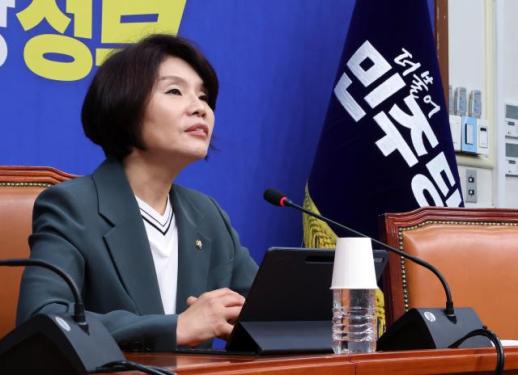 Democratic Party Unveils Youth Policies Focused on Pension and Housing The Democratic Party announced its youth policies on May 17, coinciding with the Day of Maturity, which include strengthening pension guarantees and expanding housing supply near workplaces. The party pledged to enhance the National Pension system to ensure a secure retirement for young people and improve various housing environments, including safe housing for single-person households and women. During the announcement at the National Assembly, Han Jeong-ae, chair of the party's policy committee, stated, "On this Day of Maturity, we are unveiling the Democratic Party's youth pledges for the June 3 local elections. Our goals are to support asset formation, ensure housing stability, reduce living costs, expand leisure activities, and strengthen safety nets for young people." Han elaborated, "To support asset formation, we have prepared three initiatives: enhancing pension guarantees for youth, expanding entrepreneurial opportunities for those looking to start businesses in new industries, and strengthening support for asset formation. For housing stability, we will increase the supply of housing near workplaces that young people want to live in and alleviate the burden of housing costs, including rent, by expanding and supporting shared housing that meets their needs." She also mentioned plans to ease job-seeking costs tailored to local youth, reduce transportation expenses using the 'Everyone's Card,' and expand the availability of affordable breakfast options for college students and young people at 1,000 won. Additionally, Han highlighted key pledges, including strengthening support for youth transitioning from protective facilities to independent living, reforming laws to prevent rental fraud and enhance penalties for offenders, and improving debt adjustment support systems. "Regarding the National Pension, we will support the first insurance premium when individuals turn 18 and include military service periods to ensure robust retirement security for youth," she emphasized. "We will also expand housing supply through various means, including tailored housing for single-person households and safe housing for women." Furthermore, she stated, "We will mandate public institutions to provide interview allowances and cover physical examination costs. The cultural voucher system will be expanded to allow young people to enjoy diverse cultural activities, and we will ensure uniform support from the central government for youth preparing for independence to achieve sustainable self-reliance."* This article has been translated by AI. 2026-05-17 14:33:53
 -
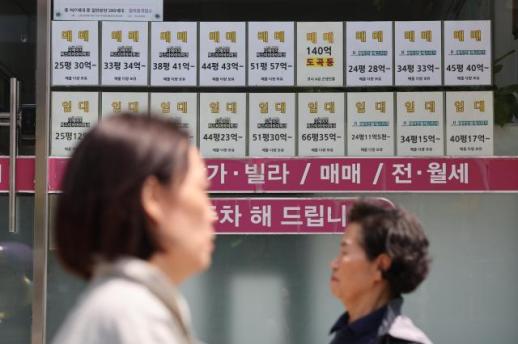 Transactions in Nowon and Dobong Surpass Gangnam as 80% of Seoul Deals Are Below 1.5 Billion Won In the Seoul apartment market, transactions for properties priced below 1.5 billion won now account for over 80% of sales, with rapid increases in transactions in outer districts such as Nowon, Dobong, and Gangbuk. This shift is attributed to the tightening of loan regulations and the designation of the entire city as a regulated area following the government's October 15 measures last year, which lowered the entry barrier for mid-priced apartments. Additionally, the end of the capital gains tax exemption for multiple homeowners has led to an increase in listings outside of Gangnam, further boosting transactions in these areas. According to the Ministry of Land, Infrastructure and Transport's real transaction disclosure system, from February to May 16 of this year, 81.6% of reported apartment sales in Seoul were for properties priced below 1.5 billion won. This marks a 3 percentage point increase from the previous three months, where the figure stood at 78.2% from November to January. The increase in demand for mid-priced apartments, which can secure loans of up to 600 million won, is seen as a response to the significant reduction in actual borrowing capacity for high-priced homes following the October 15 measures. Furthermore, the announcement by President Lee Jae-myung on January 23 regarding the end of the capital gains tax exemption for multiple homeowners has also influenced the market. Following this announcement, listings on the real estate platform Asil surged from 56,219 at the end of January to 80,080 by March 21, a jump of approximately 42.4%. It appears that multiple homeowners are increasingly selling their mid-priced properties outside of Gangnam, where the burden of disposal is relatively lower, contributing to the rise in transactions in these outer districts. In terms of price brackets, the proportion of transactions below 600 million won increased from 20.7% between November and January to 23.6% from February to May. Similarly, the share of transactions between 600 million and 900 million won rose from 26.3% to 28.7% during the same period. Conversely, the share of transactions priced between 900 million and 1.5 billion won decreased from 31.2% to 29.2%. The proportion of transactions between 1.5 billion and 2.5 billion won also fell from 15.1% to 13.2%, while those exceeding 2.5 billion won dropped from 6.0% to 4.7%. As the share of mid-priced apartment transactions increases, the average transaction price for apartments in Seoul has also declined. From February to May, the average transaction price was 1.09846 billion won, down approximately 80 million won from the previous three-month average of 1.18834 billion won. This suggests that while the market is not necessarily reviving as a whole, the focus of transactions is shifting toward outer districts and mid-priced properties. The increase in transactions in outer districts, particularly Nowon, Dobong, and Gangbuk, is notable. According to the real estate platform Asil, from February to May 17, the top-selling apartment complex in Seoul was 'SK Bukhan Mountain City' in Mia-dong, Gangbuk District, with a total of 115 transactions. Following closely was 'Hanshin-Hanjin Apartments' in Donam-dong, Seongbuk District, with 90 transactions, and 'Sangye Jugong Complex 6' in Sangye-dong, Nowon District, also ranked among the top sellers.* This article has been translated by AI. 2026-05-17 14:30:57
 -
 Anthropic AI Breaches Apple's Security Barrier in Just Five Days Anthropic's AI model, Claude Mitose Preview, has successfully compromised Apple's latest security technology, which the company invested billions in over the past five years, in just five days. According to the IT industry on May 17, the Vietnamese security research firm Caliph announced on May 14 via a Substack blog that it had developed the first-ever macOS kernel memory corruption exploit targeting Macs equipped with the Apple M5 chip. The security technology breached by Caliph is Apple's Memory Integrity Enforcement (MIE), a hardware-based memory safety system implemented exclusively by Apple on its M5 and A19 chips. MIE operates by assigning a 4-bit tag to each 16-byte memory block and immediately blocking access if there is a tag mismatch. The research team utilized Mitose to first discover the bug on April 25 and secured the completed attack code by May 1. The exploit begins with standard user privileges and escalates to the highest system privilege, known as 'root,' by chaining two vulnerabilities to target the macOS kernel. The team visited Apple's headquarters to report the vulnerability directly. Caliph stated that they chose in-person reporting to avoid being lost in the flood of bug submissions. Following this, Apple acknowledged Caliph and Anthropic Research as contributors to the vulnerability fix in the release notes for the macOS Tahoe 26.5 update. 2026-05-17 14:24:40
 -
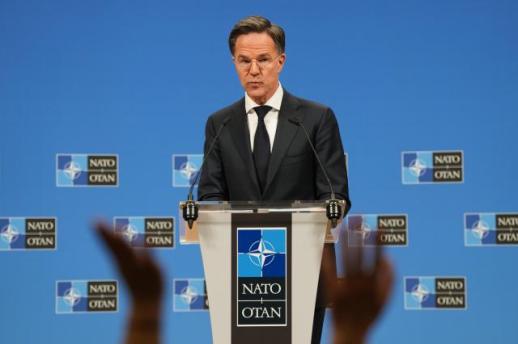 NATO Secretary General Rutte to Pressure European Defense Firms for Investment and Production Boost NATO Secretary General Mark Rutte is expected to pressure major European defense firms to increase investment and production. The Financial Times reported on May 16, citing sources familiar with the matter, that Rutte plans to meet with key European defense groups this week in Brussels. During the meeting, Rutte is expected to urge defense companies to expedite investments and ramp up production, laying the groundwork for significant defense agreements to be announced at the NATO annual summit in Ankara this July. NATO has requested that companies submit information on major investment plans and production expansion possibilities ahead of the meeting. While Rutte regularly engages with executives from major European defense firms, sources noted that gathering representatives from multiple companies in one location is unusual. The Financial Times described the meeting as indicative of NATO's urgency to showcase progress in European defense production ahead of the Ankara summit. The push for increased production in the European defense sector is partly driven by former President Donald Trump's demands for increased defense spending. NATO member countries agreed at last year's summit in The Hague to raise defense spending to 5% of their GDP in response to Trump's requests. NATO officials believe that prominently featuring arms contracts and defense investment expansion at the Ankara summit could demonstrate that the agreement to increase defense spending is yielding tangible results. One official told the Financial Times, "This is aimed at making defense spending increases appear more substantial." Rutte reportedly wants European defense firms to proactively invest rather than wait for large new government orders. However, he is also expected to listen to companies about specific challenges they face in expanding production. Some companies are expected to present plans for expanding facilities and workforce, securing key raw materials, and strengthening supply chains. Discussions are also anticipated on reducing reliance on components from China and Taiwan. The conflict surrounding Iran has further intensified the pressure on Europe to bolster its defense capabilities. According to the Financial Times, the U.S. Department of Defense announced earlier this month plans to withdraw 5,000 troops stationed in Germany amid tensions between Trump and German Chancellor Friedrich Merz. Some officials have indicated that the troop withdrawal plan and the depletion of critical munitions due to the Iran conflict have underscored the need for Europe to rapidly enhance its production capacity and military capabilities. If European NATO allies achieve the goal of spending 5% of their GDP on defense, it is estimated that annual defense spending could increase by a total of $1 trillion (1,500 trillion won) by 2035 compared to 2024. A NATO official stated, "The Secretary General regularly meets with industry and financial institutions across the alliance to encourage increased production, innovation, and investment to meet our capability needs."* This article has been translated by AI. 2026-05-17 14:09:59