
Journalist

Joseph Kwak
-
 Special Prosecutor to Investigate Yoon Suk Yeol for Military Coup Charges on June 6 Special Prosecutor to Summon Yoon Suk Yeol for Military Coup Investigation The second special prosecutor team, led by Kwon Chang-young, will investigate former President Yoon Suk Yeol for charges related to a military coup. On May 20, the special prosecutor's office announced that it plans to summon Yoon on June 6 as a suspect in the coup investigation. Yoon has expressed his willingness to cooperate with the investigation. Yoon is accused of conspiring with former Defense Minister Kim Yong-hyun to incite a riot by sending armed soldiers to the National Assembly and the National Election Commission during the declaration of a state of emergency on December 3. Previously, the special prosecutor's office had requested Yoon's appearance as a suspect on April 30, but his team did not comply, leading to a failed investigation. After notifying him again on May 23, Yoon's team indicated a refusal, prompting both sides to negotiate a new schedule. South Korean Tanker Passes Through Strait of Hormuz Amid Conflict Amid the ongoing conflict between the U.S. and Iran, one of the 26 South Korean vessels trapped in the Strait of Hormuz has successfully navigated through the waterway. On May 20, the Ministry of Foreign Affairs announced that a South Korean tanker passed through the Strait of Hormuz and is continuing its journey, with approximately 10 crew members on board. The government has consistently requested the safety and freedom of navigation for all vessels, including its own, through diplomatic channels, including four phone calls between South Korean and Iranian foreign ministers, a two-week special envoy mission, and communications through embassies. A ministry official stated, "We will continue to work to ensure the safety and passage of our vessels in the Strait of Hormuz." New R&D Funding Program to Support SMEs and Public Research Institutions A large-scale financial support program aimed at assisting the commercialization of technologies from public research institutions and small and medium-sized enterprises (SMEs) is set to be implemented. The Ministry of SMEs and Startups announced on May 20 that an amendment to the Small and Medium Enterprises Technology Innovation Act was approved during a State Council meeting and will take effect immediately. Historically, SMEs have struggled to secure funding for commercializing promising technologies obtained through research and development or transferred from public research institutions. The amendment introduces new financial support systems, including "commercialization guarantees" and "liquidity guarantees," to alleviate the financial burden associated with translating national R&D outcomes into industry applications. The total support amount for this initiative is 340 billion won, with 260 billion won allocated for commercialization guarantees and 80 billion won for liquidity guarantees. The ministry plans to begin providing guarantees as early as next month. Government Secures 245.7 Billion Won for Compensation to Historical Victims The government has secured approximately 245.7 billion won in contingency funds to compensate victims of significant historical injustices. According to the Ministry of Justice, the State Council approved the expenditure of 245.7 billion won for compensation during a meeting held at the Blue House on May 20. Justice Minister Jeong Seong-ho directed the swift restoration of rights and practical recovery for historical victims by instructing the withdrawal of appeals in major compensation lawsuits related to incidents such as the Brothers Home and the Seongam Academy in September, and the Yeosu-Suncheon 10.19 incident in October. As of March this year, the government has withdrawn appeals in 863 cases involving 3,587 individuals, including 116 cases (756 individuals) from Brothers Home, 42 cases (357 individuals) from Seongam Academy, 608 cases (1,570 individuals) from the Seongam Education Center, and 97 cases (904 individuals) from the Yeosu-Suncheon 10.19 incident. Consequently, 2,202 victims from these cases have received approximately 199.579 billion won in compensation. Xi Jinping Expected to Visit North Korea Next Week Amid Rising Tensions Chinese President Xi Jinping is expected to make a state visit to North Korea as early as next week, according to reports. On May 20, U.S. news magazine Time cited anonymous sources stating that China and North Korea are likely to strengthen their cooperation in response to Japan's rising militarism, with Xi's visit plans progressing. Time interpreted Xi's potential visit as a response to Japan's shift from a long-standing pacifist stance to a more assertive geopolitical posture. Recently, Japan has relaxed its restrictions on arms exports for the first time in 60 years following the appointment of Prime Minister Sanae Takaichi and is pushing for constitutional amendments to formally recognize the Self-Defense Forces. The country is also significantly increasing its defense budget and expediting related legislation. However, there has been no official announcement regarding Xi's visit to North Korea yet. Turkey Proposes NATO Fuel Pipeline Project to Enhance Energy Supply Turkey has proposed a fuel pipeline project to NATO that could serve as an alternative to the Strait of Hormuz. On May 20, Turkish Defense Ministry spokesperson Rear Admiral Zeki Aktürk announced at a press conference that the NATO fuel pipeline project is undergoing approval procedures within the alliance to strengthen energy supply for NATO allies on the eastern front. Aktürk emphasized the importance of this project in light of the recent situation in the Strait of Hormuz, stating that it could reduce NATO's reliance on maritime fuel transport and enhance fuel supply and interoperability. He also mentioned that if the pipeline project moves forward, NATO's common funds would be utilized. 2026-05-20 21:52:47
 -
 Government Launches $340 Million Financial Support for R&D Commercialization A large-scale financial support program aimed at assisting public research institutions and small and medium enterprises (SMEs) in commercializing technology is set to be implemented. The Ministry of SMEs and Startups announced that an amendment to the Small and Medium Enterprises Technology Innovation Act was approved by the Cabinet on May 20 and will take effect immediately. Historically, SMEs have faced challenges in securing funding to commercialize results from R&D or promising technologies transferred from public research institutions due to a lack of financial support mechanisms. The amendment introduces new financial support systems, including 'commercialization guarantees' and 'liquidity guarantees,' to alleviate the financial burdens associated with translating national R&D outcomes into industry applications. The total support amount for this initiative is 340 billion won, comprising 260 billion won for commercialization guarantees and 80 billion won for liquidity guarantees. The ministry plans to begin providing guarantee support as early as next month. With this amendment, the scope of financial support has expanded from just SMEs to include public research institutions. Notably, the support is tailored for SMEs that aim to commercialize completed national R&D projects or technologies transferred from public research institutions. Commercialization guarantees will now be evaluated based on project performance rather than solely on company metrics, allowing for support of up to 10 billion won. Liquidity guarantees will assess not only current revenues but also the potential future value and commercialization prospects of the businesses. Hwang Young-ho, Director of Technology Innovation Policy at the Ministry of SMEs and Startups, stated, "This amendment will ensure that excellent technology development results do not go to waste but instead contribute to business growth and profit generation, creating a virtuous cycle where profits are reinvested into technology development. We expect the utilization and efficiency of national R&D outcomes to significantly improve."* This article has been translated by AI. 2026-05-20 21:48:52
 -
 North Korea's Nae Go Hyang Women's Football Team Upsets Suwon FC Women in AFC Semifinal In a historic matchup, North Korea's Nae Go Hyang Women's Football Team defeated Suwon FC Women 2-1 in the semifinals of the AFC Women's Champions League on May 20 at Suwon Sports Complex. This marked the first time North Korean players participated in a sports event held in South Korea since December 2018, when table tennis player Cha Hyo-sim competed in the ITTF World Tour Grand Finals in Incheon. Nae Go Hyang will face Japan's Tokyo Verdy Beleza, who previously defeated Melbourne City 3-1, in the final on May 23 at the same venue. Despite heavy rain, 5,763 fans attended the match, including notable figures such as National Assembly Speaker Woo Won-sik, Minister of Culture, Sports and Tourism Park Hae-ryun, and Korea Sports Council President Yoo Seung-min. President Lee Jae-myung expressed his desire to attend the match during a cabinet meeting, saying, "I actually want to go, but I was told not to," and added, "I need to cheer with balance." Unification Minister Jeong Dong-young did not attend the match. He stated in a National Assembly meeting that the AFC had requested the Korea Football Association to ensure the event proceeded as a purely sports international event, separate from political considerations. Jeong decided not to attend to avoid any political implications. A joint cheering squad formed by civil organizations, including the North-South Cooperation Civil Society (Bukminhyup) and the National Council for Reconciliation and Cooperation (Minhwa-hyup), waved small flags featuring the logos of both Suwon FC Women and Nae Go Hyang, showing support for both teams. The AFC Women's Champions League is the premier women's club football competition in Asia, and this season marks its second iteration. The champions will receive a prize of $1 million, while the runners-up will earn $500,000.* This article has been translated by AI. 2026-05-20 21:42:00
 -
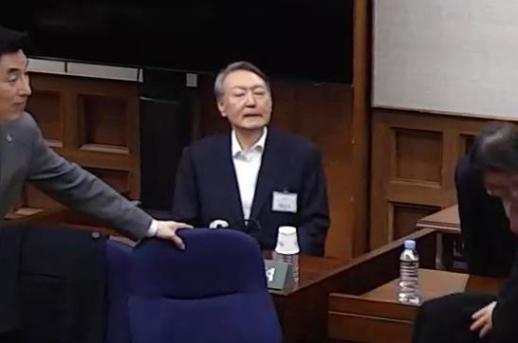 Special Prosecutor to Question Yoon Suk Yeol on Charges of Rebellion The second special prosecutor team, led by Kwon Chang-young, is set to investigate Yoon Suk Yeol on charges of rebellion under military law.The special prosecutor's office announced on May 20 that it plans to summon the former president on June 6 as a suspect in the rebellion case. Yoon has confirmed his willingness to appear before the special prosecutor.Yoon is accused of conspiring with former Defense Minister Kim Yong-hyun to deploy armed soldiers to the National Assembly and the National Election Commission to incite a riot during the declaration of martial law on December 3.Previously, the special prosecutor's office requested Yoon to appear as a suspect on April 30, but the former president's team did not comply, leading to a failed investigation. After notifying Yoon's team of a second summons on May 23, both sides have been coordinating schedules due to Yoon's team's indication of non-compliance.In addition to Yoon and former Defense Minister Kim, former Army Intelligence Command Chief Noh Sang-won and former Special Warfare Command Chief Kwak Jong-geun are also under investigation for rebellion. The special prosecutor's office first questioned Kwak on May 14 as part of the rebellion investigation.Yoon is also facing allegations of abuse of power for directing the National Security Office and the Ministry of Foreign Affairs to communicate messages to allied countries, including the United States, justifying the declaration of martial law immediately after it was announced.* This article has been translated by AI. 2026-05-20 21:36:46
 -
 From Debt to Success: Shin Sin-ja Becomes a Leading Jokbal Franchise Owner Shin Sin-ja, who rose from a debt of 1 billion won to become the head of a jokbal franchise, shares her success philosophy. In an episode airing on May 20, EBS's 'Seojanghoon's Neighbor Millionaire' features Shin Sin-ja, the CEO of a jokbal franchise that has achieved annual sales of 40 billion won. She recounts her journey from the bottom to the top, showcasing the entire process of jokbal production at her expansive 20,000-pyeong all-in-one factory. The episode will also include tips from the 40-year veteran jokbal artisan on distinguishing between front and back legs of the meat. Shin started as a franchisee before acquiring the headquarters. However, her path to success was not without hardship. After her husband defaulted on a loan, she found herself burdened with 1 billion won in debt. To make ends meet, she moved to Busan and entered the jokbal business, even selling her children's birthday rings. A chance encounter with a haenyeo (female diver) on Dongbaek Island provided her with the encouragement she needed to turn her life around. Shin eventually achieved the top sales among franchisees nationwide and transformed her fortunes by becoming the owner of the headquarters. Interest is growing in her hidden secrets to success. When Seojanghoon asked, "Isn't the food the same due to the nature of franchises?" Shin replied, "The first thing that makes a restaurant successful is not the taste of the food," revealing her unique business philosophy. She will share the elements that resonate with customers, forming her successful formula learned from experience. Meanwhile, Seojanghoon and Jang Ye-won visit Shin's factory, exploring the production process of not only jokbal but also essential side dishes like napa cabbage kimchi and dongchimi (radish water kimchi). They enjoy a hearty meal featuring freshly boiled jokbal, newly made kimchi, and refreshing dongchimi. During the meal, Shin's candid remarks catch everyone off guard. After tasting the jokbal she sliced, Jang Ye-won exclaimed, "The part you just cut is so delicious," to which Shin unexpectedly replied, "It's bland," leaving the atmosphere tense. Jang laughed, saying, "I've never heard someone say they get tired of eating too much." Seojanghoon added, "The freshly boiled jokbal is much tastier," but Shin reiterated, "It lacks umami. It's just plain." Her straightforward comments about the signature dish that generated 40 billion won in annual sales add a unique charm to the show. This episode also captures a moment when the notoriously picky Seojanghoon is disarmed. He stated, "I love jokbal, but I dislike it when it lacks chewiness," but after tasting Shin's jokbal, he expressed satisfaction, saying, "It's really good." As the freshly mixed kimchi was served, the reactions intensified. Seojanghoon remarked, "This is my favorite style. I wish I could eat this kimchi every day," as he couldn't stop eating. He reminisced about his childhood, saying, "I could only eat fresh kimchi, so my parents always had to make it. They would say, 'Who raised such a picky eater?'" bringing laughter to the scene. Shin responded with a bright smile, saying, "I’m flattered to receive compliments from someone with such discerning taste." The lively eating scene continued until the filming crew wrapped up. Viewers can catch the full episode of 'Seojanghoon's Neighbor Millionaire' airing tonight at 9:55 PM.* This article has been translated by AI. 2026-05-20 21:22:34
 -
 Turkey Proposes $1.2 Billion Military Pipeline Project to NATO Turkey has proposed a fuel pipeline project to NATO that could serve as an alternative to the Strait of Hormuz, the Turkish Defense Ministry announced on May 20. Rear Admiral Zeki Aktürk, the ministry's spokesperson, stated at a press conference, "The NATO fuel pipeline project aims to enhance energy supply for allies on the eastern front and is currently undergoing internal approval processes within NATO." Aktürk emphasized the project's significance in light of recent developments in the Strait of Hormuz, noting that it could reduce NATO's dependence on maritime fuel transport and improve fuel supply and interoperability among member nations. He also mentioned that NATO's common funds would be utilized if the pipeline is realized. However, he clarified that it is a "military fuel pipeline proposal," indicating that even if completed, its primary purpose would be for NATO's military objectives rather than civilian use. Bloomberg reported earlier that Turkey has proposed a $1.2 billion military pipeline project to NATO, which would connect through Bulgaria to Romania. The initiative aims to strengthen fuel supply chains and military interoperability among NATO allies. Although Turkey has limited fossil fuel production, it is expected to play a bridging role by utilizing existing oil and natural gas pipeline infrastructure linked to neighboring oil-producing countries such as Iraq, Azerbaijan, and Syria to connect NATO's front lines. According to Bloomberg, this proposal is expected to be a key agenda item at the NATO summit scheduled for July in Ankara, Turkey.* This article has been translated by AI. 2026-05-20 21:09:52
 -
 Samsung Union Must Embrace Responsibility in AI and Semiconductor Era The heart of South Korea's industry is shaking. The world is entering a massive industrial war over artificial intelligence (AI) and semiconductors. The United States and China are engaged in a fierce competition for AI supremacy, with companies like NVIDIA, TSMC, Samsung Electronics, and SK Hynix evolving from mere private enterprises to national strategic assets. Particularly, the semiconductor industry has transformed into a completely different realm compared to traditional manufacturing. It is a hyper-capital-intensive sector requiring hundreds of trillions of won in facility investments, research and development (R&D), ultra-fine process competition, expansion of AI data centers, and acquisition of advanced packaging technologies. In this context, the recent controversy over Samsung Electronics' union's demand for performance bonuses raises significant questions for our society. To what extent should labor rights be respected? What sense of responsibility should a union overseeing a core national industry possess? President Lee Jae-myung's remarks on labor rights and social responsibility during a recent Cabinet meeting are noteworthy in this regard. The president acknowledged that the three labor rights are constitutional safeguards for the socially vulnerable, while emphasizing that all rights come with responsibilities and limits. His comment regarding the demand to directly distribute a certain percentage of operating profit as a request that even investors would not make was a very realistic observation. A company cannot simply distribute its profits just because it has made a lot of money this year. The AI and semiconductor industries are fundamentally different from traditional manufacturing. These sectors must reinvest most of today's earnings into future investments to survive. One of the most critical concepts in the semiconductor industry is capital expenditure (CapEx). Building a state-of-the-art semiconductor factory costs tens of trillions of won. Securing high-bandwidth memory (HBM) for AI, next-generation foundries, ultra-fine processes, and advanced equipment requires astronomical funding. With U.S. companies like NVIDIA and AMD, Taiwan's TSMC, and China's SMIC engaged in a frenzied investment competition under national support, missing the timing for investment could shake the entire South Korean industry. In the AI era, the semiconductor industry prioritizes future investments over today's achievements. Even if this year’s operating profit reaches 300 trillion won, it does not immediately translate to 'surplus funds.' Most of it must be reinvested for future factories, AI infrastructure, R&D, and securing global supply chains. However, demanding a certain percentage of operating profit before taxes is a simplistic view of the industry's structure. This is not to undermine the contributions of workers. The competitiveness of Samsung Electronics and SK Hynix is due to the presence of world-class engineers and workers. The value of labor and rightful compensation must be respected. Yet, South Korea's unions must now adopt a progressive sense of responsibility that aligns with the changing global industrial landscape. The logic of unions from the past manufacturing era cannot adequately address the AI age. Today's global competition is not just a corporate issue; it is tied to national survival. This is why the U.S., China, Japan, and Taiwan support their semiconductor industries at the national level. The Samsung Electronics union must now move beyond a narrow focus on wage struggles to consider the competitiveness of South Korea's industry as a whole. Particularly, unions at global companies like Samsung Electronics must take into account their impact on global investors, markets, and the entire South Korean economy. Excessive debates over performance bonuses and extreme demands could ultimately weaken Samsung's competitiveness, which would return as a burden on the national economy. Currently, South Korea's economy is not in a comfortable position. With low growth, low birth rates, China's technological catch-up, U.S. tariff pressures, the Middle East energy crisis, and the restructuring of global supply chains, the entire South Korean economy is facing a significant test. If labor, capital, companies, and the government begin to drift toward extremes during such a time, the future of South Korea's industry will inevitably be shaken. We must view the past 30 years of Europe losing industrial vitality under excessive stakeholder capitalism and regulation with a critical eye. The crisis in Germany's automotive industry and the absence of major tech companies in Europe are not coincidences. In contrast, the U.S. has fostered super-innovative companies like NVIDIA, Apple, and Microsoft through bold investments and a capital market-centered structure. South Korea has also grown into a global semiconductor powerhouse through Samsung Electronics and SK Hynix. Now, South Korean unions must change. They need to evolve from a struggle-centered approach to a strategic union that considers industrial competitiveness and the future of the nation. A model of advanced unions is needed that goes beyond demands for wages and welfare to include discussions on technological innovation, productivity improvement, and long-term investment stability. Unions should not become adversaries of companies. Likewise, companies should not view workers merely as costs. There needs to be a shared understanding that both are part of a common destiny supporting South Korea's industrial ecosystem. In this context, President Lee Jae-myung's remarks convey a crucial message: rights must be respected, but all rights come with responsibilities and balance. The Samsung Electronics union must take President Lee's realistic warning seriously. What is needed now is not excessive demands and political slogans, but a mature sense of solidarity that contemplates the re-emergence of South Korea's industry together. The AI and semiconductor war has already begun. Now, South Korea's unions must move beyond past struggle logic to become advanced unions that jointly bear responsibility for future industries and national competitiveness. This is the path that will benefit both labor and companies, ultimately leading to a resurgence of the entire South Korean economy. * This article has been translated by AI. 2026-05-20 21:04:42
 -
 Time Reports Xi Jinping May Visit North Korea Next Week Amid Rising Japanese Militarism Chinese President Xi Jinping is expected to make a state visit to North Korea as early as next week. U.S. news magazine Time reported on May 20, citing anonymous sources, that "China and North Korea will cooperate more closely against Japan's new militarism," adding that plans for Xi's visit are underway. Time interpreted Xi's potential visit as a response to Japan's shift from its long-standing pacifist stance to a more proactive geopolitical posture. Recently, Japan has significantly strengthened its security policies, including easing restrictions on arms exports for the first time in 60 years under Prime Minister Sanae Takaichi and pushing for constitutional amendments to formally recognize the Self-Defense Forces. The country is also increasing its defense budget to record levels and expediting related legislative measures. However, there has been no official announcement regarding Xi's visit to North Korea yet. Xi previously visited Pyongyang in June 2019, becoming the first Chinese president to meet with Kim Jong-un for a summit in the North Korean capital.* This article has been translated by AI. 2026-05-20 20:36:43
 -
 South Korean Oil Tanker Passes Through Strait of Hormuz Amid Tensions One of the 26 South Korean vessels stranded in the Strait of Hormuz due to the U.S.-Iran conflict has successfully navigated through the strait for the first time. The Ministry of Foreign Affairs announced on May 20 that "one of our oil tankers has passed through the Strait of Hormuz today and is continuing its voyage," adding that approximately 10 South Korean crew members are aboard the vessel.Since the outbreak of the conflict, the South Korean government has made repeated requests for the safety and freedom of navigation for all vessels, including its own, through four phone calls between the foreign ministers of South Korea and Iran, the dispatch of special envoys over the past two weeks, and various diplomatic channels involving both countries' foreign ministries and embassies in Tehran and Seoul.A ministry official stated, "We will continue to work diligently to ensure the safety and passage of our vessels in the Strait of Hormuz."In related remarks, Minister Park Jin mentioned during a National Assembly Foreign Affairs and Unification Committee meeting that "at this moment, our oil tanker is exiting the Strait of Hormuz following negotiations with Iranian authorities."He added, "We have completed discussions with Iranian authorities, and the tanker began its voyage yesterday, navigating very cautiously with 2 million barrels of oil on board." The 2 million barrels refers to the amount of crude oil being transported by the South Korean tanker.According to Bloomberg and the ship tracking site MarineTraffic, the vessel that has exited the strait is the 'Universal Winner,' an oil tanker operated by HMM, the same company that operates the recently attacked 'Namoo.'* This article has been translated by AI. 2026-05-20 20:24:46
 -
 AI Insights: Redbrick's Yang Young-mo on the Importance of Operations in AI Implementation "The competitive standard for corporate AI is no longer which model to use, but how safely and consistently it can be operated in actual work environments," said Yang Young-mo, CEO of Redbrick. He explained that the early phase of generative AI focused on the performance of large language models (LLMs), but the emphasis has now shifted to the operational structure, which includes internal data, permissions, and security systems as key components of AI competitiveness. Yang noted, "Initially, many questions revolved around 'which model to use,' but now there are far more operational questions such as 'Can we securely connect to our company data?' and 'How can we reflect departmental permissions?' Companies are beginning to view AI not just as a productivity tool but as an integral part of their operational infrastructure." Redbrick, a startup specializing in generative AI-based content engines, offers AI solutions that support data and workflow automation for businesses and institutions through its proprietary 'Redbrick AI Engine.' The platform can generate content for games, education, and marketing with simple text inputs, and it integrates with internal documents and collaboration tools to assist with knowledge searches, document creation, and report drafting. The enterprise solution, 'Redbrick AI Enterprise,' is available in both on-premises and cloud versions, ensuring secure handling of sensitive information through end-to-end encrypted inference structures. As of 2025, the company surpassed 10 million cumulative users and was selected for the UAE's Mubadala sovereign wealth fund startup incubation program, 'HUB71.' Yang observed that corporate AI transformation (AX) projects are moving beyond simple chatbot implementations to the establishment of 'AI operational systems.' He explained that in practice, the structure of data, permission systems, and the redesign of work processes have become more critical than the performance of AI models. "In demo environments, AI appears to work well, but in actual corporate settings, documents are scattered across various systems, and both current and historical data are mixed. The complexity of the permission system means that simply attaching a model does not complete the AX process," he said. As a result, Redbrick is expanding its focus from being just an AI solutions provider to becoming a 'corporate AI infrastructure platform' company. The core strategy involves securely connecting internal company data, operating AI agents tailored to departmental needs, and creating a structure for integrated management of data access permissions, costs, and logs. Yang emphasized that the 'Front Deployment Engineer (FDE)' approach is becoming a significant trend in the global AI market. This method involves deeply engaging with clients' actual work environments to collaboratively define problems, rapidly implement solutions on the AI platform, and then enhance product features. He stated, "While past system integration projects were centered on requirements-based construction, FDE focuses on discovering problems together with clients on-site and accumulating them as repeatable platform features. Redbrick aims to be an AI engineering partner that designs AX transformations alongside our clients, not just a construction firm." Another notable change is the shift of companies toward a 'Multi-LLM' operational system, where multiple AI models are used concurrently. This shift is driven by the varying costs, speeds, and inference capabilities required for different tasks, making it challenging to handle all operations with a single model. Yang remarked, "For simple summarization or classification, lightweight models are more efficient, while high-performance models are better suited for complex analysis or decision support. Ultimately, how AI is managed on an operational structure will become more important than the models themselves." Looking ahead, Redbrick plans to focus on building an 'AI operational environment' that integrates AI infrastructure, knowledge-based AI, collaborative AI workspaces, AI workflow automation systems, and security, permission, and governance functions into a single corporate AI platform. Yang concluded, "The corporate AI market will quickly transition from the experimental stage to actual operational implementation. Redbrick aims to grow as a platform company that helps organizations operate AI safely as an integral part of their work infrastructure, beyond mere usage."* This article has been translated by AI. 2026-05-20 20:22:17