
Journalist

Jung Seokman
-
 AWS Korea CEO Ham Gi-ho: 'Physical AI is the Next Frontier for Korea' Amazon Web Services (AWS) is positioning 'Physical AI' as a key growth area, expanding beyond the digital realm into the real world, and is actively supporting the robotics industry in South Korea. This initiative comes as the era of AI operating in real industrial settings, including robotics, autonomous production, logistics, and healthcare, begins to take shape. During his keynote address at the 'AWS Summit Seoul 2026' on May 20 in Samsung-dong, Seoul, Ham Gi-ho, CEO of AWS Korea, stated, "AI is evolving from generative AI and agent AI to the physical AI stage, which extends into the physical world." On the same day, AWS unveiled the 'Physical AI Frontier Program' aimed at supporting domestic physical AI companies in technology development and international expansion. A dedicated AWS technical team will assist throughout the entire process, from data collection to model training, simulation, and edge inference. AWS plans to facilitate collaboration among domestic companies and connect them to global markets. Ham assessed that South Korea has significant potential in the field of physical AI. He noted, "South Korea has a dynamic physical AI ecosystem, ranging from AI semiconductor startups to robotics foundation model companies, and industries such as manufacturing, logistics, healthcare, and defense. The government is also accelerating the nurturing of related industries with the goal of becoming the world leader in physical AI by 2030." AWS is currently providing cloud infrastructure to major companies like HD Hyundai Robotics and Doosan, as well as domestic AI startups such as Config and RealWorld, to support physical AI development. Ham emphasized AWS's strength in practical robotic operations, stating, "Over 1 million robots are already operating in Amazon's logistics centers. The end-to-end service connecting data collection to edge inference and our real operational experience are AWS's unique competitive advantages." At the event, AWS also set up a dedicated exhibition area to showcase technology demonstrations from domestic physical AI companies. Demonstrations included autonomous production systems, collaborative robots, and autonomous delivery and patrol robots, highlighting the integration of cloud-based data processing and AI model training technologies in real industrial settings. John Felton, AWS Chief Financial Officer, remarked, "Agent AI and physical AI represent a transformative change in the AI industry structure. This presents a significant economic opportunity, especially for South Korea, which has a strong manufacturing competitiveness."* This article has been translated by AI. 2026-05-23 15:52:46
 -
 AI, Nuclear Power, and Defense Industry Drive New Growth in South Korea's Economy The foundation of South Korea's economy is gradually shifting. A new industrial axis is emerging on top of the traditional manufacturing sectors, which have been dominated by semiconductors, automobiles, and shipbuilding. This new axis includes artificial intelligence (AI), nuclear power, and the defense industry. These three sectors share a commonality beyond being promising industries; they are strategic sectors intertwined with the global reordering of power. This convergence of technology, security, and energy signifies a critical national agenda. AI is no longer just a tool for specific industries; it has become a foundational infrastructure that influences productivity and competitiveness across all sectors. The AI ecosystem, which connects data centers, semiconductors, and power grids, is expanding into a national-level competition. As the United States and China clash over AI supremacy, South Korea finds itself in a position where it cannot delay its decisions. Building an AI infrastructure based on semiconductor competitiveness is one of the few opportunities we have and a card we cannot afford to miss. Nuclear power is being re-evaluated as a practical solution to address both energy security and carbon neutrality. While the expansion of renewable energy is an inevitable trend, issues of intermittency and grid stability remain unresolved. The role of nuclear power as a baseload energy source is becoming increasingly significant. Furthermore, expectations for nuclear power exports to countries like the Czech Republic and Poland are adding to its potential as an export industry, extending beyond mere energy production. The defense industry is benefiting from a time of heightened geopolitical uncertainty. With a surge in demand for weapons, particularly in Europe and the Middle East, the competitiveness of South Korean arms is rapidly gaining recognition. The balance of price and performance, quick delivery times, and stable production capabilities have already been validated in the global market. The defense sector is no longer a 'secondary industry' but has established itself as a core industry driving both exports and technological accumulation. However, a significant concern remains: these three sectors are still largely confined to 'declarative expectations.' Without the establishment of inter-industry connections and ecosystems, there is a high risk that achievements will be short-lived. AI requires an integrated infrastructure involving power, data, and semiconductors, while nuclear power is a long-term industry that needs consistent policy and financial support. Similarly, the defense industry must align with diplomatic strategies, export financing, and technology transfer to ensure sustainable growth. Ultimately, all three sectors must operate on the common denominator of a 'national strategy.' A more fundamental question arises: Can this new growth axis transform the structure of the South Korean economy? Until now, we have relied on the boom of specific industries to elevate growth rates. However, AI, nuclear power, and defense demand a shift not just in individual industry performance but in the overall industrial structure. Comprehensive approaches are needed, including workforce development, regulatory innovation, and financial support. The current changes present both opportunities and challenges. As the global supply chain becomes more fragmented and technology and security intertwine, the choices South Korea makes will significantly influence its growth trajectory over the next decade. The three axes of AI, nuclear power, and defense have already begun to move. What remains is the speed and direction of this movement.* This article has been translated by AI. 2026-05-23 15:51:29
 -
 Korea Aims for Major Leap in Defense Industry with $60 Billion Canadian Submarine Bid When the Jangbogo submarine was commissioned in 1993, South Korea was the 43rd country in the world to operate submarines. In just over 30 years, the nation has entered the competition for Canada’s next-generation submarine project, valued at 60 trillion won. This is not merely participation; South Korea has formed a competitive duo with Germany's ThyssenKrupp Marine Systems (TKMS). Given the historical challenges faced by South Korea's shipbuilding and defense industries, this marks a significant transformation.Currently, the Canadian Patrol Submarine Project (CPSP) has narrowed down to a two-way competition between the Hanwha Ocean and HD Hyundai Heavy Industries 'one team' and Germany's TKMS. Both the government and industry insiders view the odds as essentially '50-50.' Germany is a leading submarine nation and provided technological assistance during South Korea's early submarine development, which is why Chief of Staff Kang Hoon-sik described the situation as 'not easy.' The final contractor selection is expected to be announced next month, marking a crucial turning point in South Korea's defense history.Some analysts suggest that South Korea has an advantage. The competitiveness of K-defense, demonstrated through systems like the K9 self-propelled howitzer, Cheonmu, FA-50, and KF-21, has been validated in the global market. Additionally, South Korean submarines are highly regarded for their operational capabilities, delivery timelines, and cost-effectiveness. Notably, Canadian naval officials have participated in training with South Korean submarines to assess their performance.This bidding process reflects the recent trends in the global defense market. Defense procurement is no longer just a business-to-business (B2B) transaction; it is evolving into a government-to-government (B2G) industry. This shift signifies a complex interplay of military power, security, supply chains, and diplomacy.In fact, the outcome of the Canadian submarine project will not be determined solely by performance. Local industrial cooperation, offset agreements, supply chain investments, and job creation are emerging as key variables in the 'package proposal.' The involvement of Hyundai Motor Group Chairman Chung Eui-sun as part of the special envoy is significant. The Canadian government has requested cooperation in the automotive and hydrogen sectors, prompting Hyundai to provide support, with other industries like Korean Air also joining in. If South Korea succeeds in securing the Canadian submarine contract, the implications extend beyond a mere 60 trillion won in revenue. It would elevate the country to a status where it exports submarines, often referred to as the 'ultimate weapon,' alongside ground weapons, missiles, and fighter jets. This could symbolize South Korea standing shoulder to shoulder with global defense powerhouses like the United States, Germany, and France.It is only natural that the government is fully supporting this endeavor. Chief of Staff Kang Hoon-sik has personally visited Canada in a special envoy capacity, and the Ministry of Trade, Industry and Energy, along with the Defense Acquisition Program Administration and industry players, are working in concert. This is a necessary action from the perspective of national strategic industries. The government must also consider additional support measures, including financial assistance and diplomatic channels.However, there are cautionary points to consider. An overemphasis on export-driven policies that impose excessive sacrifices on companies unrelated to the project is not advisable. While offsets are important, it is crucial that not all companies are coerced into 'semi-mandatory support.' In national strategic projects, balancing market principles with corporate autonomy is vital.The opportunity now before South Korea was unimaginable during the introduction of the Jangbogo submarine. A strategic approach that maintains principles and balance while fostering public-private collaboration is essential. The results of the Canadian submarine project, to be announced next month, are anticipated to be a historic turning point for K-defense.* This article has been translated by AI. 2026-05-23 15:48:51
 -
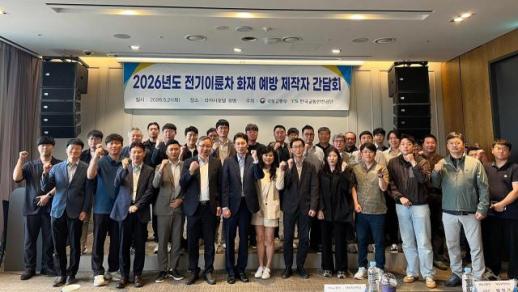 TS Hosts Fire Prevention Meeting for Electric Two-Wheelers with Seoul Fire Department The Korea Transportation Safety Authority (TS) announced on May 22 that it held a fire prevention meeting for electric two-wheelers on May 21 in collaboration with the Seoul Fire Department and relevant associations and manufacturers. The meeting aimed to create a safer environment for the use of electric two-wheelers. As of the end of last year, there were a total of 2.26 million registered two-wheelers in South Korea, of which approximately 76,000 (3.4%) were electric. Although the adoption rate remains low, recent serious incidents involving electric two-wheeler fires in residential complexes have heightened the need for proactive fire prevention and safety management. TS, in partnership with the Automotive Safety Research Institute, introduced the legal obligations of manufacturers and shared actual fire case studies and prevention technologies. Starting this year, electric two-wheelers will be included in the 'Special Safety Inspection for Electric Vehicles.' This initiative, launched in 2023 in response to recommendations from the Ministry of Land, Infrastructure and Transport, aims to alleviate public concerns regarding electric vehicle fires and promote proactive fire prevention through a public-private partnership. Last year, TS conducted special safety inspections on approximately 727,000 vehicles across 88 models in collaboration with the Ministry of Land, Infrastructure and Transport and 14 domestic and international electric vehicle manufacturers. Through these inspections, about 25,000 high-voltage batteries and electrical system anomalies were identified and addressed, and battery software updates were completed for over 260,000 vehicles. Jung Yong-sik, chairman of TS, stated, "Electric two-wheeler fire incidents can lead to significant casualties, making proactive prevention efforts crucial. We will work to create a safe operating environment for electric vehicles through the expanded special safety inspections starting this year."* This article has been translated by AI. 2026-05-23 15:46:26
 -
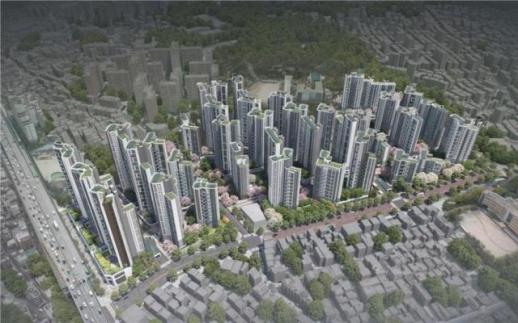 Seoul to Develop Major Redevelopment Projects with Over 3,000 Housing Units Seoul's major redevelopment areas, including the Jangwi 15 district in Seongbuk-gu, the Sangdo 15 district in Dongjak-gu, and the Noryangjin 1 district, are set to transform into large-scale apartment complexes with over 3,000 housing units following the approval of integrated redevelopment plans. According to the Seoul city government, the 9th Integrated Review Committee convened on May 21 and approved plans for the Jangwi 15 district, Sangdo 15 district, Noryangjin 1 district, as well as the Mia 3 district and the Gwan-su-dong small-scale redevelopment area. The city expects that the integrated review process will shorten project timelines by up to four to six months. The Jangwi 15 district, located near the Sangwolgok and Dolgok subway stations on Line 6, is characterized by a dense area of aging low-rise housing. The redevelopment will create a complex with a maximum height of 36 stories and 3,316 units, including 697 public rental apartments. To accommodate increased traffic, the city plans to construct a new 25-meter-wide road, Jangwol-ro, on the eastern side of the complex, and develop a neighborhood park to connect Odong Neighborhood Park and the North Seoul Dream Forest, enhancing green space in the area. Additionally, the redevelopment plans for the Jangwi 8, 9, and 14 districts are expected to gain momentum as integrated reviews are scheduled to continue through next year. The Sangdo 15 district redevelopment project also received approval. This project will feature a maximum of 35 stories, 32 buildings, and 3,204 units, with 481 of those designated as public housing. The city anticipates that this project will improve the residential environment in the Sangdo area while also providing a significant supply of housing. The Noryangjin 1 district will be redeveloped into a complex with a maximum height of 49 stories, comprising 22 buildings and 3,103 units, including 526 public rental apartments. Located near Noryangjin Station on Lines 1 and 9, the Noryangjin 1 district received approval for its management plan in April and is set to begin relocation in the second half of this year. The city aims to start construction by the end of next year, concurrently managing demolition and project plan modifications. The complex will include a multi-purpose community center with integrated childcare facilities, sports amenities, a citizens' university, senior facilities, and a community center. Plans also include open spaces that connect parks and public walkways. With the approval of these plans, the city believes that the overall redevelopment of the Noryangjin area will accelerate the supply of approximately 9,000 housing units. The Mia 3 redevelopment area in Gangbuk-gu also passed the integrated review, allowing for the development of a complex with 1,053 units, located near Mia Intersection Station on Line 4, with 158 units designated as public housing. Relocation has already been completed, and the city expects to expedite subsequent procedures, including demolition and project plan approvals, aiming for construction to begin in the second half of next year. The redevelopment project for the small-scale Gwan-su-dong area in Jongno-gu also received approval. This area, situated between Tapgol Park and Jongno 3-ga Station, will feature a mixed-use facility with four underground floors and 18 above-ground floors. Notably, the fourth floor will be dedicated to spaces for venture companies and integrated facilities, which the city hopes will enhance urban industrial competitiveness. A city official stated, "We plan to transform aging commercial areas into mixed-use facilities and expand public spaces for citizens, creating a harmonious urban environment for work, commerce, relaxation, and pedestrian access in the Gwan-su-dong area." Redevelopment promotion zones are designated areas aimed at improving residential environments and expanding infrastructure in underdeveloped urban areas through systematic and efficient planning. The city is also supporting rapid redevelopment and reconstruction projects through its expedited integrated planning system from the initial stages of planning and administrative procedures.* This article has been translated by AI. 2026-05-23 15:43:24
 -
 President Yoon Praises Global AI Hub as Major Achievement President Yoon Jae-myung commended Prime Minister Kim Min-seok on May 21 for his significant achievements related to the previous day's Global AI Hub Vision Declaration event. In a post on X (formerly Twitter), President Yoon also recognized Democratic Party lawmaker Cha Ji-ho for his support in attracting the Global AI Hub, stating, "Both of them are a blessing to South Korea. I appreciate their hard work." The Global AI Hub is a global cooperation platform being established in South Korea. It aims to create a collaborative framework for addressing global challenges by leveraging AI technology and infrastructure among international organizations, governments, academia, research institutions, and non-profit organizations. During the opening remarks at the Global AI Hub Vision Declaration event held at the Grand Hyatt Seoul, Prime Minister Kim stated, "International organizations, governments, academia, industry, and civil society must come together to innovate towards 'AI for all' and 'human-centered inclusive AI.'" The event was attended by representatives from nine international organizations, including the International Labour Organization (ILO), International Organization for Migration (IOM), International Telecommunication Union (ITU), United Nations Development Programme (UNDP), United Nations Environment Programme (UNEP), United Nations High Commissioner for Refugees (UNHCR), United Nations Children's Fund (UNICEF), World Food Programme (WFP), and World Health Organization (WHO). The South Korean government and these organizations issued a joint statement expressing their commitment to advancing the Global AI Hub.* This article has been translated by AI. 2026-05-23 15:42:00
 -
 HanAll Biopharma Shares Surge Following Immunovant Clinical Trial Results HanAll Biopharma is experiencing a strong surge in its stock price, rising over 14% on the second consecutive day, following positive clinical trial results from its global partner, Immunovant, for an autoimmune disease treatment. According to the Korea Exchange, as of 10:10 a.m. on May 22, HanAll Biopharma shares were trading at 58,000 won, up 7,100 won (13.75%) from the previous trading day. The day before, the stock had soared to the daily limit of 29.85%, closing at 59,000 won. The stock's rise is attributed to Immunovant's announcement on May 20 of interim data from a Phase 2 clinical trial for its antibody treatment, IMVT-1402, targeting rheumatoid arthritis. This treatment is based on an FcRn (neonatal Fc receptor) inhibitor that HanAll Biopharma licensed to Immunovant in 2017. Immunovant reported that in the 16-week interim analysis of patients with refractory rheumatoid arthritis who did not respond to existing therapies, the treatment achieved ACR20, ACR50, and ACR70 response rates of 72.7%, 54.5%, and 35.8%, respectively. ACR is a measure of improvement in rheumatoid arthritis symptoms, with ACR70 indicating a 70% or greater improvement in symptoms among patients. Market analysts are focusing on the strong efficacy data compared to competing drugs. Jeong Hee-ryeong, a researcher at Kyobo Securities, noted, "When compared to the Phase 2a results of Johnson & Johnson's nipocalimab, significant improvements were observed in the ACR50 and ACR70 metrics, raising expectations for the final data." Jeong Yi-soo, a researcher at IBK Investment & Securities, added, "Given that other FcRn inhibitors have shown poor results in rheumatoid arthritis trials, this data could prompt a reevaluation of IMVT-1402's potential as a best-in-class drug, increasing expectations for expanded indications in the future." The market is also keenly awaiting additional clinical results to be released. Immunovant is currently conducting further trials to confirm the maintenance effects by reclassifying patients into high-dose, low-dose, and placebo groups after the 16-week treatment. The final 28-week topline data is expected to be released in the second half of this year. Additionally, results from a proof-of-concept clinical trial for another indication, CLE (cutaneous lupus erythematosus), are also anticipated later this year.* This article has been translated by AI. 2026-05-23 15:39:00
 -
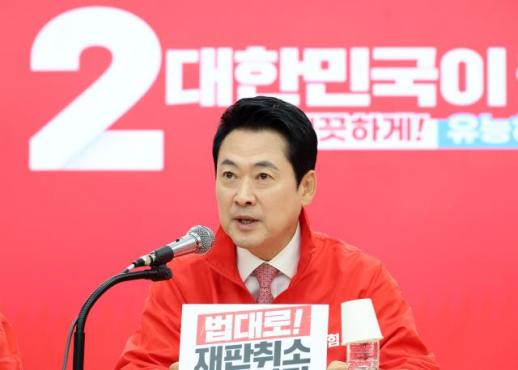 People Power Party Criticizes Jung Won-o's Call to Halt GTX Construction The People Power Party criticized Jung Won-o, the Democratic Party's candidate for Seoul mayor, for announcing plans to halt construction on the GTX-A line at Samsung Station due to alleged rebar omissions. They labeled his statement as "political manipulation under the guise of safety." Jang Dong-hyuk, the party's representative, made these remarks during a central election campaign meeting in Yeouido, Seoul, stating, "Jung should stop inciting fear and engage in discussions instead." Jang further accused Lee Jae-myung of using Jung as a campaigner, saying, "As soon as I called for a thorough investigation into the rebar omissions at Samsung Station, the Ministry of Land, Infrastructure and Transport and the Ministry of the Interior and Safety rushed in as if they were waiting for my command." He added, "It was the Ministry of Land that suppressed the Seoul city's reports six times. If they are serious about an investigation, they should start with the Ministry of Land, not the city of Seoul." Jang criticized Jung for demanding a halt to construction, asserting that the project is already undergoing reinforcement work after professional reviews and safety checks. He remarked, "Jung is calling for a stop to construction while also threatening to halt the Han River bus service and dismantle the Gwanghwamun Square. This is reminiscent of Park Won-soon’s second term, where he halted projects like the DDP and Sebit Floating Islands." He emphasized, "Returning to a city that farms instead of governing is more unsettling than having a convicted felon as mayor." Song Eon-seok, the party's floor leader, also weighed in on the Samsung Station issue, stating, "Jung's declaration to halt construction is a politically motivated attack on Oh Se-hoon, rather than a responsible administrative decision. A responsible leader would at least examine the situation closely before making such declarations." He warned that prolonged delays in the GTX construction would severely impact commuters from southern Gyeonggi Province traveling to Seoul, questioning whether Choo Mi-ae, who is running for governor of Gyeonggi Province, has discussed this issue with Jung. Song urged Choo to clarify her position on the potential delays in the GTX-A construction and whether she agrees with Jung's call to halt it. He suggested that a thorough discussion in front of the citizens of Seoul and Gyeonggi would be the proper approach to address these concerns. He concluded by criticizing all candidates, including Jung, Choo, and Incheon candidate Park Chan-dae, for avoiding debates, urging them to stop evading discussions and seek the public's judgment through open dialogue.* This article has been translated by AI. 2026-05-23 15:36:51
 -
 Over 62,000 Apply for 'Everyone's Startup' Project; 10,000 to Be Selected in Second Round The Ministry of SMEs and Startups has reported that over 62,000 people applied for the 'Everyone's Startup Project,' with plans to select 10,000 participants in the second round in July, double the number from the first round. On May 22, the ministry announced the status of applications and future plans for the project during a meeting of the Emergency Economic Headquarters, the Economic Relations Ministers' Meeting, and the National Startup Era Strategy Meeting. A record 62,944 individuals submitted applications for the government’s startup and idea competition. The application period ran from March 26 to May 15, with the official platform recording over 1.4 million visits and 135,036 registered users by the deadline. On average, 19.5 people accessed the platform per minute, with 1.9 new registrations occurring in the same timeframe. Among the applicants, 42,798 were young people aged 39 and under, making up 68% of the total. The youngest applicant was just 9 years old, while the oldest was 90. Additionally, 540 foreign applicants were recorded. The ministry will evaluate startup ideas based on published assessment criteria from various institutions within the 'Everyone's Startup Platform' and plans to announce 5,000 innovative entrepreneurs by mid-June. Selected entrepreneurs will be paired with designated mentors for at least four initial mentoring sessions, and each operating institution will run its own incubation programs. Additionally, participants will receive startup activity funding of 200,000 won. Furthermore, the ministry announced plans to launch the second round of the 'Everyone's Startup Project' in early July, expanding the selection to 10,000 participants. The new round will focus on enhancing the re-challenge function, diversifying startup leagues, expanding operating institutions, and broadening the recruitment target. For the 57,000 applicants who participated in the first round but were not selected, the ministry will provide feedback on their ideas and offer re-challenge mentoring to support their future entrepreneurial efforts. Han Seong-sook, Minister of SMEs and Startups, stated, "The participation of 60,000 challengers in 'Everyone's Startup' will open a new future for Korea's startup ecosystem, and it is the government's role to support this spark so that it can spread into a startup frenzy."* This article has been translated by AI. 2026-05-23 15:34:20
 -
 Controversy Surrounds Starbucks' 'Tank Day' Event Amid Historical Sensitivity The controversy surrounding Starbucks' 'Tank Day' event is escalating. The marketing campaign, which utilized terms reminiscent of the May 18 Gwangju Uprising and the death of Park Jong-cheol, has faced criticism for lacking historical sensitivity. This backlash has led to the dismissal of Starbucks Korea's CEO and raised questions about the company's historical awareness and social responsibility. Consumers have the right to express their opinions, including boycotting the brand. However, the recent developments in online spaces are concerning. Threatening posts, such as “I will kill anyone carrying a Starbucks cup,” indicate that the controversy is taking a dangerous turn. Attacking users of a specific brand or expressing hostility toward store employees cannot be justified. When the call to remember historical pain transforms into another form of hate and violence, society strays from common sense. Criticism of corporate missteps must be clearly distinguished from excessive ideological attacks. Some political communities are attempting to frame the controversy as a 'left vs. right' battle. The crucial issue is understanding why this incident occurred and how to prevent its recurrence, yet the debate is increasingly devolving into factional conflict. Most concerning is the secondary harm to frontline employees. Staff members, who are not involved in corporate planning or marketing decisions, are exposed to malicious complaints, verbal abuse, and threats. When emotional anger is directed at these employees, the controversy has crossed a line. In a democratic society, criticism is free, but violence and threats are crimes. No matter how justified the cause may seem, actions that threaten the safety of others are unacceptable. The anonymity of online spaces, where provocative language is often unleashed, is particularly dangerous. There have been numerous instances in the past where collective attacks on specific companies or individuals have led to real-life threats. Hate and anger can quickly combine with mob mentality, spiraling out of control. Excuses like “I didn’t mean it” or “I wrote it out of emotion” do not mitigate the issue. As social conflicts become more extreme, the first thing to collapse is the fundamental trust and safety within the community. Criticism should be made, but it must not lead to hate and threats. Consumers have the freedom to refrain from purchases and to publicly point out issues. However, once users of a specific brand are labeled as enemies or store employees become targets of attack, that criticism loses its legitimacy. There is a pressing need for restrained civic consciousness that does not cross the lines of common sense and principles. May 18 is a painful memory in the history of South Korean democracy that cannot be treated lightly. Therefore, a calm and responsible attitude is essential. If the call to remember historical wounds devolves into another form of hate and violence, it strays far from the spirit of democracy. What our society needs now is not animosity toward others but a balanced perspective based on fundamental principles and common sense. Criticism should be sharp, but threats and frenzied ideological attacks must be firmly guarded against.* This article has been translated by AI. 2026-05-23 15:31:15