
Journalist

Jung Seokman
-
 Over 62,000 Apply for 'Everyone's Startup' Project; 10,000 to Be Selected in Second Round The Ministry of SMEs and Startups has reported that over 62,000 people applied for the 'Everyone's Startup Project,' with plans to select 10,000 participants in the second round in July, double the number from the first round. On May 22, the ministry announced the status of applications and future plans for the project during a meeting of the Emergency Economic Headquarters, the Economic Relations Ministers' Meeting, and the National Startup Era Strategy Meeting. A record 62,944 individuals submitted applications for the government’s startup and idea competition. The application period ran from March 26 to May 15, with the official platform recording over 1.4 million visits and 135,036 registered users by the deadline. On average, 19.5 people accessed the platform per minute, with 1.9 new registrations occurring in the same timeframe. Among the applicants, 42,798 were young people aged 39 and under, making up 68% of the total. The youngest applicant was just 9 years old, while the oldest was 90. Additionally, 540 foreign applicants were recorded. The ministry will evaluate startup ideas based on published assessment criteria from various institutions within the 'Everyone's Startup Platform' and plans to announce 5,000 innovative entrepreneurs by mid-June. Selected entrepreneurs will be paired with designated mentors for at least four initial mentoring sessions, and each operating institution will run its own incubation programs. Additionally, participants will receive startup activity funding of 200,000 won. Furthermore, the ministry announced plans to launch the second round of the 'Everyone's Startup Project' in early July, expanding the selection to 10,000 participants. The new round will focus on enhancing the re-challenge function, diversifying startup leagues, expanding operating institutions, and broadening the recruitment target. For the 57,000 applicants who participated in the first round but were not selected, the ministry will provide feedback on their ideas and offer re-challenge mentoring to support their future entrepreneurial efforts. Han Seong-sook, Minister of SMEs and Startups, stated, "The participation of 60,000 challengers in 'Everyone's Startup' will open a new future for Korea's startup ecosystem, and it is the government's role to support this spark so that it can spread into a startup frenzy."* This article has been translated by AI. 2026-05-23 15:34:20
 -
 Controversy Surrounds Starbucks' 'Tank Day' Event Amid Historical Sensitivity The controversy surrounding Starbucks' 'Tank Day' event is escalating. The marketing campaign, which utilized terms reminiscent of the May 18 Gwangju Uprising and the death of Park Jong-cheol, has faced criticism for lacking historical sensitivity. This backlash has led to the dismissal of Starbucks Korea's CEO and raised questions about the company's historical awareness and social responsibility. Consumers have the right to express their opinions, including boycotting the brand. However, the recent developments in online spaces are concerning. Threatening posts, such as “I will kill anyone carrying a Starbucks cup,” indicate that the controversy is taking a dangerous turn. Attacking users of a specific brand or expressing hostility toward store employees cannot be justified. When the call to remember historical pain transforms into another form of hate and violence, society strays from common sense. Criticism of corporate missteps must be clearly distinguished from excessive ideological attacks. Some political communities are attempting to frame the controversy as a 'left vs. right' battle. The crucial issue is understanding why this incident occurred and how to prevent its recurrence, yet the debate is increasingly devolving into factional conflict. Most concerning is the secondary harm to frontline employees. Staff members, who are not involved in corporate planning or marketing decisions, are exposed to malicious complaints, verbal abuse, and threats. When emotional anger is directed at these employees, the controversy has crossed a line. In a democratic society, criticism is free, but violence and threats are crimes. No matter how justified the cause may seem, actions that threaten the safety of others are unacceptable. The anonymity of online spaces, where provocative language is often unleashed, is particularly dangerous. There have been numerous instances in the past where collective attacks on specific companies or individuals have led to real-life threats. Hate and anger can quickly combine with mob mentality, spiraling out of control. Excuses like “I didn’t mean it” or “I wrote it out of emotion” do not mitigate the issue. As social conflicts become more extreme, the first thing to collapse is the fundamental trust and safety within the community. Criticism should be made, but it must not lead to hate and threats. Consumers have the freedom to refrain from purchases and to publicly point out issues. However, once users of a specific brand are labeled as enemies or store employees become targets of attack, that criticism loses its legitimacy. There is a pressing need for restrained civic consciousness that does not cross the lines of common sense and principles. May 18 is a painful memory in the history of South Korean democracy that cannot be treated lightly. Therefore, a calm and responsible attitude is essential. If the call to remember historical wounds devolves into another form of hate and violence, it strays far from the spirit of democracy. What our society needs now is not animosity toward others but a balanced perspective based on fundamental principles and common sense. Criticism should be sharp, but threats and frenzied ideological attacks must be firmly guarded against.* This article has been translated by AI. 2026-05-23 15:31:15
 -
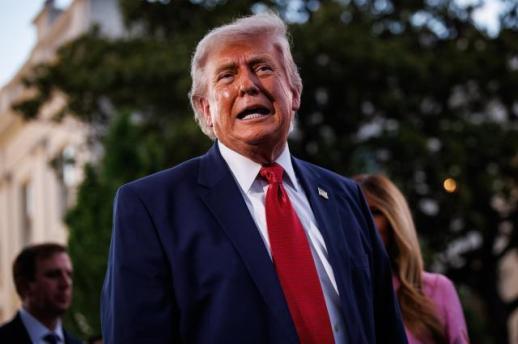 Trump Uncertain About Attending Son's Wedding Amid Iran Tensions President Donald Trump has not confirmed whether he will attend the wedding of his son, Donald Trump Jr. He stated that he is trying to make it but cited ongoing diplomatic and security issues, particularly concerning Iran, as reasons for his uncertainty. On May 21, during a press briefing at the White House, Trump was asked about his attendance at his son's wedding. He responded, "I’m going to try to make it, but right now is not a good time for me. There’s the Iran situation and other things going on." Donald Trump Jr. is reportedly set to marry his fiancée, Bettina Anderson, this weekend in the Bahamas. Reports indicate that the wedding is planned as a small, private event. Regardless of his decision, Trump acknowledged that he would face criticism from the media. He expressed frustration, saying that if he attends, he will be criticized, and if he does not attend, he will also be criticized. These comments come amid ongoing tensions between the U.S. and Iran. Recently, Trump has indicated that military operations could resume if an agreement with Iran is not reached. His attendance at his son's wedding is being closely watched in light of these developments.* This article has been translated by AI. 2026-05-23 15:30:00
 -
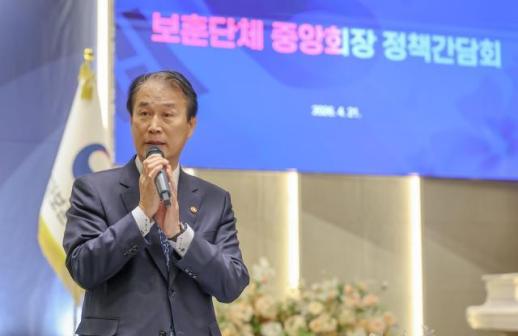 Veterans Minister Expresses Regret Over Starbucks Korea's Marketing Misstep Kwon Oh-eul, the Minister of the Ministry of Veterans Affairs, expressed deep regret over Starbucks Korea's marketing campaign related to the May 18 Democratic Uprising, known as 'Tank Day,' and pledged to take all necessary corrective actions to prevent the spread of misinformation. In a statement on his X (formerly Twitter) account on May 21, Kwon said, "As the Minister of the Ministry of Veterans Affairs, I express my deep regret and serious concern regarding Starbucks Korea's event that caused controversy on the May 18 Democratic Uprising anniversary." He added, "Honoring the noble spirit of the May 18 Democratic Uprising, which safeguarded democracy in South Korea, and recognizing the sacrifices and dedication of the May 18 democracy activists is a social responsibility for all citizens. Corporations are no exception." Kwon emphasized, "I hope Starbucks Korea will demonstrate a responsible attitude by offering a sincere apology that comforts the wounds of the May 18 democracy activists, their families, and the people of South Korea." Finally, Kwon promised, "The Ministry of Veterans Affairs will lead efforts to establish a culture of remembrance that fosters a mature and correct historical awareness among all citizens, including corporations, while also enhancing monitoring to prevent the spread of misinformation related to the May 18 Democratic Uprising and taking all necessary corrective actions." * This article has been translated by AI. 2026-05-23 15:27:20
 -
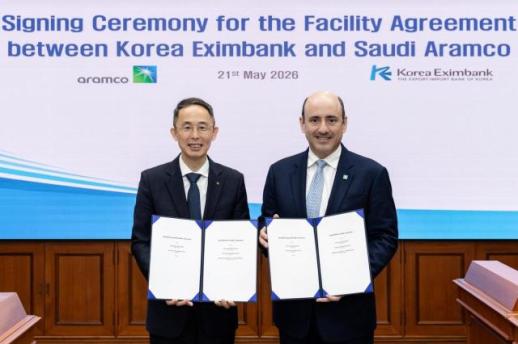 Korea Export-Import Bank Signs $3 Billion Financial Deal with Aramco Korea Export-Import Bank (KEXIM) has entered into a financial agreement with Saudi Arabia's state-owned oil company, Aramco, to support domestic companies. This initiative aims to enhance competitiveness in securing contracts in the Middle East and stabilize supply chains for essential resources like crude oil.KEXIM announced on May 22 that it has signed a $3 billion individual loan financial contract based on a master credit agreement with Aramco.The master credit agreement establishes pre-defined financial support limits and conditions for overseas prime contractors, allowing for rapid financing when Korean companies secure contracts or engage in joint ventures.KEXIM has previously provided financial support for large projects led by Aramco, including the Amiral petrochemical facility project and the Jafurah combined heat and power project, assisting local companies in securing contracts in the region.With this new agreement, KEXIM plans to mobilize various policy financing tools to support Korean companies participating in Aramco's infrastructure restoration projects and new gas and energy ventures once the situation in the Middle East stabilizes.A survey conducted by KEXIM among 505 export companies revealed that 73.5% of respondents reported negative impacts from the ongoing conflict in the Middle East. The most cited issue, affecting 69.6% of respondents, was fluctuations in raw material prices.Hwang Gi-yeon stated, "The signing of this $3 billion financial contract marks a significant milestone in elevating the strategic financial cooperation between our two institutions. I hope to see increased participation of Korean companies in future large-scale projects initiated by Aramco, and we will serve as the most reliable and swift bridge for this purpose."* This article has been translated by AI. 2026-05-23 15:24:52
 -
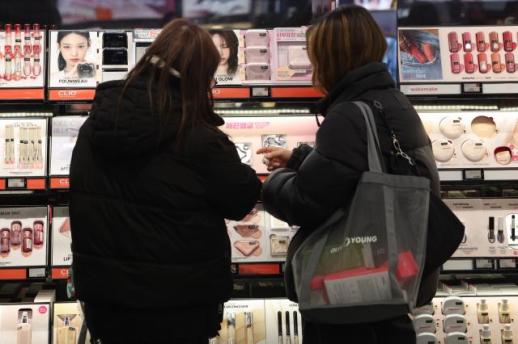 K-Beauty Surpasses $10 Billion Trade Surplus, Overtakes U.S. Cosmetics Market South Korea's cosmetics industry has achieved a historic milestone, surpassing a $10 billion trade surplus for the first time. Once heavily reliant on China, the industry has diversified its export markets to include the United States, Europe, and the Middle East, marking a significant transformation. K-Beauty is now recognized as a leading surplus industry beyond just a trend in consumer goods. On May 22, the Ministry of Food and Drug Safety reported that last year, the trade surplus for domestic cosmetics reached $10.1 billion, a 13.5% increase from the previous year, marking the first time it exceeded $10 billion. Cosmetics exports totaled $11.4 billion, the highest ever recorded, while imports slightly decreased to $1.29 billion. Cosmetics accounted for 12.9% of the total trade surplus of $78 billion. Notably, the diversification of export markets has been significant. The United States has become the largest export destination for South Korean cosmetics, with exports reaching $2.2 billion, surpassing China, which recorded $2 billion. Although exports to China have declined, the growth in the U.S., Europe, and the Middle East has driven overall expansion. The number of export destinations increased from 172 to 202 countries, effectively broadening the global market reach. Regionally, growth in Europe and the Middle East has been particularly pronounced. Exports to Poland surged by 115% year-on-year, elevating it to the ninth-largest export market, while the United Arab Emirates saw an increase of over 70%, ranking eighth. Industry experts suggest that K-Beauty is not merely a passing trend but has entered a phase of establishment in the expansive U.S. and European markets. Production figures also reached record highs. Last year, domestic cosmetics production amounted to 17.9382 trillion won, a 2.3% increase from the previous year. LG Household & Health Care and Amorepacific maintained their positions as the top two producers, followed by Aekyung Industrial. However, the ranking changes among smaller brands were more pronounced. APR jumped from 21st to 4th place, while Gudai Global and Binau also rapidly ascended the rankings. In the ODM sector, Cosmax and Korea Kolmar continued to dominate. The government plans to support the growth of K-Beauty through regulatory reforms. The Ministry of Food and Drug Safety stated, "In line with the strengthening of safety evaluations in major countries like the U.S. and China, we will gradually implement domestic regulations and provide guidelines and consulting to help the industry respond effectively." Additionally, a meeting of regulatory agency heads is scheduled for September to expand global cooperation. With the launch of halal certification support initiatives, K-Beauty is expected to further expand its presence in the Middle East and Islamic markets.* This article has been translated by AI. 2026-05-23 15:22:11
 -
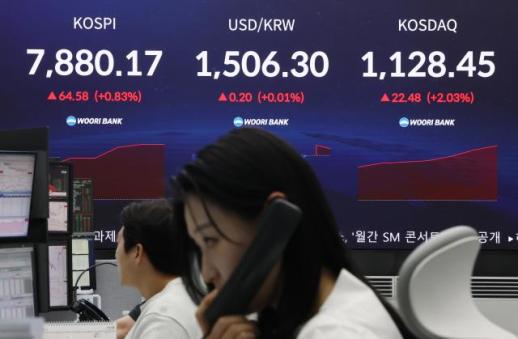 U.S.-Iran Peace Talks Boost Market Confidence as Won-Dollar Exchange Rate Declines The won-dollar exchange rate opened lower as optimism surrounding U.S.-Iran peace negotiations continued. As of 9:42 a.m. on May 22, the exchange rate in the Seoul foreign exchange market was 1,507.3 won per U.S. dollar. The rate opened at 1,504.7 won, down 1.4 won from the previous session. International oil prices fell for the third consecutive day amid expectations of progress in U.S.-Iran negotiations. Brent crude for July delivery dropped 2.32% to $102.58 per barrel. West Texas Intermediate (WTI) crude for July delivery closed at $96.35, down 1.94% from the previous trading day. The New York stock market closed slightly higher, with the Dow Jones Industrial Average rising 276.31 points (0.55%) to close at 50,285.66, marking a new record high. The Standard & Poor's 500 index increased by 12.75 points (0.17%) to finish at 7,445.72, while the Nasdaq Composite rose by 22.74 points (0.09%) to close at 26,293.10. Minkyoung Won, an economist at Woori Bank, stated, "Today, the won-dollar exchange rate is expected to decline as the market calms down following the optimism surrounding a Middle East peace agreement and financial market concerns over interest rates. Additionally, the risk appetite in the Asian market is likely to continue, leading to a reversal in foreign investment in the KOSPI and attracting offshore long stops."* This article has been translated by AI. 2026-05-23 15:19:15
 -
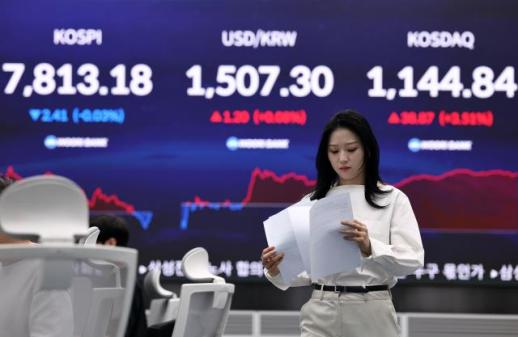 KOSDAQ Surges Over 5%, Trading Halts Triggered for Second Consecutive Day The KOSDAQ market experienced a second consecutive day of trading halts due to a temporary suspension of buy orders, known as a sidecar. According to the Korea Exchange, the buy sidecar was triggered at 9:33:06 AM on May 22. At the time of the halt, the KOSDAQ 150 futures price had risen by 114.20 points (6.12%) to 1979.20, while the KOSDAQ 150 index was up 103.72 points (5.53%) at 1979.24. The buy sidecar is activated when the KOSPI 150 futures price increases by 6% or the KOSDAQ 150 index rises by more than 3% and sustains that level for one minute. During a buy sidecar activation, all program buy orders are suspended for five minutes. The recent surge in the KOSDAQ is attributed to the launch of a public participation growth fund, which is expected to enhance capital inflow into the KOSDAQ. As of 9:57 AM, the KOSDAQ index was trading at 1162.55, up 56.58 points (5.12%) from the previous day. The index opened at 1119.43, up 13.46 points (1.22%), and continued to rise due to strong buying from foreign investors. Foreign and institutional investors were net buyers, purchasing 410.1 billion won and 181.4 billion won, respectively, while individual investors sold a net 563.5 billion won. Among the top market capitalization stocks, EcoProBM (up 11.03%), Alteogen (up 8.96%), and EcoPro (up 14.64%) showed strong performance.* This article has been translated by AI. 2026-05-23 15:18:00
 -
 Samsung Electronics Confirms Schedule for SAFE Forum 2026 in South Korea Samsung Electronics has confirmed the schedule for the 'SAFE (Samsung Advanced Foundry Ecosystem) Forum 2026' in South Korea, aimed at strengthening the global semiconductor collaboration ecosystem. According to Samsung Electronics on May 22, this year's domestic SAFE Forum will take place on July 1 at the multipurpose hall of Samsung's Seocho headquarters. The SAFE Forum is an annual technology event hosted by Samsung's foundry division since 2019, where it shares the latest semiconductor technology trends and collaboration strategies with foundry partners and industry experts. This year's event is expected to highlight Samsung's advanced technology and stable mass production capabilities in its 4-nanometer (nm) process, reinforcing trust among domestic and international clients while accelerating the expansion of the ecosystem into next-generation fine processes. Before the event in South Korea, Samsung will kick off the global SAFE Forum in the United States, specifically in San Jose, California, on May 28. This U.S. event will focus on the role of foundries in the age of artificial intelligence (AI). Notably, the U.S. forum will showcase the second-generation 2-nm (SF2P) process technology, along with the current mass production yields and process achievements, drawing significant attention from global tech companies. Additionally, plans for the third-generation process (SF2P+), set to begin mass production next year, are expected to be revealed, unveiling a roadmap targeting the AI and high-performance computing (HPC) markets. The SAFE Forums in both the U.S. and South Korea are anticipated to serve as key platforms for strengthening ties with domestic semiconductor startups and design house partners. An industry insider stated, "By solidifying the next-generation fine process roadmap and fabless customer support system, we aim to gain an edge in the fine process competition against global rivals and further strengthen our leadership in the foundry ecosystem."* This article has been translated by AI. 2026-05-23 15:15:21
 -
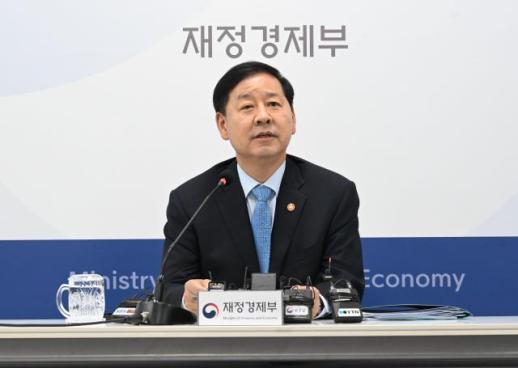 Government to Supply 90,000 Rental Homes in Greater Seoul Over Two Years The South Korean government is exploring various measures to increase the supply of non-apartment housing in response to rising apartment prices in Seoul and instability in the housing market. Non-apartment options, such as officetels, can be supplied more quickly than apartments, providing a rapid response to housing needs. On May 22, Deputy Prime Minister and Minister of Finance Koo Yun-cheol stated during a meeting of real estate ministers at the Government Complex in Seoul, "Today’s meeting will review housing market trends and discuss plans for a crackdown on illegal real estate activities." The government plans to supply 90,000 rental homes in the greater Seoul area over the next two years, from 2026 to 2027, with 66,000 of those units concentrated in regulated areas. This initiative aims to alleviate housing difficulties for young people and stabilize the market in the short term. Koo noted that the increase in apartment sale prices in Seoul has accelerated for two consecutive weeks. He explained that the number of properties for sale has significantly decreased and that rental listings have shown slight recovery. The government is committed to closely monitoring price fluctuations and property availability. Koo emphasized, "We will keep a vigilant eye on price changes and property trends to ensure market stability." The immediate focus is on expanding the supply of non-apartment housing. With rising prices primarily affecting apartments, the government aims to increase the availability of housing that can be occupied quickly to distribute demand more evenly. Koo stated, "The government is exploring various ways to expand the supply of non-apartment housing, which is a crucial part of the housing ladder." He added that non-apartment options like officetels can be supplied relatively quickly, with visible increases expected within one to two years. Expanding non-apartment housing supply is also linked to stabilizing housing for young people. As the burden of apartment prices and rental costs increases, options for young people and newlyweds become limited. The government plans to use non-apartment housing to alleviate these challenges. To facilitate this, the government will focus on increasing the supply of rental non-apartment units in regulated areas. Rental housing involves the government purchasing existing or newly built homes and leasing them, which is faster than direct construction and serves as a short-term supply solution. Koo confirmed, "We plan to supply 90,000 rental homes in the greater Seoul area from 2026 to 2027, with 66,000 units designated for regulated areas." The government is also implementing measures to accelerate the supply process. By applying modular construction methods, it aims to shorten construction time and reduce costs for developers, encouraging early project commencement. Modular construction involves pre-fabricating major structural components in factories and assembling them on-site, which can significantly reduce construction time. For housing projects that have received permits but have not yet started construction, the government will provide close management on a project-by-project basis. This includes promptly addressing on-site challenges and ensuring that financially viable projects do not encounter funding issues. Koo stated, "We will thoroughly manage housing projects that have received permits but have not yet begun construction, addressing on-site challenges immediately and ensuring that financially sound projects do not face funding difficulties." The government also reaffirmed its strict stance against market disruption. It believes that alongside increasing supply, blocking speculative demand and illegal transactions is essential for achieving market stability. Koo emphasized, "We will not tolerate any actions that disrupt market order."* This article has been translated by AI. 2026-05-23 15:13:08