
Journalist

Jung Seokman
-
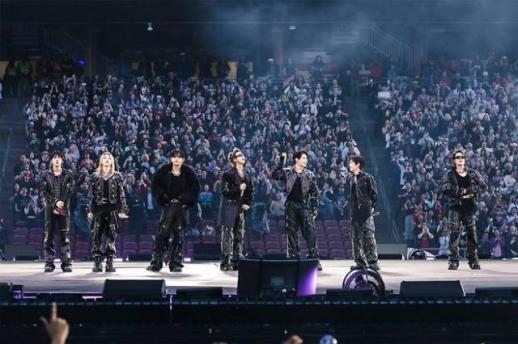 K-pop band BTS performs for 152,000 fans at Stanford Stadium SEOUL, May 22 (AJP) - K-pop legend BTS has performed for about 152,000 fans over three days at Stanford Stadium in the United States, drawing large crowds that waved South Korean flags and sang in Korean. The performances on May 16, 17, and 19 were part of the "BTS WORLD TOUR 'ARIRANG' IN STANFORD". The concerts highlighted the group's presence in the global music scene, as they became the second musical act to headline the venue since it opened in 1921, following Coldplay. During the performance of "Body to Body" from the "ARIRANG" release, the melody of the traditional folk song "Arirang" played through the stadium. The audience responded by simultaneously raising South Korean flags they had prepared in advance and singing the Korean lyrics in unison. The group addressed the crowd to acknowledge the coordinated display. "We are having the best moment of our lives right now," BTS said. "We were truly moved by the event you showed us. We will remember every single moment. We want to say thank you and promise to meet again." BTS will continue their tour with four concerts at Allegiant Stadium in Las Vegas on the 23rd, 24th, 27th, and 28th. The group is also scheduled to attend the American Music Awards at the MGM Grand Garden Arena at 5 p.m. on the 25th. 2026-05-22 15:02:06
 -
 South Korea bans travel to more parts of Congo as Ebola outbreak spreads SEOUL, May 22 (AJP) - A highest-level travel warning has been expanded to more parts of the Democratic Republic of the Congo (DRC) as Ebola infections continue to spread, the Ministry of Foreign Affairs said Friday. Taking effect from 2 p.m., travel to Ituri Province has been banned under the highest level of the four-tier overseas travel advisories amid a recent rise in Ebola-related deaths there, expanding the no-travel zone to three provinces including North Kivu and South Kivu in the African country. According to the ministry, hundreds of Ebola cases and suspected infections have been reported in Ituri and North Kivu provinces, with more than 100 deaths already confirmed. South Koreans who visit or remain in these areas without special permission could face penalties. The ministry also issued a lower, second-highest warning for several areas near the border including Bas-Uélé and Haut-Uélé, urging those staying there to leave. The latest outbreak of the deadly virus involves the Bundibugyo strain, which has no approved vaccine or treatment, and the World Health Organization (WHO) has declared it a public health emergency of international concern. According to estimates by the U.K.-based Medical Research Council (MRC), the number of infections may already exceed 1,000 including cases still in the incubation period. 2026-05-22 15:00:43
 -
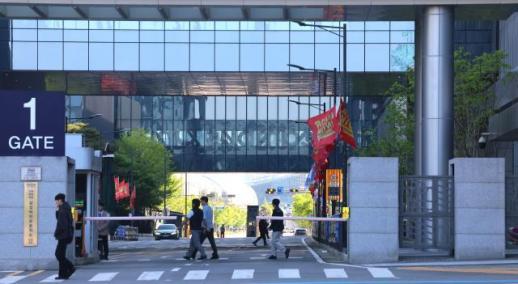 Samsung Biologics wins court penalty against union strike SEOUL, May 22 (AJP) - A South Korean court has ordered Samsung Biologics' labor union to pay 20 million won ($13,196) every time it violates an injunction restricting strike action at sensitive bioreactor lines, escalating a legal standoff at the world's largest contract drugmaker. Reports on Friday said the Incheon District Court granted Samsung Biologics' application for indirect compulsion against the union. The ruling reinforces an earlier injunction that bars union leaders from directing members on certain essential production lines to stop work or from circulating related instructions. The court had initially declined to attach financial penalties to the March injunction after the union pledged to abide by it. That pledge unraveled on April 27, when union leadership distributed a "strike guidance procedure" to members and roughly 300 employees assigned to court-restricted processes joined the subsequent walkout, prompting the company to refile. Samsung Biologics had sought 100 million won per violation, but the court awarded a fifth of that amount. "The union must not, during the period of industrial action based on the March 29, 2026 strike vote, instruct members to halt court-designated processes or distribute related guidelines," the bench said in its order. Industry observers said the decision underscores the unique vulnerability of biologic drug manufacturing, where even brief stoppages at fermentation or purification stages can spoil raw materials and finished products worth hundreds of millions of dollars. The company is separately appealing to expand the injunction's scope to cover its entire production footprint. The Samsung Biologics dispute stands apart from the wage standoff at affiliate Samsung Electronics, where its union on Wednesday suspended an 18-day general strike that had been scheduled to begin Thursday and run through June 7. Union members at Samsung Electronics will vote on the tentative wage agreement from Friday through May 27, while Samsung Biologics remains locked in litigation over the scope and enforcement of its own injunction. 2026-05-22 14:17:07
 -
 South Korean researchers discover limits of carbon conversion catalyst models SEOUL, May 22 (AJP) - Researchers from Korea Advanced Institute of Science and Technology and Korea University have identified limitations in theoretical models used to design catalysts that convert carbon dioxide into high-value chemicals. The joint research team found that current evaluation methods do not fully explain how complex compounds are formed, the prominent institute based in the central city of Daejeon said Thursday. The scientists tested the accepted theory that matching the electronic properties of a catalyst to those of copper would allow it to produce multi-carbon compounds such as ethylene and ethanol. Copper is currently the only metal known to efficiently drive this specific carbon conversion process. To test the theory, the team created a three-metal alloy using gold, silver and palladium that mimicked the key electronic indicators of copper. Despite sharing these electronic traits with copper, the new alloy failed to produce complex multi-carbon compounds and generated only simpler substances like carbon monoxide. This result demonstrates that the electronic properties of a catalyst alone do not determine its performance in complex chemical reactions. The researchers concluded that the physical arrangement of atoms on the surface of the catalyst plays an equally critical role. Converting captured carbon dioxide into usable fuels and plastic feedstocks using electricity is a central technology for achieving carbon neutrality. While existing metrics are sufficient for predicting simple chemical reactions, this study indicates that finding highly efficient alternatives to copper will require a more comprehensive design approach. The findings were published in the May 2026 issue of Nature Catalysis. "This research shows that existing catalyst theories alone cannot sufficiently explain complex multi-step carbon conversion reactions," Professor Oh Ji-hoon said. "In the future, a new catalyst design strategy that considers both electron properties and local atomic arrangement is needed." (Reference Information) Journal/Source: Nature Catalysis Title: Peaks and pitfalls of electrocatalytic CO2 reduction descriptor models Link/DOI: https://bit.ly/3Px7o90 2026-05-22 14:00:59
 -
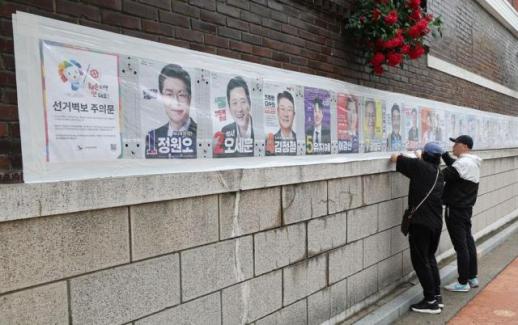 ASIA INSIGHT: With South Korea's local elections weeks away, how AI is changing political scene across Asia SEOUL, May 22 (AJP) - With South Korea's local elections less than two weeks away, the political landscape looks strikingly different from what it was just a few years ago, with voters now witnessing entirely new forms of campaigning shaped by artificial intelligence (AI) and digital technology. Loudspeaker trucks still circle neighborhoods and candidates still bow at subway stations during the morning rush, but increasingly, the real campaign is unfolding elsewhere, driven by algorithms and AI-generated ads tailored to millions of individual devices and news feeds. AI is no longer merely assisting political campaigns. It is beginning to reshape the very nature of elections across Asia and beyond. South Korea offers one of the clearest examples of this transformation, as few countries are as digitally connected or as politically online. Campaign strategists have already embraced data analytics, social media targeting and instant messaging in an effort to win over voters. AI is now accelerating all of those processes at once. Speeches can be tailored within seconds for different age groups and regions. Videos can be edited instantly for online distribution, while campaign messages can be edited, refined and redeployed almost in real time. The advantages are obvious, even as problems such as fake news, distortion and disinformation continue to pose challenges, threatening truth and trust. Political communication has become faster and cheaper, allowing smaller candidates to reach voters once dominated by larger parties with deeper financial resources. Local elections, traditionally dependent on grassroots organization and personal networks, are increasingly turning into data-driven contests. South Korean authorities have spent months strengthening regulations against AI-generated deepfakes and manipulated campaign materials, aware that a single fabricated video could spread nationwide before it can be verified as false. Officials are investing in monitoring systems and detection technologies to develop protective measures before the technology moves beyond their control. What makes South Korea's case particularly worth watching is not just its technological sophistication, but its attempt to find a balance. Rather than treating AI purely as a threat, the country is trying to integrate it into democratic politics while limiting the harm it can cause. It is, in effect, conducting a live experiment in how a highly wired democracy manages elections in the age of AI. Elsewhere in Asia, different versions of such experiments are unfolding. In India, AI has become a tool for reaching voters at massive scale. With hundreds of millions of voters spread across dozens of languages, campaigns increasingly use AI for automated translation, personalized messaging, and micro-targeting. Technology now lets candidates reach across language and regional barriers that once made nationwide campaigning nearly impossible. In Southeast Asia, the situation is far less controlled. In countries such as Indonesia and the Philippines, large and fast-moving social media ecosystems, combined with uneven regulation, have allowed AI-generated political content to spread quickly. Deepfakes, synthetic voices and altered images circulate easily in highly polarized online spaces, often making it difficult to tell what is real and what is not. Taiwan takes a different approach. AI is seen not only as a campaign tool but also as a security threat. Officials worry that fake or AI-generated content and campaigns could be used to weaken democratic institutions, sometimes with outside involvement. As a result, the focus is less on making campaigns more efficient and more on protecting democracy itself. Despite these differences, countries are confronting the same underlying reality. AI lowers the cost of political communication while making it harder to verify what is true. It opens up campaigning to more people, but it also creates new ways to manipulate. This may become one of the key debates of the coming decades. Democracies depend not just on voting systems, but on a shared trust that the information surrounding elections is basically credible. Once that trust erodes, the legitimacy of the entire process becomes harder to sustain. South Korea's upcoming local elections will not determine the future of AI politics in Asia on their own. But they may offer an early glimpse of what elections are increasingly becoming across the region. The question facing democracies is no longer whether AI will enter politics as it already has. But the real question is whether political institutions can adapt quickly enough to preserve public trust once AI becomes part of the electoral system itself. 2026-05-22 13:48:10
 -
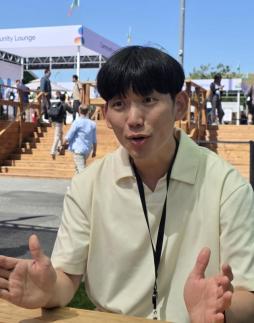 K-culture boom fuels global rise of AI Korean-learning app SEOUL, May 22 (AJP) - Riding the global mainstreaming of K-pop, Korean dramas and streaming blockbusters, a South Korean AI language-learning startup is rapidly expanding overseas, with the U.S. emerging as one of its biggest markets. TEUIDA, a South Korean language-learning app that uses AI voice recognition to simulate conversations with native speakers, has surpassed 6 million cumulative downloads worldwide, Chief Executive Jang Ji-woong said on Tuesday at Google’s annual I/O developer conference in Mountain View, California. About 30 percent of downloads came from the U.S., Jang said, while users in Southeast Asia, Europe and Japan are also driving growth. Monthly active users have reached around 600,000. Unlike conventional language-learning apps centered on memorization and repetition, TEUIDA focuses on immersive, conversation-based learning. Users speak directly to characters in filmed real-life scenarios, while AI analyzes pronunciation, context and accuracy in real time to guide the flow of the conversation. “It’s designed to feel more like talking to someone than studying a language,” Jang said. The company launched its Korean-language learning service first in Vietnam in 2019 before gradually expanding into English-speaking countries beginning in 2020. The platform now offers lessons in Korean, Japanese, Spanish and French, though Korean remains by far the most popular language among users. The app currently ranks No. 1 in Korean-language learning searches on Apple’s App Store in both the U.S. and the U.K., while also placing within the top 10 for Japanese-language learning apps. Mr. Jang said the global spread of Korean pop culture played a critical role in accelerating demand. The company’s launch coincided with BTS’s global breakout, followed by the worldwide success of Korean content such as “Parasite” and “Squid Game,” driving interest in Korean language and culture. In parts of Southeast Asia and Japan, Korean-language skills are increasingly viewed as useful for employment and education opportunities, adding to demand beyond entertainment consumption alone. The company has also sought to differentiate itself by incorporating cultural context into language learning. Lessons are filmed in authentic Korean settings — from restaurants and cafes to tourist spots such as Seoul’s Gwanghwamun district — allowing users to learn how expressions are naturally used in real-life situations. “Many users want to visit Korea and experience the culture,” Jang said, adding that the app’s appeal extends beyond simply learning the language. Earlier this year, the company launched a beta version of its English-learning service for Korean users and plans a broader rollout later this year after incorporating user feedback. Ultimately, TEUIDA aims to expand beyond Korean-language education into a broader multilingual learning platform. “Our ultimate goal is to become a multilingual app for language learners around the world,” Jang said. “This year, we are prioritizing revenue growth over profitability, though improving margins will become a priority starting next year.” 2026-05-22 11:33:16
 -
 Starbucks Korea promotion sparks police probe, government boycott SEOUL, May 22 (AJP) - Starbucks Korea is facing a widening political and legal backlash after a marketing campaign tied to the anniversary of the 1980 Gwangju uprising triggered accusations of mocking South Korea’s democratic trauma, drawing police investigations, boycott calls and government sanctions. Chung Yong-jin and former Starbucks Korea chief executive Sohn Jung-hyun are now under police investigation following complaints accusing them of insulting victims of the May 18 Democratic Uprising and their families. The Seoul Metropolitan Police Agency said Thursday it reassigned the case from the Seoul Gangnam Police Station to a public crime investigation unit under its metropolitan investigation squad. Authorities are also expected to merge a similar complaint filed in Gwangju, the southwestern city at the center of the 1980 uprising, into the Seoul investigation. The controversy erupted after Starbucks Korea launched a “Tank Day” promotion on Sunday, the 46th anniversary of the May 18 Democratic Uprising, also known as the Gwangju Uprising. The campaign advertised a “Tank” tumbler series alongside phrases such as “Tank Day” and “Tak! on the desk,” prompting criticism that the company had trivialized two of the country’s most painful moments in modern political history. The May 18 Democratic Uprising began in Gwangju in 1980, when citizens and students protested against the military junta led by Chun Doo-hwan. Troops violently suppressed the demonstrations over 10 days, using batons, bayonets and live ammunition against civilians. The uprising later became a defining symbol of South Korea’s democratization movement. The phrase “Tak! on the desk” drew separate outrage because it echoed the notorious explanation authorities gave after the 1987 torture death of student activist Park Jong-chul. Police initially claimed an officer had struck a desk with a loud “tak,” causing Park to collapse — a cover story that later unraveled and fueled nationwide protests demanding direct presidential elections. The civic group Citizens’ Coalition for Economic Justice and People’s Livelihood accused Chung and Sohn of defaming victims of the Gwangju uprising, bereaved families and Gwangju citizens. Chung removed Sohn from his post Monday as criticism intensified and issued a public apology Tuesday in his capacity as chairman of Shinsegae Group. But boycott calls targeting Starbucks Korea have continued to spread online and among civic groups. The backlash has also expanded into government circles. Interior and Safety Minister Yun Ho-jung said Thursday on X that he expressed “deep regret over Starbucks Korea’s anti-historical behavior” and that his ministry and other state agencies would stop using products from companies that “take lightly the history and value of democracy” as prizes or promotional giveaways at public events. A ministry official told AJP that some government event prizes had already been switched from Starbucks mobile vouchers to vouchers from rival coffee chains after Yun’s remarks. Another official said the minister’s comments signaled that government events should avoid products from companies embroiled in major social controversy when alternatives are available. Some officials said the ministry’s stance could trigger a broader informal boycott across the civil service, given its role in overseeing public administration and workplace culture within government institutions. President Lee Jae Myung also condemned the campaign, saying on X that he was “outraged” and that those responsible should be held accountable. The controversy has renewed scrutiny of Chung, who previously faced criticism over social media posts using anti-communist slogans. Such rhetoric remains highly sensitive in South Korea because far-right groups have long promoted discredited claims portraying Gwangju protesters as North Korean sympathizers. 2026-05-22 11:30:29
 -
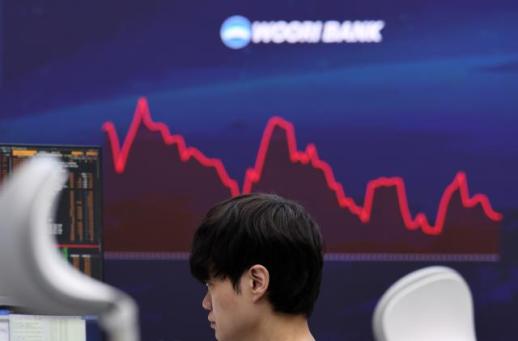 South Korea opens AI-era national growth fund to retail investors SEOUL, May 22 (AJP) -South Korea began selling a retail slice of its flagship strategic-industry fund on Friday, inviting ordinary investors to back semiconductors, batteries, mobility and artificial intelligence alongside the government in exchange for income-tax breaks and a state-funded loss buffer under a mandatory five-year lockup. The retail tranche of the Public Growth Fund targets 600 billion won ($396 million) this year, with KB Asset Management raising 200 billion won as one of 10 selected managers. The vehicle is the public-facing piece of one of President Lee Jae Myung’s signature economic initiatives. Overseen by the Financial Services Commission, the Public Growth Fund aims to channel 150 trillion won into 12 advanced strategic industries over five years, including 30 trillion won in 2026. It anchors the administration’s “productive finance” agenda — redirecting household savings out of deposits and real estate into the real economy. Lee has described the retail fund as “priming water” for future industries and household asset formation. The retail fund combines 600 billion won from the public with 120 billion won in government money earmarked to absorb losses, repeating annually for five years to build a cumulative 3 trillion won pool. Capital is funneled into a master fund-of-funds structure allocating across sub-funds managed by 10 firms, with investors sharing returns equally regardless of which manager they subscribe through. Each sub-fund must invest at least 60 percent of assets in strategic sectors and at least 30 percent in new funding for unlisted companies and firms on the tech-heavy KOSDAQ market. The structure targets growth-stage companies rather than large KOSPI names, aiming to bridge the “death valley” many deep-tech firms face when scaling commercially. The tax benefit is the centerpiece of the offering. Investors holding the fund for at least three years can claim income-tax deductions based on investment size — 40 percent up to 30 million won, 20 percent between 30 million won and 50 million won, and 10 percent between 50 million won and 70 million won — allowing a maximum 18 million won deduction on a 70 million won investment. Dividend income will be taxed separately at 9.9 percent, below the standard 15.4 percent rate. Regulators set a benchmark annual return target of 6 percent, while cautioning that actual returns remain uncertain. Eligibility requires a dedicated account open to residents aged 19 or older, or wage earners aged 15 and older, with a five-year investment cap of 200 million won. Individuals subject to comprehensive financial income taxation during the previous three years are excluded. The fund is structured as a closed-end vehicle with a mandatory five-year lockup and no early redemption. Units are expected to list within 90 days after the fund’s June 12 establishment date, although regulators warned secondary-market liquidity could remain thin. Selling within three years would also void the tax benefits. The government and fund managers will absorb losses of up to roughly 20 percent at the sub-fund level, though authorities stressed the buffer applies only to the public-investment portion rather than fully protecting investor principal. The design reflects lessons from the disappointing performance of the previous Moon Jae-in administration’s New Deal Fund, which struggled with rigid investment rules, weak returns and limited exit opportunities. Authorities extended the investment horizon to five years and diversified sub-funds by size in an effort to improve flexibility and performance. The fund is being sold on a first-come, first-served basis through 10 banks and 15 brokerages. A priority subscription window for wage earners making 50 million won or less annually runs through June 4 before general subscriptions close June 11. Applications for the broader 150 trillion won strategic-industry program have already exceeded targets by roughly 20 trillion won, leaving regulators to watch whether retail demand can match the institutional rush. 2026-05-22 11:03:39
 -
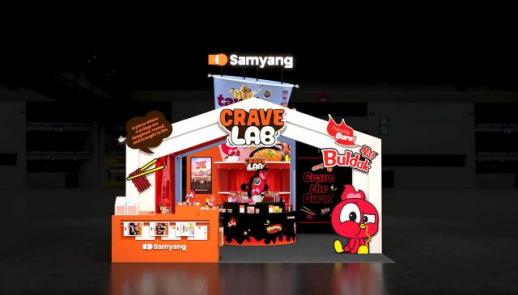 Samyang to court Southeast Asia at Bangkok food fair SEOUL, May 22 (AJP) - Samyang Foods will showcase its spicy noodle lineup at THAIFEX-Anuga Asia 2026, Asia's largest food and beverage trade fair, as the Korean instant ramen maker pushes deeper into Southeast Asia's fast-growing snack market. The five-day exhibition runs from May 26 to 30 at IMPACT Muang Thong Thani in Bangkok. Now in its 21st year, the fair last year drew about 88,000 visitors from 143 countries and 3,231 exhibitors from 57 nations, according to organizers. Samyang announced Friday that it will operate an experiential booth themed "Samyang Crave Lab," staging its flagship Buldak alongside newer brands MEP and Tangle in separate "brand labs" designed to walk visitors through each line's identity and flavor profile. Sampling sessions throughout the day will feature staples such as the original Buldak, Buldak Carbonara and the newly launched Buldak Swicy, and localized offerings including a chili-chicken-cilantro ramen and grilled garlic shrimp ramen tailored to Southeast Asian palates. Canapés made with Buldak sauce will also be served. "We focused on designing a space where visitors can taste, enjoy and immerse themselves in Samyang's brands rather than simply view products on display," said a Samyang Foods spokesperson, adding that the company will keep widening its Southeast Asian footprint through differentiated brands including MEP and Tangle on top of Buldak. 2026-05-22 10:54:30
 -
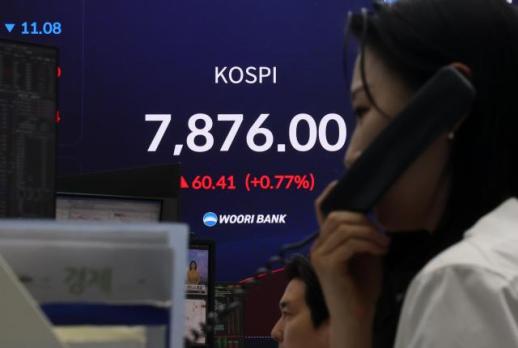 KOSDAQ triggers buy-side sidecar, Samsung Elec briefly tests 300,000 SEOUL, May 22 (AJP) - South Korean stocks erased early gains and turned lower Friday morning as foreign investors took profits after earlier record-breaking rally, while biotech and secondary-battery shares powered rally on the KOSDAQ. The benchmark KOSPI rose 0.62 percent to 7,863.71 at the opening bell, after surging 8.42 percent Thursday in its biggest single-day point gain on record. However, the index later turned lower as foreign investors extended heavy selling. As of 9:57 a.m., the benchmark index slipped 0.20 percent to 7,800.19, while the KOSDAQ jumped 5.09 percent to 1,162.25, triggering a sidecar trading curb for a second straight session. Retail investors remained aggressive buyers, purchasing a net 1.05 trillion won worth of KOSPI shares, while foreign investors sold a net 1.16 trillion won. The South Korean won remained stable, trading at 1,507.90 won against the greenback, compared with the previous session’s close of 1,506.10 won. Investor sentiment improved overnight after U.S. stocks ended higher on growing expectations of progress in negotiations involving Iran, easing concerns over a broader Middle East conflict and helping push oil prices and Treasury yields lower. The Dow Jones Industrial Average rose 0.55 percent to a record close of 50,285.66, while the S&P 500 added 0.17 percent and the Nasdaq Composite gained 0.09 percent. Chip-related shares remained a key driver of market sentiment. While Nvidia fell 1.77 percent on profit-taking despite strong earnings, memory-related stocks rallied after the company highlighted rising demand for high-capacity storage and memory products in AI data centers during its conference call. Micron Technology jumped 4.11 percent and SanDisk soared 10.75 percent, lifting sentiment toward South Korea’s semiconductor market. Samsung Electronics erased early gains after briefly touching the 300,000-won mark for the first time in intraday trading, falling 1.84 percent to 294,000 won after profit-taking accelerated following the previous session’s sharp rally. The stock also remained in focus as the company’s labor union began a six-day vote Friday on a tentative wage agreement reached earlier this week. Semiconductor equipment maker Jusung Engineering also surged 9.88 percent. The fellow chipmaker SK hynix slipped 0.46 percent to 1,931,000 won and SK Square declined 0.59 percent to 1,172,000 won. Among auto shares, Hyundai Motor dropped 2.55 percent to 649,000 won and Kia fell 2.20 percent to 164,200 won. Battery and industrial shares traded higher, with LG Energy Solution rising 2.49 percent to 411,000 won, Samsung Electro-Mechanics gaining 4.07 percent to 1,253,000 won and HD Hyundai Heavy Industries advancing 2.38 percent to 688,000 won. Doosan Enerbility also climbed 3.69 percent to 112,400 won. Financial and defense-related shares were mixed. Samsung Life Insurance rose 1.13 percent to 359,000 won, KB Financial gained 2.25 percent to 159,300 won and Hanwha Aerospace edged up 0.88 percent to 1,259,000 won, while Samsung C&T added 0.36 percent to 420,000 won. Samsung Biologics also rose 2.72 percent to 1,433,000 won. The junior KOSDAQ traded broadly higher, led by gains in biotech and secondary-battery shares. EcoPro BM surged 11.79 percent to 218,000 won, and EcoPro jumped 16.72 percent to 151,500 won. Biopharmaceutical shares were also strong, with Alteogen rising 7.68 percent to 378,500 won, Samchundang Pharm gaining 6.76 percent to 379,000 won and HLB climbing 11.54 percent to 52,200 won. Among other KOSDAQ heavyweights, Rainbow Robotics advanced 2.29 percent to 760,000 won, Leeno Industrial rose 1.54 percent to 105,600 won and EO Technics added 3.46 percent to 568,000 won. EcoPro Materials climbed 7.96 percent to 111,200 won, while JUSUNG Engineering gained 2.38 percent to 189,600 won. Oil prices also eased with Brent crude futures falling 2.32 percent to settle at $102.58 a barrel, and West Texas Intermediate crude dropped 1.94 percent to $96.35. The yield on the benchmark 10-year U.S. Treasury note slipped 0.8 basis point to 4.575 percent. Treasury yields nevertheless remained elevated as investors braced for a more hawkish Fed. Although the benchmark 10-year Treasury yield slipped 0.8 basis point overnight, it remained at 4.57 percent, while the two-year yield traded near 4.07 percent. 2026-05-22 10:41:42