
Journalist

Jung Seokman
-
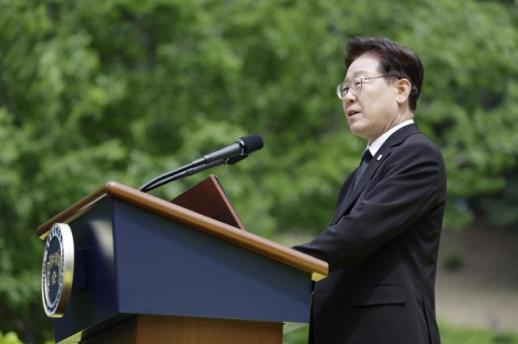 Lee pays respects to former President Roh in Bongha Village SEOUL, May 23 (AJP) - President Lee Jae Myung attended a memorial ceremony for former President Roh Moo-hyun in Bongha Village in Gimhae, South Gyeongsang Province, on Saturday. Lee made the remarks marking the 17th anniversary of Roh’s death, saying he would push ahead with reforms regardless of pushback from vested interests. “Beyond mourning you, I now feel the heavy responsibility and weight as president of the Republic of Korea, and I seek to carry on your will,” Lee said. Referring to the Oct. 4 South-North Summit Declaration, which included efforts toward denuclearization of the Korean Peninsula and the establishment of a peace regime, Lee said he would continue Roh’s vision. “I will steadily walk the path of peaceful coexistence and shared growth, inheriting the will of the president who turned the line of division into a path of peace and achieved the declaration,” Lee said. Lee said Roh envisioned a Korea where no one is driven to give up on life over making a living, and where people are treated with dignity. Lee also drew applause when he said, “After you left us, countless Roh Moo-hyuns were born again on this land. I am one of them.” It marked Lee’s first attendance at Roh’s memorial ceremony as a sitting president. Lee, who took office in June last year, attended the ceremony on May 23 last year as a presidential candidate. 2026-05-23 15:59:20
 -
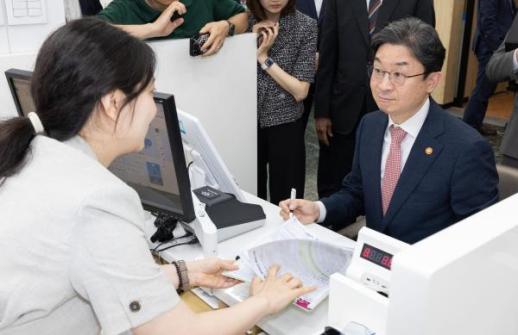 Financial Services Chair Lee Ok-yeon Joins National Growth Fund Financial Services Chair Lee Ok-yeon promoted the newly launched National Participation Growth Fund by signing up for it on May 22. According to the Financial Services Commission, Lee visited the NH Nonghyup Bank branch in Seoul on the morning of the launch to enroll in the fund. He experienced the entire enrollment process, including investor profiling and verifying key fund details, to assess the convenience and challenges of the procedure. "The National Participation Growth Fund offers citizens an attractive investment opportunity to share in the growth of future strategic industries while providing essential funding to companies in advanced strategic sectors," Lee said. He added, "In the context of fierce global competition in advanced strategic industry technologies, the National Growth Fund serves as an investment platform to overcome the structural challenges facing our economy. The public's valuable investments will be the seeds for nurturing future growth engines." As the fund's sales have officially begun, Lee urged participating firms to ensure strict internal controls to prevent any instances of improper sales. He also stated that the government would monitor the enrollment process in real-time to minimize public inconvenience and quickly address any issues that arise. "We will thoroughly review the fund's management and investment execution to ensure that the National Participation Growth Fund can swiftly provide funding to the advanced strategic industry sector," Lee stated. The National Participation Growth Fund will be available for purchase for three weeks starting from May 22, with a total size of 600 billion won. The fund will be established by pooling 600 billion won from public funds and 120 billion won from the government, which will then be invested in 10 sub-funds. It is classified as a high-risk investment product, requiring a suitable investor profile for enrollment.* This article has been translated by AI. 2026-05-23 15:57:53
 -
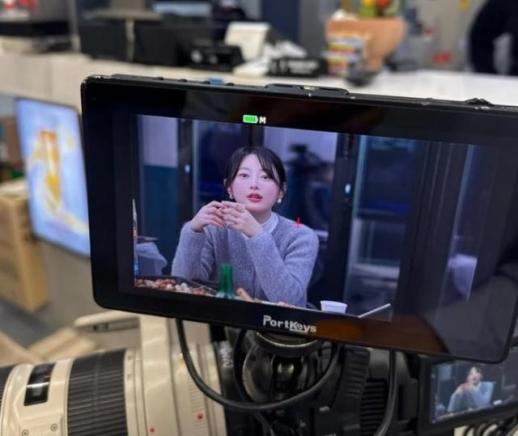 Why 'Solo 25' Participant Youngja Did Not Join 'Nasol Four Seasons' Live Broadcast Youngja, a participant from the 25th season of 'I Am Solo,' addressed questions regarding her absence from the 'Nasol Four Seasons' live broadcast. On May 22, she stated on her social media, "Although I was unable to participate in the solo reaction and live broadcast, it seems that this experience has provided me with invaluable lessons and insights." Previously, Youngja became a final couple with Youngsik from Season 20 during the broadcast of 'Nasol Four Seasons' on May 21. However, her absence from the subsequent live broadcast on 'Chonjang Entertainment TV' raised eyebrows. In response, the production team clarified in a pinned comment that "Youngja's participation in the live broadcast was restricted due to a contract violation and breach of participant obligations," which many interpreted as related to her contract with a creator agency. Youngja then provided her perspective on her absence, explaining, "If I had participated in the live broadcast, I would have wanted to share my thoughts, especially regarding my creator agency. I was contacted by the agency in February and, after much consideration, signed a contract on March 1." She continued, "I viewed this as an extension of my personal activities to continue my artwork and content creation. I intended to gradually showcase the content related to my work after the show ended, but the information became public sooner than expected. I take seriously that this could lead viewers to question the authenticity of the show." Youngja also addressed her involvement in managing three guesthouses, stating, "I had no ownership stake, and my public title was that of a manager. It was not a solo operation. There were aspects of my explanation that may have been unclear for the sake of simplicity on the show." She emphasized, "This is not a 'party guesthouse' aimed at facilitating romantic encounters, and I do not reside or participate in the space. I have never engaged in hunting, nor do I smoke, and the stories about my father are also untrue." Meanwhile, Youngsik, who was Youngja's final partner, shared during the live broadcast that they had seriously gotten to know each other after filming but could not remain a couple. He requested that viewers refrain from negative comments, saying, "Thank you for your interest. I am currently single."* This article has been translated by AI. 2026-05-23 15:55:32
 -
 AWS Korea CEO Ham Gi-ho: 'Physical AI is the Next Frontier for Korea' Amazon Web Services (AWS) is positioning 'Physical AI' as a key growth area, expanding beyond the digital realm into the real world, and is actively supporting the robotics industry in South Korea. This initiative comes as the era of AI operating in real industrial settings, including robotics, autonomous production, logistics, and healthcare, begins to take shape. During his keynote address at the 'AWS Summit Seoul 2026' on May 20 in Samsung-dong, Seoul, Ham Gi-ho, CEO of AWS Korea, stated, "AI is evolving from generative AI and agent AI to the physical AI stage, which extends into the physical world." On the same day, AWS unveiled the 'Physical AI Frontier Program' aimed at supporting domestic physical AI companies in technology development and international expansion. A dedicated AWS technical team will assist throughout the entire process, from data collection to model training, simulation, and edge inference. AWS plans to facilitate collaboration among domestic companies and connect them to global markets. Ham assessed that South Korea has significant potential in the field of physical AI. He noted, "South Korea has a dynamic physical AI ecosystem, ranging from AI semiconductor startups to robotics foundation model companies, and industries such as manufacturing, logistics, healthcare, and defense. The government is also accelerating the nurturing of related industries with the goal of becoming the world leader in physical AI by 2030." AWS is currently providing cloud infrastructure to major companies like HD Hyundai Robotics and Doosan, as well as domestic AI startups such as Config and RealWorld, to support physical AI development. Ham emphasized AWS's strength in practical robotic operations, stating, "Over 1 million robots are already operating in Amazon's logistics centers. The end-to-end service connecting data collection to edge inference and our real operational experience are AWS's unique competitive advantages." At the event, AWS also set up a dedicated exhibition area to showcase technology demonstrations from domestic physical AI companies. Demonstrations included autonomous production systems, collaborative robots, and autonomous delivery and patrol robots, highlighting the integration of cloud-based data processing and AI model training technologies in real industrial settings. John Felton, AWS Chief Financial Officer, remarked, "Agent AI and physical AI represent a transformative change in the AI industry structure. This presents a significant economic opportunity, especially for South Korea, which has a strong manufacturing competitiveness."* This article has been translated by AI. 2026-05-23 15:52:46
 -
 AI, Nuclear Power, and Defense Industry Drive New Growth in South Korea's Economy The foundation of South Korea's economy is gradually shifting. A new industrial axis is emerging on top of the traditional manufacturing sectors, which have been dominated by semiconductors, automobiles, and shipbuilding. This new axis includes artificial intelligence (AI), nuclear power, and the defense industry. These three sectors share a commonality beyond being promising industries; they are strategic sectors intertwined with the global reordering of power. This convergence of technology, security, and energy signifies a critical national agenda. AI is no longer just a tool for specific industries; it has become a foundational infrastructure that influences productivity and competitiveness across all sectors. The AI ecosystem, which connects data centers, semiconductors, and power grids, is expanding into a national-level competition. As the United States and China clash over AI supremacy, South Korea finds itself in a position where it cannot delay its decisions. Building an AI infrastructure based on semiconductor competitiveness is one of the few opportunities we have and a card we cannot afford to miss. Nuclear power is being re-evaluated as a practical solution to address both energy security and carbon neutrality. While the expansion of renewable energy is an inevitable trend, issues of intermittency and grid stability remain unresolved. The role of nuclear power as a baseload energy source is becoming increasingly significant. Furthermore, expectations for nuclear power exports to countries like the Czech Republic and Poland are adding to its potential as an export industry, extending beyond mere energy production. The defense industry is benefiting from a time of heightened geopolitical uncertainty. With a surge in demand for weapons, particularly in Europe and the Middle East, the competitiveness of South Korean arms is rapidly gaining recognition. The balance of price and performance, quick delivery times, and stable production capabilities have already been validated in the global market. The defense sector is no longer a 'secondary industry' but has established itself as a core industry driving both exports and technological accumulation. However, a significant concern remains: these three sectors are still largely confined to 'declarative expectations.' Without the establishment of inter-industry connections and ecosystems, there is a high risk that achievements will be short-lived. AI requires an integrated infrastructure involving power, data, and semiconductors, while nuclear power is a long-term industry that needs consistent policy and financial support. Similarly, the defense industry must align with diplomatic strategies, export financing, and technology transfer to ensure sustainable growth. Ultimately, all three sectors must operate on the common denominator of a 'national strategy.' A more fundamental question arises: Can this new growth axis transform the structure of the South Korean economy? Until now, we have relied on the boom of specific industries to elevate growth rates. However, AI, nuclear power, and defense demand a shift not just in individual industry performance but in the overall industrial structure. Comprehensive approaches are needed, including workforce development, regulatory innovation, and financial support. The current changes present both opportunities and challenges. As the global supply chain becomes more fragmented and technology and security intertwine, the choices South Korea makes will significantly influence its growth trajectory over the next decade. The three axes of AI, nuclear power, and defense have already begun to move. What remains is the speed and direction of this movement.* This article has been translated by AI. 2026-05-23 15:51:29
 -
 Korea Aims for Major Leap in Defense Industry with $60 Billion Canadian Submarine Bid When the Jangbogo submarine was commissioned in 1993, South Korea was the 43rd country in the world to operate submarines. In just over 30 years, the nation has entered the competition for Canada’s next-generation submarine project, valued at 60 trillion won. This is not merely participation; South Korea has formed a competitive duo with Germany's ThyssenKrupp Marine Systems (TKMS). Given the historical challenges faced by South Korea's shipbuilding and defense industries, this marks a significant transformation.Currently, the Canadian Patrol Submarine Project (CPSP) has narrowed down to a two-way competition between the Hanwha Ocean and HD Hyundai Heavy Industries 'one team' and Germany's TKMS. Both the government and industry insiders view the odds as essentially '50-50.' Germany is a leading submarine nation and provided technological assistance during South Korea's early submarine development, which is why Chief of Staff Kang Hoon-sik described the situation as 'not easy.' The final contractor selection is expected to be announced next month, marking a crucial turning point in South Korea's defense history.Some analysts suggest that South Korea has an advantage. The competitiveness of K-defense, demonstrated through systems like the K9 self-propelled howitzer, Cheonmu, FA-50, and KF-21, has been validated in the global market. Additionally, South Korean submarines are highly regarded for their operational capabilities, delivery timelines, and cost-effectiveness. Notably, Canadian naval officials have participated in training with South Korean submarines to assess their performance.This bidding process reflects the recent trends in the global defense market. Defense procurement is no longer just a business-to-business (B2B) transaction; it is evolving into a government-to-government (B2G) industry. This shift signifies a complex interplay of military power, security, supply chains, and diplomacy.In fact, the outcome of the Canadian submarine project will not be determined solely by performance. Local industrial cooperation, offset agreements, supply chain investments, and job creation are emerging as key variables in the 'package proposal.' The involvement of Hyundai Motor Group Chairman Chung Eui-sun as part of the special envoy is significant. The Canadian government has requested cooperation in the automotive and hydrogen sectors, prompting Hyundai to provide support, with other industries like Korean Air also joining in. If South Korea succeeds in securing the Canadian submarine contract, the implications extend beyond a mere 60 trillion won in revenue. It would elevate the country to a status where it exports submarines, often referred to as the 'ultimate weapon,' alongside ground weapons, missiles, and fighter jets. This could symbolize South Korea standing shoulder to shoulder with global defense powerhouses like the United States, Germany, and France.It is only natural that the government is fully supporting this endeavor. Chief of Staff Kang Hoon-sik has personally visited Canada in a special envoy capacity, and the Ministry of Trade, Industry and Energy, along with the Defense Acquisition Program Administration and industry players, are working in concert. This is a necessary action from the perspective of national strategic industries. The government must also consider additional support measures, including financial assistance and diplomatic channels.However, there are cautionary points to consider. An overemphasis on export-driven policies that impose excessive sacrifices on companies unrelated to the project is not advisable. While offsets are important, it is crucial that not all companies are coerced into 'semi-mandatory support.' In national strategic projects, balancing market principles with corporate autonomy is vital.The opportunity now before South Korea was unimaginable during the introduction of the Jangbogo submarine. A strategic approach that maintains principles and balance while fostering public-private collaboration is essential. The results of the Canadian submarine project, to be announced next month, are anticipated to be a historic turning point for K-defense.* This article has been translated by AI. 2026-05-23 15:48:51
 -
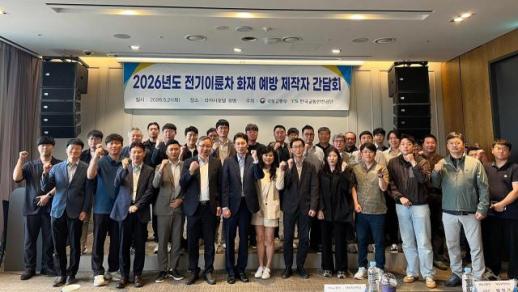 TS Hosts Fire Prevention Meeting for Electric Two-Wheelers with Seoul Fire Department The Korea Transportation Safety Authority (TS) announced on May 22 that it held a fire prevention meeting for electric two-wheelers on May 21 in collaboration with the Seoul Fire Department and relevant associations and manufacturers. The meeting aimed to create a safer environment for the use of electric two-wheelers. As of the end of last year, there were a total of 2.26 million registered two-wheelers in South Korea, of which approximately 76,000 (3.4%) were electric. Although the adoption rate remains low, recent serious incidents involving electric two-wheeler fires in residential complexes have heightened the need for proactive fire prevention and safety management. TS, in partnership with the Automotive Safety Research Institute, introduced the legal obligations of manufacturers and shared actual fire case studies and prevention technologies. Starting this year, electric two-wheelers will be included in the 'Special Safety Inspection for Electric Vehicles.' This initiative, launched in 2023 in response to recommendations from the Ministry of Land, Infrastructure and Transport, aims to alleviate public concerns regarding electric vehicle fires and promote proactive fire prevention through a public-private partnership. Last year, TS conducted special safety inspections on approximately 727,000 vehicles across 88 models in collaboration with the Ministry of Land, Infrastructure and Transport and 14 domestic and international electric vehicle manufacturers. Through these inspections, about 25,000 high-voltage batteries and electrical system anomalies were identified and addressed, and battery software updates were completed for over 260,000 vehicles. Jung Yong-sik, chairman of TS, stated, "Electric two-wheeler fire incidents can lead to significant casualties, making proactive prevention efforts crucial. We will work to create a safe operating environment for electric vehicles through the expanded special safety inspections starting this year."* This article has been translated by AI. 2026-05-23 15:46:26
 -
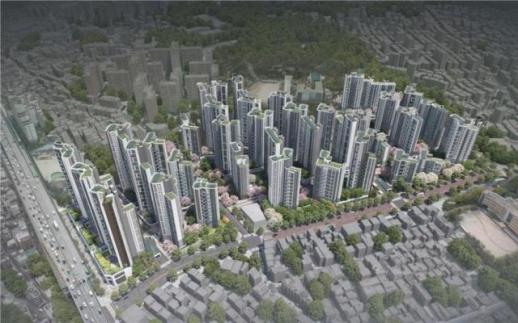 Seoul to Develop Major Redevelopment Projects with Over 3,000 Housing Units Seoul's major redevelopment areas, including the Jangwi 15 district in Seongbuk-gu, the Sangdo 15 district in Dongjak-gu, and the Noryangjin 1 district, are set to transform into large-scale apartment complexes with over 3,000 housing units following the approval of integrated redevelopment plans. According to the Seoul city government, the 9th Integrated Review Committee convened on May 21 and approved plans for the Jangwi 15 district, Sangdo 15 district, Noryangjin 1 district, as well as the Mia 3 district and the Gwan-su-dong small-scale redevelopment area. The city expects that the integrated review process will shorten project timelines by up to four to six months. The Jangwi 15 district, located near the Sangwolgok and Dolgok subway stations on Line 6, is characterized by a dense area of aging low-rise housing. The redevelopment will create a complex with a maximum height of 36 stories and 3,316 units, including 697 public rental apartments. To accommodate increased traffic, the city plans to construct a new 25-meter-wide road, Jangwol-ro, on the eastern side of the complex, and develop a neighborhood park to connect Odong Neighborhood Park and the North Seoul Dream Forest, enhancing green space in the area. Additionally, the redevelopment plans for the Jangwi 8, 9, and 14 districts are expected to gain momentum as integrated reviews are scheduled to continue through next year. The Sangdo 15 district redevelopment project also received approval. This project will feature a maximum of 35 stories, 32 buildings, and 3,204 units, with 481 of those designated as public housing. The city anticipates that this project will improve the residential environment in the Sangdo area while also providing a significant supply of housing. The Noryangjin 1 district will be redeveloped into a complex with a maximum height of 49 stories, comprising 22 buildings and 3,103 units, including 526 public rental apartments. Located near Noryangjin Station on Lines 1 and 9, the Noryangjin 1 district received approval for its management plan in April and is set to begin relocation in the second half of this year. The city aims to start construction by the end of next year, concurrently managing demolition and project plan modifications. The complex will include a multi-purpose community center with integrated childcare facilities, sports amenities, a citizens' university, senior facilities, and a community center. Plans also include open spaces that connect parks and public walkways. With the approval of these plans, the city believes that the overall redevelopment of the Noryangjin area will accelerate the supply of approximately 9,000 housing units. The Mia 3 redevelopment area in Gangbuk-gu also passed the integrated review, allowing for the development of a complex with 1,053 units, located near Mia Intersection Station on Line 4, with 158 units designated as public housing. Relocation has already been completed, and the city expects to expedite subsequent procedures, including demolition and project plan approvals, aiming for construction to begin in the second half of next year. The redevelopment project for the small-scale Gwan-su-dong area in Jongno-gu also received approval. This area, situated between Tapgol Park and Jongno 3-ga Station, will feature a mixed-use facility with four underground floors and 18 above-ground floors. Notably, the fourth floor will be dedicated to spaces for venture companies and integrated facilities, which the city hopes will enhance urban industrial competitiveness. A city official stated, "We plan to transform aging commercial areas into mixed-use facilities and expand public spaces for citizens, creating a harmonious urban environment for work, commerce, relaxation, and pedestrian access in the Gwan-su-dong area." Redevelopment promotion zones are designated areas aimed at improving residential environments and expanding infrastructure in underdeveloped urban areas through systematic and efficient planning. The city is also supporting rapid redevelopment and reconstruction projects through its expedited integrated planning system from the initial stages of planning and administrative procedures.* This article has been translated by AI. 2026-05-23 15:43:24
 -
 President Yoon Praises Global AI Hub as Major Achievement President Yoon Jae-myung commended Prime Minister Kim Min-seok on May 21 for his significant achievements related to the previous day's Global AI Hub Vision Declaration event. In a post on X (formerly Twitter), President Yoon also recognized Democratic Party lawmaker Cha Ji-ho for his support in attracting the Global AI Hub, stating, "Both of them are a blessing to South Korea. I appreciate their hard work." The Global AI Hub is a global cooperation platform being established in South Korea. It aims to create a collaborative framework for addressing global challenges by leveraging AI technology and infrastructure among international organizations, governments, academia, research institutions, and non-profit organizations. During the opening remarks at the Global AI Hub Vision Declaration event held at the Grand Hyatt Seoul, Prime Minister Kim stated, "International organizations, governments, academia, industry, and civil society must come together to innovate towards 'AI for all' and 'human-centered inclusive AI.'" The event was attended by representatives from nine international organizations, including the International Labour Organization (ILO), International Organization for Migration (IOM), International Telecommunication Union (ITU), United Nations Development Programme (UNDP), United Nations Environment Programme (UNEP), United Nations High Commissioner for Refugees (UNHCR), United Nations Children's Fund (UNICEF), World Food Programme (WFP), and World Health Organization (WHO). The South Korean government and these organizations issued a joint statement expressing their commitment to advancing the Global AI Hub.* This article has been translated by AI. 2026-05-23 15:42:00
 -
 HanAll Biopharma Shares Surge Following Immunovant Clinical Trial Results HanAll Biopharma is experiencing a strong surge in its stock price, rising over 14% on the second consecutive day, following positive clinical trial results from its global partner, Immunovant, for an autoimmune disease treatment. According to the Korea Exchange, as of 10:10 a.m. on May 22, HanAll Biopharma shares were trading at 58,000 won, up 7,100 won (13.75%) from the previous trading day. The day before, the stock had soared to the daily limit of 29.85%, closing at 59,000 won. The stock's rise is attributed to Immunovant's announcement on May 20 of interim data from a Phase 2 clinical trial for its antibody treatment, IMVT-1402, targeting rheumatoid arthritis. This treatment is based on an FcRn (neonatal Fc receptor) inhibitor that HanAll Biopharma licensed to Immunovant in 2017. Immunovant reported that in the 16-week interim analysis of patients with refractory rheumatoid arthritis who did not respond to existing therapies, the treatment achieved ACR20, ACR50, and ACR70 response rates of 72.7%, 54.5%, and 35.8%, respectively. ACR is a measure of improvement in rheumatoid arthritis symptoms, with ACR70 indicating a 70% or greater improvement in symptoms among patients. Market analysts are focusing on the strong efficacy data compared to competing drugs. Jeong Hee-ryeong, a researcher at Kyobo Securities, noted, "When compared to the Phase 2a results of Johnson & Johnson's nipocalimab, significant improvements were observed in the ACR50 and ACR70 metrics, raising expectations for the final data." Jeong Yi-soo, a researcher at IBK Investment & Securities, added, "Given that other FcRn inhibitors have shown poor results in rheumatoid arthritis trials, this data could prompt a reevaluation of IMVT-1402's potential as a best-in-class drug, increasing expectations for expanded indications in the future." The market is also keenly awaiting additional clinical results to be released. Immunovant is currently conducting further trials to confirm the maintenance effects by reclassifying patients into high-dose, low-dose, and placebo groups after the 16-week treatment. The final 28-week topline data is expected to be released in the second half of this year. Additionally, results from a proof-of-concept clinical trial for another indication, CLE (cutaneous lupus erythematosus), are also anticipated later this year.* This article has been translated by AI. 2026-05-23 15:39:00