
Journalist

Kim SeongSeo
-
 Samsung strike threat highlights widening Korea-U.S. divide in AI-era pay SEOUL, May 19 (AJP) - With memory giants Samsung Electronics and SK Hynix posting operating margins above 70 percent and quarterly chip profits of $25 billion to $35 billion, South Korea's AI-boom windfall has laid bare a compensation system still tethered to the industrial era — and the workers who built it want their share. Marathon government-mediated labor talks, watched closely by the president, politicians and investors alike, underscore the national stakes: Samsung alone accounts for roughly 20 percent of Korea's outbound shipments, and any disruption to its chipmaking lines would reverberate far beyond the factory floor. At the center of the dispute is the bonus cap. The National Samsung Electronics Union is demanding that 15 percent of operating profit be allocated to bonuses and that existing caps be abolished — a demand that has reignited a broader debate over whether South Korean companies need more transparent, equitable compensation systems. "The problem isn't the money. There just aren't clear and transparent standards," said a 31-year-old employee at a large Seoul-based company. The tension reflects a structural divergence from the United States, where AI-driven growth has largely translated into intensified talent competition and equity-based rewards. In Korea, the same boom has triggered recurring labor conflict. Wage data illustrate how much Korean pay growth depends on bonuses. According to the Ministry of Employment and Labor's Labor Force Survey, special payments — including performance bonuses — rose 8.1 percent in the first half of 2025, far outpacing the 2.9 percent increase in fixed wages. Yet profit-sharing has been uneven in application. Ministry data submitted to lawmaker Kim Ui-sang of the People Power Party on May 8 show that 43.8 percent of employers with 300 or more workers and 46.2 percent of those with over 1,000 employees pay bonuses based on annual income — compared with just 6.4 percent of companies with fewer than 300 staff. Korea's so-called performance-sharing system distributes bonuses based on overall corporate results rather than individual contribution, in contrast to the more individualized, equity-driven models common at U.S. tech firms. And even within the chip sector, the rewards remain concentrated at the top. Samsung works with roughly 150 suppliers and some 35,000 subcontracted workers — none of whom are party to the bonus dispute. "In the U.S., compensation is increasingly treated as a function of measurable contribution and strategic importance rather than role equivalence," said Erik Cambria, a professor of artificial intelligence at Nanyang Technological University in Singapore. He said major U.S. tech companies are rapidly shifting toward selective compensation structures, concentrating equity and long-term incentives on engineers and researchers viewed as critical to AI development. The scale is striking. OpenAI's average stock-based compensation reached approximately $1.5 million per employee in 2025, among the highest levels in the industry, according to financial data reviewed by The Wall Street Journal. Meta reported $20.4 billion in share-based compensation that year, while Alphabet reported $27.1 billion. The demand for high-impact AI talent is also surging. U.S. job postings for "forward-deployed engineers" — specialists who integrate AI systems directly into enterprise operations — jumped roughly 729 percent over the past year, rising from 643 openings in April 2025 to 5,330 in April 2026, according to Indeed. "While AI is standardizing routine execution, the ability to create strategic value is becoming increasingly concentrated among a small group of 'superstar' talent," said Choi Jae-pil, a management professor at Sungkyunkwan University Graduate School of Business. Choi noted that AI could make performance assessments more quantifiable and transparent, potentially making differentiated pay structures more palatable to workers — but cautioned that the shift would be harder to implement in Korea, where cash bonuses and group-based compensation remain the norm. Structural differences in the labor market compound the problem, analysts say. "Dissatisfied workers in the U.S. can easily move to other firms, pushing companies to offer better compensation to retain talent," said Shin Hyun-han, a finance professor at Yonsei University. In Korea, changing jobs carries greater risks — income loss, social stigma and career uncertainty — leaving workers with fewer exit options and more internal grievance. "Even higher bonuses may not fully resolve the frustrations of workers who feel they cannot leave," Shin said. Korean firms also tend to rely on managers' subjective judgment, often informing employees of evaluation standards only after assessments are completed — partly, Shin said, out of concern that explicit criteria could expose companies to legal challenges. U.S. companies, by contrast, tend to disclose KPIs and OKRs upfront, driven by greater labor mobility and competition for talent. The simmering tensions within Samsung — spanning both its chip and non-chip divisions — reflect a broader sense of exclusion among workers who see record-breaking profits celebrated at the top while little trickles down. "We can only watch with envy," said an employee at a parts manufacturer, who said bonuses flow mainly to flagship companies while suppliers and subcontractors are left out. "The problem is that the standards constantly change or remain unclear." Yet experts warn that importing the U.S. model wholesale carries its own risks. "Higher rewards in the U.S. also come with greater risks, including layoffs and income volatility," said Kim Jin-young, an economics professor at Korea University. "If workers expect to share in profits, they must also be willing to share the risks when business conditions deteriorate." 2026-05-19 18:00:47
 -
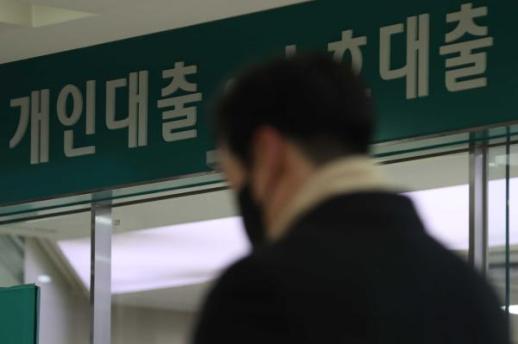 Fixed Mortgage Rates Surpass 7% Again, Raising Concerns for Borrowers Fixed mortgage rates have once again surpassed 7%, raising concerns among borrowers as expectations grow for continued increases in bank loan rates. As of May 19, the fixed mortgage rates at five major banks—KB Kookmin, Shinhan, Hana, Woori, and NH Nonghyup—are reported to range from 4.47% to 7.07%. The upper limit of mortgage rates reached 7% just a month after the outbreak of conflict between the U.S. and Iran, but fell to between 4.15% and 6.75% by mid-April as tensions eased. However, persistent international oil prices and inflation concerns have pushed rates back above 7% in just six weeks. The benchmark financial bond rate, which influences fixed mortgage rates, reached 4.279% on May 15, marking the highest level in two years since April 2024. With increasing pressure for interest rate hikes, the upward trend in loan rates may accelerate. Yoo Sang-dae, Deputy Governor of the Bank of Korea, indicated during a press conference on May 3 that it is time to consider raising rates. Even if the benchmark rate does not increase immediately, market expectations of a hike could lead to rising market rates, which would affect loan rates. As rates climb, borrowers are likely to face greater interest burdens. An increase of 0.25 percentage points in loan rates could raise the interest burden on household borrowers by 3.2 trillion won, averaging about 163,000 won per borrower annually, according to a Bank of Korea survey. Borrowers with variable-rate loans may see their repayment burdens increase more quickly, as market rate fluctuations are reflected in their loan rates. According to the Bank of Korea's economic statistics system, the proportion of variable-rate mortgages among new loans issued in March rose to 39.2%, a 10.3 percentage point increase from the previous month and the highest level since June 2022. A financial industry source noted, "Concerns about rising prices are resurfacing, and the likelihood of the Bank of Korea raising interest rates is increasing. It seems unlikely that the upward trend in loan rates will ease in the short term."* This article has been translated by AI. 2026-05-19 17:48:44
 -
 Lotte Celebrates 10th Anniversary of 'Mom-Friendly' Festival, Donates 500 Million Won to Combat Low Birth Rates Lotte Group is taking steps to address the low birth rate issue and improve child care environments.The company announced that it is hosting the 'Lotte Mom-Friendly Festival' from May 19 to 21 at Seoul City Hall's lawn in collaboration with the Green Umbrella Children's Foundation and the Community Chest of Korea.This event marks the 10th anniversary of Lotte Group's flagship social contribution initiative, 'Mom-Friendly.' It is designed as a festival where citizens can actively participate and experience the value of child care.The opening ceremony featured Lotte Holdings Communication Director Im Seong-bok, Community Chest of Korea President Yoon Yeo-jun, Green Umbrella Children's Foundation President Hwang Young-ki, Permanent Committee Member of the Low Birth Rate and Aging Society Committee Park Jin-kyung, and Seoul Deputy Mayor Park Chan-goo.During the event, Lotte announced a donation of 500 million won to the Green Umbrella Children's Foundation and the Community Chest of Korea to help combat the low birth rate crisis and improve conditions in child care facilities.The festival is organized into four thematic zones: school routes, learning, play, and rest. Each area features a variety of programs, including child rights education, safety training, and creative experiences.Since 2017, Lotte has focused on expanding child care infrastructure through initiatives like 'Mom-Friendly Dream Space' (100 locations) to improve after-school child protection facilities and 'Mom-Friendly Playgrounds' (32 locations) to create public indoor and outdoor play areas.Starting this year, Lotte is broadening its efforts beyond facility support to include raising social awareness. On May 26, the company will hold the first 'Lotte Mom-Friendly Family Awards' ceremony, recognizing individuals and organizations that contribute to promoting healthy family culture, with a total prize of 120 million won.Lotte also supports childbirth and parenting. The company has implemented a 'Mandatory Paternity Leave System,' requiring male employees to take at least one month of parental leave within two years of their spouse's childbirth. Last year, the usage rates were 96% at Lotte Hi-Mart, 71% at Lotte Holdings, and 70% at Lotte Shopping.A Lotte official stated, "We will continue to lead efforts to raise social awareness to overcome the low birth rate crisis and strive to create an environment where children can grow up healthy."* This article has been translated by AI. 2026-05-19 17:46:20
 -
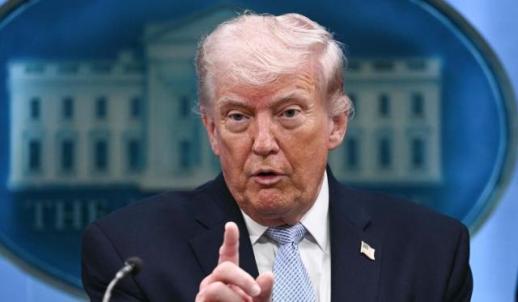 Trump Administration Considers Military Options Against Cuba The Trump administration is escalating pressure on Cuba to include military options. With the Cuban government remaining defiant despite sanctions and fuel restrictions, the U.S. is considering everything from airstrikes to ground invasions. On May 18, Politico reported that U.S. officials and sources familiar with administration discussions indicated that President Trump and his advisors are feeling limited by their current strategy against Cuba. The Cuban leadership has not accepted the economic and political reforms demanded by the U.S., prompting a more serious consideration of military action. The existing U.S. strategy has relied on economic and diplomatic pressure. Officials believed that tightening sanctions and restricting fuel supplies to Cuba would force Havana to negotiate. There was also an expectation that U.S. military successes in Venezuela and Iran would increase pressure on Cuba. However, Cuba has not acquiesced to U.S. demands. According to sources cited by Politico, the initial plan was based on the assumption that enhanced sanctions, an effective fuel blockade, and U.S. military victories in Venezuela and Iran would compel Cuba to the negotiating table. The sources noted that Cuba's resilience has made military action a more realistic option than previously considered. Military reviews are reportedly leading to actual planning efforts. The U.S. Southern Command has begun preparations for potential military actions related to Cuba in recent weeks, although no immediate actions are expected. A White House official told Politico, "It is natural for the Department of Defense to prepare to provide the president with maximum options. However, this does not mean the president has made a decision." The options being considered go beyond the arrest of specific individuals. Following reports of efforts to indict former Cuban leader Raul Castro, there has been speculation about arrest operations. However, Politico reported that military planners are examining a broader range of options, from airstrikes to ground invasions aimed at regime change. The administration is also building a rationale to support its military option considerations. Marco Rubio, Secretary of State and National Security Advisor, recently stated in a Fox News interview, "As long as these people are in power, I don’t think we can change the direction of Cuba." Reports have also surfaced that Cuba has acquired hundreds of military drones, further fueling security concerns. Cuba has strongly opposed these developments. Cuban President Miguel Díaz-Canel wrote on X (formerly Twitter) that a U.S. military attack would lead to "bloodshed with unimaginable consequences." A variable in this situation is President Trump’s political calculations. With rising oil prices and increasing pressure on his approval ratings due to the fallout from the Iran war, a military operation in Cuba could present additional risks. Experts warn that the U.S. may underestimate Cuba's resolve. Brian Latell, a former senior CIA official, cautioned, "While small-scale operations may be considered, thinking that way could lead to overestimating what they can achieve."* This article has been translated by AI. 2026-05-19 17:43:47
 -
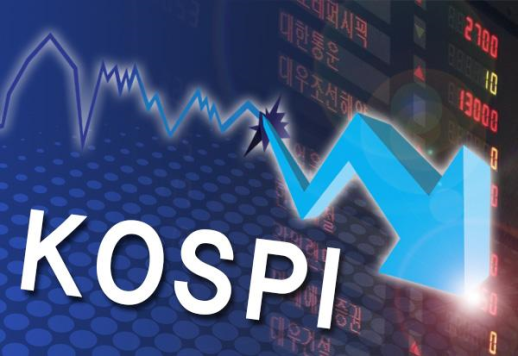 KOSPI Plummets Over 3% as Foreign Investors Sell Off 6 Trillion Won The KOSPI index fell more than 3%, dropping below the 7,300 mark due to a massive sell-off by foreign investors. The KOSDAQ also declined by over 2%. This downturn is attributed to concerns over prolonged high interest rates in the U.S. and uncertainties in the semiconductor market, coupled with profit-taking following recent gains. On May 19, the Korea Exchange reported that the KOSPI closed at 7,271.66, down 244.38 points (3.25%) from the previous trading day. The index opened at 7,425.66, down 90.38 points (1.20%), and fell further to a low of 7,141.91 during the session. Although it recovered some losses in the latter part of the trading day, it ultimately failed to maintain the 7,300 level. In the securities market, individual investors purchased a net 5.63 trillion won worth of stocks, while foreign and institutional investors sold a net 6.26 trillion won and 527.7 billion won, respectively. Foreign investors have now sold off over 42 trillion won in stocks over nine consecutive trading days. Most of the top market capitalization stocks experienced declines. Samsung Electronics fell by 1.96%, SK Hynix by 5.16%, SK Square by 6.68%, Hyundai Motor by 8.90%, LG Energy Solution by 1.96%, Samsung Electro-Mechanics by 4.27%, Doosan Enerbility by 5.44%, HD Hyundai Heavy Industries by 2.76%, and Samsung Life by 0.48%. In contrast, Hanwha Aerospace rose by 4.81%, benefiting from strong defense sector performance, making it the only stock among the top 10 to close higher. Profit-taking was particularly concentrated among automotive and robotics-related stocks, such as Hyundai Motor and LG Electronics, which had surged recently due to momentum in robotics. Concerns over escalating labor disputes between Hyundai Motor and its labor union have also dampened investor sentiment across the group. The KOSDAQ index closed at 1,084.36, down 26.73 points (2.41%) from the previous day. The index opened slightly higher at 1,111.36 but fell to a low of 1,063.28 as selling pressure from foreign and institutional investors increased. In the KOSDAQ market, individual and foreign investors bought a net 1.03 billion won and 10 million won worth of stocks, while institutions sold a net 658 million won. Among the top KOSDAQ stocks, Alteogen rose by 2.52%, but EcoPro BM fell by 4.20%, EcoPro by 4.10%, Rainbow Robotics by 10.72%, Kolon TissueGene by 1.66%, Samchundang Pharm by 2.14%, JUSUNG Engineering by 2.91%, Rino Technology by 4.85%, HLB by 1.59%, and ABL Bio by 0.18%, all closing lower. Im Jeong-eun, a researcher at KB Securities, noted, "The U.S. stock market showed mixed signals, with concerns over sustained high interest rates and comments from Seagate's CEO regarding semiconductor supply constraints leading to a more than 2% drop in the Philadelphia Semiconductor Index. In the absence of significant market momentum ahead of the Federal Open Market Committee (FOMC) minutes and NVIDIA's earnings report, profit-taking continued to be a theme." She added, "Foreign investors recorded a net sell-off of around 6.2 trillion won in the KOSPI market today, indicating a significant increase in recent market volatility. Moving forward, differentiated market trends are expected depending on the momentum from NVIDIA's AI semiconductor developments and the outcomes of key macro events." Meanwhile, in the Seoul foreign exchange market, the weekly closing exchange rate for the won against the dollar was 1,507.8 won, up 7.5 won from the previous day.* This article has been translated by AI. 2026-05-19 17:40:37
 -
 Uniqlo's flagship outlet to return to Seoul's shopping district of Myeong-dong SEOUL, May 19 (AJP) - Japanese fast-fashion brand Uniqlo is returning to Seoul's major shopping district of Myeong-dong later this week. The reopening of its Myeong-dong outlet, slated for Friday, comes after most of its stores gradually exited the market about five years ago except for a few key locations, due to South Koreans' boycott of Japanese products over historical spats between the neighboring countries, compounded by declining sales during the coronavirus pandemic. As tourism has picked up and relations between the two countries have shown signs of improvement, the Japanese retailer appears to be betting on the South Korean market to regain lost ground. With the closure of its previous largest store at Lotte Department Store in Sogong-dong late last month, the new Myeong-dong outlet will serve as its flagship store, spanning three floors and covering 3,254.8 square meters, with women's, men's, and children's sections all in a single space. The store also has pickup booths where customers can collect online orders within an hour of purchase, bridging online and in-store shopping. Some 54 fitting rooms are spread across the three floors, including one dedicated to women on the second floor. On the third floor, a drop-off box for used clothing and garments is also available, along with customization options featuring about 100 embroidery patterns and clothing repair services. Uniqlo's return to Myeong-dong comes as it recovers in South Korea, posting 1.35 trillion won in sales last year, up 27.5 percent from 1.06 trillion won a year earlier, after its revenue fell sharply, with sales dropping from 1.38 trillion won in 2019 to 629.8 billion won in 2020 and 582.4 billion won in 2021, prompting it to close its Myeong-dong store in 2021. It is also attributed to the district's recent recovery, driven by an increase in foreign tourists and fading consumer resistance to Japanese brands. "We hope the store will become a new landmark in Myeong-dong by offering the full lineup for South Korean shoppers and visitors from around the world," said Takao Kuwahara, co-CEO of FRL Korea, the joint venture that operates Uniqlo, during a press tour on Tuesday ahead of the store's grand opening. 2026-05-19 17:40:28
 -
 Woori Bank Cuts Mortgage Rates by Up to 0.8% Amid Rising Interest Rates As mortgage rates continue to rise, with the upper limit surpassing 7% annually, Woori Bank has announced additional rate cuts. According to the financial sector on May 19, Woori Bank has reduced the interest rates on its five-year fixed-rate mortgage and variable-rate products by 0.8 percentage points and 0.3 percentage points, respectively, starting today. The bank is increasing preferential rates to lower the final loan rates. As a result, from today, the five-year fixed-rate mortgage will offer preferential rates of up to 1.1% for both the metropolitan and non-metropolitan areas. The variable-rate mortgage will provide preferential rates of up to 0.7%. Woori Bank had previously cut the interest rates on its Woori Apartment Loan five-year fixed-rate mortgage by 0.3 percentage points in the metropolitan area and 0.5 percentage points in non-metropolitan areas in March. Last month, the variable-rate mortgage interest was reduced by 0.4 percentage points. The new preferential rates will be available for loan applications until June 30. Woori Bank has decided to apply higher preferential rates for new loans up to 1.5 trillion won. The same higher preferential rates will apply to variable-rate products for new loans up to 1.5 trillion won. A Woori Bank official stated, "In light of the rapid rise in market interest rates, we are expanding inclusive finance to alleviate the interest burden on actual borrowers." Meanwhile, other banks are also lowering their loan rates in line with the government's inclusive finance policy. On the previous day, Kakao Bank reduced the interest rates on its five-year fixed-rate mortgage and six-month variable-rate products by 0.3 percentage points each. Kakao Bank had also lowered the rates on its mortgage and mortgage refinancing products by 0.2 percentage points and 0.5 percentage points, respectively, last month.* This article has been translated by AI. 2026-05-19 17:39:00
 -
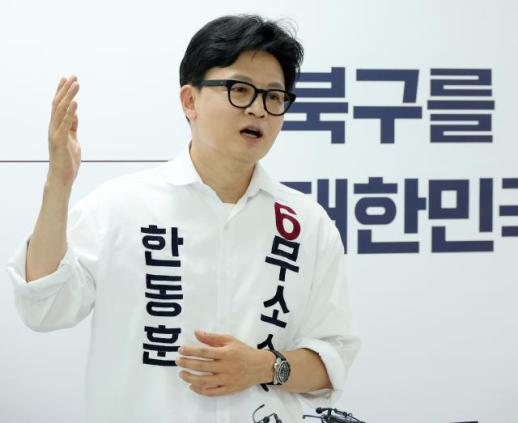 Han Dong-hoon Discusses Possibility of Unification in Election Campaign Han Dong-hoon, an independent candidate in the Busan North Gap by-election, stated on May 19 that public sentiment is guiding the potential for unification with Park Min-sik, the candidate from the People Power Party. He also claimed that if the Democratic Party candidate wins, President Lee Jae-myung will push for the cancellation of his indictment.During a press conference at his campaign office in the Hanjin Building in Busan, Han said, "Public sentiment is already showing how votes should be consolidated to defeat the representative of the Lee Jae-myung administration, which is recklessly pushing for indictment cancellation."He added, "Nothing is absolutely impossible in this world. Those who say otherwise are often harboring fear in their hearts," leaving the door open for a potential unification of the opposition.Han expressed concern about his competitor, Ha Jung-woo of the Democratic Party, saying, "He claims he was sent here on the orders of President Lee. If Ha is elected, it will be as if President Lee received permission here to proceed with the cancellation of the indictment."He continued, "I have been at the forefront of fighting against the cancellation of the indictment, and if it becomes a reality, I will even advocate for impeachment. There is a clear line drawn between President Lee and myself."Han emphasized that rebuilding conservatism involves navigating through the challenges of martial law and impeachment, stating, "If we had regained the right to speak through that process, President Lee would not have been able to go as far as seeking indictment cancellation."He also remarked, "If I, along with ten other lawmakers, had not prevented martial law, would the People Power Party be able to campaign in red uniforms now? I will definitely win and restore the right to speak for conservatism."* This article has been translated by AI. 2026-05-19 17:34:50
 -
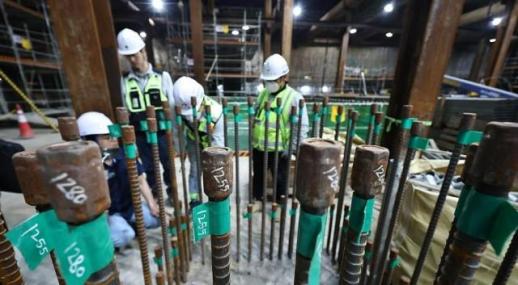 Dispute Over Missing Rebar at Samsung Station Spurs Audit by Ministry of Land The Ministry of Land, Infrastructure and Transport has launched an audit of Seoul City and the Korea Railroad Corporation (KRC) following a significant incident of missing rebar in the GTX-A line at Samsung Station. The situation escalated into a dispute over accountability after it was revealed that there was a lack of official communication among relevant agencies for about six months after the rebar deficiency was confirmed, raising concerns about the overall project management system beyond mere construction flaws. According to the Ministry of Land and construction industry sources, the ministry notified Seoul City and KRC on May 18 of an audit regarding allegations of poor construction and delays in reporting related to the underground complex development at the GTX-A Samsung Station section. Investigators will conduct a preliminary investigation by May 21, followed by a formal audit starting May 22. A ministry official stated, "This audit aims to examine whether there were issues in the overall management of this national project," adding that they plan to verify the reasons for the reporting delays by comparing the materials and explanations submitted by Seoul City and KRC. Last November, Hyundai Engineering & Construction, the contractor, discovered the missing main rebar in the underground platform structure during an internal quality inspection and reported it to Seoul City. It was confirmed that some rebar, which should have been installed in two rows according to the design, was only installed in one row, with approximately 2,500 pieces missing, totaling 178 tons. The issue lies in the subsequent response. Seoul City claims it submitted a construction management report, which included the relevant information, to KRC three times between November and January, following the construction management agreement procedures. They explained that time was needed to review and finalize reinforcement methods, sharing the final reinforcement plan with KRC and the Ministry of Land at the end of last month. In contrast, KRC argues that Seoul City treated the significant safety defect as merely internal documentation rather than a formal report. KRC stated, "The monthly construction management reports submitted by Seoul City are extensive, often running into thousands of pages, making it difficult to immediately recognize the missing rebar issue, which was only included in a portion of the construction management log." There are concerns within the industry that a more direct and clear reporting system should have been in place for such a critical defect in national railway infrastructure. Relying solely on the submission of management reports may have hindered relevant agencies from immediately grasping the severity of the issue. Seoul City maintains that there were no procedural issues, with a city official stating, "A review by structural engineers confirmed that there are currently no issues with structural safety," and that they finalized and shared the reinforcement plan after a comprehensive review of safety and construction feasibility. However, voices within KRC and beyond have raised concerns that given the significant defect in a key national railway project, more proactive external communication and separate reporting should have been necessary. The ongoing dispute over accountability suggests that the reporting system at the time was not functioning effectively. The responsibility of Hyundai Engineering & Construction is also under scrutiny. The Citizens' Coalition for Economic Justice issued a statement asserting that both the contractor and the inspection team bear significant responsibility, calling for a review of structural subcontracting practices and the avoidance of direct construction issues in large projects. Hyundai Engineering & Construction has proposed a reinforcement method that involves wrapping the deficient column exteriors with thick steel plates and welding them. Seoul City believes this method will ensure strength beyond design standards, but the Ministry of Land has stated it will not allow the resumption of reinforcement work until verification by an accredited institution is completed.* This article has been translated by AI. 2026-05-19 17:33:00
 -
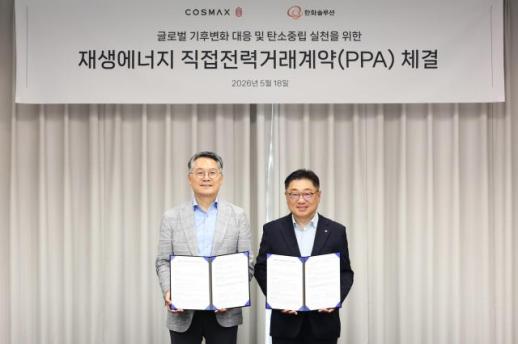 Cosmax to Source 40% of Domestic Factory Power from Renewable Energy Cosmax, a leading cosmetics manufacturer, has partnered with Hanwha Solutions Q CELLS to secure eco-friendly power in pursuit of its goal of achieving carbon neutrality by 2050. On May 19, Cosmax announced that it signed a Power Purchase Agreement (PPA) with Hanwha Q CELLS on May 18. The direct PPA allows power users to trade electricity directly with renewable energy producers, providing companies with a stable foundation for achieving carbon neutrality and RE100 (100% renewable energy usage) through long-term contracts. Under this agreement, Cosmax will receive approximately 10.4 GWh of renewable energy annually for its four key production sites in Hwaseong and Pyeongtaek starting in July, pending final approval from its Environmental, Social, and Governance (ESG) committee. This initiative will enable Cosmax to meet about 40% of its total electricity consumption at domestic factories with renewable energy, significantly contributing to the production of K-beauty products powered by eco-friendly energy. Cosmax aims to enhance its manufacturing competitiveness through this PPA, transitioning to a more sustainable framework while actively responding to the stringent carbon management and ESG standards of global clients. In addition to external power procurement, the company is also expanding its own generation facilities. Currently, it operates solar power generation systems at 12 sites worldwide, including six in South Korea and six abroad. Recently, with the expansion of its Pyeongtaek Plant No. 1, Cosmax is adding a solar power generation facility with a capacity of 499.2 kW, utilizing rooftop space. This facility is expected to be operational by the fourth quarter of 2026 and will produce approximately 638 MWh of renewable energy annually. Furthermore, Cosmax is accelerating the establishment of a Life Cycle Assessment (LCA) system, which quantifies resource and energy use and emissions throughout the entire product life cycle, from raw material procurement to production, distribution, use, and disposal. This system is a key management foundation supporting compliance with global regulations and the achievement of carbon neutrality goals. Last year, Cosmax completed its Product Carbon Footprint (PCF) calculation process and plans to finalize the LCA system covering the entire product life cycle this year. Through these efforts, Cosmax aims to strengthen its capabilities in renewable energy transition and product-level environmental impact management, enhancing its climate change response system to meet global market demands. Cosmax received an integrated A rating in the ESG evaluation from the Korea ESG Standards Institute last year. The company has established a roadmap for carbon neutrality by 2050, focusing on expanding solar power facilities and enhancing its PCF management system. A Cosmax representative stated, "We will continue to expand renewable energy, innovate energy efficiency, enhance our product environmental impact management system, and strengthen supply chain responsiveness to establish ourselves as a trusted partner in the global market."* This article has been translated by AI. 2026-05-19 17:30:00