
Journalist

Kim SeongSeo
-
 Seoul ups financial scrutiny on leverage ETFs amid frenzy SEOUL, May 19 (AJP) -South Korea's Financial Supervisory Service (FSS) has unveiled a sweeping set of preemptive consumer protection measures targeting leverage exchange-traded funds, social media investment influencers, and corporate insurance agencies, as domestic stock market volatility continues to climb. FSS Governor Lee Chan-jin chaired the second Consumer Risk Response Committee meeting at the agency's Seoul headquarters on Tuesday, where attendees reviewed emerging risk factors across financial markets amid what regulators described as overheated competition among financial firms. The financial regulator flagged growing concern over debt financed investing, noting that turnover ratios for major leverage and inverse ETF products remain significantly higher than those for general equities. The country's first single-stock leverage ETF will debut on May 27. The FSS plans to conduct intensive inspections of management status, disparity ratios, and trading trends across leverage and inverse ETFs, while issuing investor caution notices and reviewing asset managers' marketing practices. To prevent consumers from mistaking high-risk instruments for conventional ETFs, the watchdog called for clearer disclosure of core risk descriptors — such as "single-stock" and "leverage/inverse" — in product names and advertisements. Current rules require a minimum deposit of 10 million won (approximately $6,665) and mandatory prior training before investing in such products. The FSS took direct aim at so-called finfluencers — a portmanteau of "financial" and "influencer" — who have exploited recent market swings to generate personal gains. The FSS cited cases of influencers recommending stocks they had already purchased without disclosing conflicts of interest, as well as others operating paid stock-tip subscription services without registering as discretionary investment advisory businesses. The agency said it will deploy an AI-based monitoring system for round-the-clock surveillance of finfluencer activity, while stepping up enforcement on illegal financial advertisements in coordination with the Korea Communications Standards Commission. In insurance, the FSS singled out deceptive solicitation practices by general agencies (GAs) — corporate insurance intermediaries whose affiliated planners numbered 316,000 at end-2024, representing roughly 59.2 percent of all insurance planners nationwide. The watchdog said some agencies have been steering clients toward unnecessary policies under the guise of tax or labor consulting, and engaging in illegal private financing. Proposed regulatory reforms include restricting GAs from concurrently operating consulting businesses and imposing stricter penalties for sanction evasion. The committee also reviewed risks related to AI-powered cyberattacks, low early-termination interest rates at mutual financial cooperatives, and consumer access issues involving basic living expense accounts. "We must respond with a high level of vigilance against actions that fuel excessive debt investments and leverage trading by financial companies, as well as capital market disruptions by some finfluencers amid persistent stock market volatility," Lee said. 2026-05-19 16:21:39
 -
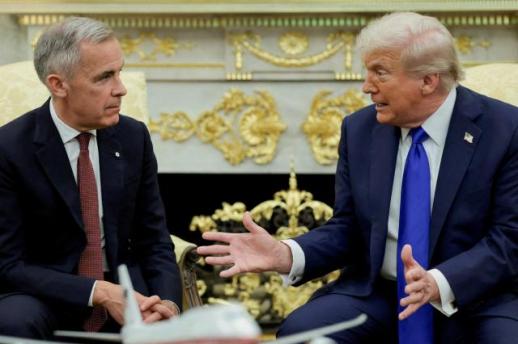 US suspends joint defense body with Canada as security tensions grow SEOUL, May 19 (AJP) - The U.S. has suspended a key defense cooperation body with Canada as tensions with Ottawa widen into security ties. U.S. Under Secretary of Defense for Policy Elbridge Colby said Monday that Washington would suspend activities of the Permanent Joint Board on Defense, or PJBD, a bilateral body responsible for coordinating military cooperation and defense policy between the United States and Canada, according to The Hill. The PJBD, which includes military officials and civilian representatives from both countries, has met twice a year to coordinate joint defense policies. Colby said the decision was made because Canada had failed to show “credible progress” in meeting its defense commitments, adding that Washington would reassess how the PJBD contributes to the joint defense of North America. In the same post on X, Colby shared a video of Carney’s speech at the World Economic Forum in Davos, Switzerland, in January. In the speech, Carney called for middle powers to unite against the influence of superpowers such as the United States and China, remarks widely seen as criticism of Trump’s approach to alliances. Colby’s decision to share the video while announcing the suspension of PJBD activities could be interpreted as a sign of Washington’s displeasure with Carney’s remarks. The Trump administration has also reacted sharply to calls within Canada to reduce purchases of U.S.-made weapons. Canada had planned to buy 88 F-35 fighter jets from Lockheed Martin, but the government is reportedly reviewing the plan. U.S. Ambassador to Canada Pete Hoekstra warned that if Canada decides not to purchase the F-35s, there could be changes to the North American Aerospace Defense Command, or NORAD, system. NORAD, established in 1958 during the Cold War to counter threats from the former Soviet Union, is a U.S.-Canada command responsible for aerospace warning and defense of North America. 2026-05-19 16:17:02
 -
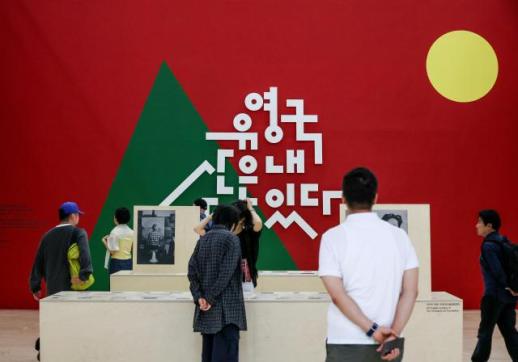 Months-long exhibition in Seoul showcases over 170 works by abstract art pioneer SEOUL, May 19 (AJP) - A retrospective exhibition honoring Yoo Youngkuk, a pioneer of South Korea's experimental abstract art, opened in Seoul on Tuesday, offering a rare opportunity to appreciate his works over his six-decade career. Marking the 110th anniversary of Yoo's birth, the exhibition at the Seoul Museum of Art in central Seoul runs until late October as part of the museum's first series featuring major South Korean modern artists. The exhibition features more than 170 works including 115 oil paintings, drawings, sculptures, and photographs, spanning Yoo's life from 1916 to 2002. Fifteen previously unreleased works are also on display. It traces Yoo's artistic journey from his early study of abstract art in Japan in 1937 to his final paintings in 1999. It includes his bold geometric works from the 1960s through the 1980s as well as his later pieces, where sharp angles give way to softer, more lyrical interpretations of nature. Widely regarded as the country's pioneer of abstract painting, Yoo drew inspiration from the mountains and other natural landscapes of his hometown of Uljin in North Gyeongsang Province. Using vivid colors and bold, simplified geometric forms, he developed a distinctive visual language rooted in nature. In particular, mountains became a major theme in Yoo's work, but he never painted them as they appeared. Instead, he used abstract shapes and colors to convey the feeling and energy of the natural landscape. The exhibition, which runs until Oct. 25, also includes works reportedly collected by RM, the leader of K-pop group BTS. 2026-05-19 16:15:48
 -
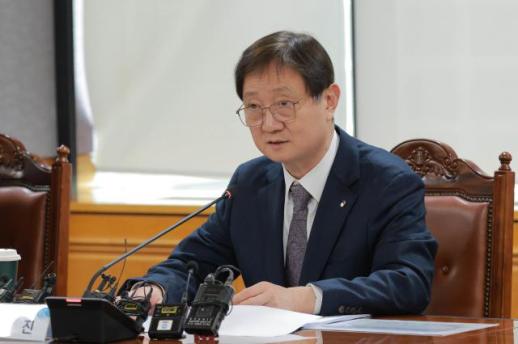 Upcoming Launch of Samsung and Nix Leverage ETFs Raises Consumer Concerns The Financial Supervisory Service (FSS) has issued a warning about potential consumer risks ahead of the launch of single-stock leverage exchange-traded funds (ETFs) next week. The FSS announced plans to enhance monitoring and internal controls related to these products.On May 19, the FSS held its second Consumer Risk Response Council, chaired by Lee Chan-jin, to discuss recent risk factors affecting financial consumers and corresponding countermeasures.The FSS identified the significant influx of retail investor funds into leverage ETFs during recent fluctuations in the domestic stock market as a major risk factor. With the launch of single-stock leverage ETFs scheduled for May 27, concerns have been raised about increased volatility due to concentration in specific stocks.Market observers have noted a surge in trading of related leverage ETFs, particularly as retail investors have focused on large tech stocks like Samsung Electronics. The trading turnover of major leverage and inverse ETFs has been significantly higher than that of regular stocks.During the council meeting, the FSS reviewed the negative compounding effects and the importance of rebalancing associated with leverage and inverse ETFs, as well as international examples. It was highlighted that even if short-term trends align, increased volatility could lead to long-term returns deviating from expectations.In response, the FSS will closely monitor the operational status of leverage and inverse ETFs, including discrepancies and trading trends, and will distribute investor warnings while checking marketing practices in the industry.The FSS also emphasized that investors in single-stock leverage and inverse ETFs must deposit a minimum of 10 million won and complete one hour each of basic and advanced training through the Financial Investment Association's education system. Financial companies have been instructed to clearly disclose the risks associated with 'single-stock' and 'leverage and inverse' products in their product names and advertising.Warnings have also been issued regarding the competitive marketing of overseas stocks by securities firms. The FSS pointed out that some firms have aggressively promoted overseas stock events and advertisements without adequate consumer protection measures and prior impact analysis. The agency plans to expand consumer protection indicators in key performance indicators and strengthen internal controls and pre-monitoring related to events and advertisements.Additionally, the FSS announced a firm response to illegal activities by financial influencers and similar investment advisory firms that exploit stock market volatility. The agency is currently using an AI-based monitoring system that operates 24/7 to detect unfair trading and illegal financial advertising in real time.In light of growing concerns about consumer harm in the marketing of ETFs and overseas stocks, financial authorities are increasing scrutiny of advertising and sales practices. Under the FSS's initiative to improve ETF advertising regulations, the Financial Investment Association will begin continuous monitoring of YouTube ETF advertisements from major asset management firms starting in July. This move follows a surge in controversies over exaggerated and misleading advertisements centered around YouTube and financial influencers in the rapidly expanding ETF market.Lee stated, "In a situation where stock market volatility persists, we will maintain a high level of vigilance against actions by financial companies that encourage excessive borrowing and leverage investments, as well as disruptions in the capital markets by certain financial influencers."* This article has been translated by AI. 2026-05-19 16:15:00
 -
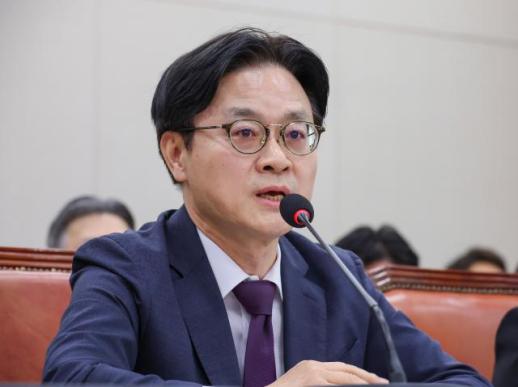 Samsung Live: Industry Minister urges 'dramatic settlement' on final day of Samsung talks SEOUL, May 19 (AJP) - As Samsung Electronics and its union entered the crucial final hours of government-mediated talks on Tuesday, South Korea's Industry Minister Kim Jung-kwan made an urgent public plea for a resolution to avert a massive strike. Speaking at a parliamentary committee meeting, Kim expressed a "desperate need" to prevent the 18-day walkout scheduled to begin Thursday. "If we cannot resolve this when everyone knows the negative impacts of a strike, what can our society achieve going forward?" Kim stated, urging both sides to reach a dramatic last-minute settlement. The minister attributed the current deadlock partly to Samsung's relatively short history of labor-management dialogue compared to other legacy manufacturers. However, he carefully refrained from commenting on specific negotiation terms to avoid interfering with the ongoing, closed-door National Labor Relations Commission (NLRC) mediation in Sejong. The remarks come as the high-stakes arbitration enters its final stretch. The National Labor Relations Commission is expected to announce the outcome of the mediation later this evening, which will determine whether the historic walkout proceeds as planned. 2026-05-19 16:12:54
 -
 Kiwoom Securities Establishes Emergency Succession Procedures Kiwoom Securities has introduced a new regulation for emergency management succession procedures to ensure immediate action in the event that the Chief Executive Officer (CEO) is unable to perform their duties unexpectedly. This move aims to minimize the risk of management gaps and formalize succession processes amid recent changes in corporate governance laws aimed at enhancing transparency.According to the financial investment industry on May 19, Kiwoom Securities has amended its internal governance norms to include a separate clause for emergency succession procedures. Previously, general and emergency succession provisions were combined in one clause, but the recent revision clarifies the initiation point for succession, the acting management system, and the deadline for appointing a new CEO in distinct terms.Under the new regulations, if the CEO resigns unexpectedly, faces regulatory sanctions, is convicted in a criminal case, or is otherwise unable to fulfill their duties due to market conditions or company management issues, the board of directors must immediately initiate the succession process. Additionally, the regulations stipulate that in the event of an emergency, an acting management system must be activated, and the appointment of a new CEO should be completed within 90 days from the occurrence of the issue to minimize management gaps.In the financial sector, there is a growing emphasis on strengthening internal controls and responsible management, prompting firms to establish emergency succession plans. Given the nature of financial companies, a prolonged absence of a CEO can lead to decision-making confusion and management gaps, which may impact market confidence and internal control systems.A Kiwoom Securities official stated, "We have specified the emergency succession regulations in line with ESG evaluation criteria."Some view this amendment as part of a broader effort to institutionalize long-term succession systems beyond just enhancing internal controls. Recent amendments to corporate laws have emphasized governance transparency, including the strengthening of the '3% rule' that limits voting rights for major shareholders and related parties. This has led to speculation that traditional management defense strategies centered on major shareholder stakes may face increasing limitations. Consequently, companies are moving towards more institutionalized and transparent succession and governance systems while accelerating their succession efforts.The current CEO, Eom Joo-sung, is set to serve until March 2027. Regardless of whether Eom is reappointed or a different professional management team takes over, the recent amendment establishes a foundation for Kim Dong-jun to proceed with the management succession process when the time is right.Since the founder, Kim Ik-rae, stepped down from active management, a gradual generational transition is underway at the group level. Industry insiders consider Kim Dong-jun a strong candidate for the next CEO of Kiwoom Securities, as his role and influence within the group have been rapidly expanding.Born in 1984, Kim began participating in group management as a director at Daou Technology in 2014. He has since served as an executive at Daou Data and currently holds positions as the CEO of Kiwoom Investment and Kiwoom PE. According to data from the Fair Trade Commission at the end of last year, Kim holds a 33.13% stake in E-Money, the largest shareholder of Daou Data, which serves as the holding company. Last year, he was appointed as an inside director at Kiwoom Securities and, alongside Vice Chairman Lee Hyun, became co-chair of the board, marking his formal involvement in managing the key affiliate of the group.* This article has been translated by AI. 2026-05-19 16:12:25
 -
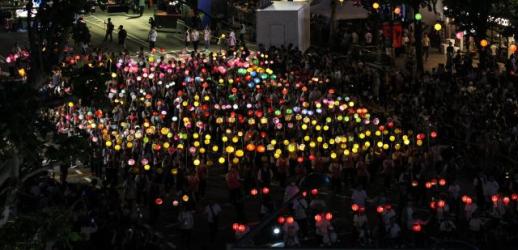 Glowing lanterns greet Buddha's Birthday SEOUL, May 19 (AJP) - On an early summer night, thousands of colorful lanterns lit up the streets of Seoul as small lights gathered into a massive procession. The glowing lanterns reflected not only a long-standing tradition, but also a sense of community and shared hope. Ahead of Buddha's Birthday, the annual Yeondeunghoe took place on May 16 across central Seoul. Citizens and foreign visitors gathered along the route stretching from Heunginjimun Gate through Jongno to Jogyesa Temple, where the lantern parade slowly moved through the city under the night sky. As lanterns filled the streets with vivid colors, many spectators paused to photograph the scene with their phones, capturing one of Seoul’s most iconic spring traditions. Yeondeunghoe, also known as the Lotus Lantern Festival, is held to celebrate the birth of Buddha. The tradition of lighting lanterns ahead of Buddha’s Birthday has evolved over centuries into one of Korea’s best-known cultural festivals. In Buddhism, lanterns symbolize wisdom and compassion that illuminate darkness, while the act of lighting them represents prayers for peace, hope and the well-being of others. Korea’s lantern tradition dates back more than a thousand years. Historical records in the Samguk Sagi mention Silla kings viewing lantern displays at Hwangnyongsa Temple, while during the Goryeo Dynasty, the lantern festival developed into a nationwide state event with lanterns decorating palaces and streets alike. Even after the Joseon Dynasty, the custom survived as a folk tradition and continues today. Recognized for its historical and communal value, Yeondeunghoe was inscribed on the UNESCO Representative List of the Intangible Cultural Heritage of Humanity in 2020. Today, the festival has expanded beyond a religious ceremony into a large-scale public cultural event. Programs featuring child monk characters, traditional cultural performances and interactive street festivals encouraged both citizens and tourists to participate rather than simply observe. The lantern parade began at 7 p.m. near Heunginjimun Gate and continued for about three hours through downtown Seoul. About 50,000 participants from Buddhist temples and organizations across the country carried nearly 100,000 handmade lanterns through Jongno, sharing what organizers described as the light of wisdom and compassion with the public. The streets featured a wide range of lanterns, from traditional lotus-shaped lanterns to giant dragon and child monk displays. Foreign tourists, children and Buddhist monks walked side by side beneath the glowing lights as the lanterns swayed between the neon signs of Jongno. This year’s festival also drew attention for the participation of a robot monk and North Korean defectors, highlighting the festival’s message of inclusion beyond religion, nationality and generation. Jinwoo, head of the Jogye Order of Korean Buddhism, said during the lantern ceremony, “May our minds find peace, and may the world find harmony,” emphasizing the importance of lighting “lanterns of unity” to overcome division and hardship. Even after the procession ended, lantern lights continued to glow across Jongno late into the night. Swaying gently in the warm breeze, the small lights quietly illuminated the fast-moving city around them. 2026-05-19 16:11:19
 -
 KOSPI tumbles 3.3% as chip-cycle peak fears trigger foreign selloff SEOUL, May 19 (AJP) - South Korean benchmark KOSPI tumbled 3.3 percent Tuesday as foreign investors offloaded shares amid growing concerns that the global memory-chip cycle is nearing its peak. Foreign investors drove the decline on the main bourse, selling 5.34 trillion won ($3.55 billion) worth of shares to outweigh combined purchases by retail and institutional investors. The selloff heavily impacted semiconductor and artificial intelligence-related stocks following an overnight slump in U.S. tech shares. The index ended at 7,271.70, dropping from an intraday high of 7,446.57 to a low of 7,141.91. Large-cap semiconductor stocks dragged the market lower, with industry leader Samsung Electronics falling 2.0 percent to 275,500 won and SK hynix dropping 5.2 percent to 1,745,000 won. Automakers and technology-related shares suffered steep losses alongside chipmakers. Hyundai Motor plunged 8.9 percent to 604,000 won, LG Electronics tumbled 11.7 percent to 191,700 won, and Hanmi Semiconductor lost 9.2 percent to 288,000 won. Mirae Asset Securities also declined 5.8 percent to 66,400 won. Moving against the broader market trend, Korea Electric Power Corp. rose 4.0 percent to 39,150 won. The gain followed expectations that the government will accelerate a high-voltage direct current transmission project on the west coast to expand renewable-energy capacity and strengthen grid stability. LG Innotek climbed 4.3 percent to 793,000 won after NH Investment & Securities raised its target price from 700,000 won to 1 million won. The brokerage cited spillover effects from package substrate shortages and stronger-than-expected benefits from camera specification upgrades for major clients. The tech-heavy KOSDAQ index fell 2.4 percent to close at 1,084.10, pressured by a selloff in growth stocks. Retail investors bought 107.1 billion won on the junior board, while foreign and institutional investors sold 12.3 billion won and 55.8 billion won, respectively. KOSDAQ-listed Doosan Robotics sank 15.1 percent to 100,100 won, and Taihan Fiber Optics fell 6.7 percent to 21,550 won. Conversely, I-ROBOTICS jumped 7.4 percent to 4,295 won after reporting a return to profitability with a first-quarter net profit of 450 million won, driven by stronger overseas orders and a 20.1 percent rise in sales. The decline in Seoul followed a mixed session on Wall Street, where the Dow Jones Industrial Average rose 0.3 percent to 49,686.12, while the Nasdaq Composite fell 0.5 percent to 26,090.73. Across Asia, Japan's Nikkei 225 fell 0.6 percent, while China's Shanghai Composite rose 0.5 percent and Hong Kong's Hang Seng Index gained 0.4 percent. Oil prices retreated from recent highs as West Texas Intermediate crude fell 1.3 percent to $103 a barrel and Brent crude declined 2.1 percent to $109.80. The pullback occurred after U.S. President Donald Trump said he had paused a planned military strike on Iran at the request of Gulf allies, prompting hopes for renewed negotiations. The South Korean won weakened against the U.S. dollar. The local currency closed at 1,506.10 won per dollar, down 1.0 percent from the previous session. 2026-05-19 16:09:44
 -
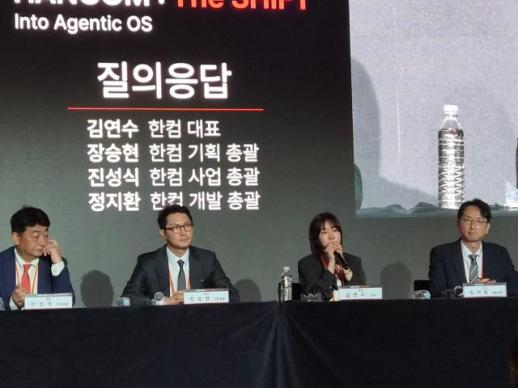 Hancom Transitions to Sovereign Agentic OS, Phasing Out Legacy Brand Hancom, a pioneering software company, has announced the retirement of its 36-year-old brand "Hangul and Computer" and its identity as a traditional office software provider. The company is transitioning to become a Sovereign Agentic Operating System (OS) firm based on artificial intelligence (AI). On May 19, Hancom held a strategy presentation titled "Hancom: The Shift" at the Fairmont Hotel in Yeouido, Seoul, where it unveiled its AI business achievements and new corporate vision. Kim Yeon-soo, CEO of Hancom, stated, "As of today, Hancom is officially transitioning to a Sovereign Agentic OS company. We have demonstrated our shift to an AI company through our results, and now we will take it a step further." The company has changed its name from "Hangul and Computer" to "Hancom" to reflect its expanded business scope, which now includes data, AI agents, and global markets. The previous name no longer encapsulates the current vision. Hancom will cease the release of traditional software packages with the launch of "Hancom Office 2024." Instead, it plans to shift to a platform structure that updates AI features in real time. Kim emphasized, "We cannot keep pace with the speed of AI evolution through annual product releases. Hancom's core business is not document tool manufacturing but AI technology development." The Sovereign Agentic OS is an AI operating platform that integrates and controls internal company data, external AI models, and existing work systems within a single environment. This approach aims to respond to market changes that emphasize the evolution of AI agents capable of performing tasks autonomously and the importance of data sovereignty and security. For the first time, Hancom also disclosed its AI business performance. Last year, its standalone revenue reached 175.3 billion won, a 10.2% increase from the previous year, marking its highest performance to date. Of the total revenue increase of 16.2 billion won, approximately 8.9 billion won, or 54.6%, came from the AI package business. This year, the share of AI business is expanding even more rapidly. In the first quarter, AI revenue reached 5.2 billion won, accounting for 11.2% of total revenue. Hancom stated, "We are already a company generating profits from AI." Hancom has established a customer base of approximately 200,000 organizations, including 14,000 public and government agencies, 40,000 educational institutions, and 140,000 private companies, which it views as a key asset for expanding its AI business. Among its B2B customers, the adoption rate of AI packages was 4.2% in the first quarter of this year. The company believes this customer base will also serve as a strength in the emerging Agentic OS market. Since existing customers have already entrusted sensitive document data and work environments to Hancom's platform, the new AI agent services are expected to be quickly adopted. Hancom is also targeting the European market, focusing on data sovereignty regulations such as the General Data Protection Regulation (GDPR) and the EU AI Act. The company plans to expand collaborations with local IT and public sector firms in Europe.* This article has been translated by AI. 2026-05-19 16:06:56
 -
 National Growth Fund to Launch on May 22, No Principal Guarantee and Five-Year Lock-In The National Participation Growth Fund will be launched on May 22, with a total size of 6 trillion won. Sales may close early if the funds are exhausted. On May 19, the Financial Services Commission provided key information regarding the National Participation Growth Fund. The fund aims to raise 6 trillion won from the general public and will be available for purchase on a first-come, first-served basis through major banks and securities firms from May 22 to June 11. However, this is not a savings product where money is deposited monthly; instead, investors must pay the entire investment amount upfront and cannot redeem it for five years. As it does not guarantee the principal, potential investors should thoroughly understand the product's structure and risks before subscribing. Here are some key questions and answers regarding the National Participation Growth Fund: - When will it be available for purchase? "Sales will begin on May 22 and continue until June 11 for a total of three weeks. The total sales amount is 6 trillion won, and since it is first-come, first-served, sales may close early if the funds are exhausted." - Is there a separate allocation for low-income individuals? "Yes, 1.2 trillion won, or 20% of the total sales, is reserved for low-income individuals. This allocation will be available during the first two weeks, from May 22 to June 4. Any remaining low-income allocation not sold during this period will be available to the general public in the third week." - Can only low-income individuals subscribe during the first two weeks? "No, the entire allocation, including the low-income portion, will be available for purchase from the start. However, the 1.2 trillion won for low-income individuals will be managed separately." - What is the income threshold for low-income status? "The threshold is an annual earned income of 50 million won or less. If there are other sources of income, the total income must be 38 million won or less. This is consistent with the requirements for the low-income personal comprehensive asset management account, or ISA." - Where can individuals subscribe? "Subscriptions can be made at 10 banks and 15 securities firms. The banks include Kookmin, KB, Nonghyup, Shinhan, IM Bank, Woori, Hana, Gyeongnam, Gwangju, and Busan banks. The securities firms include KB, NH, Daishin, Meritz, Mirae Asset, Samsung, Shin Young, Shinhan Investment, IM, Woori Investment, Yuanta, Hana, Korea Investment, Hanwha Investment, and Kiwoom Securities, which offers online-only subscriptions." - What is the subscription limit? "The annual subscription limit per person is 100 million won. Under the Tax Benefits Restriction Act, a dedicated account can hold up to 200 million won over five years. For a general account, the limit is 30 million won per person. The minimum subscription amount varies by sales firm, ranging from 100,000 won to 1 million won." - What documents are needed to subscribe? "To receive tax benefits, a certificate of income verification for ISA subscription is required. This document can be obtained from the National Tax Service's Hometax, Government24, or local tax offices. The Financial Services Commission advises obtaining this document in advance for quick subscription after the product launch. If subscribing through a general account without tax benefits, no income verification certificate is needed." - Is it possible to invest a fixed amount monthly? "No, the National Participation Growth Fund is not a savings-type product. Investors must pay the entire investment amount in one lump sum at the time of subscription. Additionally, redemption is not possible for five years." - Is the principal guaranteed? "No, it is not guaranteed. The Financial Services Commission describes this product as a high-risk investment that does not guarantee the principal, classified as a first-grade product. Investors must be assessed as having a suitable investment profile to subscribe." - Does the government compensate for 20% of individual investment losses? "No, the government does not directly compensate for 20% of individual investments. The 6 trillion won in public investment will be managed across 10 sub-funds, with an additional 1.2 trillion won from the government and seed investments from fund managers. In the event of losses, the government and fund managers will absorb losses before the public investment. However, this does not mean that individual investors are guaranteed a 20% loss coverage." - What should investors be most cautious about before subscribing? "Since sales are on a first-come, first-served basis, early closure is possible. To receive tax benefits, income verification documents must be prepared. Most importantly, investors should be aware that the product is a high-risk investment with no redemption for five years and the potential for principal loss."* This article has been translated by AI. 2026-05-19 16:04:40