
Journalist

Kim SeongSeo
-
 AXA Insurance Seeks New Revenue Stream in Rental Car Accident Handling As the burden of auto insurance policies accumulates, the profitability of insurance companies focused on auto coverage is being challenged. With pressures to lower premiums, rising repair costs, and delays in improving the treatment system for minor injuries, AXA Insurance is now seeking new revenue sources in the rental car accident handling market. According to the Financial Supervisory Service on May 19, AXA has recently reported a subsidiary business that provides and mediates accident reporting, investigation, and repair cost assessment services for rental car operators. When an accident occurs with a vehicle owned by a rental car company, AXA will handle everything from accident reporting to on-site investigation and assessment of repair costs, earning a commission for these services. This move is seen as an attempt to expand its accident handling capabilities, developed through its existing auto insurance compensation operations, into external services. AXA's actions are closely tied to the declining profitability of auto insurance. The company reported an operating loss of 39.986 billion won last year, marking a return to the red. Its net loss also reached 33.784 billion won. The audit report identified a decrease in auto insurance revenue as a major reason for the poor performance, with auto insurance revenue dropping by 45.938 billion won compared to the previous year. However, this issue is not unique to AXA. Auto insurance is heavily regulated, making premium adjustments subject to significant policy considerations. After lowering premiums for over four years, the industry raised them this year, while repair and treatment costs have continued to rise. Additionally, the introduction of the 'eight-week rule' to reduce excessive treatment for minor injuries has been indefinitely postponed, and policies like the vehicle five-part discount, which reduce premium income, are being pursued, further narrowing the profitability margins for insurers. The limitations of specialized auto insurance models are also evident in the case of Carrot Insurance. Carrot grew by promoting per-mile auto insurance but continued to incur losses since its inception, ultimately being absorbed by Hanwha General Insurance. Before the merger, Carrot recorded annual losses of around 60 billion won. Industry experts suggest that without being integrated into Hanwha, it would have been challenging for Carrot to continue operating independently due to its high dependency on auto insurance, which limits its ability to offset losses with other lines of business. Major insurance companies are also struggling with poor auto insurance performance. In the first quarter of this year, Samsung Fire & Marine, Hyundai Marine & Fire, DB Insurance, and KB Insurance collectively reported a deficit of 39.7 billion won in auto insurance. The loss ratio for auto insurance exceeded the breakeven point of 80%. Following last year's auto insurance losses that soared to around 700 billion won, the trend of deficits is likely to continue this year due to ongoing policy shifts. However, it remains to be seen whether AXA's new subsidiary business will lead to immediate profitability. An AXA representative stated, "We are still in the preparation stage," adding that "no specific timeline has been confirmed."* This article has been translated by AI. 2026-05-19 15:00:00
 -
 Emart Shares Drop Over 6% Amid Starbucks Controversy Emart's stock price fell over 6% during trading on May 19, influenced by the controversy surrounding a promotion by Starbucks Korea. According to the Korea Exchange, as of 2:07 PM, Emart shares were trading at 92,800 won, down 6,400 won (-6.45%) from the previous trading day. The stock opened at 98,200 won and briefly dropped to 90,400 won, widening its losses. Market analysts attribute the decline in stock price to weakened investor sentiment following the promotional wording controversy involving Starbucks Korea. On May 18, Starbucks Korea used phrases such as 'Tank Day' and 'On the Desk' during a tumbler promotion event. This sparked criticism on online communities and social media, with claims that the expressions belittled the May 18 Democratic Movement and the 1987 torture and death of activist Park Jong-cheol. As the controversy grew, Shinsegae Group Chairman Chung Yong-jin issued a public apology on the morning of May 19, stating, "This is an inappropriate marketing strategy that should not exist and cannot be tolerated. This matter trivializes the pain and sacrifice of all those who have dedicated themselves to this country's democracy, and it is an inexcusable mistake." The company had previously dismissed CEO Son Jeong-hyun and related executives the day before and has initiated disciplinary procedures for all involved employees.* This article has been translated by AI. 2026-05-19 14:57:00
 -
 Shinsegae Vice President Denied Apology by May 18 Groups Over 'Tank Day' Shinsegae Group's Vice President Kim Su-wan visited the May 18 Memorial Culture Center in Gwangju on May 19 to apologize for the controversial 'Tank Day' marketing campaign conducted by its subsidiary, Starbucks Korea, on the anniversary of the May 18 Gwangju Democratic Movement. However, he was unable to meet with representatives from the May 18 groups, who rejected his attempt to apologize. The May 18 groups expressed their discontent, stating that Kim's visit was unannounced and that they would not accept an apology. Speaking to reporters, Kim said, "The group is taking this situation very seriously. I sincerely apologize to the spirits of May and will do my utmost to ensure that inappropriate marketing does not happen again." He added, "The event in question was not conducted with any intent or malice, and once all circumstances are understood, I will visit the May 18 groups again to apologize." Starbucks Korea had been running a tumbler promotion from May 15 to May 26, during which it used phrases like 'Tank Day' and 'Bang on the Desk.' The term 'Tank' refers to the military tanks that entered Gwangju in 1980, while 'Bang on the Desk' evokes a statement made during the 1987 torture and death of activist Park Jong-chul, which authorities attempted to downplay and cover up. This sparked rapid criticism online. In response to the backlash, Shinsegae Group Chairman Jeong Yong-jin immediately informed Starbucks Korea CEO Son Jeong-hyun of his dismissal. Son issued a statement saying, "I deeply apologize to the spirits of May 18, the May 18 groups, the citizens of Gwangju, and the families of Park Jong-chul, as well as all those who fought for democracy in South Korea, for the inappropriate marketing that contained a wrong expression regarding the May 18 Democratic Movement." As the controversy continued, Chairman Jeong released a public apology, stating, "On the day before the 46th anniversary of the May 18 Democratic Movement, Starbucks Korea conducted an inappropriate marketing campaign that should not have happened and is unacceptable. This has caused deep wounds to the spirits of May 18, their families, and the public. I bow my head and apologize on behalf of the group." He added, "I fully acknowledge that I bear all responsibility for this matter and understand that no explanation will be easily accepted." * This article has been translated by AI. 2026-05-19 14:54:29
 -
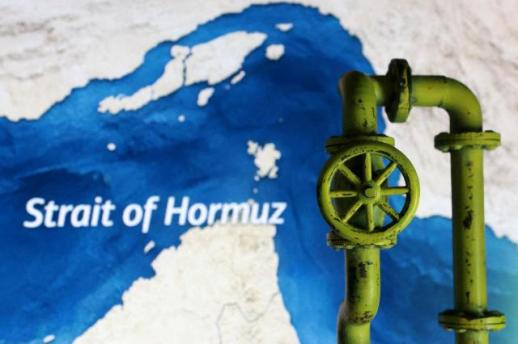 Iran Launches Bitcoin-Based Marine Insurance for Vessels in Hormuz Strait Iran has reportedly launched a Bitcoin-based marine insurance service aimed at its shipping companies navigating the Hormuz Strait. On May 18, Bloomberg News cited a document from Iran's Ministry of Economic Affairs and Finance, as reported by the semi-official Fars News Agency, stating that the service, named "Hormuz Safe," has been initiated. The Fars News report included a screenshot from the insurance company's website, which claims the service offers "fast and verifiable digital insurance to Iranian shipping companies and cargo owners." However, it did not clarify how the insurance operates or whether foreign shipping companies can also utilize it. According to Fars News, the Hormuz Safe website states that cryptographically verifiable insurance certificates will be provided for cargo passing through the Persian Gulf and the Hormuz Strait, with payments settled in Bitcoin. The coverage begins as soon as the cargo is verified, and a signed receipt will be issued to the cargo owner. This insurance service aligns with Iran's efforts to institutionalize control over the Hormuz Strait. Bloomberg noted that the Iranian government and the Islamic Revolutionary Guard Corps (IRGC) are working to formalize tolls and various fees for the strait, suggesting that the insurance service could serve as another means of securing funding. However, the practicality of a Bitcoin-based marine insurance system remains uncertain. Bloomberg pointed out that unlike stablecoins pegged to fiat currencies like the dollar, Bitcoin's high price volatility poses limitations for its use as a payment method. Since the onset of airstrikes by the U.S. and Israel on February 28, Iran has intensified its control over the Hormuz Strait. Reports indicate that the Iranian government and the IRGC have demanded fees of up to $2 million (approximately 30 billion won) from certain vessels. Additionally, on May 18, Iran's Supreme National Security Council officially launched the "Persian Gulf Authority" to manage navigation through the Hormuz Strait, claiming to be the legal representative body for overseeing strait navigation. It remains unclear how directly Hormuz Safe is connected to the IRGC or Iran's plans for an official toll system. However, given that Fars News has close ties to the IRGC, interpretations suggest that this report is not unrelated to Iran's control strategies for the strait. Meanwhile, Ebrahim Azizi, head of the Iranian Parliament's National Security Committee, stated that only vessels cooperating with Iran will benefit from the designated navigation system, adding that parties involved in the U.S.-Israel war against Iran will be prohibited from using the route.* This article has been translated by AI. 2026-05-19 14:51:53
 -
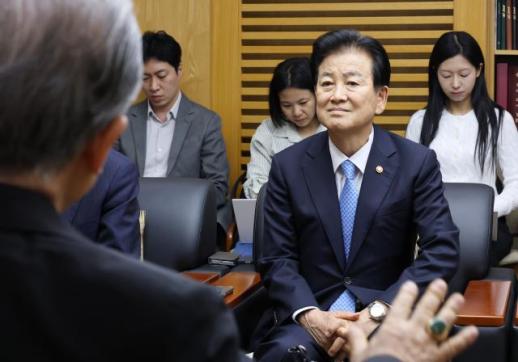 Minister Jeong Dong-young Decides Not to Attend Inter-Korean Women's Football Match Minister of Unification Jeong Dong-young has decided not to attend the inter-Korean women's football match scheduled for May 20 in Suwon. A Ministry of Unification official stated on May 19 that Minister Jeong will not be present at the semifinal match between Suwon FC Women and the Nae Gohyang Football Club. The official explained that the decision was made after considering various factors, including the nature of the event as an international tournament organized by the Asian Football Confederation (AFC). Given the current tense inter-Korean relations characterized by a 'hostile stance' from North Korea, it is believed that Minister Jeong's attendance could lead to unnecessary political interpretations. The fact that this is a club-level match rather than a national competition likely also influenced the decision. The Nae Gohyang Women's Football Club will compete against Suwon FC Women in the AFC Women's Champions League (AWCL) semifinals at the Suwon Sports Complex on May 20. This will mark the first time in eight years that a North Korean sports team has visited South Korea for a competition since the International Table Tennis Federation (ITTF) World Tour Grand Finals held in Incheon in December 2018. Additionally, it will be the first visit by the North Korean women's football team to South Korea since the 2014 Incheon Asian Games.* This article has been translated by AI. 2026-05-19 14:49:10
 -
 Industry Minister Thanks Gas Stations for Efforts Amid Middle East Crisis Kim Jeong-gwan, the Minister of Industry, Trade and Energy, stated on May 19 that the stability of domestic oil prices is largely due to the efforts of local gas stations. He expressed hope that the government, businesses, and citizens can work together to navigate the ongoing crisis stemming from the Middle East. On this day, Minister Kim visited the "Dae Won Self-Service Gas Station" in Guro-gu, Seoul, where he held a meeting with representatives from gas stations recognized as "good gas stations." The designation of good gas stations was initiated by the citizen group "Energy and Oil Market Monitoring Group" following the implementation of the maximum price system for petroleum products on March 13. To date, a total of 334 gas stations have been recognized as good gas stations across four rounds of selections. These stations sell fuel at prices approximately 14 to 15 won lower per liter than the national average, while 24 stations that have been selected more than twice offer prices 19 to 21 won lower per liter. To encourage the price stabilization efforts of these gas stations, the government is enhancing its promotion and support for good gas stations. A dedicated banner for good gas stations has been established on the Korea National Oil Corporation's Opinet website, and they can also be found on major navigation apps like T-map, Naver Maps, and Kakao Maps. Additionally, gas stations that are selected five times will receive a special designation as "super good gas stations," along with an exclusive offline mark and government awards as incentives. Currently, the average price of gasoline at gas stations nationwide is 2,011 won per liter, while diesel is at 2,006 won. According to the Ministry of Finance and Economy, the implementation of the maximum price system has resulted in a price reduction effect of 0.6 percentage points in March and 1.2 percentage points in April. Minister Kim expressed deep gratitude to the many stakeholders in the gas station industry, stating, "I hope the war in the Middle East ends soon and that all market economies can return to normal." The government is set to decide on the sixth maximum price system for petroleum products on May 21. The Ministry of Industry has been implementing the maximum price system since March 13, as international oil prices have exceeded $100 per barrel, increasing inflationary pressures. The initial maximum prices set for regular gasoline, diesel, and kerosene were 1,724 won, 1,713 won, and 1,320 won per liter, respectively. Following this, the second maximum price was established on March 27, setting regular gasoline at 1,934 won, diesel at 1,923 won, and kerosene at 1,530 won. The third to fifth maximum price systems, implemented at two-week intervals, have remained unchanged.* This article has been translated by AI. 2026-05-19 14:46:59
 -
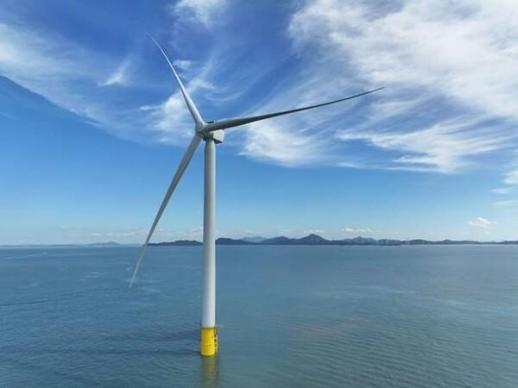 South Korea Aims to Become a Top 10 Renewable Energy Nation by 2030 The South Korean government has officially set a goal to expand its renewable energy capacity to 100 gigawatts (GW) by 2030. This initiative is part of a broader strategy to transition to renewable energy in response to the energy crisis stemming from the Middle East and the tightening of global carbon regulations. The Ministry of Climate, Energy, and Environment announced the "First Basic Plan for Renewable Energy" during the 38th Energy Committee meeting held at the Korea Chamber of Commerce and Industry in Seoul on May 19. The government aims to achieve a renewable energy capacity of 100 GW by 2030 and to ensure that renewable energy accounts for more than 30% of the country's energy generation by 2035. This plan is the first dedicated basic plan for renewable energy established under the revised "Promotion of Development, Use, and Distribution of Renewable Energy Act" enacted this year. The government has outlined five key tasks and ten strategies, promoting the vision of "renewable energy that benefits local communities and revitalizes industries," focusing on expanding distribution, reducing costs, fostering industry, enhancing public engagement, and restructuring governance. The government plans to develop large flagship projects primarily in the Seoul metropolitan area, Chungcheong region, and Gangwon province, while also increasing solar energy deployment by utilizing idle spaces such as factory rooftops, agricultural lands, and water surfaces. This initiative aims to position South Korea among the world's top ten renewable energy nations. Additionally, the government will expand energy storage systems (ESS) and promote a package approach that combines renewable energy, ESS, and heat pumps to facilitate the transition to decentralized power grids at the local level. The Renewable Portfolio Standard (RPS) will be restructured to a long-term fixed-price contract market, and efforts will be made to lower the costs of solar and wind energy to enhance their economic viability. The government also plans to promote solar energy deployment that achieves economic viability comparable to nuclear power. The strategy includes fostering the renewable energy industry as a "second semiconductor and shipbuilding industry," with plans to increase domestic solar module production capacity to 10 GW per year and wind turbine production capacity to over 3 GW per year by 2030. Of the total 100 GW, solar energy is expected to account for 87 GW, offshore wind for 3 GW, and onshore wind for 6 GW. Investments in next-generation solar cells and floating offshore wind technologies will also be strengthened. Minister of Climate, Energy, and Environment Kim Sung-hwan stated, "Based on the discussions of the Energy Committee members, we will accelerate follow-up measures to ensure that our energy policies and plans gain unwavering trust."* This article has been translated by AI. 2026-05-19 14:45:28
 -
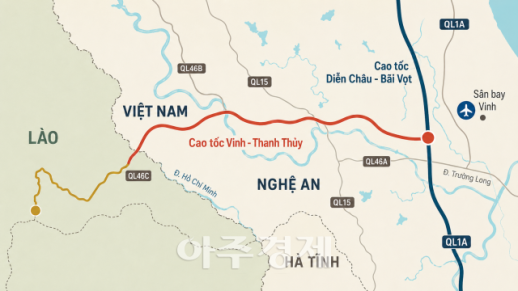 Vietnam Begins Construction of Vinh-Tan Thuy Highway to Connect Northern Region and Laos Vietnam has commenced construction on the Vinh-Tan Thuy Highway, which will connect the northern region with Laos. The project has a total investment of approximately 24 trillion dong (about $1.37 billion) and spans 65 kilometers, with a completion target set for 2029. This highway is a key segment of the Hanoi-Vientiane regional corridor. According to Vietnamese media outlet VnExpress, the groundbreaking ceremony took place on May 18 in Nghe An province, following a previous event in Dai Hue. The highway will begin at the Hung Thuy interchange, connecting to the eastern North-South Expressway's Dien Chau-Bai Bot section, and will end at the Tan Thuy-Nam On border area at the Vietnam-Laos border. The planned route will feature six lanes, with the first phase involving the complete construction of four lanes, while major bridges will be built to accommodate six lanes. The road will have a width of 32.25 meters, with design speeds ranging from 100 to 120 km/h in certain sections, and 60 to 80 km/h in mountainous areas where the width will be 29 meters. The total land area used for the project is approximately 582 hectares, including 98.5 hectares of upstream protection forest, 141 hectares of production forest, 221 hectares of rice fields, and 31 hectares of residential land. The Vinh-Tan Thuy Highway is part of the Hanoi-Vientiane connection corridor, which was agreed upon by the governments of Vietnam and Laos in 2016. The Vietnamese section of the corridor spans approximately 370 kilometers, with about 310 kilometers overlapping with the currently under-construction eastern North-South Expressway. Once completed, travel time from the Tan Thuy border to urban areas and ports within Nghe An province is expected to be significantly reduced. This will enhance connectivity between Vietnam's northern region and Laos, as well as Thailand. It is also anticipated to increase visitor traffic to tourist attractions such as Cua Lo Beach, Kim Liên Historical Site, and Phu Mat National Park. Bui Thanh An, Vice Chairman of the Nghe An Provincial People's Committee, emphasized at the groundbreaking ceremony that "this project is a strategic infrastructure initiative at both regional and national levels," and he called for close cooperation among various agencies, requesting support from the central government and relevant departments. In recent years, the Vietnamese government has prioritized funding for several east-west routes, including the North-South Expressway (eastern section), the Cai Nha-Buon Ma Thuot, the Bien Hoa-Vung Tau, the Chau Doc-Kan Tho-Soc Trang, and the Quy Nhon-Pleiku routes, aiming to complete a total of 5,000 kilometers of highways by 2030. This project is expected to enhance transportation infrastructure through modern and integrated facilities, strengthening economic and trade cooperation between Vietnam and Laos. Additionally, it aims to develop safe and sustainable transportation options, contributing to regional development and reducing traffic accidents.* This article has been translated by AI. 2026-05-19 14:42:16
 -
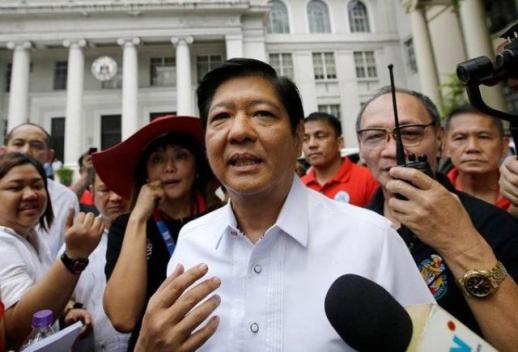 Philippine President: Taiwan Conflict Would Impact Us Ferdinand Marcos Jr., the President of the Philippines, stated that if a military conflict occurs in Taiwan, the Philippines would be unable to avoid its effects. This is due to the country's geographical proximity to Taiwan and the presence of approximately 200,000 Filipinos living there. On May 19, Bloomberg reported that President Marcos made these comments during an interview with Japanese media in Manila the previous day. He emphasized, "The Philippines has no choice," adding, "Taiwan is very close to the Philippines, and nearly 200,000 Filipinos live and work in Taiwan." He clarified that the Philippines does not wish to be drawn into a war over Taiwan. However, he noted, "If an actual conflict occurs, looking at the map, at least northern Philippines would fall within the sphere of influence or feel the repercussions." These remarks come ahead of his state visit to Japan next week, where he is expected to discuss security cooperation with Japanese Prime Minister Sanae Takaichi. Both Japan and the Philippines are experiencing maritime tensions with China in the East China Sea and the South China Sea. The Philippines is also engaging in dialogue with China. President Marcos mentioned, "The foreign ministers of the Philippines and China, along with officials from both countries, are scheduled to meet within a month." He expressed the intention to broaden dialogue channels to maintain peace amid the South China Sea disputes.* This article has been translated by AI. 2026-05-19 14:36:59
 -
 Byun Woo-seok Apologizes for Historical Distortion Controversy in '21st Century Great Lady' Actor Byun Woo-seok has once again apologized regarding the historical distortion controversy surrounding his recently concluded drama, '21st Century Great Lady.'On the morning of May 19, a production presentation for the new Netflix variety show 'Yoo Jae-suk Camp' was held at the Grand Ballroom on the LL floor of the JW Marriott Dongdaemun in Seoul. Attendees included PDs Jung Hyo-min, Lee So-min, and Hwang Yoon-seo, along with broadcaster Yoo Jae-suk, actors Lee Kwang-soo, Byun Woo-seok, and Ji Ye-eun.During the event, Byun addressed the controversy over historical inaccuracies in '21st Century Great Lady.'He stated, "I believe that the best version of myself is to do my best in every moment. Therefore, I put my utmost effort into filming 'Yoo Jae-suk Camp,' and I hope viewers will appreciate that effort in the show alone."He continued, "Regarding the issue (of historical distortion), I want to sincerely apologize for that."Meanwhile, the final episode of '21st Century Great Lady,' which aired on May 16, depicted the coronation ceremony of the character Ian Daegun, played by Byun Woo-seok. This scene sparked controversy due to the use of the term 'Cheonse,' associated with vassal states, and the appearance of a crown representing a vassal instead of the emperor's ten-leaf crown, leading to accusations of historical distortion and the Northeast Project controversy.On May 18, Byun Woo-seok took to social media to express, "During the filming and acting process, I lacked consideration for the historical context and meaning embedded in the work and how it might be perceived by viewers. I sincerely apologize for that."'Yoo Jae-suk Camp' is a variety show where Yoo Jae-suk, along with Lee Kwang-soo, Byun Woo-seok, and Ji Ye-eun, engages with viewers in a 'variety training camp.' The show is set to premiere on May 26.* This article has been translated by AI. 2026-05-19 14:34:44