
Journalist

Kwon Gi-won
-
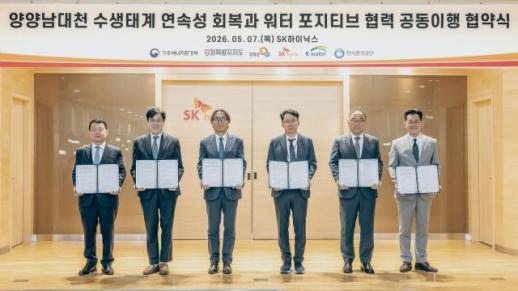 SK hynix pledges 'water positive' future starting with salmon route fix SEOUL, May 08 (AJP) - South Korean chipmaker giant SK hynix inc. has signed a multilateral agreement with the government and local authorities to restore the aquatic ecosystem of Namdaecheon Stream, a move aimed at reviving the country’s largest salmon spawning ground. Under the "Water Positive" initiative, the memory chipmaker will cooperate with the Ministry of Climate, Energy and Environment and the Gangwon provincial government to modernize aging weirs that have long obstructed salmon migration. The strategy focuses on returning more water to natural sources than the company consumes during its industrial operations, reflecting an shift toward corporate water stewardship. The restoration project, scheduled to run from 2026 through 2037, focuses on securing consistent water flow and upgrading deteriorating infrastructure to ensure a clear return path for migratory species. Namdaecheon has faced ecological challenges in recent years as outdated barriers and altered currents prevented salmon from reaching their native spawning sites. Beyond the ecological impact, the partnership is expected to bolster the regional economy by enhancing local tourism and improving the riverside environment for residents. This collaboration marks a shift toward a public-private model where corporate resources are directly integrated into national environmental conservation policies. “This project illustrates how corporate water management can serve as a tool for shared growth with both nature and local communities,” said Lee Byung-ki, Chief Production Officer at SK hynix. “We will continue to pursue sincere activities to protect water resources moving forward.” 2026-05-08 17:15:18
 -
 Government Plans Renewable Energy Roadmap for Agriculture by July The South Korean government is set to restructure the energy framework for agriculture and rural areas to achieve "oil price worry-free agriculture." The plan aims to create a long-term roadmap connecting renewable energy-based energy independence to farm income. On May 8, the Ministry of Agriculture, Food and Rural Affairs announced the launch of a task force (TF) to develop a strategy for the energy transition in agriculture and rural areas during its first meeting at the Government Sejong Center. This task force will comprehensively address rural energy independence, agricultural energy transition, and ways to utilize agricultural and rural resources to contribute to national energy transformation. It plans to establish a renewable energy transition roadmap and detailed implementation tasks by July. Amid rising energy price volatility due to recent instability in the Middle East, the agricultural sector, which is experiencing increased energy demand from the expansion of smart farms and electrification, is facing greater burdens. The government aims to shift agriculture from an energy-consuming industry to a producer and supplier of energy in response to these changing conditions. Specifically, to achieve rural energy independence, the government will promote the expansion of solar energy in farming, the establishment of energy-independent villages, and the distribution of solar power systems for farms. This initiative aims to create a "locally produced, locally consumed" energy structure in rural areas. The government will also work on improving energy efficiency throughout the entire agricultural production process. This includes transitioning old farming machinery to electric and hydrogen-based systems, expanding renewable energy facilities in greenhouses and livestock farms, and introducing self-generation facilities in processing facilities such as distribution centers and slaughterhouses. Additionally, renewable energy production models utilizing agricultural infrastructure like reclaimed land and reservoirs, as well as biomass from livestock waste and agricultural byproducts, will be established. The government expects rural areas to function as energy production hubs, providing additional sources of income. The task force is led by Kim Jong-gu, Deputy Minister of Agriculture, Food and Rural Affairs, and Kim Jeong-wook, Director of Agricultural Industry Innovation Policy, with three divisions focusing on rural energy independence, agricultural energy transition, and agricultural resource utilization, all staffed by senior officials. A private advisory group comprising industry and academic experts will also be involved. Based on the discussions of the task force, the government plans to gradually implement energy transition policies that can be felt in the agricultural and rural sectors, alongside financial projects and institutional improvements. On this day, Deputy Minister Kim stated, "Energy security is food security," adding that the government plans to establish fundamental principles and performance indicators for the energy transition in agriculture and rural areas that align with the national renewable energy transition policy, as well as to refine related systems.* This article has been translated by AI. 2026-05-08 17:13:39
 -
 Government Allocates Record 104,000 Foreign Workers for Agriculture in First Half of 2026 The South Korean government is addressing labor shortages in agriculture by allocating a record 104,000 foreign workers for the first half of 2026 and increasing support for domestic labor. On May 8, Minister of Agriculture, Food and Rural Affairs Song Mi-ryeong visited a seasonal foreign labor site in Imsil, North Jeolla Province, to assess working conditions and announce the agricultural labor supply plan for the busy farming season. This year, the government has allocated a total of 104,000 foreign workers for the agricultural sector, including 94,000 seasonal workers and 10,000 under the employment permit system. This measure aims to alleviate the ongoing labor shortage, which has seen over 60% of agricultural labor demand concentrated during specific periods. The new measures will significantly expand public seasonal labor programs. The National Agricultural Cooperative Federation will directly employ workers and supply them to small farms on a daily basis, increasing the number of operational sites from 91 last year to 142 this year, and expanding the workforce from 3,067 to 5,039. Additionally, the government plans to promote a 'contract-based seasonal labor' system, allowing qualified corporations to utilize seasonal workers for agricultural tasks. To facilitate the swift deployment of foreign workers, a dedicated team will operate at immigration offices, along with a 'mobile fingerprint registration service.' Support for domestic labor will also be enhanced. The subsidy for workers supplied through rural labor brokerage centers will be increased, raising transportation costs from a maximum of 10,000 won to 20,000 won per day, and accommodation costs from 20,000 won to 30,000 won. The government aims to encourage domestic labor influx by providing agricultural job information through private recruitment platforms and expanding assistance programs in collaboration with businesses and public institutions. During the busy farming season, the government will operate a 'special task force for labor support.' From April 9 to June 30, the task force will monitor labor supply and wage trends weekly in 35 major fruit and vegetable producing cities and counties, sharing labor pools from nearby regions as needed. Minister Song Mi-ryeong stated, "We will strengthen communication with the field to prevent labor shortages during the busy farming season and establish a close collaboration system with relevant agencies."* This article has been translated by AI. 2026-05-08 17:10:56
 -
 BIGBANG member Taeyang releases first full-length album in nine years SEOUL, May 08 (AJP) - K-pop legend BIGBANG Taeyang is set to release his fourth full-length album alongside a dedicated exhibition on May 18, the 37-year-old's agency said Friday. The record, titled Quintessence, arrives as the performer's first studio album in approximately nine years. The BIGBANG member's exhibition will be held at the Working With Friend gallery in the Yongsan District near central Seoul. The exhibition is designed to offer an immersive, multi-sensory interpretation of the album's core themes and artistic direction. The event is scheduled to run from May 18 to May 31, with the album's digital release scheduled for 6:00 p.m. (0900 GMT) on the opening day. 2026-05-08 17:08:22
 -
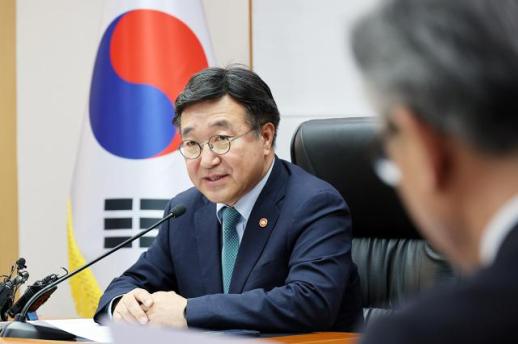 Government Vows to Crack Down on False and Fake News Ahead of June 3 Local Elections The South Korean government is intensifying efforts to combat false and fake news that threatens the integrity of the upcoming local elections on June 3. A task force will be operational weekly until the elections, mobilizing resources from all government ministries. The Ministry of the Interior and Safety announced that a meeting of the "Government-Wide Task Force on False and Fake News" was held on May 8 at 4 p.m. at the Government Seoul Complex, chaired by Minister Yoon Ho-joong. This meeting follows discussions held in February and April among relevant ministers, aimed at strengthening intergovernmental cooperation leading up to the elections. The task force was established in response to the serious issue of persistent and malicious false and fake news circulating on various online platforms and social media, which could significantly hinder citizens' exercise of their voting rights. Attendees at the meeting included deputy ministers from the Office for Government Policy Coordination, the Korea Communications Commission, the Ministry of Education, the Ministry of Justice, and the National Police Agency. They reviewed the progress of each agency's response efforts and discussed effective measures to eradicate false and fake news. The government plans to implement a comprehensive strategy to block false and fake news across all sectors. The Korea Communications Commission is operating a "Public-Private Joint Self-Regulation Task Force" to swiftly remove and block access to false and fake news on online platforms until the elections. They will regularly monitor the situation and encourage proactive measures from platform operators. Since May 4, 30 days before the election, the Ministry of the Interior and Safety has begun a concentrated cleanup of illegal advertising materials. They are promptly addressing banners that violate the "Election Advertising Management Guidelines" and relevant laws, having already removed over 30,000 illegal banners by March. Additionally, special joint inspection teams will be deployed to ensure strict penalties for public officials involved in posting or distributing false and fake news or interfering in the elections, regardless of intent. The prosecution and police have classified false and fake news, along with black propaganda, bribery, and public official election interference, as key election crimes that threaten fair elections, and are conducting thorough investigations. They will respond vigorously to organized and repeated dissemination of false and fake news, applying a zero-tolerance policy for severe penalties. The Ministry of Education and the Ministry of Culture, Sports and Tourism are also focusing on prevention and awareness campaigns. The Ministry of Education is enhancing digital media literacy education to combat the spread of manipulated information on social media, and in collaboration with the National Election Commission, is conducting "New Voter Education" for 400,000 high school students to inform them about election procedures and political laws. The Ministry of Culture is using KTV and government social media to provide accurate policy information and disseminate messages to eradicate false and fake news. The National Election Commission, a constitutional body, has established a "Special Response Team for Deepfakes, False Information, and Defamation" to thoroughly address false and fake news. They maintain a close cooperation system, sharing relevant information with the government in real-time and reporting serious violations to law enforcement agencies. Minister Yoon Ho-joong stated, "False and fake news not only obstructs citizens' free exercise of their voting rights but also undermines trust in elections, fuels social conflict and chaos, and constitutes a serious crime that damages the foundations of democracy. The government will relentlessly pursue and respond to organized and malicious dissemination of false and fake news, ensuring that this local election is conducted more fairly and cleanly than ever before through close cooperation across the government until election day."* This article has been translated by AI. 2026-05-08 17:08:18
 -
 KT fined for failing to properly inform customers over phone pre-orders SEOUL, May 8 (AJP) - Telecom provider KT was fined 640 million won (about US$460,000) for failing to properly inform customers about available benefits and subscription-related terms when accepting pre-orders for Samsung's handsets in January last year, the Korea Media and Communications Commission said on Friday. After a meeting at the government complex in Gwacheon in Gyeonggi Province, the communications watchdog decided to impose the fine along with corrective orders, citing damage to customers' rights and harm to their interests. The punitive measures came more than a year after the commission launched its investigation in February last year. It found that KT had misled customers by telling them benefits were available to all when accepting pre-orders for Samsung's flagship Galaxy S25, although they were limited to the first 1,000 customers. KT blamed the incident on a clerical error by staff. But the commission also found that KT had unilaterally canceled some 7,127 pre-orders placed through certain online platforms for some reason. The commission ordered KT to clearly inform customers of all terms and conditions including pre-order details, and to make the process more transparent. "There were shortcomings in our pre-order process at the time, but all related procedures have since been improved," a KT staffer said. "We will continue to closely monitor for any false or exaggerated ads and promotions to minimize inconvenience for customers using mobile services," the commission's chairman Kim Jong-cheol pledged. 2026-05-08 17:08:14
 -
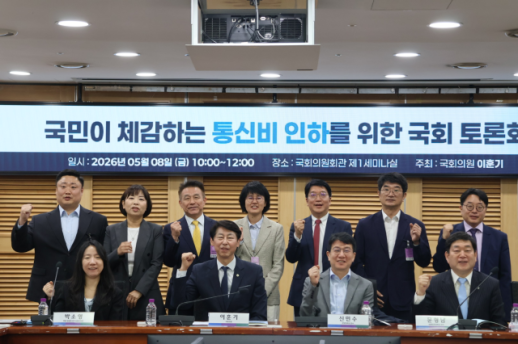 Lee Hoon-ki Calls for Government to Lower Communication Costs for Citizens Lee Hoon-ki, a member of the Democratic Party, held a discussion at the National Assembly on May 8, urging a paradigm shift in government communication cost policies to better reflect citizens' experiences. During the "Discussion on Reducing Communication Costs Felt by Citizens," Lee expressed disappointment with the recent announcement from the Ministry of Science and ICT regarding a 20,000 won 5G plan. He stated, "I had high hopes after seeing the press release, but upon reviewing the actual details, it became clear that the government is merely increasing service offerings to claim a reduction, without providing any substantial benefits for citizens." He emphasized that, similar to how amendments to corporate law have boosted stock prices, a fundamental restructuring of the market is necessary for genuine cost reductions in communication fees. The discussion also highlighted concerns that the government's proposed fee restructuring plan, announced in April, would have minimal impact on actual service quality or household financial relief. Moon Hyung-nam, president of Sookmyung Women's University, pointed out, "According to the government's figures, the average monthly savings per person is 488 won, but when accounting for the decrease in telecom company revenues, the actual savings felt by users is only about 180 won." Cho Soo-hyung, head of the Korea Consumer Protection Center for Telecommunications, noted that excessive penalties for two-year contracts create significant barriers to consumer choice, stating, "We need to go beyond simple fee reductions and implement measures to alleviate the actual cost burden, including reforms to the penalty system." Criticism also arose regarding the government's annual announcements of communication cost reduction policies, which some labeled as mere token gestures. Lim Hyung-do, a special professor of computer engineering at Kyung Hee University, remarked, "It would be better if there were no negotiations between the government and the three major telecom companies regarding fee reductions. Such negotiations lead to delays in policy announcements until the telecom companies feel pressured to propose reductions." The discussion included a structural analysis of why communication costs remain high, citing Japan's Rakuten Mobile, which offers unlimited 5G service for around 30,000 won. Kim Hyup, vice president of the Korea Policy Forum, explained, "Japan has achieved a 30,000 won unlimited plan by lowering infrastructure investment costs through cloud-based virtualization technology. We need competitive policies that fundamentally change the market structure, rather than just fine-tuning existing conditions." However, Song Cheol, head of external relations at the Korea Telecommunications Operators Association (KOTA), countered that comparing Rakuten's pricing to domestic budget phone services is inappropriate. Kim quickly responded, stating, "Dismissing Rakuten's pricing as budget phone rates prevents a fair comparison with domestic telecom companies. Rakuten Mobile is a fourth mobile carrier approved by the Japanese government, and categorizing it as a budget service is misleading."* This article has been translated by AI. 2026-05-08 17:02:05
 -
 Samsung Electronics' Major Union Enters Post-Adjustment Process Following Government Request Samsung Electronics' largest union, the Major Union, has entered a post-adjustment process at the request of the government. This decision comes as the union and management prepare to return to the negotiating table ahead of a planned general strike on May 21.The Major Union of Samsung Electronics announced on the afternoon of May 8 that this decision was made following a meeting with Kim Do-hyung, head of the Gyeonggi Provincial Labor Office, and representatives from management.The union stated, "The Ministry of Labor deeply recognizes the seriousness of this matter and has promised full support for negotiations at the government level, strongly encouraging the post-adjustment process. We have taken the government's proactive stance and repeated requests seriously and have decided to participate in the post-adjustment process after internal review."The negotiations will be conducted under the authority of the Major Union, which has been delegated the rights to negotiate and conclude agreements.The post-adjustment process is set to take place intensively on May 11 and 12, with participation from Chairperson Choi Seung-ho and union members Lee Song-yi and Kim Jae-won.Choi Seung-ho, Chairperson of the Major Union, stated, "If we do not achieve a satisfactory outcome for our members, we will not hesitate to proceed with the general strike. We will ensure that preparations for the strike are thorough and without disruption." 2026-05-08 17:00:20
 -
 AI Revolutionizes Operations in Securities Firms Securities firms are accelerating their use of artificial intelligence (AI) to innovate operations. Some companies are incorporating AI usage into their key performance indicators (KPIs), reflecting a broader organizational shift. Previously limited to experimental use in select departments, AI is now being encouraged at the enterprise level and integrated deeply into daily operations. According to the financial investment industry on May 8, some securities firms have begun identifying departments where AI can be utilized and including AI-driven performance improvement metrics in their KPIs this year. Major firms like Shinhan Investment Corp. and Hana Securities are reportedly adopting policies to reflect AI-related KPIs in departments as overall AI usage increases. Before showcasing AI-driven customer services externally, securities firms are enhancing internal efficiency through AI. They are expanding AI adoption in repetitive and extensive tasks such as report writing, research, and data analysis. While strategies and implementation speeds vary among firms, a common direction is the 'close-to-business application' of AI. KB Securities is advancing its AI initiatives through its newly established AI Digital Headquarters, which was created in 2025. The organization has been segmented to separate data strategy, AI model development, and infrastructure operations, broadening AI applications to complex areas such as investment analysis, legal review, risk management, and customer consultation. The firm is also transitioning from simple automation to a stage of 'agentic AI' that supports decision-making. Korea Investment & Securities has been increasing AI utilization by having a dedicated team assess the applicability of AI solutions across its divisions since the beginning of the year. Notably, it has established an environment where investment information is delivered promptly through AI translations of overseas research materials obtained in collaboration with global financial firms. There are also examples of generative AI platforms linked to internal systems. One securities firm has created an AI work portal within its groupware, offering interactive services that support everything from file uploads to analysis and summarization. Additionally, most securities firms are expanding AI training for employees and collaborating with external AI solution companies to broaden their reach. However, the unique security regulations in the financial sector continue to pose challenges to widespread AI adoption. Principles such as network separation limit the scope of generative AI usage. Although the Financial Services Commission announced a 'Roadmap for Improving Network Separation in the Financial Sector' in August 2024 to suggest regulatory easing, cautious approaches remain prevalent in the field. Despite these challenges, the financial investment industry is focusing on the structural changes that AI adoption may bring. There is a growing atmosphere where not only back-office staff but also front-line personnel in private banking and investment banking are autonomously utilizing AI. It is anticipated that the scope of AI reflected in KPIs will gradually expand in the future. A securities firm representative stated, "AI can process vast amounts of information and handle repetitive tasks much faster and more accurately. This allows us to allocate the time saved to more essential tasks, such as customer consultations and risk management, thereby enhancing overall organizational competitiveness."* This article has been translated by AI. 2026-05-08 16:57:32
 -
 Public Frustration Grows Over Fuel Prices and Telecom Fees Amid Corporate Profits In January 2011, former President Lee Myung-bak sparked a stir in the oil industry when he remarked on the disparity between international oil prices and domestic fuel costs, saying, "Fuel prices are strange." His comments led to government inspections of gas stations and intense media scrutiny of oil company profits, igniting public outrage over rising fuel costs. Fifteen years later, amid soaring international oil prices due to the war in Iran, President Lee Jae-myung convened an emergency cabinet meeting, directing the establishment of a maximum price for gas stations. He expressed strong dissatisfaction, noting, "Prices vary from morning to noon to evening, and some stations have raised prices by nearly 200 won per liter in a single day," pointing to unethical pricing practices by certain gas stations. According to officials from the Ministry of Trade, Industry and Energy, the price inspections that began at gas stations are now extending to oil companies. Due to the surge in oil prices linked to the Iran conflict, the first-quarter operating profits of major refiners, including SK Innovation, S-Oil, GS Caltex, and HD Hyundai Oilbank, are projected to approach 5 trillion won. Some lawmakers are reportedly preparing to pressure these companies to return their profits. When international oil prices rise, the selling price of petroleum products made from already secured crude oil increases, leading to a significant short-term boost in operating profits. Notably, over 80% of the operating profits of domestic refiners come from exports, while the margin that refiners earn from domestic gas station sales is only a few dozen won per liter after taxes. Telecom companies are facing similar scrutiny. The first-quarter results of the three major telecom firms are expected to exceed market expectations. Industry insiders attribute this resilience not to wireless communications but to increased demand for cloud services and data centers, despite subscriber losses due to hacking incidents. The wireless communication sector itself has stagnated due to the government's stringent policies against significant rate hikes. Current telecom companies have found new revenue sources through investments in AI infrastructure rather than extracting profits from consumers. Nevertheless, whenever the economy falters, the government consistently targets telecom companies. The Lee Myung-bak administration promised a 20% reduction in communication fees, while the Park Geun-hye administration called for "half-price telecom fees." The Moon Jae-in administration sought to eliminate basic fees and increase discount rates, and the Yoon Suk-yeol administration has made expanding low-cost 5G plans a priority. None of these administrations have succeeded in achieving substantial rate reductions. Under the current government, the Ministry of Science and ICT is discussing improvements to telecom plans with the three major companies, which are expected to launch 5G plans priced in the 20,000 won range this year. Industry insiders express skepticism, noting that the government continues to seek solutions to economic stimulation through telecom fees, just as previous administrations did. By creating villains in the oil and telecom sectors, the government has used them as scapegoats to address public frustration stemming from economic downturns. It is now time to focus on the real issues at hand. Labor unions in large corporations, which pay salaries exceeding 100 million won, are demanding performance bonuses in the millions of won and have initiated strikes. In contrast, many workers in small and medium-sized enterprises, which make up a significant portion of the labor force, have received notices of wage freezes due to the economic downturn. As large corporations absorb the pressure of rising labor costs by lowering supplier prices, the burden will undoubtedly fall on subcontractors and their employees. Many workers will tighten their budgets, and it will become increasingly common to see neighborhood restaurants changing their signs every few months. As lunch prices soar above 10,000 won, images of workers demanding performance bonuses of 600 million won make headlines. Today, the government continues to target easy scapegoats while proposing economic stimulus measures. The entities generating billions in operating profits are not the oil companies or telecom firms profiting from cloud services, but rather a troubling structure that mocks the entire population while masquerading as the underprivileged.* This article has been translated by AI. 2026-05-08 16:52:17