
Journalist

Lee Byung-jong
-
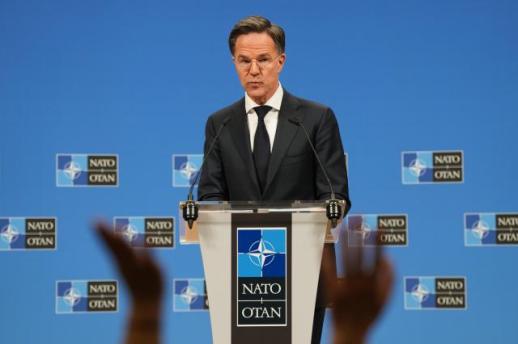 NATO Secretary General Rutte to Pressure European Defense Firms for Investment and Production Boost NATO Secretary General Mark Rutte is expected to pressure major European defense firms to increase investment and production. The Financial Times reported on May 16, citing sources familiar with the matter, that Rutte plans to meet with key European defense groups this week in Brussels. During the meeting, Rutte is expected to urge defense companies to expedite investments and ramp up production, laying the groundwork for significant defense agreements to be announced at the NATO annual summit in Ankara this July. NATO has requested that companies submit information on major investment plans and production expansion possibilities ahead of the meeting. While Rutte regularly engages with executives from major European defense firms, sources noted that gathering representatives from multiple companies in one location is unusual. The Financial Times described the meeting as indicative of NATO's urgency to showcase progress in European defense production ahead of the Ankara summit. The push for increased production in the European defense sector is partly driven by former President Donald Trump's demands for increased defense spending. NATO member countries agreed at last year's summit in The Hague to raise defense spending to 5% of their GDP in response to Trump's requests. NATO officials believe that prominently featuring arms contracts and defense investment expansion at the Ankara summit could demonstrate that the agreement to increase defense spending is yielding tangible results. One official told the Financial Times, "This is aimed at making defense spending increases appear more substantial." Rutte reportedly wants European defense firms to proactively invest rather than wait for large new government orders. However, he is also expected to listen to companies about specific challenges they face in expanding production. Some companies are expected to present plans for expanding facilities and workforce, securing key raw materials, and strengthening supply chains. Discussions are also anticipated on reducing reliance on components from China and Taiwan. The conflict surrounding Iran has further intensified the pressure on Europe to bolster its defense capabilities. According to the Financial Times, the U.S. Department of Defense announced earlier this month plans to withdraw 5,000 troops stationed in Germany amid tensions between Trump and German Chancellor Friedrich Merz. Some officials have indicated that the troop withdrawal plan and the depletion of critical munitions due to the Iran conflict have underscored the need for Europe to rapidly enhance its production capacity and military capabilities. If European NATO allies achieve the goal of spending 5% of their GDP on defense, it is estimated that annual defense spending could increase by a total of $1 trillion (1,500 trillion won) by 2035 compared to 2024. A NATO official stated, "The Secretary General regularly meets with industry and financial institutions across the alliance to encourage increased production, innovation, and investment to meet our capability needs."* This article has been translated by AI. 2026-05-17 14:09:59
 -
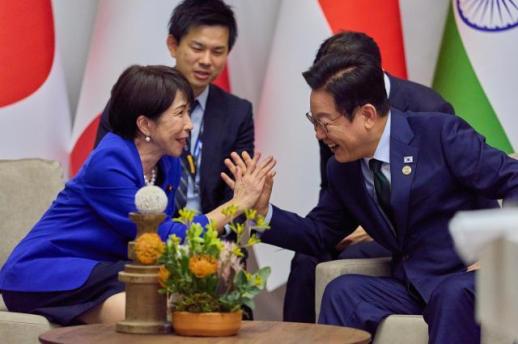 Lee to Hold Summit with Japan's Prime Minister Takaichi on May 19 The Blue House announced on May 17 that Japanese Prime Minister Takaichi Sanae will be welcomed with honors equivalent to a state visit ahead of the upcoming South Korea-Japan summit on May 19. This summit marks the first return visit since President Lee Jae-myung met with Prime Minister Takaichi in Nara Prefecture, Japan, in January, and will take place in Andong, Gyeongsangbuk-do, the president's hometown. Blue House spokesperson Kang Yu-jeong stated, "This visit is significant as it serves as a return gesture for President Lee's visit to Prime Minister Takaichi's hometown in Nara Prefecture in January, and we expect it to further deepen the trust and friendship between the two leaders." This will be the third meeting between the two leaders, following President Lee's visit to Nara in January and a summit held during the Asia-Pacific Economic Cooperation (APEC) meeting in Gyeongju last October. Prime Minister Takaichi is scheduled to arrive at Daegu Airport on the afternoon of May 19, where he will be greeted by Deputy Foreign Minister Kim Jin-ah before heading to a hotel for a series of meetings. President Lee will personally welcome Prime Minister Takaichi at the hotel entrance. A traditional honor guard and military band will escort the prime minister's vehicle, and 12 honor guards will be stationed at the hotel entrance to extend state visit-level honors, according to spokesperson Kang. Following their meeting, the two leaders will hold a joint press conference, followed by a dinner and social event. The dinner will feature fusion Korean dishes inspired by the traditional recipe book "Suwun Japbang," including Andong Jjimdak, a dish that originated as a chicken dish served to esteemed guests, along with grilled Andong Hanwoo beef ribs, Andong rice, and Sinseollo. This menu reflects the Andong spirit of hospitality, which emphasizes the importance of welcoming friends with sincerity, Kang explained. To symbolize the friendship and unity between the two nations, the dinner will include traditional Andong liquor, Tesa-ju and Andong Soju, alongside sake from Nara Prefecture, Prime Minister Takaichi's hometown. For dessert, a plate will feature a type of traditional Korean sweet called Jeonyak and the Japanese dessert Mochi. Kang added, "The dinner will showcase the elegance of Andong's traditions blended with modern sensibilities, in collaboration with Kim Do-eun of 'Rakgojae Suwun Japbang Heritage Dining' and the Westin Chosun. A performance by Korean-Japanese pianist Yang Bang-ean will follow the dinner." Afterward, the two leaders will travel to Hahoe Village, where a special traditional cultural event, the 'Seonyu Jullbul Nori,' will be held for Prime Minister Takaichi. This event, which takes place annually in the seventh month of the lunar calendar, involves scholars from Hahoe Village enjoying poetry and festivities along the Nakdong River. They will also witness the 'Nakhwa Nori,' where bundles of burning pine branches are dropped from the cliffs of Buyongdae. Additionally, a creative pansori performance titled 'Like Scattering Sparks,' inspired by the Seonyu Jullbul Nori and featuring verses from a classical Chinese poem, will be presented. 2026-05-17 13:58:07
 -
 Major Countries and Developing Nations Must Unite to Address Global Imbalances To address global imbalances, there is a growing call to enhance the roles of international organizations responsible for analysis and monitoring. The South Korean government proposed at the G20 Deputy Finance Ministers' meeting that both major and developing countries must work together to mitigate negative spillover effects. According to the Ministry of Economy and Finance, the third G20 Deputy Finance Ministers and Central Bank Deputy Governors meeting took place from May 14 to 15 in Florida, USA. Moon Ji-sung, the ministry's Director of International Economic Affairs, served as the chief representative, presenting South Korea's policies and positions on key issues. The G20 Deputy Finance Ministers' meeting is an event where finance officials from the G20 member countries gather to discuss global financial agendas. To tackle the deepening global imbalances, participating countries agreed on the need for orderly policy formulation. They reaffirmed the importance of organizations such as the International Monetary Fund (IMF) and the Organisation for Economic Co-operation and Development (OECD) in enhancing analysis and monitoring of imbalances. Currently, the Ministry of Economy and Finance co-chairs the G20 Global Imbalances Study Group with Australia. Director Moon emphasized that addressing the imbalance issue requires simultaneous efforts from surplus and deficit countries, including major economies like the United States, China, and the European Union, as well as developing nations, to minimize negative spillover effects. Discussions also covered the economic impacts of the Middle East conflict, national policy responses, and cooperation among vulnerable countries. The ministry highlighted South Korea's emergency economic response and suggested that practical solutions be developed at the G20 level to stabilize supply chains and enhance economic resilience. In the financial sector session, the ministry introduced policies aimed at improving financial regulations for productive finance and monitoring cross-border transactions of virtual assets through amendments to foreign exchange laws. Member countries showed interest in South Korea's tailored economic and financial education programs for different life stages. To promote economic growth, member countries shared examples of policies they are implementing, including regulatory reforms and the creation of innovation ecosystems. There was a consensus on South Korea's government-wide efforts for regulatory innovation and the rationalization of regulations in emerging industries such as artificial intelligence (AI) and autonomous driving.* This article has been translated by AI. 2026-05-17 13:52:08
 -
 ASIA DEEP INSIGHT: Can Korean won stable coin actually become real? Professor Lee Jong-seop’s Vision of K-Content Convergence and the Future of Korean Digital Finance The global economy of the 21st century is now fighting two currency wars simultaneously. One is the visible battle of interest rates and exchange rates. The other is the quieter yet potentially more consequential struggle for digital monetary supremacy unfolding across blockchain networks. In the past, nations that controlled oil shaped the world order. Today, the countries that dominate digital payment systems and stablecoin infrastructure may well define the future architecture of global finance. A recent policy symposium hosted in Seoul by the Global Finance Society symbolized precisely this transition. Under the theme, “The Expansion of Token Securities (STO) and Stablecoins and the Transformation of the Financial Economy,” the forum was far more than a technical discussion about virtual assets. In many respects, it resembled a strategic national debate over whether South Korea can preserve its relevance in the next era of global finance. Among the most striking remarks came from Professor Lee Jong-seop, who argued bluntly that “the time for debating whether to adopt stablecoins has already passed.” The world, he warned, is already moving ahead. Nations that hesitate risk becoming passive consumers within systems designed by others. Today, dollar-based stablecoins have surpassed a market capitalization of roughly $300 billion. While still modest compared with the scale of global foreign-exchange or U.S. Treasury markets, their growth trajectory has dramatically outpaced traditional financial infrastructure. The significance, however, lies not merely in size. Dollar-denominated stablecoins are rapidly evolving into core infrastructure for international remittances, online commerce, and digital asset transactions. The United States does not view this simply as a private-sector innovation. Increasingly, Washington appears to regard dollar stablecoins as a strategic instrument for constructing a new digital-era Bretton Woods system. Just as the postwar world once revolved around the petrodollar system tied to oil settlements, a growing number of analysts believe the United States is now attempting to establish a blockchain-based digital dollar order. The tokenization of U.S. Treasury securities is particularly symbolic. If Treasury bonds circulate seamlessly across blockchain networks and global investors gain frictionless access to U.S. assets through dollar stablecoins, then the dollar’s dominance in digital finance could become even more deeply entrenched. In that sense, stablecoins are not merely financial products; they are technological extensions of American monetary power. For non-reserve currency nations such as South Korea, this presents a profound challenge. If global digital commerce becomes increasingly centered around dollar-based stablecoins, the international role of the Korean won could diminish further. Korean companies and consumers participating in global digital markets may ultimately find themselves operating inside an overwhelmingly dollar-centric ecosystem. It is precisely for this reason that Professor Lee has emphasized the need for a distinctly Korean model. His core argument is straightforward: South Korea should build an “expansionary structure” in which central bank digital currency (CBDC) frameworks and bank-issued deposit tokens provide the foundation of trust, while private-sector firms develop diverse won-based stablecoin applications on top of that system. The appeal of such a model lies in its realism. South Korea is neither a dollar hegemon like the United States nor a tightly controlled financial state like China. Yet it possesses world-class digital infrastructure, one of the most advanced mobile payment cultures on earth, and perhaps most importantly, a globally influential content industry. In other words, Korea’s true strategic advantage may not lie in reserve currency status, but in the construction of a powerful digital ecosystem. This is where K-content becomes critically important. K-pop, BTS, webtoons, gaming, streaming dramas, and global online fandoms have already created a transnational consumer ecosystem that transcends borders. Millions of young people around the world now engage with Korean culture as part of their daily digital lives. If that cultural consumption can be linked directly to a won-based digital payment infrastructure, the implications could be transformative. Imagine global fandoms purchasing music, concert tickets, webtoon subscriptions, or gaming items through won-denominated stablecoins. Such a system would move beyond traditional content exports and begin constructing an entirely new digital financial ecosystem around Korean cultural influence. Over time, this could increase international demand for the Korean won itself, while simultaneously expanding demand for won-based deposits and government securities that serve as collateral for stablecoin issuance. Such a structure could also inject new vitality into Korean capital markets. Stablecoins fundamentally require reliable collateral assets. To maintain trust and liquidity, they must be backed by safe and highly liquid instruments. That naturally creates increased demand for bank deposits, government bonds, and high-quality short-term securities. The result could extend far beyond the growth of a virtual-asset industry. It could deepen liquidity throughout Korean financial markets, accelerate the internationalization of Korea’s government bond market, and stimulate broader development of tokenized securities (STO). The Seoul symposium therefore carried significance far beyond academia. Only a few years ago, South Korean regulators largely viewed digital assets through the narrow lens of speculation. Today, however, stablecoins are increasingly recognized worldwide as foundational financial infrastructure for the next phase of the digital economy. Major financial hubs — including the United States, the European Union, Singapore, Hong Kong, and the UAE — are moving toward strategies that combine regulation with active institutional support. Rather than attempting to suppress digital assets, they are seeking to absorb them into formal financial systems. The United States aims to reinforce dollar supremacy through stablecoins. Europe is developing euro-based digital payment ecosystems. Singapore is positioning itself as a global digital asset hub, while Hong Kong seeks to become the gateway connecting mainland China to international digital finance. If South Korea falls behind, the consequences could extend beyond losing competitiveness in blockchain technology. The country risks being marginalized within the future architecture of global payments and capital flows. Perhaps the symposium’s most important contribution was its reframing of stablecoins not as a cryptocurrency issue, but as a matter of financial order itself. Stablecoins are no longer merely speculative tokens. They now intersect with international finance, payment systems, sovereign debt markets, digital trade, and platform economies. At present, stablecoins can broadly be divided into four categories. The first is fiat-backed stablecoins, supported by reserves such as U.S. dollars, government bonds, or bank deposits. These remain the dominant and most stable form. The second is crypto-collateralized stablecoins, backed by assets such as Bitcoin or Ethereum. While they offer greater decentralization, they also suffer from higher volatility. The third is algorithmic stablecoins, which attempt to maintain value through automated supply adjustments. However, several high-profile collapses have severely damaged trust in this model. The fourth is CBDC-linked systems, which integrate private payment networks with the credibility of central bank-backed digital currencies. Globally, most major economies are concentrating on the first and fourth models. The United States is integrating private stablecoins with Treasury markets, while China continues to advance a state-controlled model centered around the digital yuan. For South Korea, the key lesson is not technology alone, but ecosystem strategy. Korea lacks America’s reserve-currency dominance and China’s centralized state power. What it possesses instead is an unparalleled combination of cultural influence and digital platform sophistication. Accordingly, Korea must pursue a distinctive model that fuses finance, culture, and digital platforms into a unified ecosystem. The objective should not merely be to create another stablecoin, but to connect K-content consumption with digital payments and, ultimately, with broader capital-market innovation through tokenized securities. In that sense, the future of a Korean won stablecoin may ultimately depend on K-content itself. South Korea already commands extraordinary cultural influence worldwide. K-pop, dramas, gaming, and webtoons have become central pillars of global digital consumer culture. If these industries are paired with won-based digital financial infrastructure, Korea could evolve beyond being merely a cultural exporter into a fully integrated digital culture-and-finance platform nation. For this transformation to succeed, however, policymakers must play a careful and strategic role. First, regulatory clarity is essential. Uncertainty remains the greatest risk. Clear frameworks governing issuance standards, collateral requirements, and consumer protections must be established quickly. Second, collaboration ecosystems linking banks, fintech firms, and content platforms must be cultivated. Finance and culture cannot operate in isolation if meaningful synergies are to emerge. Third, capital-market innovation tied to tokenized securities must accelerate. If government bonds, corporate debt, and even intellectual property rights become tokenized, the structure of Korean capital markets could fundamentally change. Fourth, international cooperation will be increasingly important, particularly in expanding won-based digital payment systems throughout Asia. Ultimately, stablecoins are not merely about cryptocurrency. They represent a contest over which nations will control the platforms underpinning the next digital civilization. South Korea now stands at a critical crossroads. If Korea succeeds in linking K-content with digital finance, the Korean won may evolve from a relatively small non-reserve currency into an important connective currency within Asia’s emerging digital economy. 2026-05-17 13:49:17
 -
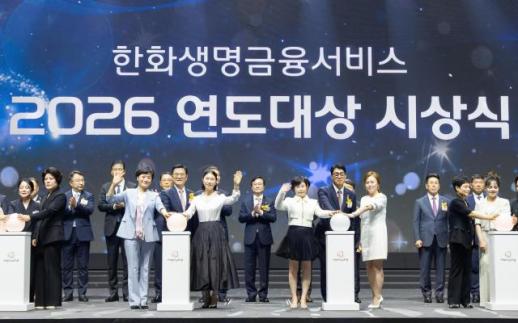 Hanwha Life Financial Services Holds 2026 Annual Awards Ceremony, Honors 15 Champions Hanwha Life Financial Services announced on May 17 that it held its 2026 Annual Awards Ceremony to recognize outstanding sales performance by agents and sales managers from the previous year.The Annual Awards Ceremony is a key event celebrating agents and sales managers who achieved exceptional sales results over the past year. The ceremony was attended by approximately 1,600 people, including 15 champions, agents, sales managers, and employees.Kim Seung-yeon, chairman of Hanwha Group, conveyed his congratulations, stating, "The financial sector of Hanwha Group continues to take bold steps to lead the global financial market through AI-based industry transformation. You, at the center of this challenge, are the true heroes and pride of Hanwha Life."Since implementing a separation of manufacturing and sales in 2021, Hanwha Life Financial Services has maintained a growth trajectory. Last year, its revenue reached 2.4397 trillion won, a 7.4-fold increase compared to its first year of operation. The number of agents, including those from its subsidiary general agency (GA), is approximately 35,000, with expectations to surpass 40,000 within the year. 2026-05-17 13:46:11
 -
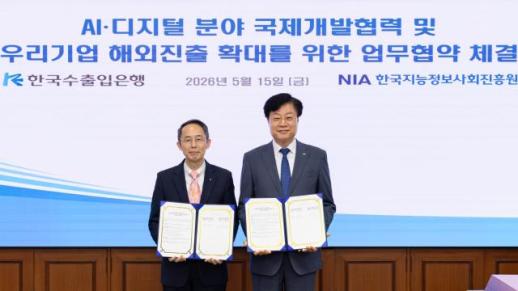 Export-Import Bank of Korea Expands AI-Based Development Cooperation, Selects Sri Lanka as First Project Site The Export-Import Bank of Korea is set to expand its AI-based international development cooperation initiatives targeting developing countries. On May 17, the bank announced that it has signed a mutual cooperation agreement with the National Information Society Agency (NIA) to enhance the effectiveness of official development assistance (ODA) projects and support the overseas expansion of domestic AI companies. Through this agreement, the Export-Import Bank plans to collaborate with the NIA to establish a platform for discovering and linking international development cooperation projects in the fields of AI, digital technology, and information technology (IT) aimed at developing countries. The two organizations have selected Sri Lanka as the first pilot project site. The bank will construct an information and communication technology (ICT) training center to enhance secondary education capabilities in Sri Lanka through the Economic Development Cooperation Fund (EDCF). The NIA plans to establish a research institute within the training center to strengthen AI education capabilities, maximizing the effectiveness of development cooperation projects in the recipient country. Hwang Gi-yeon, president of the Export-Import Bank of Korea, stated, "We will continue to discover AI projects that fit the environments of our partner countries and create a new model of K-ODA based on artificial intelligence, serving as a catalyst for the global expansion of the domestic AI industry." 2026-05-17 13:45:22
 -
 KB Financial Completes Technology Validation for Won-Based Stablecoin Payments and Remittances KB Financial Group has successfully completed a technology validation for payments and remittances based on a won stablecoin. By integrating QR payments and overseas remittances into a single blockchain flow, the company is accelerating the establishment of financial infrastructure in preparation for the institutionalization of digital assets. On May 17, KB Financial announced that it has successfully concluded a proof of concept (PoC) in collaboration with electronic payment firm KG Inicis, global Layer 1 blockchain platform Kaia, and digital asset solution provider Open Asset. This validation encompasses all stages of won stablecoin payments, settlements, and deposits. The validation represents a comprehensive demonstration that connects the entire financial service process, from the issuance of the won stablecoin to offline payments, merchant settlements, and overseas remittances. It maintains the existing methods of customer financial service usage while transitioning the internal settlement structure to a blockchain-based system. KB Financial confirmed the practical applicability of financial services through the implementation of a real-world payment model for digital assets. The real-world payment model was demonstrated through offline kiosk payments at the coffee chain Hollys. Consumers can make payments via QR codes without needing to install a separate digital wallet, with blockchain smart contracts automatically executed during the settlement phase. In the overseas remittance validation, the won stablecoin was converted into a dollar stablecoin using Kaia's on-chain liquidity, and the process was completed by transferring it to a local partner in Vietnam, ultimately reaching a real bank account. Unlike the traditional SWIFT method, which can take hours to days, the entire process was completed in under three minutes, with fees reduced by approximately 87% compared to existing methods. Based on this validation, KB Financial plans to enhance its operational capabilities to launch actual services promptly in line with the timing of relevant legislation and institutionalization of digital assets.* This article has been translated by AI. 2026-05-17 13:42:00
 -
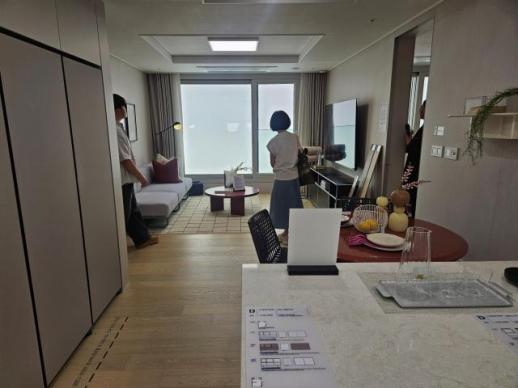 Acro River Sky in Noryangjin Offers Spacious Living Options "The 59㎡A type feels particularly spacious. The high ceiling and the view from the kitchen to the living room create a sense of openness," said a 43-year-old visitor, identified as A, after touring the Acro River Sky model home near Maebong Station in Gangnam on the morning of May 15. Residing in Gangdong District, A noted, "The prices in this area are high, so I am contemplating my options for purchasing, but I do think I will need to upgrade eventually. I am especially interested in Noryangjin, so I came here after visiting the Lacrache Zidefine that was sold last month." Design features aimed at enhancing openness captured the attention of visitors. Middle-aged women expressed admiration for the open pantry connecting the living room and kitchen in the 84㎡A type. This layout maintains a 4-bay structure while incorporating two open windows in the living room to enhance the sense of space. The living room width is 4.5 meters, consistent with the same width in the 36㎡ type designed for single-person households. The 44㎡ and 51㎡ types also include pantries, with the 51㎡A featuring individual balconies for each of its two bedrooms. DL E&C has incorporated its latest residential technology, including a patented D-Silent Floor designed to reduce noise between floors with cushioning materials and finishing mortar. The kitchen is equipped with a D-Silent hood to minimize noise. A remarked, "The master bedroom can accommodate a hotel-style bed frame, giving it a luxurious feel. It seems they have made good use of the elevation both inside and outside the complex." A sky lounge will be available for all residents on the top floor of Building 105. To create a family-friendly living environment, the basement of Building 104 will feature a kids' lounge (community care center), a kids' station for safe drop-offs and pick-ups, and private study rooms styled like individual reading rooms. The basement of Building 102 will be developed into high-end community facilities known as 'Club Acro,' which will include a fitness center, a screen golf lounge with individual spaces for all stations, a sauna, and a sports court. Notably, the indoor gym will be designed as a duplex, allowing for various activities regardless of the weather. DL E&C is overseeing the construction of Acro River Sky, part of the Noryangjin 8 Redevelopment Project, which will consist of four basement levels and 29 above-ground floors across ten buildings, totaling 987 units. Of these, 285 units will be available for general sale. A variety of unit sizes will be offered: 36㎡ (43 units), 44㎡ (9 units), 51㎡ (39 units), 59㎡ (16 units), 84㎡A (73 units), 84㎡B (59 units), 84㎡C (37 units), 84㎡T1 (3 units), 84㎡T2 (3 units), and 140㎡P (3 units). The sale prices for the 84㎡ units are set between 249.92 million and 279.58 million won, with the price per 3.3㎡ (pyeong) at approximately 77.33 million won. This is over 200 million won higher than the recently launched Lacrache Zidefine in Noryangjin New Town, which was priced between 228.73 million and 258.51 million won. The application schedule begins with special supply on May 26, followed by first priority for local residents on May 27, first priority for other areas on May 28, and second priority applications on May 29. The announcement of winners will be on June 5, with contracts taking place from June 20 to 24. To qualify for general supply, applicants must have resided in Seoul for at least two years or be at least 19 years old and reside in the metropolitan area (Seoul, Gyeonggi, Incheon). Additionally, applicants must have held a subscription account for at least 24 months and meet the deposit requirements for their area and unit size to be eligible for first priority. A 10-year restriction on re-applications and a 3-year resale restriction will apply, with no residency requirement.* This article has been translated by AI. 2026-05-17 13:19:15
 -
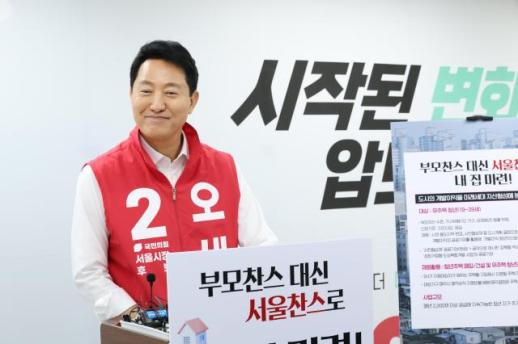 Oh Se-hoon Proposes 'Seoul Chance' Housing Plan for Young People Oh Se-hoon, the People Power Party candidate for Seoul mayor, unveiled a housing plan on May 17 aimed at assisting young people without homes. At his campaign office in Gwancheol-dong, Seoul, Oh introduced the 'Seoul Home' initiative, which allows young individuals to purchase a home by paying just 20% of the price of a property valued at 1.2 billion won or less, the current median price for homes in Seoul. Under this plan, the Seoul Housing and Communities Corporation (SH) will buy the selected property and provide it to the applicants. Young buyers will only need to cover 20% of the home price, while SH will bear the remaining 80%. Although SH will hold 80% of the ownership, residents will have full control over all decisions regarding the property. When they sell the home, they will receive a return based on the market value proportional to their ownership stake. However, as this policy is intended for actual residents, subletting is not permitted. Approximately 300,000 households of young people without homes are eligible for this program, which aims to supply 2,000 units annually, totaling 8,000 units during Oh's term. Oh's campaign team explained that this pledge completes the 'Seoul Chance' housing policy, which includes previously announced initiatives such as 'Miri Home,' 'Baro Home,' 'Sasak Studio,' and 'Youth Safe Housing.' He stated, "We will provide a 'Seoul Chance' for young people who lack financial resources to take the first step toward homeownership instead of relying on parental support." Funding for this initiative will come from public contributions generated during urban planning processes. The core of this funding model is the 'pre-negotiation system,' which allows the government to recapture a portion of the profits from private developers who enhance the viability of large-scale projects through zoning changes. This system was first introduced by the Seoul city government in 2009 under Oh's first term and has accumulated over 10 trillion won in public contributions to date. Oh emphasized that since SH will own 80% of the housing shares, the related funds will continue to grow, creating a virtuous cycle that can assist other young people in need. In a separate matter, Oh addressed the issue of missing rebar in the GTX-A line at Samsung Station, stating, "I learned about this yesterday, and upon investigation, it was purely the fault of Hyundai Engineering & Construction." He denied allegations of a cover-up by the Democratic Party candidate Jeong Won-o. He added, "Hyundai Engineering has discussed corrective measures with experts, which will actually strengthen the structure. It seems that the Jeong campaign is feeling the pressure, as they are politicizing a simple mistake made by the construction company." 2026-05-17 12:45:56
 -
 Candidates Confirmed for Busan North Gap By-Election Amid Speculation on Conservative Unity Following the confirmation of candidate numbers for the Busan North Gap by-election, political circles are closely watching the potential for a unification of conservative candidates. However, as of the first unification deadline on the 17th, a consolidation among conservative candidates remains unlikely. According to the Election Commission on the 17th, the candidates for the June 3 by-election in Busan North Gap are Ha Jung-woo of the Democratic Party (number 1), Park Min-sik of the People Power Party (number 2), Kim Sung-keun (independent, number 5), and Han Dong-hoon (independent, number 6). Kim and Han received their numbers through a lottery. With the candidate numbers now confirmed, attention is also turning to the possibility of a unified opposition. In the current three-way race, there are concerns that if conservative voters split their votes between Park and Han, Ha could win by default. A recent poll conducted by Korea Gallup on May 12-13, which surveyed 508 voters in Busan North Gap, showed support rates of 39% for Ha, 21% for Park, and 29% for Han. The poll was conducted via random telephone interviews using virtual numbers, with a margin of error of ±4.3 percentage points at a 95% confidence level (for more details, refer to the Central Election Polling Review Committee's website). Meanwhile, political analysts believe that any unification must occur before the printing of ballots begins on the 18th to maximize its impact. However, even if the first deadline is missed, there remains a possibility for dramatic unification until the 28th, as candidates can withdraw and have 'withdrawn' marked on early voting ballots.* This article has been translated by AI. 2026-05-17 12:27:47