
Journalist

Lee Byung-jong
-
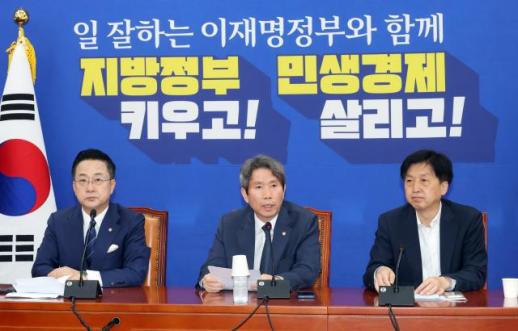 Democratic Party Condemns Negative Campaigning Against Seoul Mayor Candidate The Democratic Party on May 17 condemned negative campaigning directed at Seoul mayoral candidate Jung Won-o, urging an immediate halt to what they described as "malicious smear tactics." The party specifically referenced the controversy surrounding the missing rebar in the GTX-A line, promising a thorough investigation at the national assembly level. Lee In-young, the head of Jung's campaign, spoke with reporters at the National Assembly, stating, "We strongly condemn the smear tactics and malicious stigmatization against candidate Jung. No matter how urgent the election may be, this behavior is unacceptable. It is more disgraceful and vile than the 'gangster frame' that was placed on President Lee Jae-myung." Lee emphasized that such tactics undermine the citizens' choices and should be firmly rejected and eradicated from the political landscape. He warned, "We will hold accountable all those involved in smear politics and demand an immediate end to the People Power Party's despicable fabrications." He also addressed the recent construction errors, including the missing rebar at the Samsung Station section of the GTX-A line, indicating that a national assembly investigation would be initiated. "We demand an answer from candidate Oh regarding whether he was aware of these issues," Lee said, adding that he would work with members of the National Assembly's Land, Infrastructure and Transport Committee to uncover the truth and implement measures to prevent future occurrences. He warned that if these issues occurred under Oh's negligence or complicity, it would be a serious matter. Lee criticized Oh's administration, stating, "With such a disregard for safety, the future of Seoul is nowhere to be found. If the reality hidden behind the façade of communication is revealed, it would be shocking." He concluded by asserting that Jung would establish citizen sovereignty and transform Seoul into a city where citizens are the main actors, stating, "Candidate Oh has welcomed the night of insurrection and advocated for the release of Yoon Seok-yeol. He deserves to be judged alongside insurrectionist forces."* This article has been translated by AI. 2026-05-17 14:54:36
 -
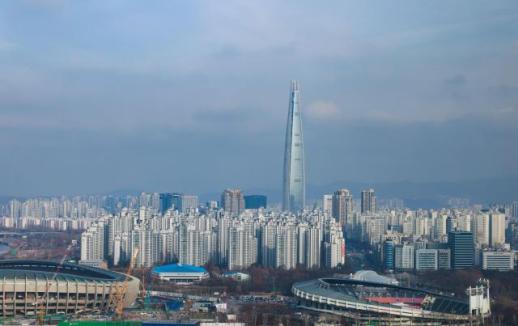 Seoul's Retail Landscape Transformed by Reconstruction Projects Reconstruction and redevelopment projects are reshaping not only residential areas but also the consumption landscape in cities. The influx of residents into large complexes and improvements in infrastructure are attracting more people to surrounding commercial areas, while the demand for new housing is expanding everyday consumer spending, highlighting new growth factors for offline retail.On May 17, an analysis of statistics from Seoul's commercial area analysis service revealed a significant increase in the 'floating population' around major urban redevelopment sites in the past five years. The floating population refers to individuals who reside or spend time around streets and buildings, serving as a key indicator for commercial area analysis.The most notable increase was observed in Dunchon-dong, Gangdong-gu. The floating population in Dunchon-dong rose from approximately 5.44 million in the fourth quarter of 2020 to about 7.92 million in the fourth quarter of 2025, marking a 45.5% increase. During the same period, estimated sales in the area grew from around 85.2 billion won to approximately 101 billion won, an increase of 18.6%.Dunchon-dong is set to see the completion of the Olympic Park Foreon, a large-scale complex with 12,032 units, starting in late 2024. The influx of residents, along with increased demand for moving and living services, new commercial facility users, and consumer spending from the surrounding residential areas, has contributed to the growth of the local market. However, the sales growth rate remains lower than the increase in the floating population, indicating that it may take more time for commercial facilities to establish themselves and for consumer spending to solidify.In Imun-dong, Dongdaemun-gu, the floating population increased from about 4.90 million to 6.84 million, a rise of 39.4%. Estimated sales in the area grew from approximately 112.1 billion won to about 142.1 billion won, a 26.8% increase. Imun-dong is experiencing a transformation as new residents from the Raemian La Grande, a redevelopment project in the Imun 1 redevelopment promotion zone, began moving in January 2025, adding a new consumer base to the existing mixed-use commercial area.Conversely, in Jamwon-dong and Gil-dong, sales growth outpaced population increases. In Jamwon-dong, Seocho-gu, the floating population grew by only 9.9%, from 6.48 million to 7.13 million, while estimated sales surged from about 245.3 billion won to approximately 329.4 billion won, a 34.3% increase. This growth is attributed to the influx of residents from the Maple Xi, a redevelopment project in the Shinbanpo 4 district, combined with increased demand for high-end housing along the Han River.Gil-dong in Gangdong-gu saw a floating population increase of just 8.0%, but estimated sales rose from about 318.5 billion won to approximately 425.6 billion won, a 33.6% increase. Gil-dong is interpreted as an area absorbing demand from the large-scale developments in Dunchon-dong and new housing in the Gangdong area rather than being a direct focus of major redevelopment projects.Overall, the impact of redevelopment projects on commercial areas has not been uniform. In areas like Dunchon-dong and Imun-dong, large-scale developments have initially attracted more residents, while in Jamwon-dong and Gil-dong, sales have responded more rapidly despite smaller population increases.Industry experts suggest that redevelopment projects are not merely about increasing housing supply but are fundamentally changing the structure of commercial areas. In the past, concerns about vacancies and commercial stagnation were prevalent during the early stages of reconstruction. However, recent trends show that after large-scale developments, consumer populations are recovering, leading to a restructuring of commercial areas focused on franchises, essential services, healthcare, educational institutions, and large retail facilities.Nonetheless, there are concerns that rapid development without buffer zones could lead to stagnation in existing, aging commercial areas. The redevelopment project in the Hannam 3 district in Yongsan is a prime example. This large-scale redevelopment site began demolition in February 2025 and is expected to create a complex with 5,988 units. As demolition and relocation progress, local merchants report that commercial facilities and shops within the area are already closing at a rapid pace.While the commercial area around Itaewon Station, which has recently attracted a lot of foot traffic, has been relatively less affected, the existing commercial zones deeper within the district are experiencing significant gaps. Even if new commercial areas are established post-redevelopment, it remains uncertain whether existing merchants can cope with rising rents and the changing consumer landscape to re-enter the market.A commercial leasing representative in Jangwi-dong, Seongbuk-gu, noted, "During construction, there is often a temporary downturn, and after residents move in, the structure of the floating population frequently changes. There are also many cases where the commercial structure and shops themselves undergo significant changes. Especially in the case of large complexes with around 10,000 units, a new consumption zone akin to a new town is formed, leading to disparities in commercial growth depending on local characteristics."* This article has been translated by AI. 2026-05-17 14:42:00
 -
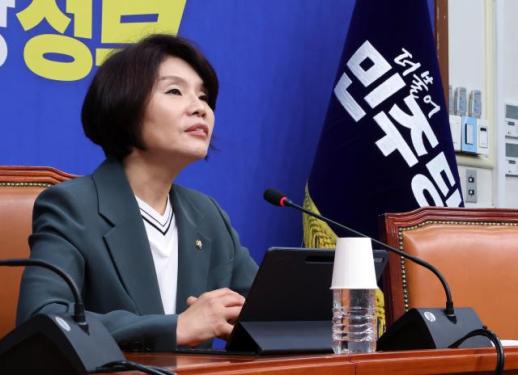 Democratic Party Unveils Youth Policies Focused on Pension and Housing The Democratic Party announced its youth policies on May 17, coinciding with the Day of Maturity, which include strengthening pension guarantees and expanding housing supply near workplaces. The party pledged to enhance the National Pension system to ensure a secure retirement for young people and improve various housing environments, including safe housing for single-person households and women. During the announcement at the National Assembly, Han Jeong-ae, chair of the party's policy committee, stated, "On this Day of Maturity, we are unveiling the Democratic Party's youth pledges for the June 3 local elections. Our goals are to support asset formation, ensure housing stability, reduce living costs, expand leisure activities, and strengthen safety nets for young people." Han elaborated, "To support asset formation, we have prepared three initiatives: enhancing pension guarantees for youth, expanding entrepreneurial opportunities for those looking to start businesses in new industries, and strengthening support for asset formation. For housing stability, we will increase the supply of housing near workplaces that young people want to live in and alleviate the burden of housing costs, including rent, by expanding and supporting shared housing that meets their needs." She also mentioned plans to ease job-seeking costs tailored to local youth, reduce transportation expenses using the 'Everyone's Card,' and expand the availability of affordable breakfast options for college students and young people at 1,000 won. Additionally, Han highlighted key pledges, including strengthening support for youth transitioning from protective facilities to independent living, reforming laws to prevent rental fraud and enhance penalties for offenders, and improving debt adjustment support systems. "Regarding the National Pension, we will support the first insurance premium when individuals turn 18 and include military service periods to ensure robust retirement security for youth," she emphasized. "We will also expand housing supply through various means, including tailored housing for single-person households and safe housing for women." Furthermore, she stated, "We will mandate public institutions to provide interview allowances and cover physical examination costs. The cultural voucher system will be expanded to allow young people to enjoy diverse cultural activities, and we will ensure uniform support from the central government for youth preparing for independence to achieve sustainable self-reliance."* This article has been translated by AI. 2026-05-17 14:33:53
 -
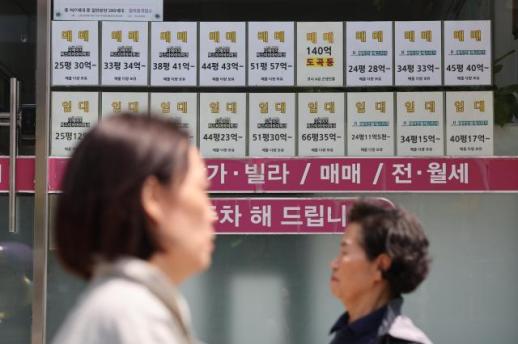 Transactions in Nowon and Dobong Surpass Gangnam as 80% of Seoul Deals Are Below 1.5 Billion Won In the Seoul apartment market, transactions for properties priced below 1.5 billion won now account for over 80% of sales, with rapid increases in transactions in outer districts such as Nowon, Dobong, and Gangbuk. This shift is attributed to the tightening of loan regulations and the designation of the entire city as a regulated area following the government's October 15 measures last year, which lowered the entry barrier for mid-priced apartments. Additionally, the end of the capital gains tax exemption for multiple homeowners has led to an increase in listings outside of Gangnam, further boosting transactions in these areas. According to the Ministry of Land, Infrastructure and Transport's real transaction disclosure system, from February to May 16 of this year, 81.6% of reported apartment sales in Seoul were for properties priced below 1.5 billion won. This marks a 3 percentage point increase from the previous three months, where the figure stood at 78.2% from November to January. The increase in demand for mid-priced apartments, which can secure loans of up to 600 million won, is seen as a response to the significant reduction in actual borrowing capacity for high-priced homes following the October 15 measures. Furthermore, the announcement by President Lee Jae-myung on January 23 regarding the end of the capital gains tax exemption for multiple homeowners has also influenced the market. Following this announcement, listings on the real estate platform Asil surged from 56,219 at the end of January to 80,080 by March 21, a jump of approximately 42.4%. It appears that multiple homeowners are increasingly selling their mid-priced properties outside of Gangnam, where the burden of disposal is relatively lower, contributing to the rise in transactions in these outer districts. In terms of price brackets, the proportion of transactions below 600 million won increased from 20.7% between November and January to 23.6% from February to May. Similarly, the share of transactions between 600 million and 900 million won rose from 26.3% to 28.7% during the same period. Conversely, the share of transactions priced between 900 million and 1.5 billion won decreased from 31.2% to 29.2%. The proportion of transactions between 1.5 billion and 2.5 billion won also fell from 15.1% to 13.2%, while those exceeding 2.5 billion won dropped from 6.0% to 4.7%. As the share of mid-priced apartment transactions increases, the average transaction price for apartments in Seoul has also declined. From February to May, the average transaction price was 1.09846 billion won, down approximately 80 million won from the previous three-month average of 1.18834 billion won. This suggests that while the market is not necessarily reviving as a whole, the focus of transactions is shifting toward outer districts and mid-priced properties. The increase in transactions in outer districts, particularly Nowon, Dobong, and Gangbuk, is notable. According to the real estate platform Asil, from February to May 17, the top-selling apartment complex in Seoul was 'SK Bukhan Mountain City' in Mia-dong, Gangbuk District, with a total of 115 transactions. Following closely was 'Hanshin-Hanjin Apartments' in Donam-dong, Seongbuk District, with 90 transactions, and 'Sangye Jugong Complex 6' in Sangye-dong, Nowon District, also ranked among the top sellers.* This article has been translated by AI. 2026-05-17 14:30:57
 -
 Anthropic AI Breaches Apple's Security Barrier in Just Five Days Anthropic's AI model, Claude Mitose Preview, has successfully compromised Apple's latest security technology, which the company invested billions in over the past five years, in just five days. According to the IT industry on May 17, the Vietnamese security research firm Caliph announced on May 14 via a Substack blog that it had developed the first-ever macOS kernel memory corruption exploit targeting Macs equipped with the Apple M5 chip. The security technology breached by Caliph is Apple's Memory Integrity Enforcement (MIE), a hardware-based memory safety system implemented exclusively by Apple on its M5 and A19 chips. MIE operates by assigning a 4-bit tag to each 16-byte memory block and immediately blocking access if there is a tag mismatch. The research team utilized Mitose to first discover the bug on April 25 and secured the completed attack code by May 1. The exploit begins with standard user privileges and escalates to the highest system privilege, known as 'root,' by chaining two vulnerabilities to target the macOS kernel. The team visited Apple's headquarters to report the vulnerability directly. Caliph stated that they chose in-person reporting to avoid being lost in the flood of bug submissions. Following this, Apple acknowledged Caliph and Anthropic Research as contributors to the vulnerability fix in the release notes for the macOS Tahoe 26.5 update. 2026-05-17 14:24:40
 -
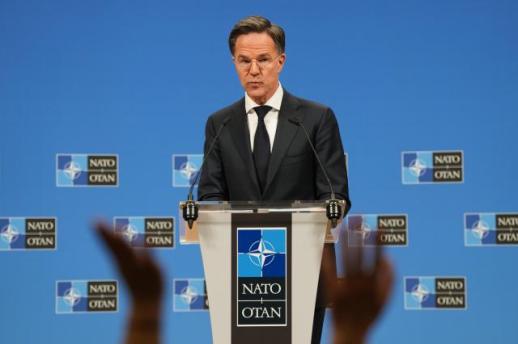 NATO Secretary General Rutte to Pressure European Defense Firms for Investment and Production Boost NATO Secretary General Mark Rutte is expected to pressure major European defense firms to increase investment and production. The Financial Times reported on May 16, citing sources familiar with the matter, that Rutte plans to meet with key European defense groups this week in Brussels. During the meeting, Rutte is expected to urge defense companies to expedite investments and ramp up production, laying the groundwork for significant defense agreements to be announced at the NATO annual summit in Ankara this July. NATO has requested that companies submit information on major investment plans and production expansion possibilities ahead of the meeting. While Rutte regularly engages with executives from major European defense firms, sources noted that gathering representatives from multiple companies in one location is unusual. The Financial Times described the meeting as indicative of NATO's urgency to showcase progress in European defense production ahead of the Ankara summit. The push for increased production in the European defense sector is partly driven by former President Donald Trump's demands for increased defense spending. NATO member countries agreed at last year's summit in The Hague to raise defense spending to 5% of their GDP in response to Trump's requests. NATO officials believe that prominently featuring arms contracts and defense investment expansion at the Ankara summit could demonstrate that the agreement to increase defense spending is yielding tangible results. One official told the Financial Times, "This is aimed at making defense spending increases appear more substantial." Rutte reportedly wants European defense firms to proactively invest rather than wait for large new government orders. However, he is also expected to listen to companies about specific challenges they face in expanding production. Some companies are expected to present plans for expanding facilities and workforce, securing key raw materials, and strengthening supply chains. Discussions are also anticipated on reducing reliance on components from China and Taiwan. The conflict surrounding Iran has further intensified the pressure on Europe to bolster its defense capabilities. According to the Financial Times, the U.S. Department of Defense announced earlier this month plans to withdraw 5,000 troops stationed in Germany amid tensions between Trump and German Chancellor Friedrich Merz. Some officials have indicated that the troop withdrawal plan and the depletion of critical munitions due to the Iran conflict have underscored the need for Europe to rapidly enhance its production capacity and military capabilities. If European NATO allies achieve the goal of spending 5% of their GDP on defense, it is estimated that annual defense spending could increase by a total of $1 trillion (1,500 trillion won) by 2035 compared to 2024. A NATO official stated, "The Secretary General regularly meets with industry and financial institutions across the alliance to encourage increased production, innovation, and investment to meet our capability needs."* This article has been translated by AI. 2026-05-17 14:09:59
 -
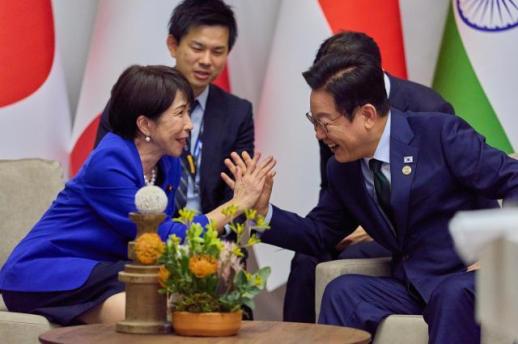 Lee to Hold Summit with Japan's Prime Minister Takaichi on May 19 The Blue House announced on May 17 that Japanese Prime Minister Takaichi Sanae will be welcomed with honors equivalent to a state visit ahead of the upcoming South Korea-Japan summit on May 19. This summit marks the first return visit since President Lee Jae-myung met with Prime Minister Takaichi in Nara Prefecture, Japan, in January, and will take place in Andong, Gyeongsangbuk-do, the president's hometown. Blue House spokesperson Kang Yu-jeong stated, "This visit is significant as it serves as a return gesture for President Lee's visit to Prime Minister Takaichi's hometown in Nara Prefecture in January, and we expect it to further deepen the trust and friendship between the two leaders." This will be the third meeting between the two leaders, following President Lee's visit to Nara in January and a summit held during the Asia-Pacific Economic Cooperation (APEC) meeting in Gyeongju last October. Prime Minister Takaichi is scheduled to arrive at Daegu Airport on the afternoon of May 19, where he will be greeted by Deputy Foreign Minister Kim Jin-ah before heading to a hotel for a series of meetings. President Lee will personally welcome Prime Minister Takaichi at the hotel entrance. A traditional honor guard and military band will escort the prime minister's vehicle, and 12 honor guards will be stationed at the hotel entrance to extend state visit-level honors, according to spokesperson Kang. Following their meeting, the two leaders will hold a joint press conference, followed by a dinner and social event. The dinner will feature fusion Korean dishes inspired by the traditional recipe book "Suwun Japbang," including Andong Jjimdak, a dish that originated as a chicken dish served to esteemed guests, along with grilled Andong Hanwoo beef ribs, Andong rice, and Sinseollo. This menu reflects the Andong spirit of hospitality, which emphasizes the importance of welcoming friends with sincerity, Kang explained. To symbolize the friendship and unity between the two nations, the dinner will include traditional Andong liquor, Tesa-ju and Andong Soju, alongside sake from Nara Prefecture, Prime Minister Takaichi's hometown. For dessert, a plate will feature a type of traditional Korean sweet called Jeonyak and the Japanese dessert Mochi. Kang added, "The dinner will showcase the elegance of Andong's traditions blended with modern sensibilities, in collaboration with Kim Do-eun of 'Rakgojae Suwun Japbang Heritage Dining' and the Westin Chosun. A performance by Korean-Japanese pianist Yang Bang-ean will follow the dinner." Afterward, the two leaders will travel to Hahoe Village, where a special traditional cultural event, the 'Seonyu Jullbul Nori,' will be held for Prime Minister Takaichi. This event, which takes place annually in the seventh month of the lunar calendar, involves scholars from Hahoe Village enjoying poetry and festivities along the Nakdong River. They will also witness the 'Nakhwa Nori,' where bundles of burning pine branches are dropped from the cliffs of Buyongdae. Additionally, a creative pansori performance titled 'Like Scattering Sparks,' inspired by the Seonyu Jullbul Nori and featuring verses from a classical Chinese poem, will be presented. 2026-05-17 13:58:07
 -
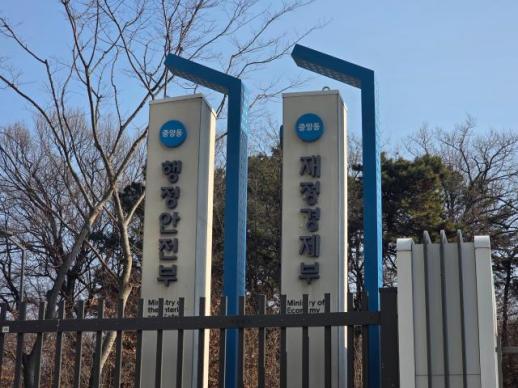 Major Countries and Developing Nations Must Unite to Address Global Imbalances To address global imbalances, there is a growing call to enhance the roles of international organizations responsible for analysis and monitoring. The South Korean government proposed at the G20 Deputy Finance Ministers' meeting that both major and developing countries must work together to mitigate negative spillover effects. According to the Ministry of Economy and Finance, the third G20 Deputy Finance Ministers and Central Bank Deputy Governors meeting took place from May 14 to 15 in Florida, USA. Moon Ji-sung, the ministry's Director of International Economic Affairs, served as the chief representative, presenting South Korea's policies and positions on key issues. The G20 Deputy Finance Ministers' meeting is an event where finance officials from the G20 member countries gather to discuss global financial agendas. To tackle the deepening global imbalances, participating countries agreed on the need for orderly policy formulation. They reaffirmed the importance of organizations such as the International Monetary Fund (IMF) and the Organisation for Economic Co-operation and Development (OECD) in enhancing analysis and monitoring of imbalances. Currently, the Ministry of Economy and Finance co-chairs the G20 Global Imbalances Study Group with Australia. Director Moon emphasized that addressing the imbalance issue requires simultaneous efforts from surplus and deficit countries, including major economies like the United States, China, and the European Union, as well as developing nations, to minimize negative spillover effects. Discussions also covered the economic impacts of the Middle East conflict, national policy responses, and cooperation among vulnerable countries. The ministry highlighted South Korea's emergency economic response and suggested that practical solutions be developed at the G20 level to stabilize supply chains and enhance economic resilience. In the financial sector session, the ministry introduced policies aimed at improving financial regulations for productive finance and monitoring cross-border transactions of virtual assets through amendments to foreign exchange laws. Member countries showed interest in South Korea's tailored economic and financial education programs for different life stages. To promote economic growth, member countries shared examples of policies they are implementing, including regulatory reforms and the creation of innovation ecosystems. There was a consensus on South Korea's government-wide efforts for regulatory innovation and the rationalization of regulations in emerging industries such as artificial intelligence (AI) and autonomous driving.* This article has been translated by AI. 2026-05-17 13:52:08
 -
 ASIA DEEP INSIGHT: Can Korean won stable coin actually become real? Professor Lee Jong-seop’s Vision of K-Content Convergence and the Future of Korean Digital Finance The global economy of the 21st century is now fighting two currency wars simultaneously. One is the visible battle of interest rates and exchange rates. The other is the quieter yet potentially more consequential struggle for digital monetary supremacy unfolding across blockchain networks. In the past, nations that controlled oil shaped the world order. Today, the countries that dominate digital payment systems and stablecoin infrastructure may well define the future architecture of global finance. A recent policy symposium hosted in Seoul by the Global Finance Society symbolized precisely this transition. Under the theme, “The Expansion of Token Securities (STO) and Stablecoins and the Transformation of the Financial Economy,” the forum was far more than a technical discussion about virtual assets. In many respects, it resembled a strategic national debate over whether South Korea can preserve its relevance in the next era of global finance. Among the most striking remarks came from Professor Lee Jong-seop, who argued bluntly that “the time for debating whether to adopt stablecoins has already passed.” The world, he warned, is already moving ahead. Nations that hesitate risk becoming passive consumers within systems designed by others. Today, dollar-based stablecoins have surpassed a market capitalization of roughly $300 billion. While still modest compared with the scale of global foreign-exchange or U.S. Treasury markets, their growth trajectory has dramatically outpaced traditional financial infrastructure. The significance, however, lies not merely in size. Dollar-denominated stablecoins are rapidly evolving into core infrastructure for international remittances, online commerce, and digital asset transactions. The United States does not view this simply as a private-sector innovation. Increasingly, Washington appears to regard dollar stablecoins as a strategic instrument for constructing a new digital-era Bretton Woods system. Just as the postwar world once revolved around the petrodollar system tied to oil settlements, a growing number of analysts believe the United States is now attempting to establish a blockchain-based digital dollar order. The tokenization of U.S. Treasury securities is particularly symbolic. If Treasury bonds circulate seamlessly across blockchain networks and global investors gain frictionless access to U.S. assets through dollar stablecoins, then the dollar’s dominance in digital finance could become even more deeply entrenched. In that sense, stablecoins are not merely financial products; they are technological extensions of American monetary power. For non-reserve currency nations such as South Korea, this presents a profound challenge. If global digital commerce becomes increasingly centered around dollar-based stablecoins, the international role of the Korean won could diminish further. Korean companies and consumers participating in global digital markets may ultimately find themselves operating inside an overwhelmingly dollar-centric ecosystem. It is precisely for this reason that Professor Lee has emphasized the need for a distinctly Korean model. His core argument is straightforward: South Korea should build an “expansionary structure” in which central bank digital currency (CBDC) frameworks and bank-issued deposit tokens provide the foundation of trust, while private-sector firms develop diverse won-based stablecoin applications on top of that system. The appeal of such a model lies in its realism. South Korea is neither a dollar hegemon like the United States nor a tightly controlled financial state like China. Yet it possesses world-class digital infrastructure, one of the most advanced mobile payment cultures on earth, and perhaps most importantly, a globally influential content industry. In other words, Korea’s true strategic advantage may not lie in reserve currency status, but in the construction of a powerful digital ecosystem. This is where K-content becomes critically important. K-pop, BTS, webtoons, gaming, streaming dramas, and global online fandoms have already created a transnational consumer ecosystem that transcends borders. Millions of young people around the world now engage with Korean culture as part of their daily digital lives. If that cultural consumption can be linked directly to a won-based digital payment infrastructure, the implications could be transformative. Imagine global fandoms purchasing music, concert tickets, webtoon subscriptions, or gaming items through won-denominated stablecoins. Such a system would move beyond traditional content exports and begin constructing an entirely new digital financial ecosystem around Korean cultural influence. Over time, this could increase international demand for the Korean won itself, while simultaneously expanding demand for won-based deposits and government securities that serve as collateral for stablecoin issuance. Such a structure could also inject new vitality into Korean capital markets. Stablecoins fundamentally require reliable collateral assets. To maintain trust and liquidity, they must be backed by safe and highly liquid instruments. That naturally creates increased demand for bank deposits, government bonds, and high-quality short-term securities. The result could extend far beyond the growth of a virtual-asset industry. It could deepen liquidity throughout Korean financial markets, accelerate the internationalization of Korea’s government bond market, and stimulate broader development of tokenized securities (STO). The Seoul symposium therefore carried significance far beyond academia. Only a few years ago, South Korean regulators largely viewed digital assets through the narrow lens of speculation. Today, however, stablecoins are increasingly recognized worldwide as foundational financial infrastructure for the next phase of the digital economy. Major financial hubs — including the United States, the European Union, Singapore, Hong Kong, and the UAE — are moving toward strategies that combine regulation with active institutional support. Rather than attempting to suppress digital assets, they are seeking to absorb them into formal financial systems. The United States aims to reinforce dollar supremacy through stablecoins. Europe is developing euro-based digital payment ecosystems. Singapore is positioning itself as a global digital asset hub, while Hong Kong seeks to become the gateway connecting mainland China to international digital finance. If South Korea falls behind, the consequences could extend beyond losing competitiveness in blockchain technology. The country risks being marginalized within the future architecture of global payments and capital flows. Perhaps the symposium’s most important contribution was its reframing of stablecoins not as a cryptocurrency issue, but as a matter of financial order itself. Stablecoins are no longer merely speculative tokens. They now intersect with international finance, payment systems, sovereign debt markets, digital trade, and platform economies. At present, stablecoins can broadly be divided into four categories. The first is fiat-backed stablecoins, supported by reserves such as U.S. dollars, government bonds, or bank deposits. These remain the dominant and most stable form. The second is crypto-collateralized stablecoins, backed by assets such as Bitcoin or Ethereum. While they offer greater decentralization, they also suffer from higher volatility. The third is algorithmic stablecoins, which attempt to maintain value through automated supply adjustments. However, several high-profile collapses have severely damaged trust in this model. The fourth is CBDC-linked systems, which integrate private payment networks with the credibility of central bank-backed digital currencies. Globally, most major economies are concentrating on the first and fourth models. The United States is integrating private stablecoins with Treasury markets, while China continues to advance a state-controlled model centered around the digital yuan. For South Korea, the key lesson is not technology alone, but ecosystem strategy. Korea lacks America’s reserve-currency dominance and China’s centralized state power. What it possesses instead is an unparalleled combination of cultural influence and digital platform sophistication. Accordingly, Korea must pursue a distinctive model that fuses finance, culture, and digital platforms into a unified ecosystem. The objective should not merely be to create another stablecoin, but to connect K-content consumption with digital payments and, ultimately, with broader capital-market innovation through tokenized securities. In that sense, the future of a Korean won stablecoin may ultimately depend on K-content itself. South Korea already commands extraordinary cultural influence worldwide. K-pop, dramas, gaming, and webtoons have become central pillars of global digital consumer culture. If these industries are paired with won-based digital financial infrastructure, Korea could evolve beyond being merely a cultural exporter into a fully integrated digital culture-and-finance platform nation. For this transformation to succeed, however, policymakers must play a careful and strategic role. First, regulatory clarity is essential. Uncertainty remains the greatest risk. Clear frameworks governing issuance standards, collateral requirements, and consumer protections must be established quickly. Second, collaboration ecosystems linking banks, fintech firms, and content platforms must be cultivated. Finance and culture cannot operate in isolation if meaningful synergies are to emerge. Third, capital-market innovation tied to tokenized securities must accelerate. If government bonds, corporate debt, and even intellectual property rights become tokenized, the structure of Korean capital markets could fundamentally change. Fourth, international cooperation will be increasingly important, particularly in expanding won-based digital payment systems throughout Asia. Ultimately, stablecoins are not merely about cryptocurrency. They represent a contest over which nations will control the platforms underpinning the next digital civilization. South Korea now stands at a critical crossroads. If Korea succeeds in linking K-content with digital finance, the Korean won may evolve from a relatively small non-reserve currency into an important connective currency within Asia’s emerging digital economy. 2026-05-17 13:49:17
 -
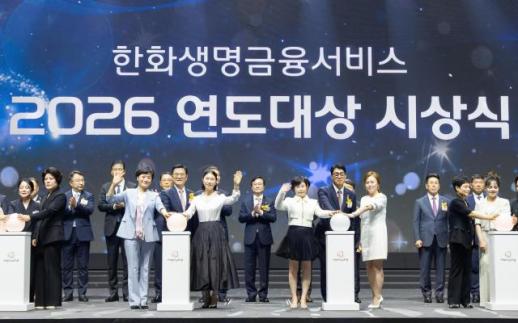 Hanwha Life Financial Services Holds 2026 Annual Awards Ceremony, Honors 15 Champions Hanwha Life Financial Services announced on May 17 that it held its 2026 Annual Awards Ceremony to recognize outstanding sales performance by agents and sales managers from the previous year.The Annual Awards Ceremony is a key event celebrating agents and sales managers who achieved exceptional sales results over the past year. The ceremony was attended by approximately 1,600 people, including 15 champions, agents, sales managers, and employees.Kim Seung-yeon, chairman of Hanwha Group, conveyed his congratulations, stating, "The financial sector of Hanwha Group continues to take bold steps to lead the global financial market through AI-based industry transformation. You, at the center of this challenge, are the true heroes and pride of Hanwha Life."Since implementing a separation of manufacturing and sales in 2021, Hanwha Life Financial Services has maintained a growth trajectory. Last year, its revenue reached 2.4397 trillion won, a 7.4-fold increase compared to its first year of operation. The number of agents, including those from its subsidiary general agency (GA), is approximately 35,000, with expectations to surpass 40,000 within the year. 2026-05-17 13:46:11