
Journalist

Lee Hugh
-
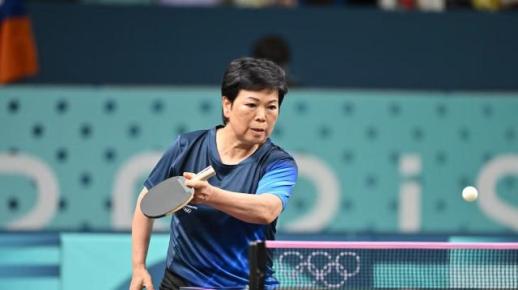 At 63, Ni Xia Lian Stuns at World Table Tennis Championships for Luxembourg In elite sports, age is often treated as a barrier — and, eventually, a biological limit. In table tennis, where split-second reactions and explosive power can decide matches, a player in her 60s competing on the international stage is rare. One point needs to be clear: Ni Xia Lian is not a typical late-blooming amateur. She came through China’s national team in the 1980s, when it was widely regarded as the world’s strongest, and spent decades in top-level training environments. Reducing her story to a simple message of “anyone can do it with willpower” misses what her career represents. Still, her latest result cannot be explained by pedigree alone. In a sport where even top players often retire in their early 30s, Ni, 63, stepped onto the world championship stage and pushed higher-ranked opponents to the limit. That played out at the International Table Tennis Federation (ITTF) World Team Table Tennis Championships at Arena Wembley in London. Leading Luxembourg’s women’s team, Ni — ranked No. 497 — drew global attention with form and touch that belied both her age and ranking. London upset at Wembley Luxembourg faced Brazil in the round of 32. Brazil’s lineup included women’s ace Bruna Takahashi, ranked No. 23, and her sister Julia Takahashi, ranked No. 111. By individual rankings, Luxembourg was clearly the underdog: its top-ranked player, Sarah De Nutte, was No. 110, while Ni was No. 497. Against that backdrop, Luxembourg’s 3-2 comeback win qualified as an upset — with Ni at its center. After Luxembourg dropped the opening match, Ni played the second against Julia Takahashi. The 63-year-old did not back down against the younger, higher-ranked opponent. They went the distance, and Ni won 3-2 (9-11, 12-10, 11-6, 9-11, 11-8) to level the tie. With Luxembourg later needing one more win, Ni was sent out again in the fourth match, this time against Bruna Takahashi. Ni lost 2-3 (5-11, 9-11, 11-8, 12-10, 10-12) after forcing a deciding set. She took the third and fourth games to make it 2-2 and pushed the fifth to deuce. Luxembourg then clinched the tie in the fifth match. De Nutte swept Julia Takahashi 3-0 (11-9, 11-7, 11-4) to send Luxembourg into the round of 16. Table tennis outlet Table Tennis Africa highlighted what it called “an amazing match by 63-year-old Ni Xia Lian,” reporting that Luxembourg earned a major win over Brazil in London. From China in the 1980s to Luxembourg in the 2020s Ni’s career traces decades of modern table tennis. She competed for China’s national team in the 1980s, then began a new chapter representing Luxembourg from the 1990s. She first appeared for Luxembourg at the 2000 Sydney Olympics and has competed at the Olympics six times. Over years of equipment advances and multiple rule changes — and as many of her contemporaries moved into coaching or commentary — she has remained an active player. Tokyo match that resonated in South Korea For many South Korean fans, Ni’s name became especially familiar at the 2020 Tokyo Olympics. In the women’s singles second round, she faced Shin Yu-bin, then 17, in a match with a 41-year age gap. Ni’s disruptive, veteran style pushed Shin in a 3-4 contest. Afterward, Ni wrote on social media: “I hope the 17-year-old young player becomes stronger.” Ni’s story is not a simple slogan that age does not matter. Her career rests on elite training, physical ability and decades of experience. But her continued presence — despite a world ranking of No. 497 — underscores that her motivation is not found only in results or numbers. Her recent matches in London, including full-distance battles against the world’s No. 23 and No. 111, again showed how far that commitment can carry a player — and how unusual it is to sustain it for so long. * This article has been translated by AI. 2026-05-07 08:39:15
 -
 Bitcoin Holds Above $81,000 as Hopes for U.S.-Iran Deal Lift Risk Appetite Bitcoin edged higher and held above $81,000, supported by improved risk appetite tied to expectations of progress in end-of-war talks between the United States and Iran. Bitcoin was trading at $81,308 as of 8 a.m. on the 7th, up 0.24% from a day earlier, according to CoinMarketCap. After reclaiming the $81,000 level on May 5 for the first time in four months, it has remained around that range. Major altcoins were mostly higher. Solana rose 2.82% to $89.06, and XRP gained 0.42% to $1.42. Ethereum fell 0.88% to $2,346. Market participants pointed to expectations that U.S.-Iran end-of-war negotiations could advance. A U.S. online outlet earlier reported the two sides were close to signing a memorandum of understanding with 14 items. The report said the MOU would include a temporary suspension of Iran’s nuclear enrichment and reopening the Strait of Hormuz. Uncertainty around the talks, however, continued to leave room for volatility. Iran’s chief negotiator, Mohammad Bagher Ghalibaf, the speaker of parliament, voiced displeasure on May 6 local time, calling the report a “fake Axios operation.” In South Korea, bitcoin was trading at about 119.56 million won on Bithumb at the same time, down 0.22% from a day earlier. The so-called “kimchi premium,” in which domestic prices trade above overseas levels, stood at 1.617%.* This article has been translated by AI. 2026-05-07 08:33:15
 -
 Samsung Says Galaxy Watch Can Predict Vasovagal Syncope, a First Samsung Electronics said May 7 that a joint clinical study with Chung-Ang University Gwangmyeong Hospital showed Galaxy Watch biometric-signal analysis can predict vasovagal syncope (VVS) early with high accuracy. The findings were published in the latest issue of a digital health journal issued by the European Society of Cardiology, Samsung said. The company called it the world’s first study to show the potential to predict fainting using a smartwatch. Vasovagal syncope is a temporary loss of consciousness caused by a sudden drop in blood pressure, often triggered by excessive tension or stress. It can lead to secondary injuries such as fractures or brain hemorrhage from unexpected falls, the company said. A research team led by Cho Jun-hwan of the hospital’s cardiology department conducted a head-up tilt test on 132 patients suspected of having vasovagal syncope while they wore a Galaxy Watch6. Using the watch’s photoplethysmography (PPG) sensor, the team collected real-time heart rate variability (HRV) data and analyzed it with an artificial intelligence algorithm. Samsung said the analysis predicted signs of vasovagal syncope about five minutes before an episode with 84.6% accuracy. “This study shows the possibility of shifting health care from after-the-fact management to prevention through wearable technology,” said Choi Jong-min, an executive director on Samsung’s MX business digital health team. He said Samsung will work to provide preventive health care solutions on the Galaxy Watch based on the results. Samsung said it is strengthening Galaxy Watch health care features, offering advanced health insights spanning sleep, exercise, antioxidants and cardiovascular health. The company said the Galaxy Watch8, released last year, added an antioxidant index feature that measures carotenoid levels in the body in five seconds to assess fruit and vegetable intake and support healthier eating habits. It also analyzes sleep patterns to suggest an optimal bedtime and measures “vascular stress” during sleep, Samsung said.* This article has been translated by AI. 2026-05-07 08:30:17
 -
 Kwon Dong-chil, footwear innovator, built 300 billion won-a-year business from poverty A TV program has spotlighted the life of Kwon Dong-chil, a self-made footwear entrepreneur who overcame poverty and at one point posted annual sales of up to 300 billion won. EBS aired an episode Tuesday of "Seo Jang-hoon's Next-Door Millionaire" featuring Kwon as a "shoe inventor" known for improving military footwear. Kwon, widely described as obsessed with shoes, produces footwear for soldiers, police and firefighters and supplies 500,000 to 600,000 pairs a year to the state. The program said he helped replace heavy, rigid combat boots with lighter, more comfortable versions. The broadcast also introduced a range of his designs, including a so-called "spider shoe" inspired by the structure of a spider’s feet. The product was scrapped just before launch after reports said fugitive Shin Chang-won climbed building exteriors while on the run, raising concerns that shoes designed to grip walls could be misused for crime. Kwon drew attention by reading Seo Jang-hoon’s habits from his shoes. Kwon asked, "You don’t like putting shoes on and taking them off, do you?" Seo replied that during his playing days he had to tie his laces so tightly that his hands developed calluses, and that he now wears slippers whenever possible. Kwon linked his drive to a difficult childhood. "During school breaks, I couldn’t even eat three proper meals a day, and I had only one pair of shoes," he said. He joined a shoe company before graduating college to earn money, handled contract manufacturing for major overseas brands and rose to head of overseas sales in his 20s. Backed by investment from an overseas buyer who noticed his work ethic and skills, Kwon started his own business in 1988. In 1994, he launched a private label with the goal of building a Korean homegrown brand. In 1998, he drew industry attention by developing what the program described as the world’s first 290-gram ultralight hiking boot, about the weight of four eggs, a product it said helped change perceptions of hiking boots and fueled the brand’s growth. The program said the success came with heavy research and development costs. "Because I kept trying to make new, creative products, I spent hundreds of billions of won just on development," Kwon said, adding that he even heard people say, "You’ll go bankrupt developing shoes." When Seo asked whether using that money on a high-profile celebrity model might have brought in more profit, Kwon said investing in products rather than stars was his way of repaying consumers. Kwon also described a recent major crisis. He said European exports plunged due to the fallout from the Russia-Ukraine war, dealing a severe blow that forced him to sell the company building. After the news spread, the program said residents in Busan began buying products voluntarily to support what they called a local company, with lines forming outside stores. Veterans who had worn his combat boots during service also voiced support, saying the company should not fail. The broadcast said Kwon has given back as well. When large wildfires hit the Yeongnam region in 2024, he donated thousands of pairs of shoes to displaced residents. It also cited his support for mountaineers and a "lifetime A/S" service. Near the end of the program, Kwon said his dream was for a Korean shoe brand to surpass global brands and become No. 1 worldwide.* This article has been translated by AI. 2026-05-07 08:25:13
 -
 Samsung Electronics, SK Hynix jump again in premarket on ceasefire hopes Samsung Electronics and SK Hynix surged again in premarket trading, as stronger U.S. stocks, expectations of easing geopolitical risk in the Middle East and hopes for a reappraisal of the memory-chip cycle lifted sentiment. As of 8:16 a.m. on May 7, Samsung Electronics was up 17,000 won, or 6.39%, at 283,000 won on the Nextrade premarket. SK Hynix rose 93,000 won, or 5.81%, to 1,694,000 won. Overnight, U.S. markets advanced on expectations that an agreement on ceasefire talks between the United States and Iran was nearing. On May 6 (local time), the Dow Jones Industrial Average closed up 612.34 points, or 1.24%, at 49,910.59. The S&P 500 gained 105.88 points, or 1.46%, to 7,365.10, and the Nasdaq composite climbed 512.82 points, or 2.02%, to 25,838.94. The S&P 500 and Nasdaq both set fresh record highs. With AI semiconductor shares led by Nvidia extending gains, buying also flowed into South Korea’s large-cap chipmakers. Some analysts said the market’s reassessment of the memory sector is still in its early stages, arguing there is room for further gains even after Samsung Electronics and SK Hynix broke through record highs. SK Securities on May 7 raised its target price for Samsung Electronics to 500,000 won from 400,000 won a month earlier, about 87% above the current price. It also lifted its target for SK Hynix to 3 million won from 2 million won, implying about 87% upside from the current share price. * This article has been translated by AI. 2026-05-07 08:24:14
 -
 KB Securities Raises Target Price for Samsung E&A on Record Order Cycle Outlook KB Securities said May 7 it raised its target price for Samsung E&A to 73,500 won from 67,000 won, citing a boom in the global plant market and expanding orders. It maintained its “buy” rating. Jang Moon-jun, an analyst at KB Securities, said the rapid buildout of artificial intelligence infrastructure and stronger energy security are shifting the key competitive factor in the global plant market to speed. “In terms of execution capability to deliver large projects within a set period, Samsung E&A’s competitiveness is standing out,” Jang said. He said the company is facing its best environment for new orders since its founding. “In the first quarter alone, it secured about 40% of its annual guidance, and this year’s annual orders will reach at least 15.5 trillion won,” he said. Jang said a resumption of capital spending by affiliates, increased global ordering tied to energy security, and postwar reconstruction demand in the Middle East are converging, calling it a structural shift rather than a one-off cycle. He said Samsung E&A has strengthened its ability to shorten construction schedules through wider use of modular methods, a FEED-to-EPC structure and investment in AI-based design automation. He said the company has entered a phase in which it is selected for execution rather than price, and that revenue and profit growth will resume in earnest starting in 2026.* This article has been translated by AI. 2026-05-07 08:21:14
 -
 Wall Street Rallies on Hopes for U.S.-Iran War-End Deal; S&P 500, Nasdaq Hit Records Expectations that the United States and Iran are nearing an agreement on talks to end the war lifted major U.S. stock indexes to a broad advance. On the 6th (local time), the Dow Jones Industrial Average rose 612.34 points, or 1.24%, to close at 49,910.59 on the New York Stock Exchange. The S&P 500 gained 105.90 points, or 1.46%, to 7,365.12, and the Nasdaq composite climbed 512.81 points, or 2.02%, to 25,838.94. The S&P 500 and Nasdaq both set fresh record highs with the gains. According to Axios and other foreign media, the United States and Iran are discussing signing a memorandum of understanding to end the war. The MOU is expected to include a temporary halt to Iran’s uranium enrichment, U.S. sanctions relief, and steps related to reopening the Strait of Hormuz, including Iran lifting a blockade of the waterway and the United States ending its maritime blockade of Iran, the reports said. Iranian Foreign Ministry spokesman Esmail Baghaei also said Iran is reviewing a U.S. proposal to end the war. In an interview with Iran’s ISNA news agency, Baghaei said, “Iran is still reviewing the U.S. plan and proposal, and after consolidating Iran’s position, it will be conveyed to the Pakistani side.” Bill Northey, chief investment officer at U.S. Bank Asset Management Group, told CNBC that if hostilities begin to slow or stop and the Strait of Hormuz reopens, some of the most economically sensitive regions hit hardest — such as Southeast Asia and Europe — could avoid their own economic strain. “That creates the conditions for a sharp rebound in the stock market,” he said. Oil prices fell on expectations of a war-ending deal and a reopening of the Strait of Hormuz. Brent crude futures for July delivery settled at $101.27 a barrel, down 7.83% from the previous session. U.S. West Texas Intermediate crude futures for June delivery settled at $95.08 a barrel, down 7.03%. In individual stocks, AMD surged 18.61% after reporting results that beat expectations. The company said it posted first-quarter earnings of $1.37 per share on revenue of $10.25 billion, above market forecasts for earnings of $1.29 per share and revenue of $9.89 billion. The major technology stocks known as the “Magnificent Seven” also mostly rose. Nvidia gained 5.77%, Alphabet 2.47%, Tesla 2.40%, Meta 1.31%, Apple 1.17%, Microsoft 0.63% and Amazon 0.53%.* This article has been translated by AI. 2026-05-07 08:18:58
 -
 Three Wild Boars Spotted Near Apartments in Sejong, Prompting Capture Effort Sejong City police and fire authorities launched a capture operation after a group of wild boars was repeatedly reported in the city center. Reports came in mainly from residential areas and commercial districts in the early morning hours, heightening public concern. According to Yonhap, a report was received at about 6:37 a.m. on the 7th that three wild boars were roaming around the Naseong-dong area of Sejong. Police and fire officials dispatched to the scene, checked the animals’ route and began efforts to capture them. Sightings were reported from before dawn. After the first call at about 1:32 a.m., authorities received seven related reports over about five hours in central neighborhoods including Dajeong-dong, Naseong-dong and Saerom-dong. Some residents said they saw the boars near roads and sidewalks. Police and fire officials were continuing to track the boars’ movements and confirm how many animals were involved. No injuries had been reported, but officials warned of possible additional safety incidents as the situation overlapped with the morning commute. Sejong City sent emergency text alerts to nearby residents and urged people to use extra caution when going out to help prevent accidents. 2026-05-07 08:18:14
 -
 Shinhan raises Hyundai Department Store target, calls it world’s cheapest peer Shinhan Investment Corp. on 7th kept its “buy” rating on Hyundai Department Store and raised its target price 17% to 140,000 won. The brokerage said improving department store conditions should continue, supported by the government’s expansionary fiscal policy, a recovery in consumption and rising sales to foreign customers. Cho Sang-hoon, an analyst at Shinhan Investment, said the rebound in department store purchasing power that began in the third quarter is expected to last through 2026. He called Hyundai Department Store “the cheapest department store company in the world” and Shinhan’s top pick in the sector. Hyundai Department Store posted first-quarter consolidated revenue of 950.1 billion won, down 13.5% from a year earlier, and operating profit of 98.8 billion won, down 12.1%, in line with market expectations. Shinhan said weakness at Zinus persisted, but the core businesses — including department stores and duty-free — offset much of the drag. Excluding a one-off gain at Zinus in the first quarter of last year — a 16.7 billion won reversal of an anti-dumping duty provision — operating profit would have risen 3%, Shinhan said. The department store business continued to grow. Total sales rose 10%, and combined growth in April and May reached 15%. Large-format stores, including The Hyundai, and higher foreign-customer sales drove results. Sales to foreign customers rose 22% from a year earlier, lifting their share to 6.1%. Cho said all product categories were performing well, including high-margin fashion. He added that cost efficiencies and operating leverage from higher sales helped department store operating profit rise for a third straight quarter. Shinhan also cited valuation and shareholder returns. Cho said that despite a recent surge in the stock price, Hyundai Department Store’s projected 2026 price-to-earnings ratio is about 9, more than 30% below peers. He said total dividends are expected to increase from 30.6 billion won in 2024 to 46.4 billion won in 2025 and to more than 50.0 billion won in 2027. He added that the company has completed the cancellation of 4.7% of its treasury shares and plans to cancel another 1.1% bought this year within the year.* This article has been translated by AI. 2026-05-07 08:14:25
 -
 Seoul Tourism Foundation spotlights hanok sites featured in hit K-dramas The drama “21st Century Grand Prince’s Wife,” starring IU and Byeon Woo-seok, has been drawing attention not only for its plot but also for the stately residence where Prince Ian (played by Byeon) stays. That setting is not a distant studio set. It is Unhyeongung’s Western-style residence (yanggwan) in central Seoul’s Jongno district. Seoul’s traditional hanok sites, known for their quiet atmosphere and distinctive design, have long served as backdrops for major scenes in dramas and films. Korean traditional architecture is often described as seeking harmony with the surrounding terrain rather than imposing on it. Windows and doors are used not only for light and air but also to frame seasonal scenery — a concept known as “chagyeong,” or “borrowed landscape.” Marking the green season in May, the Seoul Tourism Foundation recommended four hanok-related sites in Seoul that appear in K-content and reflect both the aesthetics of chagyeong and key moments of modern and contemporary history — from a private residence on a palace-like scale to a modern-era house tied to the Japanese colonial period and a large-scale traditional entertainment venue built during the military government era of the 1960s. ◆ Unhyeongung and its Western-style residence, a center of late Joseon power Behind thick stone walls in the middle of Jongno, Unhyeongung is the private residence of Heungseon Daewongun, where Emperor Gojong spent his childhood, and a major site in late Joseon history. Its layered tiled roofs set it apart from typical homes of the aristocratic class. Noandang, Heungseon Daewongun’s main quarters, served as a political stage where power was concentrated during efforts at state reform and regency. Norakdang, the inner quarters, is known for its scale and status — large enough that Gojong and Empress Myeongseong’s wedding ceremony was held there. Today, it is also a downtown refuge where nearby office workers sit on the wooden porch during lunch breaks. Across the courtyard, on a low hill, stands a sharply different structure: Unhyeongung’s Western-style residence, a two-story Renaissance-style house built around 1912 by Japanese authorities on the site of an ancestral shrine. The article says it was intended to win over and monitor members of the Korean royal family. Designed by Japanese architect Katayama Tokuma, it features arched facades and a foreign-style veranda. A plum blossom motif carved into the exterior wall is cited as a quiet reminder of the humiliation associated with the space. The building has become a frequent filming location. In “21st Century Grand Prince’s Wife,” it is the veranda where Prince Ian, after crossing into the present day, shares an emotional moment under moonlight with the grand prince’s wife (played by IU). It is also known as the gate featured in tvN’s “Goblin,” where Kim Shin (Gong Yoo) and the grim reaper (Lee Dong-wook) walk as if on a runway, and as the crown prince’s residence in MBC’s “Princess Hours,” where Prince Lee Shin (Ju Ji-hoon) stays. Nearby, the Seoul Museum of Korean Folk Music offers visitors a chance to trace Heungseon Daewongun’s legacy as a supporter of pansori and to listen to regional folk songs reflecting everyday people’s lives. ◆ Seonun-gak and Bonghwang-gak, from a 1960s elite venue to public spaces Seonun-gak, located in Ui-dong at the foot of Bukhansan, is described as the largest privately built hanok in Seoul, constructed in the 1960s. Despite its traditional exterior, it was built as a high-end entertainment venue where behind-the-scenes politics among powerful figures in politics and business took place during the military government era. Along with Samcheonggak and Daewongak, it was one of the three leading venues of its time. It has since been fully opened to the public and now operates as a hanok cafe and outdoor wedding venue. Its long stone wall and stone-paved approach were featured in tvN’s “Mr. Sunshine” as the road leading to the U.S. legation, where Eugene Choi (Lee Byung-hun) walks while thinking of Go Ae-shin (Kim Tae-ri). Visitors can view Bukhansan’s ridgelines from the main building’s second-floor terrace or sit under the eaves in the courtyard and look out over the lawn and surrounding mountains. Seonun-gak sits near another site with a different historical weight: Bonghwang-gak. The article says it was established in 1912 by Uiam Son Byeong-hui, the third leader of Cheondogyo, to train independence activists to restore sovereignty taken by Japan. It is described as a place where the framework of the March 1 Independence Movement was formed. Without painted dancheong decoration, the building’s exposed wood columns and beams are presented as reflecting a restrained spirit. The article notes that a 50-meter climb up a hill behind the rear gate leads to Son’s grave. ◆ Baek In-je House, where modern wealth and national tragedy intersect In Bukchon Hanok Village, visitors can find the Baek In-je House, marked by a large gate. The modern-era hanok was built in 1913 by Han Sang-ryong, described in the article as a pro-Japanese figure who was then an executive director of the Hansung Bank. The house used high-quality black pine transported by raft from the Amnok River. The article describes it as a space that concentrated power and capital among the top elite during the Japanese colonial period. Breaking from the standard hanok layout, it connected the men’s quarters and inner quarters with a corridor so residents could move inside without removing shoes. Red brick walls, glass windows and tatami rooms reflect a mix of Western and Japanese techniques of the time. After passing to journalist Choi Seon-ik, the house became the property in 1944 of Baek In-je, described as a leading surgeon of the era and founder of Baek Hospital, giving it its current name. During the Korean War, Baek was abducted to North Korea, the article says, and his wife, Choi Gyeong-jin, and their children preserved the home, which remains a public asset. The site has frequently appeared in period dramas and stories depicting wealthy families. In JTBC’s “Reborn Rich,” it served as the garden of “Jeongsimjae,” where Chairman Jin Yang-cheol (Lee Sung-min) walks while testing his youngest grandson, Jin Do-jun (Song Joong-ki). It also appeared in the film “Assassination,” which drew 10 million viewers, as the inner quarters of the home of pro-Japanese character Kang In-guk (Lee Kyung-young). From the second-floor terrace of the nearby Bukchon Museum of Asian Culture, visitors can view Bukchon’s tiled rooftops, Gyeongbokgung Palace and the ridgeline of Bugaksan. ◆ Suyeonsanbang and Choi Sun-woo’s former home, spaces shaped by writers and scholars On a steep hillside in Seongbuk-dong, Suyeonsanbang is a renovated hanok built in 1933 by Sangheo Yi Tae-jun, a pioneer of Korean short fiction. The name refers to a “mountain house where writers gather,” and the article describes it as more than a residence: a place where writers sought to sustain Korean literature during the Japanese colonial period. Writers including Jeong Ji-yong and Yi Sang, members of the literary group Guinhoe, are described as having stayed up through the night there discussing literature and life. Yi also lived there while producing many works. While following the hanok framework, Suyeonsanbang reorganized functions in a more modern way. The highlight is the numaru porch in front of the main room, which the article says blends with the garden and has drawn filmmakers. It has appeared in works including the film “The Housemaid” and JTBC’s “The World of the Married,” as a setting for secret meetings and tense confrontations. The site now operates as a traditional tea house. Seongbuk-dong is also home to the “Choi Sun-woo Old House,” another site highlighted for experiencing hanok design. Choi, the author of “Leaning on the Curved Pillars of Muryangsujeon” and a former director of the National Museum of Korea, lived there from 1976 to 1984. Built in the 1930s in a square “ㅁ”-shaped layout, the house avoids excessive ornament and emphasizes clean lines and the natural texture of wood, the article says. Its courtyard plantings — including pine, hawthorn and peonies — are presented as reflecting the sensibility of a scholar who devoted his life to understanding and promoting Korean aesthetics.* This article has been translated by AI. 2026-05-07 08:12:19