
Journalist

Lee Jaeho
-
 Krafton's 'Subnautica 2' Surpasses 4 Million Sales in Just 5 Days Krafton's creative studio Unknown Worlds has announced that its new title, 'Subnautica 2,' has surpassed 4 million copies sold globally within just five days of its release. Krafton reported that 'Subnautica 2' achieved 1 million sales shortly after its early access launch, and exceeded 2 million copies sold within the first 12 hours. The game has continued to perform well, reaching 4 million sales in just five days. User engagement metrics are also on the rise. The peak number of concurrent users on Steam reached 467,000, with an average of 1.3 million active users daily. Total playtime has accumulated to 28.57 million hours. User feedback has been overwhelmingly positive. Currently, there are over 73,000 reviews on Steam, with a user rating of 'very positive' (91% positive rate). Players have highlighted the realistic underwater graphics powered by Unreal Engine 5 and the exploration-focused storytelling as key strengths. The game has received praise for its expanded deep-sea exploration elements and survival-centric gameplay, appealing to a global audience. Analysts note that despite being in early access, the game exhibits a high level of polish and continues to thrive commercially. Unknown Worlds plans to implement updates based on user feedback in the future. These updates will aim to enhance the immersion of deep-sea exploration by adjusting creature aggression and awareness ranges, as well as improving the usability of survival tools. Fernando Melo, the executive producer of Subnautica 2, expressed gratitude to players worldwide for their enthusiastic support, stating, "We are deeply thankful to the global players who have dived into this alien ocean with a passion beyond our expectations. Early access is a process of completing the game together with players, and we will actively incorporate user feedback to provide a more profound exploration experience." * This article has been translated by AI. 2026-05-21 10:43:43
 -
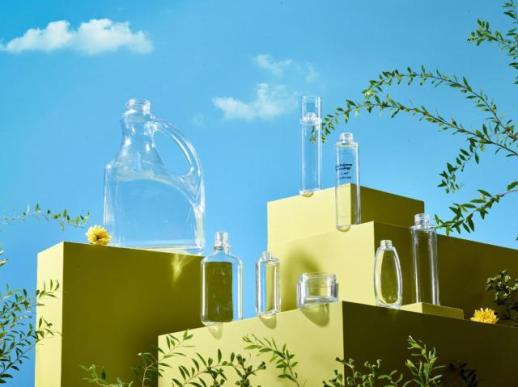 SK Chemicals Validates Recycling Suitability of Seven Plastic Materials in Europe SK Chemicals has confirmed the recycling suitability of its plastic (PET) materials in Europe. On May 21, SK Chemicals announced that its copolyester Ecotria Claro and the SkyPet PET product line have been validated for recyclability by Recyclability, a European recycling assessment organization. Recyclability is a non-profit industry consortium established to promote a circular economy for plastics in Europe. It verifies and certifies the recyclability of plastic materials based on assessment protocols and design guidelines. In this evaluation, SK Chemicals obtained a Technical Approval (TA), which verifies whether the materials can be used as recycled feedstock without affecting existing processes when introduced into the PET recycling process. This approval serves as a key indicator for assessing compatibility with recycling processes. With this certification, SK Chemicals has officially recognized the recyclability of a diverse range of polyester products, including copolyesters, PET, recycled materials, and conventional materials. The validated product line consists of seven types, including five copolyester Ecotria Claro products: Ecotria Claro 100, Ecotria Claro 200, Ecotria Claro 300, Ecotria Claro 100 CR50N, and Ecotria Claro 200 CR50N, which received a fully compatible rating for PET recycling without any restrictions. Additionally, two general-purpose plastics from the SkyPet product line, SkyPet BR and SkyPet BR-V, received a conditionally compatible rating based on specific processing conditions. An Jae-hyun, CEO of SK Chemicals, stated, "This verification confirms the recyclability of our materials, which is a crucial part of the complete circular structure we are building. We will continue to accumulate technological expertise in recycling and maintain competitiveness throughout the entire process from raw materials to product development, expanding collaboration with stakeholders, including European customers." Meanwhile, SK Chemicals reported a revenue of 385.7 billion won and an operating profit of 21.2 billion won for the first quarter of this year, as disclosed on May 8. This represents a 14.2% increase in revenue and a 464.3% increase in operating profit compared to the previous quarter.* This article has been translated by AI. 2026-05-21 10:42:00
 -
 240,000 Discount Tickets for Performances Available Starting May 22 Starting May 22, 240,000 discount tickets for performances will be distributed. Each person can receive up to two tickets on a first-come, first-served basis. The Ministry of Culture, Sports and Tourism, along with the Arts Management Support Center and the Korea Arts Council, announced that the first distribution of 240,000 10,000-won discount tickets will begin on May 22 through online ticketing platforms and non-metropolitan cultural centers. This initiative aims to expand public access to performing arts and invigorate the performing arts market. It utilizes part of the 4.1 billion won (approximately $3.5 million) allocated in the 2026 supplementary budget for 400,000 discount tickets, with the remaining funds set to be used for a second distribution in September. The tickets will be available starting at 10 a.m. on May 22 from five online ticketing platforms (Naver Reservations, NOLU Universe, Yes24, TimeTicket, and Ticket Link), with each person eligible for two tickets on a first-come, first-served basis. Tickets issued during the first distribution period from May 22 to August 20 can be used for performances scheduled until September 3. The discount tickets can be applied to various genres, including theater, musicals, Western music (classical), Korean music (traditional), dance, and mixed performances. However, they do not apply to popular music and dance performances. The distribution of tickets will operate weekly from May 22 to August 20, with tickets available from 10 a.m. on Fridays until midnight the following Thursday. Any unused tickets will automatically expire at the end of the period. Each ticket is valued at 10,000 won, and one discount ticket can be applied per transaction (up to two tickets per platform). Even if the performance price is lower than the discount ticket value, it can be used if the total payment exceeds 15,000 won. The discount can also be combined with existing promotions from the ticketing platforms. Additionally, minors can use the discount tickets if they are registered members of the ticketing platforms, and foreigners can also qualify if they complete identity verification and membership registration. Moreover, additional discount tickets specifically for performances held in non-metropolitan areas (excluding Seoul, Gyeonggi, and Incheon) will be issued through three online ticketing platforms (Naver Reservations, TimeTicket, and Ticket Link), allowing up to two tickets per person. To assist elderly individuals and people with disabilities who may not be familiar with online booking, a phone support service will be available for inquiries, and ticketing platforms will provide assistance through phone support for issuing discount tickets. On-site discounts will also be available at cultural centers in non-metropolitan areas. Eligible groups for on-site discounts include seniors (aged 55 and older), people with disabilities, low-income individuals, and farmers or fishermen. For performances exceeding 10,000 won at these cultural centers, a discount of 10,000 won will be applied at the time of ticket purchase. A list of participating cultural centers and performances can be found on the integrated performing arts information system website. A second distribution of discount tickets is planned for September. Individuals who received and used the first round of tickets will also be eligible to apply for the second round.* This article has been translated by AI. 2026-05-21 10:39:26
 -
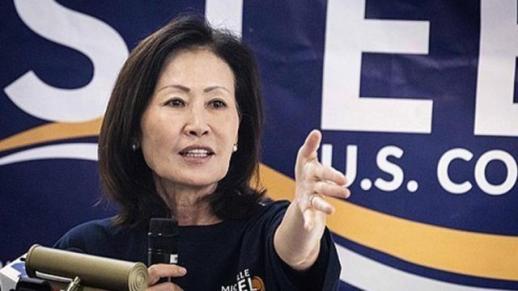 U.S. Ambassador Nominee Michelle Steel Advocates for Equal Market Access for American Companies in Korea Michelle Steel, the nominee for U.S. Ambassador to South Korea, stated that American companies operating in Korea should be guaranteed equal market access. Issues surrounding non-tariff barriers in Korea and regulations affecting U.S. tech companies have emerged as significant trade concerns for the next U.S. ambassador. During her confirmation hearing before the Senate Foreign Relations Committee on May 20, Steel remarked, "American companies doing business in Korea deserve the same market access that Korean companies enjoy in the United States." Her comments came amid discussions regarding the treatment of U.S. firms in Korea. Senator Bill Hagerty raised concerns about regulatory issues affecting U.S. tech companies, citing the case of Coupang. In response, Steel assured, "If confirmed, I will work to ensure that American companies are not treated unfairly in Korea." The discussion extended beyond technology companies. Senator Pete Ricketts highlighted non-tariff barriers affecting U.S. agricultural products and the reduction of low-tariff quotas on U.S. soybeans. Steel stated, "I will discuss market access issues for agricultural products, including soybeans, with the Korean government." The commitment of South Korea to invest $350 billion (approximately 525 trillion won) in the U.S. also became a point of contention. Steel expressed her intention to clarify the funding mechanisms for this investment, indicating a focus not only on the investment amount but also on its actual implementation.* This article has been translated by AI. 2026-05-21 10:36:35
 -
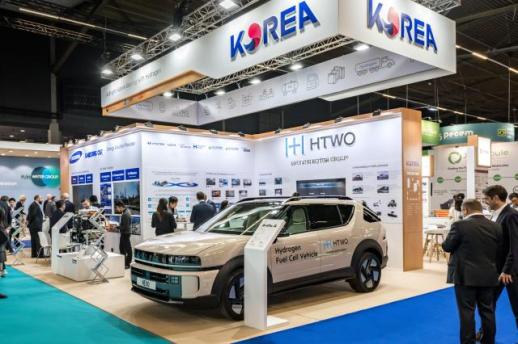 Hyundai Motor Group Highlights Hydrogen Ecosystem at World Hydrogen Summit 2026 Hyundai Motor Group announced on May 21 that it participated in the World Hydrogen Summit 2026, held from May 19 to 21 at the AHOY Convention Center in Rotterdam, Netherlands. Now in its seventh year, the World Hydrogen Summit is the largest global hydrogen industry exhibition, focusing on key issues related to hydrogen, including mobility, production, infrastructure, regulation, and investment. The event is divided into a summit and an exhibition. More than 10,000 attendees, including government officials from over 100 countries and representatives from more than 500 participating companies, shared diverse opinions during the event. Hyundai Motor Group set up a booth in the Korean Pavilion centered around its hydrogen brand and business platform, HTWO, showcasing a hydrogen fuel cell system mock-up and the all-new NEXO vehicle. The all-new NEXO, launched in the European market this year, features a 150 kW motor capable of accelerating from 0 to 100 km/h in 7.8 seconds. It can travel up to 720 km on a single charge based on domestic standards, making it Hyundai's next-generation hydrogen electric vehicle. Hyundai Motor Group also participated in discussions at the summit, engaging with global partners, including those from Europe, to explore sustainable hydrogen ecosystem development and share activation strategies through proven solutions. During the discussions, Hyundai Motor Group emphasized that hydrogen is increasingly recognized not just as a means of decarbonization but also as an energy source to mitigate risks in the global energy supply chain. The group stressed the need for consistent policies and the establishment of global standards alongside technological development to accelerate the hydrogen ecosystem. Additionally, as a founding member and co-chair of the Hydrogen Council, Hyundai Motor Group participated in the IHTF meeting, which took place on May 20 during the World Hydrogen Summit 2026. The IHTF roundtable, attended by officials from over 20 countries, discussed the growing importance of energy security and the need for practical and forward-looking hydrogen strategies to enhance collaboration between industry and government in response to these challenges. A Hyundai Motor Group representative stated, "The World Hydrogen Summit is significant as it seeks to explore the direction of hydrogen ecosystem development and discuss actual investment possibilities. We will strive to foster a sustainable hydrogen infrastructure in line with the accelerating hydrogen ecosystem that is gaining attention in the global energy market."* This article has been translated by AI. 2026-05-21 10:34:45
 -
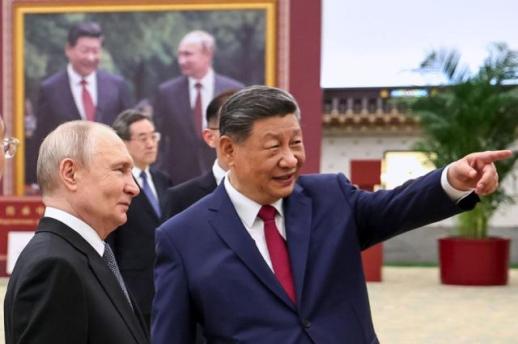 Seoul hopes for China's 'constructive role' amid Xi's possible visit to Pyongyang SEOUL, May 21 (AJP) - South Korea hopes that any possible visit to North Korea by Chinese President Xi Jinping would contribute to peace and stability on the Korean Peninsula, Cheong Wa Dae said on Thursday. "We expect China to play a constructive role on Korean Peninsula issues," it said, adding that the government has been "monitoring relevant developments." The remarks came after Xi is reportedly set to visit to Pyongyang as early as next week, after holding back-to-back talks in Beijing with U.S. President Donald Trump last week and Russian President Vladimir Putin this week, during which North Korea-related issues were discussed. Should the visit go ahead, it would mark another trip to North Korea by Xi after he became the first Chinese president to visit Pyongyang in June 2019 for a summit with North Korean leader Kim Jong-un. Earlier this week, during a phone call with South Korean President Lee Jae Myung, Trump said he and Xi held meaningful discussions on issues related to peace on the Korean Peninsula and reaffirmed their shared commitment to North Korea's denuclearization. In a fact sheet released shortly afterward, the White House also confirmed "their shared goal to denuclearize North Korea." 2026-05-21 10:33:42
 -
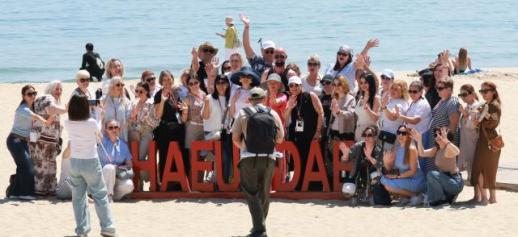 K-Tourism Surges Amid Challenges, April Visitors Reach Record High The South Korean government's goal of attracting 30 million inbound tourists is gaining momentum. Despite challenges such as high oil prices and geopolitical tensions in the Middle East, the number of foreign visitors to South Korea reached 203,000 in April, a 19% increase from 171,000 in the same month last year. Spending also rose, with foreign credit card expenditures reaching a record 1.9 trillion won in April, indicating that the growth in visitor numbers is translating into increased domestic consumption. ◆ K-Tourism Breaks Through Challenges: Cumulative 6.77 Million Visitors from January to April The Ministry of Culture, Sports and Tourism announced on May 21 that the cumulative number of foreign tourists visiting South Korea from January to April totaled 6.77 million, marking a 21% increase from 5.58 million during the same period last year. This follows a historic milestone in March when monthly arrivals exceeded 200,000 for the first time, achieving this level for two consecutive months. Despite global challenges such as rising oil prices and increased fuel surcharges, travel plans booked before the Middle East crisis continued without significant disruption, allowing for strong April entry numbers. The ministry attributes this success to the global spread of K-Culture, positioning South Korea as a prominent global tourism destination beyond Asia. ◆ Chinese and Japanese Tourists Lead, North American Visitors Join In Analyzing the market, growth was observed across various regions, including China, Japan, and North America, without heavy reliance on any single country. Chinese tourists accounted for 570,000 visitors (up 29.6%), making them the largest group, followed by Japanese tourists at 300,000 (up 17.9%), driving overall growth in the inbound tourism market. Additionally, steady inflows from Taiwan (190,000) and Hong Kong (70,000) contributed to the Chinese market, while North American (236,000) and European (182,000) visitors also added to the diversification of the market. ◆ Regional Airport Arrivals Jump 38%: Foreign Spending Hits Record 1.9 Trillion Won The upward trend in inbound tourism is directly linked to qualitative growth. The distribution effect of foreign tourists across regions was evident, with 360,000 foreign visitors arriving through regional airports in April, a 38% increase from 260,000 in the same month last year. However, arrivals via regional ports decreased by 5.3% to 184,000 compared to the previous year. Notably, tourists significantly increased their spending. In April alone, foreign tourists' credit card expenditures (including online purchases) in South Korea were estimated at approximately 1.9 trillion won, the highest since records began in January 2018. The cumulative spending from January to April also reached about 6.997 trillion won, a 22.6% increase from the same period last year. ◆ Government's Comprehensive Efforts Targeting Tourism Promotion Act: Boosting Regional Tourism The government has been conducting a comprehensive effort since the 11th National Tourism Strategy Meeting. The Ministry of Culture, Sports and Tourism is making various efforts to improve regional tourism conditions, including expanding international routes at regional airports and supporting transfer services between Incheon and regional airports. Kang Jeong-won, head of the ministry's tourism policy division, stated, "The appeal of K-Culture and government support for tourism have created a synergistic effect, allowing us to surpass 200,000 inbound tourists for two consecutive months despite challenging conditions like international oil prices. We will strive for consistent growth not only in numbers but also in regional visits and spending."* This article has been translated by AI. 2026-05-21 10:29:08
 -
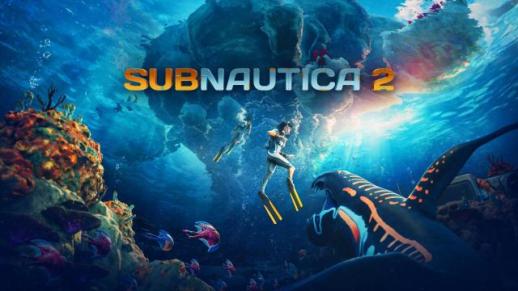 Subnautica 2 sells 4 million copies in five days after early access launch SEOUL, May 21 (AJP) - Subnautica 2, the underwater survival sequel developed by Krafton's creative studio Unknown Worlds Entertainment, has sold about 4 million copies worldwide within five days of its early access release on May 15. The title, built on Unreal Engine 5 and set on a new alien ocean planet, logged 1 million sales at launch before surging past 2 million within the first 12 hours. Peak concurrent players on Steam reached about 467,000, while average daily active users stood at 1.3 million. Cumulative playtime has exceeded 28.57 million hours since launch. The game currently holds a "Very Positive" rating on Steam, with more than 73,000 user reviews and an approval rate of 91 percent. Subnautica 2 is available on Steam, the Epic Games Store, and Xbox Series X|S. "We’re incredibly grateful for the response from players around the world," said Fernando Melo, the game's executive producer. "Community feedback continues to help shape the future of Subnautica 2, and we’re excited to keep building the experience together with our players." Unknown Worlds Entertainment is the studio behind the original Subnautica, a title widely credited with defining the marine survival genre. The sequel introduces series-first cooperative multiplayer for up to four players, allowing teams to coordinate survival strategies and share discoveries across its vast alien seascape. The developer has outlined upcoming patches to adjust creature aggression and detection range, and to enhance the utility of survival tools, as it works toward a full release in response to player feedback gathered during early access. 2026-05-21 10:27:50
 -
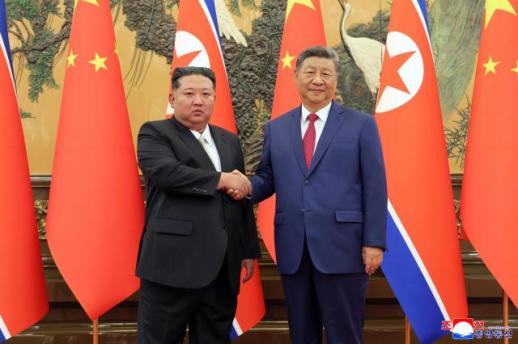 Xi Jinping's Possible Visit to North Korea Signals Shifts in Geopolitical Landscape The possibility of Chinese President Xi Jinping visiting North Korea has stirred the diplomatic landscape surrounding the Korean Peninsula. Although no official announcement has been made, recent visits by Chinese security and protocol teams to Pyongyang, along with high-level exchanges between North Korea and China, suggest a strong likelihood. Particularly, in the wake of a US-China summit where North Korea's nuclear issue has resurfaced as a key agenda item, speculation about Xi's visit carries implications beyond mere diplomatic events. The challenge lies in the fact that the issues surrounding the Korean Peninsula are no longer confined to security and diplomacy. The potential for closer ties among North Korea, China, and Russia, coupled with US-China strategic competition, has turned these dynamics into economic security variables that impact exchange rates, supply chains, investment, and industrial strategies. The geopolitics of the Korean Peninsula has become a core risk for the South Korean economy and an integral part of its survival strategy. The South Korean economy is structurally dependent on a complex web of relationships. Security relies on the US alliance, trade and industry remain deeply connected to China, and energy and raw materials depend on the Middle East and global maritime logistics. In the past, this structure could be maintained without significant conflict during the era of globalization. However, the current landscape is different. As US-China strategic competition expands across technology, finance, military, and supply chains, South Korea's security and economic interests have begun to clash. Strengthening cooperation among South Korea, the US, and Japan is perceived by China as an expansion of a US-led containment system against it. The US has already begun restructuring supply chains and implementing technology controls targeting China in sectors such as semiconductors, batteries, and advanced technologies. South Korea is not exempt from export regulations on semiconductor equipment and restrictions on advanced technology investments. In this context, South Korea's approach of "strengthening security cooperation with the US and Japan while hoping for China to play a constructive role in resolving the North Korean nuclear issue" is inherently fraught with structural tensions. International politics often lean more towards interests than ideals. China also approaches the North Korean nuclear issue not merely from a denuclearization perspective but as a strategic matter of countering the US and maintaining influence in Northeast Asia. However, the path available to South Korea is not simply a binary choice between pro-US or pro-China. Realistically, the core of South Korea's security must remain the US alliance, as military, technological, and financial systems are deeply intertwined with the US-led global order. Yet, a complete transition to a non-China economic structure is also impractical. China remains one of South Korea's largest trading partners and plays a crucial role in the supply chains of essential minerals and materials for the semiconductor, battery, and electric vehicle industries. Dependency on China is particularly high in areas such as rare earth elements, graphite, and certain battery materials. Even the US has recently shifted its terminology from "decoupling" to "de-risking," indicating a recognition that complete separation from China is not feasible. Thus, South Korea's strategy should focus on "selective reduction of dependency" rather than outright "decoupling" from China. In key strategic industries, it should aim to mitigate supply chain risks and diversify sources for raw materials and components, without abandoning the Chinese market altogether. A complex strategy is needed that strengthens cooperation with the US in security and advanced technology while maintaining practical cooperation with China in economic and industrial aspects. The challenge is that individual companies find it difficult to manage these geopolitical risks on their own. Recently, there have been calls for businesses to diversify supply chains and strengthen risk response systems, but the structural conflicts triggered by North Korea-China-Russia cooperation and US-China strategic competition exceed what can be resolved through corporate crisis management manuals. The US's semiconductor regulations against China are a prime example that cannot be addressed solely through market logic. In the event of a crisis in the Middle East that disrupts the Strait of Hormuz, individual companies cannot prevent soaring energy prices. Controlling the supply of essential minerals is also beyond the capacity of any single company. Ultimately, a national-level economic security system is necessary. Strengthening an economic security control tower that integrates diplomatic, industrial, financial, and security policies, expanding strategic reserves of essential minerals, and establishing supply chain alliances and protective systems for advanced industries must be comprehensively developed. Economic security is no longer just a concern for a specific ministry; it has become a core task of national governance. Companies must also change their mindset. CEOs should now view geopolitics not as an external variable but as a core management factor. In fact, global companies are enhancing their risk analysis organizations and geopolitical response capabilities by country. Production bases and investment strategies are also shifting to consider not only market size but also political and diplomatic risks. The speculation about Xi Jinping's visit to North Korea is not merely a North Korea-China diplomatic event. It signals that the world order is once again becoming block-oriented. The era of "efficiency-centered globalization" that drove the global economy after the Cold War is waning, and a new era is emerging where secure supply chains, reliable alliances, and protection of strategic industries are becoming increasingly important, even at a higher cost. South Korea stands at the center of this change. What is needed now is not an abstract slogan of "strategic balance." It is about how skillfully to design a realistic dual strategy that places security within a US-centered order while maintaining practical cooperation with China in economic matters. At the same time, a long-term strategy to enhance supply chain independence in key industries and gradually reduce dependency on specific countries must be pursued. Both the state and businesses can no longer afford to ignore geopolitics. The issues surrounding the Korean Peninsula are now not just diplomatic news but also matters of industry, finance, and corporate survival. A sober recognition of reality and the establishment of strategic priorities are the only ways to reduce uncertainty in the South Korean economy.* This article has been translated by AI. 2026-05-21 10:27:00
 -
 Starbucks Korea Faces Brand Crisis Amid Controversy Starbucks Korea's recent "Tank Day" controversy has raised significant questions about corporate management in South Korea. The inappropriate expression used on the anniversary of the May 18 Democratic Uprising sparked social outrage, leading Starbucks Korea to temporarily postpone its summer e-frequent buyer event and major promotions. The company also canceled its booth at the Seoul Jazz Festival and withdrew related products from stores.On the surface, this appears to be a marketing failure. However, from a corporate management perspective, the incident holds deeper structural implications. It raises questions about how such an incident could occur and why even global brands are vulnerable to sensitivity issues.It is important not to interpret this incident as a philosophical issue for Starbucks' U.S. headquarters. The controversy is more closely related to internal marketing and verification processes within Starbucks Korea. There is no confirmed evidence that the CEO directly intervened in the use of specific phrases. Therefore, it is prudent to avoid definitively linking this to an individual's historical perspective.What is clear is that a company's organizational culture and risk management system cannot be divorced from its management direction. Even if the CEO does not personally review every phrase, the organization's priorities and operational standards are influenced by its management strategy and culture.This controversy particularly highlights the structure of brand capitalism in South Korea. Starbucks was never just a coffee company; founder Howard Schultz described it as a "Third Place"—a space for people to gather and engage between home and work. Thus, Starbucks sold not only coffee but also an atmosphere, culture, and lifestyle.However, in the South Korean market, Starbucks has evolved into a different entity. E-frequent buyer programs, limited edition merchandise, and seasonal events have become crucial to its brand competitiveness. Items like tumblers, diaries, carry bags, and various giveaways have transformed from mere add-ons into a part of consumer culture. In fact, merchandise and promotions reportedly account for a significant portion of Starbucks Korea's revenue structure.The issue arises here. Modern consumer economies operate on an "attention economy." Quality alone is insufficient; companies must capture consumer time, generate buzz on social media, and create fandom and scarcity. In the platform era, clicks, endorsements, virality, and events drive sales.Starbucks Korea has actively leveraged these trends for growth. However, when the competition for events and promotions intensifies, the internal focus on speed and buzz can overshadow the essence of the brand. Marketing schedules become tighter, social media response times quicken, and the processes of verification and interpretation may weaken.This controversy is less about individual staff issues and more about the brand sensitivity verification system failing to operate effectively within a fast-paced event-driven structure. Global companies have faced similar recurring challenges.Bud Light encountered consumer backlash following a marketing campaign, while Disney found itself at the center of brand controversies over content and social messaging. Nike has also experienced both strong support and backlash due to advertising strategies linked to political and social issues.This is a common phenomenon in the era of global brands. Brands no longer sell products alone; they also sell social messages and cultural attitudes. Consumers consider not just price and quality but also the values and sensitivities a company embodies.Particularly in South Korea, there is a heightened sensitivity to historical and social issues. Companies are perceived not merely as product suppliers but as public entities that engage with society. Thus, brand risk has evolved from a simple quality issue to one of cultural and social interpretation.At this juncture, it is also worth considering the role of Shinsegae Group and its CEO, Jeong Yong-jin. Jeong is regarded as one of the most aggressive and perceptive managers in the South Korean retail industry. He has actively expanded the scope of retail to include online, content, dining, baseball, and premium consumer culture. Starbucks has been a key asset in this strategy.However, in the age of brand capitalism, speed and perception alone are not enough. As brands grow stronger, they require even higher levels of verification and interpretive ability. Consumers no longer simply purchase products; they also consume how brands relate to society.Importantly, this does not mean companies should reduce events or that the strategy of merchandise and fandom is flawed. In fact, in the modern consumer market, experience, symbolism, and fandom are powerful competitive advantages. The problem arises when these elements begin to overshadow the brand's essence and sensitivity.Ultimately, companies must not forget what they stand for. Apple's strength lies not just in its products but in its consistent brand philosophy of design, technology, and user experience. Japan's MUJI also maintains its identity of restraint and minimalism.Conversely, if a brand becomes overly event-focused, consumers may begin to feel fatigue. Marketing may become stronger, but the underlying philosophy weakens. Buzz may increase, but the essence becomes blurred.I do not view the Starbucks Korea incident merely as a crisis. Rather, it could serve as an opportunity for South Korean companies to advance to the next stage of brand management.Companies must evolve from being organizations that merely create popular events to those that manage social sensitivity and brand philosophy. Understanding context is as important as speed, and interpretive ability is as crucial as marketing.Ultimately, enduring brands are not just those that produce good products. They are companies that understand the sensitivities of the times and know how to engage with society. The Starbucks Korea controversy poses a profound question for all South Korean companies: "What is your brand remembered for?"* This article has been translated by AI. 2026-05-21 10:21:32