
Journalist

Lee Jai-hee
-
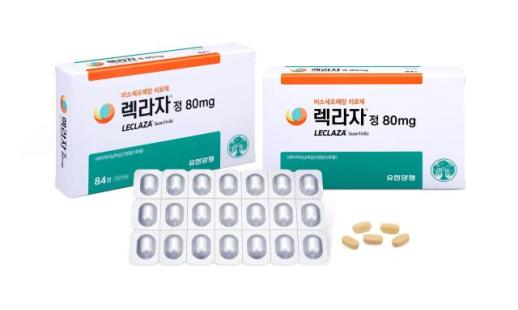 Yuhan Corporation to Receive $30 Million Milestone for Lazertinib in Europe Yuhan Corporation announced on May 14 that it is set to receive a $30 million milestone payment related to the commercialization of its non-small cell lung cancer treatment, Lazertinib, in Europe, following its technology transfer to Janssen Biotech. This milestone payment is part of a series of payments tied to the European commercialization of Lazertinib and Janssen Biotech's Amivantamab combination therapy. Although Yuhan's performance in the first quarter fell short of market expectations, the entry of Lazertinib into the European market has raised hopes for improved financial results. With this payment, the total cumulative milestone payments Yuhan has received for Lazertinib (known domestically as Lazertinib) has reached $300 million, including the initial contract fee. The total milestone payments Yuhan is set to receive amount to $950 million, of which approximately one-third has been received to date. Additionally, Yuhan has begun receiving revenue-based royalties from the combination therapy prescriptions starting in 2024, and the European commercialization is expected to lead to an increase in royalties due to expanded global sales. Lazertinib is expanding its market presence across four continents: Asia, Europe, America, and Oceania. Notably, it was included in the National Comprehensive Cancer Network (NCCN) guidelines last November as the preferred first-line treatment for EGFR mutation-positive non-small cell lung cancer, establishing itself as a global standard treatment option.* This article has been translated by AI. 2026-05-15 02:48:42
 -
 Food Industry Faces Challenges Despite Strong First Quarter Sales Major South Korean food companies reported strong performances in the first quarter of this year, driven by growth in their overseas operations. The expansion of global sales amid the K-food craze has allowed these companies to successfully defend against domestic and international uncertainties. However, as the second quarter approaches, concerns are rising due to the prolonged conflict in the Middle East, which is expected to impact raw material and packaging costs, alongside high exchange rates. According to data from the Financial Supervisory Service on May 14, CJ CheilJedang recorded consolidated sales of 7.111 trillion won and an operating profit of 238.1 billion won for the first quarter. Despite a decline of 17.2% in overall operating profit due to poor performance in its bio business, sales from global strategic products, including dumplings, surged to 3.0384 trillion won, with operating profit increasing by 11.2% to 143 billion won compared to the same period last year. Lotte Wellfood saw its operating profit soar by 118.4% to 35.8 billion won, driven by growth in its overseas operations in India and Kazakhstan. Lotte Chilsung Beverage also reported a 91% increase in operating profit to 47.8 billion won, bolstered by strong exports of its Milkis and LetsBe brands. Notably, profitability from overseas subsidiaries in the Philippines, Pakistan, and Myanmar has improved, raising the global segment's share of total sales to 46%. Samyang Foods set a new quarterly record, fueled by the popularity of its Buldak brand. With European sales skyrocketing by 215%, all overseas subsidiaries recorded double-digit growth, leading to first-quarter sales of 714.4 billion won and an operating profit of 177.1 billion won, marking increases of 35% and 32%, respectively. Orion continued its growth trajectory, with first-quarter sales reaching 934.9 billion won, up 16%, and operating profit rising by 27.7% to 169.1 billion won, thanks to strong sales in Russia and China. Nongshim is also expected to report first-quarter sales of 925.7 billion won and operating profit of 60.3 billion won, reflecting improvements of 3.7% and 7.5%, respectively, based on market estimates. These results stem from a combination of aggressive overseas market strategies and rigorous cost-efficiency measures. Major companies have focused on enhancing profitability by streamlining low-margin businesses and increasing their international presence. While concerns about rising costs due to supply chain disruptions from the Middle East have emerged, companies have managed to mitigate the impact on their performance by utilizing existing inventory. However, the effectiveness of this 'holding strategy' may diminish as the second quarter progresses. The ongoing conflict in the Middle East and persistent high exchange rates have driven naphtha prices, a key raw material for packaging, up by more than 70% since the beginning of the year, with packaging costs themselves increasing by 20-30%. Additionally, the won-dollar exchange rate is threatening to breach the 1,500 won mark, exacerbating the burden of imported raw materials and logistics costs. Compounding these challenges, the government's strict price stability measures are limiting companies' flexibility. Chief Presidential Secretary Kang Hoon-sik instructed relevant ministries during a senior secretary meeting on May 11 to prevent excessive price increases under the pretext of rising oil prices, stating, "The war on inflation is just beginning." An industry insider noted, "So far, we have been managing through inventory and cost-cutting measures, but if supply instability from the Middle East continues, we may need to adjust our production strategies for key products. The overall atmosphere in the industry is one of concern over defending profitability."* This article has been translated by AI. 2026-05-15 02:46:15
 -
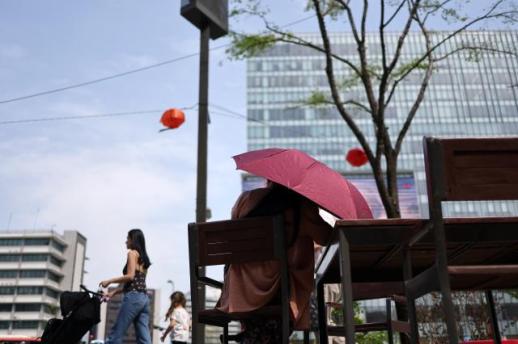 Weather Forecast: Clear Skies and Early Summer Heat Across the Country On Friday, May 15, clear skies and clean air are expected nationwide, with daytime temperatures exceeding 30 degrees Celsius in some areas. According to the Korea Meteorological Administration on May 14, morning lows are forecasted to range from 10 to 17 degrees Celsius, while daytime highs will be between 22 and 32 degrees Celsius. The early summer weather is expected to remain above the seasonal averages (morning lows of 10 to 14 degrees and daytime highs of 20 to 25 degrees). Morning low temperatures across the country are expected to be: △Seoul 17 degrees △Incheon 16 degrees △Chuncheon 13 degrees △Gangneung 13 degrees △Daejeon 14 degrees △Daegu 13 degrees △Jeonju 15 degrees △Gwangju 15 degrees △Busan 15 degrees △Jeju 16 degrees. In Seoul, the daytime high is predicted to reach 31 degrees. Other expected daytime highs include: △Incheon 28 degrees △Chuncheon 30 degrees △Gangneung 25 degrees △Daejeon 30 degrees △Daegu 29 degrees △Jeonju 30 degrees △Gwangju 29 degrees △Busan 23 degrees △Jeju 24 degrees. Air quality is expected to be at good to moderate levels nationwide. Fog is anticipated over the West and East Seas, particularly in some island regions where visibility may drop below 200 meters, accompanied by light rain. Caution is advised for maritime safety due to these conditions. Waves in the seas are expected to be around 0.5 to 1.0 meters in the East and South Seas, and about 0.5 meters in the West Sea. In the offshore areas (approximately 200 kilometers from the coastline), wave heights are forecasted to be 0.5 to 1.5 meters in the East Sea, 0.5 to 1.0 meters in the West Sea, and 0.5 to 2.0 meters in the South Sea.* This article has been translated by AI. 2026-05-15 02:44:07
 -
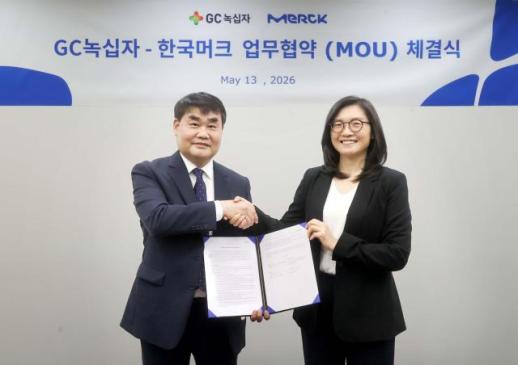 GC Green Cross Partners with Merck to Expand Biopharmaceutical Production and Supply Cooperation GC Green Cross, known for its blood product 'Aliglo,' announced on May 14 that it has signed a strategic memorandum of understanding (MOU) with global science and technology company Merck Life Science to enhance cooperation in biopharmaceutical development and Good Manufacturing Practice (GMP) production processes. The signing ceremony took place at Merck's headquarters in Gangnam, Seoul, attended by Kim Young-im, head of Merck Life Science Process Solutions Business, and Shin Woong, head of operations at GC Green Cross. Under this agreement, GC Green Cross aims to strengthen its supply chain for raw materials necessary for biopharmaceutical production and establish a cooperative system to enhance manufacturing efficiency and supply stability. This strategy targets both the profitable blood products and vaccines market as well as the global rare disease sector. Merck will provide a comprehensive cooperation system covering everything from raw material procurement to process technology support. The company plans to manage supply chain risks proactively by ensuring a stable supply of products that meet strict quality standards. The two companies plan to operate regular process consultation meetings to strengthen technical cooperation for manufacturing efficiency. This will facilitate the sharing of the latest process technology information, enhance quality competitiveness, and continuously seek opportunities for joint research and development (R&D). Shin Woong stated, "This collaboration will strengthen the foundation for producing and supplying essential medicines and treatments for major rare diseases. We will minimize manufacturing risks and enhance quality competitiveness through process optimization and technical cooperation."* This article has been translated by AI. 2026-05-15 02:43:06
 -
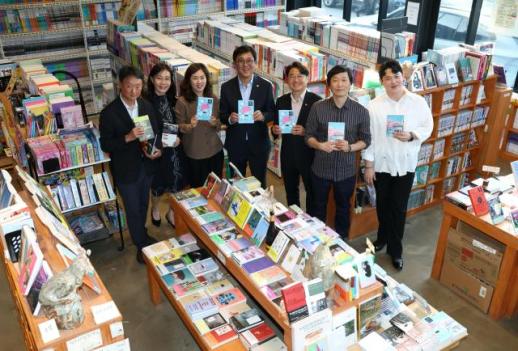 Local Bookstores Struggle to Stock Popular Titles in Miryang "When author Han Kang won the Nobel Prize, our bookstore didn’t receive a single book for two weeks. Only now are we starting to see some titles come in. Customers were disappointed, saying, 'I came to support the local bookstore, but how can there be no books when they’re all available online?' It was embarrassing." Shin Chang-seob, the owner of Cheonghak Bookstore, which has been operating in Miryang, South Gyeongsang Province, for two generations, made these remarks during a meeting aimed at revitalizing local bookstores on May 14. Shin explained, "When popular authors or politicians publish books, most of the distribution is handled in Seoul, so we often don’t receive them. After experiencing this several times, I’ve even thought it might be better if blockbuster titles didn’t come out at all. It’s disheartening." During the meeting, Minister of Culture, Sports and Tourism Choi Hwi-young listened to the concerns of representatives from five local bookstores in Miryang: Cheonghak Bookstore Sammun Branch, Cheonghak Bookstore Milgo Branch, Dongah Bookstore, Miribeol Bookstore, and Donghaeng Seorim. After hearing Shin’s frustrations, Minister Choi stated, "Books have a public nature. People want to see books everywhere. I will look into whether specific distributors are monopolizing the supply and will work on ensuring a balanced distribution." Choi noted, "As our country’s reading rate has rapidly declined, the number of local bookstores serving as community hubs is also decreasing. The President has been very interested in this issue since his time as a local government leader and continues to press for improvements." He added, "I will strive to create conditions necessary for the survival of local bookstores through various institutional improvements, including school library supplies." Representatives from local bookstores expressed a sense of hopelessness, with Lee Chan-hee, owner of Miribeol Bookstore, stating, "Forget about supplies; there are hardly any customers in the store. Since the pandemic shifted retail patterns online, customers have not returned. That’s the biggest problem." He requested, "I hope solutions can be researched and provided." There were also calls for improvements in school supply processes. Shin Kwan-seob, owner of Dongah Bookstore, pointed out, "Schools buy many books, even if they are not libraries, but a significant portion of those purchases go to online retailers." He criticized the complex purchasing process for local bookstores compared to online options and called for action against local bookstores that lack physical stores but still intercept school orders. Demands for reform of the fixed book price system were also raised. Shin Chang-seob remarked, "The current fixed book price system effectively caps discounts at 15%. The so-called big three—Kyobo, Aladin, and Yes24—maintain this 15% discount, forcing all bookstores to comply. After maintaining this for over 20 years, we had to reduce it to 10% last year due to financial strain. With a 15% discount, we are left with only 2-3% after accounting for logistics and salaries." In response to concerns about school supplies, Minister Choi said, "I will discuss this with the Ministry of Education," and regarding the fixed book price system, he stated, "I will look into how we can improve it." Meanwhile, the Ministry of Culture plans to gather opinions on policy support to revitalize local bookstores and incorporate them into next year’s budget. The ministry aims to ensure the sustainability of local bookstores, allowing residents and tourists to visit, read, communicate, and enjoy diverse experiences through books.* This article has been translated by AI. 2026-05-15 02:41:19
 -
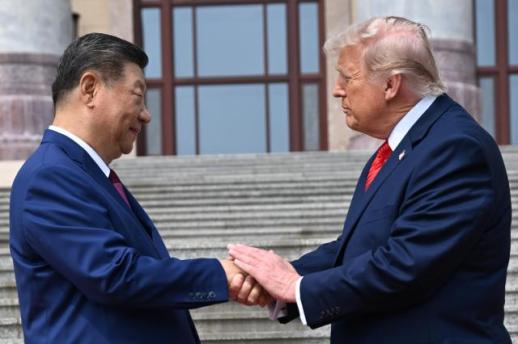 Trump and Xi Agree on Maintaining Hormuz Strait Access and Iran Nuclear Deal Donald Trump, the President of the United States, and Xi Jinping, the President of China, agreed on the importance of maintaining access to the Strait of Hormuz and the principle that Iran should not possess nuclear weapons, the White House announced on May 14. According to reports from Bloomberg and NBC, a White House official stated that Trump had a "good meeting" with Xi during their summit. The two leaders exchanged views on the situation in the Middle East. The White House official noted that both Trump and Xi concurred on the necessity of keeping the Strait of Hormuz open. Additionally, the U.S. side reported that Xi made it clear that China opposes the militarization of the Strait of Hormuz. On the issue of Iran's nuclear program, both sides agreed that Iran must never acquire nuclear weapons. The leaders also discussed economic matters, including plans for China to increase its purchases of U.S. agricultural products. Xi expressed interest in buying additional U.S. crude oil. Furthermore, the two leaders acknowledged the need to prevent the influx of fentanyl precursors into the United States, according to the official. The summit lasted over two hours, starting at 10:15 a.m. and concluding at 12:30 p.m. This duration was notably longer than the approximately 100 minutes of the previous U.S.-China summit held in Busan last October.* This article has been translated by AI. 2026-05-15 02:39:03
 -
 SK Square Reports Record Q1 Operating Profit of 8.28 Trillion Won SK Square achieved its highest quarterly performance to date, driven by profits from its stake in SK Hynix and improved profitability across its portfolio companies. On May 14, SK Square reported consolidated revenues of 3 trillion won, operating profit of 8.28 trillion won, and net profit of 8.37 trillion won for the first quarter of 2026. Compared to the same period last year, operating profit surged by 400%, while net profit increased by 419%. The company attributed its performance improvement to the expanded equity method gains from SK Hynix and the profitability-focused management strategies of its portfolio companies. Key corporate valuation indicators also showed improvement. SK Square recently ranked third in market capitalization on the KOSPI, with a market cap of approximately 157 trillion won as of the close on May 13. This represents a nearly 15-fold increase from about 10.6 trillion won in early January last year and a three-fold increase from around 51.8 trillion won in early January this year. The company's core value-up indicator, the net asset value (NAV) discount rate, continued to improve. As of May 13, SK Square's NAV discount rate was 46.6%, down from 65.7% at the end of 2024 and 51.5% at the end of 2025. A lower NAV discount rate indicates that the market values the company more highly compared to the value of its assets. The price-to-book ratio (PBR) was approximately 4.3 times as of May 13. The return on equity (ROE) stood at 55.1% as of the end of March, exceeding the company's stated cost of equity (COE) target of 15-20%. To enhance corporate value, SK Square is expanding its shareholder return policy. The company plans to implement a total of 310 billion won in shareholder returns from this year through early next year. Last year, it repurchased 200 billion won worth of its own shares and is considering a larger return policy this year. Since 2023, the company has been conducting annual share buybacks and retirements. The company is also continuing to restructure its investment portfolio. In January, SK Square sold its digital advertising firm, InCross, to SK Networks. Additionally, it has invested in seven AI and semiconductor companies in the U.S. and Japan through its overseas investment firm, TGC Square. Looking ahead, the company plans to focus on new investments and portfolio rebalancing centered around AI bottleneck resolution technologies and the semiconductor value chain. Kim Jeong-kyu, CEO of SK Square, stated, "We will enhance communication with shareholders and focus on increasing corporate value. We will continue to pursue innovations based on AI and new investments in the AI and semiconductor sectors." Meanwhile, SK Telecom (SKT) held an extraordinary shareholders' meeting on October 12, 2021, where it approved the spin-off into the surviving entity SKT and the investment firm SK Square. Both companies officially launched on November 1 of the same year. * This article has been translated by AI. 2026-05-15 02:37:16
 -
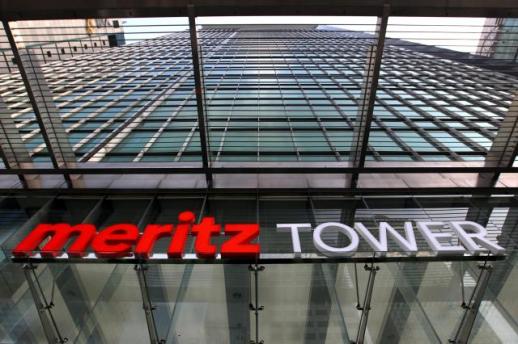 Meritz Fire & Marine Reports Q1 Net Profit of 466.1 Billion Won, Up 0.8% Year-on-Year Meritz Fire & Marine announced on May 14 that it recorded a net profit of 466.1 billion won for the first quarter of this year, marking a 0.8% increase from 462.5 billion won in the same period last year. During the same period, the company reported revenues of 3.3079 trillion won and operating profit of 630.7 billion won, reflecting increases of 9.8% and 1.4%, respectively, compared to the previous year. Investment income rose to 296.2 billion won, a 13% increase from 262.1 billion won a year earlier, driving the overall performance. The asset management investment return rate stood at 5.4%, demonstrating effective capital management. In contrast, insurance profits fell to 334.6 billion won, down 7% from 359.8 billion won in the same quarter last year. Although the insurance contract margin (CSM) amortization increased by 5.7% to 304.1 billion won, losses in other areas, including a deficit of 38.9 billion won, impacted the results. The automobile insurance segment reported a loss of 6.4 billion won, with the loss ratio at 82.7%, a slight increase from the same period last year. The provisional solvency ratio (K-ICS) was 240%, up 1.1 percentage points from 238.9% a year ago, indicating a stable trend. A representative from Meritz Fire & Marine stated, "Despite challenging domestic and international conditions, we continue to grow through our differentiated strategy of maximizing total value."* This article has been translated by AI. 2026-05-15 02:35:42
 -
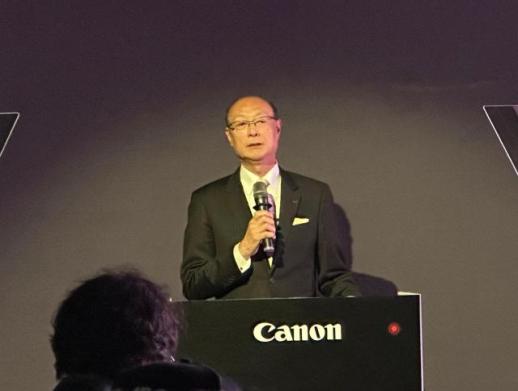 Canon Korea Launches Video-Focused Camera 'EOS R6 V' Canon Korea is accelerating its efforts to target the video creator market. As the one-person video creator market expands, the company is launching a full-frame mirrorless camera and a dedicated power zoom lens tailored for video content.On May 14, Canon Korea held a press conference at Studio 159 in COEX, Seoul, to unveil the video-focused full-frame mirrorless camera 'EOS R6 V' and the power zoom lens 'RF20-50mm F4 L IS USM PZ.' Attendees included Park Jung-woo, CEO of Canon Korea, and Tokuura Ko, Vice President of Canon Imaging Group.The new products reflect the rapid shift in the camera market from photography to video. With the rise of short-form content on platforms like YouTube, TikTok, and Instagram Reels, there is an increasing demand for high-quality video production among everyday consumers.During his visit to Korea, Tokuura Ko noted, "Twelve years ago, when I visited Korea, the presence of mirrorless cameras was limited. Now, with the evolution of smartphone cameras, everyone can enjoy photography and videography. This new product maximizes mobility and usability for video shooting, allowing anyone to capture professional-grade footage."The EOS R6 V is the first model in the EOS R V series to feature a full-frame sensor. Unlike previous mirrorless cameras focused on photography, this model is specifically designed for video production.The camera's design caters to video creators, featuring a box-shaped flat body that minimizes interference when attaching accessories. It supports vertical shooting with a tripod hole and a vertical user interface (UI) to enhance convenience for short-form content creation. Additionally, it includes a front recording button, 12 customizable buttons, and tally lamps to improve usability in real-world video production environments.Notably, the EOS R6 V has improved heat control, addressing a common challenge in video shooting. It is equipped with an internal cooling fan, allowing for continuous recording of up to 120 minutes at 4K 120P and 7K open gate resolutions. This enhancement considers the growing demand for long-duration filming and live streaming among video creators.Performance has also been significantly upgraded. The camera features a 32.5-megapixel full-frame CMOS sensor and DIGIC X engine, enabling internal recording of up to 7K 60P RAW video and supporting 7K oversampling for 4K video capture. It can shoot 4K 120P and 2K 180P without any crop loss.Canon emphasizes the 'Open Gate' feature as a key competitive advantage of this product. This function utilizes the entire 3:2 aspect ratio of the sensor, allowing for flexible cropping and reframing to suit various screen ratios. This capability enables creators to produce content for multiple platforms from a single recording.The autofocus (AF) system has also been enhanced for video shooting. The EOS R6 V features Dual Pixel CMOS AF II, which automatically recognizes people, animals, cars, airplanes, and trains, and includes a 'Review AF' function that prioritizes close-up subjects during product reviews. It also supports focus acceleration control for smooth focus transitions during video shooting.The RF20-50mm F4 L IS USM PZ, launched alongside the camera, is Canon's first power zoom lens for full-frame RF cameras. Weighing approximately 420 grams, it features a lightweight design and inner zoom structure to minimize changes in weight distribution during gimbal and handheld shooting.Notably, it allows for smooth zooming without additional equipment. The zoom speed can be finely adjusted in 15 steps, enabling solo creators to achieve cinematic effects. When paired with the EOS R6 V, it supports electronic zoom control via the body zoom lever.In his welcoming remarks, CEO Park Jung-woo stated, "Canon Korea is strengthening its integrated imaging ecosystem that encompasses photography and video, hardware and software, in response to the changing creative environment. This new product is designed to meet the rapidly evolving video content market, expanding the creative possibilities for creators."* This article has been translated by AI. 2026-05-15 02:34:11
 -
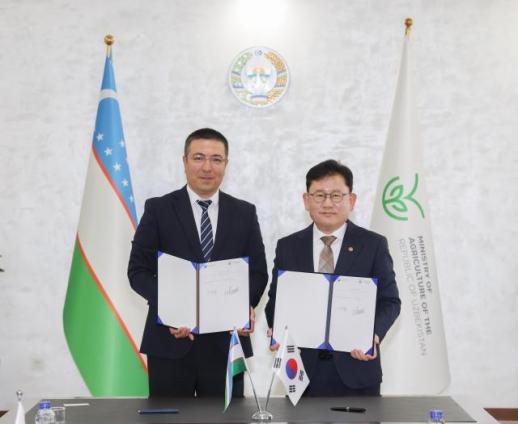 Korea's Rural Development Administration Shares Dairy and Rice Cultivation Techniques in Uzbekistan Lee Seung-don, head of South Korea's Rural Development Administration (RDA), visited Uzbekistan to promote K-dairy technology and rice cultivation techniques. According to the RDA, Lee's visit began on May 13, during which he attended field demonstrations, met with government officials, and signed a memorandum of understanding (MOU). On the first day of his visit, Lee observed a field demonstration at Sultan Farm in the Syrdarya region. During this event, a letter of intent for the export and import of Korean dairy cattle embryos was signed between a Korean embryo export company and Sultan Farm. The pregnancy success rate for implanted Korean dairy embryos is 50%, which is 20 percentage points higher than the 30% rate for foreign embryos, earning positive feedback locally. Lee also met with Shadman Ergashevich Namazov, head of the Agricultural Knowledge Innovation Agency, and Abdullo Marufovich Mansurov, director of the Rice Research Institute, where he attended the KOPIA rice mechanization demonstration. The mechanized rice planting method using Korean agricultural machinery reportedly reduces labor by 70% while increasing productivity by up to 52%. The RDA plans to expand the area for high-quality seed production to 200 hectares next year. On May 14, Lee held high-level talks with Abdujurov Jamshidjon, Uzbekistan's Deputy Minister of Agriculture, and signed an MOU to enhance the capacity of experts in artificial insemination technology. The agreement includes the exchange of livestock genetic resources, joint research on breeding and management techniques, the exchange of agricultural specialists and technical training, and the simplification of animal medicine registration. Lee stated, "This achievement goes beyond mere technology transfer; it represents a virtuous cycle that integrates into the policies of the partner country and leads to export cooperation. I will do my best to expand the overseas presence of agricultural technology and Korean agricultural equipment."* This article has been translated by AI. 2026-05-15 02:31:38