
Journalist

Lim, Kwu Jin
-
 LX Semicon Q1 Operating Profit Falls 65.5% to 20.6 Billion Won LX Semicon said in a regulatory filing on the 30th that its first-quarter consolidated revenue totaled 388.77 billion won and operating profit came to 20.594 billion won. Revenue fell 18.4% from a year earlier, while operating profit dropped 65.5%. From the previous quarter, revenue slipped 0.3% and operating profit declined 17.3%, which the company attributed to the impact of higher raw material prices. The company said the decline also reflected a base effect after customers increased inventory demand last year amid uncertainty over tariff policy. LX Semicon said it plans to focus on advanced R&D for its main products — driver ICs, timing controllers and power management semiconductors (PMICs) — and pursue market expansion based on its technology edge.* This article has been translated by AI. 2026-04-30 17:15:40
 -
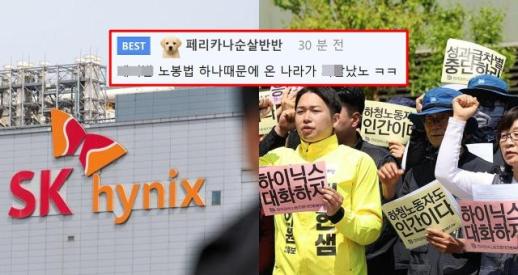 SK Hynix Faces Growing Pressure Over Bonus Distribution Amid Semiconductor Boom As the semiconductor industry thrives, tensions surrounding SK Hynix's bonus distribution are escalating, sparking widespread debate across the sector. Workers from subcontractors, including those in food service and support roles, are demanding a share of the bonuses, intensifying social conflict. Subcontractor workers have been protesting, stating, "We worked in the same environment but received no compensation," as SK Hynix reports record profits and substantial bonuses. Employees from partner companies are also joining in collective actions to demand bonuses. This trend is spreading beyond individual companies, affecting the entire industry. In shipbuilding and construction, indirect workers, including those from food service companies, are now demanding bonuses from primary contractors, asserting that even support staff should be included in compensation discussions. The recent implementation of the "Yellow Envelope Law" (amendment to labor laws) allows subcontractor workers to negotiate directly with primary contractors. Some unions are now pushing for profit-sharing, including bonuses. The issue is significant as these demands could reshape the industry's structure. Since the law's enactment, negotiations have expanded from subcontractors to include clients, with discussions now encompassing wages, benefits, bonuses, and direct employment issues. Conflicts are particularly pronounced in the semiconductor sector, where regular employees at large firms receive bonuses in the millions, leading subcontractor workers to feel deprived and demand equitable distribution. This has resulted in a "bonus domino effect," where increased profits for large companies correlate with rising demands from subcontractors. SK Hynix is reportedly facing demands for bonuses not only from its subcontractors but also from cargo unions and food service providers. Farmers have also joined the call for equitable distribution, further complicating the situation. Media outlets like MBC have echoed the sentiment that bonuses should be shared, amplifying the controversy. Many online commenters have expressed their views, stating, "Koreans claim to oppose communism but act like communists," and others suggesting that the nation's social structure aligns more closely with communism than democracy. This controversy extends beyond mere bonus disputes, raising questions about accountability between primary and subcontractors. Following the Yellow Envelope Law's implementation, the industry is grappling with the fundamental question of who the employer is and the extent of their responsibilities, with similar conflicts anticipated across major sectors like shipbuilding and construction. 2026-04-30 17:14:15
 -
 Tariff Refunds, USMCA Review Roil U.S. Auto Market; Hyundai’s Response in Focus A U.S. Supreme Court ruling has set tariff refund procedures in motion, signaling shifts in profit expectations for U.S. automakers. For foreign brands operating in the United States, uncertainty is growing as the U.S.-Mexico-Canada Agreement, or USMCA, heads toward a scheduled review. Attention is also on how Hyundai Motor Group, which has been posting strong U.S. results, will respond. Industry officials said April 30 that General Motors expects about $500 million (about 740 billion won) in tariff refunds for the first quarter following the Supreme Court’s decision that reciprocal tariffs were illegal. In its 2026 first-quarter earnings report, GM raised its forecast for adjusted earnings before interest and taxes this year to $13.5 billion to $15.5 billion, from $13 billion to $15 billion. The ruling found unlawful the broad tariffs President Donald Trump imposed under the International Emergency Economic Powers Act, or IEEPA. Ford is also reported to have reflected the impact of tariff refunds totaling about $1.3 billion paid over the past year. Despite those moves by U.S. automakers, other foreign automakers are taking a cautious stance, with tariff-related risks seen widening. Trump has added to uncertainty by raising the possibility of scrapping the USMCA or shifting to separate agreements with Canada and Mexico during the pact’s scheduled review in July. Since the launch of the second Trump administration, vehicles produced in Mexico and Canada have faced a 25% tariff depending on the share of non-U.S. parts. If remaining tariff benefits are removed, companies operating locally would face an unavoidable hit. Hyundai, Toyota and Nissan have responded by considering pulling low-priced models. Even with political uncertainty in the U.S. market, Hyundai Motor Group’s sales have remained strong. Hyundai and Kia sold 430,720 vehicles in the United States in the first quarter, up 2.6% from a year earlier. Over the same period, major rivals posted declines, including GM (-9.6%), Honda (-4.2%), Nissan (-8.3%), Toyota (-0.1%). The gains were driven by rising demand for eco-friendly models such as the Sonata Hybrid and higher sales of SUVs including the Tucson and Sportage. Hyundai said it is adjusting its strategy to fit the changing environment. It plans to invest $26 billion in the United States through 2028 to sharply increase production of vehicles, including hybrids. A Hyundai official said, "(In the U.S. market) tariff factors and policy uncertainty are growing, so we are focusing on expanding local production rather than exports from Korea."* This article has been translated by AI. 2026-04-30 17:12:36
 -
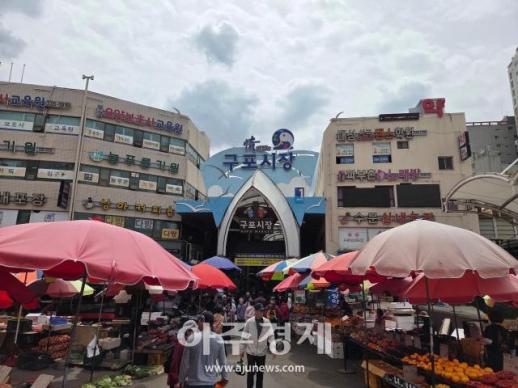 Busan Buk-gu Gap By-Election Emerges as Three-Way Fight, Poll Shows Tight Race “This time, people really want to pick someone who can get things done. If you show your face a lot and pay attention to the neighborhood, people’s hearts go to you,” a self-employed resident said in Busan’s Manduk-dong on April 29, describing sentiment ahead of the June 3 National Assembly by-election. Manduk-dong is part of Busan Buk-gu Gap, widely seen as the most competitive district among the upcoming by-elections. Han Dong-hoon, the former People Power Party leader, moved to Manduk-dong on April 14 and formally declared his candidacy. On April 30, Ha Jung-woo, former senior presidential secretary for AI Future Planning, was confirmed as the Democratic Party candidate. The People Power Party has not yet nominated a candidate, but Park Min-sik, former minister of Patriots and Veterans Affairs, has entered the race. The district has traditionally leaned conservative, but Jeon Jae-soo, the Democratic Party’s Busan mayoral candidate, won the seat three consecutive times. In the general election two years ago, it was also the only one of Busan’s 18 constituencies won by the Democratic Party. Observers attribute that to weaker partisan loyalty and a tendency to vote for individuals. Reporting across Buk-gu, Ajunews found Ha’s low name recognition in the district is viewed as a key weakness. Despite leading national AI policy at the presidential office, his name and face are not widely known locally. With the area aging rapidly, it is also unclear how much appeal an “AI expert” will have. An 80-something woman in Manduk-dong said, “I saw him on the news, but I don’t really know what he does,” adding that people around her also seem unfamiliar. Another resident, identified only as Choi, 80, said, “They say he’s impressive, but honestly I don’t know what an AI secretary is.” Han, who arrived in Buk-gu first, has built a solid base of support centered on Gupo Market. Vendors said that when he visits, supporters crowd in and sales rise, helping make him a welcome presence there. A woman in her 60s who runs a fruit shop at Gupo Market said, “Sales noticeably go up every time Han comes,” adding, “For merchants like us, it’s hard not to like someone who boosts sales.” Still, some said votes in Gupo Market alone will not decide the race and that he will need broader momentum elsewhere. Park, who served as the district’s lawmaker in the 18th and 19th National Assembly, has not secured the party nomination but has been campaigning locally since announcing his bid. Some residents, however, said they still view him negatively because he ran in Seoul’s Gangseo district, not Busan Buk-gu Gap, in the general election two years ago. A man in his 30s at Gupo Market said Park, “who went somewhere else and came back,” has no right to call Han a traitor. A woman in her 40s who said she lives in Buk-gu said leaving for another district after losing and then returning now “is a transparent move.” But one Manduk-dong resident said Park seems to be seen more often in the neighborhood than Han, expressing a favorable view. Political circles say the outcome could remain hard to predict even if the three-way race continues through Election Day without a unified candidacy. A poll commissioned by NewsTomato and conducted by MediaTomato on April 24-25 of 802 Buk-gu Gap residents age 18 and older (wireless ARS; details available on the National Election Survey Deliberation Commission website) showed Ha at 35.5%, Park at 26.0% and Han at 28.5%, a tight contest within the margin of error. The poll had a margin of error of plus or minus 3.5 percentage points at a 95% confidence level.* This article has been translated by AI. 2026-04-30 17:10:51
 -
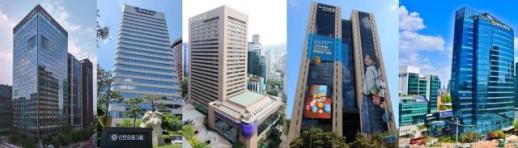 South Korea’s Top 5 Financial Groups to Invest 1 Trillion Won in Venture, Startup Support KB Financial Group, Shinhan Financial Group, Hana Financial Group, Woori Financial Group and NH NongHyup Financial Group will invest 1 trillion won to support venture companies and startups. The Financial Services Commission said the government and the five financial groups (KB, Shinhan, Hana, Woori and NH) signed a business agreement on Wednesday to boost venture investment and 추진 the “Startup for All Project.” Attendees included Minister of SMEs and Startups Han Seong-sook, Financial Services Commission Chairman Lee Eok-won, the chairmen of the five financial groups, and the heads of six related organizations including Korea Venture Investment Corp. and the Korea Technology Finance Corp. The agreement is aimed at linking the capital and capabilities of the five financial groups with the venture and startup ecosystem to accelerate a shift toward “productive finance” and expand private-sector-led venture investment. Under the plan, the five groups will create an 800 billion won private venture fund-of-funds by 2029, starting with 400 billion won this year. Hana Financial Group will contribute 100 billion won a year beginning this year, for a total of 400 billion won. Hana, KB, Shinhan and Woori will also create a 100 billion won LP (limited partner) growth fund, while Hana and NH will participate in a 20 billion won contribution to a regional growth fund. With the combined fund-of-funds totaling 920 billion won, and typical leverage from follow-on sub-funds running about seven to 10 times, officials said total assets under management are expected to expand to several trillion won. The five groups also plan to use their overseas networks to help companies backed by the government’s fund-of-funds grow into unicorns — firms valued at 1 trillion won or more — by linking support for investor relations, follow-on investment, initial public offerings and overseas expansion. The groups will jointly participate in the Ministry of SMEs and Startups’ “Startup for All Project.” The five groups will contribute 20 billion won, and the Korea Technology Finance Corp. will use the funds to launch a 150 billion won agreement-based guarantee program. Part of the contribution will be used to reduce guarantee fees for prospective entrepreneurs, fully waiving the fees and raising the guarantee coverage ratio to about 100% from 85%. “Productive finance means ensuring entrepreneurs and venture companies can secure funding when they need it,” Lee said, adding he hopes the agreement will further energize the startup and venture ecosystem. Han said the agreement was not merely a declaration of cooperation but “a starting point” for connecting the expertise and resources of the five financial groups with the startup and venture ecosystem to meet the challenges of the times. * This article has been translated by AI. 2026-04-30 17:05:41
 -
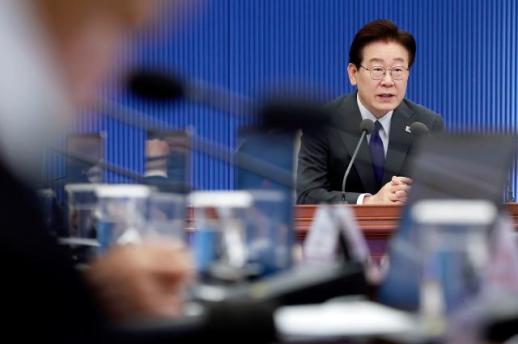 South Korea’s Lee orders public debate on school field trips, review of teacher liability President Lee Jae-myung on April 30 ordered officials to gather views from across society on school field trips and to review whether teachers face unreasonable legal burdens, amid what has been dubbed the “picnic controversy.” Senior presidential spokesperson Kang Yu-jung said at an afternoon briefing at Chunchugwan that Lee directed the government to collect opinions through an open public debate involving teachers, parents and experts on school experiential learning trips. Kang said Lee also instructed the Education Ministry and the Justice Ministry to examine whether teachers are being subjected to unfair responsibility and whether the scope of legal liability and immunity needs adjustment. At a Cabinet meeting at Cheong Wa Dae on April 28, Lee said he had heard that schools are increasingly avoiding picnics and class trips. “A picnic or a class trip is also part of instruction, isn’t it?” he said, adding, “You shouldn’t throw out the whole jar because you’re worried about maggots.” Cheong Wa Dae explained the next day, April 29, that Lee’s remarks were aimed at strengthening protections for teachers from safety accidents during field learning and ensuring they can carry out their core duties despite heavy workloads.* This article has been translated by AI. 2026-04-30 17:04:34
 -
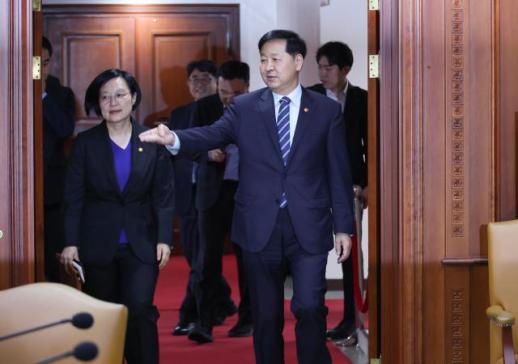 South Korea’s Koo Yun-cheol to Travel to Uzbekistan for Trilateral, ADB Meetings Deputy Prime Minister and Minister of Finance and Economy Koo Yun-cheol will depart for Uzbekistan to attend a series of major international meetings, including a trilateral meeting of finance ministers from South Korea, China and Japan and the annual meeting of the Asian Development Bank (ADB). The Ministry of Finance and Economy said Thursday that Koo will leave on May 2 for Samarkand, where he will chair the South Korea-China-Japan meeting of finance ministers and central bank governors and attend the ASEAN+3 meeting of finance ministers and central bank governors, as well as the 59th ADB annual meeting. Koo is scheduled to chair the trilateral meeting on May 3. Participants will share their countries’ economic conditions and policy responses in light of developments in the Middle East war and exchange views on regional financial cooperation. He will then attend the ASEAN+3 meeting, which brings together ASEAN members and South Korea, China and Japan. Officials from the International Monetary Fund, the ADB and the ASEAN+3 Macroeconomic Research Office are also expected to take part in discussions on global and regional economic trends and ways to strengthen the financial safety net. Strengthening the Chiang Mai Initiative Multilateralization (CMIM) is expected to be a key agenda item. The CMIM is a multilateral currency-swap arrangement designed to provide liquidity support to ASEAN+3 members in times of crisis, with a total size of about $240 billion. Koo will also attend the ADB annual meeting from May 4-5 and present South Korea’s views on sustainable and inclusive growth in the region and on cooperation among member countries. On the sidelines, he plans bilateral talks with the ADB president, Uzbekistan’s deputy prime minister and Singapore’s finance minister to discuss ways to expand economic cooperation. * This article has been translated by AI. 2026-04-30 17:03:19
 -
 Ambassador Roh Jae-heon Urges Korea-China Youth to Serve as Bridge Between Peoples Ambassador Roh Jae-heon to China visited Shanghai on a one-night, two-day trip starting April 29, carrying out public diplomacy centered on Korea-China exchanges in youth, culture and history. The Korean Embassy in China said Roh delivered a lecture at NYU Shanghai on April 29 titled "A New Era in Korea-China Relations" and met with students for an open discussion. He said young people in both countries should pursue global cooperation in areas including innovation, culture and peace, and urged them to serve as a bridge connecting the two peoples, especially among future generations. Roh later visited a mixed-use shopping complex in central Shanghai, attended an opening ceremony for a Korean company store and toured the Korea SMEs and Startups Agency's Global Business Center. He also held a public-private meeting with officials and businesspeople to review the status of the government's "K-Initiative" and exchange views on ways to implement it more effectively. On April 30, Roh visited the grave of Korean film figure Kim Yeom, known as the "emperor of film" for his work in China in the 1930s, and laid flowers. He also visited the Shanghai site of the Korean Provisional Government, underscoring historical ties between the two countries. In a meeting with an official from the Shanghai Foreign Affairs Office, Roh praised Chinese authorities for their efforts to preserve the site as the 107th anniversary of the establishment of the Korean Provisional Government approaches. He called for continued cooperation so more visitors can commemorate the shared history of Korea and China. The embassy said the trip strengthened public diplomacy, including youth exchanges, supported Korean businesspeople, and provided an opportunity to discuss and review the spread of the government's cross-agency K-Initiative and ways to improve its implementation. * This article has been translated by AI. 2026-04-30 16:58:43
 -
 South Korea seeks discipline for 12 officials over mishandled recovery in 12·29 Jeju Air crash The Office for Government Policy Coordination said it will seek disciplinary action against 12 public officials over what it called a poor recovery effort that left victims’ remains inadequately collected and stored for an extended period after the 12·29 Jeju Air passenger plane disaster. The office’s joint government inspection team on Wednesday released results of an intensive review conducted for about a month starting March 23, covering the Aviation and Railway Accident Investigation Board, the Ministry of Land, Infrastructure and Transport, and related agencies including police, fire authorities and the military. The team said early search and recovery operations were incomplete because there were no detailed guidelines for aircraft-accident recovery and because on-scene command and oversight by fire and police officials were insufficient. It also said the investigation board violated relevant rules and manuals while storing and managing debris that included unrecovered remains, leaving it piled up and unattended for a long period. The team said it will notify the relevant ministries of its findings and request disciplinary measures for 12 officials: six from the investigation board, four from the transport ministry, and one each from police and fire authorities. According to the team, the initial recovery led by fire and police authorities was carried out without a manual, and many inexperienced personnel were deployed, contributing to a flawed operation. It found the South Jeolla Fire Headquarters, which oversaw the first search, ended that initial operation on Jan. 7 last year even though remains continued to be found at the site. A second search led by the South Jeolla Provincial Police Agency ended, and the team said police did not review whether additional searches were needed even after learning that remains were found the next day. The team said the investigation board failed to properly check debris mixed with remains, placed it in large sacks and left it for 14 months, and did not respond promptly to bereaved families’ requests for a renewed search. Kim Young-soo, first vice minister at the Office for Government Policy Coordination, said the inspection was carried out quickly to ease, even slightly, the pain of bereaved families who have suffered additional distress due to the delayed recovery. He said he hoped the findings would help address suspicions raised about inadequate early recovery and the long-term neglect of remains.* This article has been translated by AI. 2026-04-30 16:57:18
 -
 Court Halts FIU Sanction, Allowing Bithumb to Keep Operating for Now Bithumb, a South Korean virtual asset exchange, has avoided a financial regulator’s business suspension for now. According to the legal community on Wednesday, the Seoul Administrative Court’s Administrative Division 2, presided over by Chief Judge Gong Hyeon-jin, granted Bithumb’s request to suspend the Financial Intelligence Unit’s (FIU) sanction of a “six-month partial business suspension.” The measure will remain suspended until the court rules on the main case. The FIU had said Bithumb violated obligations under the Act on Reporting and Using Specified Financial Transaction Information — including bans on dealing with unreported virtual asset businesses, customer identification (KYC) requirements and transaction restriction duties — a total of 6.65 million times. Last month, the FIU imposed a six-month partial suspension and a 36.8 billion won fine. The partial suspension restricts new customers from transferring virtual assets to and from external wallets. It is the toughest sanction imposed on a domestic exchange operating a won-based market. The sanction had been set to take effect March 27, but Bithumb sought an injunction, leaving the measure temporarily on hold through Wednesday. With the court’s decision, Bithumb can continue operating under its current business model until the lawsuit is resolved. A Bithumb official said the company “plans to faithfully explain its position in the remaining procedures.”* This article has been translated by AI. 2026-04-30 16:54:16