
Journalist

Lim, Kwu Jin
-
 South Korea Says It Is Consulting Iran on Korean Ships’ Passage Through Strait of Hormuz Cheong Wa Dae said Tuesday it is actively seeking ways to resolve navigation issues involving South Korean vessels in the Strait of Hormuz, including through consultations with the Iranian government. Senior presidential spokesperson Kang Yu-jung made the remarks at a briefing at the Chunchugwan press center, responding to a question about whether there had been progress for South Korean ships after reports that a Japanese tanker had made its first passage through the strait with Iranian authorization. Kang said the matter requires consideration of multiple factors, including ship safety and the position of the shipping company, and noted that more than one country is often involved, requiring broad communication and cooperation. She added that the South Korean government maintains that, within international norms, freedom of navigation and safety must be guaranteed for all vessels in the Strait of Hormuz, including South Korean ships, and said talks are underway based on that position. According to foreign media reports, a Japanese tanker was confirmed to have transited the Strait of Hormuz on the morning of April 28 local time.* This article has been translated by AI. 2026-04-29 18:01:16
 -
 Cafe24 PRO Launches Automated SMS and Kakao Friend Talk Messaging for Online Stores Global e-commerce platform Cafe24, led by CEO Lee Jae-seok, is offering an automated messaging service for SMS and Kakao Friend Talk through its premium operations support service, Cafe24 PRO. The service is designed to help online store operators more easily send marketing messages to customers, including promotions, new product launches and re-purchase campaigns. Previously, operators typically had to handle key steps themselves, such as setting recipient groups, writing copy, choosing a channel and checking rules for advertising messages. For small and midsize shopping malls with limited staff, those steps often became a burden. Cafe24 said it now supports the process through its system, from message registration to channel settings and delivery, reducing the time and procedural load for operators. To use it, operators enter the purpose, target audience and preferred schedule under “Message Sending Request” in the “Work Request” menu within the Cafe24 admin page. Cafe24 PRO customers can request and use the function from the admin page without additional complicated procedures. The supported channels are SMS and Kakao Friend Talk. SMS can be sent to members who have agreed to receive messages, while Kakao Friend Talk can be used for Kakao channel friends. For long messages, three SMS credits are deducted; for image-type Kakao Friend Talk messages, 2.2 SMS credits are deducted. Cafe24 also applies a compliance check for advertising messages. The service helps verify items that could lead to legal penalties, including whether recipients have consented, required advertising wording and handling of an 080 opt-out number. Because commercial advertising messages require prior consent and a way to opt out or withdraw consent, Cafe24 said it aims to automate related steps and reduce operators’ burden. A fashion brand manager using the service said, “We were able to reduce resources needed to prepare promotional sends and focus on product planning.” A food shopping mall manager said, “Because required advertising text rules are reflected together, it eased the burden of noncompliance.” A Cafe24 official said some businesses delay new product and promotion notices because the messaging process is complex. “Through the automated messaging service, we plan to support operators so they can communicate with customers on time without procedural burdens and connect that to real sales,” the official said.* This article has been translated by AI. 2026-04-29 18:00:10
 -
 UCI MTB World Series Opens May 1 in Pyeongchang, First Asia Stop The 2026 WHOOP UCI Mountain Bike (MTB) World Series — Mona Yongpyong opens May 1. The event runs May 1-3 at Mona Yongpyong in Pyeongchang, Gangwon Province, as the official opening round of the 2026 season under the Union Cycliste Internationale (UCI) and Warner Bros. Discovery Sports (WBD) framework. It is the first time the MTB World Series, long centered on Europe and North America, has been held in Asia. The organizing committee said delegations and officials from about 40 countries, including the United States, Canada, France, Britain and Switzerland, totaling about 1,000 people, have entered South Korea so far. Among the arrivals are U.S. cross-country (XCO) standout Christopher Blevins and Austrian downhill (DHI) contender Valentina Höll. Riders are setting up equipment in team areas and completing official training ahead of the season’s first races. South Korea’s 14-member team has been finalized. The Korea Cycling Federation selected seven riders each for XCO and DHI through national team trials. The XCO lineup is Heo Seung-su (Korea Armed Forces Athletic Corps), Cheon Seong-hun (Gyeongbuk Sports Council), Na Deok-jin (Eumseong County Office, elite), Kang Dong-hyeon (Jeonju City Hall), Hwang Ui-chan (Catholic Kwandong University), Song Myeong-gwan (Changwon National University) and Je Hwan-jun (Korea Land and Geospatial Informatix Corp., under-23). The DHI team includes Park Jong-yoon (Maru MTB Racing), Bae Jun-ho and Lee Jin-hyeong (both Dirt Yami, elite), along with junior riders Kang Ha-jun, Seok Min-jae, Song Yeon-ho and Ahn Seung-ha. Organizers said the main venue courses on Mount Balwang have been readied. The 1.86-kilometer DHI course was built to international standards with steep grades and rocky terrain, with hazardous sections addressed after test rides. The XCO course, featuring climbs, technical descents and artificial obstacles, has also been finalized. Broadcast and media preparations are in final checks. Coverage is to be carried worldwide on platforms including Eurosport, TNT Sports and HBO Max, and in South Korea on KBSN Sports. The committee said it is also conducting full rehearsals and emergency response drills ahead of an expected crowd of about 15,000. "Everything is moving smoothly as planned, from team arrivals to venues, broadcasting, transportation and safety operations," an organizing committee official said. "We will prepare thoroughly to the very end so this Pyeongchang event can be a top stage for athletes and a memorable festival for fans."* This article has been translated by AI. 2026-04-29 17:54:44
 -
 LG Electronics posts record first-quarter revenue; home appliances and auto parts top 10 trillion won LG Electronics said improving results in its core home appliance and vehicle components businesses pushed combined quarterly revenue from the two units above 10 trillion won for the first time. The company said it plans to sustain growth by focusing on future businesses such as data center cooling and commercialization of home robots. In a final earnings release on Tuesday, LG Electronics reported first-quarter operating profit of 1.6737 trillion won, up 32.9% from a year earlier. Revenue rose 4.3% to 23.7272 trillion won. It was the company’s highest first-quarter revenue on record and its third-highest first-quarter operating profit. Despite economic uncertainty, key businesses including home appliances and TVs supported the results, the company said. Its vehicle components business, a key driver of business-to-business growth, also continued to expand steadily. On an earnings conference call Tuesday afternoon, an LG Electronics official said operating profit faced headwinds from higher prices for some raw materials and tariff effects that have intensified since the second half of last year, but the company maintained solid profitability by expanding higher-margin businesses. Growth also continued in B2B, platform and direct-to-consumer experience businesses that the company said are driving quality growth based on profitability. First-quarter B2B revenue was 6.5 trillion won, up 19% from the previous quarter and up 1% from a year earlier, accounting for 36% of companywide revenue. Subscription business revenue, including product and service sales, rose 8% from the previous quarter and 15% from a year earlier to 640 billion won. The Home Appliance Solution (HS) division, which makes products such as washing machines and refrigerators, posted revenue of 6.9431 trillion won and operating profit of 569.7 billion won. Revenue was the highest across all quarters, and the division posted an operating margin of 8.2% despite higher raw material costs and the impact of U.S. tariffs. The company said its strategy of targeting both premium and midrange segments while expanding online sales and appliance subscriptions helped results. The Media Entertainment Solution (MS) division, which includes TVs, reported revenue of 5.1694 trillion won and operating profit of 371.8 billion won. Operating profit rose sharply from a year earlier and returned to the black from the previous quarter. The Vehicle Solution (VS) division posted revenue of 3.0644 trillion won and operating profit of 211.6 billion won, setting quarterly records for both. The company said sales increased, led by European automakers, as in-vehicle infotainment solutions moved upmarket and were adopted in more models. The Eco Solution (ES) division reported revenue of 2.8223 trillion won and operating profit of 248.5 billion won. Both fell from a year earlier due to weaker consumer sentiment tied to the Middle East war and higher labor costs from staffing increases in key businesses, the company said. LG Electronics said it will prioritize securing opportunities in data center cooling. The company said its chiller business, part of its data center cooling push, is expected to reach its 2027 revenue target of 1 trillion won ahead of schedule. It also said data center-related revenue, though still at an early stage, grew to about three times the prior year’s level last year. The company said certification processes for key products are progressing smoothly with major customers, including global big tech firms, and it expects to share visible results soon. The company also said it is accelerating commercialization of home robots, which it described as a future core business. An LG Electronics official said proof-of-concept demonstrations for its CLOi humanoid business are being carried out systematically this year, and that mass production of initial volumes of actuators, a key robot component, is set to begin in the first half of the year. The official said demonstrations will start in the first half and expand gradually into industrial and home uses, adding that the company will use its home-related expertise from its appliance business to lay the groundwork for commercialization of home robots in 2028.* This article has been translated by AI. 2026-04-29 17:53:04
 -
 Rep. Lee Hoon-gi to Introduce Bill Naming K-Content a National Strategic Industry Rep. Lee Hoon-gi of the Democratic Party said April 29 he will introduce a bill next month to designate K-content as a national strategic industry. Lee made the remarks at a forum titled “Policies and Strategies to Strengthen the Global Competitiveness of the K-Media Content Industry,” co-hosted with the Korea Broadcasters Association at the National Assembly Members’ Office Building. He said the current governance structure is limited because responsibilities are split among the Korea Communications Commission, the Ministry of Science and ICT, and the Ministry of Culture, Sports and Tourism. The forum was organized to assess what participants called a structural disconnect in which K-content’s global success has not translated into growth for South Korea’s domestic media industry, and to explore policy directions. “We need to look back at what we were doing while the world was going wild over ‘K-pop Demon Hunters,’” Lee said, adding that laws and policies supporting K-content’s global competitiveness remain weak. Korea Broadcasters Association President Bang Moon-shin also said the belief that the K-culture boom is leading to industrial growth is “an illusion,” and argued that asymmetric regulation is constraining content production. The forum included a presentation by Kyung Hee University professor Lee Sang-won and drew experts from academia and industry. Participants shared concerns about a broader industry downturn, citing falling terrestrial broadcasters’ revenue, fewer drama slots and a loss-making structure for over-the-top streaming services. * This article has been translated by AI. 2026-04-29 17:51:49
 -
 Appeals court sentences Yoon Suk Yeol to 7 years for blocking arrest warrant execution Former President Yoon Suk Yeol was sentenced to seven years in prison on appeal for charges including obstructing the execution of an arrest warrant by the Corruption Investigation Office for High-ranking Officials. On April 29, the Seoul High Court’s Criminal Division 1, a panel dedicated to insurrection-related cases led by Presiding Judge Yoon Seong-sik, sentenced Yoon to seven years for aggravated obstruction of official duties, abuse of power and related offenses. The term is two years longer than the five-year sentence in the first trial, but below the 10 years sought by the special prosecutor. The appeals court, unlike the first trial, found Yoon guilty on most charges. It upheld guilty verdicts on counts including abuse of power for infringing Cabinet members’ deliberation rights; violating the Presidential Records Act and damaging official documents; instructing abuse of authority under the Presidential Security Act involving a secure phone; and aggravated obstruction tied to blocking the execution of the arrest warrant. The court said it viewed as especially serious Yoon’s use of Presidential Security Service personnel to physically block CIO prosecutors from executing the warrant. Yoon’s side had argued the CIO lacked authority to investigate insurrection and that executing a warrant at the official residence, designated a protected military facility, would be illegal without a commander’s consent. The court rejected those claims. “The CIO has authority to investigate abuse-of-power offenses by high-ranking officials, and insurrection is a related offense discovered in the course of that investigation and therefore falls within the scope,” the court said. Citing the relationship between Article 110 of the Constitution and the Military Bases and Installations Act, it added that when national security conflicts with finding the substantive truth, “the president must not use national security as a shield to evade his own criminal responsibility.” The court also criticized security officials for forming a scrum to block prosecutors’ entry. It called it an act that “mobilized security service employees, who are state officials, as if they were the defendant’s private soldiers to obstruct the lawful duties of other state officials,” and said it undermined the foundations of the rule of law. The appeals court also reversed parts of the first ruling, finding Yoon guilty of infringing the deliberation rights of two Cabinet members — former Land, Infrastructure and Transport Minister Park Sang-woo and Industry and Trade Minister Ahn Duk-geun — and of ordering an overseas public relations secretary to draft and distribute press guidance, or PG. The first trial had found guilt only as to seven members who did not receive any notice to attend. The appeals court took a stricter view, saying Cabinet meetings require sufficient governmentwide deliberation and that notice must be given to all members with enough time to realistically attend. It said giving formal notice at a time when attendance was effectively impossible amounted to depriving members of their deliberation rights and hollowing out the constitutional role of the Cabinet through abuse of power. On the PG count, which the first trial had acquitted, the court cited the special prosecutor’s findings that Yoon instructed the overseas public relations secretary to distribute false claims to foreign media, including that access to the National Assembly had not been blocked and that there was no intent whatsoever to destroy the constitutional order. “Government press releases must be based on objective facts and must not exaggerate or state uncertain matters as definitive,” the court said, stressing a duty of good faith. It said spreading information contrary to the facts to foreign media dealt a major blow to South Korea’s international credibility and deceived the public’s right to know, constituting an abuse of power. The court, however, upheld not-guilty verdicts on charges of using a falsely prepared official document related to an after-the-fact department and on allegations of collusion with Kim Shin, head of the security service’s family protection division. In explaining the sentence, the court said Yoon, despite being president with a duty to uphold the Constitution and protect the nation, hollowed out constitutional procedures and obstructed judicial action with physical force to avoid legal responsibility. It also cited what it described as a lack of remorse after the investigation began, saying his repeated legal claim that the CIO lacked investigative authority weighed against him in sentencing. After the seven-year sentence was announced, Yoon left the courtroom with a blank expression. His lawyers said they could not accept the ruling and would appeal. Earlier, the court and police tightly controlled access by Yoon supporters. The National Court Administration blocked entrances to the West Building of the Seoul Central District Court, where the courtroom is located, using police buses and barricades, and deployed riot police nearby. Reporters and spectators entered through the East Building.* This article has been translated by AI. 2026-04-29 17:50:12
 -
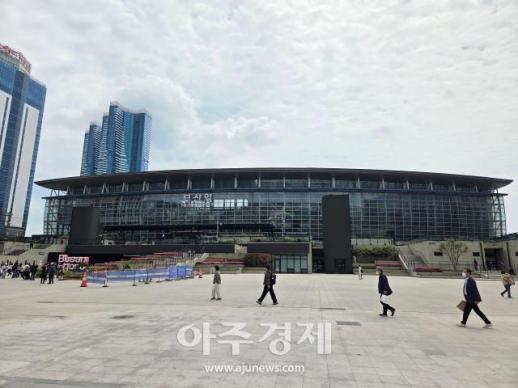 Busan mayoral race tight as voters weigh change vs conservative unity "For 75 years we’ve picked conservatives, but I think it may be time to change. The People Power Party doesn’t even seem sorry to the public. They say Jeon Jae-soo gets things done." Bae, a 75-year-old taxi driver in Busan, said he plans to vote for Jeon Jae-soo of the Democratic Party in the June 3 local elections, saying he has little expectation of the conservative bloc or incumbent Mayor Park Hyung-joon of the People Power Party. In interviews across Busanjin, Haeundae and Buk districts on April 29, many residents said they believe the city needs a change. The mood contrasted with the 66.4% support Park received four years ago. Busan also gave 51.4% support to People Power Party candidate Kim Moon-soo in the presidential election two years ago, but voters now described an unpredictable race. Kim Jun-gyu, 37, who runs a private academy in Dongnae District, said Democratic Party support appears to be rising among younger voters. He said Park’s policies seem focused on Haeundae District, home to Marine City, leaving other areas feeling overlooked. "It also feels like there isn’t enough communication in carrying out policies," he said, adding that he supports Jeon because "change is needed." Others said Busan should back Jeon to better align with the central government. Kim Jin-woo, a 37-year-old office worker who has lived in Busan since age 7, said Park’s administration "wasn’t bad" but may struggle to secure cooperation from the government. He said the next mayor should address Busan’s aging population by ensuring companies such as HMM relocate to the city without setbacks. Support for Park also remained strong, reflecting Busan’s long conservative tilt and his status as incumbent. Some supporters said they were satisfied with city administration over the past five years, while voicing sharp criticism of allegations that Jeon received money and valuables from the Unification Church. Park, a 67-year-old electrical contractor in Busan, said Park Hyung-joon "did fine" during his term. She added that Jeon "should clear up" the money-and-valuables issue before seeking office. A man in his 30s living in Nam District said he hears the race is "about half and half," but added that more people than expected say they will not vote for Jeon because of "Cartier." As the election nears, some residents said conservatives are rallying. An 80-something woman who has lived in Buk District for more than 30 years said the belief that "you should vote for the People Power Party" remains strong in Busan. She said that because the Democratic Party holds a majority in the National Assembly and is acting "recklessly," she plans to back the People Power Party for mayor. Taxi driver Kim, 70, said conservatives "need to unite," arguing that politics has become too lopsided and that voters should strengthen the opposing side. A poll showed a similar split. In a survey commissioned by KBS Busan and conducted by Hankook Research from April 17 to 19 among 1,000 Busan residents age 18 and older, Jeon had 40% support and Park 34%, within the margin of error (95% confidence level, plus or minus 3.1 percentage points). The poll used wireless phone interviews. Details are available on the website of the National Election Survey Deliberation Commission. Some analysts said a by-election in Buk-gu Gap, held alongside the local elections because of Jeon’s run, could influence the mayoral vote. A Buk District resident who described himself as a supporter of Han Dong-hoon, the former leader of the People Power Party, said he had not planned to vote but will go to the polls to cast a ballot for Han. "Once you take the (mayoral) ballot, you’re more likely to vote than leave it blank," he said, adding he expects that could benefit the conservative candidate. 2026-04-29 17:45:20
 -
 Kumho Resort Upgrades Asiana CC Course and Facilities to Boost Premium Rounds Kumho Resort said its members-only Asiana Country Club has completed course and facility maintenance and will offer an upgraded premium-round environment. Located in Yongin, Gyeonggi Province, Asiana CC said it has improved overall operations with priority on course competitiveness, on-course convenience and member satisfaction. In line with the lifestyle trend known as “quiet luxury,” the club said it is emphasizing course management that highlights natural scenery and strengthening core golf-club value, including the clubhouse, rather than flashy additions. The club consists of a dramatic East Course and a more delicate West Course, and is known for scenery that blends with nature and closely maintained playing conditions. This year, Asiana CC said it is focusing on improving course quality. To respond proactively to climate change, it plans to complete by May the replacement of greens with “Pure Distinction,” a new turf variety that was introduced on a trial basis last year, across nine holes on the East Course. The club said Pure Distinction offers better disease resistance and maintenance efficiency than the existing Dominant variety, while keeping more consistent color and density year-round. Asiana CC said it plans to replace greens across the entire course with the variety by 2028 to improve summer green speed and reinforce a high-end image. The club also said it has finished infrastructure work aimed at member convenience. In March, it repaved 7.6 kilometers (4.7 miles) of cart paths on the West Course and updated guidance lines between holes to improve driving stability. It also renovated five banquet rooms on the first floor of the clubhouse, creating private rest areas with open garden views. “Asiana CC is strengthening premium value that members can feel by raising the overall completeness of the course, including green quality,” a Kumho Resort official said. “We will continue to enhance competitiveness as a leading golf club through differentiated course-quality management and member-focused operations.”* This article has been translated by AI. 2026-04-29 17:43:59
 -
 EU Finds Meta Failed to Protect Minors on Facebook and Instagram Under DSA, Risking Huge Fine The European Union has found that Meta’s protections for minors on Facebook and Instagram are inadequate, putting the company at risk of a massive fine. In a statement issued on April 29 (local time), the European Commission said its preliminary findings show that Meta’s Instagram and Facebook violated the EU’s Digital Services Act because they failed to properly identify, assess and mitigate risks of underage access by children younger than 13. The DSA requires online platforms to ensure safer social media use for minors, including stronger age verification and measures to limit access to commercial and harmful content. The EU said Meta did not take sufficient steps. While Facebook and Instagram set the minimum age at 13, children under 13 could bypass the rule by entering a false birth date when creating an account, and Meta lacked effective controls to prevent that, the commission said. The finding comes about two years after the EU opened its DSA probe into Meta in May 2024. The commission said the preliminary results do not prejudge the final outcome. Meta said it disagrees with the EU’s assessment and signaled it will respond. A Meta spokesperson said the company makes clear that Instagram and Facebook are for users 13 and older and has measures in place to detect and delete accounts created by younger users. Meta can submit its response before the EU issues a final decision. If the EU ultimately finds Meta in breach of the DSA, it could impose a fine of up to 6% of the company’s global revenue. With Meta reporting $201 billion in revenue last year, the fine could reach about $12.1 billion (about 17.8 trillion won). The EU previously fined X 120 million euros in December, citing DSA violations related to its advertising policies. Across Europe, governments have been moving to tighten rules aimed at protecting minors on social media. France has passed a measure to ban social media use by children and teenagers under 15, and Spain is pursuing legislation to set the minimum age for social media use at 16.* This article has been translated by AI. 2026-04-29 17:42:47
 -
 Samsung Family Wealth Doubles on AI Chip Rally, Easing Inheritance Tax Pressure Samsung’s founding family has more than doubled its wealth over the past year, helped by a boom in artificial intelligence-related semiconductors, according to a Bloomberg tally. The surge has eased pressure on the family after the late Samsung Chairman Lee Kun-hee’s death brought an inheritance tax bill of about 12 trillion won and as legal risks involving Samsung Electronics Chairman Lee Jae-yong weighed on the group. As of March, the combined wealth of Lee Jae-yong’s family stood at $45.5 billion, up from $20.1 billion a year earlier, according to the Bloomberg Billionaires Index. The family rose to No. 3 among Asia’s richest clans from No. 10 last year. The family is set to complete the final installment payment this month on the 12 trillion won inheritance tax. The jump was driven largely by a sharp rise in Samsung Electronics shares. The stock gained 126% last year, its best annual increase in more than 20 years. Expectations for a semiconductor upturn lifted the shares as investment in AI infrastructure expanded and demand grew for memory chips used in AI. The rally has reduced the need for additional stake sales to raise funds for the inheritance tax. Lee Jae-yong’s personal wealth rose to $26.9 billion, reclaiming his position as South Korea’s richest person, Bloomberg said. Samsung’s weight in the domestic economy has also increased. Bloomberg calculations showed revenue at seven major Samsung affiliates, including Samsung Electronics, amounted to 19.3% of South Korea’s gross domestic product last year, up from 15.1% a decade earlier. Separately from the wealth gains, analysts said Samsung still faces pressure to improve corporate governance. While South Korean stocks have remained strong on expectations of narrowing the so-called Korea discount, Samsung has been viewed as lagging other large conglomerates in governance changes and measures to expand shareholder benefits. In a March report, Morgan Stanley said the Samsung Group was behind other major groups in plans aimed at boosting corporate value for investors. Park Sang-in, a professor at Seoul National University’s Graduate School of Public Administration, said the sharp rise in the stock price reduces the controlling family’s incentive to pursue additional governance improvements.* This article has been translated by AI. 2026-04-29 17:41:56