
Journalist

Lim, Kwu Jin
-
 Hyundai Mobis to Launch Limited Auror x Monami Car Care Special Edition Hyundai Mobis is teaming up with Monami, a widely recognized Korean stationery brand, to pitch a new take on car life through its in-house car care brand Auror. The company said Tuesday it will begin limited sales next month of an “Auror × Monami edition” through online and offline channels, adding Monami collaboration goods to Auror’s interior kit. Hyundai Mobis said the partnership is part of a marketing push to position car care items as lifestyle products and broaden customer touchpoints. Auror is Hyundai Mobis’ own vehicle care brand, featuring practical components and a modern design. The name, which the company said means “fragrance, promise and hope” in Spanish, reflects its aim to add a pleasant scent to vehicles while delivering reliable quality. Hyundai Mobis said it chose Monami to lower barriers to entry for Auror by partnering with a familiar household brand and building broader appeal. The two companies share a simple black-and-white design sensibility and used the key message, “When you need a memo in your car,” to link vehicle care with everyday life. The Auror interior kit includes a cleaner for interior use, a dedicated towel, and a limited-edition pen case and writing set reflecting Monami’s identity. The product will be sold through the official Hyundai Mobis online store. It will also be available during May at Monami’s Starfield Suwon store and its Seongsu store. Hyundai Mobis has recently stepped up accessories marketing centered on its online B2C channels, expanding brand exposure and content promotion online and connecting that effort to offline distribution to diversify brand experiences. “The auto accessories market is evolving beyond function toward a lifestyle focus that combines design and storytelling,” a Hyundai Mobis official said.* This article has been translated by AI. 2026-04-29 11:03:18
 -
 HD Hyundai Site Solution Deploys Unmanned Autonomous Excavator to Job Site for First Time HD Hyundai Site Solution, the intermediate holding company for HD Hyundai’s construction machinery business, has deployed an unmanned autonomous excavator to an active construction site for the first time. The company said Tuesday it delivered the excavator, developed with AI-based autonomy firm Gravis Robotics, to a site operated by European construction company KIBAG. The machine is a 22-ton, mid-size excavator from HD Construction Equipment fitted with the “Real X” solution, combining HD Hyundai Site Solution’s smart platform with Gravis’ AI technology. It is set to work at a construction site in Tuggen, Switzerland, carrying out civil engineering work autonomously on a project measuring 3 meters (10 feet) deep, 12 meters (39 feet) wide and 1 kilometer (0.6 miles) long. The company said the Real X-equipped excavator can operate toward preset targets without being affected by operator fatigue or lapses in concentration, delivering average productivity of about 120% compared with manned operation. The delivery follows an “autonomous construction equipment cooperation project” between HD Hyundai Site Solution and Gravis Robotics. The two companies have continued technical collaboration since signing an MOU at BAUMA 2025 in Germany on demonstrations of autonomous construction equipment. HD Hyundai Site Solution said it plans to expand global partnerships and gradually increase deployments of unmanned autonomous construction equipment, building on earlier European demonstrations and the Swiss site supply. “This project is a first step in implementing unmanned autonomous construction equipment technology at a real job site,” said Kim Pan-young, an executive director at HD Hyundai Site Solution. He said it would help improve safety and productivity and serve as a turning point that brings forward the future of the global construction machinery industry.* This article has been translated by AI. 2026-04-29 10:56:50
 -
 Amorepacific Group Q1 Operating Profit Rises 6.9% on Derma Beauty, Overseas Growth Amorepacific Group said it posted solid first-quarter results, helped by momentum in its derma beauty brands and a broader mix of global channels including North America and Japan. The company said consolidated first-quarter revenue rose 5.0% from a year earlier to 1.2227 trillion won, while operating profit increased 6.9% to 137.8 billion won. Flagship affiliate Amorepacific also reported gains, with revenue up 6.4% and operating profit up 7.6%, supporting the group’s overall improvement. In South Korea, revenue climbed 9% to 626.4 billion won and operating profit surged 65% to 81.5 billion won, the company said, citing a sharp improvement in profitability. Sulwhasoo posted higher sales across both online and offline channels on the back of Lunar New Year gift demand. Hera logged double-digit growth in multibrand stores and online channels, led by its cushion and lip categories. Aestura recorded its highest-ever sales at Olive Young, reinforcing its position as the top derma brand in the domestic market. Mise-en-scene entered cross-border channels through TikTok Shop, opening a new sales route. Overseas revenue rose 6% to 497.1 billion won. The company said it achieved double-digit sales growth in Western markets, Japan and the Asia-Pacific region, but operating profit fell 18% to 56.7 billion won due to aggressive marketing investment to expand newer brands globally. In Greater China, where efficiency measures are underway, revenue declined as offline channels were scaled back, though the company said it maintained a focus on protecting profitability. The group highlighted Aestura, Cosrx and Laneige as key performers abroad. In North America, Cosrx returned to sales growth on expanded sales of its RX line and PDRN line and strong Amazon promotions. Aestura posted triple-digit growth led by its A-Cica line, and IOPE entered Sephora in North America as it stepped up efforts in premium, high-performance skin care. Aestura also expanded into 17 European countries, while Cosrx posted strong growth in major U.K. channels. Premium brand Laneige strengthened its presence in Japan and other major Asian markets with new products including the Neo Cushion and the Juice Pop Box lip tint. Osulloc said it improved sales and profitability by reinforcing its position as a luxury tea brand and expanding product offerings that reflect current dessert trends. By contrast, other beauty subsidiaries — including Innisfree, Etude, Espoir and Amos Professional — saw results slip somewhat amid offline channel restructuring, the company said. An Amorepacific Group official said the company will focus companywide capabilities on delivering its mid- to long-term vision, “Create New Beauty.” To execute that vision, the group said it will accelerate five core strategic initiatives: 집중 육성 of key global markets, strengthening integrated beauty solutions, developing anti-aging offerings based on biotechnology, agile organizational innovation, and an AI-based shift in work processes. * This article has been translated by AI. 2026-04-29 10:55:51
 -
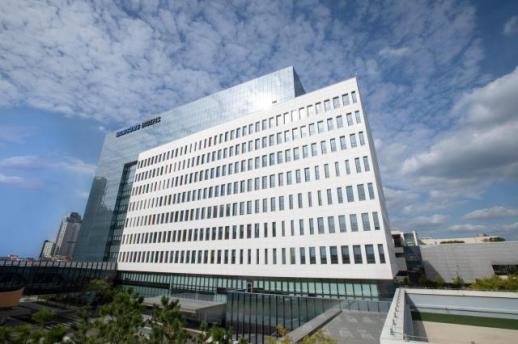 Samsung Bioepis Expands Open Innovation Partnership With China’s Atlatl Innovation Center Samsung Bioepis said on the 29th it signed a memorandum of understanding with China-based biotech R&D platform Atlatl Innovation Center to step up its global open-innovation efforts. Atlatl Innovation Center is described as Asia’s largest biotech incubation hub linking research partnerships between biotech startups and global companies. It provides shared labs and office space, as well as contract research organization services, in major biotech clusters including Beijing, Shanghai, Singapore and Australia. Under the agreement, Samsung Bioepis plans to screen promising biotech companies and support their early growth by helping them move into Atlatl’s facilities and carry out research activities. The company said the partnership is aimed at expanding beyond its biosimilar-focused business to identify and nurture early-stage new-drug technologies. Samsung Bioepis said the deal is its first open-innovation project with an overseas specialized organization. Seo Min-jeong, vice president and head of the open innovation team at Samsung Bioepis, said global cooperation is essential for biotech innovation and that the partnership will help accelerate the discovery and research of next-generation biotech technologies.* This article has been translated by AI. 2026-04-29 10:55:03
 -
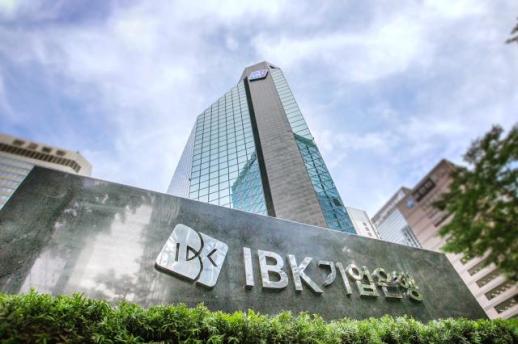 IBK Industrial Bank of Korea to Cut Online Loan Rates for SME Workers by Up to 0.6 Points IBK Industrial Bank of Korea said Tuesday it has launched a new online loan interest-rate reduction program for employees working at small and midsize enterprises, ahead of Labor Day on May 1. Eligible borrowers are workers employed at SMEs as of the application date. The bank will offer a basic rate cut of up to 0.4 percentage points depending on length of employment. It will provide an additional 0.1 percentage point discount for workers at companies outside the Seoul area and another 0.1 percentage point for young workers age 34 or younger, for a maximum reduction of 0.6 percentage points. The discounts apply to the bank’s online loan products: i-ONE mortgage loans, i-ONE jeonse loans and i-ONE interest-subsidized credit loans for workers’ living stability. With the maximum discount, the bank said that as of Tuesday its mortgage loan rate would be about 3.36% a year and its jeonse loan rate about 3.09%. The program will run through Dec. 31. Details are available at branches and on the bank’s website. A bank official said the program is intended to provide practical financial support for SME workers and that the bank will continue to introduce preferential support measures to help ease SMEs’ labor shortages.* This article has been translated by AI. 2026-04-29 10:54:19
 -
 BYD Profit Drops 55% as China EV Price War Intensifies, Company Pushes Overseas China EV leader BYD reported a sharp drop in first-quarter profit as Beijing scaled back tax incentives and competition intensified, especially in the low-priced segment. The company said it plans to speed up overseas expansion to offset weaker sales at home. According to BYD’s earnings report released on April 28, first-quarter net profit fell 55.4% from a year earlier to 4.085 billion yuan (about 881.9 billion won). The decline was steeper than the previous quarter’s 38.2% drop, extending a profit slide to a fourth straight quarter. Revenue fell 11.8% to 150.225 billion yuan. China this year cut the electric-vehicle purchase-tax exemption in half, prompting many consumers to wait, while price competition intensified for EVs priced below 150,000 yuan. The China Association of Automobile Manufacturers said first-quarter sales of new energy vehicles fell 23.8%. BYD’s first-quarter sales fell 30% from a year earlier to 700,000 vehicles. Overseas exports rose 56% over the same period but were not enough to prevent an overall decline. Monthly sales were down for a seventh straight month as of March. The China Passenger Car Association said BYD’s domestic EV market share in the first quarter slipped to 25.7% from 31.5% a year earlier, down about 6 percentage points. With the domestic slowdown showing signs of lasting, BYD has moved to target overseas markets more aggressively. It recently raised its overseas sales target for this year to 1.5 million vehicles from 1.3 million set earlier. The company aims to increase exports of new energy vehicles by more than 40% from last year’s 1.04 million. Overseas sales now account for 46% of BYD’s total, it said. The company also cited rising global demand for EVs as international oil prices climb in the wake of the Iran war. BYD is also emphasizing technology. It recently unveiled ultra-fast charging that it said can fully charge in nine minutes at room temperature and in 12 minutes at minus 30 degrees Celsius, aiming to reduce charging-time concerns and attract drivers of gasoline-powered vehicles. The company is also pursuing the premium segment. At the Beijing auto show, it introduced an electric supercar, the U9X, and a flagship SUV, the Datang, under its luxury brand Yangwang, a move seen as laying groundwork to compete with European premium automakers. Bill Russo, CEO of Shanghai-based consultancy Automobility, told the Nikkei that BYD is shifting away from volume-driven growth in China and focusing on a more balanced, globally diversified business with higher profitability. “Global markets are less overheated than China and have a more sustainable profitability structure,” he said. * This article has been translated by AI. 2026-04-29 10:51:21
 -
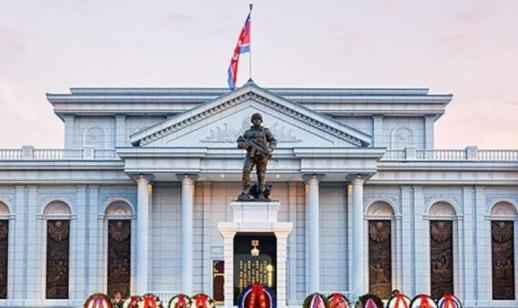 OPINION: Middle East conflict sends shockwaves through North Korean economy SEOUL, April 29 (AJP) - The conflict in the Middle East conflict that began with U.S.-led airstrikes on Iran in late February, has dragged on for nearly two months with no end in sight, pushing global oil prices higher and intensifying economic pressures worldwide. South Korea relies on the Strait of Hormuz for more than 70 percent of its crude oil imports, making the ongoing conflict a direct threat to its energy security. Seoul has joined a multinational effort, spearheaded by the U.K. and France this month, to protect shipping lanes through the strait, including the formation of a joint defensive force. However, the benefits of that cooperation, along with moves to diversify oil imports, are unlikely to be felt immediately. The crisis is also taking a toll on North Korea. Rising oil prices not only increase energy costs but also boost demand for dollars, putting pressure on the currency, widening the trade deficit, and fueling stagflation. Data from online news outlet Daily NK shows the North Korean won has lost roughly half its value against the dollar in just a few months. In cities like Pyongyang, Sinuiju, and Hyesan, the exchange rate has surged from around 35,000 won per dollar in early February to nearly 70,000 this week. The currency had remained relatively stable in the 30,000 range from July last year through early February, suggesting the Middle East crisis has had a direct impact on the won. The won's slide may have been worsened by the regime printing more currency through the central bank rather than curbing dollar usage. But after years under sanctions, North Korea has learned that such measures often backfire, weakening the currency without ensuring a stable supply of goods. North Korea's fresh economic crisis is now forcing it to rethink its survival strategy, which had briefly eased as it strengthened military ties with Russia while supporting its war in Ukraine. One immediate impact is a sharp rise in fuel costs and transport fees. Because UN Security Council resolutions cap North Korea's annual imports of refined petroleum at 500,000 barrels, the country is forced to rely on unofficial channels such as ship-to-ship transfers in international waters. With global oil prices rising, higher logistics costs for smuggling networks are adding further pressure, pushing domestic fuel prices up far faster than international benchmark prices. According to Daily NK and Japan's Asia Press International, gasoline prices in North Korea in mid-April stood at about 23,000 won per kilogram, while diesel prices were around 18,500 won, both up more than 40 percent since the start of this year. These figures are about 1.5 to two times the swing in global oil prices, reflecting scarcity. There were reports that freight charges for vehicles to inland areas such as Sinuiju nearly doubled in about a month, as authorities restricted fuel for private consumption to prioritize military strategic reserves. Another impact has been a rise in foreign-currency hoarding driven by market uncertainty. Shortly after the Middle East conflict began, North Korean state media condemned the U.S. and Israel, leading North Koreans to interpret it as a warning to prepare for harder times. Many may recall the country's currency reform in late 2009, when trust in the won collapsed and triggered a rush into perceived assets such as U.S. dollars, Chinese yuan, and gold. The trend has been even more pronounced among North Korea's elite and emerging wealthy class. Merchants also increasingly avoid using the won, with weaker consumption reducing their liquidity, and the livelihood economy has deteriorated sharply, showing signs of a prolonged slowdown. The fallout also extends beyond energy and exchange rates. As the won continues to slide amid a shortage of hard currency, North Korea has ramped up illicit cyber operations to plug the gap, intensifying cybercrime that has long served as a financial lifeline for the regime. According to a 2026 report by blockchain analytics firm Chainalysis, North Korea-linked hacking groups stole about US$2.02 billion in cryptocurrency in 2025, roughly 4.6 times the country's annual exports. The stolen assets are laundered through intermediaries and shell exchanges in Southeast Asia to hide the transaction trail, then used to bypass sanctions, financing fuel smuggling and the procurement of advanced weapons components from Russia. Ironically, the Middle East crisis is pushing North Korea further toward illegal means, creating a cycle that directly feeds into funding for its nuclear and missile programs. In the meantime, deeper economic dependence on China and Russia is narrowing North Korea's diplomatic options. China, North Korea's traditional alley, has repeatedly provided calibrated, managed support during exchange-rate spikes to prevent instability from spreading into broader regime risk. At the same time, North Korea's growing economic dependence on China and Russia is leaving it with fewer options. China, its traditional ally, has stepped in during past currency crises with various forms of support to prevent instability from spiraling into a broader crisis. If the Middle East crisis drags on further, North Korea's economic burden is likely to fall not only on China but also on Russia, to which it owes support for troop deployments in Kursk and supplies of ammunition and other resources. Without Chinese and Russian backing, it would be difficult for North Korea to achieve its ambitious goal of building 20 industrial facilities annually over the next 10 years in its rural and provincial areas. Russia is said to be investing $11 million this year in an oil exploration project along North Korea's east coast, a move that would deepen Pyongyang's economic dependence on Moscow and further skew an already asymmetric diplomatic relationship. In short, the Middle East crisis is squeezing North Korea's economy through rising oil prices and higher costs amid a sharply weakening won. Whatever military gains Pyongyang has made through its deepening partnership with Russia, an exchange rate of 70,000 won to the dollar is a clear sign that its economy is in trouble. North Korea's reliance on cybercrime and other illicit activities for its survival is likely to grow amid its deepening reliance on China and Russia. That is why the Middle East crisis may be more painful for the Korean Peninsula than for any other region. * This article, published by Aju Business Daily, was translated by AI and edited by AJP. 2026-04-29 10:49:15
 -
 LG Best Shop to Launch Starfield Unjeong Store With Major Appliance Promotions Starting May 1 LG Best Shop will run a large-scale appliance promotion to mark the opening of its new Starfield Unjeong store. LG Best Shop Starfield Unjeong is a newly opening store in the Seoul-Gyeonggi area in 2026. The company said it will operate as a hybrid location offering hands-on premium appliance experiences along with tailored consultations. The opening event begins May 1. During the promotion, the store will offer special opening benefits on major appliances, gifts based on purchase conditions and additional membership points, among other deals. Customers who buy multiple items together will be eligible for benefits worth up to 6.5 million won. Gifts will also be offered by purchase amount, a package aimed at customers planning large appliance purchases for moving, new-home occupancy or weddings. Benefit amounts and eligibility may vary depending on items purchased and event rules. The store will also provide benefits tied to LG’s appliance subscription service. The company said the service can reduce upfront costs and includes free after-sales service and periodic care during the contract term, though some items, including repairs due to customer fault, may be excluded. Separate group-buying benefits will be offered for residents moving into new apartment complexes near Unjeongjungang Station. The store plans to provide consultations on customized appliance packages and group-purchase terms for eligible customers. Customers who book a consultation in advance will receive an additional “secret gift,” the company said. Advance bookings are intended to provide a more comfortable one-on-one consultation, including product comparisons and package proposals based on purchase plans. An LG Best Shop official said, “Starfield Unjeong was designed as a space that goes beyond simple retail sales to offer customer experiences and lifestyle suggestions,” adding, “We will raise customer satisfaction through the benefits prepared to mark the new opening.” The opening promotion is available by visiting the store during the event period, and details can be confirmed on site.* This article has been translated by AI. 2026-04-29 10:48:51
 -
 USFK commander urges Korea-Japan-Philippines 'kill web' to counter North Korea, China, Russia Gen. Xavier Brunson, commander of the South Korea-U.S. Combined Forces Command and U.S. Forces Korea, has proposed building a so-called “kill web” that links South Korea, Japan and the Philippines into a single military network. The Japan Times reported April 29 that Brunson, in an interview, said the network is needed to respond to rising security threats from North Korea, China and Russia. He said the plan would connect the three countries’ capabilities in multiple layers, with the South Korea-U.S. alliance as the core. Brunson said the goal is to integrate allied forces into one network not only across traditional domains — land, sea and air — but also space, cyber and the electromagnetic spectrum. As an example, he said U.S. satellite-based sensors could detect signs of threats from North Korea, China or Russia, then ground radars in South Korea or Japan could track them, with other forces moving to respond. He said such a system requires a network that allows real-time sharing of data from sensors — including satellites, drones and troops — to strike assets such as aircraft, ships and missile systems. Brunson said modern wars are often decided in cyber and electromagnetic domains before conventional fighting begins, underscoring the need to strengthen deterrence and build a rapid, combined response. The Japan Times said the proposal aligns with a shift in how the U.S. Defense Department views East Asia: not treating the Korean Peninsula as a standalone theater focused on deterring North Korea, but as a key hub in a broader defense network along the “first island chain” stretching from Japan to Borneo. Brunson said in major regional contingencies — including tensions in the Taiwan Strait or maritime disputes — all three countries could be involved. “The question is whether we are prepared to respond together, or whether we will be forced to coordinate in a rush after the fact,” he said. He also said U.S. allies such as South Korea, Japan and the Philippines cannot exist in isolation. “If you connect them, there is no single axis that hostile forces can prepare against, and the military advantage grows,” he said. To make the concept workable, Brunson outlined four tasks. He said South Korea, with its large ground forces and defense industrial base, would serve as a central provider of deterrence and logistics support. Japan, as a hub where major assets including fifth-generation fighters and the U.S. 7th Fleet are based, would provide advanced surveillance and strike capabilities and maritime control. The Philippines would offer strategic access linking the Pacific and Indian oceans and help reinforce maritime deterrence through systems such as ground-based anti-ship missiles. He also cited expanded multinational exercises as a key step to strengthen real-world readiness. The Japan Times said turning the plan into reality would require broader intelligence sharing and a maintenance and support system for U.S. military equipment in the region. It also cited political sensitivity over South Korea-Japan military cooperation and Japan’s constitutional constraints as major variables. Brunson said cooperation between U.S. forces in Japan and Japan’s Self-Defense Forces is already close but needs to be institutionalized, comments that also supported moves in Japan to strengthen its defense posture. In November last year, Brunson posted an East Asia map on the U.S. Forces Korea website with North and South Korea inverted, arguing for the need for “strategic triangle” cooperation among South Korea, Japan and the Philippines. At the time, he said the most important insight from the inverted map was the existence of a “strategic triangle” linking the three countries, adding that the concept offers a useful framework for trilateral planning discussions beyond traditional bilateral alliances.* This article has been translated by AI. 2026-04-29 10:45:55
 -
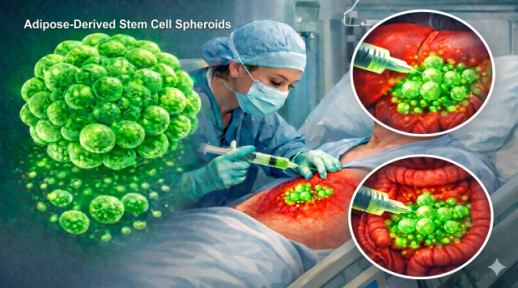 Researchers develop synthetic polymer matrix to improve stem cell survival SEOUL, April 29 (AJP) - South Korean researchers have developed a three-dimensional culture platform that improves the survival rate and therapeutic efficacy of stem cells, the Korea Advanced Institute of Science and Technology (KAIST) said Wednesday. Jon Sang-yong, a professor at KAIST's Department of Biological Sciences, led a research team to create a synthetic polymer material named "poly-Z." This material coats culture plates to encourage human adipose-derived stem cells to self-assemble into spherical structures called spheroids. Standard two-dimensional culture methods often cause these cells to age and lose functionality over time. The poly-Z platform alters the physical and chemical properties of the culture surface, promoting the adsorption of albumin proteins and preventing cells from attaching to the bottom. Stem cells grown in this environment produced more extracellular matrix, which mimics conditions found inside the human body. In animal trials involving mice with acute colitis and liver injury, the spheroids demonstrated higher survival rates and better inflammation control than cells grown using conventional methods. The new environment activates integrin and FAK signaling pathways, enabling the cells to better sense and respond to their surroundings. Seo Chang-jin, a researcher at KAIST's InnoCORE AI-Innovative Drug Discovery Research Center, served as the lead author for the research published in the journal Advanced Science on March 31, 2026. "This research demonstrates that a precise 3D culture environment based on synthetic polymers can simultaneously improve the functionality and therapeutic efficacy of stem cells," Jon said. "We expect this technology to be widely utilized in developing next-generation stem cell treatments for various intractable inflammatory diseases." (Reference Information) Journal/Source: Advanced Science Title: Polymer Matrix-Based 3D Culture Significantly Enhances the Differentiation and Immunomodulatory Functions of Human Adipose-Derived Stem Cells Link/DOI: https://doi.org/10.1002/advs.202518704 2026-04-29 10:45:44