
Journalist

MIN JAE YONG
-
 CJ Olive Young Launches First U.S. Store in Pasadena, California CJ Olive Young is set to make a significant entry into the U.S. beauty market by opening its first standalone store and launching a dedicated online shop simultaneously. Positioned in the heart of Pasadena, California, an area dominated by major beauty retailers like Sephora and Ulta Beauty, the store aims to serve as a showcase for K-beauty and a launchpad for domestic indie brands entering the U.S. market. The Pasadena location, named "Olive Young Pasadena," will open on May 29 (local time) on Colorado Boulevard, a prime shopping district in California. This area is known for its concentration of global premium brands, including Apple, Lululemon, and Tiffany & Co. The store will span approximately 803 square meters (about 243 pyeong), comparable in size to Olive Young's major outlets in South Korea. The Pasadena store will focus exclusively on K-beauty, featuring over 400 brands and more than 5,000 products, with more than 80% of the offerings being K-beauty and K-wellness items. The store will adapt quickly to trends, updating its product curation every two weeks. Inside the store, "The Beauty Lab" will offer free skincare lessons that include self-diagnosis using skin scan devices, followed by personalized consultations. Olive Young's unique "half-service" model, which allows customers to explore freely while still having access to professional beauty advice, will be implemented in the U.S. market. Alongside the Pasadena store, Olive Young will launch a dedicated online shopping platform for U.S. customers. The company recently established a 3,600-square-meter (about 1,100 pyeong) automated logistics center in Bloomington, California, which has reduced delivery times from 5-7 days to 3-5 days. Additionally, the minimum purchase for free shipping has been lowered from $60 to $35 for the local online store, making it more accessible for customers. Olive Young will also introduce the "OY Members" program, an integrated online and offline membership system that offers differentiated benefits based on membership levels. The company plans to support local marketing for smaller brands through its own promotions, such as "Brand of the Week." Lee Sun-jung, CEO of Olive Young, stated, "Just as we have helped numerous small and medium brands grow in a market once dominated by a few large international brands, we aim to contribute to the deeper establishment of K-beauty and K-lifestyle in overseas markets." Kwon Ga-eun, head of Olive Young's U.S. operations, added, "The Pasadena store will serve as a forward base for introducing various domestic brands to the global market, leveraging Olive Young's insights and brand incubating capabilities developed in Korea." * This article has been translated by AI. 2026-05-21 16:31:45
 -
 Construction Oversight Lapses at Samsung Station GTX-A Project At the Samsung Station construction site for the GTX-A line, it has been confirmed that the oversight team marked inspection results as 'satisfactory' for two consecutive months despite being aware of the missing 178 tons of rebar. Additionally, it has come to light that Seoul City submitted the oversight team's construction management report to the Korea Railroad Corporation without independent verification, raising concerns about the overall construction, oversight, and supervision system.According to the 'Construction Management Report for the Underground Complex Development Section 3' obtained by Park Yong-gap, a member of the National Assembly's Land, Infrastructure and Transport Committee, the oversight company, Saman, continued to give passing grades on inspection checklists even after acknowledging the missing rebar.Hyundai Construction, the contractor, first identified the missing 178 tons of rebar in 80 columns on October 23, 2025, through its own quality checks. The company informed the head of the oversight team on October 30 and subsequently emailed the details to Seoul City on November 10.However, the oversight team, despite knowing about the missing rebar, marked all key items on the inspection checklists dated November 11 and 14 as 'pass,' including questions about the accuracy of rebar spacing and the condition of the rebar's size, shape, and assembly. Inspection requests submitted later, such as on December 23, also recorded the rebar placement as 'satisfactory and passing.'Seoul City was aware of the structural deficiencies reported in November but accepted the oversight team's report without question. The city then submitted the construction management report to the Korea Railroad Corporation, the project client.The issue is expected to lead to disputes over liability under the Construction Technology Promotion Act. Seoul City maintains that the matter was addressed through internal checks during construction and does not constitute a 'construction accident' since there were no fatalities or property damage. However, critics argue that immediate site inspections and reports to the Ministry of Land, Infrastructure and Transport should have been conducted as soon as concerns about construction quality arose.The Ministry has already begun audits of both Seoul City and the Korea Railroad Corporation. A special inspection team has also been formed to review overall construction, safety, and quality management.Cost burdens due to project delays are another concern. If reinforcement work and external verifications continue, it could disrupt the schedule for non-stop service at Samsung Station and its official opening. This raises the possibility of increased financial liabilities for operational loss compensation to private contractors.In the political arena, there are calls for financial accountability. During a recent inquiry by the National Assembly's Land, Infrastructure and Transport Committee, Democratic Party lawmaker Han Jun-ho stated, "We cannot pass the costs of construction failures and delayed responses onto taxpayers," suggesting the need for a review of claims against Seoul City, Hyundai Construction, and the oversight company Saman. In response, Minister of Land, Infrastructure and Transport Kim Yoon-deok agreed, stating, "That is only natural."* This article has been translated by AI. 2026-05-21 16:29:03
 -
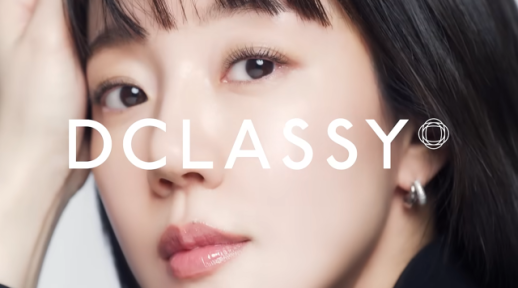 Im Soo-jung Chooses 'DCLASSY CaHA' to Target Collagen Booster Market DNC Aesthetics is making strides in the collagen booster market with its premium medical aesthetics brand, 'DCLASSY.' As demand for natural skin improvement and long-term skin health grows, the company is accelerating its market expansion with 'DCLASSY CaHA,' which emphasizes safe ingredients and natural volume formation. According to industry sources, DCLASSY CaHA is a collagen booster based on calcium hydroxyapatite (CaHA). CaHA is known for its high biocompatibility and is a mineral component that makes up human bones and teeth. Unlike hyaluronic acid (HA) fillers that directly fill the injection site, DCLASSY CaHA creates volume immediately after the procedure and gradually breaks down in the body, inducing natural collagen production. It stimulates fibroblasts in the skin to improve skin elasticity and texture, enhancing the overall skin environment. A research team led by Professor Park Gwi-young at Chung-Ang University found that after 24 weeks of treatment with the CaHA collagen booster, improvements in mid-facial volume, skin hydration, barrier function, and elasticity were observed. Notably, a pilot study involving ten adults aged 19 to 70 showed significant improvements in skin barrier, hydration, elasticity, and wrinkle reduction. Additionally, a separate clinical study involving 32 adults aged 35 to 59 confirmed an average 51% increase in dermal and epidermal thickness based on ultrasound evaluations. The study also indicated that patient satisfaction remained high for over a year. DCLASSY has recently appointed actress Im Soo-jung as its brand model and is expanding its brand campaign across various channels, including TV advertisements, digital photo shoots, OTT platforms, YouTube, and digital signage. This strategy aims to broaden consumer engagement in the premium medical aesthetics market. An industry insider noted, "There is a clear trend in the medical aesthetics market favoring natural changes, such as improved skin elasticity and texture. The CaHA-based collagen booster aligns with recent market demands for enhancing the skin's internal environment and promoting healthy changes." 2026-05-21 16:27:23
 -
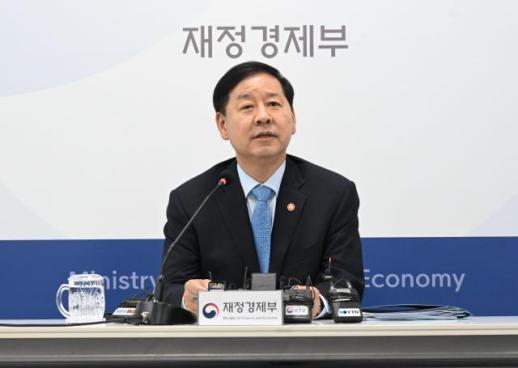 Korea to Become Hub for AI Collaboration with UN and MDBs, Says Deputy Prime Minister Koo Yun-cheol, Deputy Prime Minister and Minister of Economy and Finance, stated on May 21 that South Korea can serve as a connection hub for collaboration between UN agencies and multilateral development banks (MDBs) in the field of artificial intelligence (AI). Speaking at the Global AI Hub Vision Declaration ceremony held at the Grand Hyatt in Seoul, Koo noted that international cooperation in AI is currently fragmented among various organizations, and there is a lack of collaborative frameworks. He also pointed out that while various AI pilot projects are being attempted, there are limitations in their actual dissemination to developing countries. Koo explained that South Korea can play a mediating role to overcome these limitations and facilitate smooth cooperation between international organizations and MDBs. In South Korea, the World Bank's Global AI and Digital Knowledge Center is already in operation, and efforts are underway to establish AI collaboration hubs with the Asian Development Bank (ADB), Inter-American Development Bank (IDB), European Bank for Reconstruction and Development (EBRD), and Central American Bank for Economic Integration (CABEI). The Ministry of Economy and Finance aims to consolidate these MDB AI collaboration hubs into a global AI hub, thereby establishing a global AI cooperation network. Koo elaborated, "If the global AI hub develops public AI solutions in areas such as health, labor, disaster, and migration, MDBs can play a role in linking these solutions to development projects in developing countries, facilitating their actual implementation." Koo emphasized that even if the global AI hub is located in South Korea, it is intended for people around the world. He stressed that a foundational global AI society should be built through cooperation among nations rather than competition. He added, "The South Korean government will continue to work with the international community to ensure that the benefits of AI are not confined to certain countries or groups but are distributed to all people worldwide." Koo also outlined a vision for South Korean AI companies and research institutions to participate in solving global challenges by sharing AI technologies and practical experiences. South Korea has been gaining experience in building various public infrastructures integrated with AI, such as water resource management, which is expected to be beneficial in the process of AI collaboration with international organizations and MDBs. Koo concluded, "The connection between the global AI hub and MDBs will go beyond simple inter-agency cooperation, becoming a new model for development cooperation that spreads AI as a global public good and serves as a cooperative hub for supporting AI in developing countries."* This article has been translated by AI. 2026-05-21 16:24:28
 -
 Home & Shopping Launches 'Traditional Market Revitalization' Project at Yeonggwang Terminal Market Home & Shopping hosted a 'Local Small Business E-Commerce Seminar' at Yeonggwang Terminal Market in Jeolla Province. According to Home & Shopping on the 21st, this event is part of the 'Traditional Market Revitalization Project' launched last year, which focuses on providing concentrated support to five selected traditional markets across the country each year. Last year, the project included markets such as Changwon Masan Fish Market (Gyeongsang region), Gwangju Yangdong Traditional Market (Jeolla region), Chungbuk Yeongdong Traditional Market (Chungcheong region), and Gangwon Chuncheon Pungmul Market, as well as the Hwajeongbon-dong Market in Gangseo-gu, Seoul, and southern alley markets. This year, it follows the event at Hapcheon Wanghu Market (Gyeongsang region). The project aims to connect traditional market products, which struggle with distribution, to online sales and home shopping broadcasts. During the seminar, the procedures for entering home shopping and successful case studies were presented, and the Small Business Market Promotion Corporation delivered a lecture on 'Digital Transformation of Traditional Markets.' Home & Shopping plans to sequentially support online sales for 6 to 10 businesses, home shopping broadcasts for 3 to 6 businesses (60 minutes of broadcasting), and promotional video production for markets and stores, starting with this event. A representative from Home & Shopping stated, "We will do our best to support the merchants of Yeonggwang Terminal Market, who have excellent local specialties, in gaining digital competitiveness to reach consumers nationwide through home shopping and online sales channels."* This article has been translated by AI. 2026-05-21 16:21:40
 -
 NCT's Taeyong begins 'WYLD' promotions with music shows, Seoul Jazz Festival SEOUL, May 21 (AJP) - Taeyong of K-pop group NCT will perform at the Seoul Jazz Festival this week as he begins promotions for his first full-length solo album "WYLD," SM Entertainment said Thursday. The 30-year-old rapper, dancer and songwriter is the leader of NCT and its subunit NCT 127. Taeyong will perform tracks from "WYLD" at the 18th Seoul Jazz Festival 2026, which runs from May 22 to 24 at Olympic Park in Seoul. The festival has grown into one of South Korea’s major outdoor music events by expanding beyond jazz to feature pop, R&B, hip-hop, indie and crossover artists. His festival setlist will include the first live performances of several album tracks. Taeyong will also appear on Mnet’s "M Countdown" on Thursday, followed by KBS2’s "Music Bank," MBC's "Show! Music Core" and SBS’ "Inkigayo" throughout the week, performing the album's title track. "WYLD," released on Monday, consists of 10 tracks, including songs Taeyong participated in the production stage. The hip-hop title track draws on the instinctive movements of wild animals, with choreography built around the contrast between restrained expression and explosive energy. Since its release, the album has topped domestic album and music charts. It also reached No. 1 on iTunes Top Albums charts in 10 regions and entered the top 10 in 18 regions, while the title track topped iTunes Top Songs charts in nine regions. Tracks from the album also occupied all top 10 spots on the real-time rising chart of AWA, a Japanese music streaming service, SM Entertainment said. 2026-05-21 16:20:05
 -
 LG Electronics Shares Surge Amid KOSPI Rally and Robotics Hopes LG Electronics is experiencing a strong performance on the stock market, buoyed by a significant rise in the KOSPI index. Investor sentiment has been further enhanced by growing expectations surrounding the robotics value chain. According to the Korea Exchange, as of 2:38 PM, LG Electronics shares were trading at 235,000 won, up 54,000 won (29.83%) from the previous trading day. The stock opened at 185,200 won and surged to near the upper limit during the trading session. On this day, the KOSPI index rose more than 8% from the previous session, reviving investor confidence. This surge has led to increased buying interest in LG Electronics, which has recently been highlighted as a beneficiary of the robotics and artificial intelligence (AI) sectors. Kim Min-kyung, a researcher at Hana Securities, noted in a report on May 14 that LG Electronics is aggressively pursuing new business opportunities in robotics, which is expected to secure growth momentum. She raised the target price for LG Electronics to 230,000 won. Kim stated, "LG Electronics announced plans to establish a production system for humanoid robot actuators by the end of the year during its March shareholders' meeting, along with plans for proof of concept (PoC) technology verification in 2027. Given that the PoC timeline has been moved up to the first half of 2026, it suggests that the company is actively accelerating its robotics business." She also mentioned, "Additionally, new orders for data center cooling projects are rapidly increasing, and discussions are ongoing with NVIDIA regarding AI data centers, physical AI, and mobility collaborations, indicating momentum in AI-related business initiatives."* This article has been translated by AI. 2026-05-21 16:19:29
 -
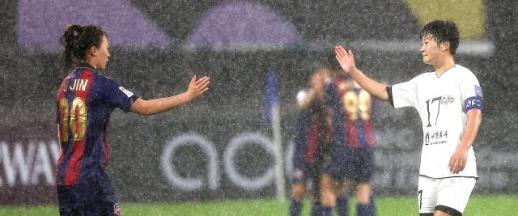 AJP Watch: The night Suwon lost more than a ball match SEOUL, May 21 (AJP) - The rain never stopped in Suwon on Wednesday night. Cold rain swept across the stands, soaked the banners and turned the pitch slick beneath the floodlights. Still, hundreds of South Koreans remained in their seats in plastic ponchos, pounding balloon sticks and chanting for a North Korean football club playing in the South for the first time in years. By the end of the night, Suwon FC Women had lost more than a semifinal. Suwon FC Women, led by coach Park Kil-young, fell 2-1 to North Korea's Naegohyang Women's Football Club in the semifinals of the AFC Women's Champions League at Suwon Sports Complex. The defeat ended Suwon's run at the continental title and sent the Pyongyang-based club into Saturday's final against Japan's Tokyo Verdy Beleza. On paper, the football story itself was straightforward enough. Suwon dominated long stretches of the match and created the better chances early. Japanese striker Haruhi Suzuki struck the post with a header in the first half. Brazilian forward Milena Barreto de Oliveira rattled the woodwork again minutes later. Suwon finally broke through in the 49th minute when Suzuki chipped the ball over goalkeeper Pak Ju-gyong after a deflection in the box. The lead lasted only six minutes. Naegohyang equalized through Choe Kum-ok’s header from a set piece before captain Kim Kyong-yong completed the comeback in the 67th minute with another headed goal after Suwon failed to clear danger inside the penalty area. Then came the image that lingered long after the final whistle. Ji So-yun, the captain and enduring face of South Korean women's football, stepped up for a late penalty that could have rescued the match. The shot drifted wide of the left post. Ji covered her face and collapsed onto the wet grass as the rain continued to fall around her. It was a football moment. But it also felt like something larger. From before kickoff, this had never been treated as an ordinary club match. Senior officials attended. Civic groups organized a joint cheering squad. Welcome banners greeted the North Korean side. Television crews crowded the stadium hours before kickoff. The match carried the weight of inter-Korean symbolism before a ball had even been kicked. That was understandable. North Korean teams rarely visit South Korea anymore. The last major period of sports exchanges between the two Koreas now feels like another political era altogether — back when athletes marched together under a unification flag at the Olympics and players from both sides still spoke publicly about reconciliation and shared identity. Those scenes have largely disappeared alongside the collapse of diplomacy over North Korea's nuclear weapons program. Today, the peninsula feels colder. North Korean leader Kim Jong-un has declared South Korea a "hostile" state. Military tensions have escalated again. Cross-border exchanges have withered. Even symbolic gestures once considered routine now feel exceptional. Which is why Wednesday night drew such emotional attention. But watching the match unfold through the rain in Suwon, another question slowly emerged. At what point does the symbolism surrounding an inter-Korean event begin to overshadow the athletes actually competing in it? For Suwon FC Women, this was not a diplomatic exhibition. It was not a goodwill friendly arranged for political theater. It was an AFC Women's Champions League semifinal. A place in the final, club history, prize money and continental recognition were at stake. Yet as the night unfolded, the emotional center of the stadium seemed to drift elsewhere. The joint cheering section had announced that it would support both teams. In reality, the louder emotional response often came for Naegohyang. Chants of the North Korean club's name echoed through the rain after goals. The visiting side was welcomed not simply as an opponent, but as a rare historical guest. There was nothing inherently wrong with that. Naegohyang deserved respect. The North Korean side played disciplined, relentless football and punished Suwon's mistakes with ruthless efficiency. Their victory was earned. Still, there was an unmistakable awkwardness in watching the home side slowly lose emotional ownership of its own stadium. Home advantage is not only geography. It lies in the noise, rhythm, and the feeling that the stadium rises with you when the match turns difficult. On Wednesday night, Suwon had the address. Naegohyang often seemed to have the occasion. That distinction mattered. After the match, Park struggled to hide her frustration. "We are Suwon FC Women, a South Korean football team," she said quietly. "I was upset throughout the match, and my heart was heavy." Her reaction was understandable. Football players are not immune to atmosphere simply because diplomacy surrounds them. They hear the cheers. They feel momentum shift. They understand when the crowd belongs emotionally to the night itself rather than to the team trying to survive it. Suwon did not lose because of the crowd. That must be said clearly. The South Korean side lost because it missed chances, conceded soft goals and failed to convert a penalty. Two shots off the post are still missed opportunities. A missed penalty remains a missed penalty. But football is never played in emotional silence. And this particular silence — the strange feeling that the home team had become secondary inside its own stadium — lingered long after the match ended. There was another layer to the unease. The football itself carried traces of the broader freeze between the two Koreas. The match was physical from the start, full of hard challenges and sharp confrontations. The atmosphere around the teams felt tense rather than warm, competitive rather than sentimental. That, too, reflected how much the peninsula has changed. There was a time when South and North Korean women footballers posed together for selfies after tournaments. During the East Asian Cup in Wuhan in 2015, players from both sides laughed together casually after matches, joking about hairstyles and hometowns. "We're one people, one bloodline," one North Korean player said at the time. Eleven years later, those words feel impossibly distant. Now the interactions are colder, more cautious and edged with hostility. The deterioration of political relations has slowly seeped into the football itself. The pitch no longer feels like neutral ground separating politics from sport. Instead, politics hangs invisibly over every challenge, every chant and every celebration. In the 2014 Incheon Asian Games semifinal, South Korea also lost 2-1 to North Korea on home soil — the same narrow margin, the same familiar ache against a side that has long been organized, disciplined and ruthless when the moment turns decisive. Wednesday night in Suwon felt like an echo of that older wound. When Ji So-yun stood over the penalty in the 79th minute, the entire weight of the night seemed to narrow onto one spot on the rain-soaked pitch — the cold, the crowd, the history, the strange emotional atmosphere surrounding the match. She is South Korea's captain, its most celebrated women's footballer, the player who has carried the domestic women’s game through much of the last two decades. In that moment, she stood alone against more than a goalkeeper. The shot drifted wide. Ji covered her face and sank onto the wet grass. It was a human moment before it was a sporting one. And it was also a reminder that even when football becomes wrapped in diplomacy and symbolism, the players themselves remain painfully human. They hear the crowd. They feel the emotional temperature of a stadium. They know when the night is carrying them forward, and they know when it is not. Naegohyang earned its victory. The North Korean side was disciplined, composed under pressure and clinical in the moments that ultimately decided the match. Welcoming its players with dignity was right. Respecting the quality of the team was right. But respecting the visiting side should not mean making the home side feel like a supporting cast in someone else's occasion. That was the lingering unease of Wednesday night. Somewhere between the rain, the banners, the official attention and the louder emotional response to the North Korean goals, Suwon FC Women seemed to lose more than a semifinal. They seemed to lose the emotional center of their own stadium. And long after the final whistle, after the chants faded and the rain continued falling over Suwon Sports Complex, the harder question remained — one no scoreline alone can answer: How did a home game come to feel like someone else's occasion? 2026-05-21 16:18:33
 -
 Special Prosecutors to Summon Yoon Suk Yeol for Investigation on Abuse of Power and Rebellion Charges The second special prosecutor team, led by Kwon Chang-young, will summon former President Yoon Suk Yeol for questioning twice next month. This investigation will focus on allegations of abuse of power related to justifying martial law and charges of rebellion under military law. The special prosecutor's office announced on May 21 that it has requested Yoon to appear at 10 a.m. on June 6 for questioning regarding his alleged abuse of power in conveying messages justifying martial law to the National Security Office and the Ministry of Foreign Affairs. Additionally, the investigation into Yoon's alleged rebellion charges is scheduled for June 13 at 10 a.m. The special prosecutors suspect that Yoon directed the National Security Office and the Ministry of Foreign Affairs to send messages justifying martial law to allied nations, including the United States, immediately after the declaration of martial law. The messages reportedly included statements such as, "This action is to protect liberal democracy," and claimed that the National Assembly attempted to disrupt the constitutional order by paralyzing the executive branch through impeachment and budget cuts. The special prosecutor's office plans to investigate the circumstances surrounding the drafting and transmission of these messages. Furthermore, the special prosecutor's team is continuing its investigation into Yoon's alleged rebellion under military law. They believe that Yoon conspired with former Defense Minister Kim Yong-hyun, former Army Chief of Staff Park An-soo, and former Army Special Warfare Command Chief Kwak Jong-geun to send armed soldiers to the National Assembly and the National Election Commission to incite a riot. While rebellion charges typically apply to military personnel, non-military individuals who conspire with them can also be prosecuted. Yoon's legal team argues that the rebellion leader charge overlaps with existing insurrection leader charges, claiming that additional indictments would constitute double jeopardy.* This article has been translated by AI. 2026-05-21 16:17:04
 -
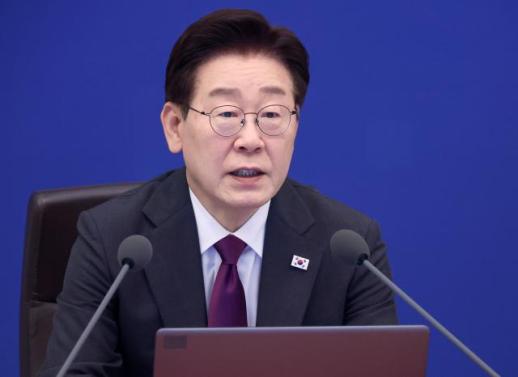 President Lee Calls for Action Against State Violence and Fake News President Lee Jae-myung stated on May 21 that all available means should be mobilized to punish those who spread malicious fake news, such as the theory of North Korean involvement in the Gwangju Uprising, and to address acts that glorify state violence or insult victims.During a senior advisors meeting at the Blue House, President Lee emphasized, "We must correct the wrong history to prevent the same tragedy from recurring." He highlighted the importance of confronting past mistakes rather than superficially reconciling them, advocating for a just integration based on reflection and accountability.His remarks appeared to target Starbucks Korea, which faced backlash for its recent 'Tank Day' marketing campaign that was deemed disrespectful to the Gwangju Uprising, as well as Musinsa, which used a controversial advertising slogan in 2019.President Lee criticized state violence as a serious crime that tramples on the human rights and lives of citizens, stating, "It is an inhumane and antisocial crime committed with the authority delegated by the sovereign to ensure the safety and better lives of the people." He argued that treating state violence on par with other crimes is unjust, citing that the Nazi war crimes are still held accountable today.He called for the swift enactment of legislation to abolish statutes of limitations for state violence crimes and to eliminate the expiration of civil claims for damages. He also stressed the need for a national compensation system to aid in victim recovery and to expedite the cancellation of honors awarded to those involved in state violence.Additionally, President Lee addressed the rising cost of living due to the prolonged conflict in the Middle East, urging strict oversight against unscrupulous price increases that exploit the current hardships without valid reasons. He requested meticulous administration to ensure that the second round of high oil price relief funds, which began accepting applications on May 18, is distributed smoothly, expressing hope that the support would alleviate some of the difficulties caused by the war.* This article has been translated by AI. 2026-05-21 16:15:00