
Journalist

MIN JAE YONG
-
 CJ CheilJedang Promotes K-Food at PGA's The CJ Cup CJ CheilJedang is set to promote K-Food and Korean culinary culture at the PGA Tour's The CJ Cup Byron Nelson, taking place from May 20 to 24 at TPC Craig Ranch in McKinney, Texas. The company announced on May 21 that it will operate a Bibigo brand experience space and food booths at the event. This year’s event features an expanded scale and enhanced interactive content. Attendees will find the "House of CJ" and two Bibigo concessions throughout the course. The "House of CJ" will be a large pantry-themed space showcasing Bibigo products, complete with a display area, photo opportunities, and tasting events for new products. A casual dining area designed to reflect the atmosphere of Hangang Park will be set up at the 7th hole, allowing spectators to enjoy Bibigo menu items while watching the tournament. Collaborative menus featuring both domestic and international chefs will also be highlighted. Notable participants include Chef Bo McMillan, winner of the American cooking show "Iron Chef"; Chef Park Jung-hyun from the New York fine dining restaurant "Atomix"; and Chef Yoo Yong-wook, who appeared on "Black and White Chef Season 2." Each day, the chefs will present different dishes using Bibigo dumplings, kimchi, K-sauces, and soba chicken. At the 17th hole, a grab-and-go menu will offer convenient meal options, featuring snacks made with Bibigo dumplings and gochujang in both original and spicy versions. Cocktails made with Korean distilled spirits will also be available. CJ CheilJedang plans to showcase four cocktail varieties using Munbaeju and Gamuchisoju through its premium distilled spirit brand "Jari," which is set to launch in the U.S. market later this year after collaborating with local breweries. Since 2018, CJ CheilJedang has introduced the Bibigo brand and Korean cuisine to the global market through The CJ Cup. The players' dining area has been recognized as the "best dining spot" on the PGA Tour, becoming a signature feature of the tournament. A CJ CheilJedang representative stated, "This year, we have prepared a wider range of content and an expanded scale to allow global audiences to experience Korean culinary culture. We plan to continue promoting the appeal of K-Food in the future." The CJ Cup is a PGA Tour event hosted by CJ Group. Launched in 2017 as the first PGA Tour event in South Korea, it has provided local golf fans with the opportunity to watch global star players. Following the COVID-19 pandemic, the tournament moved to the U.S. and has been held under the name "The CJ Cup Byron Nelson" since merging with the 80-year-old Byron Nelson tournament in 2024.* This article has been translated by AI. 2026-05-21 20:54:21
 -
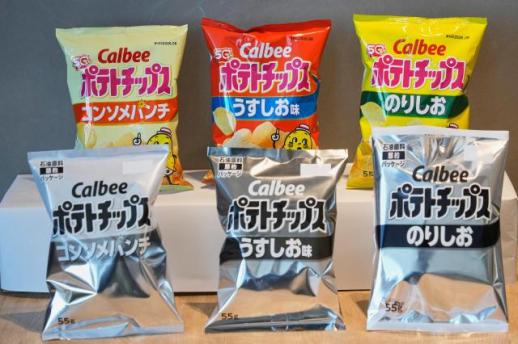 Japan Faces Supply Chain Concerns Amid Rising Naphta Procurement Issues Concerns over naphta procurement, triggered by escalating tensions in the Middle East, are spreading beyond Japan's industrial sectors into the political arena. While the Japanese government asserts that "overall supplies are sufficient" to mitigate these concerns, industries are preparing for potential disruptions and price increases in packaging materials, printing inks, paints, and housing equipment. On May 20, a parliamentary debate took place where Prime Minister Sanae Takaiichi clashed with opposition leaders. The worsening situation in the Middle East and the issue of naphta supply emerged as key topics, elevating raw material supply challenges from an industrial issue to a political one. Asahi Shimbun reported on May 21 that during the debate, Takaiichi acknowledged, "There are bottlenecks occurring in various locations regarding naphta supply," adding that "naphta, which should be sufficient, is not being properly supplied to the field." While maintaining that the total amount of naphta is not lacking, she indicated that issues are arising in the distribution process. Opposition members cited material procurement difficulties and soaring prices, calling for support for supply-side companies, to which Takaiichi responded that she would address these issues. Naphta, a petrochemical raw material extracted from crude oil, is used as a fundamental component in various industrial products, including plastics, synthetic resins, printing inks, paints, and packaging materials. Japan heavily relies on the Middle East for its crude oil and naphta supply, and the prolonged blockade of the Strait of Hormuz has increased burdens across industrial sectors. A notable example illustrating the disconnect between government and industry perceptions is the packaging change by food giant Calbee. On May 12, Calbee announced it would switch the packaging of 14 key products, including potato chips, to black and white due to instability in securing printing inks derived from naphta. According to Asahi, a senior official from the Prime Minister's office expressed strong displeasure at Calbee's response, suggesting it exaggerated supply concerns for media attention, while dismissing the possibility of ink shortages. Following Calbee's announcement, the government quickly contacted the company to clarify that the overall supply of naphta was adequate. Officials close to the Prime Minister viewed Calbee's actions as an overreaction, fearing that such reports could spread anxiety to other companies. However, Calbee has maintained its decision to switch to black and white packaging, stating it is a measure to ensure stable product supply. Takaiichi's Government on Edge The government's sensitive reaction stems from concerns that raw material shortages could dampen consumer spending and business activities. With high approval ratings serving as a driving force for Takaiichi's administration, there is apprehension that supply issues could lead to inflationary pressures and dissatisfaction with the government. In April, TOTO, a major housing equipment company in Japan, temporarily halted new orders for unit baths due to concerns over procuring naphta-derived solvents, prompting the Ministry of Economy, Trade and Industry to swiftly assess the supply situation and adjust supply chains. TOTO has since gradually resumed new orders. However, similar procurement issues have arisen, leading to discussions within the government about the limitations of responding reactively to each individual problem as they arise, Asahi reported. The government's assertion that "naphta is sufficient" is based on total volume calculations. According to Asahi, Japan's typical monthly naphta supply is approximately 2.8 million kiloliters, comprising about 1.2 million kiloliters from imports from the Middle East, 1.1 million kiloliters from domestic refining, and 450,000 kiloliters from non-Middle Eastern imports. With the blockade of the Strait of Hormuz drastically reducing imports from the Middle East, the Japanese government plans to utilize its oil reserves to maintain domestic production and increase procurement from regions outside the Middle East, such as the United States and Peru, to fill the shortfall. Additionally, the government claims to have secured 1.8 months' worth of supply based on the conversion of intermediate products held by the private sector into naphta equivalents. The issue lies in the potential discrepancy between the government's "total" figures and the "item-specific quantities" needed by companies. Intermediate products are often tailored for specific uses and are not easily interchangeable, meaning that even if the overall supply is adequate, shortages can occur for specific products. Matsuo Ko, head of the Energy Economics and Social Research Institute, pointed out to Asahi that "there is a risk of shortages for certain products." The gap between the government's reported naphta inventory and the actual usable inventory in the field is contributing to the confusion. In addition to quantity, price is also a concern. While the government maintains that there is "sufficient" supply based on overall figures, the process of sourcing alternatives from outside the Middle East can lead to increased raw material costs and transportation expenses, ultimately raising the burden on companies. Reports indicate that some companies in the printing ink sector have already raised prices by more than 30%. Price increases are also being observed in consumer goods that use naphta-derived materials for packaging, such as paper diapers and natto. Asahi noted that while the Japanese government continues to repeat the message that "overall supplies are sufficient" to prevent social unrest, companies are proactively preparing for potential procurement disruptions and price hikes. The supply chain concerns originating from the Middle East are extending beyond energy prices, affecting the broader economy, including consumer goods and housing equipment, putting Takaiichi's administration's crisis management capabilities to the test.* This article has been translated by AI. 2026-05-21 20:49:20
 -
 Labor Minister Kim Young-hoon: Negotiations Require Compromise "Negotiations are harder than strikes. Both sides made concessions." On May 21, Labor Minister Kim Young-hoon appeared on the YouTube program "Choi Wook's Maebul Show" and stated, "I believed that making public moves could create resistance, so I continued to persuade and coordinate behind the scenes." Minister Kim personally mediated the final negotiations between Samsung Electronics and its labor union the previous day at the Gyeonggi Regional Employment and Labor Office. The two sides reached a tentative agreement just over an hour before a planned general strike. In the tentative agreement, 40% of the special management performance bonus for the DS division will be prioritized for the entire semiconductor sector, while the remaining 60% will be distributed differentially among business units. Additionally, the implementation of penalties for loss-making divisions will be postponed until next year. The union plans to hold a vote from 2 p.m. on May 22 to 10 a.m. on May 27 to decide whether to accept the agreement. Minister Kim noted, "The Central Labor Relations Commission's pre-adjustment and two post-adjustments did not find common ground," adding, "While Samsung Electronics is a representative company in our country, it has been a non-union company for a long time, leading to a lack of experience in labor relations. The Samsung Electronics super-large union is also a newly formed union without a higher-level organization." He continued, "The clash of desires over how to distribute the enormous added value generated by technological innovation is a growing pain that our society must experience at some point." Minister Kim specifically mentioned that persuading management was challenging. "If both sides had demanded 10% and 5%, a compromise could have been reached at the midpoint of 7.5%. However, when principles clash, it becomes difficult to resolve," he said. "Management's principle that 'there should be rewards where there is performance' was very firm." He identified the 'clash of principles' as the biggest obstacle in the negotiations. "The union accepted the terms, but management did not, making it difficult for the second post-adjustment to proceed. It was not easy to persuade management. Adjustments involve both quantitative and qualitative aspects, including values and principles," he explained. "Quantitative aspects can allow for some compromise, but when principles clash, resolution is difficult," he added. "For example, the company argued that since this is a special performance bonus, rewards should be given where there is performance, questioning how to compensate loss-making areas. While I believe we should respect the company's principles, there are no principles without exceptions." Minister Kim suggested, "When introducing new systems, just as laws have transition provisions and preparation periods, we should propose a postponement of the implementation date," noting that this proposal helped break the deadlock. Regarding the adjustment process, he stated, "Both labor and management made concessions. The union stepped back from its previous position, and by proposing a postponement of the implementation date, we were able to create a breakthrough in dialogue." He also addressed Samsung Electronics union members, saying, "Not all demands can be met at once. It is important to understand that the leadership has been deeply concerned while leading 70,000 members, and we should approach the next steps with the mindset that any shortcomings can be addressed later." He cautioned, "If the union becomes divided and each member looks out for themselves, any future agreements will become even more difficult. We must consider not only short-term gains but also sustainability." In response to claims that the recent labor conflict at Samsung Electronics is a result of the so-called 'Yellow Envelope Law,' he countered, "Criticizing the Samsung Electronics union as an aristocratic union that does not care for its partner companies, while arguing that the Yellow Envelope Law aims to reduce the gap between primary and subcontractors, is a contradiction in terms."* This article has been translated by AI. 2026-05-21 20:46:25
 -
 Pakistani Officials Continue Visits to Tehran as Prime Minister Sharif Heads to China Pakistani officials are making a series of visits to Tehran. Prime Minister Shehbaz Sharif is scheduled to visit China from May 23 to 26. As U.S.-Iran ceasefire negotiations remain stalled, Pakistan's diplomatic efforts are expanding towards Tehran and Beijing. According to the Pakistani daily Dawn on May 21, Interior Minister Mohsin Naqvi traveled to Tehran to deliver an 'important message' to Iranian leaders. This marks Naqvi's second visit to Tehran in less than a week. Dawn reported that "Pakistan is intensifying its diplomatic efforts amid a situation that could jeopardize the U.S.-Iran ceasefire." There are also discussions about a potential visit by Pakistan's military leadership to Iran. Dawn noted that speculation is growing that Army Chief Asim Munir may visit Iran soon. Reuters reported that Munir is considering a trip to Tehran as part of mediation efforts. Iranian news agency ISNA stated that Munir is expected to visit Tehran on May 21 for discussions, although Pakistani authorities have not officially confirmed this. Pakistan is acting as a conduit between Tehran and Washington. During his visit, Naqvi reportedly met with Iranian President Ebrahim Raisi and senior officials from the Islamic Revolutionary Guard Corps. Dawn described this meeting as an attempt by Pakistan to maintain the possibility of resuming negotiations. Pakistan's diplomatic activities are also extending to China. Prime Minister Sharif's official visit to China from May 23 to 26 is aimed at strengthening economic and digital cooperation and attending a business-to-business forum. This visit coincides with Pakistan's involvement in U.S.-Iran mediation efforts. Differences between the U.S. and Iran regarding Iran's nuclear program, sanctions relief, and the opening of the Strait of Hormuz remain significant. U.S. President Donald Trump has indicated that while he is open to the possibility of an agreement, military action could resume if a resolution is not reached. Although Pakistan's mediating role is becoming more prominent, the substantial gap between U.S. and Iranian positions raises uncertainty about the actual resumption of negotiations.* This article has been translated by AI. 2026-05-21 20:43:38
 -
 Controversy Over Stamp Expiration After Compose Coffee App Overhaul The Broadcasting and Communications Commission has initiated disciplinary procedures against Compose Coffee after confirming that the company systematically expired user stamps during the operation of its app service and failed to properly notify users of contract terminations. On May 21, the commission announced that it had completed its investigation into violations of the Telecommunications Business Act by Compose Coffee, which operates the Compose Coffee app and kiosk services. The commission has issued a corrective action notice to the company. The investigation revealed that during the app overhaul, Compose Coffee terminated the existing app service and systematically expired the stamps that users had accumulated. These stamps function as points earned with beverage purchases. The commission also found that the company unilaterally terminated user contracts without adequately informing users of the contract completion, which hindered user interests. The commission plans to finalize the corrective orders and any potential fines after consulting with the business and undergoing a review and decision-making process. The commission stated, "We will continuously monitor actions that cause user harm in the telecommunications service sector, which is closely related to the public's daily life, and will respond strictly to any legal violations." In April of last year, Compose Coffee had previously expired less than ten existing stamps that were individually accumulated at each store during the app overhaul.* This article has been translated by AI. 2026-05-21 20:42:00
 -
 Lotte Engineering Pays 50 Billion Won Deposit for Seongsu 4 District Redevelopment Lotte Engineering has made a proactive move by paying the full bid deposit of 50 billion won in cash for the redevelopment project of the Seongsu Strategic Maintenance District 4 in Seoul's Seongdong District, just one day before the deposit deadline. According to the construction industry on May 21, Lotte Engineering submitted the entire bid deposit to the Seongsu 4 District Redevelopment Association ahead of the deadline of 11 a.m. on May 22. The main bidding deadline for the project is set for May 26. A representative from Lotte Engineering stated, "We plan to propose differentiated, customized project conditions that prioritize the interests of the association members. Utilizing our unique high-rise construction technology and global partnerships, we aim to create a landmark complex that represents South Korea in every aspect, including design and branding." The Seongsu 4 District redevelopment project involves constructing 1,439 residential units and supporting facilities across a site of 89,828 square meters, with a planned construction cost of approximately 1.36 trillion won, making it one of the largest projects along the Han River this year. This bidding process follows the invalidation of the first round of bidding due to violations of promotional guidelines and procedural flaws in the association's operations. Industry insiders expect a fierce competition between Lotte Engineering and Daewoo Engineering, similar to the first round. Daewoo Engineering is reportedly preparing to complete its deposit payment by the morning of May 22 after conducting internal reviews. A source from the construction industry noted, "Seongsu 4 District is an optimal location for construction companies to enhance their brand image, thanks to the relaxation of high-rise regulations and accessibility to Gangnam via the Yeongdong Bridge. Given the challenges of the first bidding's invalidation, both companies are likely to present aggressive financial terms and high-end design proposals to win over the association members." Meanwhile, the Seongsu 4 District Association plans to conclude the main bidding on May 26 and hold a meeting on June 27 to select the final construction company after internal deliberations.* This article has been translated by AI. 2026-05-21 20:39:23
 -
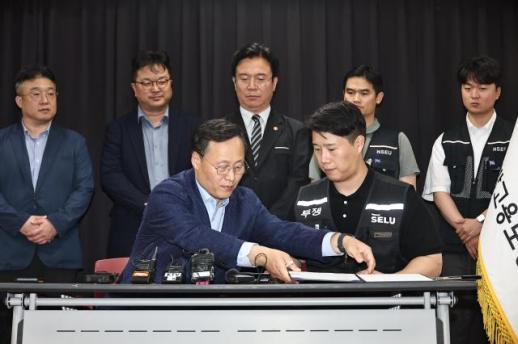 Samsung Electronics' Performance Bonuses Could Lead to High Tax Burden Samsung Electronics and its labor union have agreed to partially pay performance bonuses in company stock, raising concerns about the tax implications of these high bonuses. With the semiconductor supercycle, bonuses could reach up to 600 million won, pushing recipients into the highest income tax bracket of 42%. According to the National Tax Service on May 21, stock received as performance bonuses is classified as earned income under current tax law and is taxed in the same manner as cash bonuses. Taxes are assessed based on the market value at the time of payment, even if the stocks are not sold. The agreement to include company stock in performance bonuses is a first for Samsung Electronics, as the company and its labor union reached a tentative wage and collective bargaining agreement the previous day. A simulation by the National Tax Service indicates that for a family of three, with one spouse and one child over eight years old, a worker earning an annual salary of 100 million won without additional bonuses would face a tax liability of approximately 12.74 million won, with an additional payment of 2.66 million won after withholding taxes. If the same worker receives an additional performance bonus of 600 million won, their total salary would rise to 700 million won, and the taxable income would surge to 675.5 million won. This would place them in the highest tax bracket, resulting in a tax liability of 247.19 million won. After accounting for withholding taxes, they would still owe an additional 7.19 million won. However, this simulation does not include local income taxes. When factoring in local taxes, which are approximately 10% of the calculated tax amount, the total tax burden could approach 2.7 billion won. Analysts warn that since performance bonuses are paid in stock rather than cash, a decline in stock prices could exacerbate the perceived tax burden. Taxes are assessed at the time of payment, meaning that even if stock prices fall afterward, the tax already paid remains unchanged. The recent increase in performance bonuses among semiconductor companies is also impacting income tax revenues. In the first quarter of this year, income tax revenue rose by 4.7 trillion won year-on-year to reach 35 trillion won, largely due to increased bonuses at Samsung Electronics and SK Hynix.* This article has been translated by AI. 2026-05-21 20:37:01
 -
 Rising Demand for Health Supplements During Family Month As Family Month and Couples' Day approach, the demand for health supplements aimed at caring for parents and spouses is on the rise. Recently, the consumption of health supplements has expanded beyond simple gifts to focus on health management across generations. According to KGC, during this year's Family Month promotion period from April 23 to May 16, sales of its menopause health brand 'Hwaerak' increased by 1.3 times compared to the previous year. Sales of the men's vitality brand 'RXGIN' also rose by 1.4 times during the same period. Notably, there was a significant increase in sales among consumers in their 20s and those aged 50 and older. Consumers in their 20s showed a strong demand for gifts focused on their parents' health, while those over 50 demonstrated a higher proportion of purchases aimed at their own health management. KGC's women's health brand 'Hwaerak' focuses on products for managing menopause. Since its launch in 2003, it has continued research on women's health and has received recognition from the Ministry of Food and Drug Safety for its effectiveness in menopause health. The brand targets overall women's health based on functions such as immune enhancement, fatigue improvement, and blood circulation and memory enhancement. The flagship product, 'Hwaerak Jin Total Solution,' combines red ginseng with KGC's patented women's health formulation, deer antler extract, saffron extract, and low-molecular collagen peptides. It aims to address the complex health concerns of menopausal women while minimizing calorie content. The RXGIN men's vitality brand has also seen increased sales due to the rising demand for health gifts during Family Month. The recently renewed 'RXGIN Hongcheon-Woong' combines KGC's red ginseng concentrate with Rhodiola extract (SHR-5) and a blend of plant extracts including deer antler, goji berry, black raspberry, and five-flavor fruit, enhancing its formulation for men. Industry experts note that the consumption of health supplements is shifting from traditional 'filial gifts' to a lifestyle focused on meticulous family health management. Consumers in their 20s are seeking practical gifts for their parents' health, while the active senior demographic over 50 is increasingly investing in their current vitality and condition management rather than just preparing for old age. A KGC representative stated, "As Family Month and Couples' Day approach, more consumers are looking to care for the health of their parents and spouses. We plan to strengthen our product competitiveness tailored to health concerns across different life stages." Meanwhile, the Korea Health Supplements Association reported that the domestic health supplements market size reached 5.9626 trillion won last year. The purchase rate of health supplements within the past year hit 83.6%, the highest level recorded in the last five years.* This article has been translated by AI. 2026-05-21 20:34:30
 -
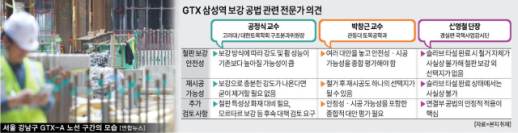 Will Steel Plate Reinforcement Ensure Safety at GTX Samsung Station? Concerns are growing over the structural safety of the GTX-A Samsung Station after it was revealed that rebar was missing from the construction site. Hyundai Engineering & Construction has proposed a "steel plate reinforcement method" to address the issue, but experts are questioning whether this approach can ensure safety. While adding steel plates to the exterior of concrete columns is being considered a practical solution, it must undergo comprehensive verification due to the unique characteristics of deep underground railway structures, including repeated train vibrations, fire resistance, and long-term maintenance. On May 20, the National Assembly's Land and Transport Committee held an urgent inquiry regarding the substandard construction at GTX-A Samsung Station. Minister of Land, Infrastructure and Transport Kim Yoon-deok stated, "We will conduct a comprehensive investigation of all columns and evaluate the reinforcement plan proposed by the Seoul City through accredited institutions to determine the optimal reinforcement method." The issue arose in the underground level five of the GTX platform at the Yeongdong-daero underground space complex development project. Out of 80 columns in this section, 50 were classified as not meeting structural standards. The design required two strands of 29-32 mm main rebar to be bundled together, but only one strand was placed during the concrete pouring process. Approximately 2,500 pieces of rebar, totaling 178 tons, were reported missing. As an alternative, Hyundai Engineering & Construction suggested wrapping the concrete columns with structural steel plates to enhance strength, a method estimated to cost around 3 billion won. The key question is whether this method can withstand the long-term usage conditions of the Samsung Station structure. Unlike ordinary buildings, the GTX Samsung Station is a deep underground railway transfer facility, which requires stricter scrutiny regarding load, vibration, and fire response standards. The Ministry of Land believes that the reinforcement plan proposed by Seoul City needs verification by accredited institutions. The effectiveness of the steel plate reinforcement method depends on the steel plates and concrete columns functioning as a single structure, necessitating verification of adhesive durability, bonding strength, connection quality, and fire resistance performance. Experts acknowledge the structural benefits of steel plate reinforcement but emphasize the importance of long-term maintenance and verification processes. Professor Gong Jeong-sik from Korea University, who chairs the Structural Division of the Korean Society of Civil Engineers, stated, "Reinforcing with steel plates could significantly increase strength depending on the method used. However, additional measures may be necessary to address fire risks, and the stability of the connection method will be crucial." Professor Park Chang-geun from Kwandong University noted that redoing the construction could be an option, but the Ministry of Land should comprehensively assess various alternatives for safety and feasibility. Conversely, some experts argue that redoing the construction may not be practical. Shin Young-cheol, head of the Economic Justice Action Citizens' Coalition's National Project Monitoring Team, explained, "If the slab has already been poured on top of the columns, demolition is practically impossible. Realistically, there may not have been many options other than steel plate reinforcement." Shin also pointed out issues related to subcontracting and inadequate oversight. He stated, "It appears that both the construction company and the supervisory team delegated responsibilities to subcontractors without proper verification, and the failure to check the rebar placement before pouring concrete is the biggest issue." A representative from Hyundai Engineering & Construction remarked, "After reviewing various structural analysis methods, the opinion from Seoul City is that there are no structural problems. We are focusing on how to safely repair and reinforce the structure."* This article has been translated by AI. 2026-05-21 20:33:00
 -
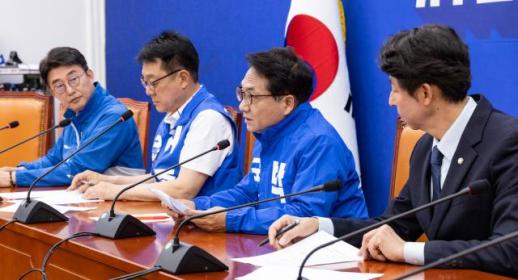 Democratic Party Demands Resignation of Incheon Mayor Candidate Over Crypto Allegations The Democratic Party on May 21 publicly demanded the resignation of Yoo Jeong-bok, the People Power Party's candidate for Incheon mayor, following the release of recordings that suggest he may have concealed virtual assets. The party also indicated plans to file a complaint against him. During a press conference at the National Assembly, lawmakers representing Incheon, including Heo Jong-sik, Noh Jong-myeon, Park Sun-won, and Lee Hoon-ki, unveiled recordings involving an individual identified as A, who is believed to have managed Yoo's virtual assets, and Yoo's spouse, Choi. According to Noh, the recordings indicate that during Yoo's tenure as mayor in April 2024, A and Choi discussed how to handle asset declarations, including a suggestion to receive virtual assets through the overseas exchange Binance. He further revealed an additional recording, likely made in December 2024, stating, "It is presumed that virtual assets were maintained in an overseas account from April to December. Yoo's claim of 'managing his brother's money' lacks credibility." Lee added, "Despite the obligation to disclose virtual assets for public officials established in 2023, Yoo failed to report accurately and misled the public with flimsy lies. Immediate compulsory investigations should be conducted, and Yoo must apologize and resign from his candidacy." The Democratic Party also mentioned that the campaign for Incheon mayor candidate Park Chan-dae is considering additional legal actions, including a formal complaint. Noh stated, "The campaign's complaint is expected to be filed on May 22. We have been verifying the matter and reviewing legal actions."* This article has been translated by AI. 2026-05-21 20:27:00