
Journalist

MIN JAE YONG
-
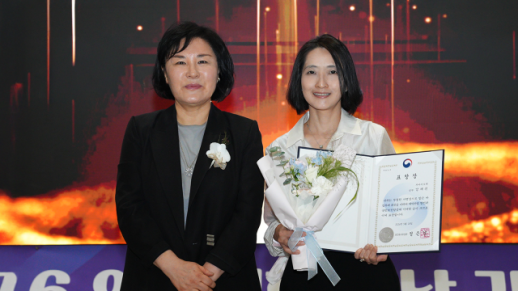 Kang Jae-seon of CHA Biotech Receives Ministerial Award on World Clinical Trials Day CHA Biotech announced on May 21 that Kang Jae-seon, Executive Director of Clinical Operations, received a ministerial award from the Ministry of Health and Welfare during the '2026 World Clinical Trials Day' ceremony held on May 20. World Clinical Trials Day commemorates the comparative clinical study conducted by British physician James Lind in 1747 to treat scurvy, highlighting the importance of clinical trials and honoring the contributions of researchers. This year's ceremony, organized by the Ministry of Health and Welfare and the National Clinical Trial Support Foundation, took place at the Dongdaemun Design Plaza (DDP) in Seoul under the theme 'Collaborative Innovation for Global Clinical Trials for Better Treatments.' Kang Jae-seon is responsible for clinical development operations at CHA Biotech, driving global commercialization efforts. He has led various domestic and international clinical trials for multiple indications at the Mokam Biotech Research Institute and GC Green Cross, guiding them through approval and product launch. Kang stated, "Cell and gene therapies (CGT) present new possibilities for treating cancer and rare, intractable diseases. We will continue to achieve development results in areas with significant unmet medical needs, such as recurrent glioblastoma and premature ovarian failure." Meanwhile, CHA Biotech is building its cell therapy technology and production infrastructure based on a cell library applicable to various diseases. The company currently holds over 80 related patents and is advancing the development of cell therapies targeting intractable diseases. Recently, CHA Biotech has accelerated its collaboration for global market entry by signing a memorandum of understanding (MOU) with Yonsei University's Biohealth Technology Holding Company to foster startups in the biohealth sector.* This article has been translated by AI. 2026-05-21 19:31:00
 -
 Hanmi Science Launches Dermacosmetic Brand 'ADESII' to Expand Beauty Business Hanmi Science, the holding company of Hanmi Group, announced on May 21 that it has launched the dermacosmetic brand 'ADESII' as part of its strategy to penetrate the beauty market. As the dermatological science-based dermacosmetic sector becomes a key pillar of K-beauty, the company is well-positioned to enter the market, leveraging its existing pharmaceutical raw material technology and the trust associated with its pharmaceutical background. ADESII is a premium dermacosmetic brand that emphasizes skin science and efficacy-driven design, built on Hanmi Group's pharmaceutical research and development capabilities. The brand highlights advanced technology, dermatological science, and efficacy clinical trials as its core concepts, focusing on ingredient formulations tailored to skin structure to demonstrate skin improvement effects. Notably, it emphasizes the ability to feel results within two weeks, which is half the skin turnover cycle. The first product launched is the 'Black Pearl PDRN Neo Serum.' According to the company, this product has been shown to improve skin elasticity and density, and its safety has been confirmed through low-irritation testing. The key ingredient is the patented 'H-EGTI,' a complex material that combines the natural amino acid 'EGT,' known for its antioxidant properties, with the plant-derived flavonoid 'Resistress.' This formulation is designed to maximize the skin's resistance to external stimuli and oxidative stress. Following this launch, the company plans to sequentially expand its product line to include offerings for whitening, wrinkle reduction, and lifting. A Hanmi Science representative stated, "We designed the formula based on pharmaceutical processes to ensure that consumers can directly experience skin changes. We aim to strengthen our brand presence in the dermacosmetic market."* This article has been translated by AI. 2026-05-21 19:28:31
 -
 Celltrion Implements Comprehensive Measures to Enhance Shareholder Value Celltrion announced on May 21 that it will implement a series of measures, including a stock split, share buybacks, and the acquisition of shares by its largest shareholder, to enhance shareholder value and reassess corporate value. This comprehensive response plan follows the company's review of strategies to improve shareholder value in light of recent market changes, as disclosed on its website on May 19. The measures aim to bolster both corporate and shareholder value. For the second consecutive year, Celltrion will conduct a stock split, allocating 0.05 new shares for every common share held, totaling approximately 10.92 million shares. The new shares are expected to be listed on June 30. Additionally, the company plans to buy back shares worth 100 billion won (approximately 55,000 shares). This follows a previous share buyback and cancellation of about 1.8 trillion won (approximately 9.11 million shares). By combining share buybacks with cancellations, Celltrion aims to address short-term market volatility while increasing shareholder returns in the long term. If the current buyback is completed by the end of the year, the total cancellation for 2026 is projected to reach around 2 trillion won. The company has already canceled approximately 3.43 million shares in 2024 and about 4.97 million shares in 2025, bringing the cumulative cancellation over three years to approximately 18.56 million shares, or about 8.4% of the total issued shares. Celltrion Holdings, the largest shareholder, and Celltrion employees will also participate in enhancing shareholder value. Celltrion Holdings plans to acquire additional shares worth about 100 billion won, and the employee stock ownership association will conduct its 12th stock subscription. Celltrion believes that its export-focused business structure and treatment-centered portfolio will limit the impact of external environmental changes. The company stated that its sensitivity to exchange rate and economic fluctuations is low, reducing the risk of fundamental deterioration. The comprehensive market response policy reflects the company's confidence in future growth. Celltrion has established a stable revenue base with 11 biosimilar products currently sold in the global market, and sales of high-revenue new products have increased by 67% compared to the same period last year, achieving the highest first-quarter performance to date. The company is focused on strengthening its business competitiveness and securing a sustainable growth foundation, with plans to quickly disclose its second-quarter results. Celltrion Group's shareholder return policy continues to be robust. The company announced record-high dividends last year, stating, "We will continue to pursue a balanced approach to our mid- to long-term growth strategy and shareholder return policy, becoming a representative company that achieves sustainable growth." Moving forward, it plans to enhance shareholder value through tax-exempt dividends and cash dividends. A Celltrion representative stated, "Despite macroeconomic uncertainties, we will maintain stable growth based on solid fundamentals and will continue to expand our shareholder-friendly policies to enhance corporate value."* This article has been translated by AI. 2026-05-21 19:23:47
 -
 Economic Growth Forecast Rises to 2.8% Amid Semiconductor Boom Thanks to strong semiconductor exports and the government's expansionary fiscal policy, market experts have raised their economic growth forecast for this year to as high as 2.8%. However, the ongoing war in the Middle East, high oil prices, and market interest rate instability have been identified as significant variables affecting the South Korean economy. A survey conducted by Aju Economy on May 21 among eight leading bond and macroeconomic experts revealed that three of the seven respondents projected the country’s GDP growth rate at 2.8% for this year. Another three estimated it at 2.5%, while one expert anticipated a growth rate of 2.6%. These figures significantly exceed the Bank of Korea's previous forecasts, which estimated a growth rate of 2.0% for this year and 1.8% for next year in its economic outlook released in February. The recovery in exports, particularly in the semiconductor sector, has been stronger than expected, shifting the economic outlook. The growth rate for the first quarter of this year was recorded at 1.7%, well above the Bank of Korea's forecast of 0.9%. Subsequent industrial activity reports also indicated an overall improvement in production, consumption, and investment metrics, suggesting that robust growth may continue into the second quarter. Experts commonly cited the semiconductor supercycle and the government's fiscal expansion as key factors driving the upward revision of growth forecasts. Jo Yong-gu, a researcher at Shin Young Securities, stated, "The strong performance of semiconductor exports due to increased investment in artificial intelligence (AI) has exceeded expectations, and the government's supplementary budget and expansionary fiscal policies are supporting domestic demand and investment recovery. The increase in foreign tourists is also a positive factor for service consumption." Kim Sung-soo, a researcher at Hanwha Investment & Securities, projected a growth rate of 2.5% for this year and 2.2% for next year, noting, "The prolonged war in the Middle East poses the biggest downside risk, but the strong semiconductor market and government fiscal policies will likely boost growth rates." Concerns about inflationary pressures remain. Experts expect the consumer price inflation rate to reach between 2.6% and 2.7% this year. Upside risks include rising international oil prices due to the Middle East conflict and the strong semiconductor market, while downside factors include government measures aimed at stabilizing prices. Woo Hye-young, a researcher at LS Securities, remarked, "Even if there are no further increases in international oil prices in May and June, we anticipate a period of rising inflation rates. Particularly in terms of service prices, the impact of rising fuel surcharges and energy costs is contributing to ongoing inflationary pressures." Experts have assessed the recent fluctuations in the won-dollar exchange rate, which has hovered around 1,500 won, as an excessive depreciation of the won compared to fundamentals. They projected the upper limit for the exchange rate this year at 1,550 won and the lower limit at 1,380 won. Park Sang-hyun, a researcher at iM Securities, stated, "The exchange rate in the 1,500 won range reflects a significant undervaluation of the won against fundamentals. While there is potential for further increases if international oil prices rise, the exchange rate could quickly drop to the mid-1,400 won range if oil prices stabilize and geopolitical risks ease. Furthermore, the current account balance is expected to be much better than last year, which could also contribute to a stronger won in terms of foreign exchange supply and demand." Concerns have also been raised about the recent surge in government bond yields, with analysts warning of the potential for further increases. This is attributed to inflationary pressures from geopolitical risks, the government's expansionary fiscal stance, and concerns over U.S. interest rate hikes. Kang Seung-won, a researcher at NH Investment & Securities, noted, "The recent rise in government bond yields reflects concerns about inflation, expectations for expansionary fiscal policies next year, and the possibility of U.S. interest rate hikes, all contributing to widespread upward pressure. The market has already begun to factor in additional interest rate hikes this year, and there is a prevailing sentiment that further increases may occur two or three more times."* This article has been translated by AI. 2026-05-21 19:21:00
 -
 Trade Commission Proposes Up to 31.55% Anti-Dumping Duties on European PVC Paste Resin The Trade Commission of the Ministry of Trade, Industry and Energy has determined that domestic industries have suffered due to low-priced dumping exports of European polyvinyl chloride (PVC) paste resin (PSR) and has decided to recommend the imposition of anti-dumping duties of up to 31.55% to the government. During its 473rd plenary session on May 21, the Trade Commission concluded that the dumping exports of PVC paste resin from Germany, France, Norway, and Sweden have caused significant harm to the domestic industry, including a decline in market share and a sharp drop in operating profit margins. The commission voted to recommend the imposition of anti-dumping duties. Specifically, the commission proposed anti-dumping duties of 30.60% to 31.55% on German products, 31.55% on French products, 25.79% on Norwegian products, and 28.15% on Swedish products to the Minister of Economy and Finance. PSR is widely used as a raw material in construction interior materials such as wallpaper and flooring, as well as in consumer goods like sofas and shoes, and industrial materials like tarpaulins and gloves. The government has been imposing provisional anti-dumping duties ranging from 25.79% to 42.81% since February, following a decision by the Trade Commission last December. The meeting also included a decision to suspend the investigation into unfair trade practices related to patent infringement of connected electric vehicles. Previously, domestic company Value Innovation Partners filed a complaint alleging infringement of patents related to LTE base station search and connection technology, prompting the Trade Commission to conduct an investigation. However, the Patent Trial and Appeal Board invalidated the patent in April, and the parties involved have since filed a lawsuit to annul the ruling in patent court, leading the Trade Commission to temporarily suspend the investigation until the court's decision is finalized. Additionally, the Trade Commission received a report on the initiation of an anti-dumping investigation into Chinese rebar used in automotive and construction machinery parts. The Trade Commission's Trade Investigation Division has been reviewing the eligibility, representation, dumping facts, and domestic industry damage based on the application submitted by the domestic industry, in accordance with the Customs Act and World Trade Organization (WTO) anti-dumping agreements. The meeting reported that the initiation of the investigation is justified, and the Trade Commission accepted it as a formal agenda item. The Trade Commission will conduct a preliminary investigation over the next three months, which can be extended up to five months if necessary. Following this, a three-month main investigation will determine the existence of dumping and the extent of industry damage, with preliminary results expected as early as September.* This article has been translated by AI. 2026-05-21 19:18:25
 -
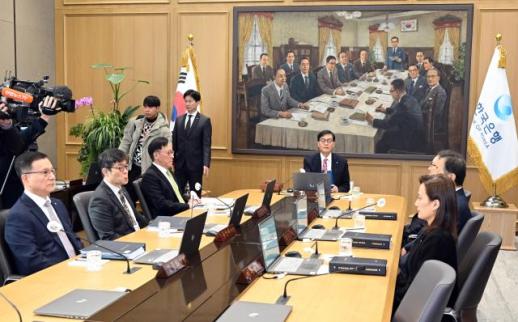
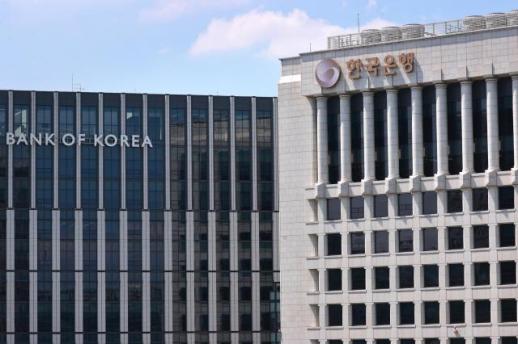 Bank of Korea Expected to Hold Interest Rate Steady Amid Inflation Pressures As inflationary pressures rise due to the ongoing conflict in the Middle East, the Bank of Korea's Monetary Policy Committee is expected to maintain the current interest rate. Market experts predict that while the Bank will choose to hold rates steady during its monetary policy direction meeting on May 28, it will signal a shift towards rate hikes in the second half of the year to address robust growth and high inflation. A survey conducted by Aju Economy on May 21 among eight leading bond and macroeconomic experts revealed that all respondents anticipate the benchmark interest rate to remain at 2.50% per annum during the upcoming meeting. This would mark the eighth consecutive month of holding rates steady since last year's second half through April. However, 75% of respondents expect a minority opinion advocating for a rate hike. Notably, 37.5% of those surveyed predicted two members would voice this minority opinion. Woo Hye-young, a researcher at LS Securities, stated, "Those expressing a minority opinion are likely to be concerned about rising demand-side inflation pressures as growth and domestic consumption recover. The combination of exchange rate fluctuations, rising oil prices, and increased domestic demand will support the argument for a rate hike." Changes in the language of the monetary policy direction statement are also anticipated. Analysts suggest that the Bank may hint at a potential rate increase to counter inflationary pressures. Yoon Yeo-sam, a researcher at Meritz Securities, noted, "Following the end of the Middle East conflict, we expect discussions on stabilizing oil prices and improvements in the semiconductor cycle to be highlighted, potentially including a statement about reviewing the timing of rate hikes for price stability." With a rate hike now seen as a foregone conclusion, experts are focusing on the number of increases expected this year. Some analysts forecast the final benchmark rate by year-end could reach 3.00%. Kang Seung-won from NH Investment & Securities anticipates a unanimous rate hike in July, projecting two increases within the next 12 months. Experts unanimously identified inflation as the most significant variable influencing the committee's decisions. Park Sang-hyun from iM Securities emphasized, "Highlighting inflation is crucial to justify a rate hike, particularly due to high oil prices." The ongoing conflict in the Middle East is also viewed as a critical factor. Kim Sung-soo from Hanwha Investment & Securities remarked, "It remains uncertain whether negotiations between the U.S. and Iran will proceed, but the Middle East conflict is the most pressing issue. China's industrial production in April fell significantly below expectations, and rising oil prices are becoming evident." He added, "While the Bank of Korea's decisions will be announced post-meeting, the impact of soaring oil prices is significant. Therefore, a rate hike is likely in the third quarter, with further increases to be determined." Experts agree that the upcoming May monetary policy meeting will convey a message hinting at a pivot in policy direction. Ahn Jae-kyun from Korea Investment & Securities expects the committee to address rising inflation pressures amid solid growth, while Gong Dong-rak from Daishin Securities also anticipates indications of inflationary concerns. Jo Yong-gu from Shin Young Securities predicted, "The committee will prioritize inflation stability over concerns about slowing growth, emphasizing the need for an unavoidable response to rising oil prices."* This article has been translated by AI. 2026-05-21 19:13:11
 -
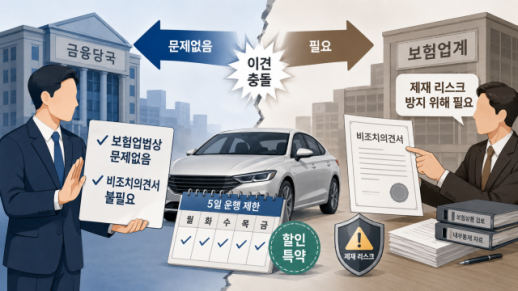 Confusion Surrounds Vehicle 5-Day Discount Program Amid Regulatory Dispute The government’s initiative for a vehicle 5-day discount program has sparked a dispute between financial authorities and the insurance industry over legal responsibilities. While the Financial Services Commission (FSC) believes there are no violations of insurance law, insurers argue that they need an official confirmation stating the program is not illegal to avoid future regulatory risks. On May 21, the FSC communicated to insurers that the vehicle 5-day discount program does not require a non-action opinion. An FSC official stated, "Since the vehicle 5-day discount program is legally sound, there is no need for a non-action opinion." A non-action opinion is an official document issued by authorities confirming that a financial company will not face penalties for a proposed new business. Previously, Shin Jin-chang, the head of the FSC's office, indicated during the announcement of the discount program that if there were legislative uncertainties, the FSC would actively consider issuing a non-action opinion to ensure smooth implementation of the program. This statement had led the insurance industry to believe that the possibility of receiving such an opinion was open. The vehicle 5-day discount program offers a 2% discount on premiums to personal auto insurance policyholders who agree not to drive on specific weekdays. The government initiated this program to encourage energy conservation and respond to high fuel prices. Insurers planned to begin accepting applications in May, with a launch scheduled for the end of the month, retroactively applying discounts from April 1. However, concerns remain in the industry regarding the basis for rate calculations as the program's launch aligns with the policy timeline. Article 129 of the Insurance Business Act mandates that insurance rates must be based on objective and rational statistical data. Typically, creating a new program requires 2 to 3 months for risk analysis, rate review, policy adjustments, and system development. In this case, the program's features were presented before the rate calculations were completed. The industry fears that a lack of statistical evidence linking participation in the program to actual reductions in accident risk could lead to future disputes over rate adequacy. Additionally, the retroactive application from April 1 complicates verification of whether participants adhered to their non-driving commitments during that period. For these reasons, insurers are requesting an official document from the financial authorities stating they will not impose penalties. If deemed a violation of the law, insurers could face fines of up to 50% of the annual premium income from the affected policies. They argue that verbal assurances are insufficient. However, the financial authorities have reiterated their position, asking the industry to trust their judgment. An insurance industry representative stated, "While we understand the authorities believe there are no issues, the responsibility ultimately falls on the insurers if problems arise in the future. Given that political or policy shifts could lead to different interpretations of the same issue, at least some legal safeguards are necessary." As a result of the ongoing tug-of-war between the industry and authorities, the launch of the 5-day discount program may be delayed. Some insurers are considering postponing the retroactive application from April 1 or pushing the launch to June after completing rate calculations.* This article has been translated by AI. 2026-05-21 19:10:40
 -
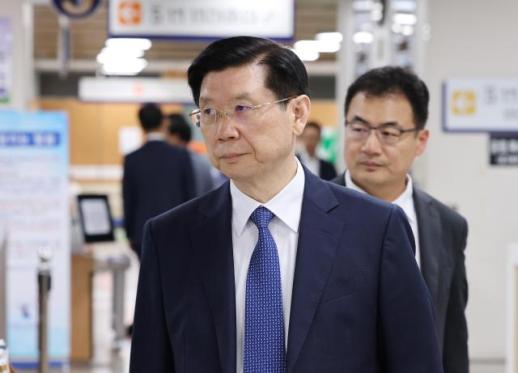 Park Jong-jun Acquitted in First Trial Over Deletion of Secret Phone Data Park Jong-jun, the former head of the Presidential Security Service, was acquitted in a first trial on charges of deleting information from secret phones used by key figures during the martial law period, including former President Yoon Suk Yeol. On May 21, the Seoul Central District Court's Criminal Division 32, presided over by Judge Ryu Kyung-jin, ruled in favor of Park, stating that the evidence for the charges of evidence destruction was insufficient. The court explained that the prosecution's claims were not substantiated, noting that the screen of Hong Jang-won, the former first deputy director of the National Intelligence Service, was publicly revealed, exposing the secret phone ID of the president. In this context, the court stated that the head of the security service's support headquarters and others acted based on their best judgment to consider and report the deletion of accounts. Furthermore, the court indicated that just because the actions taken afterward might have been inadequate or that better methods could have been employed does not imply an intention to destroy evidence. It emphasized that Park's decision was made after consulting with the National Intelligence Service director and considering the advice of staff, leading to a lack of evidence supporting the claim of evidence destruction. The court also pointed out that Park did not take similar actions regarding other individuals, such as former Police Chief Jo Ji-ho, which further weakened the argument for intentional evidence destruction. Previously, the special prosecution team had uncovered that Park deleted information from the secret phones of Yoon, Hong, and former Seoul Police Chief Kim Bong-sik during their investigation last year. The secret phones, managed by the security service, can be operated remotely, and the service deleted the information from these phones using a remote logout method. The special prosecution team charged Park with intentionally deleting evidence related to the martial law. During the sentencing hearing, they sought a three-year prison term for him. The team plans to review the ruling in detail before deciding whether to appeal.* This article has been translated by AI. 2026-05-21 19:05:41
 -
 Ministry of SMEs to Develop Five Global Startup Cities by 2030 The Ministry of SMEs and Startups is launching a project to cultivate five cities that rank among the top 100 global startup hubs by 2030. On May 21, the ministry held a "Startup City Development Project Strategy Presentation" at the Daegu Gyeongbuk Institute of Science and Technology (DGIST) Convention Hall, in collaboration with local governments, four major science and technology institutes, and regional startup support organizations. This event followed the "National Startup Era Strategy Meeting" held in April, where the initial project plan was announced. The "Startup City Development Project" aims to create a sustainable regional startup ecosystem led by local initiatives, based on government support packages for startup growth in areas such as talent development, commercialization, investment, and infrastructure. The project reflects the specialized strategies of four cities: Daegu, Gwangju, Daejeon, and Ulsan. Daegu's strategy focuses on becoming a leading city in advanced manufacturing driven by AI and robotics startups, leveraging DGIST's research capabilities to establish a deep tech testing ground. Daejeon announced its strategy to develop a deep tech startup ecosystem centered around three key sectors: space and defense, AI and robotics, and biotechnology, utilizing the strengths of the Korea Advanced Institute of Science and Technology (KAIST). Gwangju proposed a model for a testing city based on research personnel from the Gwangju Institute of Science and Technology (GIST), fostering development in future mobility, energy, AI, and semiconductors. Ulsan plans to create an open testing city that facilitates the immediate commercialization of innovative technologies from local industries such as automotive, shipbuilding, and petrochemicals. The Ministry of SMEs and Startups and the four local governments also signed a memorandum of understanding (MOU) to ensure the successful implementation of the "Startup City Development Project." Minister Han Seung-sook emphasized the importance of fostering a virtuous cycle where technology startups thrive outside the capital region and companies that grow in these areas remain rooted locally. She stated, "Through the Startup City Project, we will create a self-sustaining startup ecosystem that generates growth momentum from within the regions."* This article has been translated by AI. 2026-05-21 19:00:15
 -
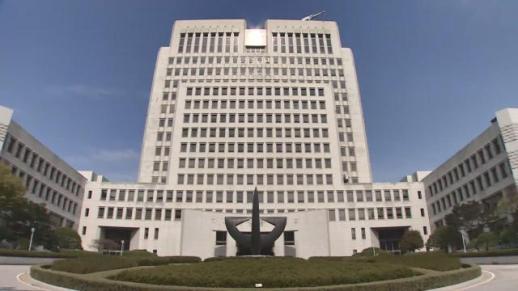 Supreme Court Rules HD Hyundai Heavy Industries Not Obligated to Bargain with Subcontractor Union HD Hyundai Heavy Industries has been confirmed by the Supreme Court to have no obligation to engage in collective bargaining with a subcontractor union. The court upheld existing legal principles under the labor union law prior to its amendment, which expanded the definition of employers.On May 21, the Supreme Court's full bench, led by Justice Oh Kyung-mi, upheld the lower court's ruling that dismissed a lawsuit filed by the subcontractor union of the Hyundai Heavy Industries branch of the Korean Metal Workers' Union. This decision comes 7 years and 6 months after the appeals court's ruling.The subcontractor union had requested collective bargaining with HD Hyundai Heavy Industries regarding the protection of union activities from April 11 to May 20, 2016. However, the company rejected the request, arguing that it was not the employer of the workers at the subcontractor and therefore not obligated to engage in collective bargaining. In response, the union filed a lawsuit demanding that the company fulfill its bargaining obligations.Both the first and second trials concluded that there was no explicit or implicit employment relationship between the defendant and the workers at the subcontractor, thus ruling that HD Hyundai Heavy Industries did not have a bargaining obligation toward the union.The Supreme Court's review focused on whether to maintain the previous legal principles regarding the scope of 'employers obligated to bargain' under the old labor union law, specifically Article 2.Article 2, Clause 2 of the labor union law defines an employer as a business owner, a manager responsible for business operations, or anyone acting on behalf of the business concerning its workers. The law was amended last September, often referred to as the 'Yellow Envelope Law,' to include individuals who, even if not parties to the employment contract, can substantially and concretely control or determine the working conditions of employees.The Supreme Court stated, "Since there is no explicit or implicit employment relationship between the defendant and the workers at the subcontractor, the lower court's determination that the defendant does not qualify as an employer obligated to bargain is not in violation of logical and experiential principles, nor does it misinterpret the legal principles regarding employers and collective bargaining under the old labor union law."The court emphasized that the previous legal principles regarding employers obligated to bargain under the old labor union law should be maintained as valid. The Supreme Court had previously ruled in 1986 that an employer with a bargaining obligation is one who has an explicit or implicit employment relationship with workers, directing and supervising them while providing wages in return for their labor.The court further explained that the wording of Article 2, Clause 2 of the old labor union law does not allow for the interpretation that all concepts of 'employers' defined in the labor union law include those who can substantially and concretely control or determine the working conditions of employees, even if they are not parties to the employment contract.Additionally, the court noted that Article 90 of the labor union law imposes criminal penalties of up to two years in prison or fines of up to 20 million won for unfair labor practices, and that the criteria for unfair labor practices related to refusal to bargain include the requirement of being an 'employer obligated to bargain,' necessitating a strict interpretation of this concept under the principle of legality.However, Justices Lee Heung-gu, Oh Kyung-mi, Shin Sook-hee, and Ma Yong-joo expressed dissent, arguing that previous case law should be changed. They pointed out that considering the legislative intent of the old labor union law, which guarantees workers' rights to collective bargaining and aims to improve working conditions and the economic and social status of workers, a contractor should be deemed an employer obligated to bargain with the union of subcontracted workers if they can substantially and concretely control or determine the working conditions, barring exceptional circumstances.* This article has been translated by AI. 2026-05-21 18:57:30