
Journalist

Mark Bennister, Ben Worthy
-
 Han Deok-soo Appeals 15-Year Sentence for Role in Coup-Related Charges Han Deok-soo, sentenced to 15 years in prison for his involvement in the December 3 martial law declaration and related coup duties, has filed an appeal against the ruling. According to legal sources on May 11, Han's legal team submitted the appeal to the Seoul High Court's Criminal Division 12-1, which presided over his case. On May 7, the appellate court sentenced Han to 15 years, reducing his initial 23-year sentence by eight years; however, it maintained guilty verdicts on most of the key charges. The court determined that Han had suggested holding a cabinet meeting to create the appearance of proper procedure during the martial law declaration and led the signing of related documents afterward, which constituted significant involvement in the coup. Additionally, the court found him guilty of concealing legal flaws by signing and then discarding the declaration document, as well as perjury for claiming during the Constitutional Court impeachment trial that he had not seen the martial law declaration. Following the appellate ruling, Han's legal team stated that they found the verdict "unacceptable in terms of factual and legal aspects" and indicated they would consider appealing. As a result, the Supreme Court is expected to engage in a rigorous legal debate over whether Han's actions during the martial law period constituted essential participation in the coup or merely complicity.* This article has been translated by AI. 2026-05-12 04:23:09
 -
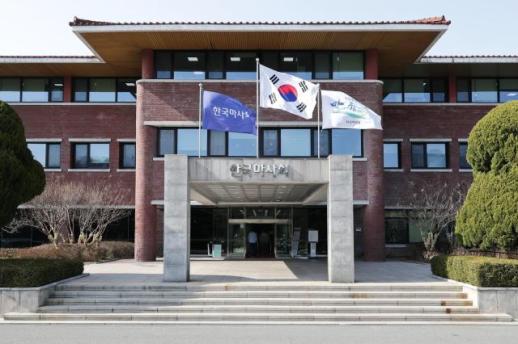 Korea Racing Authority Discusses Relocation of Headquarters and LetsRun Park In line with the government's second phase of public institution relocations, the Korea Racing Authority (KRA) is undergoing organizational restructuring, intensifying discussions about relocating its headquarters and LetsRun Park. However, the selection of a new site, funding, and regional conflicts present significant challenges that may delay the actual move. According to the public institution management information disclosure system, Alio, KRA's board of directors approved the establishment of a new "Future Strategy Headquarters" on April 30. This headquarters, which will consist of about 100 personnel, is set to launch on May 13 and will handle key functions including planning, coordination, budgeting, performance management, and overseeing the relocation of the headquarters and LetsRun Park. Alongside the organizational changes, KRA is also expanding its regional offices. The existing Busan-Gyeongnam Regional Headquarters will be restructured into the Yeongnam Regional Headquarters, with plans to increase staffing by about 40 personnel. This move is in preparation for the upcoming opening of the Yeongcheon Racecourse later this year. The head of the regional headquarters will be a senior-level employee. This restructuring is seen as a response to increasing pressure to relocate LetsRun Park, particularly in light of the government's housing supply policies in Gwacheon. The site of LetsRun Park in Gwacheon has been frequently mentioned as a potential location for new housing developments due to its prime location in the metropolitan area. Consequently, there are growing concerns within KRA about the lack of viable alternatives to relocation. A KRA official stated, "While the government emphasizes the need to relocate LetsRun Park, there has been insufficient discussion regarding the constraints of the horse racing industry and operational realities. We plan to explore necessary support and realistic alternatives through the Future Strategy Headquarters during the relocation process." Currently, the most discussed scenario involves separating the relocation of the headquarters and LetsRun Park. The headquarters may move to a regional area such as Yeongcheon or Jeju, while LetsRun Park could relocate to another area within Gyeonggi Province, considering accessibility to the metropolitan area. However, industry consensus suggests that separating the two locations poses challenges due to the need for large spectator turnout and transportation accessibility. In this context, competition among local governments to attract the horse racing venue is intensifying. In some southern Gyeonggi areas like Siheung and Ansan, local election candidates are pledging to attract a racetrack, while in Uijeongbu, proposals have emerged to locate LetsRun Park at Camp Stanley, a former U.S. military base. The active involvement of local governments is driven by the substantial tax revenue potential. In 2023, LetsRun Park contributed approximately 315.7 billion won in leisure taxes and 126.3 billion won in local allocation taxes to Gyeonggi Province. Notably, under current local finance laws, a portion of the leisure tax is distributed to municipalities where racetracks and off-track betting locations are situated, making successful relocation a pathway to stable local financial resources. There is a growing sentiment within and outside KRA that Siheung City is a realistic candidate for relocation. Its excellent accessibility from the southwestern metropolitan area and the potential for securing a large site are key factors. One industry insider noted, "The northern Gyeonggi area faces significant risks for race operations due to winter cold snaps and ground freezing issues. Considering accessibility and climate conditions, the southern Gyeonggi area is more practical, with Siheung appearing to be the most promising option." * This article has been translated by AI. 2026-05-12 04:20:54
 -
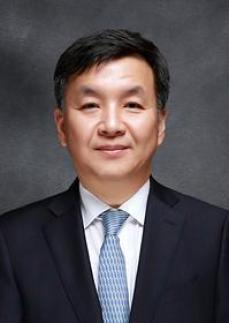 Kim Jin-il Recommended as New Member of Bank of Korea's Monetary Policy Committee The Bank of Korea announced on May 11 that Kim Jin-il, a professor at Korea University, has been recommended as a new member of the Monetary Policy Committee (MPC). Recommended by the Bankers Association, Kim, born in 1967, graduated from Seoul High School and earned both his bachelor's and master's degrees in economics from Seoul National University. He obtained his Ph.D. in economics from Yale University. Kim has previously worked as an economist at the Federal Reserve Board (FRB), an adjunct professor at Georgetown University, an assistant professor in the economics department at the University of Virginia, and a senior economist at the FRB. Since 2010, he has been a professor in the economics department at Korea University. The MPC is the policy-making body that deliberates and decides on key matters related to the Bank of Korea's monetary and credit policies. It consists of seven members, including the governor and deputy governor of the Bank of Korea. Kim is expected to succeed Shin Seong-hwan, who is retiring on May 12. Excluding the governor and deputy governor, the five remaining members are appointed by the president based on recommendations from the Minister of Economy and Finance, the governor of the Bank of Korea, the chairman of the Financial Services Commission, the chairman of the Korea Chamber of Commerce and Industry, and the chairman of the Bankers Association. The term is four years.* This article has been translated by AI. 2026-05-12 04:19:26
 -
 Companies Struggle with AI Transition: Redesigning Operations is Essential Despite ongoing attempts by South Korean companies to transition to artificial intelligence (AI), many are stalling at the implementation stage and failing to achieve tangible results. Most failures stem from treating AI as a mere tool, highlighting the need for a fundamental redesign of work processes around AI. According to the Korea Artificial Intelligence and Software Industry Association (KOSA), the utilization rate of AI in South Korea's manufacturing sector remains at just 17.9%. The primary reason for the lack of AI adoption is the difficulty in identifying areas and processes suitable for AI implementation, cited by 41.6% of respondents. A recent report from the Super Large AI Promotion Council identified four main reasons for failures in AI transitions: unclear responsibility and roles (R&R), lack of operational monitoring, unaddressed data discrepancies on-site, and governance issues that hinder implementation. While proof of concept (PoC) projects may succeed, unclear responsibilities during actual operations often lead to a lack of trust on the ground, resulting in projects being abandoned. The report succinctly states, "PoC is a snapshot, but validation is a four-season process," meaning that success at one point in time does not guarantee effective operations in changing conditions. Unique factors contributing to failures in the South Korean corporate environment have also been identified. In a case study from a knowledge and office sector company, an engineer noted, "The issue wasn't that AI couldn't write; it was that when data came in HWP format, half of the project shifted from generation to input processing." This highlights the warning that if the initial parsing pipeline is not designed to recognize HWP as a file format rather than a language, operational costs will continue to rise. The predominance of HWP format in public documents presents a significant barrier to AI adoption in South Korean companies. Similar patterns have been observed in the trade and logistics sectors. In a joint project between LabelUp and Team Reboot, an engineer remarked, "Don’t assume PDFs will be neatly formatted text." Effective automation of unstructured documents requires simultaneous design of structuring, validation, and recommendation stages; if the extraction fields are unstable, the reliability of subsequent recommendations collapses. Conversely, companies that have redesigned their operational processes are seeing clear benefits. Company B reported a reduction of up to 73% in full-time equivalent (FTE) staffing after implementing AI agents, while increasing its internal AI productivity index by 35%. LabelUp and Team Reboot reduced document processing time by over 60% on average and achieved a 99.2% accuracy rate in HS Code classification during final validation, which included human review loops. In terms of optimizing AI infrastructure, companies have cut GPU training costs by approximately 80% compared to AWS on-demand services, tripling development productivity and increasing GPU utilization from 20% to over 85%. Analysis indicates that the criteria for success in AI transitions hinge not on model accuracy but on the completeness of operational design post-deployment. Key elements such as monitoring systems, incident response procedures, user training, and standardization of R&R are essential for translating efforts into tangible business outcomes. Successful companies have commonly applied five design patterns: task decomposition and agent delegation, assetization of unstructured data, real-time edge analysis, optimization, and the integration of security and governance. The Super Large AI Promotion Council concluded that the true determinants of success in AI transitions lie not in the initial implementation but in the subsequent operational design, accountability structures, and governance frameworks.* This article has been translated by AI. 2026-05-12 04:17:42
 -
 Voter Apathy in Gyeonggi Province Ahead of Local Elections As the June 3 local elections approach, the political atmosphere in Gyeonggi Province remains subdued. Many citizens are unaware of the candidates vying to lead the province for the next four years. A taxi driver in his 50s, encountered in Suwon, remarked, "There aren’t many banners on the streets, and the election atmosphere is lacking. I almost forgot there was an election coming up." Similarly, a 43-year-old man in Uijeongbu stated, "I have no interest in politics, so I don’t know who is running. I’ll probably vote for the candidate from the party I usually support when I get to the polling station." With the election atmosphere failing to heat up, voters are expressing fatigue with politics and seem more focused on assigning blame for conflicts between parties rather than evaluating candidates. A 73-year-old woman at Uijeongbu Jeil Market said, "Politicians are always fighting, so I have no interest. I don’t like any of the candidates, and I don’t even know who is running for governor of Gyeonggi Province," but she added, "I think the ruling party shouldn’t have unchecked power, so I’m considering voting for the People Power Party." Conversely, a 27-year-old man from Suwon expressed skepticism about Choo Mi-ae, the Democratic Party candidate, saying, "Even if she wins, I don’t think she’ll pay much attention to provincial issues, only responding to central political issues." He also criticized the People Power Party for not adequately distancing itself from former President Yoon Suk-yeol and for lacking reflection on past actions. A recent poll conducted from May 4 to 5 among 802 voters in Gyeonggi Province indicated that Choo Mi-ae garnered 50.8% support, significantly ahead of Yang Hyang-ja from the People Power Party, who received 31.5%. Cho Eung-cheon from the Reform Party was supported by 6.6% of respondents. This survey was conducted by JoWon C&I using an automated response system (ARS) and has a margin of error of ±3.5 percentage points at a 95% confidence level (for more details, visit the Central Election Survey Deliberation Commission website). However, analysts caution that, based on past election results in Gyeonggi Province, the outcome may remain uncertain until the votes are counted. In the previous election, the margin of victory was just 8,913 votes (0.15 percentage points). At that time, Kim Eun-hye of the People Power Party led in districts like Bundang in Seongnam and Cheoin and Suji in Yongin, but Kim Dong-yeon of the Democratic Party secured enough support in Bucheon, Hwaseong, and Siheung to narrowly win. In fact, many voters encountered on the streets expressed hesitation in choosing whom to vote for, indicating they would decide after thoroughly reviewing the candidates' capabilities and policies. Residents of Gyeonggi Province particularly emphasized the need for policies related to housing and transportation that directly affect their daily lives. A 56-year-old woman from Dongtan, who has not yet chosen a candidate, commented, "Since the GTX line opened, it’s quick to get from Dongtan Station to Seoul, but it still takes a long time to travel within Dongtan. I hope transportation within Dongtan improves." A 31-year-old man living in Bundang expressed a desire for the next governor to effectively address practical issues like transportation and housing prices. In northern Gyeonggi Province, there are also complaints about policies and investments being concentrated in the south. A 38-year-old woman from Goyang stated, "I hope this election focuses more on the economy and people’s livelihoods rather than negative campaigning. It feels like policies are only directed at southern Gyeonggi, and I hope there is consideration for all residents of Gyeonggi Province."* This article has been translated by AI. 2026-05-12 04:14:48
 -
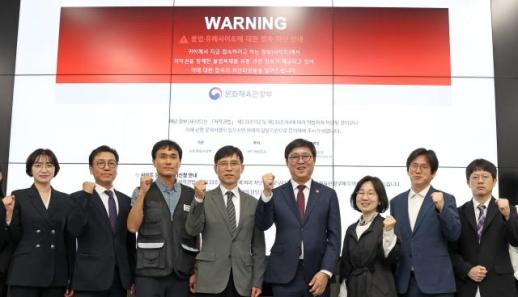 34 Copyright Infringing Sites, Including 'New Toki,' Blocked by Government The government has officially implemented an emergency blocking system for copyright infringement sites, taking its first action on May 11. The Ministry of Culture, Sports and Tourism notified internet service providers of the "first emergency blocking order" for copyright infringement sites. A total of 34 sites are included in this emergency block. The emergency block is a measure that fundamentally prevents users from accessing illegal sites and is considered the fastest and most effective administrative response to copyright infringement. The ministry explained that the 34 sites targeted for blocking meet the criteria of clear illegality as defined by copyright law, the urgency of preventing damage, and the absence of alternative measures. Notably, the site 'New Toki,' which has repeatedly closed and reopened, is among those blocked. New Toki has been illegally distributing webtoons and web novels and announced on April 27 that it had ceased operations, stating, "We have no plans to resume services in the future." However, a site with the same name has since reappeared, complicating efforts to eradicate illegal content distribution. Minister Choi Hwi-young visited the Korea Copyright Protection Agency on the same day to express his commitment to a strong response against illegal sites and to encourage on-site staff. He stated, "We recognize that operators of illegal sites are unlikely to easily give up the profits they have gained illegally, despite the government's firm stance and new response system. Even if it becomes an ongoing battle, we will strive to shorten the lifespan of illegal sites as much as possible through swift blocking measures." Meanwhile, following the closure of illegal webtoon sites, positive changes have been observed, such as improved usage metrics for legal platforms like Naver Webtoon. According to Mobile Index, the average number of new installations for Naver Webtoon from April 27 to May 1 was 15,537, a 31% increase compared to the average of 11,853 installations from April 20 to 26.* This article has been translated by AI. 2026-05-12 04:12:53
 -
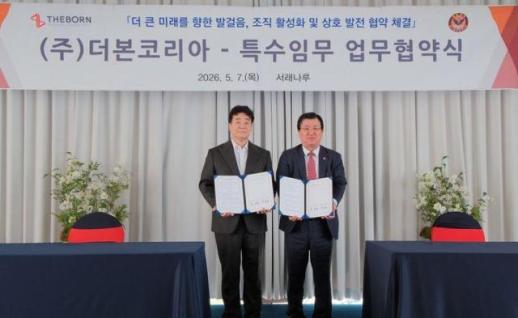 Veterans Group Partners with Daebon Korea for Economic Empowerment The Korea Special Mission Veterans Association and Daebon Korea are embarking on a partnership based on shared social responsibility. The initiative aims to support the economic independence of veterans while expanding corporate social responsibility through a collaborative model. The Korea Special Mission Veterans Association announced that it signed a memorandum of understanding (MOU) with Daebon Korea on May 7 at Seorae Naru in Banpo Hangang Park. The two organizations will focus on a "capital-free startup support program" to assist veterans' families in achieving self-sufficiency. This initiative aims to reduce the financial burden of starting a business and establish a stable foundation for operations. Additionally, they plan to collaborate on public interest projects, including eco-friendly energy and ESG management practices. The partnership is rooted in a connection formed in the past. Baek Jong-won visited the veterans association's training center while obtaining his yacht license. During this visit, he shared homemade kimchi with an instructor who was battling cancer, a gesture that gained attention online as a heartwarming story. Kim Yong-deok, the association's president, stated, "Baek Jong-won's sincere actions toward veterans' families have instilled deep trust among our members. We are now moving beyond a relationship of receiving help to becoming partners in driving corporate growth and realizing social value together."* This article has been translated by AI. 2026-05-12 04:11:15
 -
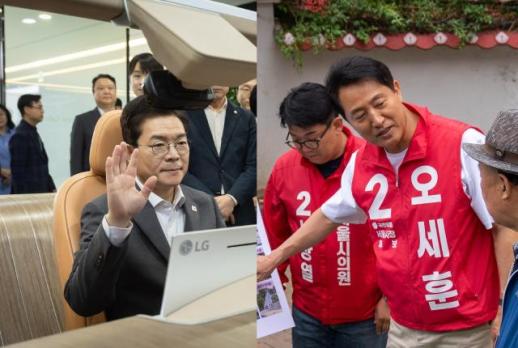 Seoul Mayoral Candidates Focus on AI and Housing Issues In the lead-up to the June 3 Seoul mayoral election, Jung Won-o of the Democratic Party unveiled AI-related policy proposals on May 11, aiming to capture the support of young and moderate voters. Meanwhile, Oh Se-hoon of the People Power Party focused on housing supply, a key issue in the election, to dominate the real estate narrative. Jung announced his 'AI G2 (Global 2nd City) Seoul' initiative on his social media, following a visit to LG's AI research center in Magok-dong, where he observed a demonstration of large-scale AI technology and held a policy meeting. This initiative follows his announcement on May 8 to develop Yongsan into a 'Global AI Governance Hub' for discussions on AI diplomacy, safety, ethics, and international standards. Jung also pledged to transform the relatively underdeveloped Guro and Gasan Digital Complex into a center for physical AI demonstration economies. He aims to connect AI research capabilities in Yangjae with the industrial base in Guro and Gasan to establish a 'Seoul-style physical AI ecosystem' that operates in real-world industrial settings. The city plans to become the first customer for AI companies, expanding projects to develop and test related services. It will also operate a hands-on AI academy for youth and middle-aged individuals to support job creation and industrial transition. AI will also be utilized for citizen safety and administration. Plans include safety AI to address stalking and nighttime risks, disaster AI to predict flooding and fires, and small business AI to assist with sales, inventory, and customer service. The city aims to establish a direct AI complaint system and an AI administrative support platform to better identify and respond to citizen issues. Jung stated, "For South Korea to lead in the global AI competition, the entire city must become an innovation platform. We will set global AI standards in Yongsan and create jobs and business growth in Guro and Gasan to usher in the AI G2 era." Oh, on the other hand, focused on addressing public concerns about real estate. He held a press conference for the 'Citizens' Countermeasure Meeting on Real Estate Hell' in Gaebong-dong, Guro-gu, and later convened a meeting with representatives from various urban planning and redevelopment associations in Jongno-gu. At the press conference, Oh highlighted issues such as the surge in jeonse (long-term lease) prices, rising monthly rents, increased property taxes, and lending restrictions, stating, "Both homeowners and those without homes are deeply concerned. All Seoul citizens are expressing their pain." He attributed the 'real estate hell' to the failures of the Lee Jae-myung administration's housing policies, asserting, "Many voters are desperately seeking solutions, and I will actively listen to the voices of residents across Seoul, especially the youth." Meanwhile, the two candidates continued their back-and-forth over the possibility of a one-on-one debate. Oh pressed Jung, stating, "A multi-candidate debate is scheduled by the election commission, but I propose a one-on-one debate on Seoul's various policies." In response to Jung's criticism that Oh had previously rejected debate proposals during the People Power Party's primary, Oh argued, "At that time, the other candidates had not yet formulated their pledges." He insisted that Jung should not use the past as an excuse to avoid a one-on-one debate, adding, "Now that both of us have put forth our pledges, it is our duty and responsibility to debate." Jung, appearing on CBS Radio's 'Park Seong-tae's News Show,' referenced the earlier primary debate and stated, "Changing one's stance based on the situation leads to a loss of trust," effectively signaling his refusal to participate in a one-on-one debate.* This article has been translated by AI. 2026-05-12 04:08:23
 -
 HMM Cargo Ship Hit by Drone in Hormuz Strait, Impacting Transformer Exports The South Korean government confirmed that the HMM Namoo, a heavy-lift vessel, was struck by what is believed to be a suicide drone on May 4, resulting in a fire onboard. This incident has raised alarms for domestic companies involved in transformer exports to the Middle East and their subsequent engineering, procurement, and construction (EPC) contracts. As HMM's operations face disruption, there are concerns that Chinese shipping companies like COSCO may benefit from this situation. According to the shipping industry on May 11, HMM Namoo has completed an initial site investigation and will now focus on repairs in the Middle East. The impact area from the unidentified flying object resulted in a breach approximately 5 meters wide and 7 meters deep, with the hull bending inward. A significant fire also occurred inside the vessel, completely destroying the engine room. HMM stated, "We plan to establish a repair schedule in consultation with local shipyards." The main concern now is the cost and duration of repairs. It is currently unclear how extensive the repairs will need to be. Experts predict that since repairs will take place at a shipyard in Dubai rather than at the Chinese CSSC shipyard where the vessel was built, significant additional costs and time will be required. Having launched last September, the latest heavy-lift vessel's departure will inevitably disrupt HMM's future business plans. As HMM has played a crucial role in exporting domestic transformers and plant materials to the Middle East, local transformer and EPC companies are closely monitoring the situation. HMM entered the heavy-lift shipping business in 2007 and, last year, added four vessels, including the Namoo, to its fleet, demonstrating a strong commitment to this sector. This decision was made in response to the rapid growth of domestic transformer and EPC businesses, particularly in the Middle East and U.S. markets. While the market situation remains somewhat fluid, HMM has deployed seven of its eleven heavy-lift vessels on routes to the Americas and four to the Middle East, effectively serving as a bridge for domestic and international companies. In fact, both the Namoo and the Narae are currently stranded in the Hormuz Strait after delivering cargo, while the Naru and Masan are waiting outside the strait to deliver their loads. The transformer and EPC sectors predict that the impact on Middle Eastern exports will be limited due to long-term contracts in place. A representative from a transformer company noted, "Contracts for transformer supplies in the Middle East are long-term, so they are not significantly affected by the closure of the Hormuz Strait or the shortage of heavy-lift vessels. However, we may need to consider securing alternative transport networks." An EPC company representative added, "There have been no reported disruptions to ongoing plant construction projects in the region due to the conflict in the Middle East. We plan to focus all efforts on responding to the reconstruction opportunities that may arise following U.S.-Iran ceasefire negotiations." However, HMM is expected to expedite efforts to secure additional heavy-lift vessels through early returns of the Namoo and long-term charter contracts, as there are concerns about losing major clients. Historically, the heavy-lift shipping market was dominated by European companies from Germany and the Netherlands, but the rapid growth of Chinese transformer and EPC firms has strengthened the influence of COSCO, a state-owned shipping company in China. COSCO operates a fleet of over 20 heavy-lift vessels, focusing on serving as a spearhead for Chinese enterprises. A shipping industry insider remarked, "The Middle East, along with routes to the Americas, is a key route for domestic heavy-lift vessels, and container shipping has only recently recovered after the bankruptcy of Hanjin Shipping. Even if the closure of the Hormuz Strait is lifted, the government needs to work closely with countries related to the strait to ensure the safe operation of domestic container and cargo vessels in the region."* This article has been translated by AI. 2026-05-12 04:05:11
 -
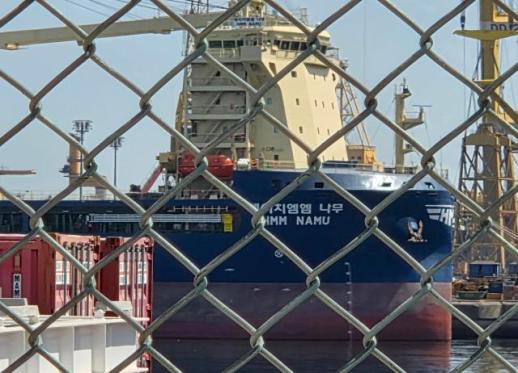 Concerns Rise Among Crew of HMM Namoo After Attack in Middle East The South Korean government has officially announced that the cause of the fire on the HMM Namoo was due to an "external impact," heightening tensions within the domestic shipping industry. Concerns are growing that other vessels waiting near the Strait of Hormuz could also become targets, leading to calls for measures to protect crew members and evacuate ships. As of May 11, crew members of the Namoo are reportedly waiting on-site while investigations and inspections are conducted. Although there have been no requests for collective disembarkation or significant unrest, the prolonged state of tension has resulted in considerable psychological stress and fatigue among the crew. Jeon Jeong-geun, chairman of the HMM Maritime Union, stated, "The crew of the Namoo is waiting calmly, but they appear to be under significant psychological pressure and shock. Disembarking from a war-risk area is a legitimate right for the crew, and we are prepared to facilitate immediate rotations if requested." HMM has also indicated that it will expedite crew rotations for those who wish to disembark. The company noted, "We are currently focused on the ship's repairs and the investigation, and if any crew members wish to rotate, we will proceed immediately." However, the challenge lies in the difficulty of executing crew rotations. Given the uncertainty of potential further attacks, finding replacements willing to enter a conflict zone is proving to be a complex issue. As the ongoing conflict in the Middle East has led to prolonged maritime waiting periods, there is a growing trend among crew members to avoid assignments on Middle Eastern routes. An industry insider remarked, "Initially, many crew members were willing to take on Middle Eastern assignments due to high war-risk allowances and wages, but the atmosphere has changed dramatically since the attack on the Namoo. Recently, families have been urging crew members to disembark or avoid Middle Eastern routes altogether." Currently, there are approximately 26 South Korean vessels and around 160 South Korean crew members in the vicinity of the Strait of Hormuz. The industry and government are monitoring the supply of essentials such as drinking water and food daily, but reports indicate that the psychological fear among crew members has reached critical levels. Shipping companies are also facing escalating financial burdens. The combination of difficulties in crew rotations, rising war insurance premiums, and increased fuel costs has led to soaring operational expenses. According to the Korea Shipping Association, the additional costs incurred by fleets stranded near the Strait of Hormuz are estimated to be around 400 million won per day. Particularly, the industry is closely watching the implications of the government investigation results on the global insurance market. With war insurance premiums and rates already rising for the region, the confirmation of actual attack incidents is expected to further increase the financial burden on shipping companies. Some are even raising concerns about a potential logistics shutdown originating from the Middle East. Kyu-hoon Koo, president of the International Logistics Association, stated, "Even if hostilities cease, supply chain disruptions and logistics delays will persist for some time. Given that the Middle East is a critical hub for global oil and logistics flows, any escalation of anxiety could have a cascading effect on the shipping and logistics markets as a whole."* This article has been translated by AI. 2026-05-12 04:02:39