
Journalist

Milad Haghani
-
 State-backed investment fund sparks frenzy as retail investors flood in SEOUL, May 22 (AJP) - A government-backed fund to invest in key strategic industries sparked a buying frenzy, with its online allocations selling out within minutes as soon as it became available on Friday. The fund, designed to invest in advanced industries such as artificial intelligence (AI) and semiconductors as part of President Lee Jae Myung's push to shift household assets away from heavy reliance on real estate and into the stock market, attracted strong demand from retail investors, who were drawn by tax incentives and a government-backed loss-sharing structure. Online offerings at some brokerages sold out within several minutes after sales began at 8 a.m., with banks and securities firms also seeing heavy demand both on mobile apps and in person. "We opened nearly 10,000 accounts for the fund in a single day," a staffer at a major brokerage in central Seoul said. "This morning alone, all online offerings were sold out within just 10 minutes." The staffer added that crowds had begun gathering early in the morning to open accounts for the fund, forming long waiting lines. Another brokerage also saw more than one-fifth of its 20 billion won ($14.5 million) allocation sold online within minutes after sales began at 8 a.m. Major banks including Shinhan and Woori said their mobile allocations sold out in the morning, while some branches saw customers lining up even before opening hours to sign up for the fund. "It feels more reliable because the government is involved," said a woman surnamed Bae in her 50s who visited a Korea Investment & Securities branch in Seoul's financial district of Yeouido to sign up for the fund. She said the product appealed to her because it was easier to manage alongside her daily job than short-term stock trading. "It feels more secure because the government is involved," said a woman in her 50s surnamed Bae, who visited a Korea Investment & Securities branch in Seoul's Yeouido financial district to sign up for the fund. She said the product also appealed to her because it was easier to manage alongside her daily job than short-term stock trading. The fund will be sold on a first-come, first-served basis over the next three weeks until June 11. To qualify for tax benefits, investors must be at least 19 years old and open a dedicated account used exclusively for the fund. Those who have been subject to South Korea's comprehensive income tax at least once in the past three years are not eligible to open such accounts. The fund aims to raise 600 billion won (US$435 million) from retail investors, along with 120 billion won in government funding. The combined assets will be allocated across 10 separate funds investing in strategic industries, with the government covering up to 20 percent of losses, though investors can still lose money. Financial regulators warned that the fund is a high-risk investment product, requiring investors to pass suitability assessments before investing. Despite the risks involved, demand appeared to surge as the fund offers tax benefits such as dividend income and income tax deductions. 2026-05-22 15:50:34
 -
 AJP Focus: Divided Samsung faces critical capex test in the AI era SEOUL, May 22 (AJP) - Samsung Electronics by March has reclaimed the top position in the global memory oligopoly after falling behind local rival SK hynix in the early race for artificial intelligence infrastructure chips, particularly high bandwidth memory (HBM). But whether the Korean tech giant can maintain that lead during the rest of AI supercycle is becoming increasingly uncertain as the company sinks deeper into internal wage conflict and spiraling compensation costs. At a moment when the global semiconductor war demands unprecedented unity and investment discipline, Samsung instead finds itself pulled apart by a widening internal divide between winners and losers of the AI boom. The contrast with its global rivals is becoming difficult to ignore. Taiwan Semiconductor Manufacturing Company and Micron Technology are aggressively channeling resources into massive capital expenditure plans aimed at dominating the next generation of AI chips, advanced packaging and memory production. Samsung, by comparison, is increasingly consumed by operational expenditure disputes, labor unrest and a rare collapse of solidarity inside one of Asia’s most tightly managed corporate empires. At the center of the tension lies an extraordinary compensation gap emerging inside the company itself. Industry estimates suggest employees in Samsung’s semiconductor Device Solutions (DS) division — now the company’s profit engine amid the AI boom — could receive as much as 600 million won ($438,000) this year in combined bonuses and incentives. Meanwhile, workers in the Device eXperience (DX) division, which oversees smartphones and home appliances, are expected to receive roughly 6 million won. A 100-fold disparity inside the same corporation has triggered deep resentment across the company. The fallout is already reshaping Samsung’s labor landscape. More than 4,000 employees from the DX division reportedly left the National Samsung Electronics Union over the past month, with many joining the rival Donghaeng union, whose membership has surged from around 2,600 to over 12,000 as non-memory workers seek more aggressive representation. “I don’t understand why there is such an extreme divide and discrimination within the same company,” a DX division official familiar with the matter told AJP on condition of anonymity. “We have to do whatever we can on our end to protect our interests.” What once functioned as a unified corporate system is beginning to fracture under the pressures of the AI economy. For decades, Samsung operated under a model where stronger divisions effectively subsidized weaker ones, allowing the conglomerate to incubate new businesses, preserve employment stability and maintain cohesion across sprawling operations. That model worked during the industrial manufacturing era when long investment cycles and centralized management rewarded internal discipline. But artificial intelligence is changing the economics of the semiconductor business. The AI boom disproportionately rewards a narrow set of high-margin technologies — especially HBM memory, advanced foundry processes and AI packaging — while leaving slower-growing consumer electronics divisions struggling to justify equal compensation structures. Silicon Valley-style winner-takes-all capitalism is colliding head-on with Samsung’s traditional top-down manufacturing culture. And the financial consequences could become severe. Foreign investors and analysts increasingly warn that Samsung’s internal fragmentation is becoming a strategic vulnerability rather than simply a labor-management dispute. According to a recent J.P. Morgan analysis, fully accommodating union demands could add as much as 39 trillion won in labor costs. Analysts estimate that such surging operational expenditures could reduce Samsung’s operating profit by up to 12 percent, potentially cannibalizing the capital expenditures needed to maintain technological leadership in extreme ultraviolet lithography, HBM production and advanced packaging. That tradeoff — between rewarding labor and funding future technology — may become one of the defining corporate dilemmas of the AI era. Unlike previous semiconductor cycles, the current AI arms race requires relentless investment speed. Delays in securing advanced equipment, expanding clean-room capacity or building next-generation packaging infrastructure can quickly translate into lost market share. Samsung’s rivals are moving aggressively precisely because they recognize the narrowness of the window. TSMC recently sold an 8.1 percent stake in Vanguard International Semiconductor to secure approximately 1.2 trillion won ($870 million) in additional funding for advanced AI packaging facilities. Micron Technology, meanwhile, is pushing ahead with a $20 billion capital expenditure plan this year largely free from labor friction or internal political constraints. The contrast is stark: although Samsung outpaced its rivals with massive first-quarter capital expenditures to reclaim its memory lead, the company increasingly finds itself debating wealth allocation while competitors remain focused on capital allocation. That distinction matters because investors ultimately reward technological dominance, not internal compromise. The danger for Samsung is not merely higher wage costs themselves. It is the possibility that internal distrust begins eroding the organizational cohesion required to compete in a capital-intensive industry where speed, secrecy and long-term strategic coordination are critical. Semiconductor leadership has historically depended not only on engineering excellence, but also on corporate unity during periods of enormous financial stress. Taiwan’s semiconductor ecosystem operates with near-national strategic alignment. U.S. chipmakers benefit from deep capital markets and shareholder tolerance for aggressive reinvestment. Samsung now risks becoming trapped between both systems — pressured simultaneously by shareholders demanding profitability and employees demanding redistribution of AI windfalls. Experts say the company may ultimately be forced to rethink its entire structure. “There appears to be significant internal dissatisfaction, but resolving it is difficult since the company cannot distribute bonuses to everyone,” said Kim Duk-ki, a professor at Sejong University. “This is a structural characteristic of Samsung. In the past, cross-subsidizing loss-making divisions helped the company continuously incubate new businesses, but looking ahead, they might have to consider spinning off divisions.” Such discussions would once have been almost unthinkable inside Samsung. But the AI era is beginning to challenge assumptions that defined the conglomerate for decades: centralized hierarchy, lifetime-style loyalty and broad internal redistribution. The more profits become concentrated in a handful of AI-related businesses, the harder it becomes to preserve cohesion across divisions moving at vastly different speeds. In many ways, Samsung’s internal conflict mirrors a broader transformation now unfolding across the global economy. Artificial intelligence is generating extraordinary wealth — but unevenly. Companies, sectors and workers directly tied to AI infrastructure are capturing disproportionate rewards, while others struggle to keep pace. That imbalance is beginning to reshape labor expectations, compensation systems and even corporate identity itself. For Samsung, the stakes are particularly high because the company sits at the center of South Korea’s economic model. Its ability to sustain investment leadership in semiconductors affects not only shareholders and employees, but also the country’s exports, currency stability and technological competitiveness. The question is no longer whether Samsung can generate profits from AI. It is whether the company can remain institutionally unified long enough to deploy those profits effectively in the global chip war. 2026-05-22 15:48:45
 -
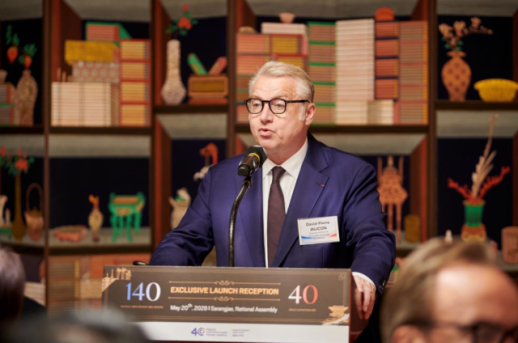 French-South Korea chamber unveils anniversary book at National Assembly SEOUL, May 22 (AJP) - The French-South Korea Chamber of Commerce and Industry launched its 40th anniversary commemorative book at the National Assembly in Seoul, signaling a deepening of economic ties as the two nations mark 140 years of diplomatic relations. The exclusive reception gathered approximately 80 diplomats, lawmakers, and business leaders to celebrate the historical evolution of the bilateral partnership. The event, organized with the support of the South Korea-France Parliamentary Friendship Association, comes ahead of a major operational expansion for the business group. The chamber announced it will open its own standalone building, the French South Korea EcoMaison, in the Gangnam district of Seoul this September. The new multifunctional facility will be fully dedicated to supporting the corporate community. During the ceremony, South Korean officials and French representatives emphasized the importance of continued cross-border cooperation in innovation, culture, and commerce. Na Kyung-won, the chair of the parliamentary friendship association, delivered opening remarks alongside French Ambassador Philippe Bertoux and chamber Chairman David-Pierre Jalicon. Park Young-sun, the former minister of small and medium enterprises and startups, followed the speeches with a celebratory toast. The commemorative publication retraces the history of bilateral relations, tracing the timeline from the 1886 Treaty of Friendship and Commerce to modern strategic partnerships. It highlights collaboration across several key sectors, including artificial intelligence, biotechnology, mobility, and green energy. Jalicon praised the contributors at the event, noting that the volume reflects the long-term dedication of the local business community. "This year should not only be an achievement, but the renewal of our ambition," Jalicon said regarding the upcoming Gangnam hub. He added that the new facility will serve as a dynamic space for future collaborative projects between the two countries. Ambassador Bertoux also stressed the global potential of the partnership, stating that the shared economic dynamism of both nations will position them to play an increasingly important role on the international stage. The diplomatic event concluded with a special celebration performance by the Orchestre national Auvergne-Rhone-Alpes. 2026-05-22 15:33:20
 -
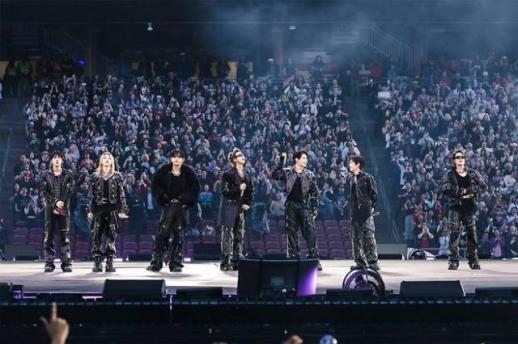 K-pop band BTS performs for 152,000 fans at Stanford Stadium SEOUL, May 22 (AJP) - K-pop legend BTS has performed for about 152,000 fans over three days at Stanford Stadium in the United States, drawing large crowds that waved South Korean flags and sang in Korean. The performances on May 16, 17, and 19 were part of the "BTS WORLD TOUR 'ARIRANG' IN STANFORD". The concerts highlighted the group's presence in the global music scene, as they became the second musical act to headline the venue since it opened in 1921, following Coldplay. During the performance of "Body to Body" from the "ARIRANG" release, the melody of the traditional folk song "Arirang" played through the stadium. The audience responded by simultaneously raising South Korean flags they had prepared in advance and singing the Korean lyrics in unison. The group addressed the crowd to acknowledge the coordinated display. "We are having the best moment of our lives right now," BTS said. "We were truly moved by the event you showed us. We will remember every single moment. We want to say thank you and promise to meet again." BTS will continue their tour with four concerts at Allegiant Stadium in Las Vegas on the 23rd, 24th, 27th, and 28th. The group is also scheduled to attend the American Music Awards at the MGM Grand Garden Arena at 5 p.m. on the 25th. 2026-05-22 15:02:06
 -
 South Korea bans travel to more parts of Congo as Ebola outbreak spreads SEOUL, May 22 (AJP) - A highest-level travel warning has been expanded to more parts of the Democratic Republic of the Congo (DRC) as Ebola infections continue to spread, the Ministry of Foreign Affairs said Friday. Taking effect from 2 p.m., travel to Ituri Province has been banned under the highest level of the four-tier overseas travel advisories amid a recent rise in Ebola-related deaths there, expanding the no-travel zone to three provinces including North Kivu and South Kivu in the African country. According to the ministry, hundreds of Ebola cases and suspected infections have been reported in Ituri and North Kivu provinces, with more than 100 deaths already confirmed. South Koreans who visit or remain in these areas without special permission could face penalties. The ministry also issued a lower, second-highest warning for several areas near the border including Bas-Uélé and Haut-Uélé, urging those staying there to leave. The latest outbreak of the deadly virus involves the Bundibugyo strain, which has no approved vaccine or treatment, and the World Health Organization (WHO) has declared it a public health emergency of international concern. According to estimates by the U.K.-based Medical Research Council (MRC), the number of infections may already exceed 1,000 including cases still in the incubation period. 2026-05-22 15:00:43
 -
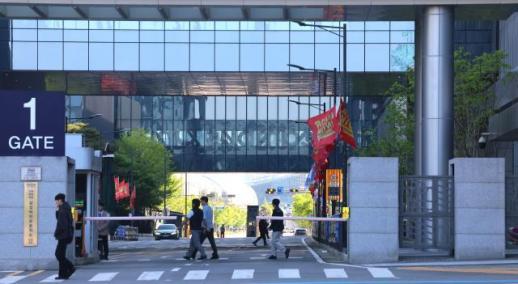 Samsung Biologics wins court penalty against union strike SEOUL, May 22 (AJP) - A South Korean court has ordered Samsung Biologics' labor union to pay 20 million won ($13,196) every time it violates an injunction restricting strike action at sensitive bioreactor lines, escalating a legal standoff at the world's largest contract drugmaker. Reports on Friday said the Incheon District Court granted Samsung Biologics' application for indirect compulsion against the union. The ruling reinforces an earlier injunction that bars union leaders from directing members on certain essential production lines to stop work or from circulating related instructions. The court had initially declined to attach financial penalties to the March injunction after the union pledged to abide by it. That pledge unraveled on April 27, when union leadership distributed a "strike guidance procedure" to members and roughly 300 employees assigned to court-restricted processes joined the subsequent walkout, prompting the company to refile. Samsung Biologics had sought 100 million won per violation, but the court awarded a fifth of that amount. "The union must not, during the period of industrial action based on the March 29, 2026 strike vote, instruct members to halt court-designated processes or distribute related guidelines," the bench said in its order. Industry observers said the decision underscores the unique vulnerability of biologic drug manufacturing, where even brief stoppages at fermentation or purification stages can spoil raw materials and finished products worth hundreds of millions of dollars. The company is separately appealing to expand the injunction's scope to cover its entire production footprint. The Samsung Biologics dispute stands apart from the wage standoff at affiliate Samsung Electronics, where its union on Wednesday suspended an 18-day general strike that had been scheduled to begin Thursday and run through June 7. Union members at Samsung Electronics will vote on the tentative wage agreement from Friday through May 27, while Samsung Biologics remains locked in litigation over the scope and enforcement of its own injunction. 2026-05-22 14:17:07
 -
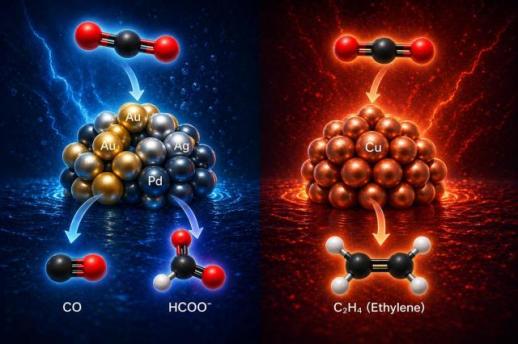 South Korean researchers discover limits of carbon conversion catalyst models SEOUL, May 22 (AJP) - Researchers from Korea Advanced Institute of Science and Technology and Korea University have identified limitations in theoretical models used to design catalysts that convert carbon dioxide into high-value chemicals. The joint research team found that current evaluation methods do not fully explain how complex compounds are formed, the prominent institute based in the central city of Daejeon said Thursday. The scientists tested the accepted theory that matching the electronic properties of a catalyst to those of copper would allow it to produce multi-carbon compounds such as ethylene and ethanol. Copper is currently the only metal known to efficiently drive this specific carbon conversion process. To test the theory, the team created a three-metal alloy using gold, silver and palladium that mimicked the key electronic indicators of copper. Despite sharing these electronic traits with copper, the new alloy failed to produce complex multi-carbon compounds and generated only simpler substances like carbon monoxide. This result demonstrates that the electronic properties of a catalyst alone do not determine its performance in complex chemical reactions. The researchers concluded that the physical arrangement of atoms on the surface of the catalyst plays an equally critical role. Converting captured carbon dioxide into usable fuels and plastic feedstocks using electricity is a central technology for achieving carbon neutrality. While existing metrics are sufficient for predicting simple chemical reactions, this study indicates that finding highly efficient alternatives to copper will require a more comprehensive design approach. The findings were published in the May 2026 issue of Nature Catalysis. "This research shows that existing catalyst theories alone cannot sufficiently explain complex multi-step carbon conversion reactions," Professor Oh Ji-hoon said. "In the future, a new catalyst design strategy that considers both electron properties and local atomic arrangement is needed." (Reference Information) Journal/Source: Nature Catalysis Title: Peaks and pitfalls of electrocatalytic CO2 reduction descriptor models Link/DOI: https://bit.ly/3Px7o90 2026-05-22 14:00:59
 -
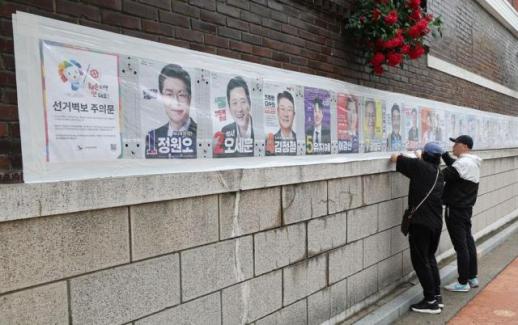 ASIA INSIGHT: With South Korea's local elections weeks away, how AI is changing political scene across Asia SEOUL, May 22 (AJP) - With South Korea's local elections less than two weeks away, the political landscape looks strikingly different from what it was just a few years ago, with voters now witnessing entirely new forms of campaigning shaped by artificial intelligence (AI) and digital technology. Loudspeaker trucks still circle neighborhoods and candidates still bow at subway stations during the morning rush, but increasingly, the real campaign is unfolding elsewhere, driven by algorithms and AI-generated ads tailored to millions of individual devices and news feeds. AI is no longer merely assisting political campaigns. It is beginning to reshape the very nature of elections across Asia and beyond. South Korea offers one of the clearest examples of this transformation, as few countries are as digitally connected or as politically online. Campaign strategists have already embraced data analytics, social media targeting and instant messaging in an effort to win over voters. AI is now accelerating all of those processes at once. Speeches can be tailored within seconds for different age groups and regions. Videos can be edited instantly for online distribution, while campaign messages can be edited, refined and redeployed almost in real time. The advantages are obvious, even as problems such as fake news, distortion and disinformation continue to pose challenges, threatening truth and trust. Political communication has become faster and cheaper, allowing smaller candidates to reach voters once dominated by larger parties with deeper financial resources. Local elections, traditionally dependent on grassroots organization and personal networks, are increasingly turning into data-driven contests. South Korean authorities have spent months strengthening regulations against AI-generated deepfakes and manipulated campaign materials, aware that a single fabricated video could spread nationwide before it can be verified as false. Officials are investing in monitoring systems and detection technologies to develop protective measures before the technology moves beyond their control. What makes South Korea's case particularly worth watching is not just its technological sophistication, but its attempt to find a balance. Rather than treating AI purely as a threat, the country is trying to integrate it into democratic politics while limiting the harm it can cause. It is, in effect, conducting a live experiment in how a highly wired democracy manages elections in the age of AI. Elsewhere in Asia, different versions of such experiments are unfolding. In India, AI has become a tool for reaching voters at massive scale. With hundreds of millions of voters spread across dozens of languages, campaigns increasingly use AI for automated translation, personalized messaging, and micro-targeting. Technology now lets candidates reach across language and regional barriers that once made nationwide campaigning nearly impossible. In Southeast Asia, the situation is far less controlled. In countries such as Indonesia and the Philippines, large and fast-moving social media ecosystems, combined with uneven regulation, have allowed AI-generated political content to spread quickly. Deepfakes, synthetic voices and altered images circulate easily in highly polarized online spaces, often making it difficult to tell what is real and what is not. Taiwan takes a different approach. AI is seen not only as a campaign tool but also as a security threat. Officials worry that fake or AI-generated content and campaigns could be used to weaken democratic institutions, sometimes with outside involvement. As a result, the focus is less on making campaigns more efficient and more on protecting democracy itself. Despite these differences, countries are confronting the same underlying reality. AI lowers the cost of political communication while making it harder to verify what is true. It opens up campaigning to more people, but it also creates new ways to manipulate. This may become one of the key debates of the coming decades. Democracies depend not just on voting systems, but on a shared trust that the information surrounding elections is basically credible. Once that trust erodes, the legitimacy of the entire process becomes harder to sustain. South Korea's upcoming local elections will not determine the future of AI politics in Asia on their own. But they may offer an early glimpse of what elections are increasingly becoming across the region. The question facing democracies is no longer whether AI will enter politics as it already has. But the real question is whether political institutions can adapt quickly enough to preserve public trust once AI becomes part of the electoral system itself. 2026-05-22 13:48:10
 -
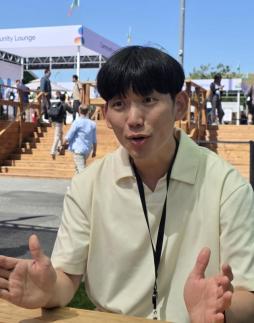 K-culture boom fuels global rise of AI Korean-learning app SEOUL, May 22 (AJP) - Riding the global mainstreaming of K-pop, Korean dramas and streaming blockbusters, a South Korean AI language-learning startup is rapidly expanding overseas, with the U.S. emerging as one of its biggest markets. TEUIDA, a South Korean language-learning app that uses AI voice recognition to simulate conversations with native speakers, has surpassed 6 million cumulative downloads worldwide, Chief Executive Jang Ji-woong said on Tuesday at Google’s annual I/O developer conference in Mountain View, California. About 30 percent of downloads came from the U.S., Jang said, while users in Southeast Asia, Europe and Japan are also driving growth. Monthly active users have reached around 600,000. Unlike conventional language-learning apps centered on memorization and repetition, TEUIDA focuses on immersive, conversation-based learning. Users speak directly to characters in filmed real-life scenarios, while AI analyzes pronunciation, context and accuracy in real time to guide the flow of the conversation. “It’s designed to feel more like talking to someone than studying a language,” Jang said. The company launched its Korean-language learning service first in Vietnam in 2019 before gradually expanding into English-speaking countries beginning in 2020. The platform now offers lessons in Korean, Japanese, Spanish and French, though Korean remains by far the most popular language among users. The app currently ranks No. 1 in Korean-language learning searches on Apple’s App Store in both the U.S. and the U.K., while also placing within the top 10 for Japanese-language learning apps. Mr. Jang said the global spread of Korean pop culture played a critical role in accelerating demand. The company’s launch coincided with BTS’s global breakout, followed by the worldwide success of Korean content such as “Parasite” and “Squid Game,” driving interest in Korean language and culture. In parts of Southeast Asia and Japan, Korean-language skills are increasingly viewed as useful for employment and education opportunities, adding to demand beyond entertainment consumption alone. The company has also sought to differentiate itself by incorporating cultural context into language learning. Lessons are filmed in authentic Korean settings — from restaurants and cafes to tourist spots such as Seoul’s Gwanghwamun district — allowing users to learn how expressions are naturally used in real-life situations. “Many users want to visit Korea and experience the culture,” Jang said, adding that the app’s appeal extends beyond simply learning the language. Earlier this year, the company launched a beta version of its English-learning service for Korean users and plans a broader rollout later this year after incorporating user feedback. Ultimately, TEUIDA aims to expand beyond Korean-language education into a broader multilingual learning platform. “Our ultimate goal is to become a multilingual app for language learners around the world,” Jang said. “This year, we are prioritizing revenue growth over profitability, though improving margins will become a priority starting next year.” 2026-05-22 11:33:16
 -
 Starbucks Korea promotion sparks police probe, government boycott SEOUL, May 22 (AJP) - Starbucks Korea is facing a widening political and legal backlash after a marketing campaign tied to the anniversary of the 1980 Gwangju uprising triggered accusations of mocking South Korea’s democratic trauma, drawing police investigations, boycott calls and government sanctions. Chung Yong-jin and former Starbucks Korea chief executive Sohn Jung-hyun are now under police investigation following complaints accusing them of insulting victims of the May 18 Democratic Uprising and their families. The Seoul Metropolitan Police Agency said Thursday it reassigned the case from the Seoul Gangnam Police Station to a public crime investigation unit under its metropolitan investigation squad. Authorities are also expected to merge a similar complaint filed in Gwangju, the southwestern city at the center of the 1980 uprising, into the Seoul investigation. The controversy erupted after Starbucks Korea launched a “Tank Day” promotion on Sunday, the 46th anniversary of the May 18 Democratic Uprising, also known as the Gwangju Uprising. The campaign advertised a “Tank” tumbler series alongside phrases such as “Tank Day” and “Tak! on the desk,” prompting criticism that the company had trivialized two of the country’s most painful moments in modern political history. The May 18 Democratic Uprising began in Gwangju in 1980, when citizens and students protested against the military junta led by Chun Doo-hwan. Troops violently suppressed the demonstrations over 10 days, using batons, bayonets and live ammunition against civilians. The uprising later became a defining symbol of South Korea’s democratization movement. The phrase “Tak! on the desk” drew separate outrage because it echoed the notorious explanation authorities gave after the 1987 torture death of student activist Park Jong-chul. Police initially claimed an officer had struck a desk with a loud “tak,” causing Park to collapse — a cover story that later unraveled and fueled nationwide protests demanding direct presidential elections. The civic group Citizens’ Coalition for Economic Justice and People’s Livelihood accused Chung and Sohn of defaming victims of the Gwangju uprising, bereaved families and Gwangju citizens. Chung removed Sohn from his post Monday as criticism intensified and issued a public apology Tuesday in his capacity as chairman of Shinsegae Group. But boycott calls targeting Starbucks Korea have continued to spread online and among civic groups. The backlash has also expanded into government circles. Interior and Safety Minister Yun Ho-jung said Thursday on X that he expressed “deep regret over Starbucks Korea’s anti-historical behavior” and that his ministry and other state agencies would stop using products from companies that “take lightly the history and value of democracy” as prizes or promotional giveaways at public events. A ministry official told AJP that some government event prizes had already been switched from Starbucks mobile vouchers to vouchers from rival coffee chains after Yun’s remarks. Another official said the minister’s comments signaled that government events should avoid products from companies embroiled in major social controversy when alternatives are available. Some officials said the ministry’s stance could trigger a broader informal boycott across the civil service, given its role in overseeing public administration and workplace culture within government institutions. President Lee Jae Myung also condemned the campaign, saying on X that he was “outraged” and that those responsible should be held accountable. The controversy has renewed scrutiny of Chung, who previously faced criticism over social media posts using anti-communist slogans. Such rhetoric remains highly sensitive in South Korea because far-right groups have long promoted discredited claims portraying Gwangju protesters as North Korean sympathizers. 2026-05-22 11:30:29