
Journalist

Park Yong-jun
-
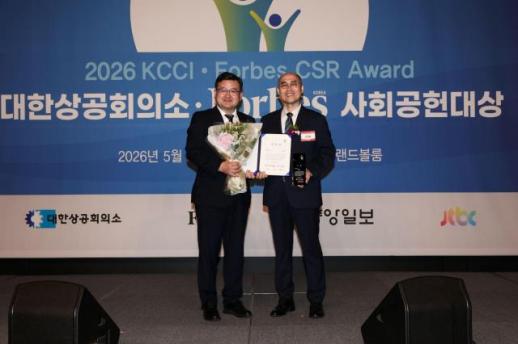 Lock & Lock Wins Social Contribution Award for Community Engagement Lock & Lock has been awarded the Social Contribution Award at the 17th Korea Chamber of Commerce and Industry and Forbes event. According to Lock & Lock on May 28, the awards ceremony recognizes companies and organizations that have demonstrated social responsibility through ongoing and exemplary social contribution activities. Lock & Lock was selected for the award based on its comprehensive efforts in sustainable and systematic social contribution activities, its contributions to community coexistence and social value creation, the integration of ESG and CSR policies into management, and its credibility and social evaluation both internally and externally. Under the motto of being a "company that cares for the environment and people," Lock & Lock has been actively engaged in various social contribution activities aimed at creating a sustainable future. Notably, the company has expanded its "Courage with Lock & Lock" initiative globally, supporting individuals with disabilities, single-parent families, and areas affected by disasters. For single-parent families, Lock & Lock regularly provides household items during the year-end holidays, festive seasons, and Family Month. Last year, the company signed a memorandum of understanding with the Jung-gu Office and the corporate social contribution specialist Giving Plus to expand its support for living expenses for single-parent families. Additionally, Lock & Lock regularly donates items to Goodwill Stores, which support the economic independence of people with disabilities, and is committed to creating job opportunities for them. Last year, the company received recognition for these efforts with an award from the Minister of Health and Welfare at the 19th Proud Korean Disability Awards. Last month, Lock & Lock visited Yeongheung Elementary School in Ongjin County, Incheon, to conduct the eco-friendly campaign "Love for Yeongheung," where they provided tumblers and practical kitchen items to students and the school. Environmental education was also conducted for the students. The company continues its global social contribution efforts, including providing relief supplies to flood-affected areas in Vietnam and donating hand blenders to a culinary high school in Indonesia, thereby spreading the value of sharing. Ahn Seong-il, Chief Human Resources Officer of Lock & Lock, expressed his satisfaction, stating, "We are pleased that our consistent efforts in various social contribution activities that genuinely help the environment and people have led to meaningful results. We will continue to fulfill our corporate social responsibility to create a better future."* This article has been translated by AI. 2026-05-28 15:48:00
 -
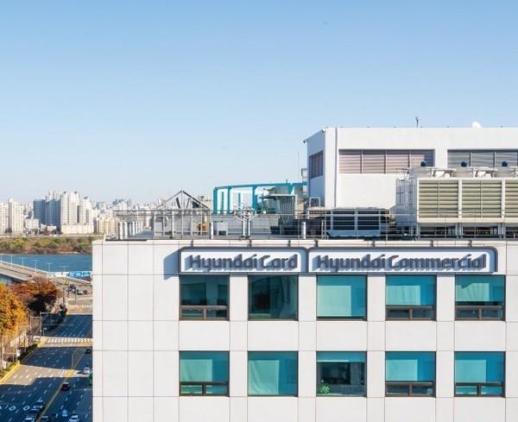 Blue Walnut Continues to Report Losses for 10th Year as Hyundai Card Depletes Investment Blue Walnut, a payment platform developed by Hyundai Card for future mobility, has been reporting losses for several years. Approximately half of the capital invested by Hyundai Card has been depleted. The company has struggled to overcome the low profitability typical of the electronic payment processing industry and has faced challenges in attracting external customers, leading to a rapid increase in losses. According to the Financial Supervisory Service's electronic disclosure system on the 26th, Blue Walnut's total capital at the end of last year was 25.3 billion won, a 10.1% decrease from the previous year’s 28.1 billion won. Blue Walnut is a wholly-owned subsidiary of Hyundai Card in the payment processing sector. Since its establishment in 2016 with an initial investment of 7 billion won, Hyundai Card has injected a total of 50 billion won through three capital increases: 13 billion won in 2018, 10 billion won in 2019, and 20 billion won in 2023. However, ongoing cumulative losses have rapidly weakened its capital base. Despite growth in scale over nine years, profitability has not improved. Last year, Blue Walnut reported sales of 188.5 billion won, but the cost of sales reached 179.3 billion won, resulting in a cost rate exceeding 95%. While transactions with group affiliates like Hyundai Motor and Kia have expanded, the lack of a high-margin structure has limited profit generation. Additionally, rising selling and administrative expenses have solidified the loss structure. The trend of increasing losses has continued into this year. In the first quarter, sales rose 10% to 51 billion won compared to the same period last year (46.4 billion won), but net losses grew from 400 million won to 1.8 billion won during the same timeframe. Blue Walnut has also served as a channel for Hyundai Card to divest its underperforming affiliate stakes. Previously, Hyundai Card and Blue Walnut established the NFT company Modern Lion in collaboration with the design firm Like a Lion in 2022. However, Modern Lion failed to achieve profitability, accumulating a net loss of 3.6 billion won by 2024. Hyundai Card transferred its entire stake (19.99%) in Modern Lion to Blue Walnut for 400 million won, effectively exiting the venture. As a result, Blue Walnut's stake in Modern Lion increased to 41%, leading to a share of 1.5 billion won in equity method losses in 2024, more than double Blue Walnut's operating loss of 700 million won for that year. Ultimately, Blue Walnut sold its entire stake in Modern Lion last year, withdrawing from the NFT business.* This article has been translated by AI. 2026-05-28 15:40:00
 -
 Hanwha Competes for Canadian Submarine Contract with Rocket and Steel Package Hanwha has introduced a "rocket" component in its bid for the Canadian submarine contract. In addition to supplying submarines, the company proposed support for Canadian rocket launches, local production of military vehicles, and steel purchases. This strategy aims to differentiate Hanwha from German competitors by emphasizing job creation and manufacturing benefits in defense contracts. According to Bloomberg on May 28, Hanwha is competing against Germany's ThyssenKrupp Marine Systems for a submarine procurement program that could involve up to 12 vessels. Glen Copeland, CEO of Hanwha Defense Canada, estimated the cost for the 12 submarines at approximately CAD 25 billion (about KRW 26 trillion). He noted that the total project cost, including support and maintenance, could reach between CAD 100 billion and CAD 120 billion (approximately KRW 104 trillion to KRW 125 trillion). Hanwha's differentiation strategy includes a focus on space. Hanwha Aerospace plans to sign a memorandum of understanding (MOU) with Maritime Launch Services, a Canadian spaceport operator. In an interview with Bloomberg, Copeland stated, "We aim to assist Canada in securing its own satellite launch capabilities." Currently, Canada lacks a domestic rocket launch infrastructure, relying on foreign companies like SpaceX for satellite launches. The Canadian government recently decided to develop a commercial spaceport in Nova Scotia, and Hanwha intends to provide the necessary launch technology. Copeland emphasized, "We will invest in rocket technology to expedite Canada's launch capabilities." He added, "This investment will proceed regardless of the outcome of the submarine contract." Hanwha also proposed local contributions, including the production of military vehicles in Canada and purchasing steel products from Algoma Steel in Ontario. This initiative aims to partially offset revenue declines in Canada's steel and manufacturing sectors, which are under pressure from U.S. tariffs. The Canadian government plans to make a decision on the submarine project by the end of June. Prime Minister Mark Carney announced this timeline on May 27. Copeland mentioned, "I have heard that the scoring and evaluation processes are complete, and the proposal is moving to the cabinet stage." He added, "Currently, the likelihood of ordering all 12 submarines appears high." Hanwha is also emphasizing its competitiveness in terms of price and delivery. Copeland stated, "Hanwha's submarines can be delivered faster and at a lower cost than those from ThyssenKrupp Marine Systems." The urgency of the Canadian Navy's need for enhanced capabilities aligns with Hanwha's argument for rapid supply.* This article has been translated by AI. 2026-05-28 15:34:00
 -
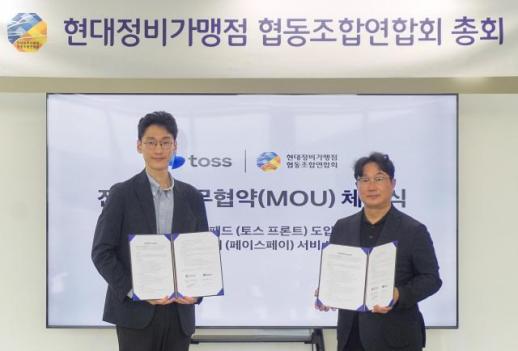 Toss Introduces 'FacePay' at Hyundai Service Centers to Enhance Customer Engagement Toss, the fintech company known for its digital payment solutions, is set to implement its facial recognition payment service, FacePay, at Hyundai service centers. On May 28, Toss announced that it has signed a memorandum of understanding (MOU) with the Hyundai Service Franchise Cooperative Association to roll out FacePay across Hyundai's Blue Hands service centers nationwide. The two parties plan to establish Toss payment terminals at all Hyundai Blue Hands locations and gradually expand the implementation of FacePay. Toss will be responsible for creating an optimized payment experience tailored to the Hyundai service environment and providing technical support. The Hyundai Service Franchise Cooperative Association will assist with the rollout and operational stability across its network of service centers. Joint marketing efforts will also be pursued. Toss will offer rewards points to customers using FacePay and promote the service within its app, while Hyundai Blue Hands locations will run promotional videos related to FacePay. A representative from the Hyundai Service Franchise Cooperative Association stated, "The experience of customers using vehicle maintenance services is increasingly shifting towards a digital focus. Through this agreement, we aim to enhance customer convenience and improve the operational environment of our franchise locations." A Toss representative added, "We are expanding the touchpoints for FacePay to ensure it can be used seamlessly in various offline settings. We will continue to enhance our service to provide a more convenient payment experience in everyday environments, such as automotive maintenance, where repeat visits are common." Additionally, Toss recently signed an MOU with Pulmuone Food & Culture to gradually introduce FacePay at over 20 rest areas nationwide, further expanding its service offerings.* This article has been translated by AI. 2026-05-28 15:34:00
 -
 Financial Exclusion Amid Semiconductor Boom: Small Businesses Face Stricter Loan Access As the economy recovers, driven by semiconductors and artificial intelligence, financial resources are increasingly flowing to large corporations and advanced industries. In contrast, small and medium-sized enterprises (SMEs) focused on domestic markets are facing higher loan barriers, exacerbating financial polarization. According to the financial sector on May 28, the outstanding loans to large corporations from the five major banks (KB Kookmin, Shinhan, Hana, Woori, and NH Nonghyup) reached 179.1 trillion won as of the end of March, marking a 5.12% increase (8.71 trillion won) from the end of last year. In comparison, loans to SMEs, including small business loans, only rose by 0.94% (6.34 trillion won) during the same period. Recent trends show that large-scale investments and operational funding demands are continuing in export-driven manufacturing sectors such as semiconductors, defense, and automotive. Consequently, banks are expanding credit primarily to financially strong companies. Data from the Financial Supervisory Service indicates that the total debt of the five largest conglomerates—Samsung, Hyundai Motor, SK, Lotte, and LG—was 395.8 trillion won last year, accounting for over half (53.2%) of the total debt of 42 conglomerates. The state-run Korea Development Bank has also accelerated support for advanced industries, launching a special program last year to provide 17 trillion won for semiconductor facility investments over three years. Analysts suggest that the influx of policy financing and private bank funds into advanced manufacturing is creating a relatively favorable funding environment. Conversely, SMEs, particularly those in domestic sectors, are experiencing rapidly deteriorating funding conditions due to prolonged high interest rates and economic slowdown. Banks are adopting a more cautious approach to lending to SMEs, which often rely heavily on collateral and have unstable cash flows, as they focus on managing delinquency rates and reducing default risks. Particularly affected is the real estate sector, which has faced project financing defaults due to the fallout from the Russia-Ukraine war that began in 2022. This has led to a withdrawal of support not only from commercial banks but also from savings banks, which are typically the last resort for funding. The outstanding loans from savings banks to the real estate sector fell by 29.1%, from 23.1 trillion won in 2023 to 16.4 trillion won last year. As bank loans become scarce, some vulnerable sectors are being pushed toward non-bank financing or non-debt funding methods. Recently, companies have been increasingly utilizing non-debt liabilities such as price return swaps (PRS), purchase card securitization, and check securitization to secure funds. This approach involves converting accounts receivable or credit card receivables into cash instead of relying on bank loans. The amount raised through non-debt liabilities was below 10 trillion won in 2022 but steadily increased to 27.5 trillion won last year. Kim Jeong-ho, head of the Financial Stability Division at the Bank of Korea, stated, "While corporate funding through loans and direct financing has been sluggish, the use of non-debt liabilities is on the rise. Since these liabilities are often utilized by vulnerable sectors and non-viable companies, their defaults could trigger a broader deterioration in funding conditions across related industries." 2026-05-28 15:34:00
 -
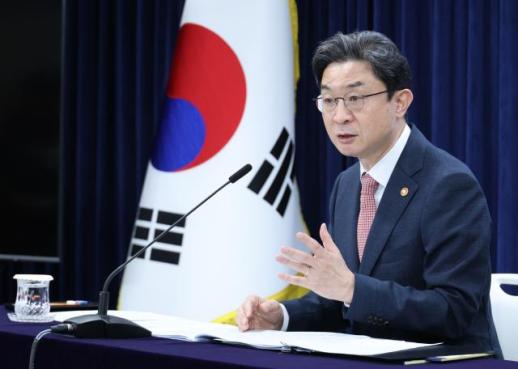 South Korea Launches Financial Reform Initiative Under President Lee Jae-myung The Financial Services Commission has initiated a financial reform effort under the banner of "Inclusive Finance Transformation." President Lee Jae-myung has sharply criticized the financial sector, describing it as engaging in "primitive predatory finance" and emphasizing the need for policies that enhance the public nature of finance and protect vulnerable populations. During the 5th meeting on Inclusive Finance Transformation held at the Credit Recovery Committee's Integrated Support Center for Low-Income Individuals on May 28, Financial Services Commission Chairman Lee Ok-keun stated, "It is now time to examine the structural causes of repeated financial exclusion and develop fundamental improvement measures. Inclusive finance is a transformative process aimed at making finance beneficial to people's lives and saving lives." This meeting aims to redesign the financial system into an "inclusive structure," going beyond merely expanding access to financial services for low-income individuals. President Lee has recently conveyed messages targeting the financial sector, stating, "The belief that 'making money is the only goal' is problematic," and that it is inappropriate to enjoy benefits without bearing burdens, underscoring the necessity for financial reform. The newly launched Inclusive Finance Strategy Promotion Team will operate through four divisions: supervision, policy for low-income individuals, financial industry, and credit infrastructure. Each division will discuss ways to incorporate inclusive finance principles into the management of financial institutions and improve soundness regulations. Notably, the credit infrastructure division will work on enhancing access to finance for low- and medium-credit individuals by moving away from the current credit evaluation methods that favor high-credit individuals and utilizing non-financial information. Additionally, the Financial Services Commission plans to transition the debt collection industry from a registration system to a licensing system to improve long-standing and excessive collection practices. This change aims to strengthen debtor protection through effective management and oversight and to eliminate regulatory arbitrage. Consequently, only corporations with over 50% investment from financial companies that include at least five professionals, such as lawyers, and meet cybersecurity requirements will be allowed to operate in the debt collection industry. To curb excessive collection incentives, the Financial Services Commission will also restrict the dual operation of lending and loan brokerage businesses. This measure aims to reduce the practice of repeatedly engaging in excessive collections after acquiring long-term delinquent debts and to embed debtor protection within the system. The Financial Services Commission plans to prepare a legislative amendment to the Moneylending Business Act, which includes the transition to a licensing system for the debt collection industry, by August and aims to complete the legislative process in the National Assembly by the end of the year. The financial sector anticipates increased pressure for both the expansion of low-income financial services and the tightening of debt collection regulations. Chairman Lee stated, "We will ensure that inclusive finance is not a temporary measure but a structure that operates sustainably within financial companies and the financial system. We will thoroughly discuss and institutionalize this through the promotion team. If the transition to a licensing system for the debt collection industry is implemented smoothly, the industry will qualitatively grow, supporting the credit system while protecting debtors and transforming into a trustworthy market." 2026-05-28 15:34:00
 -
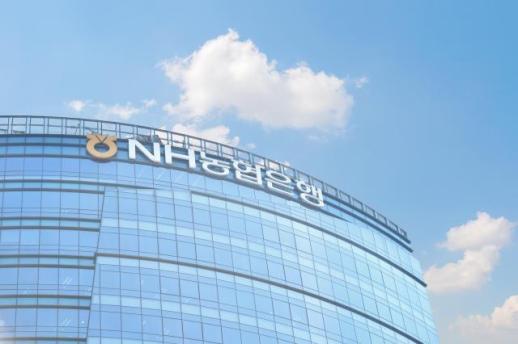 NH Nonghyup Bank Accelerates Transition to Agentic AI Banking with Direct Investment in AI Firm NH Nonghyup Bank is accelerating its transition to an Agentic AI bank through direct investments in AI companies. This move aligns with the government's focus on fostering AI and the trend toward productive finance, aiming to strengthen the integration of finance and advanced technology. On May 28, Nonghyup Bank announced it has signed a memorandum of understanding (MOU) with AI firm Agile Soda for direct investment and business collaboration. The bank determined that strategic investments in AI companies are essential for integrating AI technology across its financial services. This initiative is being recognized as a productive finance example, where the financial sector directly invests in tech firms to support their growth. Through this direct investment, Nonghyup Bank aims to enhance its AI capabilities and plans to establish an AI agent-based banking system by 2027. To achieve this, the bank intends to finalize investment contracts and regulatory filings by June and to launch the AI agent development project in July, accelerating its transition to an AX model. Kang Tae-young, President of Nonghyup Bank, stated, "To achieve the AX transition, having excellent AI professionals is crucial. This direct investment in AI companies will propel us toward becoming an Agentic AI bank that integrates AI into the daily lives of our customers and employees."* This article has been translated by AI. 2026-05-28 15:32:00
 -
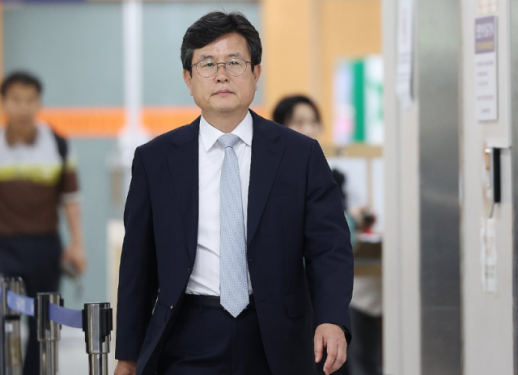 Former Presidential Aide Sentenced to 18 Months for Drafting Post-Hoc Martial Law Document Kang Ui-goo, a former aide to the presidential office, was sentenced to 18 months in prison and taken into custody after being found guilty of drafting a post-hoc martial law declaration following the lifting of emergency martial law on December 3. The Seoul Central District Court’s Criminal Division 30, led by Judge Park Ok-hee, sentenced Kang on May 28 for charges including the creation of false documents, damage to public property, and violations of the Presidential Records Management Act. The court stated, "The defendant recognized that the declaration of martial law was not made through the proper procedures involving the Prime Minister and relevant ministers, and created false documents to conceal this procedural flaw." It added, "Despite lacking prior instructions from former President Yoon Suk-yeol, Kang was responsible for drafting the cover page of the martial law declaration and obtaining signatures from former President Yoon, former Prime Minister Han Duck-soo, and former Defense Minister Kim Yong-hyun, indicating significant involvement in the crime. As a senior public official closely assisting the president, the defendant bears a heavy responsibility." However, the court ruled Kang not guilty of using false documents, noting that it was unlikely he actually used them since he stored them in a desk drawer before disposing of them. Regarding sentencing, the court considered that Kang generally acknowledged the facts of the crime and cooperated during the investigation by explaining the circumstances surrounding the document's creation. Kang was charged with creating a cover page for the post-hoc martial law declaration on December 6, 2024, to make it appear as though it followed legal procedures. The document was reportedly signed by former Prime Minister Han, former Minister Kim, and former President Yoon before being stored in Kang's office. Kang is also accused of shredding the document at the request of former Prime Minister Han after the insurrection investigation intensified. Previously, the special investigation team on insurrection, led by Special Prosecutor Jo Eun-seok, sought a five-year prison sentence for Kang.* This article has been translated by AI. 2026-05-28 15:30:00
 -
 Lotte Chilsung's Sunhari Jin Surpasses 82 Million Cans Sold in Five Years Lotte Chilsung Beverage's fruit-flavored carbonated drink brand, Sunhari Jin, has achieved cumulative sales of 82 million cans (based on 355ml) within five years of its launch. According to Lotte Chilsung Beverage on May 28, Sunhari Jin recorded approximately 82 million cans sold since the launch of Sunhari Lemon Jin in May 2021, averaging about 45,000 cans sold daily. The growth of Sunhari Jin is also reflected in its revenue. After generating 5.1 billion won in its first year, the brand has seen an average annual growth rate of about 34% through last year. This year, growth has accelerated even further. The company reported that sales in the ready-to-drink (RTD) category reached 6.5 billion won in the first quarter, a 74.4% increase compared to the same period last year. They expect sales for the first half of this year to surpass last year's total annual sales. Lotte Chilsung Beverage attributes this growth to the rising culture of solo drinking and low-alcohol beverages, as well as the trend of mixology, where various alcoholic drinks and beverages are combined. The popularity of highball culture has also contributed to the increased demand for fruit-flavored carbonated drinks. Differentiation in taste and production methods is a key competitive advantage. Instead of using artificial flavors, the company employs a "freeze-extraction method," which involves freezing whole fruits and slowly extracting their essence over 15 days to capture the natural flavors. During a renewal in November 2025, the extraction method was upgraded from "whole lemon extraction" to freeze-extraction, enhancing the flavor and aroma of lemons nearly twofold. At the same time, all products were converted to zero sugar in line with the healthy pleasure trend. The expansion of the product lineup has also been rapid. Following the introduction of Sunhari Grapefruit Jin in November 2025, the company launched Sunhari Yuzu Jin and Sunhari Sangria Jin in March of this year, broadening consumer choices. The alcohol content has been segmented into 4.5%, 7%, and 9% to cater to individual preferences. Marketing efforts have gained momentum as well. A pop-up store titled "Sunhari Jin Island," held in Seongsu-dong, Seoul, attracted over 10,000 visitors in just 11 days. The store featured four zones: "Not Cut Island, Frozen Island, Richly Brewed Island, and Sugar-Free Island," allowing visitors to experience the product features such as freeze-extraction and zero sugar. A new advertising video featuring model Ahn Yoo-jin for the launch of two new products surpassed 24 million views as of May 20, generating significant buzz. A representative from Lotte Chilsung Beverage stated, "This is the result of our continuous efforts to accurately understand changing consumer lifestyles and trends while delivering the true taste and refreshment of real fruit. We plan to solidify our position as the leading fruit-flavored carbonated beverage brand in Korea and continue marketing that satisfies diverse consumer preferences." * This article has been translated by AI. 2026-05-28 15:28:00
 -
 Aekyung Industry Discovers Hair Loss Treatment Ingredient from Traditional Herb Aekyung Industry has discovered a new functional ingredient for hair loss treatment derived from the traditional herbal plant Hyeonhoesaek, which has been used historically for its analgesic and anti-inflammatory properties. The company will present its research findings on the new hair loss treatment ingredient at the 14th World Congress for Hair Research (WCHR) taking place at COEX in Seoul from May 28 to 31. Aekyung will showcase the efficacy of L-tetrahydropalmatine (L-THP), a component derived from Hyeonhoesaek, through a poster presentation. Hyeonhoesaek has long been recognized in traditional medicine for its strong analgesic and anti-inflammatory effects. L-THP is known to be a key component mediating these effects, but research on its impact on hair follicles has been limited until now. Aekyung has focused on this unexplored area. The research confirmed that L-THP promotes the proliferation of human-derived dermal papilla cells and outer root sheath cells. It also induced the expression of hair growth factors VSCN, ALP, and VEGF. Notably, in experiments involving human hair follicles, L-THP demonstrated the ability to promote hair growth and inhibit follicle regression, proving its potential as a new functional ingredient for hair loss treatment. Aekyung is not stopping at research; it is also moving quickly toward commercialization. The company has secured patents related to L-THP and registered the ingredient with the International Cosmetic Ingredient Dictionary (ICID). Recent human application tests have also confirmed its excellent efficacy in alleviating hair loss symptoms. Currently, Aekyung is preparing to apply for functional ingredient approval from the Ministry of Food and Drug Safety under the name "tetrahydropalmatine." With verified efficacy and differentiated material competitiveness, Aekyung plans to accelerate its entry into the premium hair care market both domestically and internationally. As the global hair care market increasingly embraces the trend of "skinification," which treats the scalp like skin, interest in high-efficacy ingredients is rising. Aekyung intends to incorporate L-THP into various premium hair care lines, including shampoos and tonics. According to global market research firm Mordor Intelligence, the global hair care market is projected to grow from $78 billion in 2025 to $108.5 billion by 2031. Im Seung-eun, a researcher at Aekyung's Cosmetics Research Institute, stated, "This research is a significant achievement in scientifically proving the hair loss treatment potential of the natural ingredient L-THP. We will strengthen our global market competitiveness through differentiated material research and functional hair care technology development." * This article has been translated by AI. 2026-05-28 15:24:00