
Journalist

Park Yong-jun
-
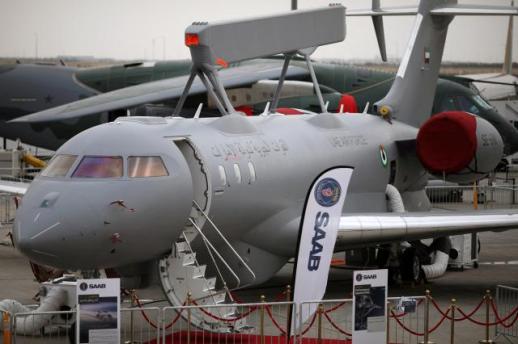 Canada Chooses Swedish Saab Over Boeing for Next-Gen Surveillance Aircraft The Canadian government has selected Sweden's Saab to supply its next-generation surveillance aircraft, opting for the GlobalEye model instead of the U.S. Boeing option. This decision reflects Canada's efforts to reduce its reliance on U.S. defense systems and enhance its Arctic defense capabilities amid strained relations since the Trump administration took office. On May 27, Canadian Prime Minister Mark Carney announced the plan to acquire Saab's GlobalEye during a defense conference in Ottawa. The GlobalEye is based on Bombardier's Global 6500 jet. Although Boeing's E-7 Wedgetail was also a contender, it was ultimately not selected due to delays in delivery and cost overruns. Reuters reported that this decision aligns with the Canadian government's strategy to decrease dependence on U.S. defense contractors. Carney stated, "Saab's GlobalEye, equipped with advanced sensors and mission systems, will be a key asset for the Canadian military to detect and deter threats across the Arctic region." While Canadian military officials did not disclose the specific contract value, they previously indicated plans to purchase six surveillance aircraft. Saab has expressed intentions to invest in research and development in Canada if the contract is finalized. Canada has historically relied on cooperation with the U.S. to monitor its vast Arctic territory, which spans over 4.4 million square kilometers. In March, Carney affirmed that Canada would take full responsibility for defending its Arctic territory. Recently, Canada has indicated a shift towards strengthening cooperation with Nordic countries on Arctic defense and security issues, citing a perception that the U.S. has become a relatively less reliable partner. Philip Lagassé, associate professor of international relations at Carleton University in Ottawa, told The Guardian that Canada's decision to purchase the GlobalEye is a significant test of the Carney government's policy to move away from U.S. military capabilities. He noted that this decision reinforces the relationship between Canada and Sweden, a new NATO ally. Swedish Prime Minister Ulf Kristersson also commented on social media, stating, "GlobalEye is already creating jobs in Canada and collaborating with Canadian supply chains. This decision will further strengthen the ties between our two countries." Saab is also pursuing the sale of its Gripen fighter jets as part of Canada's fighter jet acquisition program. Canada has a contract to purchase 88 Lockheed Martin F-35 fighter jets, but following the imposition of tariffs on key Canadian imports by the U.S. last year, Carney instructed the military to consider reducing order sizes and exploring options for aircraft from other manufacturers. Meanwhile, Canada's reassessment of its reliance on U.S. weapons is evident in other procurement initiatives. According to military media outlet The War Zone, the Canadian military plans to acquire 250 armored combat vehicles within the next five years and is considering upgrades to its existing Leopard 2 tanks. Notably, candidates to replace U.S.-made M-113 armored vehicles include models from Germany, South Korea, and Sweden.* This article has been translated by AI. 2026-05-28 10:33:22
 -
Canada Chooses Swedish Saab Over Boeing for Next-Gen Early Warning Aircraft The Canadian government has selected Sweden's Saab for its next-generation early warning aircraft program, opting for Saab's model over that of U.S. defense contractor Boeing. This decision reflects Canada's efforts to reduce its reliance on U.S. defense systems and enhance its Arctic defense capabilities amid strained relations since the Trump administration. On May 27, Canadian Prime Minister Mark Carney announced the plan to acquire Saab's GlobalEye early warning aircraft during a defense conference in Ottawa. The GlobalEye is based on Bombardier's Global 6500 jet. Boeing's E-7 Wedgetail was also a contender for the project, but delays in delivery and cost overruns led to its exclusion. Reuters reported that this decision aligns with the Canadian government's strategy to decrease dependence on U.S. defense contractors. Carney stated, "Saab's GlobalEye, equipped with advanced sensors and mission systems, will be a crucial asset for the Canadian Forces to detect and deter threats across the Arctic region." While Canadian military officials did not disclose the specific contract value, they previously indicated plans to purchase six early warning aircraft. Saab has expressed intentions to invest in research and development within Canada if the contract is finalized. Historically, Canada has relied heavily on cooperation with the U.S. to monitor over 4.4 million square kilometers of Arctic land and waters. In March, Carney declared that Canada would take full responsibility for defending its Arctic territory. In light of recent assessments that the U.S. has become a relatively less reliable partner, Canada has signaled its intention to strengthen collaboration with Nordic countries on Arctic defense and security issues. Philip Lagassé, associate professor of international relations at Carleton University in Ottawa, told The Guardian that Canada's decision to purchase the GlobalEye is a significant test of the Carney government's policy to move away from U.S. military capabilities, reinforcing ties with Sweden, a new NATO ally. Swedish Prime Minister Ulf Kristersson also commented on social media, stating, "GlobalEye is already creating jobs in Canada and collaborating with Canadian supply chains. This decision will further strengthen the bond between our two countries." Saab is also pursuing the sale of its Gripen fighter jets as part of Canada's fighter aircraft procurement program. Canada has a contract to purchase 88 Lockheed Martin F-35 fighter jets, but following the imposition of tariffs on key Canadian imports by the U.S. last year, Carney instructed the military to consider reducing order sizes and explore options for aircraft from other manufacturers. Meanwhile, Canada's reassessment of its reliance on U.S. weapons is evident in other procurement initiatives. According to military publications, the Canadian Armed Forces plans to acquire 250 armored combat vehicles within the next five years and is considering upgrades to its existing Leopard 2 tanks. Notably, candidates to replace U.S.-made M-113 armored personnel carriers include models from Germany, South Korea, and Sweden.* This article has been translated by AI. 2026-05-28 10:33:00
-
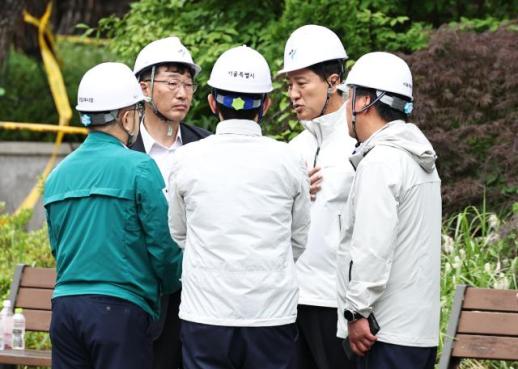 Oh Se-hoon Visits Site of Seosomun Overpass Collapse for Fourth Time Oh Se-hoon, the candidate for Seoul Mayor from the People Power Party, visited the site of the Seosomun overpass collapse on May 28, urging for safety measures. This marks his fourth visit since the incident occurred. Having suspended his official campaign for three days, Oh arrived at the demolition site in Migeun-dong, Seodaemun District, at 9 a.m. on the 28th. During his visit, he met with Acting Mayor Kim Seong-bo and spent 25 minutes assessing the recovery efforts, also urging the Minister of Land, Infrastructure and Transport for active government support. He highlighted the inconvenience caused to citizens due to debris falling onto the railway, stating, "Please ensure a swift reopening while managing the demolition site safely." This was Oh's fourth visit to the site. Following the collapse on the afternoon of May 26, he halted his scheduled campaign activities and visited the site twice. He also made an unannounced visit on the morning of May 27. Additionally, Oh is expected to appear at a televised debate for mayoral candidates later that night, marking his return to the public eye after three days.* This article has been translated by AI. 2026-05-28 10:31:20
 -
Oh Se-hoon Visits Site of Seosomun Overpass Collapse for Fourth Time Oh Se-hoon, the People Power Party candidate for Seoul Mayor, visited the site of the Seosomun overpass collapse on May 28, 2026, urging for safety measures. This marks his fourth visit since the incident occurred. Having paused his official campaign for three days, Oh arrived at the demolition site in Migeun-dong, Seodaemun District, at 9 a.m. He met with Acting Mayor Kim Sung-bo and spent 25 minutes assessing the recovery efforts, while also calling for active government support from the Minister of Land, Infrastructure and Transport. He highlighted the inconvenience caused to citizens due to debris falling onto the railway, stating, "We need to reopen quickly, but please ensure the demolition site is managed safely." Oh's visits began on May 26, the day of the accident, when he suspended his scheduled campaign events to visit the site twice. He returned again on May 27 without media presence. Later that evening, Oh is expected to participate in a televised debate for Seoul mayoral candidates, marking his return to the public eye after three days.* This article has been translated by AI. 2026-05-28 10:31:04
-
Oh Se-hoon Visits Site of Seosomun Overpass Collapse for Fourth Time Oh Se-hoon, the People Power Party candidate for Seoul Mayor, visited the site of the Seosomun overpass collapse on May 28, 2026, for the fourth time, urging for safety measures. This visit comes three days after he suspended his official campaign activities. On the morning of May 28, at 9 a.m., Oh visited the site of the overpass demolition accident in Migeun-dong, Seodaemun District. He met with Acting Mayor Kim Seong-bo and assessed the recovery efforts for 25 minutes, calling for active government support from the Minister of Land, Infrastructure and Transport. He also addressed the inconvenience caused to citizens due to debris falling onto the railway, stating, "Please ensure a swift reopening while managing the demolition site safely." This marks Oh's fourth visit to the accident site. Following the incident on May 26, he halted his campaign schedule and visited the site twice. He also made an unannounced visit on the morning of May 27. Meanwhile, Oh is expected to appear at a televised debate for mayoral candidates later that evening, marking his return to the public eye after three days.* This article has been translated by AI. 2026-05-28 10:30:51
-
 Meta Begins Charging for AI Services, Starting at $7.99 per Month Meta has initiated the monetization of its artificial intelligence (AI) services. While a free version of Meta AI will continue to be available, users who heavily utilize image and video generation, as well as advanced reasoning features, will be charged. This move comes as the company seeks to expand its revenue sources amid increasing investment costs. According to reports from The Verge and others on May 27, Meta plans to test its dedicated paid AI products in Singapore, Guatemala, and Bolivia starting next month. The offerings include "Meta One Plus" and "Meta One Premium," priced at $7.99 and $19.99 per month, respectively. The free version will remain accessible, but there will be usage limits on advanced features such as image and video generation and complex question answering. Paid subscribers will have greater access to these functionalities. The company is also expanding its paid offerings for Facebook, Instagram, and WhatsApp. "Facebook Plus" and "Instagram Plus" will cost $3.99 per month, while "WhatsApp Plus" will be available for $2.99 per month. These subscriptions will include extended story exposure times, additional pinned chats, and premium stickers. Additionally, products aimed at creators and businesses are being introduced. The "Meta One Essential" subscription will be priced at $14.99 per month, while "Meta One Advanced" will cost $49.99 per month. These plans will offer features such as verification badges, enhanced search visibility, and the ability to include external links in posts and short videos. This shift towards monetization is closely tied to Meta's increasing investment burdens. According to Reuters, the company raised its capital expenditure forecast for 2026 from an estimated $115 billion to $135 billion to a new range of $125 billion to $145 billion during its first-quarter earnings report. As costs for data centers and computational infrastructure rise rapidly, investors are becoming more sensitive to the timing of returns on these investments.* This article has been translated by AI. 2026-05-28 10:30:22
 -
Meta Begins Charging for AI Services with Subscriptions Starting at $7.99 Meta has initiated the monetization of its artificial intelligence (AI) services. While the free version of Meta AI will continue to be available, users who utilize advanced features such as image and video generation will be charged. This move comes as the company seeks to expand its revenue sources amid increasing investment costs. According to reports from The Verge and others on May 27, Meta plans to test its dedicated paid AI products, named 'Meta One Plus' and 'Meta One Premium,' starting next month in Singapore, Guatemala, and Bolivia. The subscription prices are set at $7.99 per month (approximately 12,000 won) and $19.99 per month (approximately 30,000 won), respectively. The free version will remain available, but there will be usage limits on advanced features such as image and video generation and complex question answering. Subscribers will have greater access to these capabilities. The company is also expanding its paid offerings for Facebook, Instagram, and WhatsApp. 'Facebook Plus' and 'Instagram Plus' will be priced at $3.99 per month (approximately 6,000 won), while 'WhatsApp Plus' will cost $2.99 per month (approximately 4,500 won). These subscriptions will include benefits such as extended story exposure time, additional pinned chats, and premium stickers. Additionally, products aimed at creators and businesses are being introduced, including 'Meta One Essential' for $14.99 per month (approximately 22,000 won) and 'Meta One Advanced' for $49.99 per month (approximately 75,000 won). These will offer features like verification badges, enhanced search visibility, and the ability to include external links in posts and short videos. This monetization strategy is closely tied to Meta's increasing investment burdens. According to Reuters, the company raised its capital expenditure forecast for 2026 from $115 billion to $135 billion to a new range of $125 billion to $145 billion during its first-quarter earnings report. As costs for data centers and computational infrastructure rise rapidly, investors are becoming more sensitive to the timing of returns on these investments.* This article has been translated by AI. 2026-05-28 10:30:00
-
 LG Energy Solution Shares Surge 11% After $1.6 Billion ESS Supply Deal LG Energy Solution's shares have surged following the announcement of a significant energy storage system (ESS) battery supply contract with a major U.S. energy company. As of 10 a.m. on May 28, LG Energy Solution's stock was trading at 425,500 won, up 42,000 won (10.95%) from the previous trading day, according to the Korea Exchange. The company announced it has signed a contract with DTE Energy, Michigan's largest integrated energy company, for the supply of ESS batteries totaling 6 gigawatt-hours (GWh). The contract is valued at $1.6 billion (approximately 2.4 trillion won). DTE Energy, headquartered in Detroit, Michigan, plans to use this contract to support eight key power grid projects, including the Oracle AI data center project being developed in Saline Township, Michigan. With growing expectations for the North American ESS market driven by the expansion of AI data centers and increasing demand for renewable energy, investors have reacted positively to LG Energy Solution securing a major utility customer. Analysts suggest that the production of these batteries will primarily take place at the company's facility in Holland, Michigan, enhancing its local supply chain competitiveness.* This article has been translated by AI. 2026-05-28 10:27:53
 -
LG Energy Solution Shares Surge 11% on $1.6 Billion ESS Supply Deal LG Energy Solution's shares have surged following the announcement of a significant energy storage system (ESS) battery supply contract with a major U.S. energy company. As of 10 a.m. on May 28, LG Energy Solution's stock was trading at 425,500 won, up 42,000 won (10.95%) from the previous trading day, according to the Korea Exchange. The company revealed that it has signed a contract with DTE Energy, Michigan's largest integrated energy company, for the supply of ESS batteries totaling 6 gigawatt-hours (GWh). The contract is valued at $1.6 billion (approximately 2.4 trillion won). DTE Energy, headquartered in Detroit, Michigan, plans to use this contract to support eight key power grid projects, including the Oracle AI data center project being developed in Saline Township, Michigan. With increasing demand for AI data centers and renewable energy integration, there is growing optimism about the North American ESS market. Investors view LG Energy Solution's acquisition of a large utility customer positively. Notably, the supply will be produced primarily at the company's facility in Holland, Michigan, enhancing its local supply chain competitiveness.* This article has been translated by AI. 2026-05-28 10:27:34
-
LG Energy Solution Shares Surge 11% Following $1.6 Billion ESS Supply Deal LG Energy Solution's shares have surged following the announcement of a substantial energy storage system (ESS) battery supply contract with a major U.S. energy company. As of 10 a.m. on the Korean Exchange, LG Energy Solution's stock rose by 42,000 won (10.95%) to 425,500 won compared to the previous trading day. The company announced that it has signed a contract with DTE Energy, Michigan's largest integrated energy company, for the supply of ESS batteries totaling 6 gigawatt-hours (GWh). The contract is valued at $1.6 billion (approximately 2.4 trillion won). DTE Energy, based in Detroit, Michigan, is a large power and energy company. The contract will support eight key power grid projects, including the Oracle AI data center project being developed in Saline Township, Michigan. With growing demand for AI data centers and renewable energy integration, expectations for growth in the North American ESS market are rising. Investors view LG Energy Solution's acquisition of a major utility customer positively. Notably, the supply will be produced primarily at the company's manufacturing facility in Holland, Michigan, enhancing its local supply chain competitiveness.* This article has been translated by AI. 2026-05-28 10:27:23