
Journalist

Park Yong-jun
-
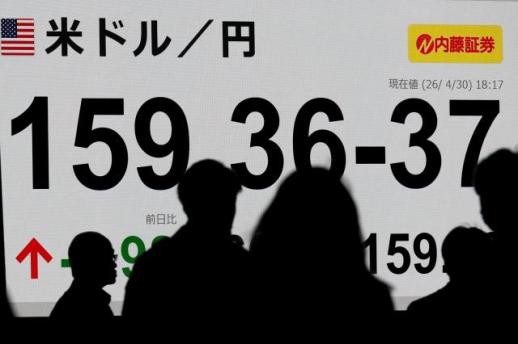 Yen Approaches 160 Mark Again Amid Growing Doubts The Japanese yen is once again nearing the 160 mark against the dollar. Following a market intervention by Japanese authorities at the end of April that temporarily pushed the yen back to the mid-155 range, it has slipped back to the mid-159 range within a month. The 160 yen defense line, which was barely maintained, is now being tested again. According to the Nihon Keizai Shimbun (Nikkei), the yen was trading at 159.57 to 159.58 yen per dollar in the Tokyo foreign exchange market on the afternoon of May 28. This represents a 0.22 yen increase (indicating a decline in yen value) compared to the previous day. At one point in the morning, the yen rose to around 159.60, marking its highest level since April 30. Reports of renewed tensions between the U.S. and Iran during negotiations have driven up oil futures prices, contributing to concerns about Japan's trade balance, which continues to weigh on the yen, according to Nikkei. However, attributing the yen's return to the 160 level solely to Middle Eastern factors is insufficient. During this period, Japan has seen rising long-term interest rates and a record current account surplus, while concerns about market intervention remain. All three factors typically support a stronger yen, yet the currency has weakened. Market attention has shifted to why these factors are failing to support the yen. The most notable aspect is the divergence between long-term interest rates and the yen's performance. Generally, rising government bond yields enhance the attractiveness of a currency. However, in Japan, despite rising long-term interest rates, there has not been a corresponding increase in yen buying. Nikkei reported that the gap between U.S. and Japanese long-term interest rates has narrowed over the past year, yet the yen's weakness persists. The market interprets the rise in Japanese long-term rates not as a sign of economic recovery or normalization of monetary policy, but rather as a reflection of fiscal risks and concerns that the Bank of Japan is lagging in addressing inflation. The impact of interest rate changes on exchange rates varies based on market interpretation. If rising rates signal that the Japanese economy is normalizing, it could lead to yen buying. Conversely, if they signal that higher returns are needed to hold Japanese government bonds, it could indicate anxiety about Japanese assets. Currently, the latter interpretation is gaining traction, making it difficult for foreign capital to actively purchase Japanese government bonds and the yen, even as yields rise. Another complicating factor for the yen's weakness is Japan's external balance. Daisuke Karakama, chief market economist at Mizuho Bank, recently noted that Japan's current account surplus for 2025 is projected to reach 34.52 trillion yen, marking a record high for three consecutive years, while the trade balance has returned to surplus for the first time in five years. On the surface, these statistics suggest little reason for the yen to weaken. However, in the foreign exchange market, what matters is not just the statistical surplus but the actual flow of money leading to yen purchases. If dollars earned overseas do not convert to yen upon entering Japan but are reinvested locally or remain in foreign asset forms, the current account surplus does not increase yen demand. Karakama pointed out that while Japan's current account surplus for January to March was 9.54 trillion yen, the actual cash flow surplus, excluding overseas reinvestment income that does not lead to yen purchases, was only about 1.6 trillion yen. The concern is what will happen if oil prices rise again. With the yen unable to escape its weakness despite a record current account surplus, an increase in oil prices could jeopardize the trade surplus that has been supporting the external balance. Karakama analyzed that the decline in oil prices last year was a key factor in Japan's return to a trade surplus. If geopolitical instability in the Middle East leads to higher oil import costs, the trade balance could deteriorate over time, increasing selling pressure on the yen. Will There Be Market Intervention Again? The remaining safety net is the possibility of market intervention by authorities. As the yen approaches 160 again, there are growing concerns that Japanese authorities may intervene in the market, similar to April. However, even if intervention temporarily boosts the yen, it does not eliminate the underlying pressure for a weaker yen. The yen still has a low funding cost compared to major currencies. With major overseas stock markets rising, investor sentiment for risk assets is also reviving. In this environment, even if intervention temporarily strengthens the yen, the yen carry trade—where investors borrow yen to invest in higher-yielding assets like dollars—could resurface, renewing selling pressure on the yen. Nikkei noted that if intervention leads to a rebound in the yen, long-term selling pressure from carry trades could quickly reemerge, further pushing the yen down. Therefore, the market suggests that even if the Bank of Japan raises rates in June, without a clear commitment to further increases, it will be difficult to curb carry trades, and the effect on yen appreciation will be limited. Ultimately, all three trends converge on one point: rising long-term interest rates, a record current account surplus, and the potential for market intervention are not being interpreted as compelling reasons to buy the yen. Concerns about fiscal and inflation instability accompany interest rates, while the current account surplus is hindered by a lack of actual yen buying demand, and intervention faces limitations due to carry trades. To prevent further yen depreciation, the Bank of Japan must demonstrate a willingness to raise rates, but its options are not straightforward. Raising rates could trigger instability in the long-term bond market and increase long-term interest rates. According to Nikkei, Japan's 10-year government bond yield recently reached 2.8%, the highest level in 29 and a half years, indicating an already unstable situation. The Bank of Japan will discuss the possibility of further rate hikes and plans to reduce government bond purchases at its monetary policy meeting next month. Slowing the pace of bond purchase reductions could stabilize the bond market, but it may also delay the withdrawal of liquidity from the market, increasing pressure for a weaker yen. The strategies to prevent yen depreciation and stabilize the bond market are in conflict. The market is closely watching the next move of the Bank of Japan, which finds itself in a difficult position.* This article has been translated by AI. 2026-05-28 17:46:00
 -
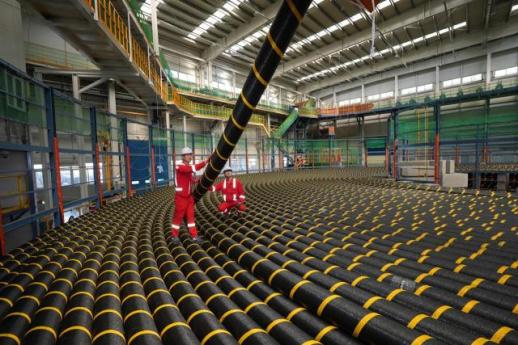 Police Charge 13 in Alleged Undersea Cable Technology Theft Case Police investigating allegations of technology theft involving LS Cable have concluded that Daehan Electric improperly acquired trade secrets. The Southern Gyeonggi Police Agency announced on May 28 that it has referred 13 individuals, including an executive from Daehan Electric and four employees, as well as seven officials from Gawon Architectural Firm and two from a construction company, to the Suwon District Prosecutors' Office on charges of violating laws related to unfair competition and trade secret protection. The Daehan Electric employees are accused of unlawfully obtaining LS Cable's trade secrets during the design phase of a factory for undersea cables in Dangjin, South Chungcheong Province, between 2022 and 2023. Police believe that Gawon Architectural Firm violated a confidentiality agreement with LS Cable by providing internal documents to Daehan Electric without authorization. Daehan Electric has faced suspicion of selecting Gawon Architectural Firm as the design contractor to gain access to LS Cable's accumulated expertise in undersea cable technology, which is considered a trade secret. Under relevant laws, trade secrets are defined as information that is not publicly known, has been kept confidential, and holds economic value. The police began their investigation in 2023 after receiving a tip-off and have now concluded the case nearly three years later, referring the matter to prosecutors. LS Cable stated that it has suffered damages amounting to hundreds of billions of won due to this incident, while Daehan Electric reportedly contends that the information in question does not qualify as a trade secret. Other involved parties, including Gawon Architectural Firm, have also denied the allegations, asserting that the information does not constitute a trade secret. Should the prosecutors and courts find Daehan Electric guilty, it is anticipated that astronomical civil lawsuits will follow. In response to the police investigation, an LS Cable representative stated, "LS Cable plans to respond according to principles against acts of technology theft and infringement to protect the core technologies and industrial ecosystem accumulated through decades of effort, dedication, and significant investment by our employees." 2026-05-28 17:46:00
 -
 Korean authorities step in to contain lodging prices ahead of BTS Busan concerts SEOUL, May 28 (AJP) -South Korean authorities moved quickly to respond to BTS' call for restraint in overcharging the group's beloved global fans traveling to the southern port city of Busan for the next stop on their worldwide tour. The government has secured more than 1,300 alternative accommodation options ahead of the concerts next month, after the group publicly criticized sharp price hikes around the event. The measures were announced Thursday at a task force meeting jointly led by the Ministry of Economy and Finance and the Ministry of Culture, Sports and Tourism to address price gouging around major events. BTS is scheduled to hold its "ARIRANG" world tour concerts on June 12 and 13 at Busan Asiad Main Stadium. The shows have triggered complaints from fans after some hotels and other accommodation providers in Busan reportedly raised room rates sharply around the concert dates—with some rooms said to have jumped from under 100,000 won to several million won per night. During a Weverse Live broadcast on Tuesday, BTS members addressed the controversy while speaking with fans. "There have been too many news reports about lodging businesses ahead of the Busan concerts. I hope businesses do not do that," RM said. "I understand there are peak-season rates, but I hope they keep it reasonable." RM also said he had heard some fans were considering staying overnight without lodging or using jjimjilbang — Korean public bathhouses with rest areas — because of the high accommodation costs. "That is not right," he said. "Shouldn't people think long term?" Jimin also expressed concern, saying he wanted fans to have a good experience in Busan. "I feel bad because I hope fans can have a good time in Busan," Jimin said. "They should keep it reasonable. How can they raise prices several times over?" Jungkook, who is from Busan, added in Busan dialect, "Goma haera" — meaning "Enough already." The controversy prompted President Lee Jae Myung to comment Wednesday that Busan's image had been hurt by complaints over what he called lodging price gouging linked to the BTS concerts, and that improvements were needed, underscoring the weight of the Kpop superstar who recently swept three awards—including their second-ever Artist of the Year trophy—at last week's American Music Awards with their new album ARIRANG just released two months ago. In response, the government said universities, religious facilities, public-sector training centers and youth training facilities in nearby areas including Busan, Yangsan and Changwon, will provide paid or free lodging for domestic and foreign visitors. Information on available facilities and reservation methods will be posted on the Visit Busan and Visit Korea websites. Authorities will also conduct special joint inspections of lodging businesses near the concert venue on Friday and again on June 8 and 9. The inspections will focus on hygiene conditions and possible price-fixing among accommodation providers. Businesses found to have violated regulations could face immediate administrative measures, including correction orders or business suspensions. Complaints filed through the 120 local call center or the 1330 tourist complaint center will be referred to local governments and subsequently to the National Tax Service for possible investigation into tax evasion. Accommodation providers confirmed to have engaged in excessive pricing will also face tougher penalties in hotel rating evaluations, with the maximum deduction raised to 30 points from the current 10. The government also plans to revise rules on reward payments for reports of unfair practices, including collusion. Under the planned changes, the current payment cap would be removed, and whistleblowers could receive up to 10 percent of the fines imposed. 2026-05-28 17:41:52
 -
 Chinese Embassy says USFK chief 'crossed the line' with 'dagger' remarks on Korea SEOUL, May 28 (AJP) - The Chinese Embassy in Seoul has strongly criticized Gen. Xavier Brunson, commander of U.S. Forces Korea, after he described South Korea as a “dagger” in Asia from China’s strategic perspective. In a written response to reporters Thursday, the embassy said Brunson’s recent remarks portrayed South Korea and USFK as a forward base aimed at China, warning that he had “clearly crossed the line.” Brunson said in a U.S. Army War College podcast released on May 22 that “when they look out from the east coast of China, what they see is Korea, the dagger in the heart of Asia,” emphasizing South Korea’s geographic importance and the role of U.S. troops on the peninsula in countering China. Last year, he also described South Korea as “an island or a stationary aircraft carrier” between China and Japan. “Is describing USFK as an aircraft carrier or a dagger an act of belligerence, or is it intended to take other countries hostage?” a spokesperson for the Chinese Embassy said. Referring to a recent summit between the U.S. and Chinese leaders, where the two sides agreed to build a constructive and strategically stable relationship, the spokesperson also questioned whether Brunson’s remarks had been approved by Washington. “Were your hostile and aggressive remarks toward China approved by Washington, or are they intended to undermine the agreement reached at the U.S.-China summit?” the spokesperson said. The embassy also noted that some South Korean media outlets had criticized Brunson’s remarks, urging the USFK commander to show greater respect for countries in the region. “We hope the commander of U.S. Forces Korea will make greater efforts to respect regional countries and promote regional peace and stability,” the spokesperson said. The embassy’s response appears to reflect Beijing’s growing concern that Washington is seeking to draw South Korea further into efforts to contain China, as the U.S. pushes to expand the strategic flexibility of USFK beyond deterring North Korea to potential regional contingencies, including in the Taiwan Strait. 2026-05-28 17:41:00
 -
 Stocks, bonds tumble as BOK chief signals potential rate hikes in 2nd half SEOUL, May 28 (AJP) - South Korea's stock and bond markets were jolted on Thursday after the Bank of Korea (BOK) hinted at potential rate hikes in the second half of the year. While the benchmark KOSPI recovered most of its intraday losses near the close on institutional interpretations of a "healthy" rate hike, government bond prices collapsed, ending sharply lower as monetary tightening was seen as almost certain. The index finished at 8,185.29, down 0.53 percent, while the tech-heavy KOSDAQ tumbled 2.54 percent to close at 1,104.36. The KOSPI plunged more than 4 percent during intraday trading, briefly breaching the psychologically critical 8,000 threshold, while the KOSDAQ widened its losses by shedding over 5.7 percent to hit an intraday low of 1,068. Market losses were sharply exacerbated after BOK governor Shin Hyun-song hinted at consecutive rate hikes during a press conference following its monetary policy meeting. Adding to the hawkish momentum, the central bank's newly released six-month dot plot revealed that the benchmark rate could peak at 3.25 percent, a significant leap from the current 2.5 percent. "The direction ahead is crystal clear," Shin said, taking a firm stance when pressed on the timeline for monetary tightening, adding, "The remaining issue now is simply when, how fast, and how far we will raise rates." The KOSPI managed to claw back much of its steeper losses near the close, driven by upbeat projections for the artificial intelligence (AI)-driven semiconductor sector, led by chip giants Samsung Electronics and SK hynix, which posted combined operating profits of over 90 trillion won (US$59.9 billion). The KOSDAQ, with less exposure to major semiconductor stocks and weaker corporate earnings, failed to mount a meaningful recovery before the close. Stock markets are highly sensitive to interest-rate expectations because higher rates raise borrowing costs for both companies and consumers, potentially slowing corporate earnings growth. Rising rates also make safer assets such as bank deposits and bonds more attractive, prompting investors to shift money out of equities and into fixed-income and foreign exchange markets. In the fixed-income market, South Korean government bond yields surged across the board. The yield on the benchmark three-year government bond advanced 5.5 basis points to close at 3.766 percent, while the ten-year note jumped 4.5 basis points to finish at 4.147 percent. Both benchmark yields touched their highest levels in approximately 15 years, reaching milestones not seen since August 2011, when the eurozone sovereign debt crisis and the credit rating downgrade of the U.S. convulsed global markets. A bond is essentially a fixed-rate contract, meaning expectations of higher interest rates make existing lower-yield bonds less attractive. As investors sell those bonds in favor of newer, higher-yielding ones, bond prices fall and yields rise. The three-year government bond yield is particularly sensitive to expectations for the BOK's policy path over the next few years. That is why even hawkish signals from the BOK can trigger sharp moves in short-term yields, as seen in the surge in the three-year note. Market observers also noted that Shin's stern warning about the country's outstanding margin trading balance, which stood at 36.7 trillion won, up a sharp 34 percent since the beginning of the year, helped cool overheated market sentiment. Margin balances track the amount of capital or shares borrowed by retail investors from brokerages for leveraged trading. "The capital losses from highly leveraged, debt-fueled trading are ultimately borne by market participants who do not carry debt," Shin said. "This behavior distorts the normal economic demand curve." 2026-05-28 17:39:52
 -
 Rising Construction Costs Shake Foundations of Public Housing in South Korea Rising construction costs are disrupting the long-standing formula for housing supply in South Korea. The construction cost index reached a record high of 134.42 in March, marking the seventh consecutive month of increases. Compared to 2020, costs have surged by over 30% in just six years, driven by soaring material and labor costs. The issue extends beyond mere cost increases; it is shaking the very calculations behind public housing supply. Construction sites are already facing unbearable pressures. Additional fees that reconstruction and redevelopment members must shoulder have ballooned into the millions of won in some projects. In areas with low profitability, these fees are exceeding the value of existing homes, raising concerns about a phenomenon known as 'fee inversion.' Even in the lucrative Gangnam area, where reconstruction projects are typically strong, delays are occurring due to difficulties in finding contractors willing to absorb the rising costs. As construction expenses climb, supply slows, creating a vicious cycle that exacerbates housing price instability. The pricing standards set by the government are failing to keep pace with reality. The basic construction cost, which serves as the benchmark for the price ceiling on public housing sales, increased by only 2.12% in March. While actual construction costs have skyrocketed, public pricing has barely budged. As the gap between set prices and market realities widens, fewer developers are willing to build at those rates. Policies aimed at stabilizing supply by suppressing prices are paradoxically leading to a contraction in supply. The implications of these rising costs extend beyond the profitability of construction companies. The burden of construction expenses translates into higher sale prices and rental rates, while project delays result in diminished supply. A decrease in supply heightens market instability. Ultimately, a significant portion of the cost burden falls on first-time homebuyers and young people, as rising expenses ripple through the housing market. In response, the government is shifting to share the burden of public supply with the private sector. The Korea Land and Housing Corporation (LH) has decided to pursue a substantial portion of public housing through private participation this year. This may be a pragmatic choice to accelerate supply and reduce financial strain. However, the private sector operates on profit motives. If public interests are not adequately secured through contracts and management, the burden of public housing will inevitably shift back to low-income residents and young people. More concerning is that despite construction costs reaching unprecedented levels, construction activity is contracting. Projects are stalling due to cost pressures, leading to reduced supply. Fears of supply shortages are once again fueling market instability. Public housing has served as a crucial safety net for young people, newlyweds, and low-income residents. If the public sector retreats due to rising costs, the first to suffer will be the housing stability of vulnerable groups. The solution does not lie in ignoring reality. While acknowledging the rise in construction costs, unverified demands for increases must be filtered through public scrutiny. The construction cost standards set by the government also need to be adjusted to reflect current realities. Even when collaborating with the private sector, public interests must be managed more stringently. Additionally, exit strategies and support mechanisms for members and tenants struggling with rising fees must be established. The surge in construction costs is an unavoidable reality. However, the public sector cannot withdraw from its responsibility to supply housing simply because costs have risen. Policies that aim to increase supply while suppressing prices, or that shift burdens to the private sector while expecting public accountability, are unlikely to endure. If the principles of public housing are compromised, the first to be affected will be the housing stability of low-income residents.* This article has been translated by AI. 2026-05-28 17:32:00
 -
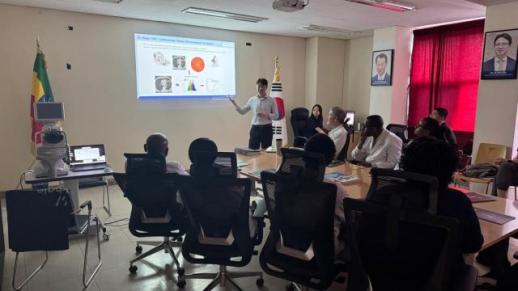 Dong-A ST Expands Digital Healthcare-Based CSR in Ethiopia Dong-A ST announced on May 28 that it is expanding its digital healthcare-based corporate social responsibility (CSR) activities in medically underserved areas of Ethiopia. The company’s phased CSR initiatives go beyond simple donations, incorporating local medical staff training and data-driven collaboration to enhance healthcare accessibility and disease management in the region. In 2024, Dong-A ST began its support for digital healthcare in Ethiopia by donating the remote patient monitoring platform HiCardi to MCM Medical Center. HiCardi is designed to remotely monitor the condition of cardiovascular patients, improving patient management efficiency in an environment where medical personnel are scarce. Last year, the company also contributed specialty pharmaceuticals to free clinics, further improving community healthcare access. This initiative included not only equipment and supplies but also training and operational support for local medical staff to enhance the platform's utilization. This year, Dong-A ST donated an additional digital diagnostic solution, Dr.Noon. This AI-based software analyzes retinal blood vessel images to predict the risk of cardiovascular diseases, aiming to support early screening and risk management in areas lacking diagnostic infrastructure. Dr.Noon is utilized to assess complications from chronic diseases such as diabetic retinopathy, macular degeneration, glaucoma, and cataracts. The examination takes approximately three minutes, helping to reduce the workload on medical staff while facilitating early diagnosis and response. In the field of cardiovascular diagnostics, Dr.Noon CVD is introduced as a solution to assist in patient screening, additional testing, and medication prescription decisions, offering accuracy comparable to coronary CT scans without radiation exposure. Dong-A ST plans to expand remote technical support and data-driven collaboration starting in 2027. The company aims to strengthen local medical staff training programs and enhance solution performance using accumulated data. The company's sincere CSR efforts have received positive feedback locally. Through collaboration with Seoul National University Hospital's Lee Jong-wook Global Center, sampling initiatives have been launched at Black Lion Hospital, the largest medical institution in Ethiopia. A Dong-A ST representative stated, "Our goal is to enhance the self-reliance of local medical staff through continuous donations, education, and collaboration in medically underserved Ethiopia. We will gradually expand our digital healthcare-based CSR activities to contribute to the health rights of local patients."* This article has been translated by AI. 2026-05-28 17:30:00
 -
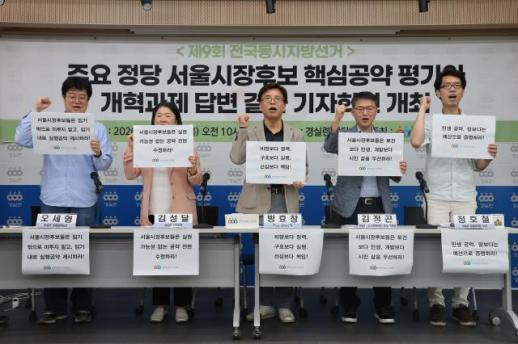 Civic Group Evaluates Seoul Mayor Candidates' Promises as Lacking Specificity In the lead-up to the local elections, a civic group has assessed the campaign promises of major party candidates for Seoul Mayor, finding them appropriate for citizens' livelihood issues but lacking in diversity and specificity regarding budget and funding.The Citizens' Coalition for Economic Justice (CCEJ) released its evaluation on May 28, based on responses from four candidates regarding their three main campaign promises.CCEJ evaluated the candidates' promises based on several criteria, including whether the policies were clearly understandable to voters, whether they reflected a desirable future for the region, whether they addressed urgent local issues, and whether candidates demonstrated a commitment to the community.Overall, CCEJ noted, "The candidates' promises lacked diversity. Aside from public care commitments, it was difficult to find meaningful promises for our society." They added that while the proposals from Jung Won-o and Oh Se-hoon were relevant, they lacked specificity and accountability in terms of budget, raising concerns about their feasibility.Jung Won-o, the candidate from the Democratic Party, proposed a vision for a global G2 Seoul, a 30-minute commuting city, and a shift in disaster management from reactive to proactive investment.CCEJ commented that while the proposal for transforming five urban centers and six metropolitan areas into growth opportunities for youth jobs was innovative, the budget for the development projects was limited to a master plan at the research level, making it unlikely to be realized during the term. They also noted that the 30-minute commuting city proposal lacked differentiation from Oh Se-hoon's plan and was vague in terms of budget and execution.Oh Se-hoon, the candidate from the People Power Party, highlighted promises to restore housing safety nets for homeless families, invest 20.8 trillion won to connect transportation arteries in northern Seoul, and expand transportation welfare through a 'Seoul Climate Companion Pass.'CCEJ criticized the proposals for serious flaws in specificity and feasibility within the term. They acknowledged the candidates' recognition of pressing issues faced by Seoul residents, such as the housing crisis, transportation disparities in northern Seoul, and rising transportation costs amid high fuel prices. However, they pointed out that the integration of the K-PASS system relied on agreements with the Lee Jae-myung administration, and concerns about wasteful spending on road undergrounding were raised. Furthermore, they noted that the housing budget proposal allocated 3.22 trillion won (83%) of the total 3.86 trillion won budget for the end of the term, effectively passing responsibility to the next mayor.Kim Jeong-cheol, the candidate from the Reform Party, proposed promises including 'AI administration and automatic welfare' for a 'welcoming Seoul,' 'affordable Seoul' through regulatory innovation, and a 'smooth Seoul' by reducing commute times by 30 minutes.CCEJ remarked that while the approach of utilizing public AI to address welfare gaps, delays in permits, and disputes in maintenance projects was innovative, it remained limited to internal administrative improvements within the Seoul City government. They expressed concerns about the lack of diversity in the promises and the potential for digital exclusion among the elderly and biases in AI algorithms, as well as fears of the city becoming a 'Big Brother' with monopolized information. Nonetheless, they praised the candidate's expertise and diligence in presenting specific proposals and expressed hope for policy competition with other candidates.Kwon Young-guk, the candidate from the Justice Party, presented key promises including public guarantees for essential goods, making all citizens stakeholders in labor rights, and establishing a public care city in Seoul.CCEJ noted that while defining housing, transportation, healthcare, food, labor, and care as public responsibilities demonstrated significant reform potential, the lack of concrete funding plans for the substantial budget of 6.34 trillion won raised concerns about the promises being mere slogans. They specifically highlighted that while Kwon's labor proposals were ambitious, they lacked feasibility regarding matters beyond the mayor's authority and acknowledged the public care promise as particularly meaningful in this election.Bang Hyo-chang, head of the promise verification team at CCEJ, emphasized, "This election should not be a competition of political slogans among major parties but a practical policy race that transforms citizens' lives through diverse promises related to housing, transportation, welfare, care, jobs, and safety."* This article has been translated by AI. 2026-05-28 17:30:00
 -
 Chinese Dissident Dong Guangping's Arrest Warrant Denied; Seeks Asylum in Canada A South Korean court has denied an arrest warrant for Chinese dissident Dong Guangping, who was apprehended after entering South Korean waters by rubber boat. According to Yonhap News, Judge Seok Ji-sung of the Daejeon District Court's Seosan branch conducted a pre-arrest interrogation on May 28 and stated, "It is difficult to recognize the reasons and necessity for detention." The court concluded that there was no significant risk of flight or evidence tampering. Upon arriving at the court for the hearing, Dong expressed his desire to seek asylum in Canada. He told reporters in Chinese, "I want to go to Canada for a family gathering," adding, "I hope the Canadian government will help me." The Taean Coast Guard is expected to transfer Dong's custody to the Daejeon Immigration Office soon, after which he is likely to be sent to a foreigner protection facility. If he applies for refugee status, his departure from South Korea will be temporarily suspended. If recognized as a refugee, he will gain the right to stay in the country. Yonhap reported that Dong was discovered on May 25 at approximately 9:36 PM, about 10 nautical miles (18 km) northwest of Seogeukbido, Taean County, while aboard a 3.3-meter rubber boat with a 9.9-horsepower engine. The coast guard responded to the report and urgently arrested him, transporting him to Sinjin Port for questioning regarding the circumstances of his arrival in South Korean waters. According to The New York Times, Dong previously served as a police officer and soldier in China and was dismissed from the police force in 1999 for signing a letter related to the Tiananmen Square protests. He has reportedly attempted to escape and been repatriated multiple times, including being detained by Chinese authorities after participating in a Tiananmen memorial event in 2014.* This article has been translated by AI. 2026-05-28 17:28:00
 -
 i-dle lands digital cover of U.S. magazine 'PAPER' ahead of July comeback SEOUL, May 28 (AJP) - K-pop girl group i-dle has been featured on the digital cover of U.S. magazine PAPER as the group prepares for a July comeback. PAPER released the cover shoot and interview with the five-member group — Miyeon, Minnie, Soyeon, Yuqi and Shuhua — on Tuesday. The feature comes as i-dle continues to expand its presence in North America through media appearances, festival stages and overseas promotions. In the cover images, the members reinterpret a 1990s-inspired angelic mood through vivid colors, ornate styling and romantic details, creating a softer but still highly stylized image for the group. PAPER described i-dle as a group that has grown more certain of its instincts and musical direction over time. The magazine said the group’s desire to strip away the unnecessary and move closer to the essential has come to define its music. The magazine also highlighted the group’s ability to build one of K-pop’s most distinctive creative worlds, balancing theatricality with emotional directness. The feature also looked at i-dle’s recent digital single “Mono (Feat. skaiwater),” released in January, describing it as a softer shift that still carries the confidence of artists no longer trying to prove themselves through noise. PAPER also drew attention to “Crow,” a new song first performed during the group’s 2026 world tour “Syncopation.” The magazine noted that the song reworks the image of the crow — often associated with death, disaster or bad omens — into a symbol of survival and endurance. The coverage adds momentum to i-dle’s upcoming activities in the United States. The group has recently appeared on NBC’s “Today” show, “The Kelly Clarkson Show” and “iHeart KPOP with JoJo” as part of its North American promotions. i-dle is also scheduled to perform at Lollapalooza in July, marking another major U.S. festival appearance for the group. In the feature, PAPER framed i-dle not simply as a K-pop act preparing another release, but as a group that has returned with a clearer sense of identity each time it has faced adversity. 2026-05-28 17:27:25