
Journalist

Park Yong-jun
-
 i-dle lands digital cover of U.S. magazine 'PAPER' ahead of July comeback SEOUL, May 28 (AJP) - K-pop girl group i-dle has been featured on the digital cover of U.S. magazine PAPER as the group prepares for a July comeback. PAPER released the cover shoot and interview with the five-member group — Miyeon, Minnie, Soyeon, Yuqi and Shuhua — on Tuesday. The feature comes as i-dle continues to expand its presence in North America through media appearances, festival stages and overseas promotions. In the cover images, the members reinterpret a 1990s-inspired angelic mood through vivid colors, ornate styling and romantic details, creating a softer but still highly stylized image for the group. PAPER described i-dle as a group that has grown more certain of its instincts and musical direction over time. The magazine said the group’s desire to strip away the unnecessary and move closer to the essential has come to define its music. The magazine also highlighted the group’s ability to build one of K-pop’s most distinctive creative worlds, balancing theatricality with emotional directness. The feature also looked at i-dle’s recent digital single “Mono (Feat. skaiwater),” released in January, describing it as a softer shift that still carries the confidence of artists no longer trying to prove themselves through noise. PAPER also drew attention to “Crow,” a new song first performed during the group’s 2026 world tour “Syncopation.” The magazine noted that the song reworks the image of the crow — often associated with death, disaster or bad omens — into a symbol of survival and endurance. The coverage adds momentum to i-dle’s upcoming activities in the United States. The group has recently appeared on NBC’s “Today” show, “The Kelly Clarkson Show” and “iHeart KPOP with JoJo” as part of its North American promotions. i-dle is also scheduled to perform at Lollapalooza in July, marking another major U.S. festival appearance for the group. In the feature, PAPER framed i-dle not simply as a K-pop act preparing another release, but as a group that has returned with a clearer sense of identity each time it has faced adversity. 2026-05-28 17:27:25
 -
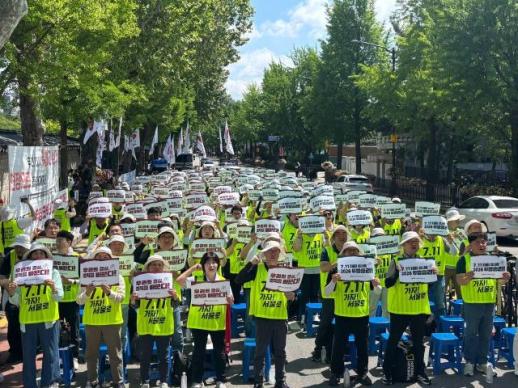 South Korean public sector union vows mass summer rally over pension, labor rights SEOUL, May 28 (AJP) - South Korea’s largest public officials’ union said Thursday it will launch a nationwide campaign and hold a large-scale rally in July demanding improvements to the civil servant pension system, higher wages, and broader political rights for government employees. The Korean Government Employees’ Union, known as KGEU, held a resolution rally near the presidential Blue House in central Seoul, where union leaders accused the government of overworking civil servants while restricting their political freedoms and weakening retirement security. The union said it plans to organize a mass rally of civil servants and teachers at Seoul’s Gwanghwamun area on July 11 as part of what it described as a broader struggle for workers’ “survival rights.” Among the union’s key demands are measures to address what it calls an “income gap” in the public pension system, wage increases, guarantees for safer working conditions, and expanded political rights for civil servants, who face legal restrictions on political activities under South Korean law. KGEU Chairman Lee Hae-jun urged members to mobilize nationwide ahead of the July rally, saying public workers must rely on “unity and struggle” to secure their demands. “We were forced to live with the label of being servants of power rather than servants of the people,” Lee told union members, emphasizing: “Sacrifice was demanded in the name of being civil servants, while our rights were thoroughly suppressed.” Union officials said organizers will begin nationwide outreach efforts immediately to recruit participants for the July event, which they hope will draw tens of thousands of workers. Speakers at Thursday’s rally described worsening working conditions across local governments, including excessive overtime, emergency duty assignments, and staffing shortages. Jang Kyung-hwan, a district branch leader in Seoul, said local officials have been burdened with election work, disaster response duties, and crowd-control assignments at large public events. “Our demand is not for privilege,” Jang said. “We are demanding wages that allow a decent standard of living, fair compensation for our work, and the right to work safely.” Other union officials highlighted workplace harassment and mental health concerns among public employees. Park Jin-hong, a branch leader from South Jeolla Province’s Jangseong County, cited multiple cases of workplace bullying, assault, and unexplained deaths involving civil servants over the past year. Union leaders also criticized past pension reforms, arguing that younger and late-career civil servants face growing uncertainty over retirement benefits. South Korea’s civil servants are prohibited from engaging in many forms of political activity, including openly supporting political parties or candidates, restrictions that labor groups have long argued violate basic political rights. The KGEU said it will continue protests and regional organizing efforts through early July ahead of the planned rally in Seoul. 2026-05-28 17:26:04
 -
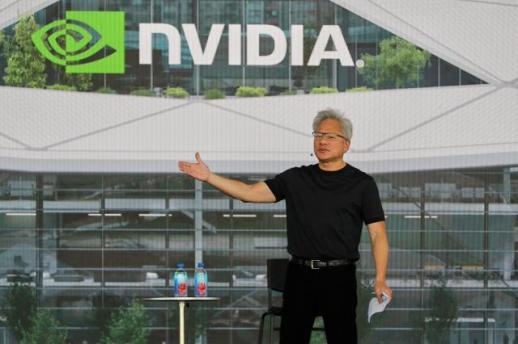 Jensen Huang Teases New Products, Predicts Record-Breaking Second Half for Nvidia Jensen Huang, CEO of Nvidia, announced that the company has an undisclosed new product and predicted that the second half of this year will be the largest ever for both Nvidia and Taiwan. On May 28, local media outlets in Taiwan, including the Central News Agency and Liberty Times, reported that Huang made these remarks after dining with executives from foundry company Quanta Computer the previous evening, where they discussed expanding production capacity and strengthening collaboration. "The main topic of discussion today was expanding production capacity. The second half of the year will be very busy, especially with new products like 'Grace Blackwell' and the next-generation AI accelerator, 'Vera Rubin,'" Huang said. He added, "We have an amazing new product that we haven't told anyone about yet, and we plan to announce it soon." Huang emphasized, "The second half of this year will be the largest ever for Nvidia and Taiwan." In response to concerns about potential supply shortages due to limitations in TSMC's 3-nanometer and 2-nanometer production capabilities, Huang stated, "TSMC is the best company in the world. TSMC can be very successful, and so can Nvidia. The two can coexist." Regarding potential equity investments in Taiwanese companies, he mentioned, "Currently, we don't have specific targets or plans, but we would like to if opportunities arise." Huang also noted that Nvidia's partnership network in Taiwan is rapidly expanding. "Just a few years ago, Nvidia had only 10 partners in Taiwan, but that number grew to 50 about five years ago, and now we have 150 partners," he said. During the groundbreaking ceremony for Nvidia's Taiwan headquarters, Huang praised Taiwan as the "epicenter of the AI revolution" and announced plans to significantly increase investments in the region. He stated, "Five years ago, our annual investment in Taiwan was between $10 billion and $15 billion, but now it will exceed $100 billion, reaching $150 billion." He emphasized, "Taiwan is the epicenter of the AI revolution, where chips, packaging, and AI supercomputers are all made." Nvidia's Taiwan headquarters is set to break ground this year, with completion targeted for 2030. Once finished, it will employ 4,000 people. Huang told employees, "In three to five years, Nvidia's market capitalization will be much higher than the current $5 trillion." Emphasis on Power Supply Huang also highlighted the importance of securing power supply, stating, "Just as human employees need food, AI employees need power. We need more power. Growth in the energy sector is crucial for Taiwan's GDP." In response, Taiwan's Minister of Economic Affairs Wang Mei-hua assured that there would be no issues with power supply until 2034, adding that if Nvidia has new major investment plans, they should inform the government in advance to facilitate planning. Since arriving in Taiwan on May 23, Huang has been meeting with leaders in the Taiwanese semiconductor industry, including a dinner with TSMC Chairman Mark Liu. He is also scheduled to attend Computex, Asia's largest IT expo, from June 2 to 5. Nvidia plans to strengthen its collaboration with TSMC while also expanding alliances with AI server manufacturers such as Foxconn, Wistron, and Quanta Computer.* This article has been translated by AI. 2026-05-28 17:24:00
 -
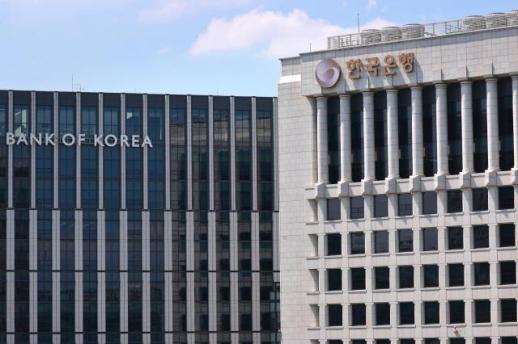 Bank of Korea Plans to Issue Up to 6.8 Trillion Won in Monetary Stabilization Bonds The Bank of Korea announced on May 28 that it plans to issue up to 6.8 trillion won in monetary stabilization bonds next month. Of this amount, 6.2 trillion won will be issued through competitive bidding, while 500 billion to 600 billion won will be raised through a subscription method. The competitive bidding will consist of eight rounds, with five rounds for 91-day bonds scheduled for June 1, 8, 15, 22, and 29. One round each will be held for one-year bonds on June 10, two-year bonds on June 4, and three-year bonds on June 17. The subscription bidding is set for June 24. Early redemption will occur on June 5 and 16, with bids of 5 billion won and 2 trillion won, respectively.* This article has been translated by AI. 2026-05-28 17:22:00
 -
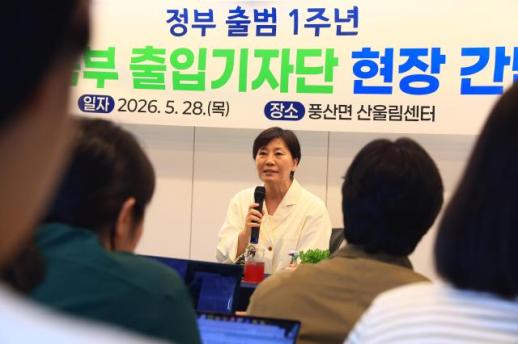 Song Mi-ryong: Export Boom Comes at the Expense of Agriculture Song Mi-ryong, the Minister of Agriculture, Food and Rural Affairs, stated on May 28 that the recent export boom, primarily benefiting large corporations, has come at a cost to the agricultural sector. During a press conference marking the first anniversary of the government's inauguration in Jeonbuk, she emphasized the need for social discussions regarding the damages incurred by agriculture during the economic opening. "It is difficult to assess accurately, but we must also address the sacrifices that the agricultural sector has endured. Initiating such discussions is a legitimate concern for the agricultural community," she said.Minister Song cited the status of the Rural Cooperation Fund as an example. This fund is voluntarily established by private and public enterprises that benefit from free trade agreements (FTAs) to support welfare, education, infrastructure, and market access in rural areas. Launched in 2017 with a goal of raising 100 billion won annually for ten years, the fund has only reached about 300 billion won so far, prompting an extension until 2037."Currently, the Rural Cooperation Fund is far below its initial targets. It relies on the voluntary participation of the industry, which has not met expectations," Song noted, stressing the need for discussions on fundamental approaches and securing momentum.When asked about utilizing the special rural tax from stock sales, she expressed hope that a thriving stock market would increase investment capacity in rural areas. "Considering that rural areas provide food, this is not wasted tax but an investment in South Korea's future," she said.Regarding the recent Starbucks controversy, she expressed a desire for it to serve as a catalyst for revitalizing local businesses. "Mocking and belittling the pain in our society is a serious issue," she remarked, adding that it would be beneficial if cafes and bakeries in local neighborhoods offered a wider variety of beverages, such as omija tea, chrysanthemum tea, and green tea, rather than just coffee.Song highlighted several achievements of the Lee Jae-myung administration in its first year, including the launch of a rural basic income pilot program, surpassing $10 billion in K-food exports, expanding support for eco-friendly agricultural products, and increasing the target for affordable breakfast programs. Future goals include enacting legislation related to rural basic income, aiming for K-food exports to exceed $16 billion, and preparing for summer agricultural supply."The main issue regarding rural basic income remains funding," she explained, announcing plans to reveal five additional selected areas next month. On K-food exports, she noted, "The halal market accounts for 20% of the global market, yet our export share is still very low. However, exports to the Middle East have increased by 38% compared to last year, which is encouraging."The government is developing tailored strategies for K-food export growth this year, including appointing ambassadors for K-food in different regions. Song announced that the representative ambassador for the Chinese market will be esports player Faker, while Chef Edward Lee will represent North America.* This article has been translated by AI. 2026-05-28 17:18:00
 -
 Samsung's largest union adopts two-track DS-DX bargaining as membership slides SEOUL, May 28 (AJP) - Samsung Electronics’ largest labor union is rapidly losing members in the aftermath of a contentious wage agreement that exposed deepening rifts between the company’s semiconductor and device businesses, prompting the union to adopt a separate “two-track” bargaining structure for its divisions. Samsung Group Labor Union’s Samsung Electronics branch, the company’s largest and majority union, said Thursday its membership fell to 69,575 as of 10 a.m. from more than 76,000 during wage negotiations. The decline came after Samsung Electronics concluded this year’s wage negotiations with a compensation framework heavily favoring semiconductor employees in the Device Solutions (DS) division, fueling backlash among workers in the Device eXperience (DX) division, which oversees smartphones, TVs and home appliances. The outflow has raised concerns that the union could eventually lose its status as the majority union, weakening its legal bargaining authority and leverage in negotiations with management. The union initially secured majority status and legal employee representative rights from the Ministry of Employment and Labor in April. However, maintaining that status requires around 64,500 members, or roughly half of Samsung Electronics’ current workforce. If the union loses that status, its legal legitimacy and bargaining power in future negotiations could weaken sharply. The organization also risks becoming a DS-centered union as compensation tensions widen between Samsung’s semiconductor and non-semiconductor businesses. Meanwhile, rival unions have continued to gain members as the largest union’s membership declined. Membership in the National Samsung Electronics Union rose to around 20,000, while Samsung Electronics Labor Union Donghaeng grew to roughly 16,000. The voting results underscored the widening divide between Samsung’s DS and DX divisions over the wage deal. Within the majority union, 80.6 percent of members, or 44,606 workers, voted in favor of the agreement. But approval in the National Samsung Electronics Union stood at 21.1 percent, with only 1,536 members backing the deal. In response to the backlash, union chief Choi Seung-ho said “To better reflect each division’s specific conditions and pending issues, our future negotiations will operate under a ‘two-track’ system separating the DS and DX divisions within the union,” adding that the union leadership would also be split between the two divisions, with five executives assigned to DS and three to DX. For the DS division, the union said it plans to closely review the financial conditions of loss-making non-memory businesses such as System LSI and foundry operations while pressing management to present a credible turnaround vision. The union also capped executive position allowances at a maximum total of 5 million won following criticism that some executives were effectively receiving overlapping compensation alongside regular salaries. Meanwhile, the union will hold a confidence vote on Choi’s leadership on June 17 after he faced criticism over remarks seen as fueling tensions between DS and DX workers during the negotiations. Choi said he would accept responsibility for mistakes made during the negotiations. “I will humbly accept the members’ judgment,” he said. He added that the union would reorganize around preparations for the 2027 wage agreement and the new DS-DX operating structure, saying, “We will do our best to deliver a more favorable outcome in the next round of negotiations.” 2026-05-28 17:17:30
 -
 Weak Iranian missiles — not ship armor — explain limited damage to HMM Namu: experts SEOUL, May 28 (AJP) - South Korea's conclusion that the cargo ship HMM Namu—damaged near the Strait of Hormuz on May 4—was likely hit by Iranian missiles has raised a simple question: how did a commercial vessel survive two direct strikes with only minor damage? Defense experts say the answer lies not in the ship's structural strength, but in the missiles' limited performance. The question arose after Seoul announced Wednesday that the two unidentified projectiles that struck the South Korean vessel were likely Noor-class anti-ship missiles, developed and produced by Iran. Investigators said the warhead found at the scene matched the section marked in red in a manufacturer’s catalog image of an anti-ship missile, while other debris appeared to be engine components. “For now, multiple pieces of evidence point toward Iran,” First Vice Foreign Minister Park Yoon-joo said at a briefing. The Noor is a mainstay of Iran’s anti-ship arsenal, developed in the early 2000s by reverse-engineering the Chinese-made C-802 cruise missile. The weapon uses “sea-skimming” technology, flying just 5 to 15 meters above the water’s surface to evade radar detection. Investigators said this low-altitude flight profile aligns with the damage sustained by the HMM Namu, which was reportedly struck near the waterline on the lower section of its hull. Experts cautioned, however, against interpreting the absence of casualties and the relatively limited damage as evidence that the Chinese-built container ship possessed exceptional defensive capability. Jeong Kyung-woon, a researcher at the Korea Military Affairs Institute, said standard anti-ship cruise missiles are designed to sink warships with compartmentalized structures and typically carry warheads containing around 450 kilograms of explosives. “If an ordinary commercial vessel were hit by two such missiles, it would be torn apart,” Jeong said. He said the scale of damage to the Namu suggests the missiles may have carried warheads with only a fraction of the typical explosive power. “The level of damage seen on the Namu appears normal, considering that the warhead of the Iranian anti-ship missile is estimated to have had about one-tenth the power of a standard anti-ship cruise missile,” he said. Jeong added that merchant ships are generally designed for cargo transport and safe navigation, not to withstand missile strikes. The Noor missile has repeatedly drawn attention from military analysts and foreign media because of its past use by Iran-backed groups. It is often cited in connection with the 2006 attack on the Israeli Navy corvette INS Hanit off the coast of Lebanon, when Hezbollah reportedly used an Iranian-supplied anti-ship missile to strike the vessel. The British military journal Wavell Room has also described the Noor as part of what it called the “Houthi model” of proxy warfare, pointing to Iran’s long-running transfer of missiles and components to members of its so-called “Axis of Resistance,” including groups in Syria, Hezbollah in Lebanon and Houthi rebels in Yemen. Kim Houng-yu, a member of the Korea Defense Industry Association, offered a similar assessment, saying the limited damage was more likely due to shortcomings in the missile system than the ship’s strength. “One of the two missiles did not explode,” Kim said, noting that a warhead must detonate properly through its fuse to achieve its intended destructive effect. “Since Iran faces severe restrictions on importing military hardware or securing proper supply chains, it is highly probable they are relying on crude, locally produced alternatives manufactured in makeshift facilities,” Kim explained. “In my view, it was not that the ship was strong enough to withstand the strike, but that the missile’s performance was fundamentally deficient.” Following the announcement, Park summoned Iranian Ambassador to South Korea Saeed Koozechi to the Foreign Ministry in Seoul later Wednesday. However, Park also acknowledged the difficulty of determining whether the attack was intentional, saying it would be “extremely difficult” to establish intent unless Iran itself acknowledges it. Koozechi expressed regret over the damage to the Korean vessel but denied any Iranian involvement. “I would like to express regret over the damage suffered by the Korean vessel,” he told reporters. But when asked whether Iran would apologize, he said Tehran “denies everything” related to the incident and had “absolutely no involvement.” During Thursday’s press briefing, Foreign Ministry spokesperson Park Il again stopped short of identifying the specific actor responsible, saying it remains “very difficult” to determine who inside Iran carried out the attack. The remarks suggested that Seoul is not yet able to specify whether the strike was conducted by Iran’s regular military, the Islamic Revolutionary Guard Corps, Houthi rebels or other Iran-backed militia groups. The ministry also stressed that the government’s response would take into account the safety of Korean vessels and crew members still operating near the Strait of Hormuz, the protection of Korean nationals and companies in the Middle East, energy supply chain stability and broader South Korea-Iran relations. “At the time of the incident, military tensions around the Strait of Hormuz were extremely high, and vessels from other countries, including China and France, were also attacked around the same time,” Park said. “The government will respond while taking those circumstances into account.” The case comes as South Korea continues diplomatic efforts to ensure the safe passage of Korean-linked vessels near the Strait of Hormuz, a key maritime route for global energy shipments. 2026-05-28 17:17:12
 -
 Vigloo Launches AI Animation Tab to Accelerate Short Drama IP Expansion Short drama platform Vigloo is accelerating its expansion into AI-based content by launching a dedicated animation tab. This new feature will categorize AI animation and AI live-action dramas separately, enhancing its multi-format IP strategy in the short-form content market.On May 28, global content platform Spoon Labs announced the establishment of the animation tab on its short drama platform Vigloo, marking a significant expansion of its AI-based content lineup.The creation of the animation tab aims to improve viewer accessibility by separating AI-produced content into an independent category. Vigloo plans to enhance its multi-format IP operations, which currently includes about 30 AI animations out of a total library of approximately 400 titles. The platform intends to gradually increase the proportion of AI live-action dramas as well.Along with the new tab, Vigloo unveiled two new AI titles. The AI 3D animation "The Demon Lord's Marked Bride: Returning for Blood," which was previewed on May 14, tells the dark fantasy romance of a bride who was sacrificed to a demon by her family on her wedding day but returns for revenge after gaining the demon lord's mark. The production utilizes AI to enhance the visual and directorial elements, creating a fantasy world and character expressions that would be challenging to achieve with live-action.The AI live-action drama "Married the Ex Gang Leader!" released on May 28 targets the Japanese market. It reflects unique Japanese subcultures, such as the bosozoku (street gang) and yankii culture, in its male protagonist's character, aiming to cater to local romance content demands.Vigloo is expanding its strategy by reinterpreting popular original works based on a strong IP ecosystem of webtoons and web novels in Korea and Japan, as well as producing spin-offs of verified drama IPs. In the U.S., the company is building a production system centered in Los Angeles, focusing on English original content that reflects North American viewer preferences, including supernatural romance, romantic comedies, and revenge romances targeting women in their 30s and 40s.AI content is also a core strategy for the platform in terms of production efficiency. Vigloo aims to fill 30% of its entire library with AI content by concurrently producing AI-based 2D and 3D animations of existing IPs and new AI live-action short dramas. The AI production structure is said to reduce costs by up to 90% compared to traditional methods while allowing for rapid supply of diverse genres and formats.A representative from Vigloo stated, "Separating AI animation into its own tab instead of mixing it with the general lineup is part of our content expansion strategy based on OSMU (One Source Multi Use), aimed at broadening our portfolio into the animation sector."They added, "We believe that as the quality of AI-produced works improves, viewers are beginning to open their wallets. Vigloo expects to maximize production efficiency using AI technology and expand genres that can express both live-action and animation, providing richer content to viewers."Spoon Labs CEO Choi Hyuk-jae remarked, "AI is a tool that expands the possibilities of content beyond the distinction between live-action and animation. Vigloo will evolve into a multi-format platform that transcends formats, genres, and markets, leveraging its AI production capabilities."Vigloo, which launched the first AI short-form animation in Korea last December, is simultaneously pursuing the animation adaptation of live-action short drama IPs and the production of original AI live-action dramas. The company aims to accelerate content supply and broaden IP utilization in the short drama market based on AI production methods.* This article has been translated by AI. 2026-05-28 17:12:00
 -
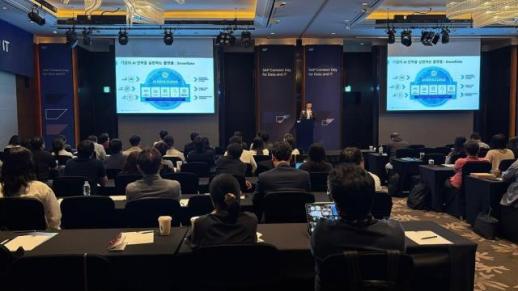 Snowflake Unveils AI Integration Solution to Eliminate Data Silos Global AI data cloud company Snowflake announced its participation in the SAP Connect Day for Data and IT Innovation, held on May 28 at the Conrad Seoul Hotel. During the event, Snowflake showcased its technological capabilities for efficiently analyzing SAP data on the Snowflake platform. Ham Jae-won, a director at Snowflake, spoke at the Data & AI track session, discussing the integration strategy with SAP Business Data Cloud (BDC) centered on autonomous business agents built with Snowflake AI under the theme "Enhancing SAP Data with Intelligence." The two companies recently launched the "SAP Snowflake" and "SAP Business Data Cloud Connect for Snowflake" solutions. SAP Snowflake enables the use of Snowflake applications within the SAP BDC environment. SAP customers can immediately access Snowflake's features, including marketplace, applications, disaster recovery, and core agent AI. SAP Business Data Cloud Connect for Snowflake allows existing Snowflake customers to access SAP data in real-time without moving or duplicating data. This integration allows for quick and efficient data consolidation and utilization, with AI models and agents operating consistently within a single governance framework that understands SAP's business context. Snowflake integrates structured and unstructured data on a single platform, providing an environment where business users can analyze data in natural language and build AI agents. The collaboration between Snowflake and SAP aims to connect Snowflake's AI capabilities directly with SAP business data, maintaining consistent security and governance in a multi-cloud environment, enabling companies to implement agent-based AI more rapidly based on core operational data. During the presentation, AI use cases applicable across various business sectors, including supply chain, finance, customer service, and HR, were also introduced. Customers can utilize these services across all business areas. For example, combining SAP inventory data with logistics and weather forecast data from the Snowflake marketplace can create integrated data that connects internal operations with external environments. The newly introduced enterprise AI integration solution also focuses on resolving companies' data silos. Many organizations have struggled to achieve enterprise-wide benefits from AI due to data being dispersed and isolated by department or system. Snowflake aims to reduce these issues through direct connections with SAP business data, supporting consistent security frameworks in multi-cloud environments. This enables companies to implement agent-based AI more quickly and expand interdepartmental collaboration and enterprise-wide AI utilization. Ham Jae-won stated, "The partnership between SAP and Snowflake presents a key strategy for companies to transition their enterprise data into a reliable AI foundation, beyond mere technological integration. Snowflake will support domestic business leaders in breaking down data silos across supply chain, finance, customer service, and other sectors, enhancing competitiveness in the era of agent-based AI."* This article has been translated by AI. 2026-05-28 17:12:00
 -
 Porter Opens New Store at Lotte World Mall in Jamsil The Japanese bag brand Porter is making its debut in Jamsil, as Lotte Department Store opens a new store at Lotte World Mall, targeting local enthusiasts. Lotte Department Store announced on May 28 that the Porter store will open on the basement level of Lotte World Mall in Jamsil on May 29. Porter was established in 1935 by Yoshida Kichizo, a Japanese bag artisan, and launched by Yoshida Company in 1962. The brand is known for its philosophy of "one stitch, one soul" (一針入魂), emphasizing exceptional quality and practical design, which has garnered a loyal following worldwide for over 60 years. The new Jamsil store spans approximately 40 pyeong and is designed to modernly reinterpret the brand's rich history and heritage. It features a facade with soft curves and arched wall designs, incorporating warm gray and rose tones to add character, a departure from the cooler designs of existing domestic Porter stores. The store also showcases a horizontal logo signage design, previously exclusive to Japanese Porter locations. Exclusive limited-edition products will be unveiled with the opening, including the 'Topaz Series' bags, which feature a main color of Topaz Blue and are characterized by the soft touch and subtle sheen of nylon material. The series includes five popular styles and will be sold exclusively at the Jamsil location. Additionally, customers can find various popular items, including the flagship 'TANKER' series made from 100% plant-based nylon. Jeong Soo-yeon, head of the Beauty & Accessories division at Lotte Department Store, stated, "We will continue to strengthen Lotte Department Store's competitiveness by showcasing strategic collaborations with global brands and differentiated content." On the same day as the Porter store opening, Lotte Department Store will also launch the first domestic store for the global running shoe brand Saucony on the seventh floor of the Jamsil location. Saucony, a running shoe specialist founded in Pennsylvania in 1898, aims to capture the running demand in Jamsil, which is surrounded by Seokchon Lake and Olympic Park, by opening the first Saucony store in the domestic market.* This article has been translated by AI. 2026-05-28 17:12:00