
Journalist

Ra Mason
-
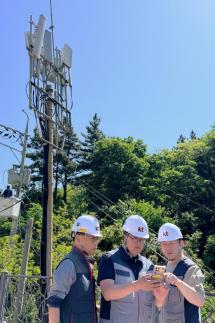 KT Ensures Reliable Communication Services on Ulleungdo Island On May 12, a passenger ferry departed from Pohang around midnight and arrived approximately six hours later at Ulleungdo, South Korea's easternmost island, located about 208 kilometers from the mainland. Despite its isolation risks during severe weather, Ulleungdo maintains a communication network with stability comparable to that of the mainland. According to KT, approximately 3,800 of the 5,500 households on Ulleungdo subscribe to internet services, while over 4,200 households use IPTV services. Yoon Chang-ho, head of the Pohang Operations Team at KT's Daegu-Gyeongbuk Access Operations Center, stated, "KT is the only telecom provider on Ulleungdo offering internet service at speeds of up to 10 gigabits per second (10Gbps). Beyond standard commercial services, we also play a crucial role in the national disaster communication network for the Ulleungdo and Dokdo regions." ◇KT Builds Unique Microwave Backup Network to Ensure Connectivity The backbone of Ulleungdo's communication network is its redundancy structure. The island is connected to the mainland via an undersea fiber optic cable, which poses a risk of total communication disruption during typhoons or underwater accidents. In response, KT has established a microwave (MW) backup network, the only one among South Korea's major telecom companies, connecting the mainland to Ulleungdo. This network aims to maintain essential national communication and internet services in the event of an undersea cable failure. The Gamulgyo relay station, located in Ulleung-eup, serves as a key point in the maritime communication network connecting Ulleungdo and Dokdo. One side of the station faces Mount Hambak in Gangwon Province, while the other faces Dokdo. The top of the tower is equipped with long-range maritime coverage LTE antennas, and 5G equipment is installed in the middle section. Through this communication network, KT provides reliable services not only to the residents of Ulleungdo but also to distant fishing vessels. Currently, nine KT staff members, including two dedicated employees and seven from the group, are stationed on the island to handle outages and maintenance. Kim Won-hun, deputy head of the Pohang Operations Team, noted, "We are actively installing base stations in the highlands of Ulleungdo to improve overall communication quality." ◇Communication Support Extends to Jukdo and Dokdo Coast Guard KT's communication support for island regions also extends to Jukdo, a small island near Ulleungdo, and Dokdo. Currently, Jukdo is home to a single family. KT has established a customized communication support system that converts LTE signals to provide internet services for the residents. As a result, residents of Jukdo can access internet and 5G smartphone services. Lee Chang-ha, head of the Dongdaegu Engineering Team at KT's Daegu-Gyeongbuk Access Operations Center, explained, "Given the challenging environment for installing fiber optic cables, we have adopted a method to convert LTE signals for internet service. We regularly check the quality status and monitor for any outages." Dokdo also saw its communication network established by KT in November 2018, making it the first provider on the island. Since then, continuous equipment upgrades have enabled wireless transmission speeds of up to 1 gigabit per second (Gbps). ◇Engineers Work to Restore Internet Amid Heavy Snow Maintaining and managing the communication network on Ulleungdo goes beyond simple facility maintenance. Due to the island's unique characteristics, which include frequent severe weather and isolation risks, the safety and daily lives of residents are at stake. Jeong Hyun-yong, from KT Service's Southern Daegu Headquarters, shared his experience of restoring communication equipment during heavy snowfall while working on Ulleungdo. He recounted, "At that time, over 1.2 meters of snow had accumulated, blocking the entrance to residents' homes. The outdoor internet lines were also severed, so I had to clear the snow and restore the communication facilities on-site." He added, "I worked for about an hour, digging through the snow to ensure residents' safety. Such situations are common on Ulleungdo." During winter, severe weather can disrupt ferry services, making it difficult to procure communication materials. In these cases, on-site engineers temporarily install personal equipment or office devices to support internet and TV access for elderly residents. Kwon Dae-hyun, from KT Service's Southern Daegu Headquarters, emphasized, "In Ulleungdo, communication is not just a convenience; it often relates directly to safety. Our most important role is to ensure that residents can live without inconvenience." 2026-05-17 15:28:33
 -
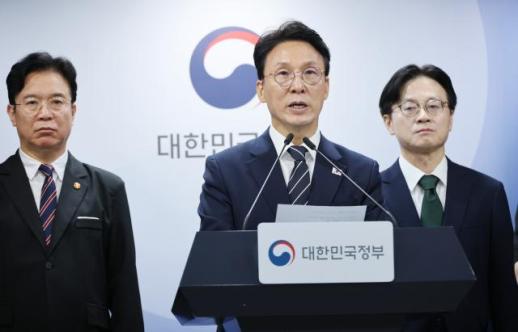 South Korean government threatens emergency mediation to stop Samsung strike SEOUL, May 17 (AJP) - The South Korean government officially raised the possibility of invoking emergency mediation powers for the first time to avert a looming general strike at Samsung Electronics. Prime Minister Kim Min-seok issued a public statement on Sunday, warning that the state would use all available legal measures if the walkout severely damages the national economy. The announcement puts maximum pressure on both management and labor ahead of a critical post-mediation meeting scheduled for May 18 at the National Labor Relations Commission. This session represents the final opportunity for both sides to reach an agreement before the planned strike begins. During his address at the Central Government Complex in Seoul, Kim emphasized the heavy responsibility resting on the negotiators. He stated that if the Samsung Electronics strike threatens to inflict massive damage on the national economy, the government will be forced to consider all options, including emergency mediation, to protect public interests. Labor Minister Kim Young-hoon attended the briefing alongside the prime minister. As the labor minister, he holds the exclusive legal authority to invoke the emergency mediation order. Under South Korean labor law, an emergency mediation order can suspend any planned strike for a mandatory thirty-day period if the labor action jeopardizes daily public life or threatens the national economy. During this freeze, the National Labor Relations Commission conducts mandatory arbitration, and it can enforce a binding settlement if an agreement cannot be reached voluntarily. The government previously maintained that it was too early to review such a drastic measure, preferring that the two sides resolve the dispute independently. However, state officials shifted their stance as industry warnings grew over potential direct and indirect economic losses reaching one hundred trillion won. Major labor organizations strongly condemned the government's announcement. The Korean Confederation of Trade Unions released a statement opposing any attempts to restrict the constitutional rights of workers using economic logic, while the Federation of Korean Trade Unions criticized the potential application of emergency mediation as an inappropriate restriction on the right to strike. The high-stakes meeting on May 18 was secured after Kim Young-hoon held consecutive meetings with union leaders and management on May 15 and May 16. In a minor breakthrough, management agreed to replace its chief negotiator, Vice President Kim Hyung-ro, while the union accepted a request to let him attend the session without speaking. The Samsung Electronics union has scheduled an eighteen-day general strike from May 21 to June 7, with labor leaders expecting up to fifty thousand members to participate. The union is demanding a fixed performance bonus equal to fifteen percent of the company's operating profit, while management proposes maintaining the current system alongside uncapped special rewards. 2026-05-17 15:28:08
 -
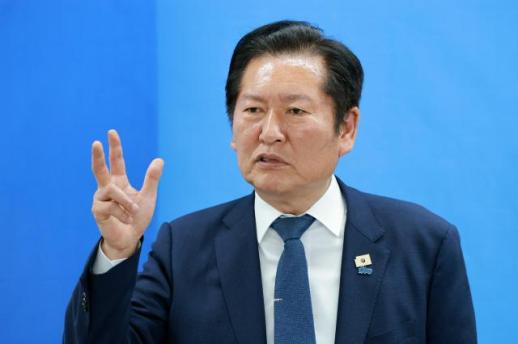 Democratic Party Reports Threats Against Leader Jeong Cheong-rae to Police As the June 3 local elections approach, the Democratic Party has reported to the police threats of a terror plot targeting its leader, Jeong Cheong-rae. The party leadership is taking the matter seriously and has indicated a strong response as the official campaign period nears. On May 17, Kang Jun-hyun, spokesperson for the Democratic Party's central election campaign committee, stated at a press conference that "reports of collective terror plotting are coming in from group chat rooms on social media." He added that the party has formally requested the police to conduct a swift investigation and ensure thorough protection for Jeong. Kang emphasized that the situation involves serious criminal implications, noting that expressions beyond mere anger, including recruitment for assassination, have been mentioned. "We will respond firmly, considering this a major crime involving potential accomplices," he said. In response to the emerging threats against Jeong, the National Police Agency has decided to activate protective measures earlier than planned, ahead of the official campaign start date of May 21. There are speculations within political circles that the allegations may be linked to independent candidate Kim Kwan-young, who has had recent conflicts with the party over nominations. However, a Democratic Party official responded cautiously, stating, "The connection to specific local party members using anonymous accounts should be clarified through investigation." Jeong addressed reporters after attending a mass at Nabawi Catholic Church in Iksan, saying, "Recruiting an assassination squad is a serious crime. I cannot stop my activities, but I will meet the public with a more humble attitude. If anyone reflects on their mistakes and confesses, I will appeal for leniency to the authorities."* This article has been translated by AI. 2026-05-17 15:27:00
 -
 Auto Insurance Losses Weigh on Major Korean Insurers Auto insurance is significantly impacting the financial performance of the property insurance sector in South Korea. As the cumulative effects of premium reductions take their toll, rising costs for parts and repairs have worsened the profitability of major insurers. Additionally, concerns are growing that the introduction of discounts linked to vehicle registration policies will further strain profitability. According to the insurance industry on May 17, the top five property insurers—Samsung Fire & Marine Insurance, Hyundai Marine & Fire Insurance, DB Insurance, KB Insurance, and Meritz Fire & Marine Insurance—reported a loss of 46.1 billion won in the auto insurance sector during the first quarter of this year, a reversal from a profit of 88.8 billion won in the same period last year. This marks a decline in profitability of over 130 billion won within a year. By company, KB Insurance recorded the largest loss at 24.9 billion won, followed by Hyundai Marine & Fire Insurance with a loss of 14 billion won, Samsung Fire & Marine Insurance with a loss of 9.6 billion won, and Meritz Fire & Marine Insurance with a loss of 6.4 billion won. DB Insurance was the only company to post a profit of 8.8 billion won, but this was an 80.9% decrease compared to the same period last year, when it earned 46 billion won. The industry attributes the worsening loss ratio in auto insurance as a primary factor. The cumulative loss ratio for the top five insurers in the first quarter of this year reached 85.2%, up from 82.5% in the same period last year. Given that the breakeven point for auto insurance is typically around 80%, this indicates a significant decline in profitability. The decline in auto insurance performance is largely due to the cumulative effects of premium cuts over the past four years. According to data from the Financial Supervisory Service, the average annual reduction in auto insurance premiums has been as follows: -1.2% in 2022, -1.9% in 2023, -2.5% in 2024, and -0.8% in 2025. As a result, the auto insurance sector reported a combined loss of 708 billion won last year across 12 companies, a substantial increase from a loss of 9.7 billion won the previous year. This was driven by a decrease in premium income of 407.3 billion won (2.1%) alongside an increase in costs for hospital bills, auto parts, and repair labor, which rose by 364.3 billion won (2.2%). The outlook remains bleak. The insurance industry anticipates continued upward pressure on loss ratios due to rising prices for vehicle parts, repair labor, and rental costs, influenced by recent inflation trends. Furthermore, in response to government policies addressing high fuel prices, insurers are expected to face additional profitability pressures as they introduce a 2% discount for auto insurance premiums for vehicles participating in the vehicle registration system. An industry official stated, "While auto insurance premiums saw a slight increase earlier this year for the first time in five years, the impact of the previous four years of premium reductions continues to drive the loss ratio downward. The delay in implementing the '8-week rule' has further exacerbated the burden on insurers."* This article has been translated by AI. 2026-05-17 15:24:23
 -
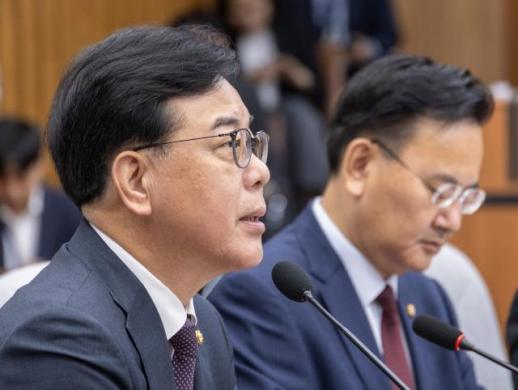 Song Eon-seok Criticizes Jeong Won-o Over Assault Allegations On May 17, Song Eon-seok, the floor leader of the People Power Party, criticized Jeong Won-o, the Democratic Party's candidate for Seoul mayor, regarding allegations of assault. He questioned, "Is this the dignity of progressivism?" In a Facebook post, Song stated, "Jeong has lectured Oh Se-hoon, the People Power Party's candidate for Seoul mayor, saying he should learn 'the dignity of conservatism.' However, the dignity of conservatism has been used as a weapon by the Democratic Party against us." He further asked, "Does the Democratic Party lack the dignity of progressivism and the dignity of a ruling party?" He pointedly remarked, "Is Jeong's claim of progressivism credible when he assaulted two police officers and two citizens while intoxicated, only to later romanticize it by blaming the May 18 incident?" Song also launched an attack on Jeon Jae-soo, the Democratic Party's candidate for Busan mayor. He criticized Jeon for failing to answer whether he received a Cartier watch at the Unification Church's Cheongpyeong Palace while shifting legal responsibility onto a 24-year-old intern. "Is this the dignity of progressivism?" he asked. He concluded by expressing hope that Democratic candidates would embody the dignity of progressivism and the dignity of a ruling party. Song emphasized, "The decline in political dignity today is due to the ruling party's unilateral passage of various unjust laws using its majority power and its efforts to leverage state power to push for the dismissal of the president's indictment. I hope to see the dignity of the ruling party demonstrated."* This article has been translated by AI. 2026-05-17 15:21:55
 -
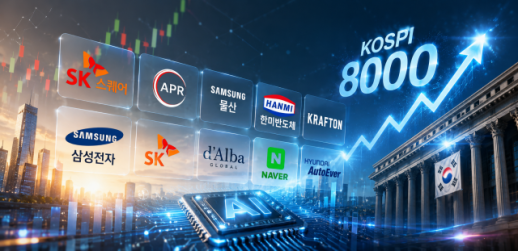 SK Square Dominates New Stock Valuation Rankings as Naver Falls The KOSPI index has surpassed 8,000 points for the first time, leading to significant shifts in the rankings of stocks based on adjusted stock prices, which standardize face values for comparison. Semiconductor and beauty stocks have risen, while platform and gaming stocks have dropped in rank. According to the Korea Exchange, as of May 15, following the KOSPI's brief touch of 8,000 points, SK Square maintained its top position in the adjusted stock price rankings. It was followed by APL, Samsung C&T, Hanmi Semiconductor, Krafton, Samsung Electronics, SK, Dalba Global, Naver, and Hyundai AutoEver in the top ten. Adjusted stock prices are calculated by standardizing the face value of listed companies to 5,000 won, correcting distortions caused by varying face values and allowing for a more uniform comparison of stock prices. Comparing the rankings to February 25, when the KOSPI closed above 6,000 points, there have been notable changes among the stocks. At that time, the rankings were led by SK Square, followed by Samsung C&T, APL, Krafton, Naver, Hanmi Semiconductor, SK, Samsung Electronics, Dalba Global, and MNC Solutions. While SK Square has retained its top position, the order of the other companies has shifted. A standout feature is SK Square's dominance since it first reached the top of the adjusted stock price rankings in November of last year. Its adjusted stock price surged from 32.35 million won (closing price of 647,000 won) on February 25 to 54.9 million won (closing price of 1,098,000 won) as of May 15, solidifying its lead. This increase is attributed to strong performance from SK Hynix and active shareholder return policies, including stock buybacks and retirements. In contrast, the rankings for companies in the top ten have varied based on industry leadership. APL, benefiting from strong K-beauty exports, recorded an adjusted stock price of 20.2 million won, moving ahead of Samsung C&T to secure second place. Dalba Global also climbed from ninth to eighth. Hanmi Semiconductor, a beneficiary of AI semiconductor trends, rose from sixth (10.725 million won) in February to fourth (18.45 million won) by May 15, while Samsung Electronics improved from eighth to sixth. Conversely, leading platform and gaming stocks have struggled. Krafton dropped from fourth to fifth, and Naver fell from fifth (12.65 million won) in February to ninth (10.175 million won) by May 15, landing at the bottom of the top tier. Concerns over global commerce platform competition and infrastructure cost burdens appear to have impacted investor sentiment. Analysts view SK Square's sustained top position as a reflection of the semiconductor industry's boom and a virtuous cycle of shareholder returns. An analyst from NH Investment & Securities, Ahn Jae-min, noted, "The significant share of SK Hynix in SK Square's net asset value (NAV) has led to a steep rise in its stock price, positively impacting the company's overall value." Ahn also adjusted the NAV discount rate from 35% to 25%, reflecting the anticipated growth in dividends due to strong semiconductor market performance. He identified three factors contributing to SK Square's high stock price elasticity: potential for mergers and acquisitions within the semiconductor value chain, ongoing stock buybacks and retirements (with 210 billion won planned for 2026), and a lower market capitalization ratio compared to SK Hynix, making it easier for institutional investors to enter. On the other hand, Naver's decline in adjusted stock price rankings has been attributed to margin contraction due to infrastructure cost burdens and a lack of short-term momentum. Lee Hyo-jin, an analyst at Meritz Securities, stated that while Naver's first-quarter consolidated revenue (3.2411 trillion won) met expectations, its operating profit (541.8 billion won) fell short in terms of margins. He noted, "The depreciation burden of computing assets has led to a 32% increase in infrastructure costs compared to the same period last year," adding that Naver plans to purchase 1 trillion won worth of GPUs, indicating that related costs are expected to continue rising throughout the year. Looking ahead, Lee remarked, "The delay in regulatory approval for mergers until the second half of the year means we are currently in a momentum vacuum. Interest in the market is likely to increase once digital asset legislation comes into view later this year." Meanwhile, financial industry experts caution against placing excessive importance on adjusted stock price rankings or using them as absolute investment indicators, as they do not accurately reflect a company's fundamental value. One industry insider stated, "Adjusted stock prices merely rank how expensive a stock is in absolute terms and should not be mistaken for a measure of a company's true scale and value, which should be assessed by market capitalization." In fact, Samsung Electronics, which holds the top position in KOSPI market capitalization, ranks only sixth in adjusted stock price, suggesting that this metric should be used as a reference tool for correcting price distortions rather than a fundamental indicator. Another insider noted, "When comparing stock prices from the past, when they were priced in the hundreds of thousands of won before stock splits, adjusted stock prices can be a useful benchmark. However, it should only serve as a reference tool for correcting price distortions caused by face value differences and should not be misinterpreted as a fundamental indicator."* This article has been translated by AI. 2026-05-17 15:16:45
 -
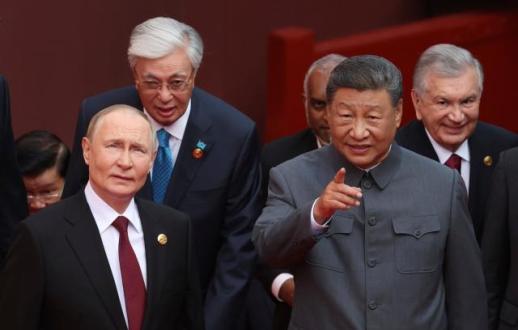 Intense Diplomacy Follows US-China Summit as Putin Heads to China and Takaiichi Visits South Korea Donald Trump’s recent visit to China has sparked renewed diplomatic activity in Northeast Asia. Following the US-China summit, which did not yield significant breakthroughs on key issues like Iran and trade, neighboring countries such as Russia and Japan are ramping up their diplomatic efforts. On May 16, the Kremlin announced that President Vladimir Putin will visit China from May 19 to 20 at the invitation of President Xi Jinping. The Kremlin stated, "This visit coincides with the 25th anniversary of the Treaty of Good-Neighborliness and Friendly Cooperation between the two countries." Chinese state media Xinhua also reported, citing the foreign ministry, that President Putin will make a state visit to China during this period. According to Russian sources, President Putin plans to hold talks with President Xi to discuss bilateral issues, enhance their comprehensive partnership, and address major international and regional matters. Additionally, he is expected to meet separately with Chinese Premier Li Qiang to discuss economic and trade cooperation. Putin’s visit comes just four days after President Trump concluded his trip to China on May 15. The South China Morning Post reported that the series of summits amid ongoing global uncertainties, including the Ukraine conflict and tensions in Iran, reflects China’s efforts to maintain relations with both the US and Russia. Russia is closely monitoring potential changes in US-China relations. Shanghai International Studies University scholar Shen Dingli told Singapore’s Lianhe Zaobao, "While President Putin does not need to directly assess the outcomes of the US-China summit, his visit to China indicates Russia's significant interest and concern regarding possible shifts in US-China relations." Following Putin, Serbian President Aleksandar Vučić, known for his pro-China and pro-Russia stance, has also announced a visit to China. According to TASS, President Vučić stated, "I understand that President Putin will visit China on May 19 and 20, as already announced, and a few days later, we will visit China to meet with President Xi." Serbia is recognized as a prominent pro-China country in Europe, actively participating in China’s Belt and Road Initiative and pursuing infrastructure projects such as power plants and railways. While expressing a desire to join the European Union (EU), President Vučić continues to strengthen ties with Russia. Takaiichi Heads to South Korea During the same period as Putin’s visit to China, a South Korea-Japan summit is also set to take place. Japanese Prime Minister Sanae Takaiichi will visit Andong, the hometown of President Lee Jae-myung, from May 19 to 20 for a two-day summit. This visit is a reciprocal trip following President Lee’s visit to Takaiichi’s hometown in Nara Prefecture in January. On the first day, May 19, the two leaders will engage in a small group and expanded summit, hold a joint press conference, and share a dinner, along with additional social activities. They are expected to discuss practical cooperation in areas directly affecting people's lives, including the development of South Korea-Japan relations, economic issues, social matters, and public safety. Prior to this, Takaiichi spoke with President Trump on May 15 after his visit to China. According to Kyodo News and NHK, Takaiichi reported that she had a 15-minute phone call with Trump, during which he provided detailed insights about his trip to China. Takaiichi stated, "We exchanged views on various issues surrounding China, including economic security, and discussed the situation in Iran. We confirmed our commitment to maintaining close communication between Japan and the US." Japan's relations with China have rapidly cooled since Takaiichi’s remarks on Taiwan last November, effectively engaging in an economic conflict with China. Amid the ongoing Middle East conflict, Takaiichi is expected to seek a breakthrough through shuttle diplomacy with President Lee. Meanwhile, The Hill, a US political news outlet, assessed that the recent US-China summit did not produce clear breakthroughs on key issues such as Iran and trade. Notably, the Chinese side barely mentioned the Iran issue in its official statements, while tensions over the reopening of the Strait of Hormuz and the Taiwan issue remain unresolved.* This article has been translated by AI. 2026-05-17 15:13:29
 -
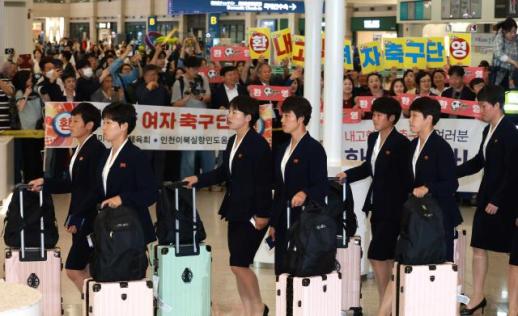 North Korean Women's Soccer Team Visits South Korea for First Time in Eight Years The Naegohyang Women's Football Team, representing North Korea, arrived in South Korea on May 17, 2026, for the Asian Football Confederation (AFC) Women's Champions League (AWCL) semifinals, marking the first visit by a North Korean sports team in eight years. The team landed at Incheon International Airport around 2:20 PM, consisting of 27 players and 12 staff members, totaling 39 individuals, according to the Ministry of Unification. This is the first time a North Korean team has participated in a sports event in South Korea since the International Table Tennis Federation (ITTF) World Tour Grand Finals held in Incheon in December 2018. Additionally, it is the first visit by a North Korean women's soccer team since the 2014 Incheon Asian Games, which took place 12 years ago. The Naegohyang team is set to face Suwon FC Women at the Suwon Sports Complex on May 20. The team departed Pyongyang on May 12 via a flight from Air Koryo, arriving in Beijing, where they trained near the North Korean embassy before flying to South Korea on a China International Airlines flight. According to a 'Cheering Support Reference Material' released by the Ministry of Unification on May 14, over 3,000 members from around 200 civic groups, organized by the National Council for Reconciliation and Cooperation, will form a joint cheering squad for the AFC AWCL. The ministry stated, "We respect the voluntary discussions and agreements of civic groups and are facilitating orderly cheering in accordance with AFC regulations," adding that they have provided guidance on prohibited items and the ban on political and religious messages at the venue. As a result of discussions with civic organizations, the joint cheering squad will utilize banners, cheering towels, cheering sticks, and flags from both clubs, all compliant with AFC regulations. 2026-05-17 15:12:00
 -
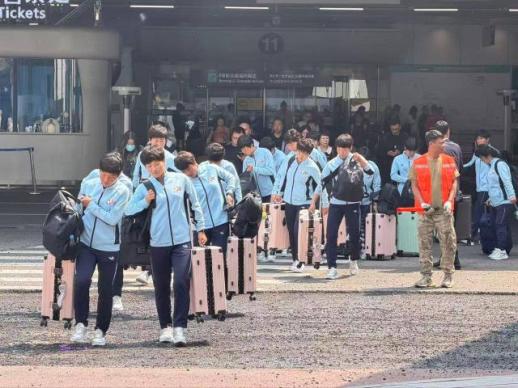 N. Korean women's football team arrives in S. Korea ahead of historic inter-Korean clash SEOUL, May 17 (AJP) - A North Korean women's football team arrived in South Korea on Sunday to compete in the Asian Football Confederation Women's Champions League semifinals, setting the stage for a rare and highly anticipated inter-Korean match. The Naegohyang Women's FC delegation, consisting of 27 players and 12 staff members, landed at Incheon International Airport at approximately 2:20 p.m., according to South Korea's Ministry of Unification. The team is scheduled to face off against South Korea's Suwon FC Women on Wednesday, May 20, at 7:00 p.m. The semifinal clash will take place at the Suwon Sports Complex. The North Korean arrival marks the first time a sports delegation from the North has visited South Korea in eight years, ending a drought that dates back to the International Table Tennis Federation World Tour Grand Finals in December 2018. In the realm of women's football, it is the first visit by a North Korean team in 12 years, following the 2014 Incheon Asian Games. The four-team tournament in Suwon will feature another major international matchup on Wednesday, with Australia's Melbourne City FC taking on Japan's Tokyo Verdy Beleza at 2:00 p.m. The finals and third-place matches are scheduled for May 23. The North Korean squad began their journey to the tournament on the morning of May 12, taking an Air Koryo flight from Pyongyang to Beijing. After holding training sessions near the North Korean Embassy in the Chinese capital, the team completed their journey to South Korea via an Air China flight on Sunday. 2026-05-17 15:07:54
 -
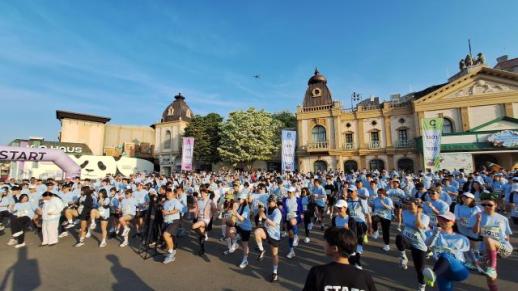 Everland Hosts Galaxy Watch Run, Featuring 4.82 km Race At 6:30 a.m. on May 17, the air was still cool at Everland in Yongin, Gyeonggi Province. Normally, this would be a time before the park opened, but over 1,000 people wearing sky-blue T-shirts filled the plaza, each sporting a Galaxy Watch 8. Today, this wristwatch was more than just an accessory; it served as a pace maker and personal medical assistant for the 4.82 km 'Safari Run.' The 'Galaxy Watch Run @Safari,' organized by Samsung Electronics in collaboration with Samsung Health, is in its second year. Only those who passed a competitive selection process with a ratio of 95 to 1 could participate. The slogan, 'Start running with Galaxy Watch, complete with Samsung Health,' caught the eye. The thrill of running on foot through the Lost Valley and Safari World, areas usually accessible only by vehicle, was palpable. Before the race began, a familiar face appeared on stage: Sean, a marathoner and Samsung Health ambassador. He joined Lim Sung-taek, Vice President of Samsung Electronics Korea, to share the significance of the event. Lim took the stage alone before Sean's arrival to announce the opening, stating, "Many people have shared their experiences with the Galaxy Watch. The biggest change for me is how it turns my entire life into numbers." Following Lim's remarks, participants engaged in a brief warm-up led by former national marathon coach Kwon Eun-joo, which included ankle rotations and thigh slaps. I glanced at my wrist, where the 'Start Running' button appeared on the Galaxy Watch 8 screen. I tapped it, and the Samsung Health app activated the GPS. Ready to go. With a shout of encouragement, runners from Group A began to take off sequentially. Lim high-fived participants as they started, and the energy surged as palms met. The first kilometer was a straightforward run. More accurately, I was pulled along by the watch. I felt a vibration on my wrist, indicating my current pace. The watch was tracking my speed down to the second. During the run, I checked the watch screen several times. The lap time display accumulated my segment records, while the pace screen updated my steps per minute and calories burned in real time. Another screen showed my heart rate at 133 bpm, with a maximum of 205 bpm indicated by red and yellow gauges. The graph pointed into the red zone. "I’m really pushing myself right now," I thought, as the data provided an objective view of my performance. Whenever my heart rate spiked, the watch vibrated silently, signaling me to ease my pace. I took a moment to catch my breath and adjust my speed. My body recovered. The running coach feature of Samsung Health analyzes running habits to assess current levels. Participants who recorded practice runs as a pre-race mission already understood their optimal pace by the time they reached the starting line. From preparation to completion, Samsung Health designed the entire event as a cohesive health routine. As we reached the midpoint of the course, we entered the Safari World section, a path usually seen only through car windows. I ran past the lion enclosure, where the scent of animals lingered. A zookeeper shouted, "Our lions are hungry, so hurry up!" eliciting laughter from the crowd. As the finish line came into view, a fellow participant raised both arms in triumph. Without realizing it, I quickened my pace. The moment I crossed the arch, the watch vibrated, signaling the end of my workout. The screen displayed my total time, average pace, and calories burned. Though I was out of breath and couldn't read it all, I felt a sense of accomplishment. All finishers received a commemorative medal shaped like the Galaxy Watch 8, filling me with pride. After the race, I headed to the experience zone, where people gathered around displays featuring the Galaxy Watch Ultra and Galaxy S26 Ultra. On the smartphone screens, results from the Samsung Health 'antioxidant index' measurement were displayed. The measurement taken at 8:06 a.m. on May 17 indicated a 'low' result on the graph. The antioxidant index is one of the specialized features of the Galaxy Watch 8 series and Samsung Health, measuring carotenoid levels in the skin to indicate the body's oxidative stress status. Measuring before and after exercise allows participants to directly compare changes in their physical condition. For those who had monitored their condition through sleep coaching the night before the run, the entire day became a comprehensive health data set. From the moment I pressed the start button to crossing the finish line, the Galaxy Watch 8 remained on my wrist, tracking my heart rate, pace, and segment records. After the run, opening the Samsung Health app revealed all that data neatly organized. It was a moment when 'records' became 'memories.' As I caught my breath after completing the race, Lim's earlier words echoed in my mind. Just as he said, seeing my life quantified made me eager to pursue my own personalized fitness journey again. 2026-05-17 14:59:34