
Journalist

Ra Mason
-
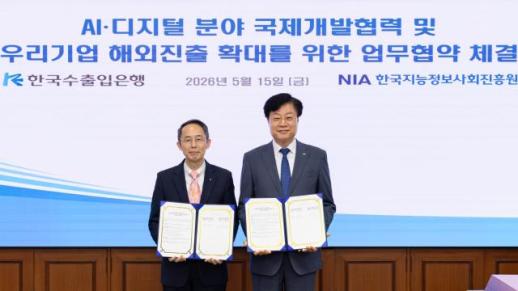 Export-Import Bank of Korea Expands AI-Based Development Cooperation, Selects Sri Lanka as First Project Site The Export-Import Bank of Korea is set to expand its AI-based international development cooperation initiatives targeting developing countries. On May 17, the bank announced that it has signed a mutual cooperation agreement with the National Information Society Agency (NIA) to enhance the effectiveness of official development assistance (ODA) projects and support the overseas expansion of domestic AI companies. Through this agreement, the Export-Import Bank plans to collaborate with the NIA to establish a platform for discovering and linking international development cooperation projects in the fields of AI, digital technology, and information technology (IT) aimed at developing countries. The two organizations have selected Sri Lanka as the first pilot project site. The bank will construct an information and communication technology (ICT) training center to enhance secondary education capabilities in Sri Lanka through the Economic Development Cooperation Fund (EDCF). The NIA plans to establish a research institute within the training center to strengthen AI education capabilities, maximizing the effectiveness of development cooperation projects in the recipient country. Hwang Gi-yeon, president of the Export-Import Bank of Korea, stated, "We will continue to discover AI projects that fit the environments of our partner countries and create a new model of K-ODA based on artificial intelligence, serving as a catalyst for the global expansion of the domestic AI industry." 2026-05-17 13:45:22
 -
 KB Financial Completes Technology Validation for Won-Based Stablecoin Payments and Remittances KB Financial Group has successfully completed a technology validation for payments and remittances based on a won stablecoin. By integrating QR payments and overseas remittances into a single blockchain flow, the company is accelerating the establishment of financial infrastructure in preparation for the institutionalization of digital assets. On May 17, KB Financial announced that it has successfully concluded a proof of concept (PoC) in collaboration with electronic payment firm KG Inicis, global Layer 1 blockchain platform Kaia, and digital asset solution provider Open Asset. This validation encompasses all stages of won stablecoin payments, settlements, and deposits. The validation represents a comprehensive demonstration that connects the entire financial service process, from the issuance of the won stablecoin to offline payments, merchant settlements, and overseas remittances. It maintains the existing methods of customer financial service usage while transitioning the internal settlement structure to a blockchain-based system. KB Financial confirmed the practical applicability of financial services through the implementation of a real-world payment model for digital assets. The real-world payment model was demonstrated through offline kiosk payments at the coffee chain Hollys. Consumers can make payments via QR codes without needing to install a separate digital wallet, with blockchain smart contracts automatically executed during the settlement phase. In the overseas remittance validation, the won stablecoin was converted into a dollar stablecoin using Kaia's on-chain liquidity, and the process was completed by transferring it to a local partner in Vietnam, ultimately reaching a real bank account. Unlike the traditional SWIFT method, which can take hours to days, the entire process was completed in under three minutes, with fees reduced by approximately 87% compared to existing methods. Based on this validation, KB Financial plans to enhance its operational capabilities to launch actual services promptly in line with the timing of relevant legislation and institutionalization of digital assets.* This article has been translated by AI. 2026-05-17 13:42:00
 -
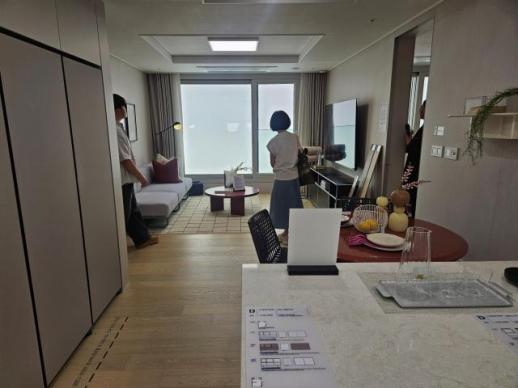 Acro River Sky in Noryangjin Offers Spacious Living Options "The 59㎡A type feels particularly spacious. The high ceiling and the view from the kitchen to the living room create a sense of openness," said a 43-year-old visitor, identified as A, after touring the Acro River Sky model home near Maebong Station in Gangnam on the morning of May 15. Residing in Gangdong District, A noted, "The prices in this area are high, so I am contemplating my options for purchasing, but I do think I will need to upgrade eventually. I am especially interested in Noryangjin, so I came here after visiting the Lacrache Zidefine that was sold last month." Design features aimed at enhancing openness captured the attention of visitors. Middle-aged women expressed admiration for the open pantry connecting the living room and kitchen in the 84㎡A type. This layout maintains a 4-bay structure while incorporating two open windows in the living room to enhance the sense of space. The living room width is 4.5 meters, consistent with the same width in the 36㎡ type designed for single-person households. The 44㎡ and 51㎡ types also include pantries, with the 51㎡A featuring individual balconies for each of its two bedrooms. DL E&C has incorporated its latest residential technology, including a patented D-Silent Floor designed to reduce noise between floors with cushioning materials and finishing mortar. The kitchen is equipped with a D-Silent hood to minimize noise. A remarked, "The master bedroom can accommodate a hotel-style bed frame, giving it a luxurious feel. It seems they have made good use of the elevation both inside and outside the complex." A sky lounge will be available for all residents on the top floor of Building 105. To create a family-friendly living environment, the basement of Building 104 will feature a kids' lounge (community care center), a kids' station for safe drop-offs and pick-ups, and private study rooms styled like individual reading rooms. The basement of Building 102 will be developed into high-end community facilities known as 'Club Acro,' which will include a fitness center, a screen golf lounge with individual spaces for all stations, a sauna, and a sports court. Notably, the indoor gym will be designed as a duplex, allowing for various activities regardless of the weather. DL E&C is overseeing the construction of Acro River Sky, part of the Noryangjin 8 Redevelopment Project, which will consist of four basement levels and 29 above-ground floors across ten buildings, totaling 987 units. Of these, 285 units will be available for general sale. A variety of unit sizes will be offered: 36㎡ (43 units), 44㎡ (9 units), 51㎡ (39 units), 59㎡ (16 units), 84㎡A (73 units), 84㎡B (59 units), 84㎡C (37 units), 84㎡T1 (3 units), 84㎡T2 (3 units), and 140㎡P (3 units). The sale prices for the 84㎡ units are set between 249.92 million and 279.58 million won, with the price per 3.3㎡ (pyeong) at approximately 77.33 million won. This is over 200 million won higher than the recently launched Lacrache Zidefine in Noryangjin New Town, which was priced between 228.73 million and 258.51 million won. The application schedule begins with special supply on May 26, followed by first priority for local residents on May 27, first priority for other areas on May 28, and second priority applications on May 29. The announcement of winners will be on June 5, with contracts taking place from June 20 to 24. To qualify for general supply, applicants must have resided in Seoul for at least two years or be at least 19 years old and reside in the metropolitan area (Seoul, Gyeonggi, Incheon). Additionally, applicants must have held a subscription account for at least 24 months and meet the deposit requirements for their area and unit size to be eligible for first priority. A 10-year restriction on re-applications and a 3-year resale restriction will apply, with no residency requirement.* This article has been translated by AI. 2026-05-17 13:19:15
 -
 Oh Se-hoon Proposes 'Seoul Chance' Housing Plan for Young People Oh Se-hoon, the People Power Party candidate for Seoul mayor, unveiled a housing plan on May 17 aimed at assisting young people without homes. At his campaign office in Gwancheol-dong, Seoul, Oh introduced the 'Seoul Home' initiative, which allows young individuals to purchase a home by paying just 20% of the price of a property valued at 1.2 billion won or less, the current median price for homes in Seoul. Under this plan, the Seoul Housing and Communities Corporation (SH) will buy the selected property and provide it to the applicants. Young buyers will only need to cover 20% of the home price, while SH will bear the remaining 80%. Although SH will hold 80% of the ownership, residents will have full control over all decisions regarding the property. When they sell the home, they will receive a return based on the market value proportional to their ownership stake. However, as this policy is intended for actual residents, subletting is not permitted. Approximately 300,000 households of young people without homes are eligible for this program, which aims to supply 2,000 units annually, totaling 8,000 units during Oh's term. Oh's campaign team explained that this pledge completes the 'Seoul Chance' housing policy, which includes previously announced initiatives such as 'Miri Home,' 'Baro Home,' 'Sasak Studio,' and 'Youth Safe Housing.' He stated, "We will provide a 'Seoul Chance' for young people who lack financial resources to take the first step toward homeownership instead of relying on parental support." Funding for this initiative will come from public contributions generated during urban planning processes. The core of this funding model is the 'pre-negotiation system,' which allows the government to recapture a portion of the profits from private developers who enhance the viability of large-scale projects through zoning changes. This system was first introduced by the Seoul city government in 2009 under Oh's first term and has accumulated over 10 trillion won in public contributions to date. Oh emphasized that since SH will own 80% of the housing shares, the related funds will continue to grow, creating a virtuous cycle that can assist other young people in need. In a separate matter, Oh addressed the issue of missing rebar in the GTX-A line at Samsung Station, stating, "I learned about this yesterday, and upon investigation, it was purely the fault of Hyundai Engineering & Construction." He denied allegations of a cover-up by the Democratic Party candidate Jeong Won-o. He added, "Hyundai Engineering has discussed corrective measures with experts, which will actually strengthen the structure. It seems that the Jeong campaign is feeling the pressure, as they are politicizing a simple mistake made by the construction company." 2026-05-17 12:45:56
 -
 Candidates Confirmed for Busan North Gap By-Election Amid Speculation on Conservative Unity Following the confirmation of candidate numbers for the Busan North Gap by-election, political circles are closely watching the potential for a unification of conservative candidates. However, as of the first unification deadline on the 17th, a consolidation among conservative candidates remains unlikely. According to the Election Commission on the 17th, the candidates for the June 3 by-election in Busan North Gap are Ha Jung-woo of the Democratic Party (number 1), Park Min-sik of the People Power Party (number 2), Kim Sung-keun (independent, number 5), and Han Dong-hoon (independent, number 6). Kim and Han received their numbers through a lottery. With the candidate numbers now confirmed, attention is also turning to the possibility of a unified opposition. In the current three-way race, there are concerns that if conservative voters split their votes between Park and Han, Ha could win by default. A recent poll conducted by Korea Gallup on May 12-13, which surveyed 508 voters in Busan North Gap, showed support rates of 39% for Ha, 21% for Park, and 29% for Han. The poll was conducted via random telephone interviews using virtual numbers, with a margin of error of ±4.3 percentage points at a 95% confidence level (for more details, refer to the Central Election Polling Review Committee's website). Meanwhile, political analysts believe that any unification must occur before the printing of ballots begins on the 18th to maximize its impact. However, even if the first deadline is missed, there remains a possibility for dramatic unification until the 28th, as candidates can withdraw and have 'withdrawn' marked on early voting ballots.* This article has been translated by AI. 2026-05-17 12:27:47
 -
 Venture Investments Surpass 3.3 Trillion Won in Q1, Driven by AI and Semiconductors According to the Ministry of SMEs and Startups, new venture investments in the first quarter of this year reached 3.3 trillion won, marking the second-highest level on record. On May 17, the ministry reported that this figure represents a 24.1% increase compared to the same period last year. This follows a period of significant venture investment activity in 2022. The amount raised by new venture funds also hit a record high of 4.4 trillion won, up 30.7% from the previous year. By type of investor, policy finance increased by 82.0%, while private sector contributions rose by 19.8%. The top three sectors for venture investment in the first quarter of 2026 were 'ICT Services' (21.4%), 'Bio & Medical' (20.5%), and 'Electrical, Machinery & Equipment' (15.3%). The 'ICT Services' sector has consistently attracted the largest share of venture investments in the first quarter over the past five years, largely due to increased funding in artificial intelligence (AI) related fields. Notably, venture investments in the 'ICT Manufacturing' sector saw a staggering 99.5% increase compared to the previous year, driven by significant investments in AI semiconductor technology. Investments in the 'Bio & Medical' sector also surged, increasing by 85.5% (3.139 trillion won) year-on-year. This growth is attributed to large-scale investments in bio and medical companies, with eight firms attracting over 10 billion won in large investments, including instances of funding exceeding 100 billion won. The ministry attributed this venture boom to the catalytic role of the Fund of Funds. Over the past 20 years, 87% of the unicorn companies that emerged in South Korea have received support from the Fund of Funds. Since its inception in 2005, the cumulative total of venture investments in South Korea has reached 65.6 trillion won, with the Fund of Funds accounting for 37.2 trillion won, or 56.7% of the total market. The ministry has set a target of 2.6 trillion won for the Fund of Funds this year. Han Seong-sook, Minister of SMEs and Startups, stated, "Following the record second-highest venture investment performance in 2025, the significant increase in both venture investment and funds in the first quarter of 2026 is a very positive signal. The ministry will continue to promote the expansion of Fund of Funds investments and improve systems to incentivize private investment, ensuring that promising small and venture companies can grow into unicorns." 2026-05-17 12:24:50
 -
 Government Launches Drone Initiative to Manage Manure and Prevent Algal Blooms The government has initiated special inspections of stockpiled livestock manure, identified as a major contributor to summer algal blooms. This effort is part of the newly implemented "Algal Bloom Seasonal Management System," which aims to expand monitoring periods and utilize drones and pollution monitoring systems to prevent these blooms before they occur. The Ministry of Climate, Energy and Environment announced on May 17 that it will conduct special inspections of stockpiled livestock manure along major river systems, including the Han, Nakdong, and Geum rivers, until mid-June. These inspections are prompted by concerns that nutrients such as nitrogen and phosphorus from manure could wash into rivers during heavy summer rains, leading to algal blooms. The government is expanding its pollution source management scope as part of the new seasonal management system. Environmental authorities have noted that recent extreme weather has led to an increase in localized heavy rainfall, resulting in repeated instances of pollutants entering rivers. Last year, the number of days with algal bloom alerts reached a record 961 days nationwide. In response, the Ministry has extended the manure management period from March to September to now include February through November. This adjustment considers the characteristics of regions with double-cropping farms, with special inspections continuing in September and October. The inspections will focus on 1,497 stockpiled manure sites identified since February, including 405 on public land and 1,092 on private property, as well as additional checks on manure left near livestock farms and agricultural lands. Joint inspection teams from the Ministry, local environmental agencies, and municipalities will oversee the field management. The government plans to encourage the removal of manure piled on public land by locating its owners and will install covers to prevent rainwater from entering newly discovered manure piles. For private property, the government will provide covers and guidance on proper management practices. Drones and the "Integrated Monitoring System for Watershed Pollution Sources" will be utilized in these inspections. This system, developed by the Korea Water Resources Corporation in 2024, allows for tracking the location of manure and the status of management actions. The government aims to minimize oversight in hard-to-reach areas or extensive river sections by employing drones. Kim Eun-kyung, Director of Water Environment Policy at the Ministry, stated, "Given the trend of algal blooms in summer, we must closely manage manure stockpiled near rivers. Through this special inspection using the integrated monitoring system and drones, we will do our utmost to cover or remove all stockpiled manure before the flood season begins on June 21."* This article has been translated by AI. 2026-05-17 12:21:53
 -
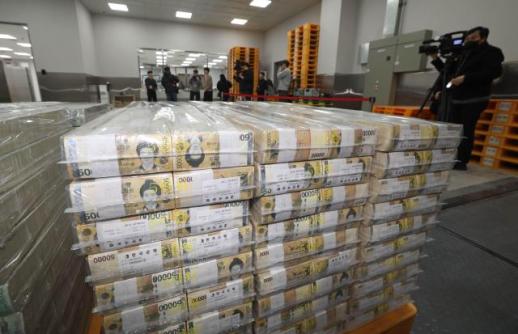 Rising Oil Prices Increase Burden on Cash Transport Industry, Bank of Korea Responds The Bank of Korea is facing increased pressure to maintain the currency circulation system due to a decline in cash usage and rising oil prices. On May 17, the bank announced that it discussed response measures with industry stakeholders during the regular meeting of the Currency Circulation System Related Institutions Council held on May 12. According to the Bank of Korea, while the proportion of cash as a payment method continues to decrease, the total amount of cash in circulation has been on the rise. As of the end of the first quarter of this year, the total currency issuance was approximately 215 trillion won, with steady demand for 50,000 won notes. In contrast, the circulation of coins has been declining since 2020, with a rapid reduction in the net issuance of 10 won coins. Kim Gi-won, head of the Bank of Korea's Currency Issuance Division, stated, "The decrease in cash usage is negatively impacting the profitability of cash transport and ATM operating companies. If this trend leads to reduced accessibility and acceptance of cash, there is a risk that the currency circulation system itself could contract." Participants in the meeting shared concerns that rising oil prices are increasing the cost burden on cash transport companies. Although the cash transport industry is working to defend its profitability through route optimization and expansion of new businesses, the surge in oil prices is exacerbating management challenges. A Bank of Korea official emphasized, "Maintaining a stable currency circulation system is a key responsibility of the central bank," adding that they plan to strengthen cooperation with relevant institutions and develop effective response measures.* This article has been translated by AI. 2026-05-17 12:18:24
 -
 Electronic Financial Industry Surpasses 12 Trillion Won in Revenue Mobile-centric digital financial transactions have rapidly expanded, leading to significant growth in the electronic financial industry last year. However, smaller firms are struggling to improve profitability, exacerbating industry polarization. According to the Financial Supervisory Service, the electronic financial industry's revenue reached 12 trillion won last year, marking a 15.4% increase (1.6 trillion won) from the previous year. Payment gateway (PG) revenue accounted for 9 trillion won, while revenue from the issuance and management of prepaid electronic payment methods totaled 2.2 trillion won. Notably, revenue from prepaid services surged by 29.4% compared to the previous year. Despite overall growth, polarization within the sector is intensifying. As of the end of last year, the top 10 companies among the 241 registered electronic financial firms accounted for 67% of total industry revenue, while smaller firms faced challenges in securing profitability. In fact, as of the end of last year, 29 electronic financial firms did not meet capital requirements and other management guidelines, an increase of one from the previous year. Among these, 21 firms had a history of non-compliance with the standards. However, financial authorities noted that most of the non-compliant firms are small businesses, and that prepaid funds are managed separately through external trusts, limiting potential harm to users. The Financial Supervisory Service plans to strengthen financial disclosure requirements for electronic financial firms starting at the end of next year, in accordance with the revised Electronic Financial Transactions Act. They will also establish a sound management system through demands for corrective actions from non-compliant firms.* This article has been translated by AI. 2026-05-17 12:16:28
 -
 Construction Firms Penalized for Shifting Liability to Subcontractors Construction companies that shifted the responsibility and costs of industrial accidents to subcontractors have faced penalties from regulatory authorities. The Fair Trade Commission announced on May 17 that it imposed corrective orders and fines totaling 729 million won (approximately $550,000) against KR Industries, Dasan Construction Engineering, and NC Construction for violations of subcontracting laws. This action follows an investigation initiated by the Fair Trade Commission in July of last year, focusing on safety-related subcontracting practices in the construction industry. Amid a rise in serious accidents and fatalities on construction sites, the commission scrutinized the practice of main contractors excessively shifting safety management responsibilities onto subcontractors. According to the Ministry of Employment and Labor, there were 605 reported fatalities due to industrial accidents last year, with 286 of those occurring in the construction sector. Notably, the number of fatalities at small construction sites with contracts valued under 500 million won increased by 25 compared to the previous year. The Fair Trade Commission identified a troubling trend where small subcontractors, often lacking the capacity for adequate safety management, bore the brunt of liability. The investigation revealed that these companies included clauses in their contracts that placed the full burden of costs and responsibilities related to accidents on the subcontractors. KR Industries, for instance, established terms in 41 subcontracting agreements with 29 subcontractors from July 2018 to May 2026, stating that "the subcontractor assumes all civil and criminal liability in the event of an accident." Dasan Construction Engineering was found to have imposed 11 unfair clauses, including requiring subcontractors to cover settlement costs for accident victims and allowing deductions from payments for accident-related expenses. Additionally, the company was cited for issuing contracts up to 112 days after the start of construction or providing contracts that omitted payment conditions. NC Construction also included clauses in its contracts that shifted all responsibilities and costs related to safety incidents to subcontractors. Some contracts failed to mention provisions related to the linkage of subcontractor payments. As a result, the Fair Trade Commission imposed a fine of 312 million won on Dasan Construction Engineering for the delayed issuance of contracts and the establishment of unfair clauses. KR Industries and NC Construction received fines of 257 million won and 160 million won, respectively. NC Construction was also fined 5 million won for failing to include payment linkage provisions in its contracts. A Fair Trade Commission official stated, "We expect this to serve as a turning point in preventing main contractors from evading responsibility in transactions with smaller construction firms, which often have weaker safety management capabilities. We will continue to monitor the establishment of unfair clauses that undermine efforts to ensure industrial safety."* This article has been translated by AI. 2026-05-17 12:15:00