
Journalist

Samuel Garrett
-
 Meryl Streep, Anne Hathaway Share Impressions of Visit to South Korea for 'Devil Wears Prada 2' Hollywood actors Meryl Streep and Anne Hathaway shared their impressions of visiting South Korea. A press conference for the film 'The Devil Wears Prada 2' (directed by David Frankel) was held Tuesday afternoon at the Four Seasons Hotel Seoul in Jongno-gu, Seoul. Streep and Hathaway attended. Streep said she was excited on the flight in after seeing mountain ranges and that she had not known much about Seoul. "I've traveled a lot, but I would pass by Korea. This is my first time coming," she said. She added that the hotel where she is staying was the best she has experienced, saying the bed was so comfortable she could hardly wake up. "Thank you for welcoming us so warmly," she said. "I'm happy we can show you a film we love so much, and I'm glad to bring a work we are proud of to Korea." Hathaway, visiting South Korea for the first time in eight years, said she wished she could stay longer. She said visiting Starfield Library was on her bucket list but she did not have enough time. "Still, I want to do as much as I can in the time we have," she said, adding that she was thinking about how to eat as much good food as possible. 'The Devil Wears Prada 2' follows Miranda (Streep), editor-in-chief of the legendary fashion magazine Runway, and Andy (Hathaway), who returns as a features editor after 20 years. They reunite with Emily (Emily Blunt), now an executive at a luxury brand, and struggle to regain leadership in the fashion world amid a dramatically changed media environment. The film is set for its first theatrical release worldwide on April 29. * This article has been translated by AI. 2026-04-08 11:33:18
 -
 Hanwha’s Ryu Hyun-jin becomes KBO’s oldest, fastest to 1,500 strikeouts Hanwha Eagles left-hander Ryu Hyun-jin added another milestone to his career. Ryu started Monday at Incheon’s SSG Landers Field and earned the win after allowing two runs over six innings in Hanwha’s 2026 Shinhan SOL KBO League regular-season game against the SSG Landers. He struck out 10 to become the oldest pitcher in KBO history to reach 1,500 strikeouts, doing so at 39 years, 13 days. He also set the record for fewest games to 1,500, reaching the mark in 246 appearances. It was also his first double-digit strikeout game in 14 years, since an Oct. 2012 outing against the Nexen Heroes (now the Kiwoom Heroes). After the game, Ryu told reporters he learned about the approaching milestone after his previous start. “I did think I wanted to get at least one strikeout,” he said. “I got it in the first inning, so I was able to pitch comfortably.” Ryu added that he was not focused on piling up strikeouts. “I don’t have a desire to chase strikeouts,” he said. “But it’s good to have a day like today once in a while, and I’m just happy to have double-digit strikeouts for the first time in a long time.” Ryu previously recorded 934 strikeouts over 10 seasons in Major League Baseball. Combined with his KBO total, he has 2,434 strikeouts in Korea and the United States. Since debuting in the KBO in 2006, Ryu has recorded at least 100 strikeouts in nine straight seasons through last year, and he is aiming to make it 10 consecutive seasons in 2026. 2026-04-08 11:18:28
 -
 Pyongyang launches ballistic missile as military posture persists despite diplomatic opening SEOUL, April 08 (AJP) - North Korea fired a ballistic missile into the East Sea on Wednesday, marking the second consecutive day of weapons testing and signaling that military provocations remain a cornerstone of its regional strategy. The launch follows a reported failure on Tuesday and comes at a volatile moment in inter-Korean relations, effectively dampening hopes for a de-escalation after a rare moment of rhetorical civility between the two capitals. The back-to-back launches disrupt a brief window of diplomatic curiosity that emerged after South Korean President Lee Jae Myung expressed regret over the infiltration of drones into northern airspace. Kim Yo Jong, the influential sister of the North Korean leader Kim Jong Un, responded to the gesture by quoting her brother’s description of the president as a bold and honest man. However, the kinetic reality on the peninsula suggests that while Pyongyang may appreciate a change in tone from Seoul, it has no intention of pausing its march toward advanced strike capabilities or altering its official designation of the South as a primary hostile state. The Joint Chiefs of Staff confirmed the Wednesday morning launch but provided few immediate details as intelligence officials in Seoul and Washington began analyzing the flight data. The move appears to be a direct follow-up to an attempted launch from the Pyongyang area on Tuesday, which South Korean authorities believe ended in failure shortly after liftoff. Such rapid-fire testing is often utilized by the North to verify technical corrections after a setback, ensuring that its missile programs maintain a credible threat profile regardless of the political climate. This cycle of weaponry follows a period of heightened friction. The drone incident, which Pyongyang claimed was a violation of its sovereignty, had initially brought the two nations to the brink of a tactical exchange. The subsequent apology from Lee Jae Myung was seen by international observers as a pragmatic attempt to lower the temperature, a move that Kim Yo-jong’s statement appeared to validate. Yet, the presence of projectiles in the sky less than twenty-four hours after that statement suggests a calculated duality in northern policy. The persistent testing underscores the geopolitical reality that the North has largely abandoned the pursuit of reunification in favor of a two-state doctrine. By continuing its weapons program even after a diplomatic olive branch, the regime demonstrates that its military objectives are decoupled from the fluctuating moods of the Blue House. For Washington, the launches serve as a reminder that the peninsula remains a primary flashpoint, regardless of the domestic political shifts within Seoul. The South Korean military has maintained a heightened state of readiness since the first launch on Tuesday. Officials in Seoul indicated that they are closely monitoring further movements in the North, particularly as the regime often uses these windows of tension to test the resolve of the alliance between the United States and South Korea. The Joint Chiefs of Staff stated that the military is maintaining a full readiness posture while sharing information related to the North Korean launches with American authorities. 2026-04-08 11:12:26
 -
 ABL Bio Says Compass’ Bile Duct Cancer Drug Wins FDA Orphan Drug Designation ABL Bio said Tuesday that tovecimig, a bile duct cancer treatment being developed by its global partner Compass Therapeutics, has been granted orphan drug designation by the U.S. Food and Drug Administration. The designation is intended to encourage development of treatments for diseases affecting fewer than 200,000 patients. In the United States, it can provide benefits including a period of market exclusivity, typically seven years, as well as tax credits, reduced FDA review fees and grants to support clinical trials. Tovecimig is a bispecific antibody developed by ABL Bio and licensed to U.S.-based Compass. It is designed to block both DLL4 and VEGF-A signaling pathways, which the company said play key roles in angiogenesis and tumor blood vessel formation. The company said inhibiting both pathways has shown strong anticancer effects by suppressing tumor cell growth. Compass is running a Phase 2/3 trial in second-line bile duct cancer patients combining the drug with paclitaxel. It plans to release key results this month, including overall survival and progression-free survival.* This article has been translated by AI. 2026-04-08 11:06:19
 -
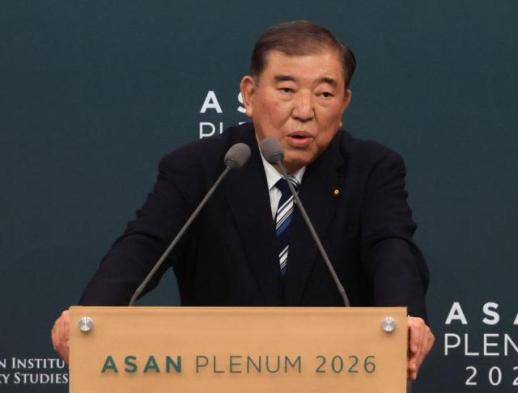 Lee set to hold talks with former Japanese PM in Seoul SEOUL, April 8 (AJP) - President Lee Jae Myung is set to have lunch with former Japanese Prime Minister Shigeru Ishiba in Seoul on Wednesday. According to Cheong Wa Dae, the two leaders are expected to exchange views and discuss various topics including bilateral relations between the neighboring countries, as well as global issues amid the prolonged Middle East crisis. Ishiba, who arrived in Seoul the previous day to attend a forum at Grand Hyatt Seoul hosted by the Asan Institute for Policy Studies, delivered a keynote speech earlier in the day. Lee held three summits with Ishiba while he was in office. They first met on the sidelines of the Group of Seven (G7) summit in Canada in June last year, followed by talks in Tokyo in August and Busan in September. 2026-04-08 10:44:12
 -
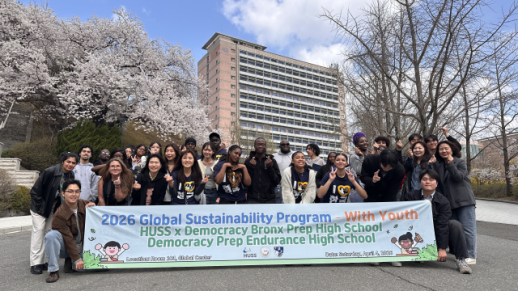 New York students explore Seoul through Kookmin University urban mission SEOUL, April 08 (AJP) - A group of New York City high schoolers navigated the crowded streets and historic landmarks of Seoul on April 4, as part of a competitive cultural exchange hosted by Kookmin University, the prominent institute in Seoul said Wednesday. The program, organized by the university's HUSS Global Coexistence Project Group, challenged 24 students from Bronx Prep and Democracy Prep Endurance high schools to complete an "Amazing Race" style mission alongside local university mentors. The initiative moves away from traditional sightseeing in favor of global service-learning, a model Kookmin University (KMU) uses to teach the Korean language and culture through direct social interaction. By teaming up to solve real-world problems, the participants focused on the practical side of cross-cultural communication. The day began at the KMU campus, where teams plotted routes using Seoul's public transit system to reach major sites like Insadong, Cheonggyecheon, Gwanghwamun, and Gyeongbokgung Palace. Under a three-hour time limit, students had to use their Korean skills to complete specific tasks, such as buying traditional snacks and navigating specific checkpoints, effectively turning the city into a sprawling classroom. KMU student supporters acted as peers rather than traditional tour guides, working with the visitors to bridge language gaps and strategize their movements. This collaborative approach allowed both the American and Korean students to build the rapport and intercultural skills necessary for global citizenship. Lee Dong-eun, Vice Director of the HUSS Global Coexistence Project Group and a professor in the School of Korean Language and Literature, highlighted the educational value of this hands-on approach. "This program is significant as a field-based international exchange where Korean and American youth communicate and cooperate through the medium of Korean language and culture," Lee Dong-eun said. "I hope the students gained an educational experience in realizing the values of global coexistence by making their own decisions and solving tasks within the given conditions." The university intends to build on this success by deepening its ties with international schools. "We plan to continue expanding student-led international exchange programs in connection with overseas educational institutions to foster global talent capable of building a peaceful and sustainable global community," Lee Dong-eun added. The HUSS Global Coexistence Consortium—a partnership between Kwangwoon University, KMU, Sun Moon University, Yeungnam University, and Honam University—has been operating since 2024 with backing from the Ministry of Education and the National Research Foundation of Korea. The group is dedicated to training students to handle complex global issues regarding sustainability and international cooperation. 2026-04-08 10:34:21
 -
 Woori Bank Unveils 'NEXT ESG' Strategy, Sets 50 Key Initiatives Woori Bank said Tuesday it has established a new environmental, social and governance management strategy, “NEXT ESG,” as part of its push to achieve carbon neutrality by 2050. The plan is designed to put into practice Woori Financial Group’s ESG vision, “A better world we create through finance.” It sets four main directions: reducing carbon emissions; creating social value through finance; strengthening and carrying out ESG expertise; and improving transparent ESG disclosures and governance. Its core program, “NEXT 50,” includes 50 action items such as cutting greenhouse gas emissions and expanding resource recycling, increasing funding support for environmentally friendly companies, and improving financial access for vulnerable groups. The bank said it aims to carry out the initiatives without disruption to broaden the base of green finance and build a leading model of finance that makes a tangible contribution to society. Woori Bank said it received a ministerial commendation from the Ministry of Climate, Energy and Environment in December 2025 in recognition of efforts including expanding eco-friendly finance and practicing carbon neutrality. More recently, in line with the government’s energy-saving policy direction, it has been implementing an alternate-day vehicle-use system and shortening the operating hours of electronic signboards. “ESG plays an important role that goes beyond environmental protection and is directly connected to customers’ lives,” said Shim Seong-jin, head of Woori Bank’s ESG and shared-growth finance department. “Through the NEXT ESG strategy, we will create changes customers can feel and lay the groundwork for companies and society to grow together.”* This article has been translated by AI. 2026-04-08 10:33:00
 -
 KakaoBank to Lead App Development for Thailand’s BankX Virtual Bank, Set Up New Base in Mongolia KakaoBank will lead overall development of the mobile app for Thailand’s virtual bank BankX, which is set to begin operations in the first half of next year. The company is also accelerating its overseas push by choosing Mongolia as a new base in Southeast Asia. It also plans to flesh out an “AI-native bank” strategy built around hyper-personalized AI services. KakaoBank CEO Yun Ho-young outlined the plan at a news conference Tuesday at a hotel in Seoul’s Yeouido district. “Using AI technology, we will provide a financial secretary optimized for everyone, and expand our stage worldwide to write the history of financial innovation,” Yun said. KakaoBank is currently working with Indonesia’s Superbank to apply its digital banking operating know-how locally. Superbank listed on the Indonesia Stock Exchange late last year and has become the country’s top digital bank by market capitalization. In Thailand, KakaoBank is preparing to launch virtual bank operations in the first half of next year through BankX, a joint venture set up with the SCBX Group. KakaoBank plans to bring to Thailand signature products that have succeeded at home, including its “26-week savings” and “group account” offerings. It said it will directly lead mobile app development, aiming to export its capability to build a digital banking platform rather than provide advice alone. KakaoBank also selected Mongolia as a new overseas base. Working with local financial institutions, it plans to share know-how behind its credit scoring system, “KakaoBank Score,” which uses nonfinancial data to assess creditworthiness. The company also presented an AI-based roadmap for its app. In the second quarter, it plans to add an in-app “investment” tab to help customers compare and invest in a range of financial products using AI. In the third quarter, it plans to apply AI to its “payments home” feature and roll out a “personalized spending management service” that proactively suggests ways to manage expenses based on customers’ payment data. KakaoBank said it also plans to enter the retirement pension market and expand into a “lifetime asset management” service spanning customers from their 20s and 30s to seniors. The goal is to evolve into a “financial secretary” platform that recommends needed services first, rather than simply offering more functions. “As a financial app adds more functions, customers face the ‘paradox of expansion,’ where it becomes harder to find what they need,” Yun said. “The future KakaoBank is pursuing is one where AI identifies and solves complex financial problems first.”* This article has been translated by AI. 2026-04-08 10:03:29
 -
 Toss Bank Issues 130,000 K-Pass Debit Cards in First Month Toss Bank said April 8 it has issued about 130,000 K-Pass debit cards in the month since the product launched. That works out to about three cards a minute, or roughly 4,100 a day. The K-Pass debit card was introduced to help ease public transit costs. In addition to standard refund benefits, it offers an extra 2,000 won in cash back when monthly public transit spending reaches at least 40,000 won. Customers can receive the benefit regardless of the prior month’s spending, as long as they meet the transit-spending threshold. Toss Bank attributed the early demand to the card’s benefit structure and a simplified user experience. The bank said K-Pass sign-up and card linking can be completed in the Toss app in one process, reducing steps for users. Among customers who received the debit card and linked it to K-Pass, about 94% registered through the Toss app, the bank said. By age group, people in their 20s accounted for the largest share at 42.6%. They were followed by those in their 30s and 40s at 14.2% each, people in their 50s at 12.2%, teens at 11.7% and those 60 and older at 5.1%. “The K-Pass debit card is designed so everyday travel turns into benefits,” a Toss Bank official said. The official said the bank believes customers responded positively to the straightforward benefits, the ease of use and a structure that also connects to the community.* This article has been translated by AI. 2026-04-08 09:45:00
 -
 KOSPI surges over 6%, USD-KRW falls under 1,500 on Hormuz reopening news SEOUL, April 8 (AJP) — South Korea’s benchmark KOSPI zoomed above 5,800 by flying 6 percent upon the opening bell Wednesday on expectations of the reopening of the Strait of Hormuz as a part of the ceasefire terms of the United States that Tehran reportedly accepted. The main index opened sharply higher, jumping 6.56 percent to 5,855.29, while the tech-heavy KOSDAQ rose 4.13 percent to 1,079.58. Japan’s Nikkei 225 also climbed more than 4 percent. A buy-side sidecar was triggered on the KOSPI 200 after the index surged past the 5 percent threshold. U.S. President Donald Trump said Tuesday (local time) he would suspend military operations against Iran for two weeks, writing on Truth Social: “I agree to suspend the bombing and attack of Iran for a period of two weeks. This will be a double-sided CEASEFIRE!” The decision, announced about 90 minutes before the deadline, is conditional on Iran ensuring the full and safe reopening of the Strait of Hormuz. The proposal — reportedly mediated by Pakistan — has been accepted by both sides, raising expectations for a broader agreement and easing concerns over oil supply disruptions. Improved risk sentiment lifted Asian markets, with Seoul leading gains on expectations of stabilizing energy prices and reduced geopolitical risk. Large-cap stocks rallied broadly. Samsung Electronics jumped 7.12 percent to 210,500 won, while SK hynix surged 8.95 percent to 998,000 won. Automakers and battery makers also advanced. Hyundai Motor rose 5.39 percent to 498,500 won, Kia gained 5.57 percent to 159,200 won, and LG Energy Solution added 2.57 percent to 419,000 won. Bio and industrial shares were higher, with Samsung Biologics up 4.35 percent to 1,655,000 won, Doosan Enerbility rising 5.06 percent to 99,700 won, and HD Hyundai Heavy Industries gaining 5.32 percent to 495,000 won. Financials led the rally. KB Financial Group jumped 7.91 percent to 158,300 won, Samsung Life Insurance rose 8.11 percent to 240,000 won, Shinhan Financial Group added 6.35 percent to 97,200 won, and Mirae Asset Securities climbed 8.13 percent to 66,500 won. Other major gainers included Samsung C&T, up 9.49 percent to 300,000 won; Celltrion, rising 5.32 percent to 204,000 won; Hanwha Ocean, advancing 6.20 percent to 128,400 won; Samsung SDI, up 3.07 percent to 470,500 won; and Hyundai Mobis, gaining 4.87 percent to 409,000 won. Hanwha Systems was the only major decliner, falling 2.34 percent to 1,501,000 won. The U.S dollar dropped nearly 20 won to 1,477.5, breaking below the 1,500 level. 2026-04-08 09:40:47