
Journalist

Seán Canney
-
 HD Korea Shipbuilding & Offshore Q1 Operating Profit Jumps 58% to 1.356 Trillion Won HD Korea Shipbuilding & Offshore Engineering, HD Hyundai’s intermediate holding company for its shipbuilding business, said it extended strong results in the first quarter of 2026 on favorable conditions in its shipbuilding and engine businesses. In a regulatory filing on Thursday, the company reported consolidated first-quarter revenue of 8.1409 trillion won and operating profit of 1.3560 trillion won. That was up 20.2% and 57.8%, respectively, from a year earlier. Despite fewer operating days due to seasonal factors, revenue and profitability rose across all business lines as the share of high-margin eco-friendly ships increased, productivity improved and offshore earnings strengthened, the company said. Shipbuilding led the gains. Integrated HD Hyundai Heavy Industries, launched through a merger with HD Hyundai Mipo on Dec. 1 last year, posted revenue of 5.9163 trillion won and operating profit of 905.4 billion won. In the first quarter of last year, HD Hyundai Heavy Industries reported revenue of 3.8225 trillion won and operating profit of 433.7 billion won. HD Hyundai Samho reported revenue of 2.1245 trillion won and operating profit of 395.2 billion won, each up 8% from a year earlier. HD Hyundai Marine Engine said revenue and profit rose on higher engine selling prices, increased deliveries and stronger parts sales. It posted revenue of 133.5 billion won and operating profit of 32.6 billion won, up 60.8% and 216.5%, respectively, from a year earlier. HD Hyundai Energy Solutions reported revenue of 159.9 billion won, up 87.6% on higher module sales at home and abroad and price increases. Operating profit was 29.0 billion won, returning to the black. By segment, the shipbuilding division posted revenue of 6.6963 trillion won and operating profit of 1.1107 trillion won, up 14.6% and 42.1% from a year earlier on higher productivity and an improved product mix. The engine and machinery division reported revenue of 717.0 billion won and operating profit of 218.1 billion won, up 7.5% and 41.3%, respectively, as tighter global environmental rules boosted demand for dual-fuel engines. The offshore plant division posted revenue of 457.8 billion won and operating profit of 86.6 billion won, up 183.8% and 1212.1%, respectively, on higher project progress-based revenue recognition and cost cuts. An HD Korea Shipbuilding & Offshore Engineering official said newbuilding orders have continued, led by large tankers, with orders for gas carriers and container ships also steady. The official said bidding for major LNG projects in the United States is expected to ramp up in the second half, likely expanding demand for LNG carriers, and the company will continue selective orders focused on high value-added ships. The company said it has been winning orders for high value-added vessels since the start of the year. It recently won an order from KSS Line for three very large gas carriers, or VLGCs, worth a combined 504.8 billion won, bringing year-to-date orders to 86 ships totaling $9.35 billion (about 13.76 trillion won).* This article has been translated by AI. 2026-05-07 14:24:32
 -
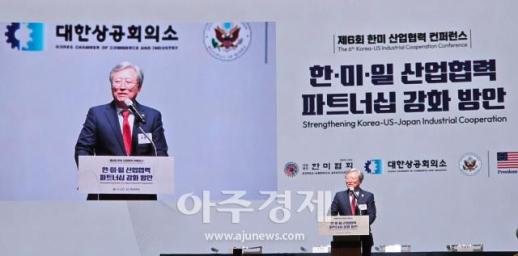 South Korea urges U.S.-Japan AI and energy alliance to strengthen supply chains The Korea Chamber of Commerce and Industry and the Korea-U.S. Association held the sixth Korea-U.S. Industrial Cooperation Conference on Wednesday at the KCCI building in Seoul, calling for closer South Korea-U.S.-Japan coordination on artificial intelligence and energy security. Speakers said surging power demand driven by AI and growing energy instability tied to the Middle East underscore the need to deepen cooperation in semiconductors, liquefied natural gas and small modular reactors. Choi Joong-kyung, chairman of the Korea-U.S. Association, said in opening remarks that the world has entered an era in which “security is industry, and industry is security.” He said trilateral industrial cooperation could become “the most powerful industrial alliance in human history” and reshape global industry. Lee Hyung-hee, vice chairman of the Seoul Chamber of Commerce and Industry and vice chairman of SK, said South Korea should build strategic ties with U.S. big tech companies around its strengths in semiconductors. In energy, he cited joint South Korea-Japan investment in U.S. LNG and cooperation on SMRs as practical steps that could improve supply stability and industrial competitiveness. Lee said companies would be better positioned if the government more boldly laid the groundwork for cooperation and provided targeted support. “The government needs to open barriers that are difficult to overcome through private-sector efforts alone,” he said. Yeo Han-koo, trade minister at the Ministry of Trade, Industry and Energy, said the Middle East crisis shows energy volatility can threaten industrial stability and national security. With AI driving “explosive” growth in electricity demand, he said securing a stable power supply is critical. Yeo said South Korean companies are expanding investment in key U.S. industries such as semiconductors, batteries and electric vehicles, making bilateral cooperation “no longer a choice but a necessity.” He said that cooperation could also help drive a broader rebound in U.S. manufacturing, including shipbuilding, civilian nuclear power and energy. He called on the three countries to build a successful model in advanced manufacturing, forge an innovation partnership for the AI era and strengthen an energy security alliance. In a keynote address, Sung Yun-mo, a distinguished professor at Chung-Ang University, said U.S.-China competition is unlikely to end soon and that South Korea must secure “irreplaceable” core technologies in semiconductors, AI and future vehicles. Sung said China is expanding its ecosystem around homegrown AI, and argued South Korea needs cooperation that combines its hardware capabilities with U.S. data platforms, financial investment and talent, along with Japan’s global supply chains. On energy, he said South Korea and Japan face instability in energy supply and therefore need supply cooperation with the United States, which has greater energy autonomy. He said South Korea should strengthen core technology and manufacturing competitiveness in the energy industry to exercise strategic autonomy. During a panel discussion, Kwon Seok-jun, a professor of chemical engineering at Sungkyunkwan University, said the first step in trilateral cooperation should be resolving a “memory bottleneck.” He said South Korea has a strong base in memory manufacturing, Japan has strengths in packaging and manufacturing, and combining those with U.S. design technologies and AI-specialized models could create a powerful shared platform. Cho Hong-jong, a professor of economics at Dankook University, said trilateral coordination is needed in energy security to prevent “China’s monopoly and productivity.” He proposed a fast-track system for cooperation on rapid licensing and permitting for SMRs. Cho said cooperation should combine U.S. foundational technology, Japan’s precision parts and finance, and South Korea’s construction and equipment capabilities, adding that regulations are an obstacle and that a fast track could support joint entry into third countries. About 120 people attended, including Choi; Lee; Yeo; James Heller, chargé d’affaires at the U.S. Embassy in Seoul; James Kim, chairman of the American Chamber of Commerce in Korea; Sung; and Ahn Se-hyun, dean of the College of Economics and Public Affairs at the University of Seoul.* This article has been translated by AI. 2026-05-07 14:19:13
 -
 Hanwha Ocean Rejects Union Demand to Reverse Safety-Related Discipline Hanwha Ocean said it will not accept what it called improper union demands to reverse discipline tied to workplace safety, as disputes over the issue intensify following the implementation of the so-called Yellow Envelope Act, a revision to labor law. Industry officials said Hanwha Ocean issued a statement on the 7th regarding the Korean Metal Workers’ Union’s Hanwha Ocean branch demand to withdraw disciplinary action, saying it “cannot accept any demand that undermines safety principles at worksites.” Hanwha Ocean previously decided to suspend three employees for one month, saying they failed to follow safety rules and directly contributed to accidents that occurred at its Geoje facility in February and March. The union has continued holding rallies at the site calling for the suspensions to be rescinded. It was also reported that on April 28 union members entered the head of manufacturing’s office and removed items including laptops, tablet PCs and phones. Hanwha Ocean said those involved in the accidents were found to have violated safety rules, including breaching crane signaling standards, leaving their work area without authorization during operations, failing to follow safety controls and not sharing a crane movement route that had been provided in advance. The company said two injured workers remain hospitalized at rehabilitation facilities and were reported to have received assessments indicating a labor capacity loss rate close to 100%. Hanwha Ocean said the one-month suspensions were imposed through proper procedures after convening a personnel committee, based on its collective bargaining agreement and work rules. The company said it has a duty to prevent similar accidents and that discipline is a minimum measure to protect industrial safety. “Demanding the withdrawal of discipline by going beyond the rules, regardless of who is involved, cannot be justified for any reason,” the company said, adding it will not yield to “any coercion or pressure” that threatens employees’ lives and safety. Kim Seong-hui, a professor at Korea University’s Graduate School of Labor Studies, said the union may believe the company interpreted the incidents in a way favorable to itself without fully disclosing information. He said a thorough investigation that includes workers is needed on the causes and responsibility, and that the causal link to the accidents should be closely examined before discipline is imposed.* This article has been translated by AI. 2026-05-07 14:15:31
 -
 Special counsel resumes raid on prosecutors’ e-Pros server over Shim Woo-jung martial law allegations A second comprehensive special counsel team investigating unresolved allegations after the three earlier special counsel probes said it will resume a search and seizure of the Supreme Prosecutors’ Office’s e-Pros server, focusing on allegations that former Prosecutor General Shim Woo-jung was involved in the Dec. 3 martial law episode. The team, led by Special Counsel Kwon Chang-young, said it will restart execution of the warrant at 2 p.m. on May 7 at the National Information Resources Service’s Gwangju Center, under on-site direction by Assistant Special Counsel Kwon Young-bin. The move continues a warrant execution that began April 24 and was halted late at night. It is the first time, the report said, that a search-and-seizure warrant has been executed covering the entire e-Pros server. Investigators suspect Shim, during the martial law period, reviewed sending prosecutors to a joint martial law investigation headquarters at the direction of then-Justice Minister Park Sung-jae. They are also examining allegations that Park spoke by phone with Shim several times around a Justice Ministry senior staff meeting. The special counsel is expected to secure internal prosecution messenger records and reports from that period to confirm how the prosecutor-dispatch review was handled and who directed it. The team is also looking into how prosecutors in March last year decided to forgo an immediate appeal of a court decision canceling the detention of former President Yoon Suk Yeol. Shim cited possible constitutional issues and directed that no immediate appeal be filed, leading to Yoon’s release.* This article has been translated by AI. 2026-05-07 14:12:40
 -
 South Korea Stock Market Cap Rises to No. 7 Globally, Passing Canada " height="424" id="imgs_2924918" photo_no="2924918" src="/content/image/2026/05/07/20260507140527632879.jpg" width="640" /> South Korea’s stock market has climbed to seventh in the world by market capitalization, moving up another notch after passing the U.K. about 10 days earlier, Bloomberg data showed. As of the previous trading day, May 6, South Korea’s total market capitalization stood at about $4.59 trillion, topping Canada’s roughly $4.50 trillion, according to Bloomberg’s tally. South Korea now ranks behind the United States ($77.08 trillion), China ($15.27 trillion), Japan ($8.33 trillion), Hong Kong ($7.47 trillion), India ($5.01 trillion) and Taiwan ($4.67 trillion). It is followed by Canada, the U.K. ($4.0 trillion), France ($3.54 trillion), Germany ($3.11 trillion) and Switzerland ($2.66 trillion). As recently as April 27, South Korea’s market cap was $4.04 trillion, narrowly ahead of the U.K. in eighth place, while Canada and Taiwan were still above it. Since then, Samsung Electronics and SK Hynix have repeatedly set record highs, lifting the broader market’s value. The KOSPI jumped 5.12% on May 4 and 6.45% on May 6 to close at 7,384.56. The next target is Taiwan. On May 7, the KOSPI was up 0.63% at 7,433.34 as of about 2 p.m., another record. The index rose 75.5% last year; it is the first time since the late-1980s “three-lows” boom — 1986 (67%), 1987 (93%) and 1988 (73%) — that the KOSPI has posted gains of more than 70% for two consecutive years, the report said. Analysts said South Korea’s global ranking could rise further, arguing that earnings are improving faster than share prices. Han Ji-young, a researcher at Kiwoom Securities, said profit growth is “far outpacing” the market’s rise. “The KOSPI’s 2026 operating profit consensus is 124.2%, exceeding the KOSPI’s gain over the same period,” Han said. He added that with foreign investors posting net buying of about 6 trillion won since May and with earnings momentum improving, the KOSPI has room to extend gains led by bellwether stocks such as semiconductors. 2026-05-07 14:11:40
 -
 Tesla Tops South Korea’s Imported-Car Sales in April as Market Jumps 58% Tesla again led South Korea’s imported-car market in April, topping 10,000 monthly sales and extending its lead for a third straight month after first surpassing BMW in February. The Korea Automobile Importers & Distributors Association said April registrations of imported passenger cars rose 58.1% from a year earlier to 33,993 units, up from 21,495. That was 0.1% higher than March’s 33,970. Cumulative registrations through April reached 116,113 units, up 41.3% from 82,152 a year earlier. By brand, Tesla ranked No. 1 with 13,190 registrations. Best-selling models included the Model Y Premium (9,328) and the Model 3 Premium Long Range (1,481). BMW followed with 6,658, then Mercedes-Benz with 4,796, BYD with 2,023 and Volvo with 1,105. Lexus (1,079), Audi (918), Toyota (829), Mini (696) and Porsche (679) rounded out the top 10. By engine displacement, vehicles under 2,000cc accounted for 9,087 registrations (26.7%), followed by 2,000cc to under 3,000cc with 5,565 (16.4%), 3,000cc to under 4,000cc with 544 (1.6%) and 4,000cc or more with 478 (1.4%). By fuel type, electric vehicles led with 18,319 registrations (53.9%), followed by hybrids with 12,777 (37.6%), gasoline with 2,734 (8.0%) and diesel with 163 (0.5%). Individuals bought 22,089 vehicles (65.0%), while corporate buyers accounted for 11,904 (35.0%). Among individual purchases, Gyeonggi led with 7,427 registrations (33.6%), followed by Seoul with 4,075 (18.4%) and Incheon with 1,732 (7.8%). For corporate purchases, Busan ranked first with 3,798 (31.9%), followed by Incheon with 3,458 (29.0%) and South Gyeongsang with 2,067 (17.4%). KAIDA Vice Chairman Jeong Yun-young said April registrations held near the previous month’s level despite mixed brand performance, supported by strong EV sales and new-model launches by some brands.* This article has been translated by AI. 2026-05-07 14:06:17
 -
 Simtech Shares Jump Nearly 14% as Brokerages Raise Price Targets Simtech shares surged more than 13% intraday, as investors appeared to respond to upbeat brokerage outlooks and a string of higher price targets. According to the Korea Exchange, Simtech was trading at 106,900 won as of 1:50 p.m. on the 7th, up 13,100 won, or 13.97%, from the previous session. Daishin Securities said in a report that earnings improvement should begin in earnest, driven by expanding sales of server memory modules and SOCAMM2. It maintained its “buy” rating and raised its target price to 105,000 won from 60,000 won. Park Kang-ho, an analyst at Daishin Securities, said Simtech is estimated to have the largest share of SOCAMM2 supply among the three major memory makers. He added that operating margin gains should continue as the company increases the share of higher-profit products. Daishin Securities expects the pace of improvement to accelerate in the second quarter after gains in the first. It estimated second-quarter operating profit at 40.2 billion won, up 193% from the prior quarter. NH Investment & Securities also raised its target price to 120,000 won from 66,000 won. Hwang Ji-hyun, an analyst at NH Investment & Securities, said the revision reflected a rise in the sector’s average valuation multiple, from 21 times to 27 times. Hwang said margin improvement is progressing faster than expected as price increases and stabilizing raw material costs take effect. She added that the firm expects upward revisions to full-year results and further profitability gains on the back of expanding demand centered on SOCAMM and FC-CSP. Shinhan Investment Corp. raised its target price to 150,000 won from 120,000 won, and iM Securities lifted its target to 135,000 won from 105,000 won.* This article has been translated by AI. 2026-05-07 14:02:16
 -
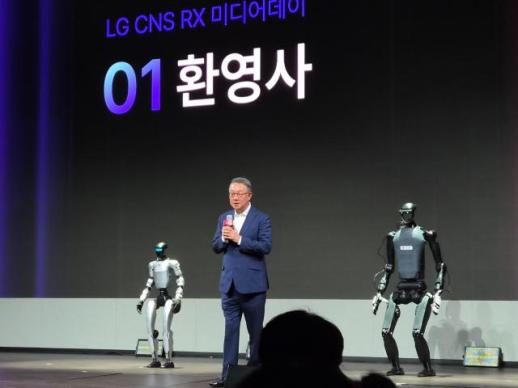 LG CNS Unveils RX Platform for Autonomous, Collaborative Robots A dancing robot opened LG CNS’ showcase, greeting Chief Technology Officer Park Sang-yeop. Another robot handed a microphone to CEO Hyun Shin-gyun to begin the event. In a logistics demo area, robots moved and worked together without human control. A humanoid robot picked up a plastic bag and passed it toward a box on a conveyor belt. A quadruped robot carried the box, and a wheeled robot and an autonomous mobile robot, or AMR, placed it on a designated shelf. LG CNS described the scene as a preview of what it called an era of self-moving robots. LG CNS on May 7 held a “Robot Transformation (RX) Media Day” at its Magok headquarters in Seoul and unveiled its RX platform, “Physical Works.” It also introduced two core platforms: the robot training platform “Physical Works Forge” and the integrated operations platform “Physical Works Baton.” The company said the center of the robot industry is shifting from hardware to real-world deployment. It said the key is building a system that trains robots using on-site data and then operates and upgrades them reliably, rather than simply installing robots. LG CNS defined RX for industrial sites as an end-to-end service covering the full process — from introducing intelligent robots to training and operations — and said it is moving to expand in the market. “LG CNS does not manufacture robot hardware directly, but we source the most suitable robots for each site, train them with data, and operate and manage them so they can perform real work,” Hyun said. “A company’s competitiveness depends on how quickly it can apply robots in the field and turn that into results.” He added that while the robot industry has developed around hardware, the priority is now making robots perform tasks well, validating them on site and operating them stably — “the essence of RX” as LG CNS defines it. Physical Works Forge is a robot training platform that collects and learns from industrial-site data to prepare robots for deployment, LG CNS said. It supports the full process from data collection to simulation and on-site application, and can cut deployment time from several months to about one to two months, the company said. Securing high-quality on-site data quickly and training robots with it is a core capability, it added. Physical Works Baton is designed to integrate control and monitoring of different robots from different manufacturers within a single system. It assigns tasks and manages operations in real time across biped, quadruped, wheeled and AMR robots. Its name refers to a conductor’s baton, reflecting its role in orchestrating multiple robots, the company said. LG CNS said that applying the system to an environment operating about 100 robots could raise productivity by about 15% and cut operating costs by up to 18%. Lee Jun-ho, head of LG CNS’ Smart Logistics & City Business Division, said earlier smart-factory automation largely repeated preset motions, while physical AI-based RX enables robots to recognize situations and carry out tasks autonomously. He said the industry is rapidly shifting from showcase demonstrations to delivering results in real manufacturing and logistics sites. Lee said the biggest barrier to deployment is what he called the “PoC swamp,” referring to proof-of-concept projects that do not progress. He added that if companies can quickly collect and train on high-quality data, the pace of field deployment will accelerate. LG CNS said it is conducting robot PoCs with more than 20 customers in South Korea and overseas. In the Busan Smart City National Pilot City project, it said it is using Physical Works Baton to integrate monitoring of four types of robots: patrol, barista, luggage-carrying and cleaning robots. The company said it plans to expand its RX business based on robot forms optimized for industrial sites and industry-specific robot foundation models, or RFMs.* This article has been translated by AI. 2026-05-07 14:00:23
 -
 BGF Retail to Pay CU Store Owners Aid After Logistics Strike, Dispute With Truckers Persists BGF Retail, the operator of CU convenience stores, began compensating franchise owners on Wednesday after a labor agreement between its distribution and logistics affiliate, BGF Logis, and the Cargo Truckers Union ended a disruption in CU deliveries. The company’s move comes as CU franchisees continue to press the union for damages, signaling the dispute is not over. According to the retail industry, CU store owners on Wednesday could confirm the headquarters’ support amounts on their settlement statements under an item labeled “logistics supply support funds and consolation payments.” The strike ended after BGF Logis signed a collective agreement with the union on April 30, and the support plan was finalized about a week later. Some owners said the amounts were larger than expected even when their losses were limited, industry officials said. BGF Retail issued a notice to franchisees and employees detailing the plan, which was finalized late Tuesday. It consists of store support funds and separate consolation payments, with individual deposits scheduled for May 8. The store support funds include compensation for stockouts of chilled and frozen products and reimbursement for discarded ready-to-eat meals. For the period from April 5 to 30, BGF Retail will cover the full amount of store gross profit that would have been earned from out-of-stock refrigerated and frozen items, assuming normal sales. It will also reimburse the full value of ready-meal disposals incurred during the same period. The consolation payments are additional support separate from direct loss compensation. Regional payments will be set on a sliding scale, up to 300,000 won, based on the level of supply instability. Store-by-store payments, considering stockouts and delivery delays, will be up to 700,000 won per store. BGF Retail did not disclose the total amount, but the industry estimates it at around 10 billion won. “As the franchisor, we put store stability first and prepared a plan that includes practical compensation as well as consolation payments,” a BGF Retail official said. “We will continue working so we can grow together based on partnership.” Even as deliveries return to normal, friction between franchisees and the Cargo Truckers Union continues. The CU Franchisee Council on May 4 sent the union a certified letter demanding 14 billion won in damages, steps to prevent a recurrence and a public apology, seeking to hold the union responsible for losses during the strike. The council said it will file a civil damages lawsuit if its demands are not accepted by May 15, and it will also seek criminal accountability for alleged illegal acts during the strike. Another CU franchisee group, the CU Franchisee Federation, has also recently sent the union a certified letter demanding a resolution and compensation, according to industry officials.* This article has been translated by AI. 2026-05-07 13:56:42
 -
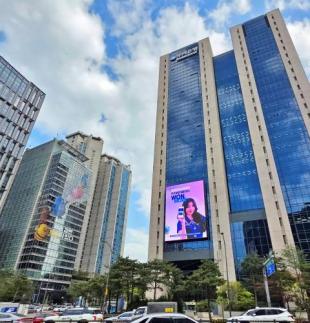 Woori Bank to Lead Investment in Government Future City Fund for First-Generation New Town Redevelopment Woori Bank said Wednesday it will participate as the largest investor in the government-backed “Future City Fund,” aimed at supporting redevelopment projects in first-generation new towns. The policy fund was created to provide stable financing for aging apartment complexes in areas such as Bundang and Ilsan, where reconstruction is being pursued. It is designed to supply essential early-stage project costs from the planning stage, helping projects move forward more smoothly. Woori Bank will commit 480 billion won to the first master fund, which totals 600 billion won, as part of a broader 12 trillion won Future City Fund initiative. Linked to guarantees from the Korea Housing & Urban Guarantee Corp. (HUG), the funding will be provided at low interest rates, up to 20 billion won per project site, the bank said. Woori Asset Management will run the fund. The selection will allow the firm to expand beyond traditional asset management into alternative investments and large policy funds, it said. Major investors, including Woori Bank, have completed investment agreements to establish the fund. It will operate on a capital-call basis, with money drawn and deployed when needed. Actual disbursements will begin after the first borrower project is chosen among designated leading districts in the first-generation new towns and requests financial support. Lee Jin-kyung, a team leader in Woori Bank’s structured finance department, said the bank’s participation will help ease early funding shortages for aging new-town redevelopment and provide a more stable foundation for projects. He said the bank will continue expanding structured finance tied to policy financing. 2026-05-07 13:55:47