
Journalist

Seán Canney
-
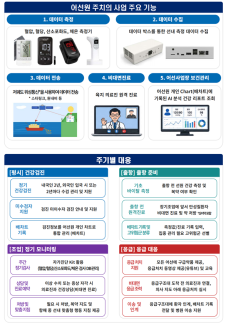 Pilot Program Launched to Provide Onboard Medical Care for Fishermen # A crew member, identified as A, was found unconscious but breathing in the engine room while returning from a fishing trip in the 35th maritime area. He was transported to a nearby hospital 45 minutes after being discovered, but despite CPR efforts, he was pronounced dead due to respiratory failure. # Another crew member, B, suffered a finger amputation during fishing operations and requested assistance from the captain, who notified rescue services. Following their guidance, B preserved the severed part and was transported to a nearby hospital for surgery. To address the healthcare needs of fishermen who suffer injuries or health deteriorations while at sea, the Ministry of Oceans and Fisheries is launching a pilot program for an "onboard doctor" service. This initiative will run until the end of the year for deep-sea fishing workers. On May 14, the ministry announced that it will sign a memorandum of understanding with representatives from eight organizations on May 15 to kick off the pilot program. The Ministry of Oceans and Fisheries will oversee the initiative, with administrative support from Jeju Province. The Korea Maritime Traffic Safety Authority and the National Federation of Fisheries Cooperatives will execute the program, while the Foundation for Cooperation between Large, Medium, and Small Enterprises and the Incheon Port Authority, Yeosu Gwangyang Port Authority, and HK InnoN will provide financial support. The "onboard doctor" program aims to support health management for those engaged in fishing activities far from land, where access to medical care is limited. The Jeju area is located more than 640 kilometers from the mainland, with travel times of three to four days. Fishing trips can last over 45 days. This pilot program is designed to manage the health of fishermen throughout the entire fishing cycle, including pre-departure, during operations, and in emergencies. As part of the program, fishermen will receive support for routine health check-ups, management of results, and assistance for those who have not undergone examinations. They will also benefit from remote consultations and prescriptions for chronic conditions, as well as pre-departure health checks for long fishing trips. Additionally, regular health assessments will be conducted during fishing periods, and if any abnormal results are found, doctors will provide consultations. Emergency care and management will also be available for trauma and other urgent cases. The ministry plans to utilize advanced technologies such as artificial intelligence and low-orbit satellite communications to implement this program. Initially, over 100 fishing vessels operating in the waters near Jeju, with around 1,000 fishermen, will be included in the pilot program, which will run from May 15 to December. The ministry will evaluate the results to consider potential expansions. Choi Hyun-ho, head of the Fisheries Policy Office at the Ministry of Oceans and Fisheries, stated, "This program is a systematic health management measure aimed at saving the lives of fishermen and preventing risks. We will also closely examine the health management of foreign fishermen who may fall into gaps in care through this pilot program."* This article has been translated by AI. 2026-05-14 12:22:50
 -
 Surge in Semiconductor and Computer Exports Driven by AI Demand Boosts April ICT Exports Exports of semiconductors and computers surged in April, driven by increased demand for artificial intelligence (AI), resulting in a record increase in information and communication technology (ICT) exports. According to the Ministry of Science and ICT and the Ministry of Trade, Industry and Energy, April's ICT exports reached $42.71 billion, a 125.9% increase compared to the same month last year. This marks the second consecutive month of exports exceeding $40 billion, achieving the highest growth rate on record. Imports also rose, totaling $16.16 billion, a 33.3% increase from the previous year. The trade balance recorded a surplus of $26.55 billion. Leading the exports in April were semiconductors and computers and related devices. Semiconductor exports soared to $31.91 billion, up 173.3% year-on-year. This growth was fueled by increased investments in AI servers, leading to a sustained demand for memory and rising fixed prices, marking the first time exports exceeded $30 billion for two consecutive months. Computer and related device exports were driven by solid-state drive (SSD) sales, which totaled $4.26 billion, a staggering 430% increase from the previous year. The demand for storage devices based on AI server semiconductors contributed significantly to this growth. The Ministry of Science and ICT noted, "For the first time, SSD exports surpassed $4 billion, achieving the highest performance ever recorded." Mobile phone exports also increased by 14% year-on-year, reaching $1.36 billion, supported by robust demand for high-end products and a rise in the export of high-value components. Telecommunication equipment exports rose by 9.9% to $220 million, bolstered by increased shipments of components to Vietnam and wired communication equipment to Japan, leading to a rebound in overall exports after three months. In contrast, display exports fell by 5.3% to $1.44 billion, attributed to rising semiconductor prices and increased cost burdens, which dampened demand from upstream companies. Exports of semiconductors and mobile phones increased across various regions. Exports to China reached $16.77 billion, a 132.1% increase from the previous year. Exports to the United States surged by 294.2% to $7.9 billion, while Vietnam saw an 89.3% growth to $5.77 billion. Taiwan's exports rose by 89.4% to $4.54 billion, the European Union increased by 58.4% to $1.78 billion, India by 86.5% to $950 million, and Japan by 42.5% to $450 million. The ICT export and import statistics are compiled to respond swiftly to changes in the global market. They serve as foundational data for analyzing the export competitiveness and import dependency of the domestic ICT industry.* This article has been translated by AI. 2026-05-14 12:20:19
 -
 Battery Cages for Egg Production to Be Phased Out as Conventional Farms Decline According to the Ministry of Agriculture, Food and Rural Affairs, the number of conventional egg production farms using so-called "battery cages" has decreased by 9% over the past 11 months. On May 14, the ministry held the third meeting of the Task Force for Improving Layer Farming Density to discuss the implementation of improved farming practices. The government is working to increase the minimum space requirement for each layer hen from 0.05 square meters to 0.075 square meters. However, due to concerns about egg supply and price stability, this change is currently left to the discretion of the private sector until September of next year. The ministry reports that the private sector is actively participating in improving farming density. The number of conventional farms decreased from 718 in August 2025 to 655 in May 2026, representing a 9% decline. The proportion of these farms within the total number of farms also fell from approximately 43% to 39%. Additionally, 521 of the remaining conventional farms, or 80%, have submitted compliance plans to improve farming density. The ministry plans to encourage farms that have not submitted compliance plans to do so. It will also listen to the concerns of farms that are reducing their livestock numbers to meet density standards and provide additional support. Lee Jae-sik, the livestock policy director at the ministry, stated at the meeting, "We will do our best to secure funding and improve regulations for farms that are working to enhance their facilities and comply with density improvements."* This article has been translated by AI. 2026-05-14 12:18:27
 -
 LX Pantos Wins Grand Prize at Korean Labor-Management Cooperation Awards Comprehensive logistics company LX Pantos has been recognized for its achievement in establishing a collaborative labor-management culture by winning the Grand Prize in the large enterprise category at the Korean Labor-Management Cooperation Awards. LX Pantos announced on May 14 that it received the award during the 38th Korean Labor-Management Cooperation Awards ceremony held at the Four Seasons Hotel in Jongno, Seoul. The event was attended by key figures including Kim Young-hoon, Minister of Employment and Labor; Kim Ji-hyung, Chair of the Economic and Social Labor Council; Son Kyung-sik, President of the Korea Employers Federation; and Kim Dong-myung, President of the Korean Confederation of Trade Unions. LX Pantos was represented by CEO Lee Yong-ho, employee representative Park Cha-jun, and CHO Kim Sung-wook. The Korean Labor-Management Cooperation Awards, organized by the Korea Employers Federation, recognize companies that have contributed to national economic development by fostering a desirable labor-management culture based on mutual cooperation. Since 1989, the federation has annually honored companies that exemplify collaborative labor-management practices. LX Pantos has been commended for maintaining stable labor-management relations without disputes or strikes for nearly 50 years since its founding in 1977. The company has implemented regular labor-management councils, a junior board focused on younger generations, and an industrial safety and health committee to systematically gather employee feedback. This proactive approach has established a cooperative labor-management culture that focuses on identifying and resolving issues before conflicts arise, rather than responding reactively. As labor disputes have emerged as a significant management risk across various industries, LX Pantos' 50-year record of no disputes is highlighted as a model of collaborative labor-management relations. The company also conducts regular town hall meetings, management forums, and family invitation events to enhance trust and connections among employees and promote a communication-centered organizational culture. Sustainable management activities, including maternal protection programs, promotion of employment for individuals with disabilities, and social contribution initiatives, have also received positive recognition. Lee Yong-ho, CEO of LX Pantos, expressed, "We are deeply honored to have our efforts in building a collaborative labor-management culture recognized through this award. We will continue to foster a healthy organizational culture based on mutual trust and communication, and achieve sustainable growth."* This article has been translated by AI. 2026-05-14 12:16:51
 -
 Samsung Fire & Marine Insurance Reports 1st Quarter Net Profit of 635.2 Billion Won Samsung Fire & Marine Insurance announced on May 14 that it recorded consolidated revenue of 6.6763 trillion won and a net profit of 635.2 billion won for the first quarter of this year. These figures represent increases of 9.3% and 4.3%, respectively, compared to the same period last year.The long-term insurance sector saw significant growth, with the insurance contract margin (CSM) multiple improving to 14.2 times, a 2.3-fold increase year-on-year. The total CSM also rose by 301.5 billion won from the end of last year, reaching 14.4692 trillion won.Insurance profit reached 440 billion won, up 4.9% from the previous year. The retention rates for 25-month and 37-month policies also improved, rising by 7.1 percentage points and 5.0 percentage points, respectively, continuing the trend of enhanced efficiency metrics.In the auto insurance sector, despite a prolonged deterioration in loss ratios, the company shifted to a portfolio strategy focused on high-quality contracts, resulting in an increase in premium income per policy compared to the previous quarter. Although insurance revenue decreased by 1.0% year-on-year to 1.3636 trillion won, the insurance profit was maintained at a deficit level of 9.6 billion won.The general insurance sector benefited from growth in domestic and international operations, with insurance revenue increasing by 9.6% year-on-year to 449.1 billion won. The loss ratio improved by 9.9 percentage points to 53.6%, thanks to refined rate structures and a reduction in large claims, leading to an insurance profit of 104.7 billion won, an increase of 55.1 billion won.In asset management, improvements in the bond portfolio and operational efficiency strategies led to an expansion in interest and dividend income. Consequently, the investment return rate for the first quarter was 3.68%, with investment income based on managed assets reaching 853.7 billion won, a 15.4% increase from the previous year.The solvency ratio (K-ICS) improved to 270.1%, up 7.3 percentage points from the end of last year (262.9%).Koo Young-min, Chief Financial Officer of Samsung Fire & Marine Insurance, stated, "As a result of proactive structural improvements under a solid and consistent profitability-focused management policy, the first quarter insurance profit has turned to a growth trend. We will strengthen our core competitiveness through continuous innovation across all business sectors and establish new growth foundations."* This article has been translated by AI. 2026-05-14 12:15:21
 -
 KT Prohibits External Directors from Exercising Influence, Revises Ethics Code KT announced that its board of directors held a meeting on May 12, where they approved revisions to the board's ethics code and updates to the external director delegation contracts. The revised ethics code for external directors now includes a provision stating that "external directors shall not exercise influence that undermines fairness or independence regarding the company's personnel, business, or investment matters." External directors will be required to complete a "self-assessment checklist for external director ethics compliance" every six months to ensure adherence to the ethics code. KT aims to strengthen its compliance and ethics-focused board management system through this initiative. The external director delegation contracts have also been updated. The revised contracts specify that external directors must comply with relevant regulations, including laws, the company's articles of incorporation, the corporate governance charter, and the external director ethics code. Additionally, if violations of related regulations or breaches of independence and ethics are recognized, the board may take actions such as issuing warnings, recommending non-participation in board and committee votes, or suggesting resignation through board resolutions. Kim Yong-heon, chair of KT's board of directors, stated, "With the launch of the new board, we are implementing system improvements to enhance compliance with laws and the ethical consciousness of individual directors, thereby establishing a more responsible board management system. We will contribute to the sustainable growth of the company and the enhancement of corporate value through continuous improvements in governance." Meanwhile, KT's board previously amended regulations to expand the management autonomy of the CEO last month.* This article has been translated by AI. 2026-05-14 12:13:26
 -
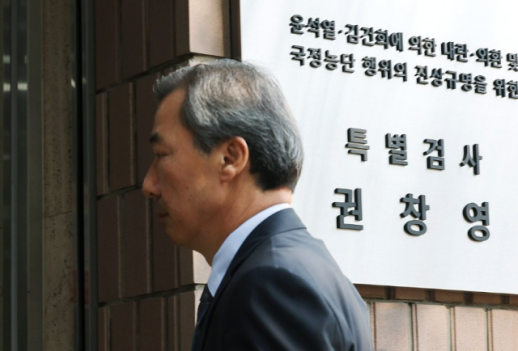 Special Prosecutors Launch Investigation into Presidential Office Relocation Audit The second comprehensive special investigation team, led by Special Prosecutor Kwon Chang-young, has begun a formal inquiry into allegations surrounding the relocation of the presidential office and residence during the Yoon Suk Yeol administration. The investigation focuses on whether there were any illegal activities during the audit conducted by the Board of Audit and Inspection from 2022 to 2024. In a press release on May 14, the special prosecutor's office stated, "We are investigating whether there were any illegalities in the audit process regarding the relocation of the presidential office and residence," adding that they executed search warrants at four locations, including the Board of Audit and Inspection and three residences, starting at 9 a.m. Details regarding the specific targets of the searches or the nature of the allegations remain undisclosed due to the ongoing investigation. Following his election, President Yoon Suk Yeol relocated the presidential office to the Ministry of National Defense building in Yongsan and the presidential residence to the former minister of foreign affairs' residence. Allegations of favoritism and illegalities arose concerning the selection of construction firms and budget execution, prompting the Board of Audit and Inspection to conduct an audit, the results of which were released last year. The Board of Audit and Inspection determined that 21gram, the company overseeing the residence construction, began work before the contract was signed and subcontracted to multiple unqualified firms, violating the Construction Industry Basic Law. However, the core allegations regarding how 21gram was awarded the contract remain unresolved, leading to criticism of a flawed audit. The special prosecutor's office plans to investigate whether the Board of Audit and Inspection failed to adequately examine the circumstances surrounding the awarding of the construction contract and budget execution based on the materials obtained during the searches. Additionally, the special prosecutor's office is looking into potential connections between 21gram and Kim Geon-hee, the spouse of President Yoon. 21gram sponsored exhibitions organized by Kim's company, Kovana Contents, and was also responsible for the design and construction of her office. Allegations of personal connections between Kim and the company's representatives have also surfaced. Reports indicate that 21gram demanded payment for construction costs without objective evidence, and government budget allocations were executed without proper verification or adjustments, following directives from the presidential office. According to the Construction Industry Basic Law, a comprehensive construction license is required for expansion and structural reinforcement work; however, 21gram is only registered as an interior construction company, raising legal concerns over its involvement in the residence expansion project. It has also been confirmed that 21gram received over 1.4 billion won in construction payments before the completion inspection was conducted. The special prosecutor's office is expanding its investigation based on suspicions of illegal budget reallocations during this process. Furthermore, Yoon Jae-soon, the former chief secretary to the president, has been summoned for questioning as a suspect in the abuse of authority and obstruction of the exercise of rights. He is accused of being involved in budget reallocations and payment processes during the relocation of the residence. The special prosecutor's office previously questioned Kim O-jin, the former deputy minister of land, infrastructure, and transport, as a suspect and plans to interrogate Kim Dae-ki, the former chief of staff to the president, on May 15. Relevant materials were secured through searches of related departments, including the Ministry of Strategy and Finance and the Ministry of the Interior and Safety. 2026-05-14 12:11:28
 -
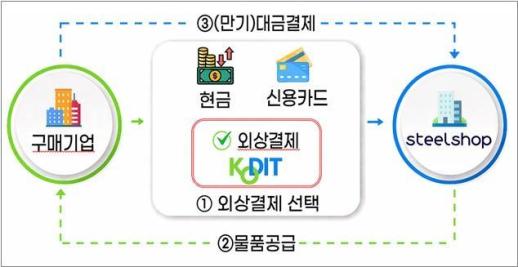 Korea Credit Guarantee Fund Expands Digital Supply Chain Guarantee Service with Dongkuk Steel The Korea Credit Guarantee Fund is expanding its business-to-business (B2B) platform guarantee services to include Dongkuk Steel. On May 14, the fund announced that it will extend its 'Pay-One Guarantee' service, which was previously available to Hyundai Steel, to Dongkuk Steel. The Pay-One Guarantee is an electronic commerce collateral guarantee that allows companies to conduct credit transactions when purchasing goods on B2B platforms. The entire process, from application to issuance and limit management, is carried out within the seller's platform. With this partnership, companies using the guarantee will be able to purchase goods on Dongkuk Steel's steel distribution platform, 'Steel Shop,' using the guarantee certificate as collateral for online credit transactions. This is expected to help purchasing companies reduce cash liquidity burdens while securing necessary raw materials reliably. The process has also been streamlined, eliminating the need for separate visits. By linking the systems of the Credit Guarantee Fund and the distribution platform, automatic assessments based on data will be conducted, allowing companies to receive guarantee certificates on the same day within their pre-assigned limits. The Credit Guarantee Fund believes that this service expansion will contribute to stabilizing raw material supply in the steel industry and enhancing transaction convenience for corporate clients. A fund official stated, “We hope this service expansion will assist steel companies in stabilizing their raw material supply, and we will continue to expand B2B guarantee services across various industries to contribute to building stable supply chains.”* This article has been translated by AI. 2026-05-14 12:09:53
 -
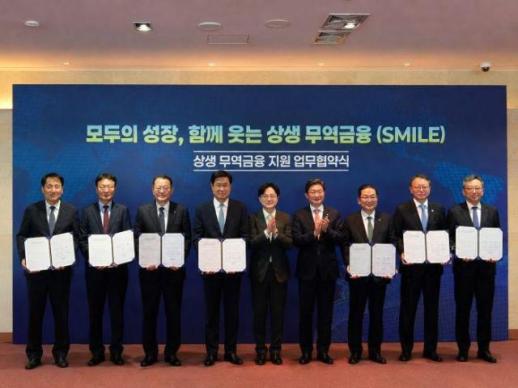 Shinhan, Hana, and Woori Banks Provide 1 Trillion Won to Support Korean Shipbuilders Major commercial banks are launching a 1 trillion won financial support initiative to enhance the export competitiveness and supply chain stability of the shipbuilding industry.On May 14, financial sources reported that Shinhan Bank, Hana Bank, and Woori Bank signed a financial cooperation agreement to provide 1 trillion won to the suppliers of their main client companies, Samsung Heavy Industries, HD Hyundai Heavy Industries, and Hanwha Ocean.The signing ceremony took place on May 13 at the Hotel Hyundai by Lahan in Ulsan, attended by Minister of Trade, Industry and Energy Kim Jeong-kwan, Financial Services Commission Chairman Lee Ok-won, and the presidents of the three banks, among others.This agreement aims to provide stable liquidity to the suppliers of the shipbuilders, strengthening the export supply chain and supporting the co-prosperity of large corporations with small and medium-sized enterprises. President Yoon Suk Yeol emphasized the importance of government support for maintaining employment and developing the shipbuilding ecosystem during a meeting with industry representatives the previous day.Initially, Shinhan Bank and Samsung Heavy Industries will jointly contribute 21.3 billion won, with the Korea Trade Insurance Corporation providing a total of 300 billion won in special guarantees to Samsung Heavy Industries' suppliers. The selected companies will benefit from liquidity support through special guarantees and full coverage of guarantee fees, reducing their financing costs.Hana Bank plans to provide a total of 400 billion won in financing to support the management stability of small shipbuilders and equipment suppliers in collaboration with HD Hyundai Heavy Industries. Earlier in January, the two companies contributed a total of 28 billion won (Hana Bank 23 billion won, HD Hyundai Heavy Industries 5 billion won) to the Korea Trade Insurance Corporation and signed a business agreement for preferential financial support for recommended suppliers.Woori Bank also plans to supply a total of 300 billion won in financial support through a joint contribution with Hanwha Ocean, with Woori Bank contributing 17.8 billion won and Hanwha Ocean 3.5 billion won. The two banks will utilize the Trade Insurance Corporation's guarantee program to provide trade finance and corporate working capital loans to small and medium-sized suppliers within the shipbuilding supply chain.* This article has been translated by AI. 2026-05-14 12:09:07
 -
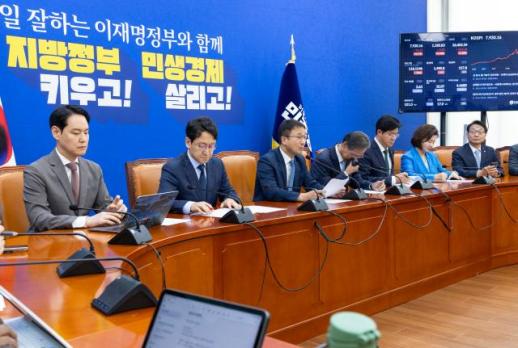 Democratic Party Urges People Power Party to Cease Negative Campaigning The Democratic Party called on the People Power Party on May 14 to refrain from negative campaigning, stating it would respond firmly to falsehoods. Han Byeong-do, the party's floor leader, urged the opposition to stop spreading misinformation ahead of the June 3 local elections. During a policy coordination meeting at the National Assembly, Han referenced the People Power Party's recent allegations against Jeong Won-o, the party's candidate for Seoul mayor, regarding a past violent conviction. He described the claims as "merely one-sided assertions based on the opposing side's statements from 30 years ago." Han further noted that similar unfounded allegations had been made against Lee Jae-myung, the then-Gyeonggi governor, during his own tenure as a lawmaker. He emphasized that the repetition of such negative campaigning must be met with serious and decisive action. Lee Joo-hee, the party's spokesperson, commented that while competitive elections can be beneficial, the current situation involves the People Power Party focusing on discrediting opponents without presenting concrete policies. She expressed concern that the continuation of such tactics, which go beyond simple criticism to include falsehoods, would increase public fatigue. Lee urged the People Power Party to refrain from negative campaigning based on misinformation.* This article has been translated by AI. 2026-05-14 12:06:29