
Journalist

Seo Hye Seung
-
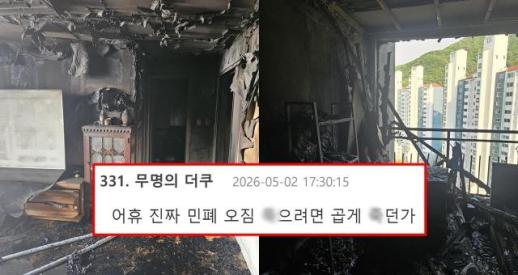 Uiwang Apartment Fire Leaves Family Homeless After Gas Blast Kills 2 A resident who lost a home in a recent apartment fire in Uiwang, south of Seoul, has shared the family’s story online, drawing sympathy as authorities investigate a blast that killed two people and injured six. In a post on an online community, the writer, identified only as A, said the fire spread quickly from a lower floor and heavily damaged the parents’ unit. “My parents’ home, where they lived for more than 20 years, burned down overnight and we lost everything,” A wrote. Clothing, bedding, furniture and other essentials were destroyed, leaving little to salvage, the post said. “People said we might be able to save something, but when we actually went there, nothing was left,” A wrote, adding the family felt numb and devastated, especially watching the parents try not to ask their children for help. A said the family did not have fire insurance and compensation would not be enough to replace household goods. The writer said they were checking what help might be available from local government and public agencies, but support for appliances and furniture appeared limited. A asked readers to share information on assistance for fire victims or corporate donations, noting other affected residents, including those upstairs, likely faced similar losses. The post spread online, prompting calls for more practical support for households hit by the fire. Some commenters also stressed the need for fire insurance in multiunit buildings. Police said the fire broke out about 10:30 a.m. on April 30 at an apartment building in Naesu-dong, Uiwang, accompanied by an explosion-like sound. A man in his 60s, identified as A, fell and died, and his wife, identified as B and in her 50s, was found dead in the unit’s bathroom. Police said a note was found on the man’s clothing describing personal despair, including financial difficulties. A police official said no flammable materials were found at the scene and a gas explosion was suspected. The official said an autopsy indicated the wife appeared to have died before the fire started. The building has 20 stories above ground and one basement level, with a total floor area of about 8,800 square meters and 78 households, police said. The apartment complex was completed in 2002, when sprinklers were required only on floors 16 and above, meaning they were not installed on the 14th floor where the fire occurred.* This article has been translated by AI. 2026-05-02 19:22:19
 -
 South Korea Names 2026 ‘Year to Visit Islands,’ Offers Up to 100,000 Won in Travel Aid The Ministry of the Interior and Safety said Friday it has designated 2026 as the “Year to Visit Islands” and will provide up to 100,000 won in travel support for people who visit islands. The initiative is being launched for the first time to highlight the tourism value of Korea’s islands, which the ministry said has been underestimated, and to promote tourism as part of efforts to support balanced regional development in island communities. The ministry said it will subsidize lodging costs for tourists who visit islands and stay at least one night during the summer vacation season (July-August) and during the 2026 Yeosu World Island Expo, scheduled for Sept. 5-Nov. 4. Detailed eligibility rules and application procedures will be posted on a dedicated website set to open May 18. South Jeolla Province will also run its own “Jeonnam Year to Visit Islands” program offering up to 100,000 won in travel support, and the Korea Tourism Organization plans to hold an island lodging discount campaign in September, known as the Lodging Sale Festa. The ministry held a proclamation ceremony for the “2026 Year to Visit Islands” at 3 p.m. Friday at Yi Sun-sin Square in Yeosu, South Jeolla Province. Attendees included Vice Interior Minister Kim Min-jae, South Jeolla Vice Gov. Hwang Gi-yeon, Yeosu Vice Mayor Jeong Hyeon-gu, and Korea Island Development Institute President Cho Seong-hwan. The ministry said it will also roll out participation programs aimed at helping people build ongoing ties with islands. It plans a “One Person, One Island” promotional campaign that issues participants a digital “island resident ID,” along with events that match people with a “companion island” or grant honorary island resident status. The ministry also plans an event encouraging visits to 88 islands selected each year as places people want to travel to. “Our country is an archipelago tourism nation with 3,390 beautiful islands, and each island has its own unique appeal and value,” Kim said. “I hope that, through the 2026 Year to Visit Islands, more people will visit islands and enjoy a special trip with family and friends.”* This article has been translated by AI. 2026-05-02 19:21:18
 -
 Restaurant Featured on Sung Si-kyung’s YouTube Accused of Abandoning Dog as It Closed A seafood restaurant that appeared on singer Sung Si-kyung’s YouTube channel has come under criticism after online posts alleged it shut down and left a dog behind. On the 2nd, multiple online communities shared a post titled, “A Yongsan sashimi restaurant believed to have abandoned a 14-year-old dog when it closed.” The author, identified only as A, wrote, “Seeing it in person makes my heart race,” and added, “Fortunately, it seems a resident takes the dog at night and cares for it,” posting photos. One photo showed a notice taped to the restaurant’s glass door. The notice referred to a “dog left in an empty shop that has stopped operating,” and said the district office and related centers had been notified. It warned that the interior becomes dangerously hot during the day and said Yongsan District Office planned to visit on 5/4, urging the owner to take the dog. A wrote, “Fourteen years. Are you human, or have you given up being human?” The author also claimed the food “wasn’t good” and the staff were rude, adding that the incident made them distrust restaurants promoted on YouTube. Another photo showed the dog confined inside the closed shop alongside a message asking why the animal was being left there. Commenters expressed anger and concern, with some writing that if the district office takes the dog it could be euthanized, and others noting the restaurant had appeared on Sung’s “Meogeultende” series. Another user, identified as B, alleged the dog was left behind by a Huam-dong sekkosi restaurant that had presented itself as “pet-friendly.” B said the business closed in early April and abandoned the dog, describing it as 14 years old and appearing to have problems with its ears and legs. B wrote that the dog’s eyes also looked unwell and criticized leaving an elderly animal behind because veterinary care is expensive. B said nearby residents have at least been giving the dog water, and that the animal was trembling, prompting B to place an apron and clothing on the floor. B also described unsanitary conditions, including feces attracting flies, mosquitoes and other insects, poor ventilation and a bad odor. B said the indoor temperature has been high during the day and that power had been cut off for some time, adding that the dog appeared to be weakening and that temporary shelter was difficult. “Please help,” B wrote.* This article has been translated by AI. 2026-05-02 18:36:20
 -
 Seoul mayoral candidates trade blame over housing and rents Jung Won-oh, the Democratic Party’s candidate for Seoul mayor, and Oh Se-hoon of the People Power Party traded barbs May 2 over the city’s housing market. With the June 3 local elections a month away, the two sides are intensifying their fight over who is responsible for Seoul’s housing and rental strains. Speaking at a party rally at Seodaemun Cultural and Sports Center, Jung criticized Oh for what he called silence when President Yoon Suk Yeol was “ruining the country,” while now attacking President Lee Jae-myung. “He should have said something, even a word, when President Yoon Suk Yeol was ruining the country,” Jung said. Jung also pushed back on Oh’s recent claims that young people are facing “rent hell” and “real estate hell” because of the current government. “Wasn’t the Seoul mayor you?” Jung said, arguing that Oh failed over five years to increase housing supply and manage measures for monthly rent and jeonse leases, and is now blaming the government for the difficulties. Oh, in turn, warned that Seoul real estate would become “hell” if Jung is elected. Oh said soaring home prices and rising rents stem from what he called a supply strategy created by “the dream team” of Moon Jae-in and Park Won-soon. Oh said that when he left office as mayor in 2011, he had designated more than 400 areas for redevelopment and reconstruction that could have supplied 420,000 homes, but that Mayor Park “canceled them all.” Oh said the resulting lack of new supply is now being pinned on him. “That’s turning the tables,” he said.* This article has been translated by AI. 2026-05-02 18:21:16
 -
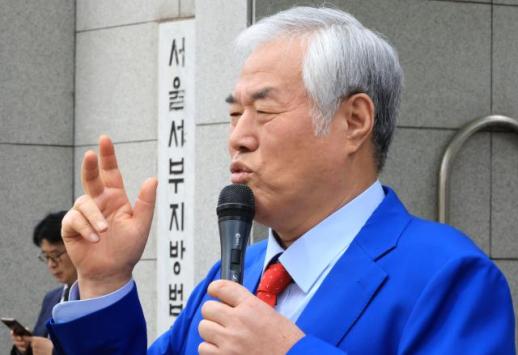 Pastor Jeon Kwang-hoon holds weekly Gwanghwamun rallies after visiting Yoon Suk Yeol On May 2, Jeon Kwang-hoon held a downtown Seoul rally after visiting former President Yoon Suk Yeol, Yonhap News Agency reported. Jeon’s group, the Korea First National Movement Headquarters, began its rally at 11:30 a.m. near the Dongwha Duty Free Shop in the Gwanghwamun area. About 6,000 people attended, according to an unofficial police estimate, waving South Korean and U.S. flags. From the stage, Jeon referred to his visit with Yoon. Jeon’s visit to Yoon at the Seoul Detention Center on April 30 had been reported earlier. “We have to make a decision. The preamble to the Constitution says to carry on the spirit of April 19,” Jeon said, adding that when the country is in turmoil it means invoking “the people’s right to resist,” as in the April 19 movement. Jeon also said martial law is “one of the president’s governing powers,” and claimed that if 10 million people gather in what he called “nonviolent arms,” as advocated by India’s Gandhi, “we can rebuild the Republic of Korea.” Jeon was previously arrested in connection with unrest at the Seoul Western District Court and was released on bail last month. He has since resumed public appearances and rallies, delivering political messages. The May 2 event was among the first large public rallies held after Jeon’s visit with Yoon became known. Separately, at 5 p.m. the progressive group Candlelight Action held a rally in front of Seoul City Hall and marched toward the U.S. Embassy in Gwanghwamun. The group denounced U.S. calls to ensure the personal safety of Coupang Inc. Chairman Kim Beom-seok, calling it a “violation of sovereignty.” It also described some U.S. diplomatic and security-related steps as “interference in internal affairs” and demanded a reset of South Korea-U.S. relations.* This article has been translated by AI. 2026-05-02 17:42:17
 -
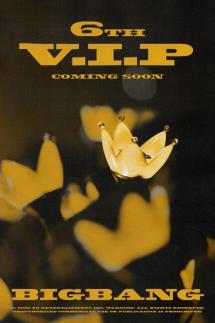 BIGBANG to reopen fan club after 11 years ahead of comeback SEOUL, May 02 (AJP) - K-pop boy band BIGBANG will recruit members for its official fan club, V.I.P, for the first time in 11 years ahead of the group’s 20th anniversary comeback, YG Entertainment said Saturday. The group unveiled a teaser poster for the recruitment of the sixth generation of V.I.P through its official social media channels on Friday. It marks the first official fan club drive since 2015. The poster features BIGBANG’s official light stick, known as Bang Bong, which symbolizes the bond between the group and its fans. Recruitment for the fan club will take place through BIGBANG’s official community on fan platform b.stage. “We prepared this new V.I.P membership round to communicate more closely with fans who have supported BIGBANG for many years,” YG said. “Please look forward to the new journey of the 20th anniversary that the artists and V.I.P will write together.” BIGBANG recently performed at the 2026 Coachella Valley Music and Arts Festival in the United States, where the group said it had completed preparations for a new album and plans to begin a world tour in August. Originally a five-member group, BIGBANG now works as a trio after Seungri left in 2019 amid the Burning Sun scandal involving a Seoul nightclub and T.O.P departed following the end of his contract with the agency. T.O.P, who later appeared in Netflix’s “Squid Game” Season 2, had previously been convicted of marijuana use. 2026-05-02 17:09:01
 -
 Iran War Risks Hormuz Strait Disruption, Exposing China’s Oil Import Dilemma When the tide goes out, what was hidden is exposed. A line attributed to the Chinese poet Su Shi has become a shorthand for what the Iran war is revealing about the global economy. In years of ample liquidity and optimism, the world rode a wave of growth. The shock of war has pushed that water back, exposing structural weaknesses. China, the world’s largest oil importer, is now at the center of that strain. Global outlets have pointed to early signs. The BBC recently reported that the war’s fallout is hitting China’s textile and apparel sector as oil prices surge. Polyester prices, tied to petroleum-based inputs, rose by about 20% in a short period, pushing up production costs. Factories in Guangzhou and Zhejiang have delayed orders or cut output because they cannot absorb higher costs. Some traders warned that “at this cost structure, global clothing price increases are inevitable.” The pattern is familiar: war lifts crude prices, and the shock moves from petrochemicals to textiles and then to consumer prices, underscoring how deeply modern industry depends on oil. The pressure is broader than textiles. The Financial Times and The Wall Street Journal have said Chinese manufacturing is facing a double hit from higher raw-material costs and logistics disruptions. The electric-vehicle sector, which has relied heavily on Middle East markets, has been unexpectedly hard hit. With shipping constrained, ports are filling with vehicles waiting to be exported, tightening cash flow. For some companies, where the Middle East accounted for 80% to 90% of exports, business has nearly ground to a halt. Demand may exist, but supply is blocked — a hallmark of a wartime economy. The economic shock is also becoming a diplomatic dilemma. China imports more than about 10 million barrels of crude oil a day, much of it from the Middle East and routed through the Strait of Hormuz. About 20% of the world’s oil shipments pass through the strait, making it a critical chokepoint. If it is blocked or becomes too risky, China would face not only higher prices but physical supply disruptions. China has built up strategic petroleum reserves, but the International Energy Agency has said stockpiles are only a short-term buffer, not a long-term solution. They may buy weeks or months, but they cannot replace the supply chain itself. At the same time, alternative sources such as Venezuela and Iran remain unstable because of sanctions and geopolitical risk. State refiners including Sinopec and Sinochem are also under pressure. When crude prices jump, refining margins become volatile, and government price controls can further squeeze profitability. International media have described the companies as moving into “crisis management mode,” a sign that the energy foundation of the broader economy is under strain. China is trying to maintain strategic cooperation with Iran while also strengthening economic ties with Saudi Arabia. It can expand purchases of Russian crude, but logistics and payment constraints remain. Energy supply chains are becoming more politicized amid strategic competition with the United States. Reuters reported that “China is positioning itself as a stable economic partner and a peace mediator, but in reality it is moving under the urgent interests of energy security.” Iran is not just a supplier. Its ability to influence the Strait of Hormuz is a strategic asset. Even without an actual blockade, the possibility can jolt markets, driving up prices, insurance costs and shipping risk. Energy, in this environment, is increasingly treated as a strategic asset tied to politics, security and diplomacy. Russia is another pillar. After Western sanctions, Russia built new markets by selling discounted oil to China and India. That can help China in the short term, but it also raises the risk of dependence on a narrower set of suppliers. As these moves intersect, the world is sliding into a cycle of “blockade and counter-blockade.” The next month is expected to test China’s ability to balance these pressures. If oil prices rise further, cost strains on manufacturers will intensify. If exports do not recover, inventories and debt could worsen at the same time. Domestic demand could also weaken under inflation pressure. International investment banks have been cutting their short-term growth forecasts for China. The article argues this should not be viewed as a routine business cycle. China’s growth model — low-cost production, stable supply chains and large-scale exports — is being shaken simultaneously by higher input prices, logistics disruptions and geopolitical risk. As the war drains away the water, the rocks underneath are becoming visible. China may try to ride out the immediate shock with stockpiles and diplomacy, but the longer-term tasks — reshaping its energy structure, diversifying supply chains and upgrading industry — are harder, and time is limited. The central question, the article concludes, is whether the crisis ends as a temporary shock or becomes a trigger for structural change.* This article has been translated by AI. 2026-05-02 16:39:23
 -
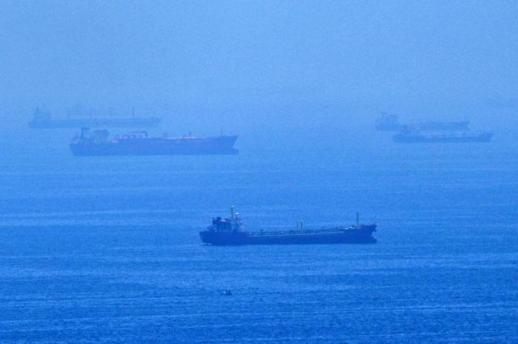 Seoul weighs role in Hormuz security efforts as US plan adds new variable SEOUL, May 02 (AJP) - South Korea is weighing how to contribute to multinational efforts to secure safe passage through the Strait of Hormuz, as a separate U.S.-led proposal adds another layer of complexity to ongoing discussions led by Britain and France. Military authorities have been taking part in talks on supporting the reopening of the key waterway after the war, starting with a virtual meeting of chiefs of staff hosted by France in March and followed by senior-level military discussions. Seoul has maintained that it is reviewing possible contributions. The discussions, involving around 40 countries, have produced broad agreement on the need for international cooperation to ensure freedom of navigation. The more difficult question is whether South Korea will deploy military assets. The Strait of Hormuz remains exposed to regional tensions and irregular threats. Operations to clear mines or protect civilian vessels could leave participating forces vulnerable to drone attacks and other asymmetric threats. The possible deployment of the Cheonghae Unit’s destroyer Dae Jo-yeong, or its replacement vessel Wang Geon, has been discussed, but caution remains strong within the military given the need to ensure troop safety. Domestic procedures also remain a key factor. If the Cheonghae Unit, currently deployed in the Gulf of Aden, is redirected to the Strait of Hormuz or given an expanded mission, parliamentary approval would be required. That means the issue would require not only a military decision but also political consensus. The government’s emphasis on a phased response plan appears to reflect these constraints. As an initial contribution, Seoul is expected to consider sending personnel and sharing intelligence. Options include dispatching liaison officers to a multinational command or strengthening information-sharing channels. Such steps would allow South Korea to respond to international calls for cooperation while minimizing the military burden. The U.S. proposal for a “maritime freedom” coalition has emerged as a new variable. If a separate U.S.-centered coalition takes shape alongside the existing UK-France-led initiative, Seoul may have to reassess how and where to participate. The government has refrained from making a formal announcement while continuing close consultations with Washington. Experts say the issue should be seen not simply as a question of troop deployment but as a broader diplomatic strategy. Seoul must balance cooperation with the U.S., given the importance of the alliance, with participation in a European-led multilateral security effort. Leaning too heavily toward one coalition could also create diplomatic risks, they say. The government is likely to first assess the details of the U.S. proposal and the level of international participation before deciding on the scale of its phased contribution. The deployment of military assets is expected to be considered only as a limited option at a later stage. However, pressure for more active military involvement could grow if the security situation in the Middle East deteriorates further or if disruptions in the Strait of Hormuz are prolonged. 2026-05-02 16:24:05
 -
 Seoul mayoral race: Poll lead holds, but undecided voters and turnout loom large Seoul’s political mood is hard to read. Poll numbers are moving, but many voters are holding back. The central dynamic in the race is this: public sentiment appears to be shifting, but many people still hesitate to vote. Recent published polling trends still show a gap, with candidate Jeong Won-o ahead and candidate Oh Se-hoon closing in. But reading the race only through charts is risky. The key is momentum. Oh’s gradual rise matters because small shifts can become the start of a turnaround. Against that backdrop, Jeong’s campaign was hit by a controversy over a promotional post citing a poll. The material was posted without required disclosure items such as the polling firm and survey period, then deleted at what critics called “the speed of light.” The episode left a political impression beyond a simple mistake. A front-runner needs steadiness, not haste, and the incident suggested a campaign in a rush. With similar disputes said to have occurred repeatedly, Jeong’s camp may struggle to avoid criticism of poor oversight. In politics, impatience can be costly. The more a candidate leads, the more composure voters expect. When a small error hardens into doubts about why a campaign is rushing, the contest can shift from numbers to psychology. For Jeong, the immediate need is tighter management, not more messaging. For Oh’s side, the moment creates an opening. Challengers start at a disadvantage, but they can benefit first when the race becomes unstable. If the opponent repeats mistakes, momentum can move without direct attacks. In that sense, elections can reward the side that holds steady when the other side wobbles. The biggest variable, however, may be undecided voters. In conversations with residents, a pattern keeps emerging: distrust of politics, fatigue with the two major parties, and signs of weakening willingness to vote. One resident described themselves as “undecided” while sharply criticizing certain political behavior. Yet when asked whether they would vote, the answer became uncertain. That reflects a slice of Seoul’s mood. This type of distrust-driven undecided voter could be decisive. They do not move easily, but when they do, they can shift the race. The risk is if they do not move at all: turnout falls, and the side with stronger organization gains an advantage. It is a democratic paradox — anger without action — and the article describes it as a warning sign. Intense political clashes and disputes over prosecutors and special prosecutors are also adding to fatigue rather than energizing voters, the article says. Instead of generating momentum through conflict, politics is widening cynicism. A typical result in such moments is a low-turnout election. The race, then, is not only about who leads in support. It is also about who can get more voters to the polls. A front-runner can stumble through complacency, and a challenger can flip the contest by seizing an opening. Meanwhile, undecided voters may delay their decision until the end. For now, the article concludes, sentiment in Seoul may be moving, but whether it turns into votes remains unclear — and the gap could close quickly depending on who bridges it first. * This article has been translated by AI. 2026-05-02 16:21:18
 -
 Pokémon leaps off screen as game IP craze paralyzes Seongsu SEOUL, May 02 (AJP) - Crowds are continuing to line up for a Pokémon pop-up event in Seoul’s Seongsu-dong on Saturday, a day after tens of thousands of fans packed the area and prompted organizers to suspend parts of the event just hours after it opened. The continuing turnout shows how game and animation intellectual property, or IP, is increasingly moving beyond screens into offline spaces, drawing massive crowds through pop-up stores and experience-based events. The event, held to mark the 30th anniversary of the Japanese animation and game franchise, drew large crowds from early morning as fans gathered for a pop-up store operated by Pokémon Korea. Authorities began receiving multiple reports around 10:30 a.m. that the area was becoming dangerously crowded. No injuries were reported. Pokémon Korea had opened the pop-up store in Seongsu-dong and held an event offering rare cards to visitors who participated in games. The promotion drew fans during the Labor Day holiday, while visitors to a Pokémon-themed garden installed at the nearby 2026 Seoul International Garden Show in Seoul Forest also added to the crowd. Photos and videos posted on social media showed narrow streets in Seongsu packed with people, with some users expressing concern over crowd safety. According to Seoul city estimates, the number of people in the Seongsu cafe street area rose from around 26,000 at 10 a.m. to about 40,000 by noon. The organizer suspended the event around noon at the request of Seoul city and other authorities. Some participants protested the decision, leading to brief disputes at the scene. Police officers were deployed to mediate and manage the crowd. The trend comes as pop-up stores have become a mainstream marketing channel in Korea. According to Sweet Spot’s 2025 Pop-up Trend Report, 3,077 pop-up stores were held across its network last year, up 109 percent from a year earlier. Seongdong District, which includes Seongsu-dong, accounted for 35.38 percent of pop-ups in Seoul. Sweet Spot also said more than 60 pop-up stores were operating in Seongsu-dong in a single week as of April 2026, showing how temporary retail events have become a regular feature of the district rather than one-off promotions. Cushman & Wakefield’s 2025 Seoul High Street Retail report said the district is evolving from a pop-up store hub into a flagship destination, recording the lowest vacancy rate among major commercial districts in Seoul. The shift also reflects the growing commercial value of character and content IPs. KOCCA’s latest annual report showed Korea’s content industry sales rose 2.6 percent to $112 billion in 2025, while exports grew 5.9 percent to $14.91 billion, driven in part by character businesses. 2026-05-02 15:05:19