
Journalist

Seo Hye Seung
-
 FSS chief’s expense account disclosed for first time; averaged 2.09 million won a month over 8 months Details of official expenses used by Financial Supervisory Service Gov. Lee Chan-jin since taking office have been disclosed for the first time, with most spending tied to discussions on supervisory issues, staff encouragement and media briefings. According to financial authorities on the 29th, the FSS posted the governor’s expense-account records on its website the previous day. The disclosure covers eight months of spending from August last year, when Lee took office, through March this year. Total spending during the period was 16,677,500 won across 76 transactions, averaging about 2.09 million won a month. Monthly totals were 1,621,100 won in August 2025; 2,167,000 won in September; 1,629,000 won in October; 2,336,600 won in November; 2,068,400 won in December; 2,268,300 won in January 2026; 2,204,100 won in February; and 2,383,000 won in March. Most expenses were incurred at restaurants around Yeongdeungpo-gu in Seoul, where the FSS headquarters is located. By purpose, work-related meetings accounted for a large share, including discussions on key supervisory issues and work plans and sharing difficulties by division. Other items included staff encouragement, meetings with news organizations, consultations with related agencies, and condolence or congratulatory payments. The disclosure follows Lee’s pledge during a National Assembly Legislation and Judiciary Committee audit in October last year. After criticism over how the FSS exercises its authority, he said he would improve transparency in the use of official expenses. Separately, official expenses used under the previous FSS governor from January through May last year totaled 12.10 million won, averaging 2.42 million won a month: 2.37 million won in January, 2.55 million won in February, 1.82 million won in March, 2.45 million won in April and 2.89 million won in May. 2026-04-29 09:40:16
 -
 Korea Creative Content Agency Earns Top Shared-Growth Rating for Fourth Straight Year The Korea Creative Content Agency said Tuesday it received a top rating for the fourth consecutive year in the Ministry of SMEs and Startups’ 2025 evaluation of shared growth by public institutions. Among 133 institutions assessed, the agency maintained the highest grade and posted the top score among other public institutions, it said. The agency credited efforts including building an innovation ecosystem for the content industry using artificial intelligence; creating a cooperation framework between over-the-top streaming platforms and small and midsize broadcast and video production companies; expanding cross-industry collaboration opportunities centered on content intellectual property through a character licensing fair; and strengthening shared-growth programs based on environmental, social and governance management, it said. The agency also operates business centers overseas that serve as local hubs for small and micro content companies. It said it used the global reach of K-content to broaden overseas demand in related industries such as food, consumer goods and tourism, helping open new export channels. “This result reflects our steady efforts to spread a culture of shared growth and cooperation across the content industry,” said Yoo Hyun-seok, acting president of the agency. “We will continue to actively support small and midsize companies so they can grow into core players in the content industry.”* This article has been translated by AI. 2026-04-29 09:38:15
 -
 Samsung Biologics Labor Dispute Nears Strike, Raising Calls for Balanced Solution Samsung Biologics’ labor dispute has moved toward a strike, with disruptions already reported in some processes and the possibility of a broader walkout being discussed. The issue should not be dismissed as a routine company dispute, but it also should not be exaggerated into a “national crisis.” The central task is to uphold the principle of autonomous bargaining at a private company while finding a balanced approach that accounts for potential spillover effects across the industry. First, the basic principle should be clear: A company is a private entity, and labor-management negotiations are fundamentally voluntary. Talks over wages, bonuses and working conditions are a matter of reconciling interests between the parties. Framing the dispute as “public interest” to pressure one side is difficult to justify. Workers’ right to strike is also protected by the Constitution. Still, this dispute has features that set it apart. Contract manufacturing of biopharmaceuticals depends on long-term trust and quality certification. Production disruptions can go beyond short-term revenue losses, affecting contract stability and a company’s reputation. That can ripple to partners, investors and the local economy. In other words, while the dispute is private, the industry’s external impact is large, and public-interest considerations may also need to apply. Even so, that does not justify assigning blame to only one side. It is not persuasive to label union demands “excessive” simply because a strike burdens the company. At the same time, management cannot avoid responsibility if it allowed conflict to escalate in an industry where stable production is critical. In sectors with high systemic risk, managing disputes early and drawing out compromise is a core management function. The view that worker compensation and future investment are a simple trade-off also warrants review. Corporate capital allocation is complex. It cannot be assumed that wage increases automatically lead to cuts in research and development. Conversely, it also cannot be ruled out that excessive short-term compensation could squeeze investment capacity. The key is not simply raising or lowering one item, but designing a balanced allocation of overall resources. Labor and management should seek a practical meeting point on that basis. A solution is not found in “dialogue” alone. For talks to work, institutional support is needed, and that is where the government’s role begins. The government cannot directly intervene in wage levels or management rights. But it can create a framework for mediation and conditions that allow negotiations to continue. Options could include procedures that encourage intensive bargaining for a set period, minimum operating standards for essential processes, and a system to assess public-interest impacts if the dispute drags on. Such measures could reduce industrial shock without undermining bargaining autonomy. Another key issue is transparency. When wage demands, business performance and investment plans are disconnected, rational judgment is difficult. The company should present financial conditions and investment plans more clearly, and the union should explain the basis for its demands in concrete terms. When information is shared, negotiations can be driven by numbers rather than emotion. Ultimately, the core issue is balance: workers’ rights, corporate sustainability and industrial stability must all be weighed. Emphasizing only one side will not produce a solution. A strike should be a last resort, and management should also leave room for compromise to the end. What is needed now is not a test of strength, but restoring trust and finding a realistic compromise. The Samsung Biologics dispute may be part of the growing pains of a maturing Korean industry. If it is not managed, it could become a broader crisis; if resolved well, it could help establish a new balance. Neither side is free of responsibility. * This article has been translated by AI. 2026-04-29 09:37:38
 -
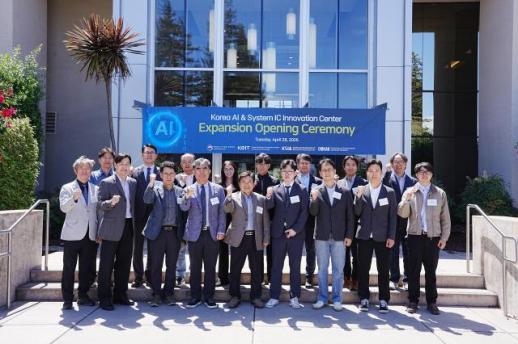 Korea Expands Silicon Valley AI Chip Innovation Center to Support Fabless Firms The Korea Semiconductor Industry Association has doubled the size of its Korea-U.S. AI Semiconductor Innovation Center in Silicon Valley, stepping up support for South Korean fabless chipmakers seeking to expand in the U.S. market. The group said the center will further serve as a local hub, offering on-the-ground testing and verification and helping connect companies with customers as the AI chip market grows and global supply chains are reshaped. The association said it held an opening ceremony for the expanded center on April 28 local time in Silicon Valley. The center is operated with support from South Korea’s Ministry of Trade, Industry and Energy and the Korea Institute for Advancement of Technology. Founded in September 2024, the center has served as a base for South Korean system semiconductor companies entering the U.S., in a region packed with global big tech and fabless firms. It launched with five resident companies and 20 member companies; after the expansion, those totals rose to 10 and 40, respectively. Resident and member companies posted more than $36 million in U.S. sales last year, according to the association. Industry officials have said the results show the center is playing a practical role in helping South Korean AI and system semiconductor firms enter the U.S. market. Among the resident companies, Sapien Semiconductor signed a supply contract for display driver chips for smart glasses, and SemiFive won a project to develop a fully homomorphic encryption, or FHE, accelerator, the association said. The expansion also strengthens on-site support facilities, including a test lab, meeting rooms and networking space. QRT, a company specializing in reliability testing, will participate in operating the center’s test lab, creating a one-stop setup that runs from reliability verification to links with local customer networks. The center is also working to connect global AI companies with South Korean fabless firms. The day after the ceremony, it plans to invite U.S. AI cloud company TensorWave for one-on-one business consultations with South Korean system semiconductor companies including Mobilint and HyperAccel. The association said it plans to further expand programs that match companies with local demand, strengthen testing and verification support, and provide tailored assistance. Kim Jeong-hoe, vice chairman of the Korea Semiconductor Industry Association, said, “We expect the expansion of the center will further accelerate South Korean system semiconductor companies’ entry into the U.S. market.” He added, “To respond to a rapidly changing market environment centered on AI, continued policy support from the government is important.” 2026-04-29 09:36:51
 -
 U.S. intelligence weighs Iran response if Trump declares unilateral victory, sources say U.S. intelligence agencies are analyzing how Iran might respond if President Donald Trump were to declare a unilateral victory, as political pressure grows with the war dragging on, according to a Reuters report. Reuters, citing U.S. government officials, reported April 28 local time that intelligence officials are reviewing the potential fallout if Trump declares victory in the roughly two-month war with Iran. The report said the analysis, requested by senior administration officials, is part of broader scenario planning. Some officials and advisers are concerned the conflict could lead to a major Republican defeat in the midterm elections, and they want to understand the consequences if Trump pulls back from the war. No specific decision has been made, but Trump could expand military operations again if needed. A rapid de-escalation could ease political pressure, officials said, but it could also allow Iran to rebuild nuclear and missile capabilities and expand its regional influence. U.S. intelligence has conducted similar assessments before. After initial airstrikes in February, one assessment found that if Trump declares victory and reduces troop levels, Iran would be likely to treat it as a de facto victory. If Trump declares victory while keeping forces in place, it could be seen as a negotiating tactic, but would be unlikely to end the war, the assessment said. The White House says it remains open to talks. Spokeswoman Anna Kelly said the United States is still negotiating with Iran and will not rush into a bad deal. She said the president will agree only to a deal that puts U.S. national security first and has made clear Iran must never obtain a nuclear weapon. Public opinion in the United States has worsened, the report said. In a Reuters/Ipsos poll, 26% said the military operation was worth the cost, and 25% said it made the United States safer. The prolonged war is also weighing on energy markets. The Strait of Hormuz, which Iran has blocked, is a key shipping route through which about 20% of the world’s oil cargo passes. Continued disruption has kept pressure on international crude prices and U.S. gasoline prices. A diplomatic solution remains unclear. Trump signaled skepticism about progress by canceling a weekend trip to Pakistan by envoy Steve Witkoff and Jared Kushner, the report said. Military options are still being reviewed inside the administration, though one U.S. government official and another source said the most hard-line option, such as an invasion of the Iranian mainland, appears less feasible than it did several weeks ago. Iran, meanwhile, is believed to be using a ceasefire period to repair military assets damaged in the initial airstrikes. Analysts said that if full-scale fighting resumes, the military costs could be higher than at the outset.* This article has been translated by AI. 2026-04-29 09:36:04
 -
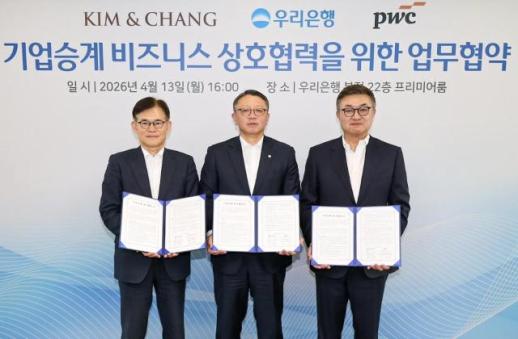 South Korea’s Business Succession Bill Needs Market Fixes, Not Just Tax Breaks Small and midsize businesses in South Korea are disappearing — and not only because they are losing money. Even profitable firms with strong technology are shutting down. Owners are aging, there is no successor, and even when they try to sell to a third party, suitable buyers often do not emerge. Discussion of a proposed “special act on business succession,” raised by the Democratic Party’s Euljiro Committee, starts from that reality. The direction is right, but whether the prescription is sufficient needs scrutiny. The first question is the cause. Labeling the closure of profitable companies as a simple “policy failure” is too narrow. It is true that tax benefits for third-party acquisitions lag those for family succession, and that is a real barrier. But it is not the whole story. Many small manufacturers face low margins, unstable trading relationships and heavy reliance on domestic demand. A company may show a profit on paper, but if its growth prospects are unclear, outside investors’ reluctance is a market judgment. That means the succession problem is not only about taxes; it is about the industrial ecosystem. Cutting taxes alone will not solve it. A structure that can generate profits and a market that can support growth must be built alongside any tax relief. Otherwise, tax incentives will be only a temporary fix. Even so, a special act on business succession is needed. With family succession increasingly difficult, keeping companies alive through third-party acquisitions is a practical alternative. From the standpoint of preserving technology and jobs, mergers and acquisitions are a far better option than closure. Tax support comparable to family succession and simplified procedures should be pursued. The point is that these steps are necessary, but not sufficient. Foreign examples also need to be used carefully. Germany’s competitiveness among midsize firms is not simply the result of “passing companies down through generations,” but of long-term investment, stable business relationships and strong technological capabilities. A family-succession model and a third-party M&A model work differently. South Korea cannot simply copy Germany and must design a succession model that fits local conditions. Another challenge is balancing speed and protection. The longer a succession takes, the more a company’s value can fall, so streamlining procedures and speeding transactions matters. At the same time, safeguards are needed to prevent technology theft. These goals can conflict. A practical approach is to limit access to information early and institutionalize step-by-step deal structures in which core technology is disclosed only after a certain level of trust is secured. Achieving both speed and protection requires more precise design, not just fewer steps. The biggest issue comes after the acquisition. The goal of the proposed law is not merely more deals, but the preservation of technology and jobs. Private investors, however, act for profit, not public interest. The risk cannot be ruled out that a buyer could take tax benefits, acquire a company, then strip key assets and cut staff. To prevent that, post-deal oversight is essential, including clear requirements to maintain employment for a set period, limits on overseas leakage of core technology, and conditions for clawing back tax benefits in stages. In sum, a special act on business succession is needed, but it is not enough on its own. Tax support, procedural reform, technology protection and post-deal management must be designed as a single package. Beyond that, policies must also create a market environment in which small and midsize businesses can grow. Emphasizing succession without fair trading structures and stable profit foundations is like trying to grow a tree without roots. South Korea’s economy may appear to be holding up, but its industrial base is weakening. If small and midsize businesses collapse, large companies cannot hold out either. Business succession is not a problem of individual firms; it is directly tied to the sustainability of the broader industrial system. Politics cannot afford further delay. But rushing is not enough, either. The direction is right, and the design must be more precise. Keeping companies going is not simply inheritance; it is protecting the industrial foundation.* This article has been translated by AI. 2026-04-29 09:35:05
 -
 DB HiTek to Showcase Next-Gen SiC and GaN Power Chip Processes at PCIM 2026 DB HiTek said Tuesday it will take part in PCIM 2026, Europe’s largest power semiconductor exhibition, to be held June 9-11 in Nuremberg, Germany, where it plans to present its latest technology. In its second consecutive year at the show, the company will share the latest development status of silicon carbide (SiC) and gallium nitride (GaN) processes, which it described as next-generation power semiconductors. DB HiTek also plans to discuss cooperation with customers in Europe, focusing on its BCDMOS process, which it said has secured industry-leading capabilities. The company said it is accelerating work to secure next-generation processes. In December, it produced products for more than 20 customers through a multi-project wafer (MPW) run based on SiC and GaN processes. It said deliveries to customers have recently been completed and evaluations are under way. Based on those results, DB HiTek said it plans to finalize the process technology and begin full-scale mass production starting in 2027. DB HiTek said it is currently in mass production with about 400 customers in its core power semiconductor business. It also said it plans to keep increasing the share of industrial and automotive products, supported by specialized image sensor process technologies such as single-photon avalanche diode (SPAD) devices.* This article has been translated by AI. 2026-04-29 09:34:25
 -
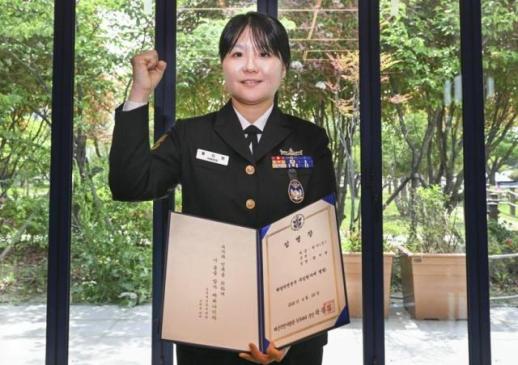 South Korea Navy Names First Female Senior Enlisted Adviser, Highlighting Broader Shift A milestone in South Korea’s Navy history was marked with the appointment of its first female senior enlisted adviser. The Navy named Master Chief Petty Officer Hwang Ji-hyeon to the symbolic post of senior enlisted adviser at the Maritime Operations Command. Hwang, commissioned as a noncommissioned officer in 2006, has repeatedly set “firsts,” including serving as a training company commander and advancing in shipboard specialties, the column said. It described her appointment as more than a routine personnel move, calling it a signal of how the military is changing. The military has long been defined by tradition and strict discipline, and “first” records can indicate shifting standards, the column said. Hwang’s rise, it argued, reflects a move toward evaluating service members by ability and experience rather than gender. It said she has trained thousands of noncommissioned officers and built operational experience on major combat ships, adding that her record is viewed as “proven capability” before “first female.” Still, the column cautioned against treating one case as proof of complete, organizationwide change. Individual achievement can show what is possible while also underscoring remaining barriers, it said, arguing the moment is better understood as a transition than an endpoint: the door has opened, but the path through it is not yet wide enough. The column said demographic decline and changes in force structure are pushing the military toward new choices, arguing it can no longer sustain itself by limiting participation by specific groups. It added that broader opportunity does not mean lower standards; rather, competition can intensify and criteria can become more precise. In that framing, population shifts open the door, but performance remains the standard for passing through it. It described Hwang as a “pioneer” not because she began with special advantages, but because she accumulated results within existing standards. Her appointment, it said, is less about a single hero than about steady work reaching a point that changes expectations, becoming a benchmark for the next generation. From there, the column turned to the question of what society chooses to remember, arguing that change is built on time and accumulation that often go unseen. It pointed to the “Bohun New Year Literary Contest,” hosted each June by Ajunews during the month dedicated to veterans affairs, describing it as more than a writing competition: an effort to bring past sacrifice into present language and restore stories that were not recorded. At first glance, the appointment of a female senior enlisted adviser and the literary contest may seem unrelated — one a current achievement, the other an act of remembrance — but the column said both are linked by continuity. Past sacrifice shapes the present, and today’s choices become tomorrow’s standards, it argued, adding that veterans affairs is not only about the past but also a force that influences the present. Hwang’s path, it said, was made possible by years of gradual opening within the military and by the accumulated work of many people who served without recognition. For that reason, the column argued, her “first” should be understood as a community story as well as a personal one. It said the literary contest carries a similar message: society may remember the names of heroes while forgetting the many ordinary lives that made those achievements possible. The strength that sustains a country, it argued, often comes from people doing their jobs in everyday roles and from choices that were real even if they were never written down. The column added that change that begins in the military can extend across society. Recognizing diversity and judging people by ability, it said, is a principle that applies to companies, public institutions and schools alike, arguing that national competitiveness depends not only on systems but on standards. Memory, it said, helps shape those standards. A society that forgets the past can lose direction, while one that remains stuck in the past cannot move forward. What matters is connecting past remembrance to present choices and expanding those choices into future norms, it argued. June’s month of veterans affairs, the column said, is a time to reflect on that connection, and the literary contest is a venue for turning it into concrete language. Through writing, it said, people revisit the past and reconsider the present, allowing individual experience to become shared memory. Hwang’s step, it concluded, is not an end but a beginning — and a starting point for someone else. In the same way, it said, a single written story or a single remembered life can become a standard for the next generation. The column ended with two questions: What will we remember, and what standards will we set through that memory? It argued that the Navy’s first female senior enlisted adviser and the Bohun literary contest, though different scenes, pose the same challenge — to remember the past, choose in the present and prepare for the future — and that the answer lies in doing one’s role and recording the stories that accumulate into a society’s direction.* This article has been translated by AI. 2026-04-29 09:31:08
 -
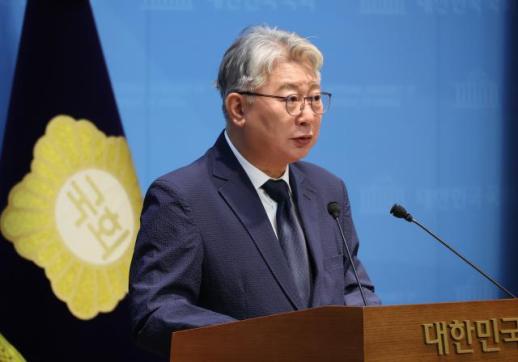 Gyeonggi governor candidate Cho Eung-cheon says Choo Mi-ae has 'no attack points' against him Cho Eung-cheon, the Reform Party’s candidate for Gyeonggi governor, said Tuesday that Democratic Party candidate Choo Mi-ae would be “the easiest” opponent and “not uncomfortable,” adding that she would have “no attack points” against him. Cho made the remarks on YTN Radio’s “Jang Seong-cheol’s News Myeongdang” when asked whether he found Choo a difficult rival. Cho said the key question was whether a candidate had given serious thought to Gyeonggi Province, and said that when he watched the Democratic Party’s primary debate, Choo appeared to turn to talk of prosecutorial reform when she was stuck. He criticized her as having focused on political fights in national politics during her time in the legislature. He also questioned her motives for running, saying it seemed she needed the position rather than having a plan for what to do as governor. He said he suspected she was using the race as a steppingstone to “a bigger place” in four years. Asked about the People Power Party’s primary for the Gyeonggi governor nomination, Cho said he did not know much about it and that party members would decide, but added that “there seems to be no answer” no matter who wins. The People Power Party will hold its primary from April 30 through May 1, and will announce its final nominee on May 2 from among Ham Jin-gyu, a former lawmaker; Supreme Council member Yang Hyang-ja; and former MBC announcer Lee Seong-bae. Asked whether he would consider aligning with the People Power Party nominee, Cho said he had “no intention at all.” Cho also criticized party leader Jang Dong-hyeok, saying he changed sharply after becoming leader and suggesting he had “sold his soul” to the “Yoon Again” forces for a presidential bid and his own political ambitions.* This article has been translated by AI. 2026-04-29 09:30:17
 -
 Online Reaction to Chef Ahn Seong-jae’s Korean Pork Ad After Wine-Switch Controversy A full TV commercial featuring chef Ahn Seong-jae, a promotional ambassador for Korean pork, has been released, drawing reactions from users on online communities. On the 28th, one online community shared a campaign video titled, “A global ingredient, close at hand: Korean pork.” The ad highlights the appeal of Korean pork through close-up visuals of meat cooking and juices running. In a segment labeled “Superfood,” it also presents a nutritional angle, describing Korean pork as a daily ingredient that provides protein and essential nutrients and supports a balanced diet. Some commenters, however, pointed to Ahn’s recent “wine switch” controversy and compared the timing to Baek Jong-won, CEO of Theborn Korea, who previously faced criticism over disputes about the Korean pork content in his “Baek Ham” product. Comments included, “A Korean pork ad at this timing feels loaded,” and “It’s like Korean pork showed up as a grim reaper.” Some users argued over whether the ad’s release coincided too neatly with recent controversies. The debate follows a dispute involving wine service at “Mosu Seoul,” a fine-dining restaurant operated by Ahn. A user identified as A wrote on a Naver cafe that after visiting Mosu Seoul and ordering an expensive wine, a different wine was served. A said, “The sommelier who served us explained the wine while holding a bottle labeled as a ‘2005’ vintage, and the explanation was also for 2005. But after tasting the wine and looking at the wine pairing list, I realized only then that a 2000 vintage should have been served.” Mosu Seoul posted an apology on its official social media account on the 23rd, saying, “We bow our heads in apology regarding the matter recently shared through online communities.” The restaurant said, “On the 19th, during the wine pairing service, accurate guidance was not provided to the customer, causing confusion. We also sincerely apologize for not providing a sufficient explanation during our response afterward, which caused great disappointment.” It added, “After the incident, we separately apologized to the customer, and (the customer) accepted it generously, but in light of the expectations placed in our restaurant, we take seriously that the process was still not sufficient.” Some users who saw the apology said they remained dissatisfied. 2026-04-29 09:29:31