
Journalist

Seo Hye Seung
-
 OpenAI Renegotiates Microsoft Deal, Opening Path to AWS and Google Cloud OpenAI and Microsoft have revised their partnership, loosening a structure that had effectively given Microsoft exclusive rights to sell OpenAI’s AI models. Reuters reported on 27일(현지시간) that the companies renegotiated key terms, allowing OpenAI to offer its products through rival cloud providers such as Amazon Web Services and Google Cloud under certain conditions. Under the amended agreement the companies released, Microsoft remains OpenAI’s primary cloud partner, and OpenAI products will generally launch first on Microsoft Azure. But if Microsoft cannot, or chooses not to, support needed features, OpenAI may provide those products on other clouds. A central change is that Microsoft’s intellectual property license to OpenAI models and products, which runs through 2032, is no longer exclusive. The U.S. technology outlet The Verge said the shift to a nonexclusive license could widen access to OpenAI technology for other companies. The revenue-sharing structure also changes. Microsoft will no longer share with OpenAI a portion of the revenue it earns from offering OpenAI models on Azure. OpenAI’s revenue-sharing payments to Microsoft will continue through 2030, but with a cap on the total amount. Reuters reported that Microsoft will receive 20% of OpenAI revenue through 2030, subject to an undisclosed overall limit. The adjustment comes as OpenAI seeks to expand its corporate customer base. Under the previous deal, AWS and Google Cloud customers faced constraints in adopting OpenAI products directly. Amazon responded quickly. CEO Andy Jassy said, “We will offer OpenAI models directly on AWS’s AI platform within weeks.” The revised agreement also removes an artificial general intelligence, or AGI, clause. The earlier contract included a provision that could have changed revenue-sharing and rights if OpenAI reached AGI. The new deal keeps revenue-sharing in place through 2030 regardless of whether AGI is achieved. The Verge said the AGI clause, long seen as pivotal to the partnership’s future, was deleted. The changes do not end the relationship. Microsoft remains a major shareholder with a 26.79% stake in OpenAI. OpenAI’s commitment to use at least $250 billion (about 36.8 trillion won) in Azure services through 2032 also remains in effect. 2026-04-28 14:17:58
 -
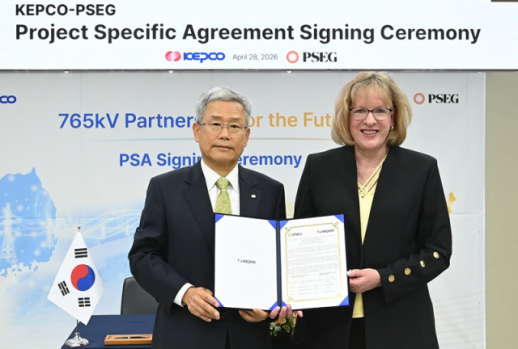 KEPCO Signs 765kV Transmission Technology Cooperation Deal With PSEG Korea Electric Power Corp. said it has partnered with U.S. energy company Public Service Enterprise Group, or PSEG, as it moves to expand into the U.S. extra-high-voltage transmission market. KEPCO said it signed the agreement on April 28 at its Art Center in Seoul’s Yangjae-dong to cooperate on 765-kilovolt transmission projects. The utility said the deal is significant because it represents formal recognition overseas of KEPCO’s capabilities in engineering, procurement and construction, or EPC, for 765kV-class transmission networks, as well as its ability to operate power systems reliably. KEPCO said its long-distance, large-capacity transmission technology and operating experience have helped demonstrate its competitiveness in the U.S. market. KEPCO said it plans to go beyond technical consulting and take a more active role across project development and execution. It said it aims to enter the U.S. power market in earnest by participating directly through equity investment and the establishment of special-purpose companies, or SPCs. KEPCO also said it will work with South Korean equipment makers under a “Team Korea” framework to pursue entry into the U.S. 765kV transmission market. It said the effort is expected to broaden overseas opportunities for South Korea’s power equipment industry and strengthen competitiveness in the global power infrastructure market. KEPCO said it plans to use the extra-high-voltage transmission business as a foothold to gradually expand cooperation in new U.S. energy ventures, including an intelligent digital power plant, or IDPP, and an advanced distribution management system, or ADMS. KEPCO President Kim Dong-cheol said the agreement “served as an opportunity for KEPCO’s 765kV EPC and operational capabilities to be validated in the global market.” He added, “As a responsible public enterprise, we will continue to expand our entry into the U.S. power market in various ways, including equity investment, in cooperation with domestic companies.”* This article has been translated by AI. 2026-04-28 14:17:12
 -
 TY Life, Hyundai Marine & Fire and My Financial Partner sign MOU to expand insurance-linked lifecare TY Life (Taeyang Life), Hyundai Marine & Fire Insurance and My Financial Partner have signed a memorandum of understanding aimed at expanding insurance-linked lifecare services, the companies said. They described the deal as a structural cooperation model that goes beyond a simple partnership, seeking to combine each firm’s customer touchpoints and product strengths into an integrated service system spanning a customer’s life cycle. The companies said the agreement centers on expanding product portfolios and diversifying sales channels. TY Life, which has broadened beyond funeral-ceremony services into health care, welfare and leisure, is expected to strengthen a “total lifecare” structure by pairing its services with insurance products. The companies said insurance focuses on protection against risks such as accidents and illness, while mutual-aid and lifecare services extend from daily life and old age through funerals, allowing a longer customer relationship when combined. For My Financial Partner and Hyundai Marine & Fire, the companies said the cooperation could help attract new customers and widen distribution. My Financial Partner, a corporate insurance agency organization, said it specializes in tailored insurance planning; adding lifecare services could shift it beyond straightforward policy sales toward a more consultative model. Hyundai Marine & Fire would also gain access to a new customer base in the mutual-aid and lifecare market, the companies said. The companies linked the deal to a broader push across finance and services to build “lifecare platforms” that move beyond single-product sales and address a range of needs over a customer’s lifetime. They cited demographic changes such as population aging, growth in one-person households and rising demand for health management as factors increasing demand for combined insurance and lifecare offerings. They also pointed to the potential for data-driven expansion. By combining insurance usage data with lifecare service data, the companies said they could more precisely analyze customer patterns and risk factors, enabling more customized product design and service recommendations and supporting more personalized services tied to digital transformation. TY Life said it has built a stable customer management system based on 22 years of experience operating mutual-aid services and has recently pursued a platform shift by expanding across lifecare. My Financial Partner is a Hyundai Marine & Fire subsidiary with face-to-face sales strength through a professional planner organization, while Hyundai Marine & Fire brings product development and risk management capabilities built in South Korea’s non-life insurance market, the companies said. The three companies said they may expand cooperation in stages, including joint product development, integrated service packages and joint marketing. Industry observers said that if the model takes hold, it could become an example of broader convergence across insurance, mutual-aid services and health care. The companies said the MOU is intended not only to boost near-term sales but also to build an integrated service structure connecting customers across their life cycle and to lower barriers between industries, signaling potential growth in similar partnerships.* This article has been translated by AI. 2026-04-28 14:16:23
 -
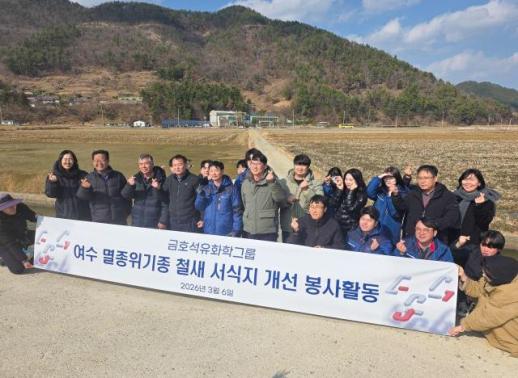 Kumho Petrochemical to Restore Migratory Bird Habitat in Yeosu Wetland Project Kumho Petrochemical Group said it is launching a habitat restoration project in Yeosu, South Jeolla Province, aimed at protecting biodiversity and supporting climate response efforts. The group said April 28 it will begin a project to improve habitat for endangered migratory birds. Five affiliates will participate: Kumho Petrochemical, Kumho P&B Chemicals, Kumho Mitsui Chemicals, Kumho Polychem and Kumho T&L. Working with Thanks Carbon, the group will invest a total of 260 million won over the next three years to create wetlands by flooding farmland near the Gasari Eco Park. The area will expand in phases, from about 1,200 pyeong in the first year to 2,400 pyeong in the second and 3,400 pyeong in the third. The Yeosu area, near the Suncheon Bay wetland, has served as a key stopover and wintering site for migratory birds. The group said industrialization and development have reduced farmland and worsened habitat conditions. Its plan is to restore winter habitat by creating flooded rice paddies on farmland during the off-season. Flooded paddies can support a range of species and are also known for storing carbon in soil, the group said. It plans to monitor bird numbers and environmental changes using unmanned sensor cameras and to develop management strategies based on the data. Local farmers will take part as operators. The group said nearby farms are supplying feed such as rice seed and sweet potatoes once a week during winter. In March, Kumho Petrochemical employees joined on-site activities, it said. Baek Jong-hoon, CEO of Kumho Petrochemical, said, “Preserving Yeosu’s ecological value and protecting biodiversity is a responsibility for a company that has grown with the local community.” He added, “We will continue sincere efforts to deepen our ESG management.” Separately, the company said employees raised 210 plants of the Jeju native species ‘pachoil-yeop,’ a Class II endangered wild plant, for nine months and planted them near their natural habitat at the Kumho Jeju Resort. 2026-04-28 14:15:18
 -
 Iran Nears Oil Storage Limit Under U.S. Pressure, May Face More Output Cuts Iran is rapidly running out of crude oil storage capacity under U.S. economic pressure, raising the likelihood of additional production cuts, analysts said. Bloomberg reported on April 27, citing commodities analytics firm Kpler, that Iran has only about 12 to 22 days of usable crude storage remaining. Kpler said shrinking storage could push Iran to cut output by as much as 1.5 million barrels a day by mid-May. Goldman Sachs has previously assessed that Iran has already reduced crude production by up to 2.5 million barrels per day. Iran’s crude exports have fallen sharply since a U.S. maritime blockade, Kpler said. Recent exports were about 567,000 barrels a day, down from a March average of about 1.85 million barrels a day. Crude loadings have also dropped about 70% since the blockade, it said. Even with lower production, the fiscal hit is expected to arrive with a lag. It takes about two months for Iranian crude to reach Chinese ports, its main destination, and payments take additional time, meaning the impact of reduced revenue is expected to become more pronounced in about three to four months. Iran is expanding stopgap measures to keep production going, The Wall Street Journal reported. With crude piling up at home, Iran has restarted disused storage tanks in poor condition and is using temporary facilities such as containers. The steps are seen as aimed at easing infrastructure strain and reducing U.S. pressure amid tensions around the Strait of Hormuz. Sanam Vakil, director of the Middle East and North Africa program at the U.K. think tank Chatham House, said Iran is trying to avoid shutting in production and deepening revenue losses. “A production shutdown would increase pressure and encourage negotiations,” she said. Iran is also turning to rail transport, a method typically avoided because it is less profitable and efficient. A spokesperson for the Iran Petroleum Exporters Association said Iran is pursuing a plan to ship crude to China by rail. Erica Downs, an energy policy expert at Columbia University, said it is unclear whether small Chinese refineries will absorb higher rail costs, calling it “a measure born of desperation.”* This article has been translated by AI. 2026-04-28 14:12:05
 -
 BR Korea Names Cho Yoon-sang CEO BR Korea, which operates Baskin-Robbins and Dunkin, said April 28 it has appointed Cho Yoon-sang as its new CEO. Cho is a management specialist with 27 years of experience in marketing and digital strategy at major companies in South Korea and abroad. He previously led the marketing communications group at LG Electronics and served as marketing director at YUM! Global, a global franchise operator of Pizza Hut, KFC and Taco Bell, overseeing assessments of brands’ digital competitiveness, organizational management and marketing strategy. He later served as chief marketing officer for the Asia-Pacific region, leading product innovation and marketing strategy. During the pandemic, he was credited with advancing new channel strategies centered on delivery apps to respond to rapid shifts in the dining market. Most recently, Cho served as CEO of Pizza Hut Korea, where he led efforts to strengthen the organization. The company said he reinforced cooperation through direct communication with franchisees while pursuing digital transformation and performance-based restructuring, shifting the business model toward profitability. BR Korea said the appointment is aimed at strengthening its management foundation and accelerating efforts to boost brand competitiveness and digital transformation. A BR Korea official said Cho is a leader with broad market understanding, experience and strong on-the-ground execution, adding that the company expects him to raise the brand value of Baskin-Robbins and Dunkin and further advance its business model through digital innovation."* This article has been translated by AI. 2026-04-28 14:06:17
 -
 Kim Seong-tae denies alleged 'salmon and drinking party,' says he did not drink Kim Seong-tae, former chairman of Ssangbangwool, on April 28 denied allegations that he held a so-called “salmon and drinking party,” saying he did not drink and urging people to stop focusing on what he ate. He also rejected suspicions of stock manipulation involving the company. Appearing as a witness at a National Assembly hearing for a special committee investigating alleged fabricated indictments, Kim said, “I have never had a drink. I didn’t drink, so I’m saying I didn’t.” He added, “I’m close to 60. Please stop talking about what I eat.” The allegation surfaced after attorney Seo Min-seok, who previously represented former Gyeonggi Province peace vice governor Lee Hwa-young, released a transcript on March 29. The transcript raised claims that on May 17, 2023, Kim held the gathering in the office of prosecutor Park Sang-yong, who investigated the Ssangbangwool case involving alleged remittances to North Korea. On the stock manipulation allegations, Kim raised his voice, saying, “There has to be a benefit for me to manipulate stock prices. What stock manipulation are you even saying I did?” He also pushed back against claims that prosecutors conducted a lenient investigation to link President Lee Jae-myung to the North Korea remittance case, saying, “What did those vicious prosecutors supposedly go easy on?”* This article has been translated by AI. 2026-04-28 14:03:50
 -
 South Korea launches nationwide carbon-neutral action campaign, forms preparatory committee The government is moving to step up a nationwide public action campaign aimed at carbon neutrality and a major shift in energy use. The Ministry of Climate, Energy and Environment said it will hold a launch ceremony Monday afternoon at Korea House in Jung-gu, Seoul, for the “Republic of Korea Climate Action Preparatory Committee for Carbon Neutrality and the Energy Transition.” At the event, the committee will declare this year the “first year of Republic of Korea climate action” and discuss ways to build and expand everyday public participation to respond to the climate crisis and advance the energy transition. About 100 people from across society — including religious groups, industry, finance, education and civil society — are expected to attend, marking what organizers described as a new start for the initiative. The committee said it plans to systematically spread climate actions rooted in daily life and local communities so that small steps can contribute to carbon neutrality, while building broader public consensus through voluntary private-sector participation. Participants will issue a climate action declaration under the theme “From the declaration of 100 people to the practice of 10 million citizens.” Free remarks will follow, covering topics such as climate action guidelines and ways to broaden participation nationwide, environmental, social and transparent governance (ESG) cases, and policy proposals. Starting Monday, the committee plans promotional activities, including public participation events, through the “2026 Environment Day and Climate Action Launch Event” on June 5. The ministry said it will reflect the committee’s input in a future national climate action plan and build an operating framework based on voluntary participation to link the “declaration of 100 people” to “the practice of 10 million citizens.” Minister Kim Seong-hwan said, “Now is the time for everyone to act together with a sense of urgency.” He added that he hopes the preparatory committee will serve as a hub for nationwide climate action by “spreading declarations into practice, and practice into culture.”* This article has been translated by AI. 2026-04-28 14:03:17
 -
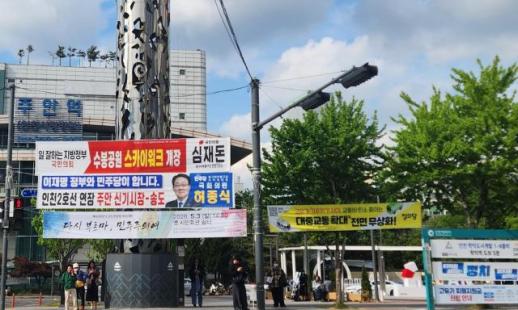 Incheon mayoral race: Voters weigh ties to ruling party vs policy continuity "Wouldn’t candidate Park Chan-dae, who is close to the president, be more helpful in resolving pending issues?" (office worker Kim, surname only) "For policy continuity, Mayor Yoo Jeong-bok should win another term." (homemaker Cho Mi-ryeong) With the Incheon mayoral election approaching, voters in the city often called a microcosm of South Korea showed little sign of rallying behind a single party or candidate. The contest pits Park Chan-dae of the Democratic Party against Yoo Jeong-bok of the People Power Party, drawing attention as a matchup between a key figure in the Lee Jae-myung administration and an incumbent seeking a third term. It is also the only race for a metropolitan mayor in the Seoul area framed as a contest between two local natives. At Incheon Bus Terminal in Gwangyo-dong, Michuhol-gu, taxi driver Byun Jang-su, 68, said he supports Yoo, adding he would vote for him "to keep the ruling party in check." A 53-year-old self-employed resident, who also described himself as Incheon-born, said the city tends to choose based on candidates and pledges rather than party or the administration in power. He said he plans to vote for Yoo, citing his experience and a high rate of delivering on promises. Old downtown areas including Michuhol-gu, Jung-gu and Dong-gu have larger elderly populations and have traditionally leaned conservative; Yoo won there in the 2022 local elections. Still, some voters signaled a shift. A 25-year-old job seeker in Jung-gu said he expects Park, a former floor leader of the ruling party, to communicate smoothly with the president and the National Assembly. A 58-year-old woman working near Sinpo International Market in Jung-gu said Yoo has done a good job but she will vote for Park, saying Park’s ties to President Lee would help address local issues. In newer districts such as Yeonsu-gu and Seo-gu, seen as decisive battlegrounds, opinions also split. Na Hyun-ju, a 48-year-old office worker in Songdo, Yeonsu-gu, said Yoo’s performance has not been rated poorly, but some residents worry that if the mayor is from a different party than the administration, projects in Songdo such as the Incheon Tower and a tram could face difficulties. She said the mayoral race there has tilted toward the Democratic Party. In contrast, Cho Mi-ryeong, a 43-year-old homemaker in Lu1 City in Seo-gu, said new towns still have many unresolved issues, including daily infrastructure. She said the city needs a candidate who can steadily continue current policies rather than offer new pledges, and she plans to vote for Yoo. Centrists and unaffiliated voters appeared even more cautious. Cho Yoon-sun, a 70-year-old woman in Namdong-gu, sometimes called Incheon’s political hub, said she votes every time but has not decided yet. She said she will back the candidate whose pledges would help residents more. A man in his 70s met near Incheon City Hall also said he plans to vote but does not have a preferred candidate. Some younger voters said they may sit out the election, saying no candidate or pledge clearly addresses problems facing their generation, including difficulty finding jobs. Noh, a 29-year-old woman in Guwol-dong, Namdong-gu, said people her age and other young voters around her have long had little interest in elections and that she does not plan to vote in the local elections. Yoo, the incumbent mayor, is set to step down from the post on April 29 and formally announce his bid for a third term in front of City Hall. Park, a three-term lawmaker representing Incheon’s Yeonsu-gu Gap district who declared his candidacy on April 22, will also resign his parliamentary seat that day and begin campaigning in earnest. 2026-04-28 14:01:16
 -
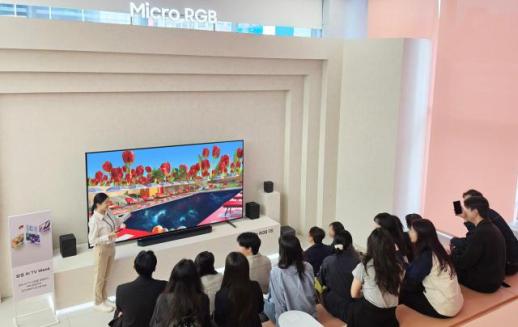 Samsung mulls TV pullout option after smartphone-like defeat in China SEOUL, April 28 (AJP) -Samsung Electronics is weighing a pullout from its TV business in China, in what would mark a second setback in the world’s second-largest market after its retreat from smartphones. Samsung Electronics said Tuesday that “no such decision has been finalized,” responding to speculation over a possible withdrawal. A company spokesperson said market conditions in China are under review, but denied reports of a full exit from its TV and home appliance business. According to market research firm AVC, Samsung’s share of the Chinese color TV market stood at just 3.62 percent as of early this month, more than halved from 8.48 percent share in March 2024. Japan's Nikkei reported Samsung plans to end its direct home appliance and TV sales in China by the end of the year, and AVC forecasts the company is likely to transition from a direct sales model to a proxy agency model within the second half of the year. Samsung Electronics Visual Display (VD) Division President Yong Seok-woo earlier this month admitted that the China business was difficult, adding that the company is "looking at the business in various forms, and discussions are currently ongoing." A retreat from the TV market would represent a second major blow to Samsung in China, echoing its earlier failure in the local smartphone sector. Much like its mobile division—which lost its dominance to domestic brands and saw its market share evaporate to roughly 1 percent—Samsung's TV division is being squeezed out by aggressive local competitors. Samsung first entered the Chinese market in the mid-1990s and established itself as a top-tier brand. By early 2011, the company led the Chinese flat-panel TV market with a 12.3 percent share, firmly cementing its image as a premium electronics manufacturer. However, Chinese rivals such as Hisense and TCL rapidly closed the gap, leveraging superior panel procurement capabilities, aggressive pricing, and expansive local distribution networks. While Samsung’s OLED TVs are still highly regarded by Chinese tech reviewers for their AI chips, design, and gaming performance, superior product quality is no longer translating into business viability. Industry analysts note that high-end strategies are failing to gain traction as domestic manufacturers successfully push into the premium segment. Foreign brands as a whole are struggling; total TV shipments in China for Sony, Samsung, Sharp, and Philips combined fell short of 1 million units last year, capturing less than a 5 percent collective market share. 2026-04-28 14:01:01