
Journalist

Seo Hye Seung
-
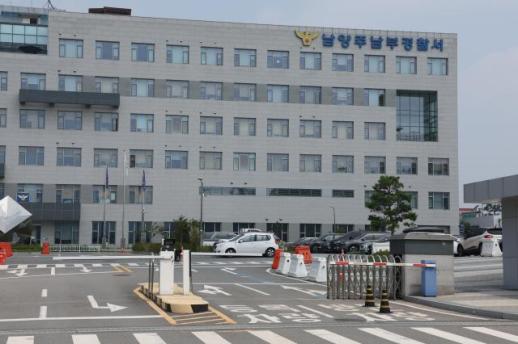 South Korean nightclub worker arrested for attempted murder of teenager SEOUL, April 25 (AJP) - A 20-year-old employee of an adult entertainment establishment has been arrested on suspicion of attempted murder after allegedly stabbing a teenager during a dispute that began while soliciting customers, police said Saturday. The Namyangju Nambu Police Station said the suspect, identified only as A, is accused of stabbing a male teenager in the chest and abdomen at approximately 2:30 a.m. Thursday. The incident took place in an underground parking garage of a commercial building in Hwado-eup, Namyangju, Gyeonggi Province. The victim was transported to a nearby hospital for emergency surgery and remains hospitalized for treatment. According to investigators, the altercation began on the street when A, who was working as a promoter for a local venue, encountered the victim, who was reportedly intoxicated at the time. Following a verbal exchange, A allegedly returned to his place of employment to retrieve a weapon before moving to the parking garage with the victim to carry out the attack. A local court issued an arrest warrant for the suspect on Friday, citing concerns that he might attempt to flee. Police officers apprehended A at the scene immediately following the stabbing. Authorities have secured CCTV footage from the area and are currently analyzing the video to determine the precise circumstances of the dispute. The investigation is ongoing as police work to establish the specific motive behind the violent escalation. 2026-04-25 13:54:37
 -
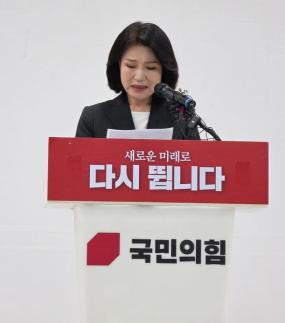 Lee Jin-sook Drops Out of Daegu Mayor’s Race After PPP Cutoff Lee Jin-sook, a former chair of the Korea Communications Commission who was cut from the People Power Party’s primary for Daegu mayor, said April 25 she will not run in the June 3 local election. With Rep. Joo Ho-young also having declared he will not run, the party’s internal turmoil over the Daegu race appeared to ease. Speaking at a news conference at the People Power Party’s Daegu office, Lee said, “Today, I am stepping down from the position of preliminary candidate for Daegu mayor.” She added, “When the People Power Party’s Daegu mayoral candidate is chosen tomorrow (26th), I will do my best to help that person defeat the Democratic Party candidate. I will help protect Daegu from the reckless Democratic Party government.” Lee again called the party nomination committee’s decision to cut her unfair, but said she would not run as an independent. “I also had the desire to leave the party and run as an independent to receive the judgment and choice of citizens,” she said. But she said she was held back by concerns that “if even Daegu is handed over to the left, what will happen to the Republic of Korea,” adding that she feared Daegu, a conservative stronghold, could be overtaken by “socialist populism.” Asked whether she might run in a possible parliamentary by-election that could arise from the Daegu mayoral contest, Lee did not answer directly. “As I said in my statement, I have only one 마음 — to protect Daegu as the last bastion of liberal democracy,” she said. Asked whether she had further meetings with party leader Jang Dong-hyuk or other members of the nomination committee, Lee said Jang met her before leaving for the United States and that they met again recently to discuss the Daegu situation. “We discussed how to protect Daegu, and there was also common ground,” she said. * This article has been translated by AI. 2026-04-25 13:51:17
 -
 Analysis: Missile Stockpiles, Costs Fuel Calls for a Broader Middle East Peace Deal War often begins with a stated purpose, but what remains is destruction, exhaustion and a bill. The Iran war launched by the United States and Israel is no exception. Framed as “security” and “deterrence,” it has increasingly highlighted rapid depletion of munitions, pressure on national economies and a broader drag on the global economy. Missile inventories and public patience can run out before any victory banner is raised. Recent analyses by U.S. media and think tanks underscore the scale of consumption. After the “Grand Rage” operation, the U.S. military has used more than 1,100 JASSM-ER long-range stealth cruise missiles, with remaining stockpiles down to about 1,500. Each missile costs about 1.6 billion won and was originally positioned as a strategic asset for a full-scale conflict with China, but nearly half has been spent in the Iran theater. More than 1,000 Tomahawk missiles have been fired — about 5.3 billion won each, roughly 10 times the annual purchase volume. More than 1,200 Patriot interceptor missiles have also been used, exceeding twice last year’s total production. War is measured not only in gunfire but in numbers. Analysts estimate the cost of munitions used in the first two days alone at $5.6 billion, with total war costs already exceeding $28 billion to $35 billion. Daily costs are nearing $1 billion. That spending is not abstract: it could have gone to health insurance for the U.S. middle class, student loans for young people, or repairs to aging urban infrastructure. Ultimately, the public pays the price. But the deeper problem is not only U.S. depletion. Israel, too, is not in a position to sustain “unlimited defense.” The Iron Dome and Israel’s layered air defenses — long regarded as among the world’s strongest — have shown clear limits in prolonged fighting. When short-range rockets and drones, ballistic missiles and cruise missiles arrive in waves, Iron Dome must prioritize targets, and saturation has appeared in some key areas. One interceptor can cost more than dozens of attack drones. Once defense becomes more expensive than offense, a long war becomes harder to sustain. Israel has also had to manage the northern Hezbollah front, Gaza and long-range threats aimed at Iran itself at the same time. Air defense is not only a technology issue but a stockpile issue; the depth of ammunition reserves can determine national security. Even the most advanced system fails if interceptors run short. Some strategic facilities and industrial infrastructure have been threatened, and civilian psychological fatigue has risen sharply. The idea of a “perfect shield” has been tested. Iran’s situation is no less severe, and in some ways more structural. Iran has maintained an “axis of resistance” centered on the Revolutionary Guard, but in a prolonged war its missile production bases and underground storage sites, drone assembly plants, air-defense radar networks and command-and-control systems have been hit repeatedly. Losses to long-range ballistic missile production lines and key air-defense bases are difficult to restore quickly. Missile launches may continue, but if sustainable production capacity collapses, Iran’s ability to wage war can weaken rapidly. Sanctions, dwindling foreign currency reserves, difficulty sourcing industrial parts and restrictions on importing precision guidance systems are already squeezing Iran’s economy. Missiles are not built on willpower alone; they require semiconductors, specialized metals, precision machinery and supply chains. The longer the war lasts, the more likely Iran’s economy is to break before its military does. Israel and Iran, the article argues, are no longer calculating victory so much as trying to avoid mutual ruin. One side’s defenses are thinning; the other’s production base is being damaged. The United States is drawing down its own stockpiles, while allied cohesion in Europe and Asia is weakening. The central issue is not who wins, but that continued fighting leaves everyone weaker. The rationale for the war is also wearing thin. The United States has spoken of removing a nuclear threat; Israel has described its actions as self-defense for survival; Iran has invoked resistance, dignity and anti-imperialism. Over time, each justification has lost persuasive force as fatigue accumulates among civilians, the international community and allies. The question “Why are we fighting?” has become harder to answer clearly. The article says wars tend to be most political when short and more commercial as they drag on: the arms industry benefits while daily life deteriorates. Oil prices rise, exchange rates swing and supply chains become unstable again. For a trade-dependent country such as South Korea, that becomes a matter of survival. A spike in oil prices can ripple from petrochemicals to aviation, logistics and food. Currency volatility can chill corporate investment and push up household costs. A war without a convincing purpose can hold the global economy hostage. The question, it says, is whether to keep fighting or to survive. Negotiations are difficult for several reasons. First is regime security. For Iran, nuclear capability is described as more than technology — it is insurance for the system’s survival. Iran, the article says, remembers Libya’s Moammar Gadhafi and what happened after he gave up nuclear ambitions. For Israel, Iran’s nuclear capability is seen as an existential threat; one side’s insecurity becomes the other’s fear. Second is domestic politics. Israel’s leadership risks political instability if it appears less hard-line. Iran’s revolutionary system is not positioned to choose retreat easily. The United States, facing a presidential election, also finds it politically difficult to accept a perceived retreat in the Middle East. Peace may be necessary, the article says, but politicians often calculate approval ratings first. Third is the regional order. Saudi Arabia, the United Arab Emirates, Turkey, Qatar, Egypt, and also Russia and China all have interests at stake. The Middle East is not a simple chessboard, the article argues, but a multilayered board where one move can shift several directions. That is why a structural agreement, not a simple ceasefire, is needed. The article calls for a new framework it labels a “Noah Accord,” beyond the Abraham Accords. The Abraham Accords, brokered by the United States in 2020, marked a diplomatic turning point as Israel and the UAE and Bahrain agreed to normalize relations, later joined by Sudan and Morocco. The core shift was that the long-standing formula — no normalization with Israel before resolving the Palestinian issue — weakened under political realities. The United States offered security assurances, arms sales and economic support, while Arab states chose to counter Iran and pursue practical interests. The process moved through strong U.S. diplomatic coordination, quiet working-level talks and formal signing at the White House. But that was mainly an adjustment of state interests, the article says. What is needed now is a deeper civilizational understanding — returning to a more fundamental shared ancestor than Abraham, namely Noah. Citing Genesis 10, it says Elam, understood as an ancestor of Iran, is placed in the line of Shem, Noah’s son. Israel is also described as descending from Shem, with Abraham within that genealogy. The article notes interpretations linking Eber to the origin of the term “Hebrew,” concluding that Iran and Israel are not civilizational strangers but nations that split from the same roots. AJP, the English news service of Aju News Corporation, says it has long been uncomfortable with media framing that reduces the region to “Arabs versus Israel.” The Middle East includes Persians, Turks, Kurds and Jews, it says, and Iran is not an Arab country. Persia’s 5,000-year civilization is distinct, and the article argues that any serious regional expert should understand that basic historical structure. The article cites Jeremiah’s judgment of Elam’s pride while also quoting, “In the last days I will restore the fortunes of Elam” (Jeremiah 49:39). It argues that judgment and recovery can coexist, and that total destruction does not create a sustainable order; only a peace that allows recovery can shape the future. It says a “Noah Accord” should start from three points: addressing the nuclear issue within a framework of regime security guarantees; redesigning a multilateral regional security architecture that includes Iran and Israel; and linking economic cooperation, supply-chain stability and joint energy management. Peace does not arrive by declaration alone, it argues, but by building shared structures for daily life. If the Abraham Accords were a diplomatic agreement, the article says, a Noah Accord must be an agreement for survival. In a reality where no one can win completely and no one can disappear completely, coexistence is presented as the only exit. The article cites Sun Tzu’s maxim that the best victory is won without fighting, the Tao Te Ching’s line that the strong are broken while the soft survive, and the Bible’s blessing on peacemakers. Civilization, it argues, is built not on the edge of a sword but on order. What Iran and Israel need now is not more missiles, the article concludes, but more imagination and trust. With munitions depleted and justifications fading, it says the remaining choice is whether to keep fighting and collapse together, or remember shared roots and live together. It adds that Middle East peace is no longer only a regional issue, but tied to global economic stability, South Korea’s national interest and the next chapter of human civilization — and that it is time for agreements, not gunfire, to change history. * This article has been translated by AI. 2026-04-25 13:47:04
 -
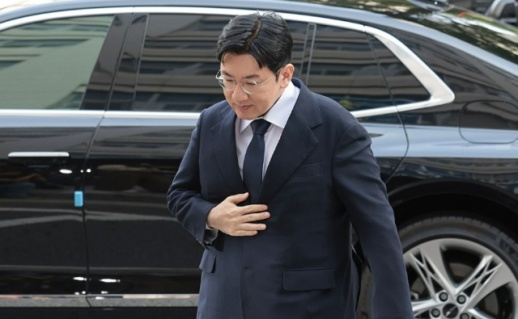 Prosecutors Seek More Investigation in Suspected Capital Markets Case Involving HYBE’s Bang Si-hyuk No one stands above the law, and capital markets run on trust built through fair disclosure and transparent procedures. Allegations that HYBE Chairman Bang Si-hyuk violated South Korea’s capital markets law therefore warrant careful scrutiny. The core suspicion is that before the company’s initial public offering, Bang told existing shareholders there were no IPO plans, encouraged them to sell stakes to a specific private equity fund, and later realized large gains through the listing. If proven, the conduct should be judged under the law. Markets do not move on emotion or reputation. They move on contracts, disclosures and verifiable facts. In that context, prosecutors’ recent decision to return a request for an arrest warrant for Bang and seek additional investigation is significant. It does not amount to a finding of no wrongdoing; it reflects a judgment that, at this stage, the case has not met the threshold to justify detention as a compulsory measure. A basic principle of criminal justice is investigation without detention. In many economic-crime cases, key evidence is preserved in documents — contracts, accounting records and internal reports. Unless there is a clear risk of flight or evidence destruction, detention is generally treated as a last resort. The article notes that Bang is a globally known business figure whose domestic and overseas activities are public, and that he has cooperated with repeated summons for questioning. Equality before the law is essential, but proportional and rational enforcement is also part of justice. Detention is an investigative tool, not punishment, and should not be used as a symbolic response to public pressure. The case also unfolds against a broader backdrop. Bang’s name is closely tied to BTS, described here as a global cultural asset and a major symbol of South Korea’s cultural influence. The article calls 2026 a pivotal year, saying the members are expected to return as a full group after completing military service and that global demand for BTS’ return remains high. It describes the fan base, known as ARMY, as a cross-border cultural community, and says competition to host BTS concerts has spread beyond entertainment into the realm of diplomacy, from Seoul to Mexico, Vietnam, the United States, Europe, the Middle East and Latin America. In Mexico, the article says, discussion has included a message that the country’s president hopes to attract a BTS concert — framed not as a simple request but as an event tied to national image, tourism revenue, youth culture and consumer spending. Vietnam is also described as seeking a concert as part of youth cultural demand and national branding. The article argues that a BTS world tour cannot be measured only by ticket revenue, citing ripple effects across airlines, hotels, retail, cosmetics, fashion, food and platform businesses. It says a single Seoul concert can generate economic effects in the “trillions of won,” and that overseas tours expand the scale, including broader exposure for Korean brands and gains in national image and tourism. It also links BTS to a wider “K-series” of industries — including K-food, K-beauty, defense exports and semiconductors — and says K-dramas and Korean cinema should be part of that package. It cites the global impact of “Squid Game” and the stature of “Parasite” as evidence that South Korea’s cultural industries have become more than export products. The article contends that diplomacy should not be limited to ministries and industrial deals, and that cultural assets such as K-pop, K-dramas and Korean film should be considered alongside sectors like semiconductors and defense. It says many world leaders know BTS and consume Korean dramas and films, and that culture can open doors before formal agreements do. At the same time, it argues that national interest is not a reason to halt legal proceedings. The law must apply fairly to everyone. But it also says enforcement should consider whether the truth can be established without detention, warning against approaches that could unnecessarily damage what it calls national assets. The article concludes that South Korea faces a choice that goes beyond Bang’s guilt or innocence: how to uphold justice while safeguarding the country’s future strategy. It calls for calm legal analysis and mature judgment, saying detention is not synonymous with justice. 2026-04-25 12:36:36
 -
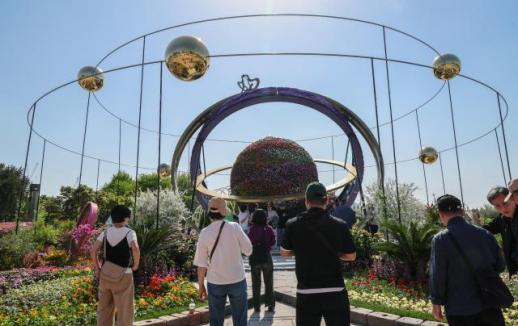 Sea of colorful bloom at Goyang flower festival SEOUL, April 24 (AJP) -Spring arrives in full and assorted colors at Ilsan Lake Park as the 2026 Goyang International Flower Festival opens, drawing visitors into a vast landscape of blooms just northwest of Seoul. Under the theme “Flowers Color Time,” the 17-day festival unfolds across a 250,000-square-meter venue, where more than 100 million flowers shape gardens, installations and winding paths along the lakeside. Large-scale floral sculptures rise against the water, while walking gardens and shaded rest areas offer a slower pace for visitors taking in the season. Families gather around themed spaces featuring Pengsoo, adding a playful touch to the spring outing. Inside, exhibition halls shift the mood from open-air spectacle to curated artistry. Floral designers from around the world present intricate arrangements, while an international flower exhibition brings together participants from some 30 countries, showcasing rare species and diverse plant life. Now in its 18th year, the festival has grown into one of the country’s best-known spring events, attracting more than 9 million visitors over time and cementing its place as a seasonal escape near the capital. 2026-04-25 12:14:46
 -
 U.S. Envoys Head to Pakistan for Possible Iran Peace Talks; Tehran Denies Meeting Planned As the United States and Iran issue conflicting messages about whether peace talks will resume, reports say delegations from both sides could make contact in Pakistan as soon as this weekend. Yonhap News Agency reported that The New York Times, citing two senior Iranian officials, said Iranian Foreign Minister Abbas Araghchi is expected to meet U.S. Middle East envoy Steve Witkoff and President Donald Trump’s eldest son-in-law, Jared Kushner, in Pakistan this weekend. The officials said Araghchi traveled to Islamabad carrying a written response to a U.S. proposal for peace talks. They said Iran has publicly maintained it would not hold talks until the U.S. blockade of the Strait of Hormuz is lifted, but has privately explored ways to restart negotiations through intermediaries including Pakistan. Araghchi arrived in Islamabad on April 25 local time. The Washington Post also reported the talks would resume this weekend. A U.S. official told the newspaper that Witkoff and Kushner had received confirmation from Iran about restarting talks, saying, “Otherwise they wouldn’t be going.” The U.S. government also officially confirmed plans to send Witkoff and Kushner to Pakistan. The White House said it “expects positive progress” from the visit. Trump suggested talks could advance, saying Iran “will come up with a proposal.” Reports differ on timing. The Associated Press said a meeting was set for Saturday, April 25, while Axios, citing multiple sources, reported it could be held Monday, April 27. Iran’s official position, however, diverged from the U.S. account. Iranian Foreign Ministry spokesman Esmail Baghaei wrote on X that “no meeting between Iran and the United States is planned.” He said Araghchi’s Islamabad trip was to meet senior Pakistani leaders and to support Pakistan’s continuing efforts to end the U.S.-led war and restore regional stability. * This article has been translated by AI. 2026-04-25 10:57:17
 -
 Microsoft, Meta Layoffs Highlight Paradox of Massive AI Spending Microsoft is moving ahead with a large voluntary separation program for some U.S. employees. The plan primarily targets workers whose age and years of service add up to 70 or more. Some estimates put the eligible group at about 7% of Microsoft’s roughly 125,000 U.S. employees, or about 8,700 people. On the same day, Meta also announced plans for major job cuts and reduced roles. As the race to invest in artificial intelligence intensifies, the paradox of cutting people while spending heavily on technology is becoming more visible. Microsoft recently announced cloud and AI investment plans totaling $18 billion in Australia and $10 billion in Japan. Building data centers, semiconductors and large-scale computing infrastructure requires enormous capital. Companies fear that falling behind in generative AI could cost them market leadership. As money flows to machines and servers, pressure to cut costs often lands on workers. From a management perspective, reallocating resources to future growth areas during a technology shift is not unusual. Reducing overlapping organizations and raising productivity are standard goals, and publicly traded companies face constant pressure from earnings and stock prices. The key questions are the method, the pace and the level of social responsibility. Microsoft’s approach also raises a broader issue: how companies value experience. Using a combined age-and-tenure threshold can be defended as an efficiency measure, but it can also signal that skill and institutional knowledge are being treated mainly as costs. Corporate competitiveness is not built only on younger talent and new technology. Crisis-management experience, operational know-how, customer networks and the ability to mentor colleagues are assets that are hard to quantify. The moves also risk clashing with the values big tech companies have promoted, including diversity, inclusion, sustainability and people-centered innovation. If priorities shift and the response is large-scale layoffs, trust can erode. A technology company’s brand is shaped not only by products but also by culture and stated principles. A deeper concern is that AI may reshape jobs faster than society can prepare. Restructuring is increasingly reaching high-paid office workers, developers and middle managers. Where earlier automation first disrupted factory labor, today’s AI is directly affecting white-collar roles. That makes the issue more than a corporate staffing decision; it points to a broader shift in labor markets. South Korea is not immune. Domestic companies are also weighing bigger AI spending alongside leaner organizations. Pressure to improve workforce efficiency could grow across semiconductors, finance, platform businesses and manufacturing. Without early preparation — including retraining systems, job-transition support, measures for older workers and wage structures linked to productivity — the shock could be larger. Companies need to invest in the future. But they should not treat today’s workers as disposable in the name of progress. Voluntary separation programs are not just a way to reduce headcount; they can change a person’s livelihood, career and direction in life. Adequate compensation, re-employment support and respectful procedures should follow. Competitiveness in the AI era will not be decided by server capacity alone. Companies that adopt new technology while protecting people, and that pursue efficiency without abandoning community responsibility, are more likely to endure. Big tech companies should answer whether cutting workers first while spending tens of trillions of won on AI is truly innovation.* This article has been translated by AI. 2026-04-25 10:33:18
 -
 US Sanctions China’s Hengli Group Over Purchases of Iranian Oil The United States has added China’s major refining company Hengli Group to its sanctions list over imports of Iranian oil. According to Yonhap, the U.S. Treasury and State departments said on April 24 (local time) they were sanctioning Hengli Group for buying Iranian oil. The Treasury Department’s Office of Foreign Assets Control said Hengli is among the largest customers, purchasing Iranian oil worth tens of billions of dollars. Treasury said it determined that Hengli and other Chinese refiners, by importing sanctioned Iranian oil, were providing economic support to Iran’s government, including Iran’s military. Hengli is known to have refining facilities in the northeastern port city of Dalian with capacity to process about 400,000 barrels of crude oil a day. Treasury also targeted a shipping network involved in transporting Iranian oil. It added about 40 shipping companies and vessels to the sanctions list for operating a “shadow fleet” that moves Iranian oil while evading sanctions. Under the measures, U.S.-based assets of the designated companies and vessels will be frozen and property interests blocked. Entities in which they directly or indirectly own 50% or more are also covered. Sanctions may also be imposed on institutions that conduct transactions involving funds, goods or services with them. Separately, Treasury said it froze $344 million worth of cryptocurrency believed to be linked to Iran. Treasury Secretary Scott Bessent said on X that OFAC is imposing sanctions on “multiple wallets” tied to Iran, adding the action would “systematically degrade Tehran’s ability to generate and move funds back home.” He also said the department would track funds Tehran is “desperately” trying to move abroad and target all financial lifelines connected to the government. CNN reported that the cryptocurrency freeze was carried out through Tether, the issuer of the world’s largest stablecoin, USDT, based on information provided by Treasury. * This article has been translated by AI. 2026-04-25 09:57:16
 -
 Sunday Forecast: Mostly Sunny Nationwide; Showers for Jeju and Parts of the South Sunday the 26th is expected to be mostly sunny nationwide. The Korea Meteorological Administration said Jeollanam-do, the Gyeongsang region and Jeju Island will see more clouds at times. Jeju is forecast to get 5 to 10 millimeters (0.2 to 0.4 inches) of rain from dawn through daytime hours. Showers are also expected from afternoon into evening in southern Jeollanam-do; inland areas of Busan, Ulsan and South Gyeongsang; and the southern East Sea coast of North Gyeongsang. Forecast rainfall is 5 to 10 millimeters in southern Jeollanam-do and inland areas of Busan, Ulsan and South Gyeongsang, and around 5 millimeters along the southern East Sea coast of North Gyeongsang. Morning lows will range from 6 to 15 C (43 to 59 F), similar to or slightly higher than usual. Daytime highs will be 20 to 26 C (68 to 79 F). With day-to-night temperature swings near 20 C (36 F), the agency urged caution for health. Dry weather advisories are in effect for central regions, North Gyeongsang and parts of North Jeolla, and could expand to other areas. Authorities urged caution to prevent wildfires. Fine dust levels are expected to range from good to moderate nationwide due to favorable atmospheric dispersion. Waves are forecast at 0.5 to 1.0 meters (1.6 to 3.3 feet) in nearshore waters of the East and South seas and 0.5 meters (1.6 feet) in the West Sea. In offshore waters about 200 kilometers (124 miles) from the coast, wave heights are expected at 0.5 to 1.5 meters (1.6 to 4.9 feet) in the East and South seas and 0.5 to 1.0 meters (1.6 to 3.3 feet) in the West Sea. * This article has been translated by AI. 2026-04-25 09:36:17
 -
 Iran’s Revolutionary Guard Seizes Ship It Says Visited U.S. Ports, Citing Maritime Violations Iran’s Islamic Revolutionary Guard Corps Navy has seized a vessel it said was suspected of cooperating with the U.S. military. According to Yonhap News Agency, Iran’s Tasnim news agency reported that the Guard on Thursday (local time) seized the EPAMINODES, citing violations of maritime regulations. The Guard’s navy said it had monitored the ship for the past six months and confirmed it had visited U.S. ports several times. It said the vessel was seized after it ignored repeated warnings and continued to violate maritime rules. The seizure comes as tensions rise amid Iran’s threat to block the Strait of Hormuz and what the report described as a U.S. maritime blockade of Iran. The Revolutionary Guard seized three vessels on April 22, saying they tried to transit the Strait of Hormuz without authorization from Iran’s military. The United States previously seized two ships in the Indo-Pacific that were part of what the report called Iran’s “dark fleet” — vessels such as tankers involved in illegal shipments of crude oil and other cargo to evade international sanctions — after they departed Iranian ports and before the maritime blockade began. * This article has been translated by AI. 2026-04-25 09:04:20