
Journalist

Seo Jeong-hee
-
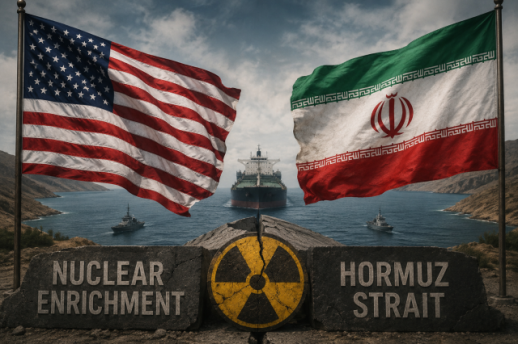 Iran Media Reports US-Iran Ceasefire Agreement Not Finalized Iran's TASS news agency reported that the ceasefire extension agreement between the United States and Iran has not yet been finalized. This comes amid reports that both sides have tentatively agreed to a 60-day extension, with Iran clarifying its position on the interpretation of a final deal. On May 28, Reuters cited sources close to the negotiations, stating that the draft of the agreement has not been finalized and that the approval process is still pending. According to Reuters, while the U.S. and Iran have reached a tentative agreement to extend the ceasefire for 60 days, approval from President Donald Trump and confirmation from Iranian leadership are still required. The tentative agreement reportedly includes discussions on Iran's nuclear program, sanctions relief, and navigation issues in the Strait of Hormuz during the extension period. However, as the final draft and approval process remain incomplete, specific conditions may change. The TASS report appears to counter claims from U.S. and Western media suggesting that an agreement is imminent. Iran emphasizes that coordination on the draft and confirmation from its leadership are still necessary, indicating a desire to leave room for negotiation on issues related to its nuclear program, sanctions relief, and navigation conditions in the Strait of Hormuz.* This article has been translated by AI. 2026-05-29 06:40:00
 -
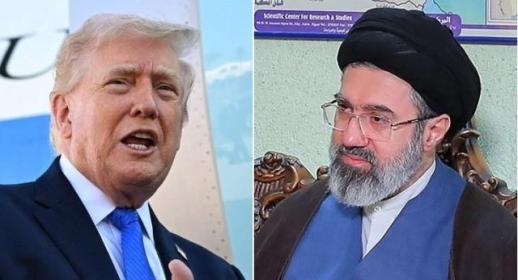 U.S. and Iran Reach Agreement on War Termination MOU, Awaiting Trump Approval U.S. media outlet Axios reported on May 28 that the United States and Iran have reached an agreement on a Memorandum of Understanding (MOU) to end hostilities, but final approval from President Donald Trump is still pending. According to Yonhap News and Axios, two U.S. officials and local sources involved in the negotiations indicated that additional discussions on nuclear-related issues, as requested by Trump, are still necessary to finalize the agreement. U.S. officials stated that as of May 26, both sides had agreed on most of the negotiation terms. Notably, the Iranian side conveyed to the U.S. that it was prepared to sign the MOU after receiving approval from its leadership. However, after being briefed on the details of the final negotiation proposal by the U.S. delegation, President Trump did not immediately approve it. One U.S. official told Axios, "The president asked the mediators for a few days to consider it." U.S. officials noted that the MOU would specify an extension of the ceasefire for 60 days, allowing unrestricted passage of vessels through the Strait of Hormuz. This means there will be no tolls or attacks aimed at disrupting maritime traffic, and Iran is expected to remove all mines from the strait within 30 days, according to U.S. officials. 2026-05-29 06:34:00
 -
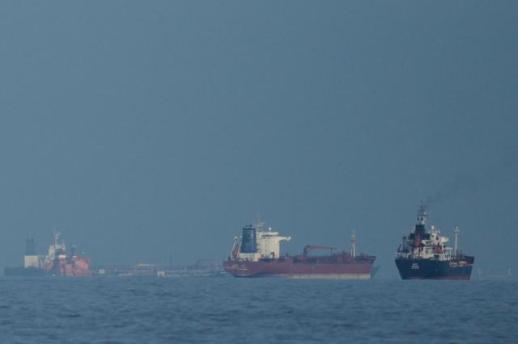 U.S. Warns of Punishment for Those Involved in Hormuz Toll Collection The United States has warned that it will punish individuals and organizations involved in the collection of tolls in the Hormuz Strait. This warning comes as Iran attempts to establish a toll collection system under the guise of navigation management, which the U.S. has made clear it will not recognize even during ongoing negotiations. On May 28, U.S. Treasury Secretary Scott Vesent stated on X (formerly Twitter) that "the U.S. government will not tolerate any attempts to implement a toll system in the Hormuz Strait." He specifically mentioned Oman, warning that "individuals and organizations that directly or indirectly support related activities could also be subject to sanctions." Oman, a country bordering Iran across the Strait, has played a mediating role between the U.S. and Iran. The U.S. mentioning Oman publicly is seen as a measure to prevent any involvement by Oman in Iran's toll collection plans. The U.S. has already designated Iranian organizations involved in this effort for sanctions. The Treasury Department classified the Persian Gulf Shipping Authority (PGSA), which Iran established to manage navigation in the Strait, as a funding mechanism for the Islamic Revolutionary Guard Corps (IRGC). According to the Treasury, the PGSA requires vessels to provide navigation permit information, mandates adherence to designated routes, and imposes fees. Indirect payments are also at risk of sanctions. According to Reuters, the Treasury's Office of Foreign Assets Control (OFAC) previously warned that payments made in the form of charitable donations or indirect transfers are not permitted. This includes nominal donations or digital asset payments that could also be subject to penalties. This warning comes amid ongoing discussions about extending the ceasefire between the U.S. and Iran and resuming navigation in the Strait. Reuters, citing sources, reported that both sides have agreed to a 60-day extension of the ceasefire and the lifting of navigation restrictions, although final confirmation from both countries is still pending.* This article has been translated by AI. 2026-05-29 06:28:00
 -
 Seoul Mayoral Debate Highlights Clash Between Accountability and Stability The only televised debate for the Seoul mayoral election ultimately showcased a direct clash between the themes of accountability and stability. However, what lingered in voters' minds after the debate was not the accountability of Oh Se-hoon, the candidate from the People Power Party, but rather the scrutiny surrounding Jung Won-o of the Democratic Party. The debate, organized by the National Election Commission, took place from 11 p.m. on May 28 to 1 a.m. on May 29, serving as a crucial moment just before early voting. In an unusual scenario where only one debate was held, the four candidates—Oh Se-hoon, Jung Won-o, Kim Jeong-cheol from the Reform Party, and Kwon Young-guk from the Justice Party—engaged in a heated discussion over pressing issues in Seoul, including real estate, the economy, the omission of rebar in the GTX project, the high-profile demolition disaster in Seosomun, and redevelopment challenges. In the early part of the debate, Jung Won-o raised the expected theme of the '10-year accountability' regarding Oh Se-hoon. He urged voters to judge Oh for his decade of incompetence, targeting his administrative performance, safety issues, and failures in housing supply. He criticized Oh for not visiting the site of the Seosomun demolition accident, stating, "His absence shows a lack of safety awareness." However, it was later confirmed that Oh had visited the site before Jung on the day of the incident and returned again later that afternoon. In contrast, Oh Se-hoon defended his record, asserting, "I have done everything possible to normalize Seoul over the past five years," emphasizing themes of stability and experience. He cited initiatives like the Rapid Integration Plan, revitalization of redevelopment and reconstruction, Seoul Run, and the Han River Renaissance, stating, "We are on the brink of becoming the world's third-largest city. I want to complete this overwhelmingly." He also expressed condolences to the victims' families from the safety incidents and promised to establish stricter safety standards and management systems. However, the debate unexpectedly shifted from Jung's attacks to scrutiny of his own past. The most pointed criticism came from Kim Jeong-cheol, who revisited Jung's past controversy regarding alcohol abuse, directly asking, "Did you ever force anyone to stay out overnight during drinking sessions?" In response, Jung claimed, "Bringing up unrelated topics only muddles the election." However, interpretations may vary on whether questions about a candidate's past conduct and morality are indeed unrelated to the debate topics. Voter judgment encompasses not only policy capabilities but also the candidate's qualifications, sense of responsibility, and crisis management skills. Jung's repeated defensive responses to related questions, labeling them as "smear campaigns," "negativity," and "unrelated topics," appeared to weaken his position. At times, he reacted somewhat emotionally. As a challenger expected to lead the attack, spending more time on defense rather than explanation was a missed opportunity. The controversy over Jung's avoidance of debates clearly weighed on him. On this occasion, Kim Jeong-cheol even brought a panel labeled 'Jung Won-o's Debate Avoidance Calendar,' claiming to have recorded every date Jung had evaded debate proposals. The Seoul mayoral election is the largest local election in the country, with the choice of 8 million voters at stake. Compared to past elections where multiple TV debates facilitated policy and qualification verification, the fact that this election concluded with only one official debate left voters feeling disappointed. Oh Se-hoon did not escape criticism either. Kwon Young-guk pressed him hard on the omission of rebar in the GTX project, asking, "Did you really not receive any reports on this?" Jung also targeted Oh over the Seosomun disaster and the shortfall in housing supply. In response, Oh stated, "I was not informed. I learned about it through the news," emphasizing that he was campaigning while under suspension from his duties. Regarding the housing supply criticism, he countered, "We are in the process of restoring the 389 redevelopment and reconstruction areas that were released during the Park Won-soon administration." Overall, while Oh faced attacks, he maintained a relatively calm demeanor, emphasizing experience and administrative continuity. In contrast, although Jung Won-o led with the theme of accountability, he found himself on the defensive due to overlapping issues of past controversies, including the alcohol abuse scandal and debate avoidance. Of course, one debate will not determine the election outcome. Seoul's public sentiment often remains concealed until the last moment. However, it is clear that this debate centered more on the scrutiny surrounding Jung Won-o than on the theme of 'holding Oh Se-hoon accountable.'* This article has been translated by AI. 2026-05-29 06:22:00
 -
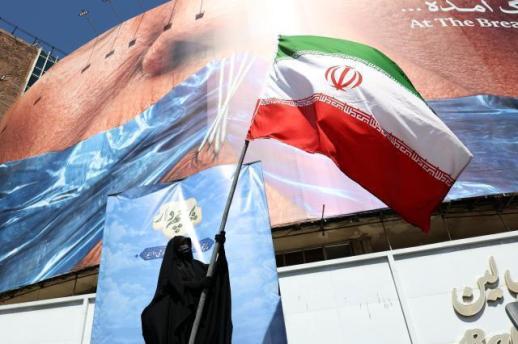 Iranian Military Launches Missiles at 'Specific Targets' in Southern Iran The Iranian military launched missiles toward specific targets in southern Iran on the night of May 28, according to the Fars news agency. The Guardian reported that the destination of the missiles remains unclear, and there has been no confirmation of any damage. Details about the targets, including their location and nature, have not been disclosed. It is also uncertain whether this missile launch is directly linked to other military activities occurring in the Gulf region on the same day. This news comes amid heightened tensions in the Strait of Hormuz and the Gulf area. On the same day, Mehr news agency reported that the Iranian military conducted warning shots toward vessels near the Strait of Hormuz. The Guardian also noted ongoing incidents involving U.S. and Iranian forces. On the diplomatic front, discussions are ongoing regarding an extension of the ceasefire. Reports indicate that the U.S. and Iran are considering a 60-day extension and the initiation of final agreement negotiations, but Iranian officials have stated that no agreement has been finalized. The missile launch complicates the situation, making it difficult to determine the intended target. However, it is seen as a variable that increases uncertainty in the context of military tensions and ceasefire negotiations.* This article has been translated by AI. 2026-05-29 06:20:00
 -
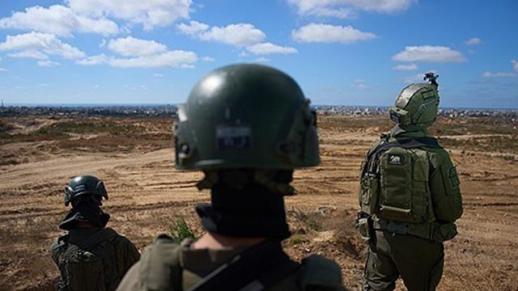 Netanyahu Orders Israeli Forces to Expand Control in Gaza to 70% Benjamin Netanyahu, the Prime Minister of Israel, has instructed the Israeli military to expand its control over the Gaza Strip to 70%. This directive indicates a push beyond the control line established in the ceasefire agreement of October 2025. On May 28, during an event in a West Bank settlement, Netanyahu stated, "We were at 50%, and we moved to 60%. My instruction is to gradually increase our presence in Gaza." He added, "First, let’s aim for 70%. We are pressuring Hamas from all directions." The key issue is the extent of control. According to the October 2025 ceasefire agreement, Israeli forces were to withdraw to a line known as the 'yellow line,' which would leave approximately 53% of the Gaza Strip under Israeli jurisdiction. However, Reuters estimates that Israeli effective control and restricted areas currently cover about 64%. Netanyahu's directive aims to increase this to 70%. Reports indicate that Israel has also adjusted its baseline. Reuters previously reported that Israel moved the concrete blocks marking the yellow line further into Gaza. Netanyahu has framed this action as a measure to pressure Hamas and secure a buffer zone, claiming it is necessary to prevent threats similar to the Hamas attack on southern Israel in October 2023. Palestinian representatives and human rights organizations have criticized this move, arguing it could exacerbate forced displacement and humanitarian crises. If Israel controls 70% of Gaza, the living space for over 2 million residents would shrink to less than one-third of the total area. The ceasefire in Gaza is already under strain. According to Reuters, Israeli airstrikes have continued even after the ceasefire, with Gaza health authorities reporting over 900 deaths due to Israeli attacks. During the same period, Israel reported that four of its soldiers were killed in attacks by armed groups.* This article has been translated by AI. 2026-05-29 06:10:00
 -
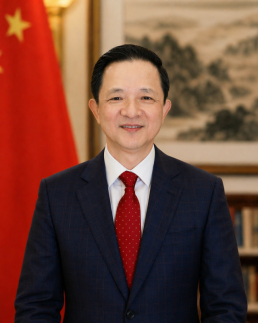 Do Not Mislead the Public with False Information About China Recently, President Lee Jae-myung criticized a South Korean media outlet for spreading false news that "Chinese nationals purchased 944 apartments in Gangnam, Seoul," which he said incited anti-China sentiment. The outlet later issued a public apology, acknowledging serious factual errors in its reporting and removed the article. President Lee's actions were well-received by citizens of both countries. China and South Korea are important neighbors and partners, and strengthening friendly cooperation is the only correct choice for both sides. However, some South Korean media outlets have fabricated and disseminated false news about China to attract attention and increase viewership or for undisclosed political motives. They have exaggerated individual cases, misrepresented biases as facts, and intentionally damaged the image of China and Chinese nationals in South Korea, creating obstacles to improving bilateral relations and ultimately harming South Korea's image and national interests. For instance, claims such as "China interfered in South Korean elections" and "99 Chinese spies were sent to U.S. military bases" have been clearly debunked by South Korea's National Election Commission and the National Intelligence Service. Allegations that "the crime rate among Chinese nationals in South Korea is high" have been shown to confuse absolute figures and ratios. According to the Korean National Police Agency, the crime rate among Chinese nationals is significantly lower than that of locals. The assertion that "fine dust from China affects South Korea's air quality" ignores China's significant improvements in air quality. In fact, in recent years, nearly 90% of days in Chinese cities have seen good air quality, and the fine dust in Seoul is largely unrelated to China. The claim that "all Chinese students in South Korea are spies" is also baseless. Chinese expatriates and students in South Korea are deeply integrated into local society, promoting friendly cooperation and actively contributing to South Korea's economic and social development. Last year, approximately 5.78 million Chinese tourists visited South Korea, and the number has significantly increased this year, strongly boosting industries such as aviation, hospitality, retail, and food service. According to estimates from the Bank of Korea, an increase of 1 million Chinese tourists could raise South Korea's GDP growth rate by about 0.08 percentage points. Over 3 million South Koreans visited China last year, and this year has also seen a significant increase, leading to active "mutual visits" between the two countries. South Koreans who traveled to China have shared photos and videos on social media showcasing China's natural landscapes, historical and cultural sites, cuisine, and trendy figures, presenting an open, friendly, and harmonious image of China. Additionally, many South Korean media outlets are actively reporting on China's economic and technological advancements, emphasizing the need to leverage opportunities and strengthen cooperation with China. At the end of last year and the beginning of this year, the leaders of China and South Korea successfully conducted reciprocal visits, opening a new chapter in bilateral relations. Exchanges and cooperation across various fields, as well as friendly sentiments among citizens, continue to rise. Media outlets in both countries should contribute to fostering a more objective, rational, and inclusive understanding between their peoples, creating a positive atmosphere that propels bilateral relations to a higher level. Freedom of the press does not equate to the freedom to spread falsehoods. It is hoped that individual South Korean media outlets will adhere to journalistic ethics, base their reports on facts regarding China, and view China from an objective and fair perspective, refraining from misleading readers with false information and slander. Seeing is believing. We sincerely welcome more South Koreans to visit China and experience its multifaceted, vibrant, and open society firsthand.* This article has been translated by AI. 2026-05-29 06:02:00
 -
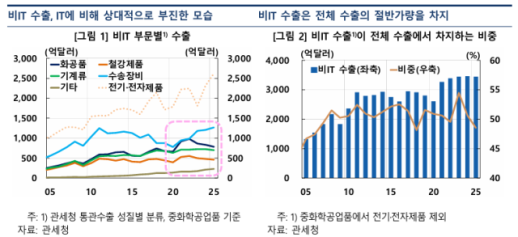 South Korea's Non-IT Exports Hold Steady Against Germany and Japan Amid China's Manufacturing Surge As China's manufacturing sector continues to grow, South Korea's non-IT exports are performing relatively well compared to traditional manufacturing powerhouses like Germany and Japan, according to an analysis by the Bank of Korea. The strengthening of export competitiveness, particularly in high-value items, suggests that South Korea is partially replacing products from Germany and Japan alongside China. In a report titled "Assessment of Competitive Conditions Among Major Countries in Non-IT Exports," released on May 30, the Bank of Korea noted that while South Korea's non-IT exports have shown stagnation since 2023, they still account for more than half of the country's total exports. However, recent trends indicate that non-IT exports are lagging behind IT exports due to intensified competition with China and the impact of U.S. tariff policies. Despite the expansion of China's market share, the Bank of Korea assessed that South Korea's competitiveness remains relatively stable. By 2024, China's share of the global market for non-IT chemical products increased from 11.0% in 2019 to 14.6%, while Germany's share fell from 12.4% to 11.1%, and Japan's dropped from 6.9% to 5.6%. South Korea's share saw a slight increase from 3.9% to 4.0% during the same period. In terms of specific sectors, China's market share rose across all categories, including chemicals, steel products, machinery, and transportation equipment, while Germany and Japan generally experienced declines. South Korea's share in steel and machinery products decreased slightly, but there were gains in transportation equipment and other categories. Notably, in markets where China's share increased, South Korean products also often saw a rise. From 2019 to 2024, 60.8% of the items that experienced an increase in China's share also saw a corresponding rise in South Korea's share, compared to just 20.4% for Japan and 23.6% for Germany. Lee Taek-min, a senior official at the Bank of Korea's International Economic Team, stated, "In categories where South Korea's share has expanded, there has been a tendency for Germany and Japan's shares to decline, indicating that our products are partially replacing those from Germany and Japan alongside Chinese products." The competitiveness of high-tech items also appears to be relatively strong. An analysis based on the Product Complexity Index (PCI) showed that from 2020 to 2024, South Korea's export growth rate for high-tech items averaged 6.8%, surpassing the rates for low-tech (3.3%), lower-middle-tech (3.0%), and upper-middle-tech (2.1%) items. This growth rate exceeds the global average of 6.0% and outpaces Germany's 5.2% and Japan's 2.3%. However, it remains lower than China's high-tech growth rate of 11.8%. Despite the impact of U.S. tariff policies, South Korea's non-IT exports to the U.S. have been relatively resilient. Between the second quarter of 2025 and the first quarter of 2026, South Korea's exports of non-IT tariffed items to the U.S. decreased by 12.8% compared to the same period the previous year, but the decline in market share was limited to 0.4 percentage points. The Bank of Korea noted that the imposition of high tariffs on Chinese products by the U.S. has restricted their entry into the American market, allowing South Korean products to benefit from a spillover effect. In fact, there have been numerous instances where South Korea's share increased in categories where China's share declined. Lee added, "In the future, non-IT exports are expected to focus more on technological and quality competition in high-value items rather than price competition for generic products, which may limit quantitative growth. Our products seem to have also benefited somewhat from the U.S. tariffs on China."* This article has been translated by AI. 2026-05-29 06:02:00
 -
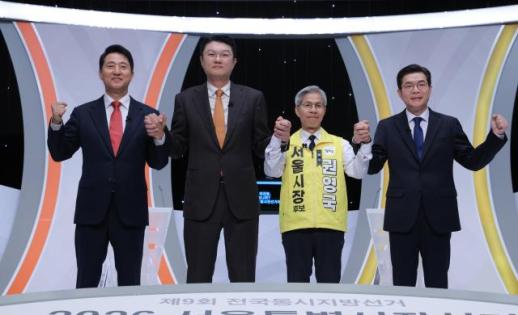 Candidates Clash Over Housing and Safety Ahead of Early Voting in Seoul Mayoral Race In a joint debate held just seven hours before early voting for the local elections, candidates for the Seoul mayoralty discussed pressing issues such as housing and safety. The debate, featuring Jeong Won-o of the Democratic Party and Oh Se-hoon of the People Power Party, among others, included scrutiny of each candidate's policies and allegations, but did not yield clear answers. Candidates Exchange Blame Over Housing Supply Issues Jeong, Oh, Kim Jeong-cheol of the Reform Party, and Kwon Young-guk of the Justice Party participated in the TV debate hosted by SBS on May 28. Housing and safety were major topics of discussion. In response to Oh's previous criticisms regarding new apartment supply, Jeong emphasized that "12 out of 21 designated areas for apartment supply have been completed since I took office as the Seongdong District Mayor." He added, "Oh promised to supply 360,000 units within five years during the 2021 mayoral election, but only 39,000 units were started from 2022 to 2024. Why blame the former mayor (the late Park Won-soon) and the government when you can't keep your own promises?" Oh countered, stating, "All 21 designated areas were established during my first term. The former mayor removed 389 maintenance zones, and I am currently restoring what was destroyed." He also defended his administration's supply performance, claiming, "I promised to designate 60,000 units annually, but Jeong keeps twisting my words." He presented visual evidence to refute claims that he neglected the rental housing program, asserting, "I supplied more than the former mayor." Candidates Avoid Direct Answers on Controversial Allegations The debate also featured heated exchanges over allegations regarding the omission of rebar in the construction of the Greater Seoul Metropolitan Express Railway (GTX). Jeong accused Oh, stating, "Hyundai Engineering, the Ministry of Land, Infrastructure and Transport, and the supervisory company deemed it a serious construction defect, yet the Seoul City has not reported it." He emphasized, "There is no value more important than the lives and safety of citizens. You still haven't visited the Samsung Station site." In response, Oh said, "The responsible department head assessed that the construction could continue based on expert opinions, and measures for improvement were established. I will not be dragged into using this as an election issue." Oh then targeted Jeong over the so-called 'Baby Seat Donation' controversy in the Seongdong District, claiming, "It was reported that the district office guided the redevelopment association to donate facilities worth approximately 20 billion won, but the district office denies it. Shouldn't the association head be prosecuted for breach of trust?" He further questioned, "Jeong acknowledged the mistake regarding the daycare center issue in the Haengdang 7 District, but what about the public officials involved? Have they faced any disciplinary action?" Jeong responded, "I explained that the donation was not possible when I took office, as it was decided by my predecessor, but the association and Baby Seat were involved in the process." He deflected the topic back to similar projects, asking, "Why are you only criticizing Haengdang 7?" He did not answer questions regarding the accountability of the responsible officials. Jeong also avoided questions about his past convictions for assault and obstruction of official duties. Kim challenged him, saying, "When your assault conviction was raised, you mentioned the May 18 Democratic Movement as the reason. Did you ever pressure a female employee at a bar to go out with you, as stated in the 1995 Yangcheon District Council minutes?" However, Jeong replied, "I have addressed this issue multiple times through court rulings and media reports. You are trying to muddy the election process with irrelevant topics." Kim Jeong-cheol Calls Jeong Won-o a 'Defective Product' in Politics Kim criticized Jeong for avoiding debates, stating, "The president has endorsed you as a capable candidate, and you have come out with a nice package. But we cannot entrust the lives of 10 million Seoul citizens to a defective product in politics." In response, Jeong said, "Debates often devolve into smear campaigns and negative attacks, which is predictable." Kim expressed disappointment that this was the first and last joint debate just hours before early voting, stating, "It is unfair to label attempts to verify through debate as negative campaigning." During the debate, Jeong asserted, "Oh's administration is characterized by superficial governance. Please judge the 10 years of incompetence." He promised to support the safety and well-being of citizens. Oh urged voters, saying, "To serve as mayor, one needs prepared skills and verified experience. Please ensure that Seoul remains a minimum foothold to check the arrogance and unilateralism of the Lee Jae-myung administration." Kim concluded with a call to end the politics of the two major parties, while Kwon urged voters to support the Justice Party, which stands for workers and tenants.* This article has been translated by AI. 2026-05-29 02:54:00
 -
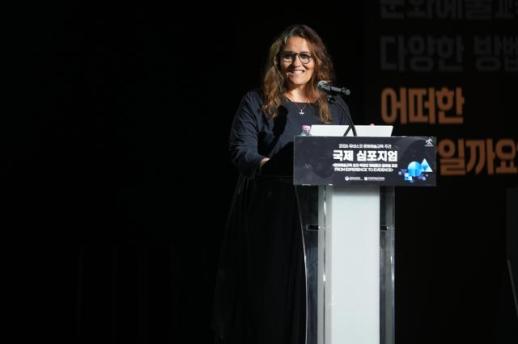 The Importance of Cultural Arts Education in Human Development "Human flourishing is made possible through cultural arts education. It allows individuals to blossom," said Valeria Pica, a researcher from Italy's G. d'Annunzio University, during the international symposium linked to the 2026 UNESCO Cultural Arts Education Week at the National Museum of Modern and Contemporary Art in Seoul on May 21. The symposium, hosted by the Ministry of Culture, Sports and Tourism and the Korea Arts and Culture Education Service, brought together global scholars who unanimously stressed the significance of cultural arts education. Pica introduced the Culture 3.0 paradigm, highlighting the productive role of culture. Culture 3.0 views culture as an active and participatory endeavor, moving beyond Culture 1.0, where experts provide culture to individuals, and Culture 2.0, which symbolizes the popularization and mass production of culture. "In Culture 3.0, the barriers between those who create and those who use culture are broken down," Pica explained. "It signifies that many people participate in creating platforms or redefine themselves through cultural arts, returning to their inherent values." She particularly emphasized 'cultural and artistic subjectivity,' stating, "Culture is not just for the elite or only for special festival periods. Culture and art must become part of everyday life." Pica noted that creativity, innovation, and critical thinking are all achievable through cultural arts education, which fosters a virtuous cycle of professional training and cultural enjoyment when both producers and consumers coexist. She warned that without cultural arts education, not only could the creative economy suffer, but social cohesion could also weaken, asserting that cultural rights, as a foundation for civic participation, are as crucial as human rights. To accurately assess the effects of cultural arts education, Pica advocated for a 'multi-model approach.' She stated, "We should not measure the effects of cultural arts activities solely quantitatively. Evaluation methods must capture effects across cognitive, emotional, social, and developmental dimensions." Anne Bamford, a professor at the University of Sydney who led a survey of 60 countries for UNESCO, advised that arts education must be implemented in school environments to ensure that no child is excluded from cultural arts education. Bamford cautioned that inadequate arts education could diminish children's creativity, stating, "One-third of all arts education has actually harmed children," and noted that overly strict education could lead to a loss of interest, causing children to abandon playing instruments and stifling their creativity. She added that arts education should be systematic and sustained over the long term.* This article has been translated by AI. 2026-05-29 00:10:00