
Journalist

Tom Stacey
-
 Kona I Posts 94% Jump in Q1 Operating Profit on Premium Metal Card Exports Fintech company Kona I said Tuesday it posted first-quarter consolidated revenue of 76.6 billion won ($766 billion) and operating profit of 24.6 billion won. Revenue rose 31.3% from a year earlier and operating profit jumped 94%, the company said. The card industry typically sees weaker volumes early in the year because overseas financial institutions place orders in cycles, but Kona I reported double-digit growth in both revenue and profit. Kona I said expanded exports of premium metal cards drove the results, citing steady growth in demand for high-end cards globally even as mobile payments spread. Its payments platform business also grew, the company said, as the central government expanded budget support for local currency programs. Kona I said it maintained its operating base in major local governments including Gyeonggi Province and expanded the platform to new areas including Jincheon, Sejong, Chungju and Sangju, boosting transaction volume. The company said its shift to an open platform also helped, as it broadened links with mobile payment services such as Naver Pay and Kakao Pay and diversified rewards. Chief Executive Cho Jeong-il said both overseas exports and the domestic platform business posted meaningful year-on-year growth. He said the company expects growth momentum to continue for the full year, noting that global card volumes tend to be concentrated in the second half. * This article has been translated by AI. 2026-04-15 13:57:37
 -
 OPINION: Set aside the ghost whispers — it is time for Iran and Israel to speak directly Wars in the Middle East are often described in terms of missiles, airstrikes and troop movements. Yet much of the region’s conflict unfolds elsewhere — in the shadows of diplomacy, through intermediaries, and in signals that are never formally acknowledged. This quieter dimension might be called “ghost whispering”: the informal, deniable channels through which states exert pressure, shape perceptions and influence outcomes without direct confrontation. For decades, the confrontation between Iran and Israel has operated within this framework. It has been a conflict sustained not only by open hostility, but by a system that allows both sides to act without fully committing to war — or to peace. Public diplomacy and private signaling rarely align. States project restraint in official forums while pursuing leverage through proxies, intelligence operations and selective escalation. Iran has extended its influence through regional networks — from Lebanon to Gaza and beyond — enabling it to apply pressure without direct engagement. Israel, for its part, has relied on pre-emptive strikes, covert operations and deterrence to contain perceived threats before they consolidate. This model has proved durable. It reduces the immediate costs of confrontation while allowing strategic competition to persist. But it also has a consequence: it delays resolution. Israel’s strategic posture is often framed as ideological. In practice, it is also deeply structural. The country’s geography — narrow, exposed and lacking strategic depth — has long encouraged a doctrine of anticipatory defense. At its narrowest point, Israel is little more than 15 kilometers across. In such conditions, waiting for threats to fully materialize is rarely seen as an option. History reinforces this logic. The experience of displacement and persecution, culminating in the Holocaust, has embedded a powerful assumption: security cannot be outsourced. Yet this logic exists alongside another, equally entrenched narrative. For Jews, the land represents a historical return. For Palestinians, it is a lived continuity. The events of 1948 — independence for Israel, catastrophe for Palestinians — did not resolve this contradiction. They institutionalized it. The result is not simply a territorial dispute, but a conflict of memory, identity and legitimacy. Such conflicts are not easily settled through conventional diplomacy. For years, indirect confrontation provided a form of stability. Proxy actors absorbed much of the conflict, allowing the principal states to avoid sustained direct engagement. That distance is now narrowing. Recent cycles of escalation — including direct exchanges and a widening geographical scope — suggest that the informal boundaries governing the conflict are weakening. The consequences are no longer confined to the region. Energy markets, shipping routes and global financial conditions now react almost immediately to developments in the Gulf. A conflict once buffered by distance is becoming harder to contain. The obstacles to resolution are well known, and remain largely unchanged. Jerusalem, central to three major religions, resists simple partition. Israeli settlement expansion complicates territorial compromise. Palestinian political fragmentation limits the possibility of unified negotiation. Even where frameworks for peace exist, their practical implementation has become increasingly difficult. “Ghost whispering” has allowed the conflict to be managed. It has not allowed it to be resolved. Indirect pressure, strategic ambiguity and proxy warfare can sustain a balance of sorts. But they also create a system in which escalation is possible without accountability, and de-escalation is difficult without direct engagement. In that sense, the same mechanisms that have prevented full-scale war have also prolonged instability. Iran and Israel have existed in mutual hostility since 1979. Over time, that hostility has become embedded — less a temporary condition than a structural feature of regional order. Reversing it will require more than incremental adjustments. The core disputes — nuclear capability, regional influence, territorial claims — are too complex to be resolved quickly. But the current model, built on distance and deniability, is approaching its limits. A shift toward direct engagement, however tentative, may be the only viable starting point. Without it, the conflict will remain mediated through others — and extended by that mediation. The Middle East has long been shaped by what is said in private and denied in public. The next phase may depend on whether its principal actors are willing to reverse that equation. *The author is a columnist of AJP. 2026-04-15 13:55:17
 -
 Ryu Ji-hyeon to Lead South Korea Baseball Team Through 2026 Asian Games Ryu Ji-hyeon, who guided South Korea to its first World Baseball Classic quarterfinal in 17 years at the 2026 tournament, is set to remain in charge through the 2026 Aichi-Nagoya Asian Games in September. The Korea Baseball Softball Association said Tuesday that it selected Ryu as the top candidate to manage the Asian Games national team after an open recruitment process for coaches to be sent to this year’s age-group international competitions. The association held a meeting of its performance improvement committee on April 10 and conducted interview evaluations. Ryu received favorable marks across the criteria, including the detail of his national team operations plan, analytical ability and leadership, according to the association. If his appointment is finalized following board approval and other procedures, Ryu will lead the team at the 2026 Aichi-Nagoya Asian Games, to be held in Japan from Sept. 21 to 27. South Korea has won four straight Asian Games baseball gold medals, from the 2010 Guangzhou Games through the 2022 Hangzhou Games held in 2023. Association President Yang Hae-young said the selection focused on choosing a capable coach with transparency and fairness as the top priorities. He said the association will move quickly to assemble the coaching staff and select players once the remaining approval steps are completed.* This article has been translated by AI. 2026-04-15 13:39:00
 -
 KPGA Tour Opens April 16 in Chuncheon as Ok Tae-hoon, Jang Yu-bin Lead Field The 2026 Korea Professional Golfers’ Association Tour opens with the 21st DB Insurance Promy Open. The tournament, with a total purse of 1 billion won, will be played April 16-19 at Lavieest Belle Golf & Resort’s Old Course (par 72) in Chuncheon, Gangwon Province. The winner earns a three-year tour exemption (2027-2029) and 1,000 Genesis Points. It is the KPGA Tour season opener for the 12th time, held in that role from 2014-2019 and from 2021-2026. Title sponsor DB Insurance has been a tour title sponsor for the 21st time since starting with the 48th KPGA Championship, the Dongbu Fire Promy Cup, in 2005. A main storyline is the showdown between Ok Tae-hoon and Jang Yu-bin, who dominated the tour after winning the Genesis Grand Prize in 2025 and 2024, respectively. Ok, who won three times last year and made the cut in all 18 events while also taking the money title, the low-scoring award and the most improved player honor, said he is focused on steady execution. “Last year was such a great year, so of course I’d like to have good results again this year,” Ok said. “But things don’t always go the way you want, so I’ll just do my best with what I’m given.” He added, “My season goals are to make the cut in every event and win three times.” Ok said his putting has been off recently. “I thought I was putting poorly, but I think it was because my distance control wasn’t right,” he said. “If I putt well this week, I think I can get a good result.” Jang, who won twice in 2024 and became the first player in KPGA Tour history to surpass 1 billion won in season earnings, returns to the domestic tour after moving to LIV Golf following the end of the 2025 season. “My goal this season is the Genesis Grand Prize,” Jang said. “I think the most important thing is to go back to basics and stay focused every tournament. I used training camp to work on getting my swing feel and performance back, and my condition has improved a lot. I’ll show the fans a good side of me.” He said he plans to focus on execution rather than results in the season’s first event. “As it’s the first tournament of the season, I’ll focus more on carrying out what I prepared than on the pressure of results,” Jang said. “My goal is to build momentum with steady course management and start the first event on a positive note.” Defending champion Kim Baek-jun also draws attention as he tries to repeat. Kim won last year at 11-under 273 for his first career title, coming in his 19th start on tour. Kim, who listed multiple wins and the Genesis Grand Prize as his goals this season, said the title defense brings both excitement and nerves. “It’s my first time defending a title, so I feel excited and at the same time nervous,” Kim said. “It’s a course where I won my first title, so I have good memories. I really want to successfully defend.” He added, “I got through last season without a second-year slump, so as I prepared for this season I also felt pressure that I have to do even better. But I prepared well in the offseason, so I’m looking forward to it.” Sponsor-backed player Kim Hong-taek is another to watch. He tied for fifth two weeks ago at the Asian Tour’s International Series Japan. “Because it’s my main sponsor’s tournament, I’m more excited than for other events,” Kim Hong-taek said. “Last year I couldn’t finish because of a back injury, and that was very disappointing. That’s why I paid more attention to taking care of my body this year. I’ll do my best with the goal of winning this tournament.” Park Sang-hyun, the career leader in domestic prize money, will try to become the first player to surpass 6 billion won in domestic KPGA Tour earnings. Park has played 235 events and has earned 5,893,724,057 won, leaving him 106,275,943 won short of 6 billion won. He also won twice last year, setting a KPGA Tour record for multiple wins by a player in his 40s for the first time in 20 years. Past winners including Moon Do-yeob, Bae Yong-jun, Park Seong-guk, Jeon Ga-ram, Choi Seung-bin and Kim Jae-ho are also in the field, setting up a competitive start to the 2026 season.* This article has been translated by AI. 2026-04-15 13:24:00
 -
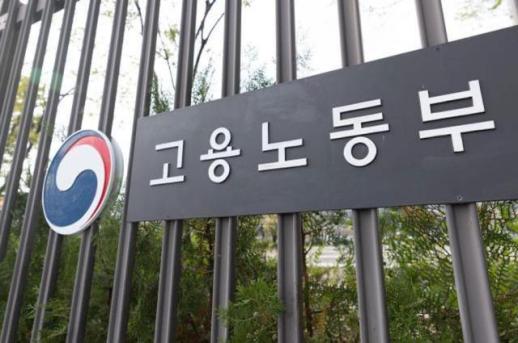 First meeting on next year's minimum wage to be held next week SEOUL, April 15 (AJP) - This year's first meeting of a committee responsible for setting next year's minimum wage is scheduled to be held next week. The committee, consisting of members from labor, employer and government representatives under the Ministry of Employment and Labor, will gather for talks at the government complex in the administrative city of Sejong on April 21. With the committee's chair remaining vacant, members in attendance are expected to elect a new chair during the meeting, which will be presided over by Labor Minister Kim Yong-hoon. They are also expected to discuss plans and schedules for subsequent sessions to continue wage deliberations. However, tough confrontations are already expected, as labor representatives are likely to propose a higher increase from this year's minimum wage of 10,320 Korean won, up just 2.9 percent, or 290 won, from a year ago, while employers are expected to push for a freeze amid the prolonged conflict in the Middle East. One of the contentious issues between the two sides will be discussions on whether to apply the minimum wage to platform workers including delivery workers and riders, a long-standing demand from labor groups. Kim earlier said such talks would be held for the first time, citing the need to consider a separate minimum wage or similar arrangements for contract-based workers and other laborers if it is deemed inappropriate to set wages on an hourly, daily, weekly, or monthly basis. The committee is required to make a final decision within 90 days from the date the Labor Minister requests a review, which falls on June 29 this year. However, this deadline is largely advisory in nature, and in practice the decision is often delayed until around mid-July due to usual differences between both sides. 2026-04-15 11:28:55
 -
 Baeksang Arts Awards nominations spark backlash over Yoo Jae-suk omission The biggest reaction to the 62nd Baeksang Arts Awards nominations did not center on presumed front-runners, but on who was missing. Nominees for the men’s variety award were Kwak Beom, Kian84, Kim Won-hoon, Lee Seo-jin and Choo Sung-hoon. Nominees for the variety program award were “Extreme 84,” “Rookie Director Kim Yeon-kyeong,” “Our Ballad,” “Office Workers Season 2” and “Black and White Chef: Cooking Class War Season 2.” Yoo, who drew major attention again this year, and programs he appeared in were absent from the major categories. The omission fueled a “Yoo Jae-suk snub” controversy, and fans quickly issued a statement calling for the awards to disclose its standards. Baeksang says its broadcast judging covers terrestrial networks, general programming channels, cable, streaming platforms, and web content. In the variety category, it has included web content since the 59th awards, and says the variety awards evaluate both on-screen talent and creators. The awards also states that it selects nominees through strict judging, placing “expertise and fairness” first. Because Baeksang itself has expanded the platforms it considers, questions about how it compares work across platforms have followed. This year’s slate suggests the judges put more weight on distinct characters, clear formats, platform reach and the rise of new faces than on the star power of established celebrities. That direction is not inherently hard to understand. The list may reflect what the panel valued most this year, rather than an effort to exclude Yoo. The controversy has grown, however, because the basis for those judgments has not been clearly explained. In that context, the fan statement is not simply a demand that a particular star be nominated. It is a call for procedural clarity. Baeksang does not need to publish individual reasons for every omission, but it could more clearly explain the principles it uses to compare web and TV productions, long-running programs and seasonal projects, and star-driven shows and format experiments. It is premature to frame the dispute as either Baeksang’s heavy-handedness or an overreaction by fans. The core issue is the limited visibility of the judging standards. An awards show’s authority does not come from “accept our choices,” nor from offering explanations only when criticism grows loud. It comes from balancing a process the public can understand with independence the judges maintain to the end. The Yoo Jae-suk snub controversy is testing that balance. What Baeksang ultimately needs to answer is not about Yoo personally, but about the yardstick it is using to evaluate variety entertainment now. * This article has been translated by AI. 2026-04-15 11:03:17
 -
 KOSPI tops 6,100; Asian markets rise on renewed U.S.-Iran talks hopes SEOUL, April 15 (AJP) - South Korea’s KOSPI climbed above the 6,100 level on Wednesday, as the benchmark index rode easing war concerns to resume its record-breaking rally that had been disrupted by U.S. and Israeli strikes on Iran in late February. The main index rose 2.96 percent to 6,144.26, while the KOSDAQ gained 1.93 percent to 1,143.49 as of 10:29 a.m. Japan’s Nikkei 225 rose 1.15 percent to 58,542.14. Hong Kong’s Hang Seng Index gained 1.00 percent to 26,131.14, and China’s Shanghai Composite Index added 0.33 percent to 4,039.85. Samsung SDS surged more than 10 percent in early trading after announcing plans to issue 1.22 trillion won worth of convertible bonds. The stock opened 9.70 percent higher at 166,200 won and extended gains, rising 19.08 percent to 180,400 won as of 10:00 a.m., up 28,900 won from the previous session. Bellwether Samsung Electronics gained 3.63 percent to 214,000 won, while SK hynix rose 5.53 percent to 1,164,000 won ahead of its earnings release next week. In the auto sector, Hyundai Motor climbed 4.37 percent to 513,000 won, and Kia added 2.61 percent to 153,100 won. Battery and energy shares were also in positive territory, with LG Energy Solution up 1.75 percent at 407,000 won and SK Inc. gaining 4.84 percent to 671,000 won. Hanwha Aerospace edged up 0.26 percent to 1,527,000 won. Biopharmaceutical stocks saw moderate gains, as Samsung Biologics rose 2.15 percent to 1,569,000 won and Doosan Enerbility advanced 4.61 percent to 104,300 won. Financials also moved higher across the board, with KB Financial Group up 2.05 percent at 159,100 won, Samsung Life Insurance rising 5.49 percent to 259,500 won, and Shinhan Financial Group gaining 1.32 percent to 99,600 won. All major KOSDAQ stocks also traded higher. Among biopharmaceutical and healthcare shares, Alteogen rose 3.97 percent to 367,000 won, Samchundang Pharm gained 3.08 percent to 536,000 won, and ABL Bio climbed 3.91 percent to 162,000 won. HLB and LigaChem Biosciences also advanced 1.12 percent and 5.30 percent to 63,400 won and 190,600 won, respectively. In other sectors, Ecopro and Ecopro BM rose 3.81 percent and 3.39 percent to 149,700 won and 204,500 won, respectively, while Rainbow Robotics gained 1.16 percent to 610,000 won. Koh Young Technology jumped 9.32 percent to 104,400 won, and Rino Industrial edged up 0.54 percent to 112,200 won. The dollar retreated on foreign stock buying, trading at 1,471.80 won, compared with the previous close of 1,481.20. Overnight on Wall Street, U.S. tech stocks rallied on hopes for renewed U.S.-Iran talks. Nvidia rose 3.8 percent, while Micron Technology surged 9.17 percent, extending gains in the Philadelphia Semiconductor Index, which climbed 2.04 percent for a 10th consecutive session. Buying sentiment was supported by softer U.S. producer price data, easing inflation concerns. The U.S. Labor Department said the Producer Price Index (PPI) rose 0.5 percent in March, well below the Dow Jones consensus estimate of a 1.1 percent increase. Meanwhile, oil prices pulled back sharply. West Texas Intermediate fell 7.9 percent to $91.28, while Brent crude dropped 4.6 percent to $94.79 a barrel. 2026-04-15 10:57:02
 -
 Celltrion Named to S&P Global CSA Top 1% in Biotechnology for ESG Performance Celltrion said April 15 it was named a “Top 1%” company in the biotechnology sector in S&P Global’s Corporate Sustainability Assessment, or CSA. The company was also listed as an “Industry Mover,” citing the scale of its year-on-year improvement in environmental, social and governance, or ESG, performance. The CSA evaluates ESG performance across more than 12,000 companies worldwide and ranks top performers by industry. Results are reflected in S&P Global’s Sustainability Yearbook, which recognizes the top 1%, 5% and 10% in each sector. Celltrion moved into the top 1% this year after placing in the top 5% in the biotechnology category last year. The company said it is pursuing structured management aimed at building a “sustainable medical service ecosystem based on ESG management.” On the environment, Celltrion said it is working toward carbon neutrality by 2045 by managing greenhouse gas emissions and expanding renewable energy use. It said it has expanded life cycle assessment, or LCA, to 11 biosimilar products to reduce environmental impacts across product lifetimes. On the social front, the company said it has supported startups through open innovation as part of efforts to strengthen South Korea’s biotech ecosystem. It also said it has continued support to improve medical conditions in developing countries using proceeds from an in-house bazaar event called “Celeb Market.” Through the “Kkumkkureon 2026” campaign involving running club members, it said it donated all participation fees to the Korea Blood Cancer Association. On governance, Celltrion said it introduced a lead independent director system to strengthen board independence. It also cited shareholder returns, saying it paid a cash dividend of 750 won per share in 2025 and canceled 895 billion won worth of treasury shares, posting a shareholder return ratio of 103%, which it said was the highest level in its industry. A Celltrion official said the selection reflects recognition of the company’s ESG performance in global markets and that it will continue strengthening the foundation for sustainable growth.* This article has been translated by AI. 2026-04-15 10:51:00
 -
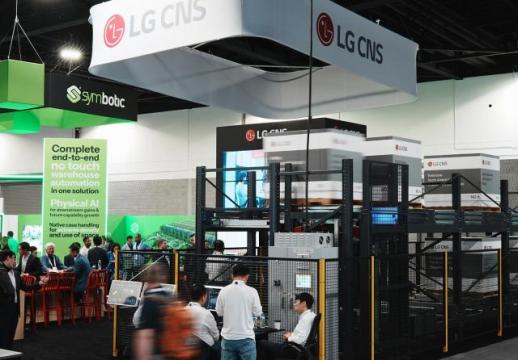 LG CNS unveils cold-chain logistics robot at U.S. trade show, eyes North American market SEOUL, April 15 (AJP) - LG CNS showcased a new warehouse automation robot capable of operating in sub-zero freezer environments at a major North American logistics trade show, as the South Korean IT services firm pushes to expand its footprint in the United States. The company unveiled its "Mobile Shuttle" system at Modex 2026 on Monday (local time) in Atlanta, where the robot was highlighted for its ability to function continuously at temperatures as low as minus 26 degrees Celsius — a threshold that covers most industrial cold-chain and frozen food storage facilities. The robot has received UL certification, a mandatory safety standard for electrical and mechanical equipment in the United States. Each shuttle unit can carry loads of up to 1,500 kilograms and travels at 1.5 meters per second along warehouse racks. The system uses a four-way directional structure — moving forward, backward, sideways, and vertically — to minimize routing constraints and boost storage density by more than 30 percent compared with conventional two-directional warehouse setups. LG CNS has equipped the system with an AI agent that allows warehouse workers to issue commands in natural language through a chatbot interface, including for emergency dispatch situations. The AI component also diagnoses malfunctions and proposes corrective actions in real time, the company said. "We have expanded the scope of logistics automation to cover refrigerated and frozen environments," said Lee Jun-ho, executive vice president of LG CNS' smart logistics and city business division. "We will continue to grow our global business on the strength of our differentiated capabilities in high-density, high-efficiency logistics operations." 2026-04-15 10:50:14
 -
 Lotte Biologics to Present SoluFlex Link ADC Platform Data at AACR 2026 Lotte Biologics said Tuesday it will present research results on its antibody-drug conjugate, or ADC, platform technology, SoluFlex Link, at the American Association for Cancer Research meeting, AACR 2026, to be held April 17-22 in San Diego. At the conference, the company will disclose results from an evaluation of the structural stability of an ADC using SoluFlex Link technology co-developed with Kanaph Therapeutics. According to Lotte Biologics, an analysis of aggregate changes over time found that a control group without the SoluFlex linker showed increasing aggregation as time passed, while the group using the SoluFlex linker showed markedly suppressed aggregation and maintained high stability. The company said the technology could help keep product quality stable during distribution and storage. In cell tests targeting multiple markers, including epidermal growth factor receptor (EGFR) and trophoblast cell surface antigen 2 (TROP-2), the SoluFlex Link group showed stronger anticancer effects at lower concentrations than the non-applied group, the company said. It also showed strong efficacy in triple-negative breast cancer cells. Lotte Biologics said animal studies showed improved in vivo pharmacokinetics, or PK, based on high stability. The company said the findings support SoluFlex Link as a platform technology not limited to a specific antibody, with potential to improve anticancer efficacy and pharmacokinetic properties. A Lotte Biologics official said SoluFlex Link is a differentiated platform that goes beyond the limits of existing technologies, adding that the company will provide solutions to help partners and customers develop next-generation ADCs. AACR is considered one of the world’s three major cancer meetings, along with the American Society of Clinical Oncology (ASCO) and the European Society for Medical Oncology (ESMO). It brings together cancer researchers and industry representatives to discuss cancer treatments and new drug development. * This article has been translated by AI. 2026-04-15 10:45:00