
Journalist

Tom Stacey
-
 Exo starts world tour as 32,000 global fans fill Seoul arena SEOUL, April 13 (AJP) - K-pop boy band Exo members -- Suho, Chanyeol, D.O., Kai, and Sehun -- opened their sixth concert tour in Seoul last Friday. The group performed for 32,000 fans over three days at the KSPO Dome in southern Seoul, marking the band's first concert series in six years and four months. The three-day concert in Seoul proved that the group remains a major force in the K-pop scene despite a long break from the stage. Their last major tour was held in 2019, and this new series, titled "EXO PLANET #6 - EXhOrizon in SEOUL," is designed to show the group and their fans starting a new chapter together. The group performed a variety of their most famous songs, including 'MAMA' and 'Love Shot'. At the end of the final show, which was also streamed online to fans around the world, the members shared their feelings about returning to live performance. "I had worries since it was a performance after a long time, but seeing you smile gave me strength. EXO-L is like the four seasons of spring, summer, fall, and winter to us. Thank you for loving us without change for 14 years," the members said. "We said if forever exists, it would be our story, and it was possible thanks to all of you who kept that place until now. I want to be on stage with you for the rest of my life." The tour will now move to 14 different regions. The group is scheduled to perform in Ho Chi Minh on April 25. In May, they will visit Nagoya, Taipei, Bangkok, and Macau. The schedule continues in June with stops in Osaka, Jakarta, Hong Kong, and Kuala Lumpur, followed by performances in Manila, Tokyo, Kaohsiung, and Singapore in July. 2026-04-13 14:08:06
 -
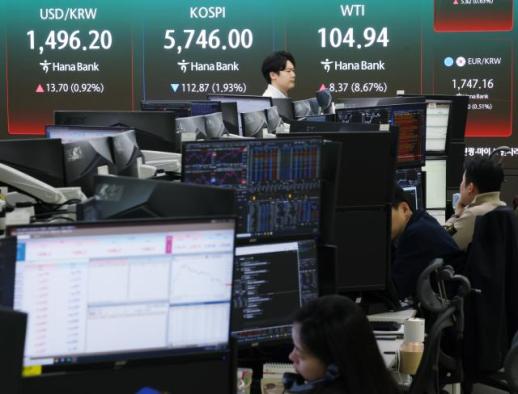 Korean stock turnover more than triples in Q1 amid heavy volatility SEOUL, April 13 (AJP) -South Korea’s stock market activity more than tripled in the first quarter, as heightened volatility following war-driven shocks disrupted the KOSPI’s red-hot rally and amplified trading momentum. According to the Korea Securities Depository Monday, the daily average value of stocks, bonds and other securities processed reached 35.8 trillion won ($26.5 billion) in the January–March period. The figure rose 31.6 percent from a year earlier and climbed 15.3 percent from the previous quarter, when the market’s record-breaking run gathered pace. Equities posted the sharpest gains. The daily average turnover of stock transactions, spanning both on- and off-exchange activity, came to 6.5 trillion won, jumping 77.9 percent from the prior quarter and more than tripling from a year earlier. On-exchange equity turnover — covering the KOSPI and KOSDAQ — averaged 2.9 trillion won per day, up 78.2 percent quarter-on-quarter. Institutional equity flows, representing transactions between brokerages and large investors, also advanced 77.6 percent to 3.6 trillion won. The increase was fueled by robust retail participation alongside sizable portfolio reshuffling by institutional investors. Bond activity continued to anchor the market, accounting for 81.8 percent of the total value processed. The daily average in the bond segment reached 29.3 trillion won, rising 7.0 percent from the previous quarter and 15.8 percent from a year earlier, sustaining a gradual upward trend. However, activity diverged across venues. On-exchange bond turnover slipped 0.1 percent from the prior quarter to 2.9 trillion won, while over-the-counter institutional bond flows expanded 7.8 percent to 26.5 trillion won, underpinning overall growth. The shift points to increased hedging demand and large-scale capital deployment by institutions amid heightened interest rate volatility. 2026-04-13 13:38:19
 -
 NH NongHyup Bank, BNK Busan Bank Join Financing for Sinan Ui Offshore Wind Project The Sinan Ui offshore wind power project, the first investment backed by the National Growth Fund, has moved into full-scale funding execution, putting the development on track. According to the financial industry on the 13th, NH NongHyup Bank said it will join the project financing agreement for the Sinan Ui offshore wind power project. The project will build a 390-megawatt offshore wind complex in waters near Uido, Sinan County, South Jeolla Province. Total project costs are 3.4 trillion won. It is the first case of the National Growth Fund supplying capital to an industrial project. NH NongHyup Bank will provide a total of 207 billion won, including 120 billion won in senior loans and 87 billion won in indirect investment through its Future Energy Fund. The bank also plans tailored support for partner companies by using its strong branch network in South Jeolla. It will introduce reverse factoring — early purchases of accounts receivable — to help local equipment and materials suppliers that may face cash shortages during the large-scale PF process. Companies with strong wind technology will be eligible for a technology-finance special program offering low-interest loans and guarantees. “Participation in the Sinan Ui offshore wind power project is an excellent example of the locally focused, productive finance NH NongHyup Bank pursues,” a bank official said. “We will continue expanding productive finance that helps environmentally friendly energy industries and regional small and midsize companies grow together.” BNK Busan Bank will also join the PF agreement. Drawing on its experience in shipbuilding and maritime finance, Busan Bank said it is the only regional bank to participate in the lending group for the project. Busan Bank has positioned maritime finance as a core specialty, providing services across ship finance, refund guarantees and port infrastructure. It said the PF participation will help speed efforts to diversify its business portfolio. Noh Hae-dong, head of Busan Bank’s Maritime and IB Group, said the deal will be an opportunity to expand financial support into energy infrastructure based on the bank’s maritime finance experience. He said the bank will continue strengthening financing for renewable energy such as offshore wind and for maritime infrastructure.* This article has been translated by AI. 2026-04-13 11:30:16
 -
 Asian stocks retreat near 1% amid imminent US reverse blockade at Hormuz SEOUL, April 13 (AJP) — Asian markets opened broadly lower Monday on renewed spike in oil price after the U.S.-Iran showdown spilled over to the Strait of Hormuz following failed weekend peace talks. The pullback, however, remained relatively contained at around 1 percent, suggesting markets are still pricing in a controlled escalation and a potential pathway toward stabilizing the critical waterway. South Korea’s benchmark KOSPI fell 0.79 percent to 5,812.82 as of 10:43 a.m., and Japan’s Nikkei 225 also 0.79 percent to 56,474.72. Hong Kong’s Hang Seng Index declined 1.11 percent to 25,605.67, and China’s Shanghai Composite Index edged down 0.28 percent to 3,975.10. The cautious retreat followed confirmation from the United States Central Command that it would implement maritime security measures targeting vessels entering or leaving Iranian ports starting at 10 a.m. Eastern Time on April 13. Under the plan, traffic linked to Iranian ports across the Persian Gulf and the Gulf of Oman will be subject to control measures regardless of nationality, while transit through the Strait of Hormuz will remain open for vessels traveling between non-Iranian ports. The move aligns with a more aggressive posture signaled by Donald Trump, who said “the blockade will begin shortly” and indicated mine-clearing operations would commence in the waterway. The calibrated approach — restricting Iranian-linked flows while preserving broader navigation — points to a selective pressure strategy aimed at choking off Tehran’s oil revenues without triggering a full-scale supply shock. Large-cap stocks in Seoul mostly traded lower. Samsung Electronics fell 1.70 percent to 202,500 won, Hyundai Motor declined 1.23 percent to 483,500 won, and LG Energy Solution slipped 1.09 percent to 407,500 won. Samsung Biologics dropped 1.78 percent, while KB Financial Group edged down 1.20 percent. Losses extended across cyclicals, with Samsung C&T down 2.31 percent and Celltrion off 2.63 percent. Doosan Enerbility fell 1.70 percent, HD Hyundai Heavy Industries declined 1.05 percent, and NAVER slipped 1.93 percent. Gains were limited. SK hynix rose 1.36 percent to 1,041,000 won, Hanwha Aerospace added 0.40 percent, and SK Square advanced 2.46 percent. Construction shares, which had rallied on expectations of postwar reconstruction demand in the Middle East, came under renewed pressure as the collapse of U.S.–Iran talks dampened sentiment. GS Engineering & Construction dropped 4.12 percent, Hyundai Engineering & Construction fell 1.62 percent, while Kyeryong Construction Industrial and Samsung E&A declined 4.20 percent and 3.61 percent, respectively. The retreat followed a sharp run-up. From March 3 to April 10, the KRX Construction Index surged 26.11 percent, the strongest gain among all sectors, while KOSPI-listed construction stocks climbed 30.59 percent, significantly outperforming the broader market. The KOSDAQ bucked the trend, rising 0.55 percent to 1,099.67. Among gainers, EcoPro rose 0.55 percent and EcoPro BM gained 0.99 percent, while Leeno Industrial edged up 0.09 percent. On the downside, Alteogen fell 3.04 percent, ABL Bio dropped 1.78 percent, and Kolon TissueGene slid 6.24 percent. The U.S. dollar rose to 1,491.40 won from last close of 1,482.50. 2026-04-13 11:13:02
 -
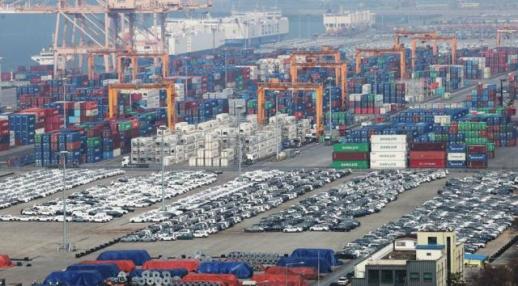 South Korea posts record early-April exports despite Middle East crisis SEOUL, April 13 (AJP) - Despite geopolitical risks amid the prolonged conflict in the Middle East, South Korea posted its highest-ever exports for the first 10 days of this month, driven by strong demand for semiconductor chips. According to data from the Korea Customs Service (KCS) released on Monday, exports during the period from the first day of April to last Friday totaled US$25.21 billion, up 36.7 percent from a year earlier, surpassing the previous record for the same period, set just a month earlier at $21.70 billion. Average daily outbound shipments rose 36.7 percent to $2.97 billion. By product, semiconductor chips surged 152.5 percent from a year earlier to $8.57 billion, the highest amount ever recorded for the period and well above last month's record of $7.6 billion, accounting for 34 percent of total exports, up 15.6 percentage points from a year earlier. Exports of computer peripherals rose 134.9 percent, petroleum products 38.6 percent, and ships 26.6 percent, while home appliances fell 26 percent and passenger cars declined 6.7 percent. By destination, exports to China climbed 63.8 percent to US$5.73 billion, while shipments to Taiwan rose 68.3 percent. Exports to the U.S. and Viet Nam also increased 24 percent and 66.6 percent, respectively. Meanwhile, imports rose 12.7 percent to $22.11 billion. Semiconductor imports increased 29.7 percent, crude oil 8.7 percent and semiconductor manufacturing equipment 77.9 percent, while machinery imports fell 7.4 percent. Total energy imports including crude oil, gas and coal rose 13.1 percent, which the KCS attributed to rising global energy prices due to the Middle East conflict. Imports increased from China by 13.6 percent, the U.S. by 39.3 percent, the European Union by 38.0 percent and Taiwan by 24.6 percent. With exports exceeding imports, the trade balance recorded a surplus of $3.10 billion. 2026-04-13 11:01:31
 -
 Yuhan Wins FDA Orphan Drug Designation for Gaucher Disease Candidate YH35995 Yuhan said on the 13th that its new drug candidate YH35995, being developed to treat Gaucher disease, has received Orphan Drug Designation from the U.S. Food and Drug Administration for the Gaucher disease indication. The FDA program is intended to encourage development of treatments for diseases that affect small patient populations and have limited options. Designated products may qualify for incentives including clinical trial tax credits, waiver of certain review fees and up to seven years of market exclusivity after approval. Gaucher disease is a lysosomal storage disease caused by an enzyme deficiency that disrupts metabolism. It is an inherited rare disorder that can cause a range of symptoms throughout the body, including enlarged liver and spleen, anemia, low platelet counts and skeletal problems. Type 3 Gaucher disease includes neurologic symptoms, and there is no approved treatment for those symptoms, the company said. YH35995 is an oral small-molecule glucosylceramide synthase inhibitor designed to reduce production of glucosylceramide (GL1), a form of substrate reduction therapy. In preclinical studies, the compound showed a tendency to maintain strong and sustained inhibition of GL1 in the brain based on its ability to cross the blood-brain barrier. Yuhan said it expects the drug could provide clinical benefit for Type 3 patients, who have limited treatment options for neurologic symptoms. Yuhan said it plans to use the orphan designation to organize its global clinical development and regulatory strategy and focus on follow-up development aimed at improving patient access. The company previously received approval from South Korea’s Ministry of Food and Drug Safety for an investigational new drug application for a Phase 1 trial and is conducting a first-in-human study in healthy volunteers to evaluate safety, tolerability, pharmacokinetics and pharmacodynamics. “This FDA orphan drug designation is a meaningful achievement that externally confirms both the need to develop a new treatment option for Type 3 Gaucher disease patients and the potential of YH35995,” said Kim Yeol-hong, head of R&D at Yuhan. “Based on discussions with global regulators, we will do our best to accelerate clinical development and provide a practical treatment alternative for patients with rare diseases.”* This article has been translated by AI. 2026-04-13 11:00:37
 -
 Actress Ji Ye-eun Confirms Dating Dancer Bada of 'Street Man Fighter' Actress Ji Ye-eun and dancer Bada have confirmed they are dating. Ji’s agency, CP Entertainment, told Aju Business on the 13th that the two, who had been colleagues, “are seeing each other with good feelings.” The agency added, “We ask for your warm support.” The two are both born in 1994 and are said to have developed their relationship after working in the entertainment industry. They reportedly grew closer through a shared religion. Ji debuted in the 2017 web drama “How To” and drew attention through variety shows including the “SNL Korea” series and “Running Man.” Bada is the leader of We Dem Boyz, the dance crew that finished runner-up on Mnet’s “Street Man Fighter.” He has created choreography for Zico’s “Saebbing” and Jennie’s “Like Jennie,” among others.* This article has been translated by AI. 2026-04-13 11:00:14
 -
 MBC’s ‘The Grand Princess of the 21st Century’ draws debate online after premiere MBC’s Friday-Saturday drama series ‘The Grand Princess of the 21st Century’ has sparked mixed reactions online since its first broadcast. On April 12, posts about the drama flooded an online community, with viewers trading opinions on its premise, the cast’s performances and a well-known streamer’s review. Some viewers said the show’s world-building is hard to accept. One commenter wrote that it makes little sense for the female lead — described as a second-generation conglomerate heir — to be called “lowborn” and looked down on as a commoner and illegitimate child. “Rather than feeling sorry for her, I first think, ‘So what?’” the commenter said. The same post also questioned other character setups, including a second male lead portrayed as a hereditary prime minister who collects supercars, and a male lead who is the king’s son but “has nothing.” Others alleged the series borrows heavily from Japan. Another commenter said it looks like Japan’s imperial system and political structure were “Koreanized,” pointing to similarities in the military system, the constitutional monarchy setting and the class structure. The commenter also criticized the idea of a specific family inheriting the prime minister’s post, saying it resembles Japanese political culture and feels out of place in a drama set in Korea. Assessments of the acting were also divided. On X, some viewers praised Gong Seung-yeon, who plays the queen dowager, saying her delivery and tone fit a historical drama and that her performance draws viewers into the character. But some criticized Byeon Woo-seok, who plays the male lead, saying his voice and expressions feel monotonous and that his emotions do not come through strongly. A review by content commentator “Dangun,” an esports caster, also drew attention. In a live broadcast, he lowered the drama’s grade from B to C before adjusting it back to B. “The world-building is interesting, but the characters aren’t convincing,” he said, adding that the conflict structure among key figures and the plot development need more explanation. Ratings, however, started strong. Nielsen Korea said Episode 2, aired April 11, posted 9.5% nationwide and 10.1% in the Seoul metropolitan area, ranking No. 1 in its time slot. Its 20-49 rating was 5.3%, the highest among all Saturday programs, and its peak minute reached 11.1%. The series has opened with solid viewership, but debate over its premise and performances is expected to continue as the story unfolds.* This article has been translated by AI. 2026-04-13 10:54:14
 -
 Kia's fully facelifted Seltos leads small SUV market last month SEOUL, April 13 (AJP) - Kia sold 4,983 units of its Seltos in the domestic market last month, the most in the small sports utility vehicle (SUV) segment for March, according to sales figures released by its parent company Hyundai Motor on Monday. Kia gave the Seltos its first major facelift in six years, giving it a bolder, more angular look in line with the brand's overall lineup, along with improved convenience and safety features. The popular SUV has held the top spot in its segment since 2020, following its release in 2019. Those in their 20s and 30s were the largest group of buyers, accounting for about 30.5 percent, with male motorists slightly outnumbering women. Nearly half of buyers or 45.5 percent opted for the top-trim models, which come with features typically found in higher segments such as comfortable first-row seats and automatic retractable door handles. This suggests that perceived quality including design and convenience features matters more than price alone, even among entry-level or first-time buyers. Its hybrid version accounted for about 38.6 percent of sales. "The latest Seltos is a true all-rounder, combining great design, efficiency, practicality and convenience," said a Kia spokesperson. "We are confident it will appeal to a broad range of customers from first-time buyers to those seeking a versatile vehicle for both everyday use and leisure activities." 2026-04-13 10:30:14
 -
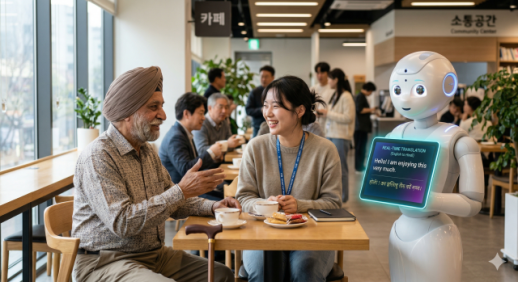 Sookmyung University highlights human-centered AI research at global conferences SEOUL, April 13 (AJP) - The Empathic AI Women's Engineering Talent Training Team at Sookmyung Women's University in South Korea is presenting a series of research papers at major international computer science conferences. As part of the Brain Korea 21 program, the team is developing human-centered artificial intelligence designed to address social isolation and communication barriers. Professor Kim Byung-Gyu leads the multidisciplinary group, which conducts research on emotion recognition, generative AI, and human-computer interaction. His group will present a multimodal emotion recognition model called EmoXFormer at the IEEE International Conference on Pattern Recognition (ICPR) 2026. This technology integrates different signals to identify human emotions more accurately. In the field of virtual reality, a group led by Professor Dong Suh Yeon presented two papers at the IEEE International Conference on Pervasive and Ubiquitous Computing (UbiComp) 2025. Their work involves a method to measure heart rates using the area around the ear when a user's face is obscured by a headset. This allows for stable emotion recognition even when a user is moving. Professor Kim Sangyeon and his team are focusing on digital accessibility for the elderly. At the ACM Conference on Human Factors in Computing Systems (CHI) 2026, they will introduce an AI-based tool that helps older users identify digital buttons and icons more easily through color and spatial cues. Other researchers on the team have focused on cybersecurity and data systems. Professor Jeong Seonghoon developed a model to detect evolving cyber threats for the IEEE/IFIP International Conference on Dependable Systems and Networks (DSN) 2026. Professor Choi Yoonhyuk also presented research on improving recommendation systems at various conferences, including AAAI 2026 and WSDM 2025. "We are expanding the practical applications of empathic AI through these diverse research achievements," said Professor Kim Byung-Gyu. "Based on our global research capabilities, we plan to contribute to fostering talent who will solve social problems and lead the AI industry in the future." 2026-04-13 10:17:58