
Journalist

Wolfgang Preiser, Cheryl Baxter, Jean Nachega
-
 Google I/O 2026 Sparks Major Changes in AI Landscape with New Products and Partnerships As Google's annual developer conference concluded, significant shifts in the AI industry became evident. Changes are unfolding simultaneously across hardware, software, and partnerships. According to the IT industry on May 21, Google announced several key developments during the Google I/O 2026 event held on May 19-20 at the Shoreline Amphitheatre in Mountain View, California. These included the unveiling of AI smart glasses, enhancements to its agent coding platform, and a reduction in subscription fees. Google and Samsung Unveil AI Glasses Designed by Gentle Monster and Warby Parker The highlight in hardware was the first public reveal of the AI glasses, 'Intelligent Eyewear,' co-developed by Google and Samsung. This marks the first time the product's design has been shown since the collaboration was announced in December. The glasses were designed by the South Korean eyewear brand Gentle Monster and the American company Warby Parker. They feature built-in speakers, cameras, and microphones, allowing users to execute functions through voice commands, positioning them as a 'companion' device to support key features of the Galaxy AI phone. During a stage demonstration, the glasses successfully performed a series of tasks, including navigation, ordering drinks, summarizing texts, and adding calendar events, all through voice commands. The audio glasses are set to launch this fall, while the display glasses, which will show information directly in the user's field of vision, will be released in subsequent phases. This move marks Google's and Samsung's entry into the AI glasses market, previously dominated by Meta's Ray-Ban. Antigravity 2.0 Launches to Challenge Anthropic's Dominance in AI Coding On the software front, regaining leadership in the AI coding market was a primary focus. Google introduced 'Antigravity 2.0,' an agent-based development platform, as a standalone desktop app, simultaneously unveiling CLI, API, and SDK, signaling a shift from a single coding tool to an agent ecosystem platform. Google claims that multiple agents can now work in parallel, achieving processing speeds 12 times faster than before. This urgency stems from the competitive landscape, where Anthropic's market share in enterprise AI chatbots surged from 10% in February 2025 to over 60% in February 2026, while OpenAI's share plummeted from 90% to 35% during the same period. Currently, Google ranks third in this competition. The company has also reduced the price of its AI Ultra Plan from $250 to $200 per month and introduced a new entry-level tier at $100 per month. However, on the day of the announcement, Google's stock rose only 0.66% in pre-market trading, indicating a lukewarm market reaction. Meanwhile, xAI also launched its Grok build, intensifying the competition for the enterprise AI coding market, which Anthropic had previously dominated. End of OpenAI-Microsoft Exclusivity as Anthropic Claude Integrates with Copilot The landscape of partnerships is also shifting. The six-year exclusivity agreement between OpenAI and Microsoft is effectively coming to an end. Under the new agreement, OpenAI has gained the right to freely engage with cloud providers such as Oracle, Google, and AWS, in addition to Microsoft Azure. Microsoft is accelerating the integration of Anthropic Claude into its Office 365 and Copilot services. Currently, Copilot is transitioning to a multi-model architecture, where Anthropic Claude will handle enterprise reasoning tasks while OpenAI's GPT model will manage consumer-facing functions. This unusual situation sees Microsoft, which helped elevate OpenAI, now acting as both an investor in Anthropic and a partner for model integration. The common thread among these developments is clear: the AI market is shifting its focus from chatbot competition to alliances in agents, hardware, and infrastructure. Aside from Samsung and Gentle Monster's involvement in the Google-Samsung AI glasses ecosystem, domestic companies have yet to establish themselves as key players in this reconfiguration.* This article has been translated by AI. 2026-05-21 08:07:46
 -
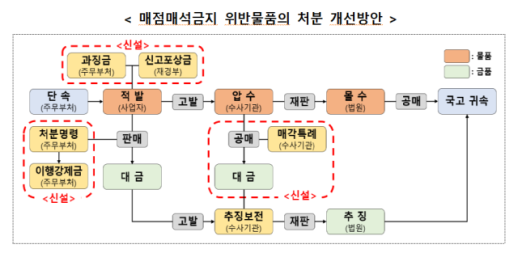 Government Introduces Fines for Price Stability Violations, Extends Fuel Tax Cuts The government has announced measures to enhance the effectiveness of price stability initiatives. To address the limitations of existing legal sanctions against violations such as hoarding, the Price Stability Act will be amended to introduce monetary penalties. Additionally, the government will extend fuel tax cuts for gasoline by 15% and diesel by 25% for two more months, until the end of July, in response to rising international oil prices. Koo Yoon-cheol, Deputy Prime Minister and Minister of Economy and Finance, convened a task force on special management of living costs and the 268th External Economic Ministers' Meeting on May 21 to unveil these measures. Previously, the government had implemented maximum price controls on petroleum products, emergency supply adjustments, and a ban on hoarding to address supply shortages. However, there were no legal means to compel sales in cases of hoarding violations, and significant time was required to supply goods to the market. To rectify this, the government is establishing measures to deprive illegal profits through monetary sanctions. A Ministry of Economy and Finance official stated, "We will impose administrative penalties such as compliance fines and surcharges for violations of price stability measures, and we will introduce special provisions for sales to improve the distribution speed of goods in short supply and recover illegal profits." The amendment to the Price Stability Act will impose monetary penalties exceeding unjust gains. Surcharges will be levied for violations of emergency supply adjustments and the hoarding prohibition to recover economic benefits. A reward system for reporting violations will also be introduced to encourage whistleblowing. To quickly resolve supply shortages, rapid distribution enforcement measures will be implemented. If violations of government measures are detected, a disposal order will be issued, and failure to comply will result in compliance fines. New regulations will also allow for the sale of confiscated goods when urgent supply is needed. With the amendment of the enforcement decree of the Price Stability Act, the authority to crack down on hoarding violations at the import and customs stages will be delegated from the relevant minister to the Commissioner of the Korea Customs Service. In cases of disposal of violating goods, the police will actively utilize pre-indictment confiscation to recover the value during the investigation stage. A Ministry of Economy and Finance official noted, "We will apply the revised enforcement decree of the Price Stability Act starting this month and will push for amendments to the Price Stability Act in August." As international oil prices continue to soar, the government will extend the fuel tax cuts until July 31, maintaining a reduction of 15% for gasoline and 25% for diesel, particularly benefiting essential diesel used in industries and logistics. However, the specific end date for the fuel tax cuts has not yet been determined. The government plans to implement the revised enforcement decree of the Transportation, Energy, and Environment Tax Act following approval at the Cabinet meeting. The Ministry of Economy and Finance anticipates that the inflation rate for May will remain around 2%. A ministry official commented, "There have been no significant fluctuations in petroleum product prices, and no unusual factors have been identified in agricultural and marine products. It seems likely that prices will rise less than in April."* This article has been translated by AI. 2026-05-21 08:04:13
 -
 Samsung Electronics DS Division Bonuses Projected to Reach Up to 600 Million Won Per Employee According to industry sources, employees in certain sectors of Samsung Electronics' semiconductor division may receive bonuses of up to 600 million won each, based on a tentative agreement reached just before a planned general strike. On May 21, reports indicated that Samsung Electronics and its labor union established a new special management bonus system for the DS division in their recent tentative agreement. This system combines the existing OPI of 1.5% with an additional special management bonus of 10.5%, resulting in a total bonus pool of 12%. The special management bonuses will be calculated based on performance metrics agreed upon by both parties, with no upper limit on the amount. The distribution of these bonuses will vary within the DS division. Sixty percent of the total bonus pool will be allocated to profitable sectors, while the remaining 40% will be distributed across the entire DS division. As a result, employees in profitable sectors, such as memory, are expected to benefit the most. Industry analysts estimate that if Samsung's DS division sees a significant improvement in operating profit, employees in the memory sector could receive bonuses of around 600 million won, combining the common pool and sector-specific allocations. This estimate is based on a salary of 100 million won and is calculated before taxes. Loss-making sectors may also receive a certain level of bonuses in the short term. The tentative agreement reportedly includes a provision to apply differential treatment to loss-making sectors starting in 2027, effectively postponing penalties for this year. However, the agreement has sparked controversy, as it is seen as unprecedented. The bonus pool is set to be maintained for ten years, and the lack of a cap could lead to substantial rewards during periods of strong performance. Conversely, there may be growing feelings of deprivation and fairness concerns among non-semiconductor sectors and shareholders due to the DS-centric bonus distribution. An industry insider noted, "While the general strike has been averted, internal equity issues surrounding the bonuses are likely to intensify from here on out. Especially if the figure of 600 million won gains prominence, the gap between DS and non-DS sectors could widen further."* This article has been translated by AI. 2026-05-21 07:55:05
 -
 OpenAI Plans to Submit IPO Filing as Early as May 22 OpenAI is expected to submit initial paperwork for its initial public offering (IPO) to U.S. regulators as early as this week. The Wall Street Journal reported on May 20, citing multiple sources, that OpenAI has been preparing a draft of its IPO prospectus in collaboration with investment banks and plans to file it confidentially with the U.S. Securities and Exchange Commission (SEC) as soon as May 22. The company aims for a public listing by September, although sources indicated that these plans remain fluid and subject to change. OpenAI recently overcame a significant hurdle in its IPO efforts by winning a lawsuit filed by Elon Musk, CEO of Tesla. However, Musk has stated his intention to appeal the ruling. The acceleration of OpenAI's IPO preparations comes amid a competitive landscape for tech company listings. SpaceX is set to go public on the Nasdaq on June 12, and Anthropic is also targeting an IPO within the year. However, concerns have been raised about OpenAI's ability to demonstrate revenue growth sufficient to support its substantial investments in data centers. The Wall Street Journal noted that OpenAI must address worries about whether it can generate enough revenue to sustain its commitments to large-scale AI infrastructure spending. Recently, OpenAI has reportedly fallen short of some internal revenue and user targets amid increasing competition from rivals like Google and Anthropic. Notably, Anthropic has shown faster growth in recent months as adoption of its software tools has surged in corporate settings. In response, OpenAI is shifting its strategy to enhance software tools that cater to high demand from enterprise customers. The Wall Street Journal reported that OpenAI is undertaking significant strategic changes to catch up with Anthropic.* This article has been translated by AI. 2026-05-21 07:46:00
 -
 SpaceX Announces Plans for Record-Breaking IPO Targeting $2 Trillion Valuation SpaceX has officially announced plans for what could be the largest initial public offering (IPO) in history. On May 20, local time, NBC News reported that SpaceX confirmed its intention to publicly sell shares to individual investors through a securities filing submitted that day. The official name is Space Exploration Technologies Corp., and it is set to trade on NASDAQ under the ticker symbol 'SPCX.' Given SpaceX's significant competitive advantages in the rocket launch and satellite internet sectors, the IPO is expected to attract considerable investor interest. If the company achieves its target valuation of $2 trillion, it could rank among the top 10 companies globally by market capitalization. The size of the offering has not yet been disclosed. However, NBC News noted that this IPO could surpass the $29.4 billion record set by Saudi Arabia's state-owned oil company Aramco in 2020. According to the filing, SpaceX reported revenues of $18.6 billion in 2025, a 33% increase from the previous year. However, the company incurred a net loss of $4.3 billion during the three months ending March 31 of this year. Musk is expected to maintain significant control after the IPO, with SpaceX stating that he will hold 85% of the company's voting rights and continue to serve as CEO, chairman, and chief technology officer. SpaceX's core businesses include rocket launch services and the Starlink satellite internet service. The company has provided launch services to government agencies, including NASA and the U.S. Department of Defense, sending satellites, equipment, and personnel into space. However, there are concerns regarding the risks associated with the rocket business. SpaceX has invested $15 billion in developing its massive Starship rocket. Recently, a worker died after falling from scaffolding at its Texas facility, and Reuters previously reported that there have been hundreds of unreported worker injuries at SpaceX. Starlink is rapidly increasing its subscriber base. According to the filing, Starlink currently has 10.3 million subscribers, more than double the 5 million reported a year ago. However, the average revenue per user has decreased as more subscribers come from regions outside North America and from lower-cost plans. SpaceX is also involved in artificial intelligence (AI). In February, the company acquired Musk's AI startup xAI, and Musk announced earlier this month that SpaceX would manage all of its AI products without keeping xAI as a separate entity. The AI business has also been flagged as a risk factor. The filing mentions that xAI's chatbot Grok is under investigation for issues related to non-consensual sexual deepfakes. The company indicated that these investigations could lead to legal liabilities, negative public sentiment, or sanctions. SpaceX also owns the social media platform X (formerly Twitter). The company reported that as of March, it had 6.3 million active paid subscribers for consumer services, including X Premium and SuperGrok. The filing also outlines plans to develop X into an 'everything app' that integrates real-time information, communication, media, payments, banking, and commerce. This IPO is expected to serve as a litmus test for investor sentiment toward Musk. While he is also the CEO of Tesla, the company has recently faced challenges, including declining sales, rising capital costs, and a lack of new products. Musk's political actions and controversies could also influence investor sentiment. Given the unusually large size of this offering, 23 major global banks and investment firms will participate in the underwriting. Goldman Sachs will serve as the lead underwriter, followed by Morgan Stanley, which was also involved in Tesla's IPO in 2010.* This article has been translated by AI. 2026-05-21 07:34:18
 -
 Woori Bank's CEO Jeong Jin-wan Focuses on Restoring Trust in Finance Jeong Jin-wan, CEO of Woori Bank, bases his leadership on a foundation of crisis. He took charge of an organization where trust had eroded, rather than one experiencing growth. Following incidents of improper lending and embezzlement, he faces the challenge of restoring the bank's core essence. Jeong has distilled this issue into a singular task: 'trust recovery.' Instead of opting for flashy strategies, he has chosen to return to basics.Internal controls, corporate culture, and customer focus may seem like conservative approaches, but they are, in fact, the most aggressive strategies. Trust is the strongest competitive advantage in finance. At the same time, he has re-emphasized Woori Bank's roots in corporate finance. The challenge lies in balancing these two aspects: trust requires a slower pace, while corporate finance demands speed. The essence of Jeong's leadership is to unify these conflicting directions into a single strategy. He has initiated an experiment to transform the 'collapsed bank' into a 'bank that is chosen again.' Leadership Emerging from Crisis, Centering on TrustThe starting point of Jeong Jin-wan's leadership is clear: it is not growth or innovation, but trust. Upon his appointment, he prioritized internal control reform and corporate culture restructuring as essential tasks. This was not a choice but a necessity, as Woori Bank had already suffered significant losses in market trust due to major financial incidents. Jeong approached this issue as a matter of 'people' rather than 'systems.' He believes that the failure of internal controls stems from organizational overload and culture, not from the system itself. He aimed to restructure the organization to reduce employees' workload and create time for focusing on internal controls. This approach is not merely about strengthening controls but about creating an environment where controls can function effectively. At this juncture, Jeong's leadership reveals its characteristics. Instead of tightening regulations, he creates a structure that allows regulations to operate. This is a hallmark of field leadership. Returning to Corporate Finance, Reviving Woori Bank's EssenceJeong finds Woori Bank's competitiveness in 'corporate finance.' From the outset of his tenure, he emphasized that the bank's roots lie in providing financial services to Joseon merchants and declared a commitment to strengthening corporate finance. His symbolic first step was to visit small and medium-sized enterprises and small business sites directly. This was not just a simple event but a strategic message declaring a return to the real economy as the bank's focus. However, his corporate finance strategy differs from the past. He is cautious about reckless loan expansion, setting loan targets at a 'maintenance' level to manage risks effectively. Jeong views corporate finance as a matter of 'quality' rather than 'quantity.' This represents an attempt to balance financial stability with growth. Transforming the Organization with a Field-Centric ApproachAnother notable aspect of Jeong's leadership is his approach to organizational restructuring. He has reduced headquarters operations and strengthened the independence and accountability of sales organizations. The abolition of the division head system and the expansion of group leaders' authority are prime examples. This goes beyond simplifying the organization; it also clarifies responsibility. As organizations become more complex, accountability becomes blurred, and when accountability is unclear, internal controls weaken. Jeong aimed to structurally block this issue. Additionally, the shift from relative to absolute performance evaluation is noteworthy. This measure aims to reduce excessive competition and enhance organizational stability, aligning with the structural changes to strengthen internal controls. Jeong focuses on making the organization operate 'stably' rather than merely 'efficiently.' Platform Strategy: Becoming a Bank That Attracts CustomersJeong acknowledges the limitations of traditional sales methods. He believes that we are no longer in an era where customers visit banks; instead, banks must reach out to customers. Consequently, he is strengthening the platform strategy. A prime example is the collaborative platform 'To the Moon.' This is not just a ticket booking service but a platform designed to expand customer touchpoints. It combines cultural content with finance to integrate into customers' daily lives. Jeong views expanding the customer base as a 'result' rather than a 'goal.' He aims to create a structure where customers voluntarily choose the bank, rather than merely meeting sales targets. This strategy differentiates him from traditional banks. While conventional banks set targets and strive to achieve them, Jeong designs customer experiences and waits for the outcomes. Prioritizing Stability Over Speed: A Shift to Long-Term StrategyJeong's leadership does not prioritize speed. He places greater importance on improving the organization's fundamentals over short-term results. In fact, Woori Bank once endured negative growth while focusing on enhancing internal controls and asset structure. This is a significant characteristic of financial entrepreneurship. Choosing long-term competitiveness over short-term performance is not an easy decision. Jeong aims to transform the bank into a 'sustainable organization' rather than merely a 'growing organization.' While this may appear to be a conservative strategy, it is, in the long run, the most aggressive choice. SWOT Analysis:Jeong Jin-wan's financial entrepreneurship is defined as 'trust-based field-oriented reconstruction leadership.'Strengths include expertise in corporate finance and understanding of field operations. He possesses the ability to design finance connected to the real economy based on his experience in small and medium-sized enterprise sales. Additionally, his structural leadership simplifies the organization and clarifies responsibilities. Weaknesses include limitations on growth speed. The strategy focusing on internal controls and improving fundamentals may constrain short-term performance. Furthermore, the late start in platform competitiveness compared to other financial groups is also a concern. Opportunities arise from structural changes in finance. Expanding corporate finance, platform finance, and ESG finance provide Woori Bank with opportunities for resurgence. Particularly, trust recovery can serve as a strong differentiator in the market. Threats include competition and past risks. The aftereffects of financial incidents, factional conflicts within the organization, and gaps with competing banks remain burdensome. Delays in trust recovery could also jeopardize growth strategies.* This article has been translated by AI. 2026-05-21 07:31:02
 -
 AI Insights: Companies Struggle to Implement Chatbots Effectively “Many companies expect that adopting artificial intelligence (AI) will lead to immediate operational innovation, but the reality on the ground presents entirely different challenges,” said Yang Young-mo, CEO of Redbrick, while discussing the current atmosphere surrounding corporate AI transformation (AX) projects. The surge in generative AI has led to a rapid increase in the implementation of chatbots, document summarization, and report automation systems. However, unexpected limitations are frequently emerging during actual usage. Yang noted that it is common to hear that “AI has been implemented, but employees are not using it effectively.” He explained that initial evaluations often focus on the performance and accuracy of AI models. However, in real work environments, operational factors such as integration with existing systems, data management frameworks, and permission issues become significantly more important. In practice, AI often clashes with existing workflows. One company established a generative AI-based support system, but its utilization fell short of expectations. The system failed to integrate smoothly with ERP (Enterprise Resource Planning), collaboration tools, and internal systems, leading employees to perceive it as an additional program rather than a seamless part of their workflow. Issues with document management systems are also a recurring problem. Instances arise where the latest documents are mixed with outdated materials, or where different departments have varying management standards, causing AI to generate responses based on obsolete data. Yang emphasized that “in corporate AI, what matters is not just simple accuracy, but also the operational structure that includes the data being used for responses and whether access permissions are properly reflected.” Yang identified the shift towards a ‘multi-LLM’ (Large Language Model) environment, where companies utilize multiple AI models simultaneously, as a new challenge. Marketing teams may use SaaS-based AI, development teams may opt for open-source models, and customer service teams may employ separate AI solutions, leading to a diverse range of AI applications. However, there remains a lack of systems for integrated management. He warned that “from a corporate perspective, it may become difficult to track which organization is using what data with which AI,” adding that in a multi-LLM environment, data control, security policies, and cost management must all be considered. This trend is particularly pronounced in industries like finance, manufacturing, and public sectors, where security and operational stability are critical. Recently, there has been an increase in requests for not just AI implementation, but also for data integration structures, permission management systems, and operational governance design. Yang pointed out one of the biggest misconceptions among companies is approaching AI solely as a technology project. He stated, “If AI is implemented without organizing internal data structures, workflows, and approval systems, problems will inevitably arise during the operational phase. AX is not just about adding AI functions; it is more about redesigning the entire corporate operational structure.” He concluded, “In the future, corporate AI competitiveness will likely hinge not on who introduces the most advanced models, but on how reliably and consistently AI can be operated within actual workflows.”* This article has been translated by AI. 2026-05-21 07:27:00
 -
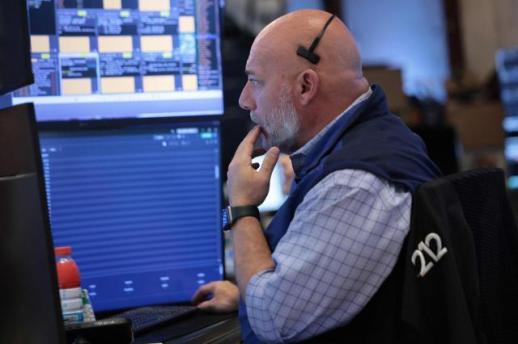 U.S. Stocks Rebound as Oil Prices and Treasury Yields Decline U.S. stocks rebounded on Tuesday, buoyed by easing pressures from oil prices and Treasury yields. Amid expectations of negotiations with Iran, oil prices plummeted, while the rise in interest rates moderated, reviving buying interest in technology and semiconductor stocks. On May 20, the Dow Jones Industrial Average closed up 645.47 points, or 1.31%, at 50,009.35. The S&P 500 index, which is heavily weighted toward large-cap stocks, rose 79.36 points, or 1.08%, to finish at 7,432.97. The tech-heavy Nasdaq composite surged 399.65 points, or 1.55%, closing at 26,270.359. The recent decline in U.S. Treasury yields helped restore investor sentiment. The yield on the 30-year U.S. Treasury bond, which had reached a 19-year high of 5.20% the previous day, fell by 6.6 basis points to 5.114% on Tuesday. The benchmark 10-year U.S. Treasury yield also dropped 10 basis points to 4.569%. International oil prices saw a significant decline. July futures for Brent crude fell 5.63% to $105.02 per barrel, while July futures for West Texas Intermediate (WTI) crude dropped 5.66% to $98.26. The drop in oil prices accelerated after President Donald Trump stated that negotiations with Iran had entered the "final stage." Speaking to reporters, Trump said, "We are in the final stages regarding Iran. Let’s see what happens." The Iranian government is currently reviewing a new draft proposal from the U.S. based on its own 14-point proposal, but has not yet provided an official response. In terms of individual stocks, technology and semiconductor sectors showed notable strength. Nvidia rose 1.3% amid strong earnings expectations, while AMD and Intel surged 8.1% and 7.4%, respectively. The Philadelphia Semiconductor Index jumped 4.5%. However, Nvidia's stock fell 0.14% in after-hours trading to $223.16 following its earnings report, which revealed first-quarter revenues of $81.62 billion. The company projected second-quarter revenues between $89.18 billion and $92.82 billion. Carol Schleif, chief market strategist at BMO Private Wealth, told Reuters, "Today, technology and AI themes are leading the market again. Just yesterday, concerns about interest rate hikes and potential inflation were dominant, but now there is a renewed focus on AI-related stocks."* This article has been translated by AI. 2026-05-21 07:13:11
 -
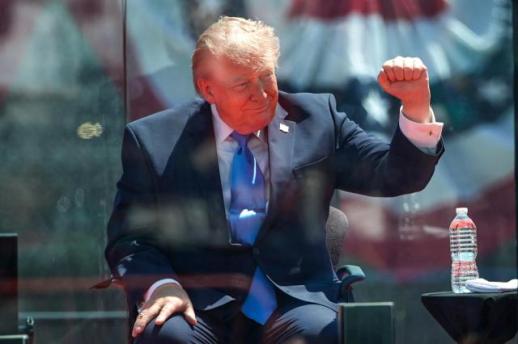 Trump: Iran Negotiations in Final Stages, Military Action Possible Donald Trump, the President of the United States, stated that negotiations with Iran have entered their final phase, warning that if an agreement is not reached, further military action could follow. On May 20, local time, Trump made these remarks to reporters as he left the White House for a visit to the Coast Guard Academy in New London, Connecticut. "We are in the final stages regarding Iran," he said, adding, "Let’s see what happens." He continued, "We will either reach an agreement or we will have to do some rather unpleasant things. But I hope that doesn’t happen." When asked if he was rushing to resolve the situation with Iran due to the upcoming midterm elections, he replied, "Everyone talks about the midterms, but I am not rushing at all." During his commencement address at the Coast Guard Academy, Trump maintained his pressure on Iran. He stated, "We will watch what happens. We have hit them very hard. We may have to hit them even harder, but maybe not." He emphasized, "We will not allow Iran to possess nuclear weapons. It’s very simple." Trump also claimed that Iran's military capabilities have been significantly weakened. He said, "Everything has disappeared. Their navy is gone. Their air force is gone. Almost everything has disappeared. The only question is whether we will go in and finish it or whether they will sign a document."* This article has been translated by AI. 2026-05-21 06:58:08
 -
 Nvidia Reports Record Revenue for 12 Consecutive Quarters, Driven by Data Center Growth Nvidia, the world's most valuable company by market capitalization, has achieved record revenue for the 12th consecutive quarter. The surge in data center sales, fueled by demand for artificial intelligence (AI) infrastructure, has led to results that exceeded market expectations. On May 20, Nvidia announced that its revenue for the first quarter of the fiscal year (February to April) reached $81.62 billion (approximately 122 trillion won). This marks a 20% increase from the previous quarter's record of $68.13 billion. Compared to the same period last year, revenue has increased by 85%, surpassing the market estimate of $78.85 billion compiled by the London Stock Exchange Group (LSEG). The growth in revenue was primarily driven by the data center segment, which reported sales of $75.2 billion, a 92% increase year-over-year. Specifically, data center computing revenue was $60.4 billion, while networking revenue accounted for $14.8 billion. Revenue from the edge computing segment, which includes PCs, gaming consoles, and autonomous vehicles, rose to $6.4 billion, a 29% increase from the same period last year. Nvidia's adjusted earnings per share (EPS) were $1.87, exceeding Wall Street's expectation of $1.76. The company announced a restructuring of its business segments starting this quarter. Instead of the previous detailed divisions, it will now focus on two main areas: data centers and edge computing. The data center segment will be further divided into hyperscale and ACIE (AI Cloud, Industry, and Enterprise) sectors. Nvidia anticipates that the growth trend will continue into the second quarter, projecting revenue to reach $91 billion. However, this forecast does not include revenue from data centers in the Chinese market. Jensen Huang, Nvidia's CEO, stated, "The construction of AI factories, the largest infrastructure expansion in human history, is accelerating remarkably. Nvidia is the only scalable platform that operates across all clouds, supports all frontier and open-source models, and enables AI production from hyperscale data centers to edge computing." Following the earnings announcement, Nvidia's stock rose 1.3% during regular trading. However, in after-hours trading, the stock fell 0.14% to $223.16 as of 5:25 PM Eastern Time.* This article has been translated by AI. 2026-05-21 06:37:05